The Best Geocaching GPS Handhelds
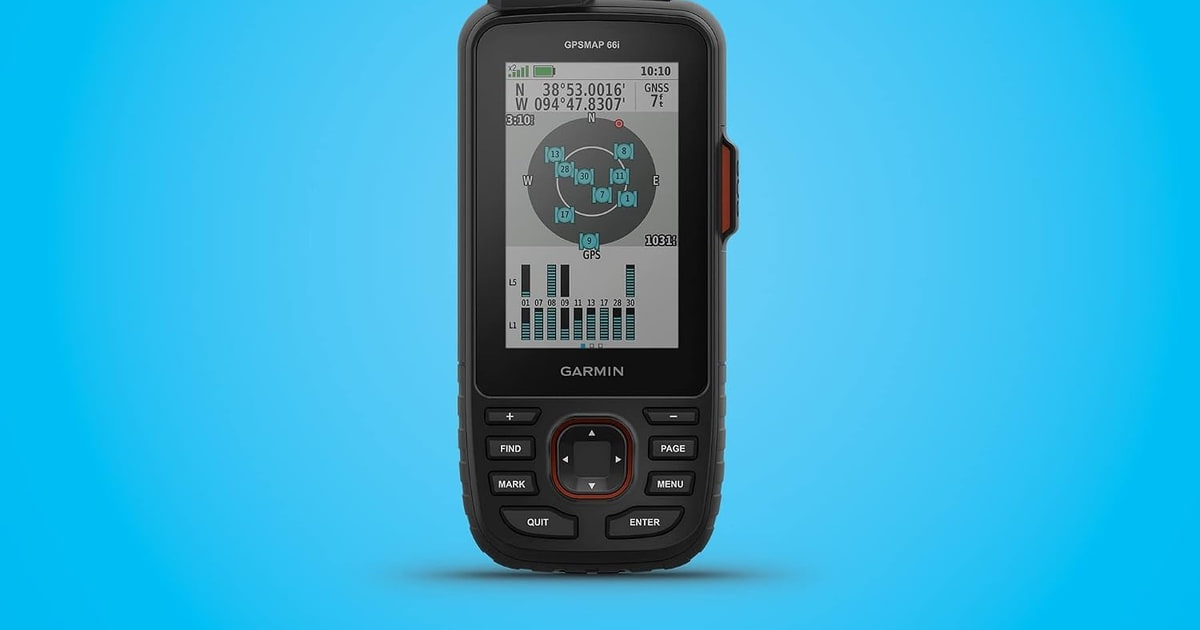
Geocaching starts out as a phone hobby. Then you chase a cache into a hemlock stand, your blue dot starts drifting in lazy circles, and your battery slides toward 20 percent with two more finds on the list. That's the moment a dedicated handheld earns its keep. A good one locks onto satellites in seconds, holds a steady fix under leaves, runs all weekend, and shrugs off a drop onto granite. It also carries the cache description, the hint and the recent logs, so you're not squinting at a dying screen.
Here's the honest part. None of these things are a joy to use. The menus feel like a flip phone, loading caches means wrangling GPX files or a Bluetooth sync that sometimes sulks, and no handheld will put you within arm's reach of the container. Garmin rates its best units at about three meters under open sky. The last few steps are still you, poking around under a guardrail and trying to look casual. This is also a one-brand category now, so the choice is which Garmin, not which company.
So the real question is how much accuracy you need under tree cover, whether you'd rather swap AA batteries or charge an internal one, and whether you'll ever be far enough out to want an SOS button. Screen size and how you load caches matter too, and they're where these models actually diverge. We think that the Garmin GPSMAP 67 is the best geocaching GPS handheld for most people, and that the Garmin eTrex 32x is the one to buy if you'd rather carry something pocket-sized that runs on AAs.
Everything we recommend

The steadiest signal under trees, with battery life to spare

Small, AA-powered and simple, with less accuracy under canopy

The simplest way to find out whether geocaching sticks

The same navigation, plus a way to call for help off the grid
At a glance
| Product | Display Size | Battery Life | Price | |
|---|---|---|---|---|
| Garmin GPSMAP® 67Top pick | 3-inch color | 182 hrs standard | $547.99 |
| Garmin eTrex 32xRunner-up | 2.2-inch color | — | $299.99 |
 | Garmin Oregon 750TAlso consider | 3-inch touch | — | $649 |
 | Garmin Montana 700Also consider | 5-inch touch | — | $499.99 |
| Garmin GPSMAP 67i Rugged GPS Handheld withUpgrade pick | 3-inch color | — | $479.99 |
| Garmin 010-02256-00 eTrex 22xBudget pick | 2.2-inch color | 25 hrs GPS mode | $199.99 |
How we picked
Accuracy under cover. We weighted multi-band GNSS support heavily, because published benchmarking in GPS World shows it cuts positioning error by roughly half in canopy and urban canyons. Single-band units still made the list, but only where the size or battery tradeoff justifies it.
Battery you can plan around. We compared Garmin's rated runtimes and looked at whether the battery is a field-swappable pair of AAs or a sealed internal pack. Owner feedback made clear that multi-day cachers care about this more than any spec on the box.
Getting caches on it. Paperless geocaching only works if the cache description, hint and logs actually reach the device. We favored units that sync wirelessly through Geocaching Live and noted which ones still require a USB cable and a computer.
Screen and controls. We looked at display size, resolution and whether the panel is transflective enough to read in direct sun, plus whether you can work the controls with gloves. Repeated owner complaints about small text pushed the tiny-screen models down the list.
Ruggedness and weight. We checked IPX7 water ratings and MIL-STD-810G compliance against listed dimensions and weight. A unit that survives a creek dunking but won't fit in a jacket pocket loses points for casual caching.
Top pick
The steadiest signal under trees, with battery life to spare
Garmin GPSMAP® 67
The GPSMAP 67 is Garmin's multi-band handheld, and it holds a steadier position under heavy leaf cover than anything else here. You get preloaded TopoActive maps, real buttons you can work with gloves on, an IPX7 body, and wireless cache syncing through your phone.
$547.99fromAmazonMulti-band reception is the whole reason to buy this one. The 67 pulls from GPS, GLONASS, Galileo, BeiDou and QZSS at the same time, and Garmin lists typical accuracy of about three meters under open sky. Independent GNSS benchmarking published in GPS World found multi-band receivers cut positioning error by 50 to 60 percent in dense canopy and urban canyons compared with single-band units. In plain terms: fewer forty-foot wandering loops around ground zero.
It's also quick to wake up. DC Rainmaker's field reporting on the 67 recorded a cold start in under five seconds under open sky, and under 20 seconds beneath moderate tree cover — faster than the other handhelds in that same session. That sounds like a small thing until you're doing a dozen park-and-grabs in an afternoon and the unit is ready before you've shut the car door.
Battery life stops being something you think about. Garmin rates the internal lithium-ion pack at up to 182 hours in standard mode and up to 840 hours in expedition mode, which covers a full season of day trips between charges. Owners who use these for work in the woods consistently describe charging it and forgetting about it. You will want a power bank for anything multi-day, though.
The buttons matter more than you'd expect. Cold hands, wet hands, gloves, a screen streaked with rain — none of it stops you from cycling through the compass page by feel. The 3-inch display is sunlight-readable, the body is rated IPX7 and built to MIL-STD-810G for shock, vibration and thermal swings, and Geocaching Live syncs caches over Bluetooth from your phone, so you can pull down a pocket query at the trailhead without a laptop.
Flaws but not dealbreakers
You can't swap the battery in the field. That's the recurring complaint from owners who backpack for days or leave the unit in a drawer for a month and come back to a dead device. With an eTrex you drop in two fresh AAs and keep walking; here you're carrying a battery bank and a cable.
The interface hasn't changed much in years, and it shows. Menus are deep, some settings are buried, and getting comfortable takes a few outings. This is also the most expensive way to find a Tupperware container in the woods, and the wireless features assume you're carrying a phone with the Geocaching app and a Premium membership.
Runner-up
Small, AA-powered and simple, with less accuracy under canopy
Garmin eTrex 32x
The eTrex 32x is a pocket-sized, button-driven handheld that runs about 25 hours on two AA batteries. It comes with routable TopoActive maps, a compass and a barometric altimeter, and it handles what a weekend geocacher needs without the bulk of the GPSMAP 67.
$299.99fromAmazonThis one disappears into a jacket pocket. It weighs about a third of a pound, works entirely from a thumbstick and a few buttons, and you can run it one-handed while the other hand holds a coffee or a kid. For urban caches, park trails and neighborhood series, that's most of what you want from a handheld.
Two AA batteries are the whole argument. Garmin rates the 32x at up to 25 hours of GPS-active use on a pair of AAs, roughly two to three times the active GPS runtime you'd get from a flagship phone. When it runs down, you swap cells from your pack or a gas station and lose about fifteen seconds. No cable, no charger, no anxiety.
The rest is quietly complete. You get GPS and GLONASS tracking, a 3-axis compass, a barometric altimeter, preloaded routable TopoActive maps, 8GB of internal storage and a microSD slot for more coverage. The compass is the part geocachers notice: it keeps pointing at the cache while you're standing still, sweeping the ground around a stump.
What you give up is the 67's multi-band reception. Under thick summer canopy or between tall buildings, you'll circle a bit more and second-guess the arrow. Owner feedback backs this up — people who upgraded from an eTrex to a GPSMAP describe a real difference in the woods. In open parks and along trails, you'd struggle to tell them apart.
Flaws but not dealbreakers
The 2.2-inch screen is genuinely small. Owners with older eyes or larger thumbs regularly say they find it hard to read a cache description and fiddly to operate, and a few end up upgrading for that reason alone. If you already hold your phone at arm's length to read a menu, look at a touchscreen model instead.
There's no Bluetooth, so every cache reaches this device by USB cable from a computer. That means running pocket queries, downloading GPX files and plugging in before you leave the house — no last-minute syncing in the parking lot. Adding map coverage also needs a microSD card that doesn't come in the box, which catches people out during setup.
Budget pick
The simplest way to find out whether geocaching sticks
Garmin 010-02256-00 eTrex 22x
The eTrex 22x is the 32x without the compass and altimeter, and it's the least intimidating handheld Garmin sells. Preloaded maps, 8GB of storage, a microSD slot and about 25 hours on two AAs make it a sensible first device for a family testing the hobby.
$199.99fromAmazonHand this to a ten-year-old and it survives the day. It's light, it runs on AAs you already have in a kitchen drawer, and the button interface gives kids something to press that isn't a screen. Families who want a Saturday activity rather than a new piece of gear tend to be happiest here.
It's the same basic hardware as the eTrex 32x, minus two sensors. You still get the 2.2-inch sunlight-readable color display, GPS and GLONASS reception, preloaded routable TopoActive maps, 8GB of internal memory, a microSD slot and capacity for 2,000 waypoints — far more caches than you'll load for a weekend. Garmin rates battery life at up to 25 hours on two AAs, same as its pricier sibling.
The missing piece is the electronic compass. Without one, the arrow only points reliably while you're walking. Stand still at ground zero and the heading drifts, so you end up doing little shuffling laps to keep it honest. It's a real annoyance in the last twenty feet, and it's the main reason to spend up to the 32x.
For a first device, though, the tradeoff is fine. Most caches are found by reading the hint and looking at the terrain anyway, and the 22x gets you close enough for that. If the hobby sticks, this makes a decent backup or loaner unit later.
Flaws but not dealbreakers
No barometric altimeter either, which matters if you chase EarthCaches or want elevation profiles from your tracks. The small screen has the same readability problem as the 32x, and some owners find the trail detail on the preloaded maps thinner than they expected.
Loading caches is wired-only, through a computer. Several owners describe the setup — registering the device, adding a microSD card, waiting on a long map download — as slow and unintuitive. Budget an evening at the kitchen table before your first hunt.
Upgrade pick
The same navigation, plus a way to call for help off the grid
Garmin GPSMAP 67i Rugged GPS Handheld with
The GPSMAP 67i navigates exactly like the GPSMAP 67 and adds inReach two-way satellite messaging with an interactive SOS through the Iridium network. If you hunt caches on old forest roads where nobody would come looking for a day, that button is worth the ongoing subscription.
$479.99fromAmazonEverything good about the 67 carries over. Multi-band GNSS, preloaded TopoActive maps, satellite imagery support, the 3-inch sunlight-readable display, the same tactile buttons, and Geocaching Live syncing over Bluetooth when it's paired with your phone. Nothing about finding caches changes.
What you're paying for is the satellite link. The 67i sends and receives text messages anywhere on the Iridium network, which covers the whole planet, and triggers an interactive SOS to Garmin Response, a coordination center staffed around the clock. An active subscription is required, and some jurisdictions regulate these devices, so check before traveling.
Think about where you actually cache. If your finds are guardrails and library parking lots, skip this. But wilderness-rated caches, long forest-road approaches and solo hunts are exactly where a phone stops being a safety plan. The two-way messaging is also just useful — you can tell someone at home you're running two hours late instead of having them call the sheriff.
Owners using it for geocaching in tricky spots report it holding position better than older units near buildings, which tracks with the multi-band hardware. Battery life is long enough that the tracking and messaging features don't leave you rationing power over a weekend.
Flaws but not dealbreakers
The satellite features don't work without an active plan, and that's a bill that keeps arriving whether you cache that month or not. Owners are blunt about disliking the subscription even while they keep paying it.
This particular listing is a factory-renewed unit rather than new in box, which is worth knowing if you care about original packaging or want the longest possible coverage. Like the 67, it runs on an internal battery you can't swap in the field, and the menu system takes real study — you don't want to be learning the messaging screens for the first time when something has gone wrong.
Who this is for
Buy one of these if the geocaching app on your phone keeps letting you down — drifting under trees, dying halfway through a series, or leaving you stranded when the trail loses signal. It's also an easy call if you cache with kids, in bad weather, or anywhere far from a road. Dedicated handhelds are tougher than any phone, they run for days, and they keep working with no cell service at all, because they talk to satellites rather than towers.
You can skip all of this if you mostly do urban caches within a mile of your car. The official app is good, it's free to start, and it doesn't add another charger to your life. This guide covers handheld GPS units suited to paperless geocaching, so it doesn't get into phone mounts, cache containers, trackables or car navigators. Every unit here is a Garmin, which isn't a preference so much as a description of what's left in this category.
How we picked
Accuracy under cover: multi-band GNSS support carried the most weight, since published benchmarking shows it roughly halves positioning error in dense trees and among tall buildings. Battery: we compared rated runtimes and, just as important, whether you can swap a pair of AAs in the field or you're tethered to a charger. Cache loading: paperless geocaching needs the description, hint and logs on the device, so we favored units that sync wirelessly over Bluetooth and flagged the ones that still need a USB cable. Screen and controls: display size, sunlight readability and glove-friendly operation, weighed against repeated owner complaints about small text. Ruggedness: IPX7 ratings and MIL-STD-810G compliance, balanced against weight, because a brick in your pocket doesn't get carried.
Other geocaching gps handhelds worth considering
If you want the biggest screen you can get: The Garmin Montana 700 ($499.99) — The Montana 700 carries a 5-inch 800×480 transflective touchscreen, the largest display in Garmin's handheld line, and it stays readable in direct sun where a phone washes out. It's glove-friendly, built to MIL-STD-810 for shock, water and vibration, supports multiple mounting options, and pulls BirdsEye satellite imagery straight to the device over Wi-Fi. The catch is size and weight — this is nearly a pound and closer to a dash-mounted navigator than something you slip in a pocket. It's also multi-GNSS rather than multi-band, so it can't match the GPSMAP 67 under canopy, and some owners find the touchscreen sluggish and the map packages fussy to set up. Good choice if you cache from an ATV or a boat.
If you want to photograph your finds: The Garmin Oregon 750T ($649) — The Oregon 750t is the only mainstream geocaching handheld with a real camera — 8 megapixels, autofocus, with an LED flash that doubles as a torch when you're reaching into a dark stump. Photos are geotagged, so documenting a clever container or logging a trackable takes one button. The 3-inch touchscreen works in either orientation and has a glove mode, the body is water-rated to IPX7, and Connect IQ lets you add data fields and apps. You're giving up multi-band accuracy, and owners report a fiddly battery door and weather features that need connectivity to be much use. Worth it if you like a photo log; otherwise the 67 is the better navigator.
The competition
These are the units the research turned up, not a census of every handheld on the market. Garmin sells a lot of overlapping models, and the differences between them are often one sensor or one radio. Here's what didn't make the cut and who might still want it.
Setup and cache loading
Do your loading at home, not at the trailhead. Run a pocket query on geocaching.com, which needs a Premium membership for unlimited batch downloads, and either drag the GPX file onto the device over USB or sync it wirelessly with Geocaching Live if your unit supports Bluetooth. Add a microSD card if you want map coverage beyond the preloaded TopoActive maps — the eTrex models especially need one, and it isn't included. Keep firmware and maps current through Garmin Express; stale firmware causes most of the pairing headaches owners describe. Carry lithium AAs in cold weather, since alkalines fade fast below freezing. And dry the unit and the battery contacts after a wet day, because IPX7 covers a dunking, not a week of damp.
Questions we get
Can I just use my phone instead of a dedicated GPS?
For most caches, yes — the official app is genuinely good and it's how nearly everyone starts. A handheld pulls ahead in three situations: heavy tree cover, where multi-band reception holds a much steadier fix; long days, since the eTrex units run about 25 hours on two AAs versus a few hours of active GPS on a phone; and rough weather, where an IPX7 body doesn't care about rain. If none of those describe your caching, keep your phone.
What does paperless geocaching mean?
It means the cache description, the hint, the attributes and the recent logs live on your device, so you don't print anything or check your phone at the site. Every Garmin here supports it once you load caches as GPX files. The catch is that unlimited pocket queries — the batch downloads that make it practical — require a geocaching.com Premium membership.
Does multi-band GPS really make a difference?
Under trees and between buildings, yes. Multi-band receivers listen to more than one satellite frequency at once, which lets them reject signals that bounced off a trunk or a wall. GNSS benchmarking published in GPS World puts the improvement at 50 to 60 percent less positioning error in those environments versus single-band units. In an open field, you'd hardly notice.
Do these work without cell service or Wi-Fi?
Navigation does, completely. These units talk to satellites, and the maps are stored on the device, so a Garmin handheld works in a canyon with no bars at all. What needs connectivity is the extra stuff: syncing new caches through Geocaching Live, active weather, and map downloads all want your phone or Wi-Fi. Load your caches before you leave and you're set.
What's the difference between the GPSMAP 67 and the 67i?
As navigators they're the same device — identical multi-band GNSS, the same maps, screen and buttons. The 67i adds inReach two-way satellite messaging and an interactive SOS routed to Garmin's staffed response center over the Iridium network. That requires an active subscription. If you cache in the backcountry or alone, it's the model to get; for suburban caching it's a feature you'll never use.
Do I need a geocaching.com Premium membership?
Not to find caches, but effectively yes to use a dedicated GPS well. Premium unlocks unlimited pocket queries, which is how you get hundreds of cache listings onto the device in one file instead of downloading them one at a time. It also opens up member-only caches. Basic members can still send individual caches to a device, which is fine for occasional hunts.
Why you should trust us
For this guide:
- We read Garmin's published specifications for every unit here and compared reception, rated battery life, display size, durability ratings and storage side by side.
- We reviewed published field reporting on these handhelds, including DC Rainmaker's satellite-acquisition results for the GPSMAP 67 and GNSS benchmarking published in GPS World.
- We read through owner feedback on each listing to find the complaints that repeat — small screens, sealed batteries, fiddly map setup — rather than one-off gripes.
- We read owner reviews on every listing, weighted toward the critical ones, because that is where the recurring failures show up.
- We have a systematic way of automatically fetching the latest prices, so the numbers on this page stay current.
- This is a research-focused guide, so the team may not own every product listed — though we often do own the top winners, which gives us extra context for the recommendations.
- We don't accept free products, and the retailer commission never changes which product we recommend.
Sources
Garmin GPSMAP 67 Official Product Page & Specifications, Garmin
Garmin eTrex 32x Official Product Page & Specifications, Garmin
Garmin Oregon 750t Official Product Page & Specifications, Garmin
Garmin Montana 700 Official Product Page & Specifications, Garmin
Best Handheld GPS Devices 2026 — Outdoor Gear Lab, Outdoor Gear Lab
Best Handheld GPS Units — Wirecutter (NYT), Wirecutter
Best GPS for Geocaching — PCMag, PCMag
Garmin GPSMAP 67 In-Depth Review — DC Rainmaker, DC Rainmaker
Geocaching Device Compatibility & App Guide — Geocaching.com, Geocaching.com
Geocaching.com Account Plans & Premium Pricing, Geocaching.com
GPS for Geocaching — REI Expert Advice, REI
Best GPS for Geocaching 2026 — Tom's Guide, Tom's Guide
Amazon product listings and owner reviews for all 6 products
Manufacturer specification pages for each product
Some passages in this guide may be paraphrased with AI help. Prices are refreshed automatically.
More like this.
Continue exploring lifestyle reviews and recommendations.

The Best Handheld Vacuums for Car and Pet Hair
Pet hair doesn't sit on car upholstery. It works its way into the weave, and a plain suction nozzle glides right over the top of it. That's the whole…

The Best Handheld Milk Frothers
A handheld frother is the simplest upgrade you can make to your morning coffee. You warm the milk however you like, drop the whisk in, and hold the button…

The Best Handheld Vacuums for Car and Pet Hair
Pet hair in a car doesn't behave like pet hair on a floor. It works down into the seams of a bench seat, wraps around the fibers of a rubber-backed mat,…

The Best Pet GPS Trackers and Smart Collars
Most dogs never need a tracker until the one afternoon they do. A gate gets left open, a thunderstorm hits, a squirrel wins. In that moment you don't want…

The Best Hiking GPS Devices
A hiking GPS earns its place in your pack on the days your phone can't help. Cold drains a phone battery fast. Rain turns a touchscreen into a smudge. And…

The Best Pet GPS Trackers
A tracker earns its keep in the ten minutes after a door gets left open. That's the whole pitch. You want to open an app and see a dot moving down the…