The Best Graphic Novels for Adults
Graphic novels ask something different of you than prose does. You read a page in a minute and then sit with it for five, because the drawing carried a piece of the meaning the words left out. For adults coming from literary fiction or serious nonfiction, that's the whole appeal. The best books in this format handle war, grief, sexuality and death with the same craft you'd expect from a good novel. They just do it with pictures, and the pictures aren't decoration.
Here's the honest part. No graphic novel is easy the way a beach paperback is easy, and the ones with the most prestige tend to be the heaviest. Holocaust memoir, a father's probable suicide, political imprisonment — that's the canon. The art styles that critics love most are often the spare, black-and-white ones, which can feel austere if you were hoping for lush color. And a few of the listings you'll find online aren't the books you think they are. Read the title twice.
We're covering the titles that show up again and again in critical roundups, university syllabi and award lists, plus a couple of specialty editions that serve narrower needs. Formats range from a plain paperback you can throw in a bag to an oversized slipcased hardcover that barely fits a shelf. We think that Maus: A Survivor's Tale is the best graphic novel for most adult readers, and that Fun Home: A Family Tragicomic is the one to buy if you want a complete literary memoir in a single, easy-to-carry volume.
Everything we recommend

The one that convinces skeptics the format is literature

A complete literary memoir you can finish in one sitting

The most welcoming art style and the best book club pick

An oversized collector's edition that commands a shelf
At a glance
| Product | Format | Weight | Price | |
|---|---|---|---|---|
| Maus: A Survivor's Tale by SpiegelmanTop pick | Paperback | — | $45.92On sale |
 | Visual Worldbuilding in Alan Moore and DaveAlso in lineup | — | 0.16093745126 lbs | $39.50 |
| [The Complete Persepolis] [By: SatrapiAlso great | — | 1.2 lbs | $28.34On sale |
| Fun Home: A Family Tragicomic―A New YorkRunner-up | — | 0.89948602896 lbs | $9.99On sale |
 | Our Favorite Thing is My Favorite ThingAlso consider | Comic Book | — | $12.99 |
| The Absolute SandmanUpgrade pick | — | 7.50012615324 lbs | $64.59On sale |
How we picked
Critical standing. We weighted awards that come from outside the comics world — Pulitzer, TIME's 100 Best English-Language Novels, World Fantasy — because they signal a book will hold up for readers arriving from prose. Eisner Awards mattered too, especially for art-driven work.
Complete in one volume. For anyone new to the format, we preferred books that tell a whole story in a single purchase. Multi-volume series had to earn their spot on production quality or reputation alone.
Accessibility for newcomers. We looked at how much prior comics literacy each book assumes, drawing on published reviews and the recurring themes in owner feedback. Books that regularly convert skeptics ranked above books that reward existing fans.
What the listing actually is. We checked every listing against the publisher, format and page description to confirm whether it's the graphic novel itself, a sampler, or a companion text. Two of these turned out not to be the books their titles suggest.
Edition and build. Trim size, binding and page count decide whether a book is a reading copy or a shelf object. We flagged which is which rather than treating a heavy hardcover as automatically better.
Top pickOn sale
The one that convinces skeptics the format is literature
Maus: A Survivor's Tale by Spiegelman
Art Spiegelman's Holocaust memoir is the only graphic novel ever to win a Pulitzer Prize, and this Penguin edition collects both volumes in one paperback. If you've never read a graphic novel and you're not sure the format is for you, start here.
$45.92fromAmazonList priceIt's the book that settled the argument about whether graphic novels count as literature. The Pulitzer board gave Maus a Special Award in 1992, and no other graphic novel has won one since. That matters less as a bragging point than as a signal: the same institutions that judge serious nonfiction looked at this and didn't blink. If a skeptical friend or parent needs one book to change their mind about the format, this is reliably it.
The two-timeline structure is what makes it work, not the mice. Spiegelman draws himself interviewing his aging, difficult father Vladek in New York, and he draws Vladek's memories of Auschwitz in stark expressionist black and white. So you're reading a book about the Holocaust and a book about a strained father-son relationship at once. The metaphor — Jews as mice, Nazis as cats — sounds reductive until you're twenty pages in and stop noticing it.
This edition gives you the complete story in one book. Maus ran in serial form for over a decade, then arrived as two separate volumes: My Father Bleeds History and And Here My Troubles Began. You want them together, and this paperback does that in over 300 pages. No hunting for volume two, no cliffhanger you can't resolve.
It's the most-taught graphic novel in American universities, which means help is everywhere. If you're picking a book club title, that's a practical advantage. Study guides, discussion questions and critical essays are free and abundant online. Your group will have plenty to argue about — memory, survivor guilt, and whether it's ethical to draw a genocide at all.
Flaws but not dealbreakers
This is a UK Penguin edition, and a US Pantheon paperback of the same content exists. The contents are identical. If you're just here to read the book rather than to collect a particular printing, it's worth checking which edition is available to you before you commit — the packaging differs, the story doesn't.
The subject matter is genuinely hard, and it doesn't let up. This isn't a book you dip into over a long weekend for fun. It sits with atrocity, and it sits with a son who can't stand his own father. Readers regularly describe finishing it in a fairly wrecked state. Come to it the way you'd come to serious literary nonfiction, with some room around it.
The art is spare and it's meant to be. Thick black brushwork, no color, deliberately rough. If you were hoping for the kind of illustration you'd hang on a wall, this isn't that. The visual restraint is doing real work, but it can read as plain on first flip-through.
Runner-upOn sale
A complete literary memoir you can finish in one sitting
Fun Home: A Family Tragicomic―A New York
Alison Bechdel's memoir about her closeted father, her own coming out, and his death is one of only two graphic novels on TIME's 100 Best English-Language Novels list. It's a standalone story, so there's nothing else to buy afterward.
$9.99fromAmazonList priceIf you love literary fiction, this is the graphic novel written for you. Bechdel reads her own childhood through Fitzgerald, Joyce and Proust, and the allusions aren't showing off — they're how she makes sense of a father she couldn't reach. Readers who admire Joan Didion or Mary Karr for their cold-eyed self-examination will recognize the voice immediately. It rewards a second read the way a good novel does.
The story is complete in one volume, which lowers the stakes of trying the format. You're not signing up for ten books. Fun Home starts, circles, and lands, all in roughly 240 pages you can hold in one hand. If visual storytelling turns out not to be your thing, you've spent an evening finding out — and if it is, you've got a whole medium waiting.
Bechdel's restraint is what makes the emotional moments land. Her artwork is precise and methodical, almost architectural. Nothing is exaggerated for effect. So when a panel does open up, you feel it, because the book hasn't been asking for your feelings on every page. That control is unusual and it's the main reason critics keep returning to this one.
The Broadway adaptation is proof the story travels. A Tony Award-winning musical came out of this memoir, which tells you the material works even stripped of Bechdel's drawings. For a book club, that's a useful second text — you can talk about what the stage version keeps and what it loses when the panels go away.
Flaws but not dealbreakers
The non-linear structure can be disorienting at the start. Bechdel revisits the same handful of scenes over and over, each pass adding information the last one withheld. It's the point of the book. But if you like clean chronology, the first chapter will feel like it's refusing to get going.
The themes are heavy and specific: repression, a closeted parent, an ambiguous death. There's real warmth and dry humor in it, but the emotional center is a loss no one in the family can name out loud. If you want a gentler doorway into graphic novels, The Complete Persepolis is the friendlier choice.
Also greatOn sale
The most welcoming art style and the best book club pick
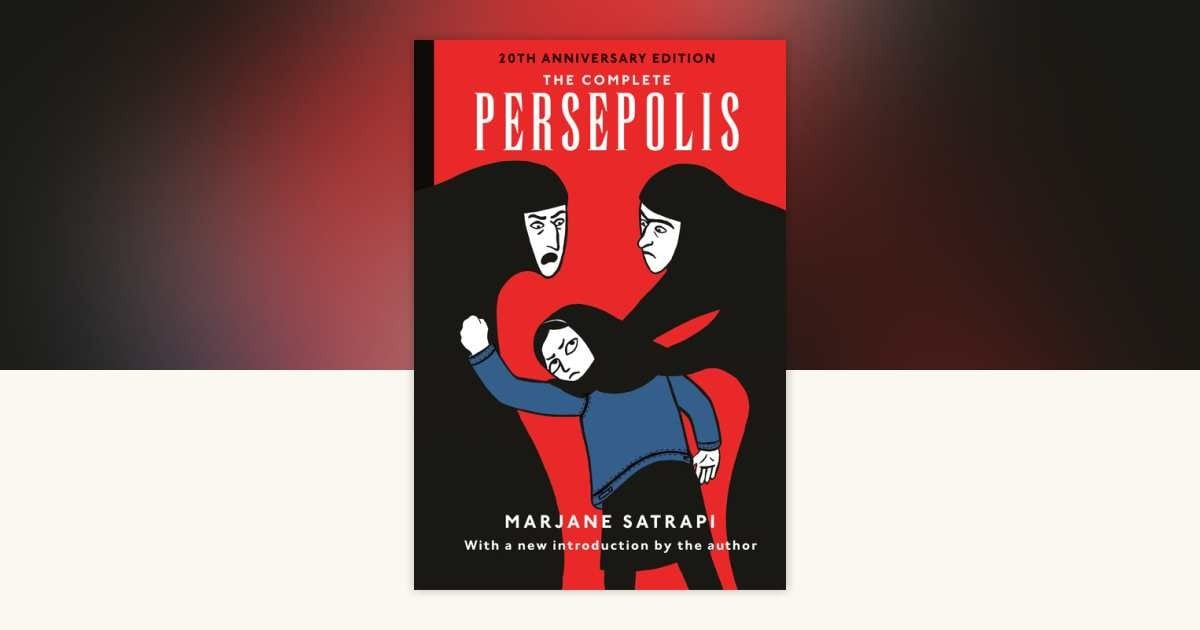
[The Complete Persepolis] [By: Satrapi
Marjane Satrapi's memoir of growing up during the Iranian Revolution is the graphic novel most likely to convert someone who thinks they don't like graphic novels. This complete edition collects all four original volumes in a single book.
$28.34fromAmazonList priceThe art style is the most approachable on this list, and that's a feature. Satrapi works in high-contrast black and white with a flat, almost woodcut simplicity that owes something to Persian miniature painting. There's nothing to decode. Your eye moves fast, which keeps the focus on her voice — and her voice is funny, furious and devastating, sometimes on the same page.
It's a history lesson that never feels like one. You watch the 1979 revolution through the eyes of a kid from a secular, educated Tehran family, which means the politics arrive as things happening to people she loves. If you've been meaning to understand modern Iran and bounced off the nonfiction, this gets you further in an evening than most books do in a week.
For a book club, it generates better conversation than almost anything else you could assign. Identity, feminism, exile, what a state does to a family — every chapter hands your group something to argue about. It's among the most-assigned graphic works in North American universities, so free study guides and discussion questions are easy to find.
The complete edition means you're not chasing volumes. Persepolis originally came out in four parts. This single book collects all of them, so you get Marjane's childhood, the war years, her exile to Europe and her return without any gaps. There's also a Cannes Jury Prize-winning animated adaptation that Satrapi co-directed, which makes a good companion for a group.
Flaws but not dealbreakers
If you want gorgeous illustration, this will feel plain. The drawing is deliberately reduced — thick lines, solid blacks, minimal detail. Readers coming from an art or design background sometimes find it underwhelming next to something like Emil Ferris's work. It's a stylistic choice, but it's a real mismatch for some people.
It covers political violence, imprisonment and executions, and it doesn't soften them. The tone is lighter than Maus overall, and Satrapi's humor carries a lot of it. But there are pages that hit hard, and they arrive without warning.
Upgrade pickOn sale
An oversized collector's edition that commands a shelf
The Absolute Sandman
This slipcased hardcover presents the first twenty issues of Neil Gaiman's Sandman at 25% larger trim size with remastered coloring. It's the most impressive physical object here, and it's the wrong place for a newcomer to start.
$64.59fromAmazonList priceThe oversized format genuinely changes how the artwork reads. At more than fifteen inches tall and over seven pounds, this isn't a book you read on a train. But that scale gives Gaiman's collaborators room their original comic pages never had. Details you'd skim past in a trade paperback stop you. If you already love Sandman, this is the version worth owning.
The recoloring fixes a real problem with the early issues. The first Sandman comics were printed under limitations that flattened the palette. This edition restores the colors the creative team intended, and the difference is visible rather than theoretical. For anyone who read these issues in their original printing, that alone is the case for upgrading.
It's the best gift on this list for a comics-literate adult. Slipcase, black cover, enormous. It makes an impression the second someone unwraps it, and it keeps making one every time they walk past the shelf. For a milestone birthday or a housewarming for someone who already reads fantasy, nothing else here has this kind of physical presence.
The material earns the treatment. Sandman reimagines the lord of dreams as a mythological figure moving through gods, historical figures and ordinary people. It won a World Fantasy Award in 1991 — one of the first comics to take a major literary prize — and it's still among the best-selling adult graphic novel series ever published. If you like Borges, Tolkien or Gaiman's prose, the register will feel familiar.
Flaws but not dealbreakers
It's the wrong entry point, and buying it first is the most common mistake with this series. Gaiman leans hard on Shakespeare, Chaucer and classical mythology, and the early issues assume patience. Read the standard trade paperbacks first. Then buy the Absolute as the upgrade, once you already know you want it.
Volume 1 is the beginning of a set, not a complete story. It collects the first twenty issues. Finishing the Absolute Sandman means buying more oversized volumes, and they aren't small commitments. If you want one book that starts and ends, pick Maus, Fun Home or Persepolis instead.
The size is impractical for actual reading. Seven and a half pounds, over a foot tall. You'll read it at a table. Some owners of oversized editions like this also find the slipcase and boards vulnerable in shipping, so it's worth inspecting the corners when it arrives.
Who this is for
This guide is for adults who read — novels, memoir, history — and who keep hearing that graphic novels are worth a try without knowing where to start. If that's you, buy one of the complete standalone memoirs and give it an evening. It's also for book club organizers who want a title that generates real argument, and for gift buyers looking for something a literary friend won't already own. If you already read widely in comics, you'll find the picks familiar; the value here is in the edition details and the two listings that aren't what they appear to be.
We're covering critically established adult titles, not new releases or superhero series, and not manga. If you want ongoing serialized fantasy or space opera, this isn't the list — those live in long-running series we don't cover here. Every book here handles adult themes: genocide, sexuality, political violence, grief. There's nothing on this list you'd hand to a ten-year-old, and nothing that treats its subject lightly. If you're looking for something light, look elsewhere for now and come back when you want the heavy stuff.
How we picked
Critical standing: We favored recognition from outside the comics world — the Pulitzer, TIME's novels list, the World Fantasy Award — because those signals translate for readers coming from prose. Complete in one volume: Standalone books lower the risk of trying a new format, so they outranked series openers unless the edition itself was the draw. Accessibility: We read published reviews and owner feedback themes to judge how much comics fluency each book assumes, and ranked the skeptic-converters highest. What the listing is: We checked publisher, format and page description on every ASIN, which is how two items here turned out to be a sampler and an academic companion rather than the graphic novels their titles imply. Edition and build: Trim size, weight and binding decide whether you've bought something to read or something to display, and we say which is which.
Other graphic novels for adults worth considering
If you want to sample Emil Ferris's artwork before committing: The Our Favorite Thing is My Favorite Thing ($12.99) — This is the Free Comic Book Day 2019 edition of My Favorite Thing Is Monsters, and it's a preview rather than the book. What you get is a focused taste of Ferris's technique — everything rendered in ballpoint pen on what looks like college-ruled notebook paper, dense and layered in a way that reads closer to gallery drawing than comics linework. If you come to graphic novels from a fine art background, she's the artist most likely to reorganize your idea of what the medium can do. But it's abbreviated, it's graded as a collectible rather than a reading copy, and it doesn't give you the story. For the whole thing, you want the full Fantagraphics volumes, which won five Eisner Awards in 2018.
The competition
This is what our research surfaced across these listings, not a survey of everything published for adult readers. Plenty of excellent work — contemporary series, translated titles, manga — sits outside what we're covering. Here's the remaining item and where it fits.
The Visual Worldbuilding in Alan Moore and Dave ($39.50) — Visual Worldbuilding in Alan Moore and Dave Gibbons' Watchmen is an academic analysis of Watchmen, published by GRIN Verlag. It is not the Watchmen graphic novel, and that's the single most important thing to know before you click buy. If you've already read Watchmen and want a critical framework for Gibbons' rigid nine-panel grid, the recurring motifs like the blood-stained smiley face, and the embedded documents Moore threads through the story, this can genuinely deepen what you noticed. But GRIN publishes student theses from German-speaking universities, so the rigor varies and it isn't peer-reviewed to university-press standards. Students and educators teaching Watchmen are the audience. Anyone who wants Moore's actual story should look for the DC Comics trade paperback instead.
Choosing an edition and caring for it
Two things go wrong when people buy graphic novels online. First, listings for collected editions and single volumes look nearly identical, so check the page count and whether the title says complete before you order — Maus and Persepolis both exist as separate volumes and as one-book compilations. Second, oversized hardcovers arrive damaged more often than paperbacks do, so inspect the slipcase corners and board edges when a big edition shows up. Once you own them, keep them upright rather than stacked. Comics paper is thin and heavy books press their own spines out of shape over time. Direct sun fades the printed color fast, especially on remastered editions where the palette is the point. And if cost is the obstacle, check your library's digital catalog first.
Questions we get
What's the difference between a graphic novel and a comic book?
A graphic novel is a complete, book-length story told in sequential art, usually published as a standalone volume. A comic book is a shorter periodical, typically 20 to 32 pages, released as part of an ongoing series. Many graphic novels — including Maus and Watchmen — first ran as periodical comics before being collected. The term now covers any book-length work in the format, whatever its original publication route.
Are graphic novels really taken seriously as literature?
Yes, and the record is specific. Maus won a Pulitzer Special Award in 1992, the only graphic novel ever to take one. Watchmen and Fun Home are the two graphic novels on TIME's 100 Best English-Language Novels list. The Sandman won a World Fantasy Award and My Favorite Thing Is Monsters took five Eisner Awards — the same institutions that judge prose reached the same conclusion.
I have no interest in superheroes. Is there anything here for me?
Almost all of it. Maus is a Holocaust memoir, Persepolis is an Iranian coming-of-age story, Fun Home is a queer family memoir, and My Favorite Thing Is Monsters is a noir mystery set in 1960s Chicago. Only the Watchmen companion text touches costumed characters at all, and even that book is about deconstructing them. Superheroes are one genre in this medium, not the medium.
Should I start with a standalone book or a series?
Start standalone, every time. Maus, The Complete Persepolis and Fun Home each give you a full narrative arc with nothing left to buy. The most common way adults abandon graphic novels is by starting a ten-volume series, stalling somewhere in the middle, and concluding the format isn't for them. Once you know visual storytelling works for you, a long series becomes a reward instead of a gamble.
Which of these makes the best gift for someone who doesn't read comics?
Fun Home is the safer reading gift — it requires no comics background, tells a complete story, and its place on TIME's list gives a skeptical recipient a reason to open it. The Absolute Sandman, Vol. 1 is the better object gift if the recipient already reads fantasy, because the oversized slipcase edition makes an immediate impression. Skip the Absolute for someone new to the format.
Can I read these on a Kindle or tablet?
Most major graphic novels are available digitally through comics platforms and library apps like Libby and Hoopla. A standard e-ink Kindle isn't a good fit — the screen is small and the color support is limited. A tablet works much better. For an oversized edition like The Absolute Sandman, the physical scale is the whole point and doesn't survive the move to a screen.
Why you should trust us
For this guide:
- We compared publisher, format, trim size and page details across every listing here to sort actual graphic novels from samplers and companion texts.
- We read published criticism and award records — Pulitzer, TIME's novels list, Eisner and World Fantasy — to judge which titles hold up for readers arriving from prose.
- We reviewed recurring themes in owner feedback, particularly around edition confusion, shipping damage on oversized hardcovers and how much prior comics experience each book assumes.
- We read owner reviews on every listing, weighted toward the critical ones, because that is where the recurring failures show up.
- We have a systematic way of automatically fetching the latest prices, so the numbers on this page stay current.
- This is a research-focused guide, so the team may not own every product listed — though we often do own the top winners, which gives us extra context for the recommendations.
- We don't accept free products, and the retailer commission never changes which product we recommend.
Sources
The Pulitzer Prize Winners — Special Awards 1992: Maus by Art Spiegelman received the only Pulitzer Prize ever awarded to a graphic novel, The Pulitzer Prize Board
Eisner Award Winners Archive — My Favorite Thing Is Monsters by Emil Ferris won five Eisner Awards in 2018 including Best New Graphic Album—Original and Best New Writer/Artist, Comic-Con International / Eisner Awards
Amazon product listings and owner reviews for all 6 products
Manufacturer specification pages for each product
Some passages in this guide may be paraphrased with AI help. Prices are refreshed automatically.
More like this.
Continue exploring lifestyle reviews and recommendations.

The Best Thriller and Mystery Novels
A good thriller does one job: it keeps you turning pages long after you meant to sleep. But what you want out of one shifts with your mood. Some nights…

The Best Gifts for LEGO-Loving Adults
A good LEGO gift buys someone hours away from a screen. That's the real present here - a quiet evening at the kitchen table, a podcast on, a pile of…

The Best Electric Scooters for Adults
An electric scooter earns its keep on the trips that are too far to walk and too short to drive. Two miles to the train. A mile and a half across campus.…

The Best Bento Lunch Boxes for Adults
A lunch box has one job: get your food to work in the same shape it left your kitchen. That sounds simple until the dressing finds a seam and soaks the…

The Best Young Adult Fantasy Book Sets
A boxed fantasy series is a commitment, and not just a shelf-space one. You're signing up for weeks of reading, a cast you'll live with, and a world…

The Best Weighted Blankets for Adults
A weighted blanket works by pressing down on you the way a firm hug does. That pressure, which therapists call deep pressure stimulation, seems to quiet…