The Best Electric Scooters for Adults
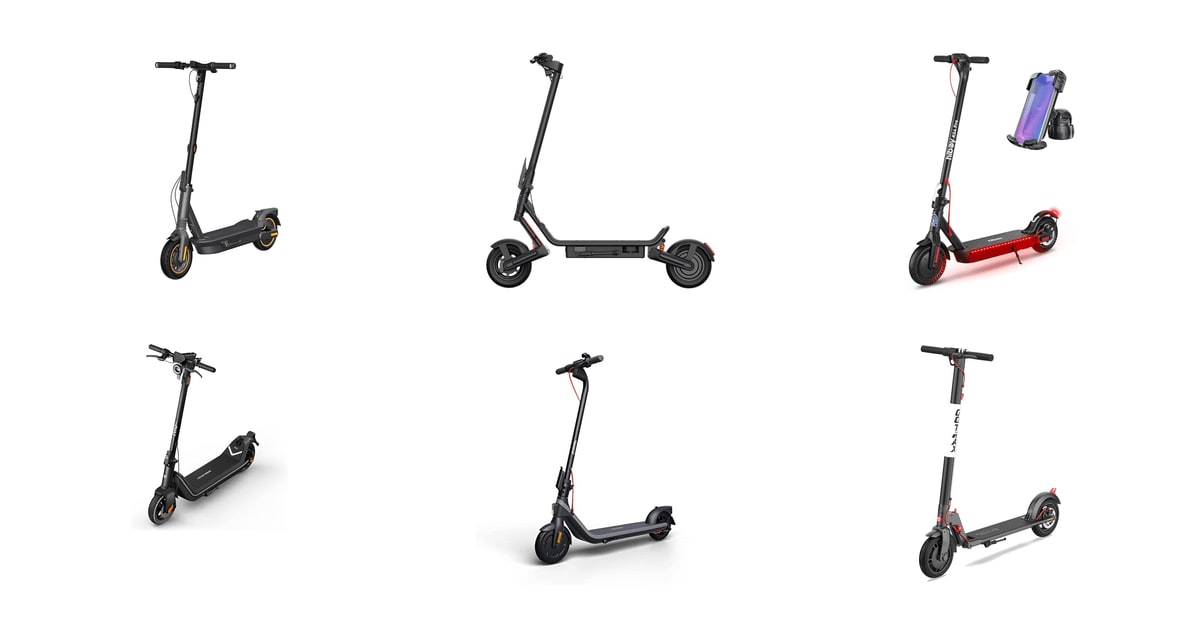
An electric scooter earns its keep on the trips that are too far to walk and too short to drive. Two miles to the train. A mile and a half across campus. The grocery run you'd otherwise skip. What matters on those rides isn't the top speed on the box — it's whether the deck feels stable over a cracked sidewalk seam, whether the brakes stop you when a car turns without looking, and whether you can fold the thing and carry it up a flight of stairs without hating your life.
Here's the honest part: no scooter hits its advertised range. Manufacturers test at low speed, on flat ground, with a light rider and a fresh battery. Ride at full throttle with hills and you'll usually see 60–70% of the claim, sometimes less. Batteries fade too — most quality packs hold 70–80% of their capacity after about 500 charge cycles, which is two to four years of daily commuting. Plan around the real number, not the sticker, and you won't be disappointed.
We also can't ignore safety. The Consumer Product Safety Commission points to UL 2272 certification as the baseline for electrical and fire safety, and its injury data shows head injuries are the most common e-scooter ER visit. Wear a helmet. Check your city's rules — New York, Los Angeles, and Chicago all keep scooters off sidewalks and cap speeds. We think that the Segway Ninebot MAX G2 is the best electric scooter for adults for most people, and that the Apollo Explore is the one to buy if you want more power and suspension for rough roads.
Everything we recommend

The most complete commuter, if you can live with the weight

More power and much better suspension for rough roads

Light enough to carry, with dual suspension and no flats

Simple, light, and easy to ride — but keep the route flat

The lightest way to find out if you'll actually ride one
At a glance
| Product | Range | Motor Power | Price | |
|---|---|---|---|---|
| Segway Ninebot MAX G2 Electric KickScooterTop pick | 43 Miles | 1000W | $999.99 |
| Apollo Explore Off-Road Electric Scooter for AdultsUpgrade pick | 34 Miles | 1650W Peak | $849 |
| Hiboy KS4 Pro Electric ScooterAlso great | 25 Miles | 500W (750W Peak) | $399.98On sale |
 | NIU KQi3 PRO Electric Scooter - BlackAlso consider | 31 Miles | 700W | $299.99On sale |
| Segway Ninebot E2 Plus Electric KickScooter- 300WBudget pick | 15.5 Miles | 300W | $229.99 |
| Gotrax GXL V2 Electric Scooter for AdultAlso great | 12 Miles | 250W | $227On sale |
How we picked
Real-world range. We compared manufacturer range claims against independent range testing and owner reports, and treated 60–70% of the advertised figure as the realistic number. A scooter had to cover a typical 5–7 mile each-way commute at that discounted rate.
Ride comfort. Tire type and suspension drive comfort more than anything else on cracked pavement. We favored 9- or 10-inch tires with real suspension, and treated air-filled or self-healing tires as a meaningful advantage over solid ones.
Weight and folding. Spec sheets told us which scooters clear the roughly 40-pound line where carrying becomes impractical. Anything heavier had to justify itself with range, power, or suspension you can't get otherwise.
Safety certification. We required UL 2272 certification, which the CPSC identifies as the minimum electrical and fire safety standard after a pattern of lithium battery fires in uncertified scooters.
Brakes and support. We looked for dual braking systems in published specs, and we read owner feedback for recurring patterns around warranty response, parts availability, and units arriving damaged.
Top pick
The most complete commuter, if you can live with the weight
Segway Ninebot MAX G2 Electric KickScooter
The MAX G2 pairs a 1000W motor with 10-inch self-healing tires, dual suspension, and traction control — the combination most riders actually need on cracked city streets. It's heavy at 53.5 pounds, but nothing else here covers as many kinds of rides.
$999.99fromAmazonFor everyday commuting, this is the scooter that asks the fewest compromises of you. The 1000W motor pulls to 22 mph without drama, and the 551Wh battery is rated for 43 miles. Segway's own spec sheet and independent range testing tell different stories — expect roughly 28 to 32 miles at a steady 15 mph, and less if you ride flat out. That's still enough for a week of five-mile commutes between charges.
The tires deserve most of the credit for how it rides. They're 10 inches, air-filled, and lined with a self-healing foam that Segway says seals punctures under 4mm. You get the vibration absorption of pneumatic tires — the thing that actually separates a comfortable ride from a jarring one on broken pavement — without the flat-tire tax. Front hydraulic and rear spring suspension handle what the tires don't.
Traction control is the feature you won't think about until the morning you hit a wet manhole cover. It's rare at this level, and it's the kind of thing that quietly keeps a bad moment from becoming a crash. Apple Find My support is a similarly practical touch: if the scooter walks off from a bike rack, you've got a shot at locating it.
Owner feedback skews strongly positive on build and ride quality, and long-term reports from earlier MAX models describe hundreds of miles with minimal battery capacity loss. Segway also runs a real service and warranty operation, which matters more than people expect. When a controller or a brake cable fails on a no-name scooter, you're on your own.
Flaws but not dealbreakers
It's 53.5 pounds. That's fine if you roll it into a garage or an office elevator, but it's genuinely unpleasant to carry up subway stairs or into a third-floor walkup. If your commute involves stairs every day, buy something lighter and accept the shorter range.
The range gap frustrates people. Riders who push the throttle and expect 43 miles routinely report closer to 15 or 20, and that mismatch shows up clearly in owner complaints. It isn't a defect — it's how every manufacturer states range — but going in expecting 30 miles instead of 43 will save you some resentment.
It uses a front drum brake and rear electronic braking rather than dual mechanical discs. Stopping is reliable, but riders coming from disc-brake scooters may find the feel less immediate at speed.
Upgrade pick
More power and much better suspension for rough roads
Apollo Explore Off-Road Electric Scooter for Adults
The Apollo Explore runs a 1650W peak motor, triple spring suspension, and tubeless 9-inch tires with six inches of ground clearance. It's the one to buy if your route includes steep hills, gravel, or pavement bad enough to rattle your teeth.
$849fromAmazonThe Explore is built for terrain that punishes normal commuter scooters. Three spring shocks — two rear, one front — plus concealed airflow suspension and six inches of ground clearance mean you can ride a gravel shoulder or a road with frost heaves and not feel every inch of it. Owners riding gravel and dirt describe it as unusually composed for a scooter this size.
Power is the other reason to step up. The 1650W peak output pushes it to 28 mph and Apollo rates it for 34 miles in Eco mode, which in practice means somewhere in the mid-20s at a normal riding pace. Riders around 200 pounds report it climbing steep hills without bogging down — the thing single-motor 500W commuters struggle with most.
The details are more thought-through than the category norm. There's 360-degree lighting with turn signals, a dot-matrix display, an app that adjusts acceleration and regenerative braking, and an IP66 water rating that's stronger than most. The tubeless tires resist punctures. And despite the specs, it folds in about three seconds.
Apollo's Amazon presence is newer and the review pool is small, so treat the volume of praise cautiously. What comes through consistently, though, is the unboxing-to-riding experience: complete tool kits, clear instructions, tight assembly. One reviewer in his seventies with no scooter experience found it easy to ride the first time out, which says something about stability.
Flaws but not dealbreakers
Weight is the real cost. Apollo's listing says 49 pounds and the shipping spec says 60 — either way, it's the heaviest scooter here and not something you'll carry far. Folded, it goes in a car trunk fine. Up a stairwell, less so.
At least one owner reported a pinched brake cable and assembly damage out of the box. With a smaller review pool, it's hard to know how common that is, so inspect the brakes and cabling carefully before your first ride.
Twenty-eight miles per hour is faster than most U.S. cities allow. You'll be riding within legal limits for most of your commute anyway, which makes the top speed more of a hill-climbing reserve than something you'll actually use.
Also greatOn sale
Light enough to carry, with dual suspension and no flats
Hiboy KS4 Pro Electric Scooter
The Hiboy KS4 Pro is about 31 pounds with a 500W motor, dual shock absorption, and 10-inch honeycomb tires that can't go flat. It's the sensible pick if you carry your scooter as often as you ride it.
$399.98fromAmazonList priceWeight is the spec that most last-mile commuters underestimate. Anything past 40 pounds stops being portable in any real sense. The KS4 Pro comes in around 31 pounds by Amazon's listing, and that difference is the whole argument — you can fold it, carry it onto a bus, and set it under a desk without a production.
It doesn't cut the comfort features to get there. You get adjustable dual shock absorption front and rear, plus 10-inch honeycomb tires, which is unusual at this weight. The 500W motor peaks at 750W and tops out near 19 mph, with a 25-mile claimed range — figure high teens in real use. That covers a five- to seven-mile commute each way with margin.
The braking setup is smarter than the price suggests. A rear disc brake engages alongside front regenerative anti-lock braking, so stopping force gets distributed instead of dumped onto one wheel. Owners around 200 pounds report it feels stable and adequately powered, including with light cargo.
Honeycomb tires are the trade-off worth understanding. They can't puncture, which eliminates the single most common scooter repair, but solid and foam-filled tires transmit more road buzz than air-filled ones. The dual suspension compensates for a lot of that. On smooth bike lanes you won't notice; on badly broken pavement you will.
Flaws but not dealbreakers
Honeycomb tires ride firmer than pneumatic ones. If your route is all cracked sidewalk and pothole patches, the MAX G2's air-filled tires are noticeably more forgiving.
Hiboy's after-sale support draws mixed owner feedback. Some describe helpful pre-purchase help; others report slow or unhelpful responses on warranty issues, and at least one unit arrived dead on delivery. Test everything within your return window.
The listing states 30.9 pounds in one spec field and 38.5 pounds in a bullet, which is a frustrating discrepancy on the number that matters most for a portable scooter.
Budget pick
Simple, light, and easy to ride — but keep the route flat
Segway Ninebot E2 Plus Electric KickScooter- 300W
The Segway Ninebot E2 Plus is a 300W, 15.5 mph scooter weighing about 32 pounds, with automotive-grade steel construction and UL 2272 certification. It's the one to buy if you're new to scooters and your rides are short and mostly level.
$229.99fromAmazonFirst-time buyers usually don't need 22 mph or 40 miles. They need something that turns on, rides predictably, and doesn't feel like a science project. The E2 Plus is that. It arrives nearly assembled — click the stem into the base and go — and the controls are simple enough that riders of any skill level get comfortable within a block or two.
Segway's reliability infrastructure is the quiet reason to pick this over a generic budget scooter. It's UL 2272 certified, which the CPSC treats as the minimum electrical and fire safety threshold given the lithium battery fire risk in uncertified units. Segway also built it from automotive-grade steel and rates it for 3,000 km of durability testing. The companion app and warranty network are real.
The 15.5-mile range is honest for what this is. Owners describe five-mile commutes each way on a single charge, which lines up. At 15.5 mph you're within the speed cap in most U.S. cities, so you're not buying performance you legally can't use. The 8.1-inch shock-absorbing tires smooth out ordinary pavement.
At roughly 32 pounds it sits in the carryable range, and the folding mechanism is straightforward. For a campus, a flat neighborhood, or a short hop to a transit stop, this is enough scooter.
Flaws but not dealbreakers
Hills are its weakness, and owners are blunt about it. The 300W motor struggles on even moderate inclines, sometimes requiring a kick to get going. If your route has any real grade, skip this one entirely.
Braking is the other soft spot. It uses an electronic drum brake, and several owners describe stopping power as merely adequate rather than confidence-inspiring.
Customer service complaints show up in owner feedback, particularly around warranty claims on multi-unit purchases. Segway's network exists, but reaching it isn't always smooth.
Also greatOn sale
The lightest way to find out if you'll actually ride one
Gotrax GXL V2 Electric Scooter for Adult
The Gotrax GXL V2 weighs 27 pounds, tops out at 15.5 mph, and goes about 12 miles on a charge. It's the most widely owned entry-level adult scooter in the U.S., and it's a low-commitment way to test whether a scooter fits your life.
$227fromAmazonList priceTwenty-seven pounds is genuinely light. You can carry it one-handed up a stairwell, slide it into a trunk, or tuck it beside a desk. If your commute is a mile from the train to the office, portability beats every other spec, and nothing else here is easier to pick up.
This is also the most road-proven scooter in the lineup by a wide margin. Gotrax has sold the GXL V2 through Walmart, Target, and Amazon for years, and the accumulated owner feedback on Amazon runs into the thousands. That volume is useful evidence: the failure modes are known, parts are available, and owners consistently describe it as easy to repair yourself.
The spec sheet is modest and that's the point. A 250W motor, 15.5 mph top speed, 12 miles of range, 220-pound capacity, and UL 2272 certification. Solid honeycomb tires mean no flats and no pump. Cruise control makes longer flat stretches less tiring. For occasional riding or a short flat commute, that's a complete package.
Owner feedback skews toward people who weren't sure a scooter was for them — commuters in their fifties, students, parents buying for teens — and who found it approachable. If you're not certain you'll ride enough to justify a bigger purchase, starting here costs you far less than starting at the top.
Flaws but not dealbreakers
The 250W motor runs out of enthusiasm with a heavier rider or a hill. Around 190 to 200 pounds, owners report noticeably slower acceleration and reduced range — closer to 10 miles than 12.
Weight distribution sits toward the rear, which makes the folded scooter more awkward to balance in your hand than the raw 27-pound figure suggests.
Some owners report the tires arriving underinflated despite the solid-tire description, and the cruise control engaging at times riders didn't expect. Learn how to disable it before you ride in traffic.
Who this is for
This guide is for adults buying a scooter to actually get somewhere — a commute of a few miles, a campus crossing, the gap between a bus stop and an office. If that's you, the picks here will cover the ride comfortably. It's also for recreational riders who want something stable and comfortable for weekend loops, and for heavier riders, who should skip the 250W and 300W options and start with the MAX G2 or the Apollo Explore.
It isn't for everyone. If you need 45 or more real miles per charge, none of these will do it — you're shopping for a much larger battery than anything in this lineup. If you carry a scooter up stairs twice a day, buy the lightest thing that covers your distance and forget about top speed. And we're covering standing kick-style commuter scooters only, not seated models, mopeds, or freestyle trick scooters.
How we picked
Real-world range: we discounted every manufacturer claim to roughly 60–70% and checked that the result still covered a normal commute. Ride comfort: tire size and type plus suspension matter more than any other comfort spec, so we favored larger air-filled or self-healing tires with front and rear damping. Weight: anything over about 40 pounds stops being portable, so heavier scooters had to earn it with power or range. Safety: UL 2272 certification was non-negotiable, following CPSC guidance on lithium battery fire risk. Brakes and support: we wanted dual braking systems and a manufacturer that answers the phone, and we read owner feedback for patterns in warranty response and shipping damage.
Other electric scooters for adults worth considering
If you want NFC unlock and triple braking in a lighter package: The NIU KQi3 PRO Electric Scooter - Black ($299.99) — The NIU KQi3 Pro is a well-regarded scooter on paper — a 700W rated motor, 20 mph top speed, up to 31 miles of claimed range, and a genuinely thorough braking setup with front and rear mechanical discs plus an electric brake. NIU's app and hardware polish are real. The catch is what's available here: the listing that keeps surfacing is a refurbished unit, and owner feedback on it is rough. People report missing screws and chargers, beat-up boxes, scraped decks, and units that needed a second shipment to get right. The riders who received a clean one are happy with it and describe strong torque even at 240 pounds. But that's a gamble, and it's the reason this isn't a pick rather than anything wrong with the scooter itself.
The competition
This is what our research surfaced, not a census of the category. New scooters launch constantly and plenty of good ones — particularly direct-to-consumer models that never hit Amazon — aren't represented here. What follows is the one remaining scooter we looked at closely and where it landed.
Care and maintenance
Battery habits determine how long your scooter stays useful. Most quality packs hold 70–80% of their capacity after roughly 500 full charge cycles, which is two to four years of daily commuting. You'll stretch that by avoiding the extremes — don't leave it plugged in at 100% for days, and don't store it fully drained over winter. Around half charge is the sweet spot for long storage, ideally somewhere that isn't a freezing garage. Beyond the battery, check tire pressure weekly if you're on air-filled tires, and squeeze both brake levers before every ride to confirm the cables haven't stretched. Keep the folding latch clean and snug; a loose stem is the most common source of that unnerving wobble at speed. Wipe road salt off the frame and don't pressure-wash anything, whatever the IP rating says.
Questions we get
How far can an electric scooter realistically go on one charge?
Plan on 60–70% of the advertised range. Manufacturers test at low speed, on flat ground, with a light rider, so a scooter rated for 43 miles typically returns something closer to 28–32 at a steady 15 mph. Ride at full throttle, up hills, or in cold weather and it drops further. Your weight matters too — heavier riders should discount the claim more aggressively.
Are electric scooters street legal, and do I need a license?
Rules vary by city and state, and you generally don't need a license for a standard e-scooter. New York, Los Angeles, and Chicago all require riding in bike lanes or on roads rather than sidewalks, and each caps speeds somewhere between 15 and 20 mph. Fines apply for violations. Check your local transportation department before you buy, especially if you're considering a scooter that goes faster than your city allows.
What does UL 2272 certification mean, and does it matter?
UL 2272 is an electrical and fire safety standard covering the battery, charging system, and wiring. The CPSC recommends it as the minimum threshold for personal e-scooters after a pattern of lithium battery fires and thermal runaway in uncertified units. It's the one spec we'd treat as non-negotiable. Every scooter we picked here carries it.
Is it safe to ride an electric scooter in the rain?
Light rain is fine on a scooter rated IPX4 or better, and higher ratings like IP66 handle more. What changes is traction, not the electronics — wet paint lines, metal plates, and leaves are where riders go down. Slow down, brake earlier, and avoid standing water deep enough to reach the motor hub. No scooter is meant to be submerged, regardless of rating.
Do I really need a helmet?
Yes. CPSC injury surveillance data consistently shows head injuries as the most common type of e-scooter emergency room visit, making up roughly a quarter to a third of cases across annual reports. Helmet laws vary by jurisdiction and many places only require them for minors. Wear one anyway — a scooter puts you at road speed with nothing between you and the pavement.
What's the difference between single-motor and dual-motor scooters?
A single motor drives one wheel and is plenty for flat commuting; a typical 500W single-motor scooter handles grades in the 15–20% range. Dual motors drive both wheels, which helps enormously on steep hills and for heavier riders — high-output setups are rated for grades up to about 35%. The cost is weight, price, and shorter range, since two motors drain the battery faster. Most commuters don't need one.
Why you should trust us
For this guide:
- We read manufacturer specification sheets for every scooter here and compared the stated range, motor output, tire type, and weight figures against each other.
- We reviewed published range testing and buying guidance from independent e-scooter reviewers, along with CPSC safety and injury data on lithium batteries and head injuries.
- We read owner feedback for each listing looking for recurring themes — range shortfalls, shipping damage, hill-climbing complaints, and warranty response — rather than individual opinions.
- We read owner reviews on every listing, weighted toward the critical ones, because that is where the recurring failures show up.
- We have a systematic way of automatically fetching the latest prices, so the numbers on this page stay current.
- This is a research-focused guide, so the team may not own every product listed — though we often do own the top winners, which gives us extra context for the recommendations.
- We don't accept free products, and the retailer commission never changes which product we recommend.
Sources
Best Electric Scooters — Wirecutter (NY Times), Wirecutter
Best Electric Scooters for Adults — CNET, CNET
Best Electric Scooters 2026 — TechRadar, TechRadar
Best Electric Scooters — Tom's Guide, Tom's Guide
Electric Scooter Buying Guide & Reviews — Electrek, Electrek
Electric Scooter In-Depth Reviews — Electric Scooter Guide, Electric Scooter Guide
E-Scooter Safety Guidance and UL 2272 Certification — U.S. CPSC, U.S. Consumer Product Safety Commission
E-Scooter Emergency Department Data — CPSC National Electronic Injury Surveillance System, CPSC NEISS
Global Electric Scooter Market Statistics — Statista, Statista
Segway Ninebot MAX G2 Official Specifications, Segway
Apollo Phantom and Apollo City Pro Specifications, Apollo Scooters
Niu KQi3 Pro Official Product Page, Niu Technologies
Amazon product listings and owner reviews for all 6 products
Manufacturer specification pages for each product
Some passages in this guide may be paraphrased with AI help. Prices are refreshed automatically.
More like this.
Continue exploring lifestyle reviews and recommendations.

The Best Knee Scooters for Foot Injuries
A broken foot changes your whole day. Crutches sound simple until you've used them for a week, and then your armpits ache, your wrists throb, and you…

The Best Mobility Scooters for Seniors
A mobility scooter earns its keep in small moments. You get to the far end of the grocery store without hunting for a bench. You join the family walk…

The Best Graphic Novels for Adults
Graphic novels ask something different of you than prose does. You read a page in a minute and then sit with it for five, because the drawing carried a…

The Best Weighted Blankets for Adults
A weighted blanket works by pressing down on you the way a firm hug does. That pressure, which therapists call deep pressure stimulation, seems to quiet…

The Best Bento Lunch Boxes for Adults
A lunch box has one job: get your food to work in the same shape it left your kitchen. That sounds simple until the dressing finds a seam and soaks the…

The Best Young Adult Fantasy Book Sets
A boxed fantasy series is a commitment, and not just a shelf-space one. You're signing up for weeks of reading, a cast you'll live with, and a world…