The Best Mobility Scooters for Seniors
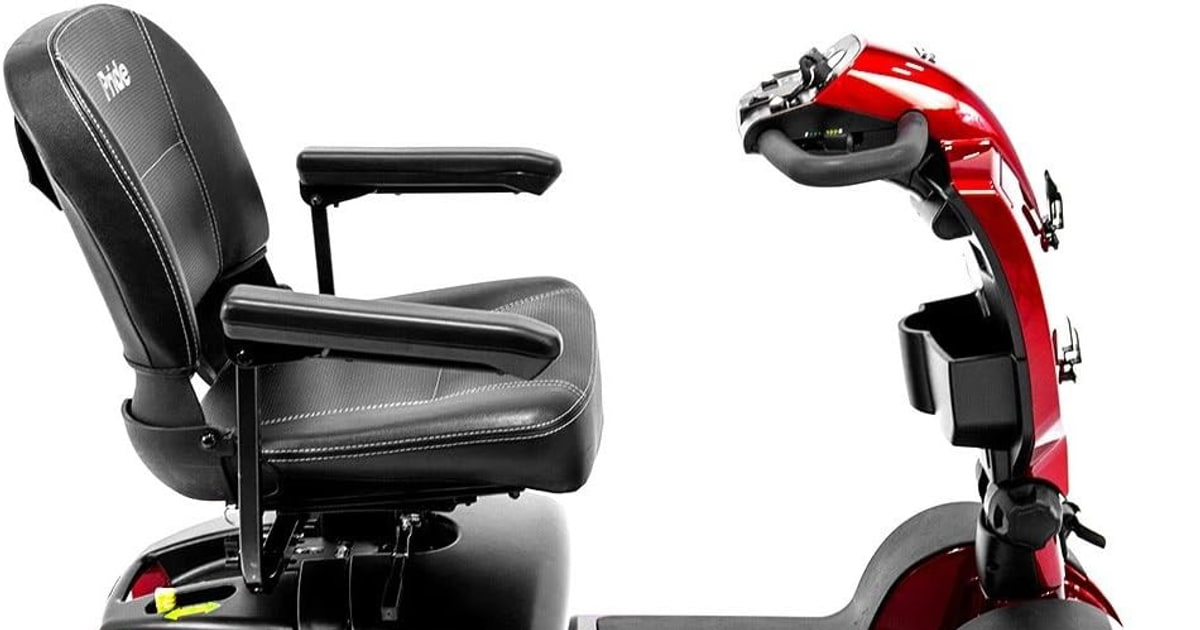
A mobility scooter earns its keep in small moments. You get to the far end of the grocery store without hunting for a bench. You join the family walk instead of waving from the porch. What separates a good scooter from a frustrating one is rarely top speed. It's whether the seat swivels far enough for you to stand up easily, whether the tiller sits where your arms want it, and whether somebody can lift the heaviest piece into a trunk without help. Those details decide whether you'll actually use it.
Here's the honest part. No scooter does everything. The ones light enough to travel with have small batteries, low ground clearance and a short range. The ones that glide over cracked sidewalks are heavy, and they tend to stay in the garage between outings. Range claims come from flat ground, mild weather and a lighter rider, so plan on less than the box promises. And every scooter struggles somewhere: curbs, thick carpet, gravel, steep driveways. Pick the compromise that matches where you actually go.
So start with your week, not the spec sheet. Count how often you head out, how far you travel, and who loads the scooter into the car. If a caregiver does the lifting, the weight of the single heaviest piece matters more than anything else on the page. If you mostly roll around a neighborhood, range and suspension matter more. We think that the Drive Medical Scout Compact is the best mobility scooter for seniors for most people, and that the Vive 4 Wheel Mobility Scooter is the one to buy if you want a lighter machine with a folding tiller and a simpler four-piece breakdown.
Everything we recommend

A steady four-wheel ride that still splits into five liftable pieces

Lighter to load, with a wide padded seat and a folding tiller

Longer range and real suspension, if you ride outdoors a lot

Folds itself with a key fob and clears airline battery rules
Prices as of Oct 24, 6:27 AM PT · Details
At a glance
| Product | Wheels | Range per charge | Price | |
|---|---|---|---|---|
| Drive Medical Scout Compact Travel Power ScooterTop pick | — | Up to 9 miles | $849 |
| Vive 4 Wheel Mobility Scooter - ElectricRunner-up | — | — | $624.99 |
| Golden Technologies Buzzaround EX Extreme GB148 -Upgrade pick | — | 18 miles | $1,963 |
 | Victory 10.2 Red Pride Mobility 4-Wheel ElectricAlso in lineup | — | — | $3,049 |
| EV RIDER Transport AF Plus Automatic FoldingAlso great | — | Up to 10 miles | $2,250 |
 | drive Drive Phoenix 4-Wheel Heavy Duty MedicalAlso consider | — | — | $1,445 |
Prices as of Oct 24, 6:27 AM PT · Details
How we picked
Stability first. We favored wide four-wheel bases and anti-tip designs, since the CDC reports that about one in four adults over 65 falls each year. Spec sheets had to show a stable stance, not just a light frame.
The heaviest piece. We looked for published disassembly weights, because a caregiver lifts one section at a time. A heaviest piece around 30 pounds or less earned real credit.
Range you can plan around. We compared manufacturer range ratings and discounted them, since those numbers assume flat ground and a lighter rider. Nine miles handles errands; eighteen changes what a full day out looks like.
Seat and controls. We prioritized swivel seats, fold-down backrests, adjustable armrests and adjustable tillers, drawing on listing specifications and recurring owner feedback about standing up and reaching the controls.
Service and parts. We leaned toward brands with established dealer networks and available replacement parts, because a scooter nobody local will repair turns into furniture.
Top pick
A steady four-wheel ride that still splits into five liftable pieces
Drive Medical Scout Compact Travel Power Scooter
This is the scooter we'd point most people toward: four wheels for stability, a swivel seat that makes standing up easier, and a five-piece breakdown for the trunk. Drive rates its 12Ah battery for up to nine miles, which covers a store run and a lap of the neighborhood.
$849fromAmazonPrices as of Oct 24, 6:27 AM PT · Details
Four wheels are the safer default for most people. A three-wheeler turns tighter, but a four-wheel base is much harder to tip on a sloped driveway or a broken sidewalk seam. That matters. The CDC reports that about one in four adults over 65 falls each year, and a scooter should shrink that risk, not add to it. The Scout still steers well enough for wide store aisles and most kitchens.
Getting out of a scooter is where a lot of people struggle. The Scout's seat swivels and the backrest folds down, so you can turn your knees toward open floor before you stand instead of squeezing sideways past the tiller. The armrests slide outward to widen the seat, and seat height adjusts. If you have a hip that doesn't like twisting, those small adjustments matter more than the motor does.
Drive says the Scout separates into five pieces for the trunk. That's the number to ask about, because you never lift all 110 pounds at once. Owner feedback consistently flags the rear drive section as the awkward one, and a caregiver with a cranky back may want a second pair of hands the first few times. After that, loading it becomes routine.
The adjustable tiller is a bigger deal than it sounds. If the steering column sits at the wrong angle, your shoulders take the strain on every single trip, and eventually you stop taking trips. The Scout's tiller angle changes without tools, so you set it once and forget it. The controls stay simple too: a variable speed dial, a forward-reverse switch, a headlight and a horn.
Flaws but not dealbreakers
Nine miles of rated range is fine for errands and thin for a day at a fair or a long boardwalk. Manufacturers measure range on flat ground with a light rider, so treat that figure as a ceiling. If you regularly cover more ground than that, step up to a scooter with a bigger battery.
The Scout isn't a rough-terrain machine either. Grass, gravel and steep curb cuts are where small wheels and modest clearance show up. The listing also doesn't state a weight capacity, so if you're near the upper end of what compact travel scooters handle, ask the seller before you order.
Runner-up
Lighter to load, with a wide padded seat and a folding tiller
Vive 4 Wheel Mobility Scooter - Electric
The Vive weighs less than most four-wheel scooters and breaks into four pieces, with a 29-pound rear section as the heaviest lift. A wide padded seat, a folding tiller and a plain control panel make it an easy first scooter for someone who's never owned one.
$624.99fromAmazonPrices as of Oct 24, 6:27 AM PT · Details
The heaviest piece is the number that decides everything. Vive lists the rear section at 29 pounds, and that's what a spouse or an adult child actually picks up. Total scooter weight tells you almost nothing about trunk loading. At 88 pounds all in, the Vive is also easier to shove through a doorway by hand on the day somebody forgets to charge it.
The tiller folds flat instead of coming off, so there's one less part to misplace in the garage. The seat lifts away, the rear section separates, and the pieces stack in a sedan trunk. If you drive a car rather than an SUV, that folding tiller is the difference between a five-minute load and a wrestling match in the parking lot.
Vive rates the scooter for riders up to 265 pounds, with a 15.75-inch padded seat and backrest. That's a sensible fit for most average-frame riders, with a little headroom left over. Leave yourself that buffer on purpose. Riding right at a scooter's rated limit wears the motor and batteries faster, and it makes every hill feel steeper than it is.
The control panel is about as plain as they come. A speed dial, forward and reverse, a headlight and a horn all sit under your thumbs on the tiller. If arthritis makes fiddly buttons hard, that simplicity is the feature, not a shortcoming. The seat swivels too, so you can turn toward the curb before you stand up.
Flaws but not dealbreakers
The 265-pound capacity is the lowest among our picks, so larger riders should look at a heavy-duty model instead. Vive doesn't publish a range figure in this listing either, which makes a long outing harder to plan. Owner feedback tends to cluster around battery life over time rather than the ride itself, so keep the charging routine strict and expect to replace batteries eventually.
Four wheels also means a wider turning circle. In a narrow apartment hallway or a bathroom doorway, you'll be doing three-point turns.
Upgrade pick
Longer range and real suspension, if you ride outdoors a lot
Golden Technologies Buzzaround EX Extreme GB148 -
Golden rates the Buzzaround EX Extreme for an 18-mile range and 5 mph, with front and rear suspension underneath. If your outings run longer than a grocery run, this is the scooter that stops turning every trip into a range calculation.
$1,963fromAmazonPrices as of Oct 24, 6:27 AM PT · Details
Range is the upgrade you feel first. Golden lists 18 miles on the extended pack, roughly double what compact travel scooters manage. That changes what you plan. A farmers market, an afternoon at the zoo, a long stretch with the grandkids and a stop on the way home all fit inside one charge, with margin left for a hill you didn't see coming. You stop rationing trips.
Front and rear suspension is the other reason to spend more. Cracked sidewalks, driveway aprons and gravel shoulders send a jolt straight up your spine on an unsprung scooter. Suspension takes the edge off that. If you have back or hip pain and you ride for more than a few minutes at a stretch, it's the difference between arriving comfortable and arriving sore.
At 5 mph, the EX Extreme runs a touch quicker than most scooters, which AARP notes typically cap around 4 to 4.25 mph on purpose. That's sidewalk speed, not road speed, and the cap is a safety choice rather than a limitation of the motor. The extra bit helps you keep pace with a walking companion outdoors. You'll want to dial it back indoors.
The tradeoff is bulk. Golden says the scooter disassembles, and it does, but this is a bigger, heavier machine than the Scout or the Vive, and the pieces reflect that. If a caregiver loads it into a sedan alone every week, look hard at the Vive instead. If it lives in a garage and rolls into a van or up a ramp, the size costs you nothing.
Flaws but not dealbreakers
Golden doesn't state a weight capacity in this listing, and the long-range figure applies to the extended battery pack, so confirm which pack ships with your order before you buy. Range ratings also assume flat ground and mild weather. Cold mornings, hills and a heavier rider will all eat into that 18 miles.
There's less published owner feedback on this model than on the mass-market scooters, so you're leaning harder on Golden's own specifications. Golden's long track record and dealer network are what make us comfortable recommending it anyway.
Also great
Folds itself with a key fob and clears airline battery rules
EV RIDER Transport AF Plus Automatic Folding
The Transport AF+ folds and unfolds on its own when you press a key fob, then stands as one 49-pound piece you can roll like a suitcase. Its 11.5 Ah lithium battery is rated for up to 10 miles, and EV Rider sells it as approved for airline and cruise travel.
$2,250fromAmazonPrices as of Oct 24, 6:27 AM PT · Details
No disassembly is the whole point. Every other scooter here asks you to pull the seat, split the frame and lift sections in the right order. The AF+ folds itself when you press the fob, and then you wheel it. If you fly a few times a year, or if nobody in the car can lift 30 pounds overhead into a trunk, that one feature outweighs range and cushioning.
Air travel is the reason this scooter exists. TSA allows mobility scooters through security checkpoints and generally lets you stay in yours until boarding. Batteries follow separate rules, though. The FAA generally wants lithium packs in mobility devices under 300 watt-hours to fly without special approval, and every airline layers its own paperwork on top. Call yours well before the trip and ask what they need.
Dual front wheels are a recent change and a welcome one. A single front wheel on a narrow folding frame feels twitchy as you pick up speed, and folding scooters sit low to begin with. The paired wheels steady the front end without widening the scooter much, so it still tucks into a hotel elevator or a cruise cabin doorway.
Ten miles of rated range from a pack this small is respectable. Lithium is also why the whole scooter weighs 49 pounds. Comparable lead-acid packs run roughly twice as heavy, which is exactly why travel scooters have shifted to lithium in recent generations. An actuator lock keeps the frame from folding while you're sitting on it, which is reassuring the first time you ride it.
Flaws but not dealbreakers
This is a travel scooter, and it rides like one. Small wheels, a firm seat and low ground clearance make it pleasant on smooth pavement and miserable on gravel, thick grass or a rutted parking lot. It's not what you want for daily neighborhood miles.
The folding mechanism is a motor plus hinges, which is more to go wrong than a frame that simply pulls apart. And the seat is a bench rather than a captain's chair, so an hour of sitting gets tiring.
Who this is for
Buy a scooter if walking distance is what's shrinking your week. If the grocery store, the church parking lot or the family reunion has started feeling too far, that's the problem a scooter solves. These machines suit people who can still walk short distances, stand up on their own and steer with one hand. If you can't sit upright without support, can't manage a tiller, or need help transferring in and out of a seat, a power wheelchair is the better conversation to have with your doctor.
This guide covers scooters sold for personal use by adults, from compact travel models to full-size four-wheel machines and one heavy-duty option. It doesn't cover power wheelchairs, walkers and rollators, or the rental scooters you find at theme parks and airports. We also don't recommend replacement batteries or parts here, though a couple turned up in the lineup and we've flagged them as such.
How we picked
Stability: we favored wide four-wheel bases and anti-tip wheels over the tightest possible turning radius, because a fall is the risk that matters most. Lifting: we tracked the weight of the heaviest single piece after disassembly rather than total scooter weight, since that's what a caregiver actually picks up. Range: we compared published range ratings and treated them as ceilings, not promises, because they assume flat ground and a light rider. Seat and controls: swivel seats, fold-down backrests and adjustable tillers and armrests carried real weight, since they decide whether you can get on and off comfortably. Service: we leaned toward brands with dealer networks and parts you can actually order.
Other mobility scooters for seniors worth considering
If you want more weight capacity and a wider seat: The drive Drive Phoenix 4-Wheel Heavy Duty Medical — The Phoenix carries riders up to 350 pounds on a 20-inch seat, which is where our picks run out of room. It's a four-wheel scooter with quick-connect batteries, flat-free tires, anti-tip wheels, a USB charging port and a five-year warranty that Drive says covers the batteries too. That battery coverage is unusual and worth something. What you give up is portability. It disassembles, but the sections are bigger than the Scout's, and this is a garage-and-ramp scooter more than a trunk scooter. Bariatric models go higher still, up to roughly 500 pounds, so if you need capacity beyond 350 you'll want to keep looking past this one.
The competition
This is what our research surfaced, not a survey of everything sold. Mobility scooters move through local dealers as much as through online listings, and model names repeat across generations, so a scooter we don't mention here isn't necessarily one we'd steer you away from.
The Victory 10.2 Red Pride Mobility 4-Wheel Electric — The Pride Victory 10.2 is a full-size four-wheel scooter with an 18-inch seat, LED headlights, a low-mounted pathway light, a tiller cup holder and a USB charging port. It's a comfortable neighborhood cruiser, and Pride's service network is among the easiest to reach when something breaks. Two things kept it out of our picks. This listing warns of a long lead time before the scooter ships, which is hard to plan around when mobility is the whole reason you're buying. And it's a full-size machine on standard U1 batteries, so it lives in a garage rather than a trunk. If you have the storage, a ramp or a lift, and you want the plushest ride here, it's worth a look.
Care and maintenance
Batteries fail first on almost every scooter, and how you charge them decides how long they last. Plug it in after every real outing instead of waiting for the gauge to drop, and leave it on the charger overnight if the manual tells you to. If the scooter sits unused for weeks, charge it monthly anyway, because lead-acid packs die from sitting empty. Keep grit out of the tires, check that the seat post pin is fully seated before you climb on, and wipe salt and road film off the frame after wet rides. When your familiar routes start draining the battery noticeably faster, that's the pack telling you it's near the end, not the motor giving up.
Questions we get
Does Medicare pay for a mobility scooter?
Medicare Part B can cover up to 80% of the cost as durable medical equipment once you've met your annual deductible. A doctor has to certify that the scooter is medically necessary, and you have to buy through an approved supplier. The National Institute on Aging notes that a prescription or Certificate of Medical Necessity is typically required before any insurer reimburses a dime. Start with your doctor, not with the checkout page.
What's the difference between a 3-wheel and a 4-wheel mobility scooter?
A three-wheel scooter turns tighter, which makes it easier to get around furniture and down narrow hallways. A four-wheel scooter trades some of that turning radius for a wider, steadier base outdoors and on uneven ground, according to the National Council on Aging. If you'll spend most of your time indoors, three wheels often fits better. If you're outside on sidewalks and driveways, go with four.
Can you take a mobility scooter on a plane?
Usually, yes. TSA allows mobility scooters through security checkpoints and generally lets you stay in yours until boarding. Batteries are the catch. The FAA generally wants lithium packs used in mobility devices under 300 watt-hours to fly without special approval, and each airline adds its own paperwork on top of that. Call your airline well before the trip and ask exactly what they need.
How far can a mobility scooter go on one charge?
Compact travel scooters typically claim somewhere around 9 to 10 miles, while larger scooters with extended packs claim closer to 18 or 19. Treat those as best-case figures. Manufacturers measure on flat ground with a light rider and a full charge, so hills, cold weather, a heavier rider and stop-and-go riding all cut into it. Plan on meaningfully less than the printed number.
How much weight can a mobility scooter hold?
Standard travel scooters generally handle 250 to 300 pounds. Heavy-duty and bariatric models go up to roughly 500 pounds on reinforced frames with wider seats. Choose a capacity with a buffer above your actual weight rather than one that barely clears it. Riding at the limit strains the motor and batteries, and every hill feels worse.
What's the best mobility scooter for indoor apartment use?
Look at turning radius and overall width first, not range. Three-wheel scooters turn tighter, and a folding tiller lets you park in a corner instead of blocking a hallway. The scooters we recommend here all lean toward outdoor stability, which means they need more room for a U-turn, so measure your tightest doorway before you order. If your building has thick carpet, ask about ground clearance too.
Why you should trust us
For this guide:
- We compared manufacturer specifications for every scooter here, focusing on disassembly weight, rated range, seat adjustment and stated weight capacity.
- We read published guidance from the CDC, Medicare, the FAA, TSA, AARP and the National Council on Aging on fall risk, coverage rules and air travel with mobility devices.
- We reviewed recurring themes in owner feedback around battery life, trunk loading and seat comfort rather than leaning on any single account.
- We read owner reviews on every listing, weighted toward the critical ones, because that is where the recurring failures show up.
- We have a systematic way of automatically fetching the latest prices, so the numbers on this page stay current.
- This is a research-focused guide, so the team may not own every product listed — though we often do own the top winners, which gives us extra context for the recommendations.
- We don't accept free products, and the retailer commission never changes which product we recommend.
Sources
Mobility Scooters: Medicare Coverage Rules, Medicare.gov
Older Adult Falls Data and Statistics, CDC
How to Choose a Mobility Scooter, National Institute on Aging
Mobility Aids for Older Adults: What to Know, National Council on Aging
Choosing the Right Mobility Scooter, Verywell Health
Traveling with a Mobility Scooter: TSA and Airline Rules, TSA
Battery Regulations for Air Travel (Lithium Batteries), FAA
Pride Go-Go Elite Traveller Plus Specifications, Pride Mobility (manufacturer)
Golden Technologies Buzzaround Scooter Line, Golden Technologies (manufacturer)
Drive Medical Scooter Product Line, Drive Medical (manufacturer)
Consumer Reports Buying Guide: Mobility Scooters, Consumer Reports
AARP Guide to Choosing a Mobility Scooter, AARP
Amazon product listings and owner reviews for all 6 products
Manufacturer specification pages for each product
Some passages in this guide may be paraphrased with AI help.
Product prices and availability are accurate as of the date/time indicated and are subject to change. Any price and availability information displayed on Amazon.com at the time of purchase will apply to the purchase of this product.
More like this.
Continue exploring health reviews and recommendations.

The Best Knee Scooters for Foot Injuries
A broken foot changes your whole day. Crutches sound simple until you've used them for a week, and then your armpits ache, your wrists throb, and you…

The Best Magnifying Glasses for Seniors
Small print stops being a minor annoyance somewhere around 60. Pill bottles, insurance letters, the ingredient list on a soup can - they all start…

The Best Reacher Grabbers for Seniors
A reacher grabber earns its keep by the number of times you don't have to bend down. The dropped sock, the can on the top shelf, the remote that slid…

The Best Shower Chairs for Seniors
A shower chair is one of the simplest safety upgrades you can make to a home, and one of the few that changes a daily routine immediately. Standing on wet…

The Best Electric Scooters for Adults
An electric scooter earns its keep on the trips that are too far to walk and too short to drive. Two miles to the train. A mile and a half across campus.…

The Best Compression Socks for Circulation
If you're on your feet for twelve hours, or wedged into a middle seat for nine, your calves are doing a lot of quiet work. Compression socks help with…