The Best Reacher Grabbers for Seniors
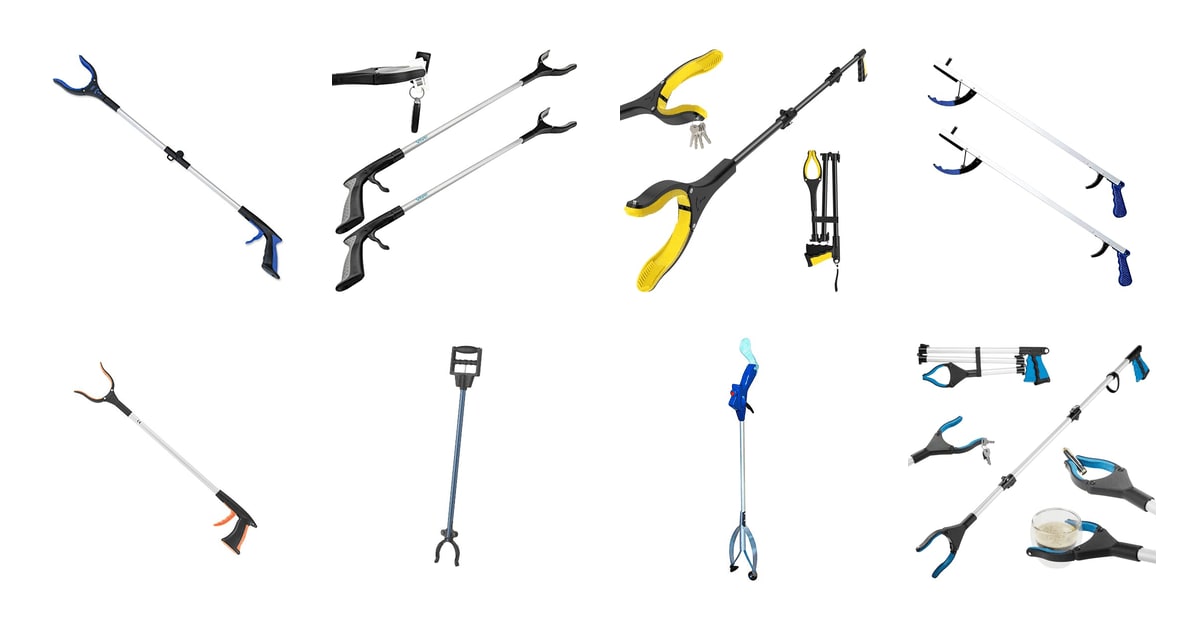
A reacher grabber earns its keep by the number of times you don't have to bend down. The dropped sock, the can on the top shelf, the remote that slid under the couch — each one is a small chance to lose your balance. A good reacher takes those chances off the table. And because you'll reach for it a dozen times a day, the small stuff matters: how heavy it feels in a tired arm, how hard you have to squeeze, whether the jaw lines up with the thing you're after.
Here's the honest part. No reacher does everything. The one model here that locks shut doesn't spin a full circle. The ones that fold have a joint that flexes when you lift something awkward. The extra-long ones let you grab off the floor without leaning, but they're clumsy in a bathroom or a narrow hall. Magnetic tips are genuinely useful for pills, coins and keys, and several otherwise strong models simply don't have one. You're choosing a compromise, not finding a perfect tool.
So start with your body and your rooms. Your height sets the length you need, your grip strength sets the trigger you want, and where you'll use it decides whether folding matters. Most people land somewhere in the low-30-inch range with a rotating jaw and a rubberized grip surface. We think that the Vive Reacher Grabber Tool is the best reacher grabber for seniors for most people, and that the Carex Ultra Grabber is the one to buy if arthritis or hand weakness makes holding a squeeze painful.
Everything we recommend

A rotating jaw and steel guts, for daily use in every room
It locks shut, so you don't have to keep squeezing
Folds down small, and the trigger asks little of your hand

No joints, no wobble — steady help while you're healing
At a glance
| Product | Reach Length | Jaw/Grip Type | Price | |
|---|---|---|---|---|
| RMS 34 Inch Extra Long Reacher GrabberBudget pick | 34 in | Rotating Jaw | $8.98On sale |
| Vive Reacher Grabber Tool - 32" ExtraTop pick | 32 in | 360° Rotating Jaw | $32.99 |
 | 44 Inch Extra Long Grabber Reacher Tool,FoldableAlso consider | 44 in | 360° Rotating Jaw | $9.99 |
| Blue Jay 32" Reacher Grabber Tool forAlso great | 32 in | Magnetic Tip & Wide Jaw | $29.95 |
 | Drive Medical Handy Grabber Reaching AidAlso in lineup | 28 in | — | $15.71On sale |
 | Medline 31" Reacher Grabber Tool with 5Also consider | 31 in | — | $20.21 |
| Carex Health Brands Ultra Grabber Reaching AidRunner-up | 32 in | 90° Rotating Arm | $35.16 |
 | Jmlxiaoya Upgraded 43 Inch Grabber Reacher ToolAlso in lineup | 43 in | Rubberized Jaw | $8.49On sale |
How we picked
Reach that fits you. We compared listed lengths against the height guidance published in occupational therapy sources, which puts most average-height adults in the 30-to-34-inch range for standing floor pickup. Anything that forces a forward lean defeats the purpose, so short models had to earn their place another way.
Trigger and grip effort. We read specs and owner feedback for how much hand strength each design demands, favoring full-hand and pistol-style triggers over two-finger squeezes. A locking tab counted heavily, because it removes sustained pressure entirely.
Jaw design. We looked for openings of at least three inches, a non-slip rubberized surface, and rotation — ideally a full circle. Owners repeatedly report smooth bottles and glasses slipping from bare plastic claws, so coating wasn't optional.
Build and failure points. Spec sheets told us which models use steel cable internals versus plastic, and which use a one-piece shaft versus a folding joint. Cable stretch and joint flex are the two failures owners describe most often after months of use.
Weight and storage. Listed weights and folded dimensions decided how a tool fits into a real day — whether it's light enough for a weak arm twenty times over, and small enough to keep where you'll need it.
Top pick
A rotating jaw and steel guts, for daily use in every room
Vive Reacher Grabber Tool - 32" Extra
The Vive is a 32-inch reacher with a jaw that turns a full circle and a rubberized grip that holds slick bottles. It comes two to a box, so you can leave one by the bed and one in the kitchen instead of hunting for it.
$32.99fromAmazonThe rotating jaw is what you'll notice on day one. It turns a full 360 degrees in quarter turns, so you can set it flat to slide under a magazine or upright to pinch a bottle. Most grabbers make you twist your whole arm to match the object. This one doesn't. Over twenty or thirty grabs a day, that's a lot of shoulder movement you skip.
The internals are built for the way cheap grabbers die. The usual failure isn't the jaw — it's the cable inside stretching or snapping under load. Vive specifies sautered steel wiring meant to survive tens of thousands of pickups, with a five-pound lifting rating. That's enough for a full soup can, a big sport bottle, or a folded towel, which covers nearly everything you'd pick up in a day.
Two grabbers solve a problem one grabber creates. The reacher you need is always in the other room. With a pair, you keep one at the bedside and one in the kitchen, or hand the second to a caregiver. If you've ever balanced on a chair because the grabber was upstairs, you already understand why this matters more than any spec.
The jaw coating and frame handle the messy jobs. An anti-slip rubberized surface grips glass and smooth plastic, which is where bare plastic claws tend to let go. The frame is rust-proof, so the laundry room, the patio and the garden are all fair game. It's also the reacher you'll be happiest using on things you'd rather not touch with your hands.
Flaws but not dealbreakers
There's no locking trigger, and that's a real gap. You hold the squeeze the entire time you're carrying something. Walk a shirt from the dryer to the basket and your hand works the whole way. If arthritis or post-stroke weakness makes sustained pressure hard, the Carex below is the better buy even though it gives up some jaw rotation.
At 32 inches, tall users will still lean forward. If you're much over 5-foot-10 and you want to grab something off the floor from a standing position without bending at all, this isn't long enough. You'd want something in the 43-inch range instead — with the trade-off that it's awkward indoors.
The Vive is backed by a one-year guarantee.
Runner-up
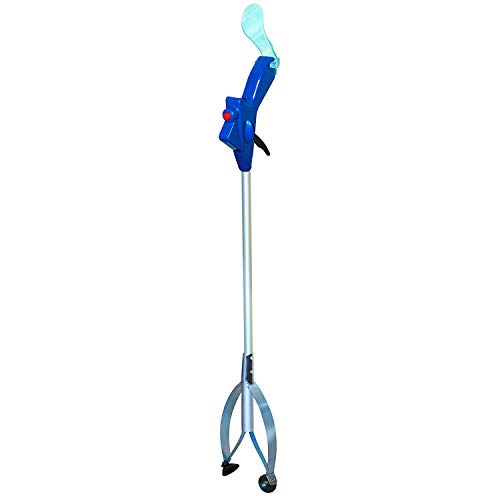
It locks shut, so you don't have to keep squeezing
Carex Health Brands Ultra Grabber Reaching Aid
The Carex is a 32-inch reacher with a locking tab that holds the jaw closed on its own, plus a wrist support and an arm that rotates a quarter turn. If your hands tire fast or cramp, that lock changes what you can do by yourself.
$35.16fromAmazonThe locking tab is the rarest useful feature in this whole category. Close the jaw on a garment, flip the lock, and walk. No sustained squeeze, no grip fading halfway across the room, no dropped shirt on the hallway floor. For laundry, carrying mail, or moving anything more than a few steps, it's the difference between doing the task yourself and asking someone.
The wrist support takes load off a weak hand. Carex designed this one around people whose strength has dropped — after a stroke, with arthritis, or just with age. The support braces your wrist so the effort spreads back into your forearm instead of concentrating in your fingers. If you've noticed your grip giving out before your arm does, that's the part to pay attention to.
The arm rotates 90 degrees, which covers the two angles you actually need. You can come at an object from above, like a can on the floor, or from below, like something on a high shelf. It's not the full circle the Vive gives you. But those two positions handle the bulk of ordinary household grabs.
Carex has been making over-the-counter home health aids for decades, and you can find them in person. Their products sit on shelves at the big pharmacy chains. If you like being able to hold a tool before you buy it, or replace it locally next year without waiting on shipping, that availability counts for something.
Flaws but not dealbreakers
Quarter-turn rotation means you'll still reposition the whole tool sometimes. Anything at an odd angle — a pen wedged against a baseboard, a sock draped over a shoe — takes some arm-twisting the Vive wouldn't ask for. It's a small tax, paid repeatedly.
There's no magnetic tip. Pills, coins, keys and screws are too small for any jaw to close around, and this one leaves you without a backup plan for them. If dropped medication is a regular event in your house, look at the Blue Jay instead.
The design is plain and dated-looking. That's cosmetic, and the engineering underneath is sound. Still, next to the newer consumer-brand grabbers, it looks like something from a hospital supply closet — because that's roughly what it is.
Budget pickOn sale
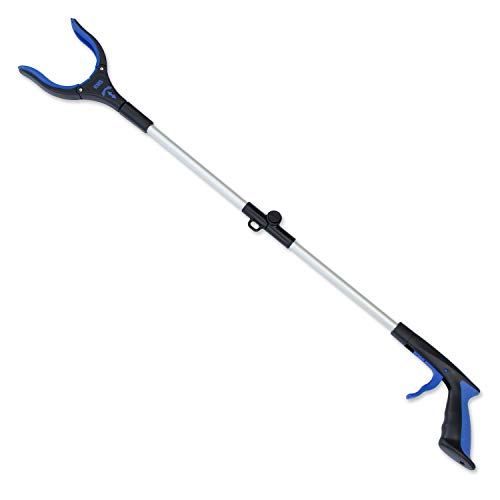
Folds down small, and the trigger asks little of your hand
RMS 34 Inch Extra Long Reacher Grabber
The RMS folds in half for a nightstand drawer, a car door pocket or a wheelchair bag, and it reaches 34 inches when open. The full-hand trigger spreads the squeeze across four fingers, which helps a lot if your hands ache.
$8.98fromAmazonList priceFolding is the feature that gets this one used. A rigid 34-inch stick has to lean in a corner somewhere. This one collapses to half its length, so it rides in a car door, tucks into a walker bag, or sits in a drawer next to the bed. The reacher you can bring with you is worth more than the sturdier one you leave at home.
The full-hand trigger is easier on sore fingers than a two-finger squeeze. Cheaper grabbers load all the work onto your index and middle finger, and those two get tired fast. Wrapping your whole hand around the trigger spreads the same force across four. If you have mild arthritis and you're not ready to spend more, that's the design detail that matters most.
Thirty-four inches is a genuinely useful length. It's a couple of inches past the common 32-inch standard and well past the short 28-inch models, which is enough for most average-height adults to lift something off the floor without leaning at the waist. That forward lean is exactly the movement a reacher is supposed to prevent.
The jaw rotates and the internals are steel cable. You get a rotating rubberized head for lining up on odd angles, plus a steel cable inside rather than a plastic one, which is the part most likely to stretch out over time. For a budget tool, that's an unusually sensible place to spend the money.
Flaws but not dealbreakers
No magnetic tip, and you'll miss it. Dropped pills, coins and keys are the exact items a jaw can't close around, and this one leaves you stuck. If that happens weekly in your house, spend up for the Blue Jay or one of the long magnetic models.
The folding joint flexes under an awkward load. Lift a full bottle at an angle and you'll feel a little give in the middle. It's fine for everyday grabs and not a dealbreaker, but the joint is a stress point, and it's why we wouldn't pick a folder for the heaviest lifting.
There's no lock on the trigger. Carrying something across a room means holding the squeeze the whole way.
Also great
No joints, no wobble — steady help while you're healing
Blue Jay 32" Reacher Grabber Tool for
The Blue Jay uses a one-piece aluminum shaft, so there's no folding joint to flex when you lift a jar or a full glass. It has a magnetic tip for dropped pills and keys, and it comes as a pair for a recovery household.
$29.95fromAmazonA one-piece shaft feels different the moment you lift something heavy. There's no joint in the middle, so there's nothing to give. After a hip or knee replacement, when you're already unsteady and cautious about every movement, that rigidity does something a spec sheet can't capture — it makes you trust the tool. Confidence is most of what a recovery aid is for.
The magnetic tip handles what the jaw can't. A dropped pill on a hardwood floor is the classic problem: too small and too flat for any claw to close around, and exactly the thing you shouldn't kneel down for. The magnet picks it up, along with keys, coins and pins. Blue Jay pairs it with a wide, textured rubber-lined jaw for the normal-sized stuff.
It's designed with wheelchair users in mind. Seated, you're farther from the floor than you'd think, and everything on it — the remote, the newspaper, a piece of mail — is out of reach without a dangerous lean. Thirty-two inches with a rigid shaft covers floor-level items and cabinet shelves from a chair without the tool flexing mid-lift.
Two in the box makes sense during recovery. In the first weeks after surgery, walking to another room to fetch the grabber defeats the entire point. Keep one in the bedroom and one where you spend your days. Blue Jay is part of an established medical manufacturing group, so this isn't a no-name pair.
Flaws but not dealbreakers
It doesn't fold, so it doesn't travel. There's no putting this in a drawer, a backpack or a car door pocket. It leans in a corner, which is fine for a home tool and a nuisance for anything else. The rigidity you're buying is exactly what makes it bulky.
The jaw doesn't rotate. Every grab means turning your wrist and arm to match the object's angle instead of just spinning the head. It's a minor thing once per use and an accumulating one at twenty or thirty uses a day, which is why the Vive wins for long-term daily driving.
Who this is for
Buy one if you're recovering from hip, knee or back surgery, if arthritis makes bending painful, if you use a wheelchair or walker, or if you'd simply rather not climb on a chair to reach the top shelf. This guide covers manual reachers for everyday household use — floor pickup, high cabinets, laundry, mail, yard litter. If you're shopping for a discharge kit after surgery, ask your therapist what length they recommend for your height before you order.
It's not for you if you need to lift something genuinely heavy. These tools top out around five pounds, and the frame or the jaw will let go before you get much past that. We don't cover suction-cup reachers, powered grabbers, or the long-handled dressing aids like sock pullers and shoehorns that often come bundled in recovery kits — those solve different problems. And if you have significant vision loss or cognitive impairment, the simplest possible design usually beats the most featured one.
How we picked
Reach: we matched listed lengths to published height guidance, since a reacher that's too short makes you lean forward and puts you right back where you started. Trigger effort: full-hand and pistol grips beat two-finger squeezes because they spread the load across four fingers, and a locking tab beats everything because it removes the squeeze entirely. Jaw: at least three inches of opening, a non-slip rubberized surface, and rotation — a full 360 degrees if we could get it. Build: steel cable internals over plastic, and we noted where a folding joint adds a flex point under load. Weight and storage: light enough for repeated use with a tired arm, and either compact enough to travel or rigid enough to justify staying put.
Other reacher grabbers for seniors worth considering
If you want the longest reach for outdoor work: The 44 Inch Extra Long Grabber Reacher Tool,Foldable ($9.99) — The Ronivante stretches to 44 inches, the longest here by a wide margin, and it still folds down to about 17 inches for storage or clipping to a walker. The jaw opens a full four inches, so thick winter coats, jumbo bottles and bulky packaging are no problem, and it rotates a full circle. Two magnets — one at the jaw, one at the handle end — mean you can grab nails or coins from either direction. What you give up is indoor manners. At nearly four feet, you'll bump walls and furniture in a bathroom or hallway, and fine control at the far end drops off. Think garage, yard and big open rooms.
If you want a hospital-supply brand at a moderate price: The Medline 31" Reacher Grabber Tool with 5 ($20.21) — Medline sells to hospitals, nursing homes and home health agencies at enormous scale, and this 31-inch reacher is built to those plain, functional standards. The full-handgrip trigger uses all four fingers, which is the single best thing you can do for aching hands short of a locking tab, and it's rated to five pounds with slip-resistant rubber tabs over composite jaws. It's light and needs no assembly. The catch is that nothing rotates, so every pickup means turning the whole tool to match the object, and there's no magnet. It also looks like what it is: institutional equipment, not a consumer product.
The competition
These are the reachers our research turned up alongside the picks, not a survey of everything sold. Two didn't make the cut, and both are perfectly usable tools — they just lose to a pick on the things that matter most in daily use.
The Jmlxiaoya Upgraded 43 Inch Grabber Reacher Tool ($8.49) — The Jmlxiaoya Upgraded 43 Inch Grabber packs a surprising amount into a low-cost tool: a head that rotates a full circle, a magnetic tip for screws and keys, an aluminum alloy tube with metal wire inside, and a soft rubber-wrapped handle that's more comfortable than the bare plastic on similar tools. It folds to about 17 inches, too. It loses to our picks on two counts. At 43 inches it's genuinely awkward indoors, and the brand doesn't have much of a track record yet, which matters for a tool you're trusting with your balance. If you're tall, mostly working outdoors, and want rotation plus a magnet without spending much, it's a reasonable buy — and the Ronivante above does much the same job with a wider jaw.
The Drive Medical Handy Grabber Reaching Aid ($15.71) — The Drive Medical Handy Grabber is the name most likely to be handed to you at hospital discharge, and Drive is one of the largest mobility aid makers in the country. The 28-inch aluminum frame is light and the trigger needs only about 12 ounces of pressure to close the jaws, which is genuinely easy on a weak hand. Its simplicity is a real virtue for a first-time user: no rotating head, no locking tab, nothing to learn. But 28 inches is the shortest reach here, and most adults over about 5-foot-4 will bend forward to reach the floor with it — the exact movement you bought a reacher to avoid. There's no rotating jaw and no magnet either. Choose it if brand continuity with your care team matters to you, or if you're seated and mainly reaching nearby surfaces rather than the floor.
Care and maintenance
Wipe the jaw and handle with a damp cloth and mild soap, or a diluted disinfectant if the reacher gets shared. Don't submerge a folding model — water gets into the spring and cable and starts corroding the parts you can't see. For a household in post-surgery mode, 70 percent isopropyl wipes are safe on rubber jaw pads and aluminum frames. Every month or so, check the hinge for play and squeeze the jaw closed on something soft. If the closing force feels weaker than it used to, the spring or the internal cable is stretching, and that's your warning before the tool drops a glass. Keep it out of the rain even if the frame is rust-proof, and store folding models open rather than clamped shut.
Questions we get
Which reacher is best if I have arthritis?
Look for a full-hand or pistol-style trigger, which spreads the squeeze across four fingers instead of loading it onto two. The Carex adds a locking tab, so you can close the jaw and stop squeezing altogether — that's the feature therapists tend to rate highest for arthritis. The Medline's full handgrip is the next best thing if you want a medical-supply brand. Skip two-finger squeeze designs; they tire the index and middle finger fast.
How long a reacher do I need for picking things up off the floor?
Roughly, if you're 5-foot-4 or under, 26 to 28 inches works. From 5-foot-5 to 5-foot-10, aim for 32 to 34 inches. Above 5-foot-10, you'll need something in the 43-to-44-inch range to avoid bending at all. When you're between sizes, go longer — a reacher that's too short makes you lean forward, which is the fall risk you were trying to remove.
Do I need a magnetic tip?
It depends on what you drop. A jaw can't close around a pill, a coin, a key or a screw, so without a magnet those items mean kneeling or asking for help. If dropped medication is a regular occurrence, treat the magnet as a requirement — the Blue Jay, Ronivante and Jmlxiaoya all have one. If not, it's a nice extra you can skip.
How much weight can a reacher hold?
These are rated between about one and five pounds, and the Vive and Medline both specify five. That covers a full soup can, a large water bottle, and light folded laundry. Push past the rating and you risk the jaw slipping or the frame fatiguing — especially on folding models, where the joint is the weak point under sustained load.
Which one should I get after hip or back surgery?
Therapists generally steer recovery patients toward rigid, non-folding shafts, because there's no joint flex to surprise you mid-lift. The Blue Jay fits that description and adds a magnetic tip for dropped pills, which matters when kneeling is off the table. Buy it before your procedure if you can, so it's waiting when you get home.
Will Medicare or my insurance pay for one?
Usually not on its own. Reachers are typically treated as accessories rather than standalone durable medical equipment, so Part B generally won't cover a direct purchase. They're sometimes covered when prescribed as part of a post-surgical rehab plan and billed through a therapy provider. Ask your insurer or occupational therapist, since policies vary by plan and state.
Why you should trust us
For this guide:
- We read the manufacturer specifications and listing details for every reacher here, comparing reach length, jaw opening, rotation, trigger type, rated capacity and frame materials side by side.
- We reviewed published occupational therapy guidance on reach assist devices to set our thresholds for length, trigger force and jaw design.
- We read through owner feedback across these models to find the failure modes people actually run into — cable stretch, joint flex, and jaws that slip on smooth bottles.
- We read owner reviews on every listing, weighted toward the critical ones, because that is where the recurring failures show up.
- We have a systematic way of automatically fetching the latest prices, so the numbers on this page stay current.
- This is a research-focused guide, so the team may not own every product listed — though we often do own the top winners, which gives us extra context for the recommendations.
- We don't accept free products, and the retailer commission never changes which product we recommend.
Sources
Best Reacher Grabbers — Wirecutter (NYT), Wirecutter
Best Reacher Grabbers for Seniors — Healthline, Healthline
Best Reacher Grabbers — Verywell Health, Verywell Health
Best Reacher Grabbers for Seniors — Forbes Health, Forbes Health
Best Reacher Grabbers — Medical News Today, Medical News Today
Falls Among Older Adults: An Overview — Centers for Disease Control and Prevention, CDC
Occupational Therapy Practice Framework: Domain and Process — American Occupational Therapy Association, American Occupational Therapy Association
Medicare Coverage of Durable Medical Equipment — Medicare.gov, Medicare.gov
Amazon product listings and owner reviews for all 8 products
Manufacturer specification pages for each product
Some passages in this guide may be paraphrased with AI help. Prices are refreshed automatically.
More like this.
Continue exploring health reviews and recommendations.

The Best Magnifying Glasses for Seniors
Small print stops being a minor annoyance somewhere around 60. Pill bottles, insurance letters, the ingredient list on a soup can - they all start…

The Best Shower Chairs for Seniors
A shower chair is one of the simplest safety upgrades you can make to a home, and one of the few that changes a daily routine immediately. Standing on wet…

The Best Mobility Scooters for Seniors
A mobility scooter earns its keep in small moments. You get to the far end of the grocery store without hunting for a bench. You join the family walk…

The Best Gifts for Elderly Parents and Seniors
Shopping for a parent in their late seventies is a strange kind of hard. They tell you not to spend money on them. They already own three sweaters they…

The Best Golf Clubs for Beginners
Your first set of golf clubs has one job: get the ball in the air. That sounds simple. It isn't, and it's why beginner clubs look different from the ones…

The Best Smart Home Gym Systems
The pitch for a smart home gym is simple: the equipment is already in your house, so the hardest part of working out - getting there - disappears. That's…