The Best Shower Chairs for Seniors
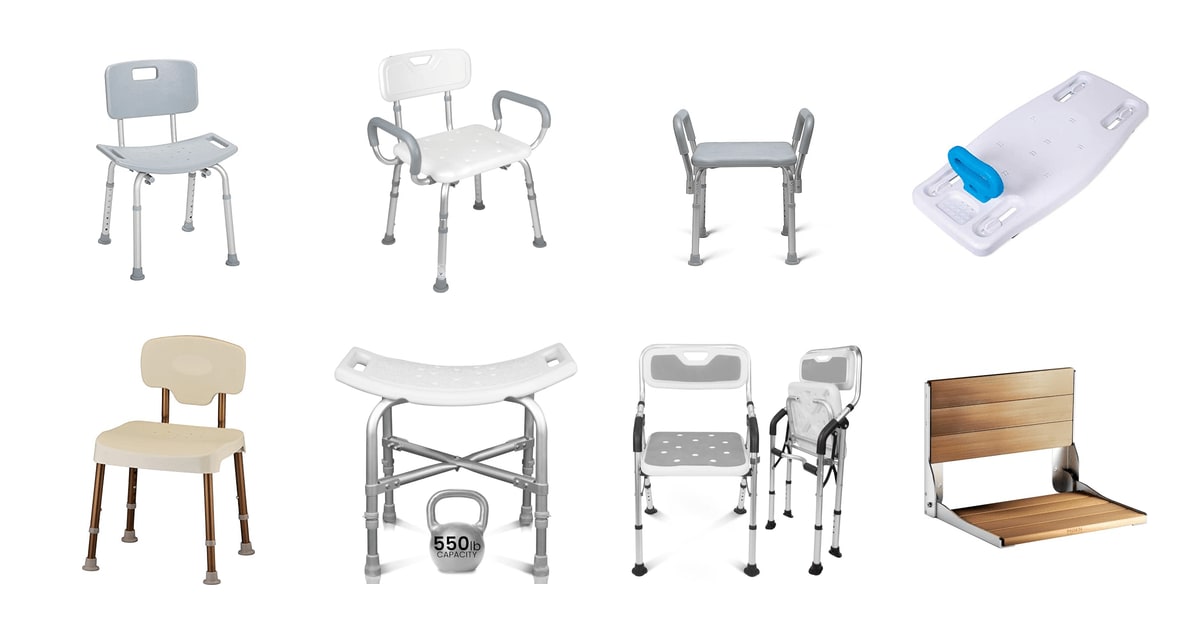
A shower chair is one of the simplest safety upgrades you can make to a home, and one of the few that changes a daily routine immediately. Standing on wet tile while reaching down to wash your feet is where a lot of bathroom falls start. Sitting removes most of that risk. The CDC counts roughly 36 million falls a year among adults 65 and older, and the bathroom is the room where they most often happen. A chair with a back, arms, and rubber feet turns a nervous ten minutes into an ordinary one.
Here's the honest part: no shower chair fixes a bathroom by itself. None of these will stop a slide if you stand up too fast on a soapy floor, and none replace a grab bar bolted into a stud. Assembly is another common frustration — most of these ship as a bag of legs and pins, and even the tool-free ones take a patient half hour the first time. Seat widths also run narrower than the numbers suggest, because armrests eat into the usable space. Measure your shower before you order anything.
We looked at what these chairs are rated for, how they adjust, and what owners say holds up after months of daily use. Weight capacity, seat height range, and whether the feet actually grip mattered most. So did the difference between a chair you sit in and a bench that spans a tub wall, because those solve different problems. We think that the Drive Medical Shower Chair with Back and Suction Feet is the best shower chair for seniors for most people, and that the Vaunn Medical Deluxe Spa Shower Chair is the one to buy if you need armrests to push up from.
Everything we recommend

Light, adjustable, and the one most bathrooms can fit

Padded arms and a 450-pound rating, at the cost of bulk

Folds flat against the wall when you're done with it

A 500-pound rating without a heavy steel frame

Wall-mounted teak that folds up and looks like furniture
At a glance
| Product | Weight Capacity | Weight | Price | |
|---|---|---|---|---|
| Drive Medical Shower Chair with Back andTop pick | 300 lb | 7 lbs | $33.16 |
| Vaunn Medical Deluxe Spa Shower Chair withRunner-up | 450 lbs | 8.5 lbs | $44.99 |
 | Medline Backless Shower Chair with Arms -Also in lineup | 350 lb | 6.29 lbs | $30.79On sale |
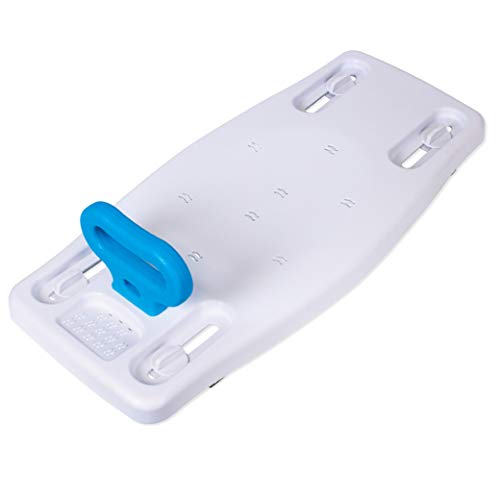 | Carex Portable Shower Bench - Shower BathAlso consider | 300 lbs | 4.6 lbs | $44.22 |
| NOVA Medical Products Bariatric Shower and BathUpgrade pick | 500 lb | 6 lbs | $89.95 |
 | Vive Heavy Duty Bariatric Shower ChairAlso consider | 550 lbs | 7 lbs | $59.99 |
| Vive Shower Chair for Elderly and DisabledAlso great | 300 lbs | — | $89.99 |
| Moen DN7110 Home Care Fold-Down Shower ChairAlso great | 400 lbs | — | $228.95 |
How we picked
Weight capacity. We compared manufacturer ratings against frame construction, and treated anything under 300 pounds as unsuitable for a general recommendation. For bariatric picks we looked for reinforced frames rated to 400 pounds or more, since published guidance is clear that users above 300 pounds should never rely on a standard-capacity chair.
Height and fit. We favored chairs adjustable within the ADA seat range of 17 to 19 inches, ideally with room above and below for taller and shorter users. Seat width and overall footprint mattered too, because owner feedback shows the most common regret is a chair that doesn't fit the tub.
Grip and stability. Non-slip rubber feet were a requirement, not a bonus. We read owner reports for the specific complaint of a chair shifting on wet tile, and weighted suction-cup designs lower because they only seal on smooth surfaces.
Rust resistance. Aluminum frames survive years of daily wet use better than painted steel, so we prioritized anodized or rust-proof aluminum. Teak earns a place for the same reason — it resists moisture and mildew without sealants.
Assembly and handling. Tool-free assembly and a light frame make a chair something a caregiver can actually manage. We looked for push-button or snap-pin legs rather than screw hardware, and read owner accounts of how long setup really took.
Top pick
Light, adjustable, and the one most bathrooms can fit
Drive Medical Shower Chair with Back and
This is the plain aluminum chair you've probably seen in a relative's shower, and it earns that ubiquity. It holds 300 pounds, adjusts by push-button in one-inch steps, and weighs about seven pounds, so a caregiver can lift it in and out with one hand.
$33.16fromAmazonFor most seniors, this is the chair to start with. It does the three things that matter and skips the rest. The back is removable, so you can run it as a full chair or a backless stool depending on how much support you need that month. The seat is contoured and has drainage holes, so you're not sitting in a puddle. And at seven pounds, you can move it out of the way when someone else needs the shower.
Height adjustment is push-button, which matters more than it sounds. Arthritic hands don't do well with screw pins, and this releases with thumb pressure. Owners recovering from broken legs and femur fractures consistently mention getting the height right on the first try. If you're tall, set it high; if you're five-two and your feet dangle, drop it. Just make sure all four legs land on the same notch — an uneven set is how a chair wobbles.
The 19.5-inch seat is wide for a chair this light, and that's the trade-off Drive Medical got right. You get room to shift and wash without a frame that dominates a small stall. Owners with roughly four-by-three shower stalls report it fits against the wall with space left over. In a standard tub it's tighter, and a few buyers have found it too wide for their tub entirely.
Drive Medical is the default in this category for a reason — it's the volume seller, which means replacement parts and instructions are easy to find, and home health aides already know how it goes together. That's worth something when a physical therapist walks into your bathroom and needs to adjust it without a manual.
Flaws but not dealbreakers
The suction feet are the weak point. They grip acrylic and smooth tile well enough, but on textured shower floors or a non-skid tub bottom they don't seal, and the chair can shift. If your floor has any texture, treat this as a chair with rubber feet rather than a suction-locked one, and go slowly when sitting down.
Assembly hardware isn't always packaged cleanly. Owners have opened the box to find loose washers rattling around and one or two missing. It's a minor annoyance if you have a junk drawer, and a real problem if you don't. Count the parts against the diagram before you start.
There are no armrests. If you need something to push down on to stand up, this isn't your chair — go to the Vaunn instead.
Runner-up
Padded arms and a 450-pound rating, at the cost of bulk
Vaunn Medical Deluxe Spa Shower Chair with
The Vaunn adds what the Drive Medical leaves out: padded armrests you can push up from, plus a 450-pound capacity from an anodized aluminum frame. It's the better choice for anyone with weak legs or grip, as long as your shower has the room.
$44.99fromAmazonArmrests are the single biggest safety upgrade in this category. Standing up from a seated position is where balance fails, and having something solid to press down on changes the odds. If you have arthritis, Parkinson's, or you're a few weeks out from a knee replacement, this is the feature worth paying for. The pads also mean your forearms aren't resting on cold bare aluminum.
It's rated to 450 pounds, which is well past what most standard chairs claim, and the anodized aluminum won't rust the way steel does in a wet room. Owners consistently describe it as not wobbling, which is the specific complaint that sinks cheaper chairs. Both the back and the armrests come off if you want a wider, more open seat — a nice bit of flexibility as someone's needs change.
Tool-free assembly is genuine here. Owners routinely report getting it together in under half an hour, several in under ten minutes, working from illustrated instructions. Do it before the surgery, not after. One buyer with a small tub found the whole process easy but the finished chair a tight squeeze — which brings us to the real catch.
The footprint is 20 inches wide, and with the arms attached this is a big object in a small room. In a roomy walk-in it's ideal. In a standard tub it fits, barely, and you'll be climbing over the arm to get in. Measure the inside width of your tub before you commit.
Flaws but not dealbreakers
It's the bulkiest chair among our picks. In a narrow tub the armrests make entry awkward, and caregivers who need to reach in from outside the shower will find the arms in the way. Several owners with smaller bathrooms wish they'd sized down.
At 8.5 pounds with the back on, it's heavier than the Drive Medical and less pleasant to move daily. If it's living in the shower full-time that doesn't matter. If you're stowing it between uses, it will get old.
Also great
Folds flat against the wall when you're done with it
Vive Shower Chair for Elderly and Disabled
This Vive chair folds down to about 12 inches deep, so it can hang on a hook or lean behind the door instead of squatting in your shower all week. It holds 300 pounds and has foam padding, arms, and a back.
$89.99fromAmazonIf you share a bathroom, the folding hinge is the whole point. A rigid chair in a small stall means everyone else in the house showers around it. This one collapses in a few seconds and tucks away, and owners who are caregivers describe folding it against the wall mid-shower rather than hauling it out entirely. That's a small daily convenience that adds up over months.
It doesn't feel like a compromise for folding. The frame is oxidized aluminum, rated to 300 pounds, with large non-slip rubber feet and adjustable legs. Owners repeatedly use the word sturdy, and a few mention they expected wobble from a folding design and didn't find it. The foam padding on the seat takes pressure off the thighs and lower back, which matters if you sit for a long shower.
It's also the pick to take on a trip. At around 12.75 inches folded it slides into a car trunk without disassembly, so a week at a rental or an adult child's house doesn't mean showering standing up. Vive also lists this as HSA and FSA eligible, which is a practical way to reduce what you actually pay.
Flaws but not dealbreakers
Folding mechanisms are one more thing to maintain. Hinges in a wet room need rinsing and occasional attention, and a chair that folds will never feel quite as monolithic as a fixed-leg frame. Nobody reports failures, but it's the part to keep an eye on.
The 300-pound capacity is the lowest among our picks. If the user is anywhere near that, choose the Vaunn or the NOVA instead — capacity ratings are not a place to round up.
Upgrade pick
A 500-pound rating without a heavy steel frame
NOVA Medical Products Bariatric Shower and Bath
The NOVA is rated for 500 pounds while weighing about six pounds itself, thanks to molded plastic and rust-proof aluminum. It has a contoured back, drainage holes, and push-button legs that adjust from 16.5 to 20.5 inches.
$89.95fromAmazonIf the user is over 300 pounds, a standard chair is not an option. Bariatric frames use thicker tubing and reinforced joints that ordinary chairs don't have, and exceeding a stated limit is exactly how a chair folds at the worst moment. The NOVA gets to 500 pounds without becoming a heavy steel object you can't move, which is unusual.
The seat is 17 inches wide and 14.75 deep, with a slight contour in both the seat and back. That's a real seat, not a perch. Larger owners describe feeling secure on it after being nervous on other chairs, and the almond-and-bronze color scheme is at least less clinical than white plastic. It's a small thing, but people live with these for years.
Assembly is tool-free and takes minutes, and the whole chair breaks back down just as fast — useful if you're moving it between bathrooms or packing it for a trip. The push-button legs adjust in even increments, and the instructions are explicit that all four must match. Follow that. Most of the wobble complaints on chairs like this trace back to mismatched legs.
Flaws but not dealbreakers
Not everyone gets a rock-solid result. At least one owner reported noticeable wobble with a 220-pound user until the legs were dropped to the lowest setting, which suggests assembly precision and floor flatness matter a lot here. Check every leg and every pin before first use, and test it with a hand on a grab bar.
The review history on this listing is thin compared with the big sellers, so there's less long-term owner feedback to draw on than for the Drive Medical or Vaunn.
Also great
Wall-mounted teak that folds up and looks like furniture
Moen DN7110 Home Care Fold-Down Shower Chair
The Moen DN7110 bolts to the studs and folds flat against the wall, with a teak seat on a stainless and aluminum frame. It's ADA compliant, holds 400 pounds, and takes up no floor space at all.
$228.95fromAmazonThis is the chair for a bathroom you're renovating rather than adapting. It mounts to the wall, so there are no legs to slip and no chair to move — you fold it down when you need it and up when you don't. For a curbless walk-in shower where a freestanding chair would slide around, a mounted seat solves the problem permanently. It's also ADA compliant, which matters if you're building to code.
Teak is the right material for a wet room. Dense tropical hardwood resists moisture, mold, and mildew without chemical sealants, and a teak seat can last a decade or more with occasional oiling. It's also warmer to sit on than plastic in a cold bathroom, and it doesn't read as medical equipment. Several owners note oiling theirs before installation to keep the color.
Installation is the trade-off, and it's a real one. You need to find studs behind tile and drive the provided screws into them; Moen sets the bracket at standard 16-inch spacing to help. Owners describe it as manageable but fussy, with locating the studs as the hard part. Triple-check your seat height before you drill, because you get one shot at it.
Flaws but not dealbreakers
It's permanent. Once it's on the wall it can't move to another bathroom, travel with you, or be returned to a rental in original condition. If your situation is temporary — a six-week recovery from surgery — this is the wrong purchase.
The fold mechanism is stiff, especially when new. Owners describe it as taking a firm hand, which is arguably good for safety but not ideal for someone with weak grip. If the user can't operate it alone, a caregiver will need to fold it down each time.
It's the most expensive option here by a wide margin, and it requires either DIY comfort with a stud finder and a tile bit or paying someone to install it.
Moen backs this chair with a lifetime limited warranty.
Who this is for
Buy a shower chair if standing through a shower is tiring, if you're steadying yourself on a towel bar, or if you're heading into hip or knee surgery and want the bathroom sorted before you get home. This guide is written for seniors aging in place and for the adult children and caregivers who usually do the actual shopping. It also covers post-surgical recovery, and chronic conditions like arthritis, Parkinson's, MS, and stroke recovery where balance and grip are unreliable.
It's not for everyone. If you can't step over a tub wall at all, a chair inside the tub won't help — you need a transfer bench that spans the wall, and we cover one below. If the user can't sit down or stand up without physical help, seating alone isn't the answer; talk to an occupational therapist about the whole bathroom. We also don't cover grab bars, non-slip mats, or handheld shower heads here, though a chair works best alongside all three. One more thing worth asking your doctor: shower chairs can qualify as durable medical equipment under Medicare Part B with a physician's order for a specific condition, which can cut what you pay out of pocket.
How we picked
We built this guide from manufacturer specifications, published buying guides, and themes in owner feedback, weighing five things. Weight capacity: we matched stated ratings to frame construction and treated 300 pounds as the floor for a general pick, with reinforced bariatric frames for anyone above that. Height and fit: adjustability spanning the ADA range of 17 to 19 inches, plus a footprint that survives a standard tub. Grip and stability: rubber non-slip feet as a hard requirement, with suction cups treated as a bonus rather than a substitute. Rust resistance: anodized aluminum or teak over painted steel, because a shower chair lives in permanent humidity. Assembly and handling: tool-free legs and a frame light enough that a caregiver can lift it with one hand.
Other shower chairs for seniors worth considering
If you can't step over the tub wall: The Carex Portable Shower Bench - Shower Bath ($44.22) — The Carex Portable Shower Bench is a different tool from everything above. It rests across the rim of the tub, so you sit down on the outside and swing your legs over rather than lifting them over a wall while standing. For someone six weeks out from a hip replacement, that's the difference between showering and sponge-bathing. It adjusts to tub widths from 19 to 28 inches, weighs under five pounds, and packs easily for a hotel. What you give up is height: the seat sits low relative to a proper transfer bench with legs, and some owners with significant mobility limits found they still couldn't get down to it. Check the geometry against your own tub before buying.
If you want the highest capacity available: The Vive Heavy Duty Bariatric Shower Chair ($59.99) — The Vive Heavy Duty Bariatric chair is rated to 550 pounds — the highest number in this lineup — on extra-thick anodized aluminum, with four anti-slip rubber tips and a 16-to-21-inch height range. Owners describe it as genuinely wide and stable, and one used it in a narrow tub without trouble. It lost to the NOVA on two counts: it's a backless stool, so there's nothing to lean against, and assembly draws more complaints, including a center bracket screw that doesn't always tighten down. Vive's lifetime guarantee softens that. If you need the extra capacity and don't need a backrest, it's a fair pick.
The competition
This is what our research surfaced on Amazon, not a census of the whole category. Medical supply retailers and DME providers stock chairs you won't find here, and an occupational therapist may recommend something specific to a diagnosis. What follows is the one product from our lineup that didn't make a pick.
The Medline Backless Shower Chair with Arms - ($30.79) — The Medline Backless Shower Chair with Arms is a solid, cheap stool with padded armrests, a 350-pound capacity, and legs that adjust an inch at a time from 16 to 21 inches. Owners like it — a 94-year-old's daughter called out how few chairs come with real handles. It lost to our picks on one thing: there's no back. For a senior with poor balance, a backrest is a meaningful part of staying upright, and armrests alone don't replace it. The seat is also narrow at 16 inches wide and 13.5 deep, which is snug for larger users. But if the person showering has decent trunk control, wants arms to push up from, and needs the chair to stay compact, this is a reasonable buy — several owners in small showers specifically praise the size.
Care and installation notes
Assemble the chair before you need it, not the night you come home from surgery. Count the hardware against the parts diagram first, since missing washers are a common complaint, and set all four legs to the same notch — mismatched legs are the number one cause of wobble. Once it's in the shower, wipe the seat and legs down weekly with soapy water and rinse the drainage holes, because soap scum breeds mildew fast in a warm bathroom. Pull the rubber feet off every couple of months and clean underneath them; grit trapped there is what makes a chair slide. Teak seats want a light coat of teak oil once or twice a year to keep the wood from graying and drying out. And check the leg pins and armrest bolts every few weeks — vibration and daily use loosen them slowly, and you'd rather find it with your hand than with your weight.
Questions we get
What's the difference between a shower chair and a tub transfer bench?
A shower chair sits entirely inside the shower or tub, so you have to step over the tub wall to reach it. A transfer bench spans the wall, with two legs outside the tub and two inside, so you sit down on the outside and slide across. If lifting a leg over the tub rim while standing is difficult or unsafe, you need a bench, not a chair.
Are shower chairs covered by Medicare?
Sometimes. Shower chairs can be classified as durable medical equipment under Medicare Part B when a physician prescribes one for a specific medical condition. If it's approved, you're typically responsible for 20% of the Medicare-approved amount after your annual deductible. Ask your doctor's office to write the order and check with your plan before you buy, since coverage isn't automatic.
What weight capacity do I need for a 275-pound user?
Look for at least 350 pounds, not 300. Stated capacities are static ratings, and real use involves shifting, leaning, and dropping into the seat, all of which load the frame harder than sitting still. The Vaunn at 450 pounds or the NOVA at 500 gives you real margin. Never exceed a stated limit.
How do I stop a shower chair from sliding on wet tile?
Start by checking that all four rubber feet are actually on and clean — grit and soap film underneath them kill the grip. Make sure all four legs are set to the same height so the chair sits flat. Suction feet only seal on smooth surfaces; on textured floors they do almost nothing, so don't rely on them. A non-slip mat under the chair helps, and a grab bar within reach matters more than any of this.
What height should the chair be set at?
The ADA range of 17 to 19 inches suits most adults. The practical test is simple: sit down and see whether your feet rest flat on the floor with your knees at roughly a right angle. If your feet dangle, go lower. If standing up feels like a deep squat, go higher. For a five-foot-two user, the low end of the range is usually right.
Is a teak chair worth it over plastic?
Only if you're renovating or you'll be living with it for years. Teak naturally resists moisture, mold, and mildew without sealants and can last a decade or more with occasional oiling, and it looks like furniture rather than hospital equipment. But a plastic-and-aluminum chair does the safety job just as well for a fraction of the cost. For a temporary recovery, buy the aluminum one.
Why you should trust us
For this guide:
- We compared manufacturer specifications for every chair in this guide, including stated weight capacities, seat dimensions, height adjustment ranges, and frame materials.
- We read published buying guidance from health and medical publications alongside ADA seat-height standards and CDC fall-prevention data to set our thresholds.
- We reviewed owner feedback across each listing for recurring themes — assembly problems, wobble, fit in standard tubs, and how the feet behave on wet floors.
- We read owner reviews on every listing, weighted toward the critical ones, because that is where the recurring failures show up.
- We have a systematic way of automatically fetching the latest prices, so the numbers on this page stay current.
- This is a research-focused guide, so the team may not own every product listed — though we often do own the top winners, which gives us extra context for the recommendations.
- We don't accept free products, and the retailer commission never changes which product we recommend.
Sources
Important Facts About Falls — CDC Injury Center, CDC (Centers for Disease Control and Prevention)
Get the Facts on Falls Prevention — NCOA, NCOA (National Council on Aging)
Bathroom Safety for Older Adults — AARP, AARP
Best Shower Chairs — Wirecutter (NYT), Wirecutter
Shower Chair Buying Guide — Healthline, Healthline
Durable Medical Equipment Coverage — Medicare.gov, Medicare.gov
ADA Standards for Accessible Design — U.S. Access Board, U.S. Access Board
Fall Prevention for Older Adults — Mayo Clinic, Mayo Clinic
Best Shower Chairs for Seniors — Forbes Health, Forbes Health
Best Shower Chairs for Elderly — Medical News Today, Medical News Today
Home Safety and Fall Prevention for Older Adults — AOTA, American Occupational Therapy Association (AOTA)
Best Shower Chairs — VeryWell Health, VeryWell Health
Amazon product listings and owner reviews for all 8 products
Manufacturer specification pages for each product
Some passages in this guide may be paraphrased with AI help. Prices are refreshed automatically.
More like this.
Continue exploring health reviews and recommendations.

The Best Mobility Scooters for Seniors
A mobility scooter earns its keep in small moments. You get to the far end of the grocery store without hunting for a bench. You join the family walk…

The Best Reacher Grabbers for Seniors
A reacher grabber earns its keep by the number of times you don't have to bend down. The dropped sock, the can on the top shelf, the remote that slid…

The Best Gifts for Elderly Parents and Seniors
Shopping for a parent in their late seventies is a strange kind of hard. They tell you not to spend money on them. They already own three sweaters they…

The Best Magnifying Glasses for Seniors
Small print stops being a minor annoyance somewhere around 60. Pill bottles, insurance letters, the ingredient list on a soup can - they all start…

The Best Shower Drain Hair Catchers
Hair is what clogs a shower drain. Not soap, not hard water, not old pipes - hair. It slips through the drain cover, tangles around whatever's already…

The Best Rust-Proof Shower Caddies
A shower caddy lives in the wettest spot in your house, and most of them aren't built for it. Chrome-plated wire looks great in the product photo and then…