The Best Sushi Making Kits
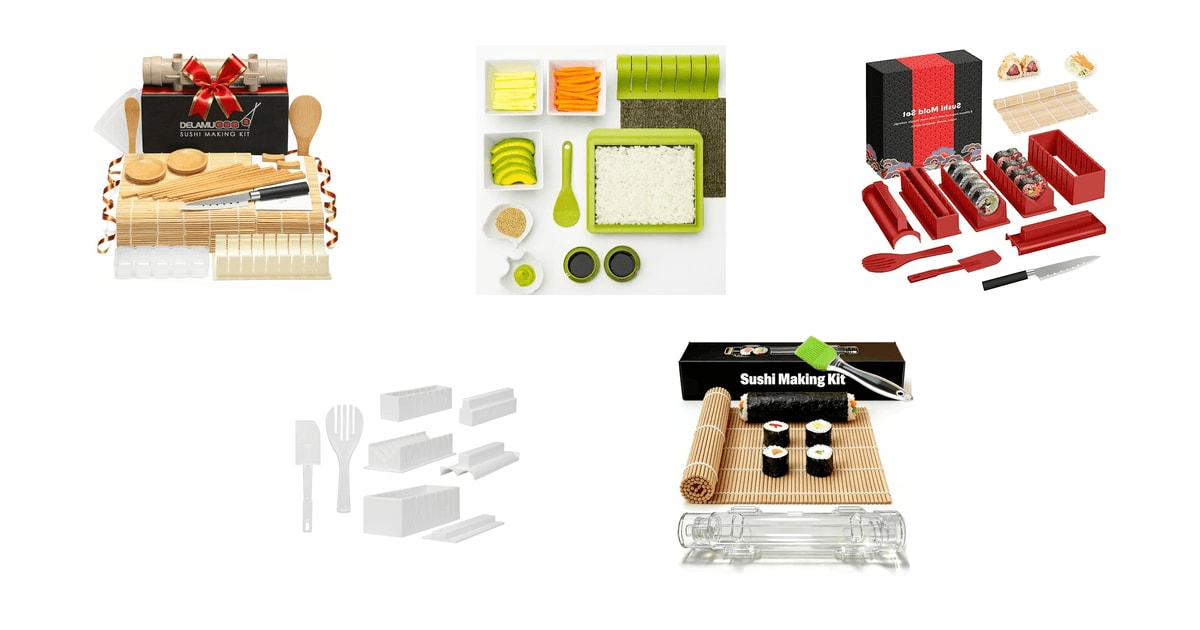
Homemade sushi is mostly a rice problem. Get the rice sticky and cooled to room temperature, and the rolling part is easier than it looks. A kit's job is to close the gap between a sad, bursting roll and something you'd happily set on a plate. Most kits do that with one of three tools: a bamboo mat, a plastic tube you pack and push, or rigid molds you press rice into. Which format you pick matters far more than how many pieces come in the box.
No kit makes sushi for you. None of them include nori, rice, vinegar or fish, and none can tell you whether the salmon at your grocery store is safe to eat raw. Plastic tools also leave a texture tell, since mold-pressed rice never gets the tight bite of a roll you've squeezed by hand. And sticky rice gets into everything. Every kit here needs a rinse right after you use it, or you'll be digging dried grains out of ridges and bamboo weave.
So it comes down to how you want to roll. If you're patient and want the dense bite of restaurant maki, you want bamboo. If you want a good-looking roll on the first attempt, you want a tube or a mold. Most people are happiest with a kit that has both. We think that the Delamu Sushi Making Kit, 20 in 1 Bazooka Roller Kit is the best sushi making kit for most people, and that the SushiQuik Sushi Making Kit is the one to buy if you're rolling with kids or want your first roll to hold together.
Everything we recommend

Two ways to roll and the tools for every sushi style
Easier first rolls, but only one size and one style

Two tools, no extras, and you can see what you're doing
At a glance
| Product | Piece Count | Material | Price | |
|---|---|---|---|---|
| Delamu Sushi Making KitTop pick | 20-in-1 | BPA-Free | $21.99On sale |
| SushiQuik Sushi Making Kit with Rice SpreadingRunner-up | — | — | $16.99 |
 | HI NINGER Sushi Making Kit Deluxe EditionAlso consider | 12 PCS | Food Grade PP | $19.79On sale |
 | Helen's Asian Kitchen Sushi Making KitAlso in lineup | 5-Piece Set | BPA Free | $24.99 |
| Sushi Making KitBudget pick | — | Food-Safe | $7.99On sale |
How we picked
Rolling method. We sorted every kit by how it actually forms a roll: bamboo mat, tube or rigid mold. A kit had to be honest about which one it is, and ideally give you a second option in the same box.
Pieces that earn space. We read the full contents list for each kit and counted only the tools that do something distinct. A high piece count built from duplicate sauce dishes doesn't beat a small set of well-made essentials.
Cleaning and mold. Owner feedback across this category keeps circling back to sticky rice in crevices and mold in bamboo weave. We favored kits whose parts come apart, rinse quickly, or go in the dishwasher.
Roll size options. Most tube kits make exactly one diameter. We checked spec sheets to see which kits can handle thin hosomaki, fat futomaki, nigiri or hand rolls rather than one shape forever.
Learning resources. Rolling is tactile, and written instructions consistently undersell it. Kits with a real guide book or video walkthrough scored higher than kits with a folded card in the bag.
Top pickOn sale
Two ways to roll and the tools for every sushi style
Delamu Sushi Making Kit
The Delamu 20-in-1 is the rare kit that covers both the shortcut and the skill. You get a bazooka tube for instant round rolls, two bamboo mats for when you want to learn properly, plus molds, a knife, chopsticks and a guide book.
$21.99fromAmazonList priceIt's the only kit here that grows with you. Load the clear bazooka tube with rice and fillings, press the plunger, and you get a round log ready to slice. That's your first month. Then the two bamboo mats are sitting right there for when you want to control tightness and diameter yourself. Most kits pick one method and lock you into it. This one lets you switch whenever you feel like it.
The tube handles the step beginners get wrong. Uneven rice is what makes a roll burst at one end and unravel at the other. The tube sets the rice thickness and keeps the fillings centered for you, so a first-timer can turn out something presentable without any practice. Published reviews of tube-style rollers land in the same place: the results look consistent long before your technique is.
The extras cover styles other kits ignore. There's a rice mold for nigiri, two temaki rollers for cone-shaped hand rolls, and enough tooling to attempt gunkan. If you want to make more than plain maki, that's normally three separate purchases. You also get a rice paddle, a spreader and a cutting mold, so you're not improvising with a soup spoon on your first try.
It's set up for a group. Five pairs of chopsticks, two chopstick holders and two sauce dishes mean a sushi night doesn't require raiding the rest of your kitchen. It ships in a retail box that looks like a gift, which matters if you're buying it for someone else. The guide book covers rice seasoning ratios and ingredient prep across six recipes, not just the rolling motion.
Flaws but not dealbreakers
Rinse the tube immediately or you'll fight it. Sushi rice sets fast inside the tube's inner ridges, and once it dries it's genuinely stubborn. Owners who leave the kit on the counter until after dinner report scrubbing they didn't sign up for. Make rinsing the tube the first thing you do after the roll comes out, before you sit down.
The knife is functional, not sharp. It'll get through a roll, but it drags on nori and squashes delicate fillings. If you own a decent chef's knife, use that instead and treat the included blade as a spare. The thin spatula-style tools in the box also bend under hard pressure, so use a light hand.
The guide assumes Japanese short-grain rice. Follow its ratios with medium- or long-grain rice and you'll get a drier, looser roll that won't hold. That's not really the kit's fault, but the book doesn't warn you, and it's the most common reason a first attempt falls apart.
Runner-up
Easier first rolls, but only one size and one style
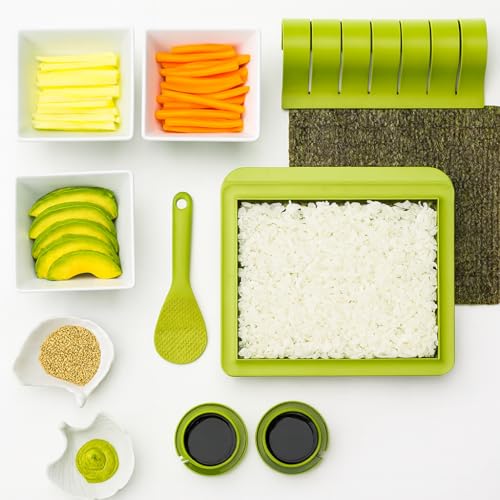
SushiQuik Sushi Making Kit with Rice Spreading
SushiQuik uses a plastic training frame that spreads your rice to an even layer before you roll anything. It's the most forgiving kit here for kids and total beginners, and it snaps apart for the dishwasher when you're done.
$16.99fromAmazonThe training frame fixes the one mistake that ruins beginner rolls. It sits over the mat and physically limits how much rice you can lay down and where. Too much rice at one end and the roll bursts; too little and it unravels. The frame removes that decision entirely. Instead of adding more tools than everyone else, SushiQuik targets the single failure mode that makes people give up after one session.
Cleanup doesn't hold up the evening. Each section of the rolling mat snaps apart, so you can get at the rice and starch that would otherwise cement into a bamboo weave. Then the whole thing goes in the dishwasher. If you're cooking with kids, that's the difference between a fun hour and a sticky twenty minutes at the sink afterward.
Video beats a printed card. The kit links to six instructional videos covering rice prep, fillings and the rolling motion. Sushi rolling is a tactile skill, and written steps consistently undersell how much pressure you're supposed to use. Watching someone do it first is the fastest way to shorten the learning curve, especially for a child following along.
It's designed for hands that shouldn't hold a knife. The roll cutter portions the finished log into even pieces without a blade, and the end caps double as soy sauce holders so the table setup is done. For kids around eight and up, that means an adult only needs to supervise the food prep, not every step.
Flaws but not dealbreakers
One roll size, one style. You get standard maki and nothing else. There's no nigiri mold, no temaki roller, no way to make thin hosomaki or a fat futomaki. If sushi night becomes a regular thing, you'll be shopping again within a few months.
The mat is the weak link. It's thinner than a proper full-size bamboo mat, and owners who roll often report it looking tired sooner than the plastic parts. It's fine for occasional use. It's not the mat you'd want if you're rolling every week.
Stock can be patchy. This kit turns up unavailable more often than the others here, so if it's the one you want, it's worth grabbing when you see it rather than bookmarking it for later.
Budget pickOn sale
Two tools, no extras, and you can see what you're doing
Sushi Making Kit
This kit is a clear bazooka tube and a bamboo mat, and that's it. The see-through tube lets you check your filling placement before you compress anything, which is a genuinely useful trick most rollers don't offer.
$7.99fromAmazonList priceThe clear tube catches mistakes before they become mistakes. Almost every bazooka-style roller is opaque, so you pack it blind and hope. Here you can see whether your avocado is centered and whether the rice is even along the length before you push the plunger. For a first-timer, that visual feedback teaches you what the right amount of rice looks like much faster than guessing does.
You still get a bamboo mat. Most single-tool rollers ship alone. This one pairs the tube with a natural bamboo mat, so you have a path to traditional maki when you're ready to try it. It's a modest mat, but it means the kit isn't a dead end the moment you want tighter, denser rolls.
It's a low-commitment way to find out if you'll stick with this. Home sushi sounds great until you learn that the rice takes real effort. If you're not sure you'll do it twice, this covers the two tools you actually need to make a round roll tonight, and it disassembles for a quick rinse.
Flaws but not dealbreakers
Two pieces means two pieces. No rice paddle, no spreader, no chopsticks, no sauce dishes, no guide of any kind. You'll be spreading rice with a kitchen spoon, which works but makes even layers harder. Budget for the accessories mentally, or accept that this is a bare setup.
The mat is basic. It'll roll maki, but the weave and ties aren't built for weekly use, and it needs the same careful rinse-and-air-dry routine as any bamboo mat. Expect to replace it before you replace the tube.
The brand has little history behind it. NTMURIKS is new enough that there's not much owner feedback on how these hold up over a year. Nothing suggests a specific problem, but there's also not much of a track record to lean on.
Who this is for
Buy one of these if you like sushi enough to want it on a weeknight and you're willing to cook rice properly. That's the whole bargain: the kit handles shape, you handle the rice. It's a good fit for families who want a dinner everyone helps build, for anyone tired of paying restaurant prices for a cucumber roll, and for cooks who want to try nigiri or hand rolls without hunting down separate tools.
Skip these if you already own a good bamboo mat and know how to use it, since most of what's in these boxes will end up in a drawer. This guide covers consumer kits for rolling and shaping sushi at home. It doesn't cover knives sold on their own, rice cookers, ingredients, or anything raw. No kit here includes nori, rice, vinegar or fish, and none of them can make questionable fish safe to eat.
How we picked
Rolling method: We separated bamboo mats, bazooka tubes and rigid molds, because that choice shapes everything about how a kit feels to use, and we gave credit to kits offering two paths. Pieces that earn space: We counted distinct tools from each contents list rather than headline numbers, since five pairs of chopsticks is useful and a second identical sauce dish is padding. Cleaning and mold: Owners talk about sticky rice in tube ridges and mold in bamboo weave more than anything else, so we favored parts that snap apart, rinse fast or survive a dishwasher. Roll size options: We checked which kits handle thin hosomaki, thick futomaki, nigiri and temaki instead of a single fixed diameter. Learning resources: A guide book with rice ratios or a video walkthrough beats a printed card, because the pressure you use is hard to describe in words.
Other sushi making kits worth considering
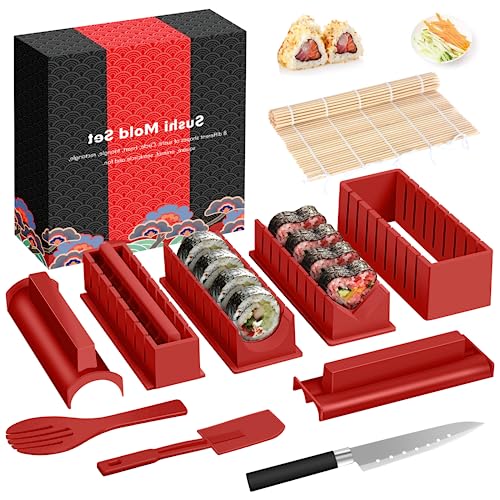
If you want a table full of shapes: The HI NINGER Sushi Making Kit Deluxe Edition ($19.79) — The HI NINGER Deluxe Edition comes with 11 different rice mold shapes, including squares, hearts, circles and triangles that a mat simply can't produce. Press rice in, add fillings, close, compress, done. For a dinner party or a plate you're trying to make fun for a seven-year-old, that variety does more work than another round roll would. The molds are food-grade PP with a smooth interior, so rice releases instead of bonding, and they rinse clean without a drying ritual. A bamboo mat, knife and two pairs of chopsticks come along for standard maki. What you give up is texture: mold-pressed rice never gets the compacted density of a hand-rolled maki, and anyone who eats sushi often will notice on the first bite. There's no tube for traditional round rolls, no sauce dishes, and the thin spatula bends if you lean on it.
The competition
These are the kits our research surfaced as the main contenders, not a survey of everything for sale. Sushi kits turn over constantly, and plenty of near-identical tubes and mold sets appear under different brand names with the same contents.
The Helen's Asian Kitchen Sushi Making Kit ($24.99) — Helen's Asian Kitchen Sushi Making Kit is a focused, BPA-free polypropylene mold set with large, small and heart-shaped forms, plus a slotted rice paddle and spatula sized to match. It fills a real niche: making a fat futomaki is the hardest roll to get right on a mat, and pressing one into a form makes it straightforward, while the small form handles thin hosomaki. Helen's Asian Kitchen is a long-established name in cooking tools, and the forms are dishwasher safe. It lost to our picks on scope. Five pieces means no rolling mat, no chopsticks and no sauce dishes, so it can't be your only sushi tool, and the heart form is a novelty you'll use twice a year. Availability also tends to be thin. Choose it if you specifically want diameter flexibility from verified BPA-free plastic and you already own a mat.
Care and cleaning
Bamboo is the part that fails from neglect. Rinse the mat under warm water right after use, working a soft brush between the strips to dislodge rice, then stand it upright and let every surface air-dry completely before it goes away. Never soak it and never put it in the dishwasher, since prolonged water weakens the cotton ties and the bamboo can mold from the inside. Store it flat somewhere ventilated, not sealed in a bag or a damp drawer. Plastic parts are easier but less patient: rinse a bazooka tube within a few minutes, because sushi rice sets into the inner ridges and turns into a scraping job. Molds and snap-apart mats can go straight in the dishwasher.
Questions we get
What's the best sushi making kit for a complete beginner?
The SushiQuik, mostly because of its rice-spreading training frame. Uneven rice is what makes beginner rolls burst or unravel, and the frame takes that decision away from you. If you want beginner-friendly plus room to grow, the Delamu 20-in-1 pairs a bazooka tube with bamboo mats and a guide book covering six recipes.
What is a sushi bazooka, and should I get one instead of a mat?
It's a cylindrical tube you pack with rice and fillings, then compress with a plunger to push out an even round log for slicing. Get one if you're new, impatient, or roll only occasionally, because it produces a consistent roll with no technique at all. Stick with a bamboo mat if you want tighter, denser, more restaurant-like rolls and don't mind practicing. The Delamu kit includes both, which is why it's our top pick.
Is a bamboo mat better than a silicone or plastic one?
Bamboo is the culinary standard and gives you the most control over tightness and diameter, plus better texture in the finished roll. The catch is upkeep: hand-wash and fully air-dry after every single use or mold grows in the weave. Silicone and plastic surfaces are dishwasher safe and won't mold, which makes them the better call for families and anyone who won't reliably dry a mat.
Do any of these kits include nori or rice?
No. Every kit here is tools only, so you'll need nori, Japanese short-grain rice and rice vinegar from a grocery store or Asian market. Look for full-size toasted nori sheets, roughly 7.5 by 8 inches, because half sheets are too small for standard maki. Rice is usually labeled sushi rice or Japanese short-grain.
Do I need sushi-grade fish?
Yes, if you're using raw fish. Sushi-grade means the fish was flash-frozen cold enough and long enough to kill parasites, and regular fish labeled fresh at the supermarket hasn't been through that. Buy only from a fishmonger who explicitly sells it for raw consumption. If you can't verify the source, roll cooked shrimp, imitation crab, smoked salmon, avocado or cucumber instead, which is what most home sushi is anyway.
How do I get the rice sticky enough?
Use Japanese short-grain rice and cook it with roughly a 1:1.1 rice-to-water ratio. While it's still warm, fold in about 3 tablespoons rice vinegar, 2 tablespoons sugar and 1 teaspoon salt per 2 cups of dry rice, fanning as you fold for a glossy finish. Then let it cool to room temperature before you roll, because hot rice tears nori on contact and the roll falls apart.
Why you should trust us
For this guide:
- We read the manufacturer spec sheets and full contents lists for every kit here, comparing rolling formats, materials, piece counts and roll diameters.
- We compared published reviews of bazooka-style rollers, bamboo mats and rigid molds to understand where each format helps and where it disappoints.
- We looked at recurring themes in owner feedback, particularly complaints about rice sticking in tubes, mat durability and mold in bamboo weave.
- We read owner reviews on every listing, weighted toward the critical ones, because that is where the recurring failures show up.
- We have a systematic way of automatically fetching the latest prices, so the numbers on this page stay current.
- This is a research-focused guide, so the team may not own every product listed — though we often do own the top winners, which gives us extra context for the recommendations.
- We don't accept free products, and the retailer commission never changes which product we recommend.
Sources
Best Sushi Making Kits, Tested — The Spruce Eats, The Spruce Eats
How to Make Sushi at Home — Bon Appétit, Bon Appétit
Equipment Review: Sushi-Rolling Mats — America's Test Kitchen, America's Test Kitchen
The Beginner's Guide to Rolling Sushi at Home — Serious Eats, Serious Eats
Bamboo vs. Silicone Sushi Mat: Which Is Better? — The Kitchn, The Kitchn
Amazon product listings and owner reviews for all 5 products
Manufacturer specification pages for each product
Some passages in this guide may be paraphrased with AI help. Prices are refreshed automatically.
More like this.
Continue exploring home reviews and recommendations.

The Best Cold Brew Coffee Makers
Cold brew asks one thing of you that morning coffee doesn't: a little planning the night before. Get that part right and the payoff is real. Coarse…

The Best Baby Food Makers
Making your own baby food sounds ambitious until you do it once. You steam a sweet potato, blend it smooth, spoon it into a tray, and freeze it. That's…

The Best Label Makers for Home Organization
A label maker earns its keep in the boring places. The bin of winter hats. The spice jars that all look alike. The tangle of black cords behind the TV.…

The Best Countertop Nugget Ice Makers
Nugget ice is the soft, chewy pellet ice you get at a drive-through soda counter, and once you've had it at home, regular cubes feel like a downgrade.…

The Best Soda Makers and Sparkling Water Machines
If you drink sparkling water every day, you already know the routine: hauling cases home, stacking cans in the garage, hauling the empties back out. A…

The Best Pasta Makers
Fresh pasta takes about an hour, and most of that is the dough sitting still. The machine's job is narrow: turn a lump of dough into sheets or strands of…