The Best Caulking Guns
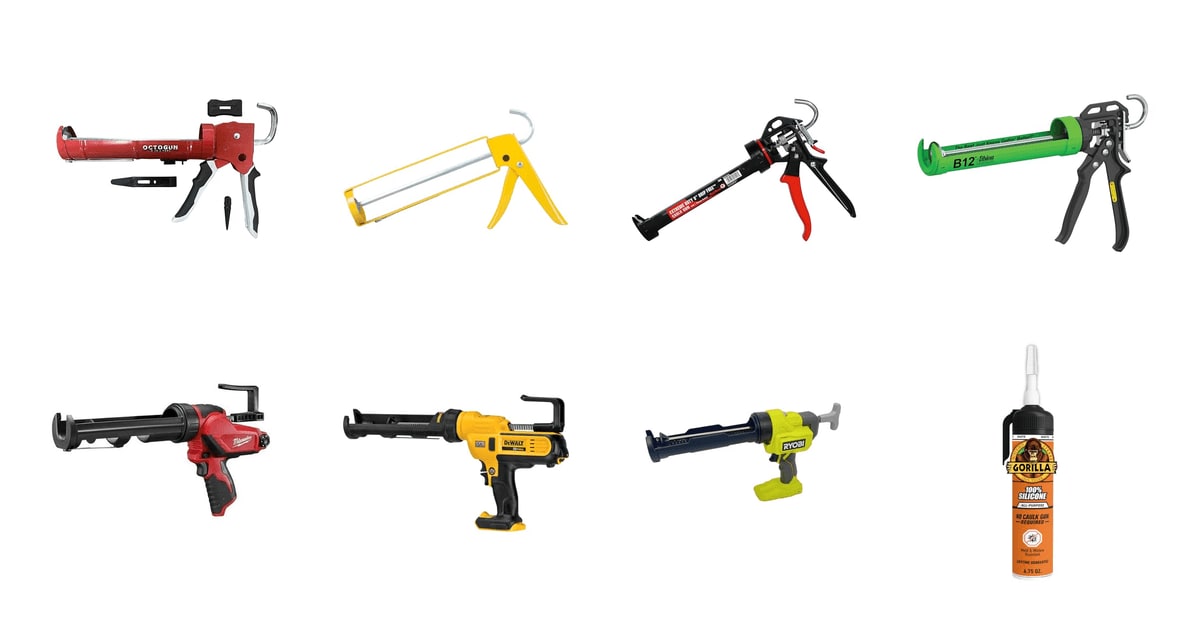
Caulk is one of those jobs where the tool does more of the work than you'd expect. A good gun lays a steady, even bead that you smooth once and walk away from. A bad one skips, dribbles, and keeps pushing sealant after you let go, so you spend the afternoon wiping silicone off tile. The difference comes down to two things you can check before you buy: thrust ratio, which is the leverage behind each trigger pull, and whether the plunger backs off when you stop squeezing.
No gun makes you neat, though. Every one here still needs you to cut the nozzle at the right angle, punch the cartridge seal, and keep a wet rag in your pocket. Cordless guns take away the hand fatigue but not the mess, and they're heavy enough that you'll feel it working overhead. Manual guns are lighter and cost less to own, but your forearm sets the pace. And nothing fixes bad prep — sealant laid over dust or old caulk peels no matter what pushed it out.
Most people caulk a tub, a few windows, maybe a countertop seam, then put the gun away for months. That's who we wrote this for, with notes along the way for crews that go through tubes by the case. The good news is that the manual guns finish painters actually reach for don't cost much more than the flimsy ones near the register. We think that the Newborn 930-GTD is the best caulking gun for most people, and that the Dripless ETS2000 4-pack is the one to buy if you need to put a gun in more than one pair of hands.
Everything we recommend

Smooth beads, no drips, and every small tool built in

Four drip-free guns at once, if one is never enough
Motor-driven beads for people who caulk all day

Brute manual thrust for adhesives that fight back
At a glance
| Product | Capacity | Thrust Ratio | Price | |
|---|---|---|---|---|
| Milwaukee 2441-20 M12 10 oz Caulk GunUpgrade pick | 10 oz | — | $149.99 |
 | DEWALT 20V MAX Caulking GunAlso in lineup | 10oz | — | $199.99On sale |
| Newborn 930-GTD Drip-Free Smooth Hex Rod CradleTop pick | 10oz (1/10 Gal) | 10:1 | $12.19On sale |
 | RYOBI ONEAND 18V Cordless 10 OZ. CaulkAlso consider | 10 OZ | — | $102 |
| Dripless ETS2000 Ergo Composite Caulk GunRunner-up | 10 oz | 12:1 | $74.99 |
 | 200ml Epoxy Gun Dual Component Professional Heavy-DutyAlso consider | 200ml | — | $40.99 |
| Albion Engineering Company B26 B-Line Manual CartridgeAlso great | 10 oz (300 ml) | 26:1 | $52.42 |
 | Red Devil 1049 Plastic Sausage Caulking GunAlso in lineup | Fits 20 oz gun | — | $10.96 |
How we picked
Thrust ratio. We treated 10:1 as the floor for anything that has to push silicone, and looked for 18:1 or higher on guns aimed at construction adhesive. Published specs made this easy to compare across the manual guns.
Drip control. We favored guns with a plunger that retracts on its own when you release the trigger, since published reviews from painting trades consistently rank it among the features that save the most cleanup time.
Cartridge compatibility. We checked which formats each gun actually accepts — standard 10-ounce, 29-ounce, sausage pack, or dual-component — because a mismatch here makes the gun useless for your sealant.
Comfort and weight. We compared listed weights and grip designs, and read owner feedback for the complaint that shows up most on long jobs: a trigger that leaves your hand sore before the tube is empty.
Power and batteries. For cordless picks we looked at whether the tool ships ready to run and which battery platform it locks you into, since the packs usually cost more than the gun.
Top pickOn sale
Smooth beads, no drips, and every small tool built in
Newborn 930-GTD Drip-Free Smooth Hex Rod Cradle
This is the manual gun finish painters keep in the truck, and it doesn't cost much more than the throwaway kind. The 10:1 drive pushes silicone without a fight, the hex rod keeps the bead even, and the nozzle cutter and puncture wire are already attached.
$12.19fromAmazonList priceA 10:1 thrust ratio is the difference between caulking and wrestling. Thrust ratio is just leverage — how many pounds of push you get per pound of trigger squeeze. The bargain guns near the register run 4:1 or 5:1, and they choke the moment you load silicone. The Newborn's 10:1 drive moves silicone and standard latex caulk without you leaning into it, so your bead stays the same width from the corner to the far end of the tub.
The hex rod keeps the plunger from twisting under load. A round push rod can rotate slightly as pressure builds, and that shows up in the bead as small surges and thin spots. The six-sided rod here can't spin in its housing, so the force arrives at the cartridge in a straight line. Owners who caulk for a living single out how predictable the flow is, which is exactly what you want on a joint people will look at.
Let go of the trigger and it stops. The drip-free plunger takes pressure off the cartridge instead of letting sealant keep oozing. That sounds minor until you're on a ladder shifting your grip and a rope of silicone lands on the sill. You'll still want a rag nearby, but you won't spend the job chasing the gun.
Everything you'd otherwise go hunting for is already attached. There's a spout cutter, a wire for punching the cartridge seal, a scraper for digging out the old bead, and a four-sided finishing square for tooling the new one. That last piece is the one people underrate. Drag the right notch along a fresh bead and you get a clean concave line without buying a separate tool or sacrificing a fingertip.
Flaws but not dealbreakers
It runs out of muscle on the thickest stuff. Ten to one is plenty for silicone, acrylic latex, and window sealant. Construction adhesive and cold polyurethane are another matter — you'll squeeze hard and the bead will stutter. If subfloor adhesive is a regular part of your work, get the Albion instead.
Your forearm is the motor. On a whole-house window job you'll feel it by the third or fourth tube, and grip fatigue is why late beads tend to look worse than early ones. The padded trigger spreads the load better than a bare wire handle, but it doesn't change the math.
Runner-up
Four drip-free guns at once, if one is never enough
Dripless ETS2000 Ergo Composite Caulk Gun
These come four to a box, with a plunger that retracts on its own and a 12:1 drive that handles everything from thin latex to stiff silicone. Buy them if you've got helpers, if you lose tools, or if you'd rather keep one gun loaded per sealant type.
$74.99fromAmazonA 12:1 drive covers every sealant you're likely to load. That's a step above the usual pro benchmark, and it's enough for silicone, acrylic latex blends, and most urethane window sealants without a hard squeeze. Dripless has been building these since well before composite frames were common, and the 12:1 ratio is the spec painters point to when they explain why they trust the line.
Automatic retraction is the feature you notice every single tube. The plunger pulls back after each trigger pull, which stops flow instantly and keeps sealant from creeping out while you reposition. Less waste per cartridge, less cleanup per joint. On finish work that matters more than raw power, because every drip you have to wipe is a spot you'll have to touch up later.
Four guns solve a problem one gun can't. Hand one to a helper. Keep one loaded with silicone and one with paintable latex so you're not flushing a nozzle mid-job. Leave one in the shop and one in the truck. If you've ever had a gun jam on a Saturday with the tile shop closed, the spare is the whole argument.
The body is built around a long day. The composite frame weighs less than a steel gun, the grip and trigger are padded, and the barrel revolves so you can keep a consistent bead profile in a tight corner. There's a ladder hook for reloading up high, plus a built-in poker and cutter so you can open a cartridge without digging for a knife.
Flaws but not dealbreakers
Composite frames don't age the way steel does. For daily high-volume use, an all-metal gun like the Albion will outlive this one. Owners who go through sealant year-round report frames flexing and eventually cracking under sustained heavy loads, which is less of a risk if you're caulking a few weekends a year.
A four-pack is a strange thing to own for one bathroom. If you need exactly one gun and don't want three sitting in a drawer, the Newborn makes more sense. The box also isn't light once all four are in it, which matters if you're carrying tools up a ladder.
Upgrade pick
Motor-driven beads for people who caulk all day
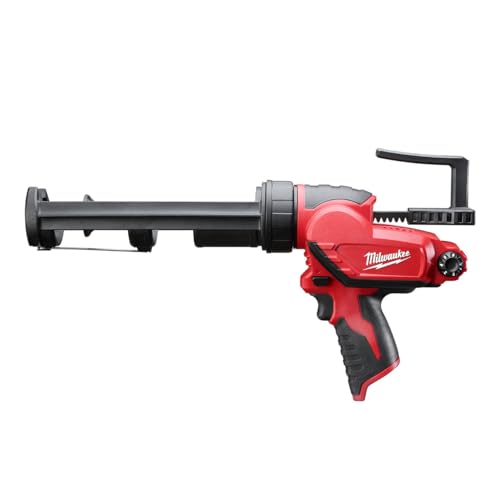
Milwaukee 2441-20 M12 10 oz Caulk Gun
This gun trades your forearm for a 12-volt motor and a variable-speed trigger, and it's compact enough to work inside a cabinet or a window return. It makes sense once you're past five or six tubes in a sitting, and mostly if you already own M12 batteries.
$149.99fromAmazonPast a handful of tubes, a motor changes the job. Manual caulking degrades as your hand tires, and the last bead of the day rarely looks like the first. A motor doesn't tire. If you're running weatherproofing across a dozen openings or resealing a commercial bathroom, the consistency you get from motor-driven flow is the real reason to spend here.
The variable-speed trigger gives you a dial most manual guns don't have. Squeeze gently for a slow, thin bead along a shower pan. Open it up for a fat weatherproofing run down a door jamb. You're setting the rate with your finger rather than fighting a fixed mechanical ratio, which helps a lot when you switch between a thin latex and a stiff urethane on the same job.
It's small where cordless guns usually aren't. The M12 body is slim enough to work inside a cabinet carcass or a recessed window return, where a full-size 20-volt tool has to come in at an awkward angle. At just over four pounds it's still heavier than any manual gun here, but it's the least unwieldy powered option in this guide.
The battery platform is a big part of the value. If you already have M12 packs for a drill or a work light, the same batteries run this gun and you skip buying another charger. If you don't own any M12 tools, factor the pack and charger into what this actually costs you, because it ships as a bare tool.
Flaws but not dealbreakers
It arrives as a bare tool. No battery, no charger. That's normal for the professional cordless market, but it means the sticker doesn't reflect what you'll spend if you're starting from scratch — and a gun plus a pack plus a charger is a lot to commit for occasional caulking.
Owner feedback on this listing is thin. The durability case rests on Milwaukee's broader M12 line rather than on reports from people who've worn this particular gun out. That's a reasonable bet given the platform, but it's a bet.
For one bathroom a year, it's the wrong tool. The Newborn will give you the same bead quality on a tub surround with none of the battery overhead. Buy this because of volume, not because it's the nicest thing in the guide.
Also great
Brute manual thrust for adhesives that fight back
Albion Engineering Company B26 B-Line Manual Cartridge
The B26 puts a 26:1 drive behind the plunger, rated to 900 pounds of force and 300 psi — roughly triple what a good standard pro gun manages. That's what you want for construction adhesive, cold-weather polyurethane, and two-part cartridges with static mixers.
$52.42fromAmazon26:1 makes thick adhesive behave like thin caulk. Dense construction adhesive and stiff cold-weather sealant are what break cheap guns and wreck beads, because you end up squeezing so hard your hand shakes. With this much mechanical advantage, the trigger pull stays light and steady, and the bead comes out even instead of arriving in surges.
The Double-Gripping Plate is why it lasts. Most manual guns drive the rod with a single contact plate, which wears and starts slipping under heavy loads. Albion uses two, which the company credits with doubling tool life, and adds an adjustable wear-compensation device so you can take up slack as the plate ages rather than replacing the gun.
The details are aimed at real job sites. The half-cradle carriage holds the cartridge securely and rotates, so you can attack a joint from an odd angle without twisting your wrist. There's a puncture wire built in and a ladder hook for pulling it up with you. The full-size handle is meant for hours of dispensing, not a quick touch-up.
Flaws but not dealbreakers
It takes standard 10-ounce cartridges and nothing else. No sausage packs, no dual-component 200ml tubes. If your sealant comes in a foil chub or a side-by-side epoxy cartridge, this gun can't load it, and there's no adapter that fixes that.
All that thrust is wasted on bathroom silicone. A 26:1 drive means a lot of plunger travel per squeeze, which takes some getting used to when you want a fine, slow bead. For tub surrounds and window trim, the Newborn gives you better control with less gun.
Who this is for
Buy now if you own a house and a caulk gun you don't trust — the one with the bent wire handle that ratchets and drips. A decent manual gun costs little and will outlast several of those, and it will make the bathroom job look like someone who knew what they were doing did it. Go cordless if you're applying sealant most weeks, working overhead, or running long weatherproofing lines where hand fatigue starts showing up in the bead.
Skip the upgrade if you caulk once or twice a year. A motor won't make a once-a-season tub reseal look better, and the batteries will be flat when you need them. This guide covers guns for cartridges and dual-component tubes, so we get into thrust ratios, drip control and cartridge formats. We don't cover pneumatic guns, sausage-pack-only guns, or the sealants themselves — picking the right silicone or urethane for your joint is a separate decision, and the wrong sealant ruins the job no matter how good the gun is.
How we picked
We built this guide from spec sheets, published reviews and owner feedback, weighing five things. Thrust ratio: at least 10:1 for silicone, and 18:1 or more if construction adhesive is in the mix. Drip control: a plunger that retracts on trigger release, because it's the single biggest reduction in wasted sealant and wipe-up. Cartridge compatibility: whether the gun takes standard 10-ounce tubes, larger 29-ounce cartridges, or dual-component packs, since that decides what you can actually load. Comfort: weight, grip shape and trigger effort, judged against the fatigue complaints owners repeat on long jobs. Power: for cordless guns, whether a battery and charger are included and which platform you're committing to.
Other caulking guns worth considering
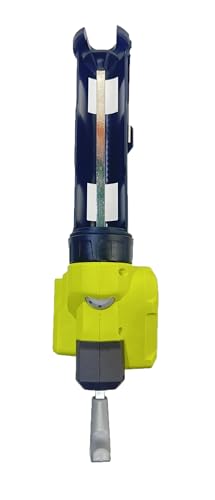
If you want cordless without buying a battery separately: The RYOBI ONEAND 18V Cordless 10 OZ. Caulk ($102) — This RYOBI kit is the only powered gun here that ships ready to use, with a 1.5Ah pack and a charger in the box. It takes both 10-ounce and 29-ounce cartridges, which is useful if you buy the bigger tubes for exterior work, and the battery drops into any of RYOBI's ONE+ tools, so the cost spreads across your whole kit. What you give up is information and muscle. The listing publishes no thrust figure and almost no useful detail — one bullet on the page is about lawn equipment parts, which tells you how much care went into it — and the 18-volt platform generally puts out less peak force than Milwaukee's or DEWALT's professional guns. It's also the heaviest cordless option here, which you'll notice on ceiling joints.
If you need to shoot two-part epoxy or panel-bonding adhesive: The 200ml Epoxy Gun Dual Component Professional Heavy-Duty ($40.99) — Two-component sealants come in side-by-side cartridges that have to be pushed at the same time to hold the mixing ratio, and no standard gun can do that. This Storvix applicator takes 200ml and 215ml dual cartridges in both 1:1 and 2:1 ratios, which covers automotive panel bonding, structural repair and marine work. The full-metal frame, steel push rod and thickened push plate are there because these adhesives are dense and the dispensing forces are high. It comes with ten mixing nozzles, gloves and scraper tools, so you can start a job without a supply run. The trade-off is that it does exactly one thing: it won't accept a standard 10-ounce cartridge, so it's a second gun rather than a replacement. Storvix is also far less established than the other brands here.
The competition
This is what our research surfaced, not a full census of the market. Caulking guns are a crowded, low-visibility category, and plenty of perfectly fine ones never get written about. Here's the one we looked at closely that didn't make the picks.
The DEWALT 20V MAX Caulking Gun ($199.99) — The DEWALT DCE560B is the most feature-loaded cordless gun in this guide. A six-speed dial sits on top of the variable-speed trigger, giving you two separate ways to set flow — genuinely useful if you jump between thin latex and stiff urethane on the same job. It also retracts the plunger automatically on trigger release, swaps canister trays with a quick connect, and adds an LED and a hang hook. It lost to the Milwaukee on two counts. It's the most expensive gun here by a clear margin, and it ships bare, so batteries are on you. And the 20-volt body is bulkier, which costs you reach inside cabinets and window returns. If you're already deep in the DEWALT 20V MAX platform and you switch sealant types constantly, buy it without hesitation.
Care and maintenance
Clean the gun while the sealant is still wet — that's the whole trick. Wipe silicone off the nozzle, plunger and cradle with a rag and mineral spirits or isopropyl alcohol before it skins over, because once it cures, no solvent will touch it and you'll be cutting it off with a blade. Uncured polyurethane comes off with acetone. Never leave a urethane cartridge sitting in the gun between jobs; pull it, cap the nozzle with a screw or a wire nut, and wipe the rod down before it sets. Check the drive rod and gripping plate every so often for hardened crud, since buildup there is what makes a plunger slip. Metal-frame guns handle repeated solvent cleaning better than composite ones.
Questions we get
What does thrust ratio mean, and how much do I need?
It's the leverage between your finger and the plunger. At 10:1, every pound you put into the trigger delivers about ten pounds of push on the cartridge. Thin acrylic latex is happy at 4:1 or 5:1, silicone really wants 10:1 or better, and thick polyurethane or construction adhesive calls for 18:1 or higher. Buying more ratio than you need rarely costs anything; buying too little means fighting the tool on every joint.
Is a cordless caulking gun worth it for occasional DIY?
Usually not. If you reseal a tub or caulk a window once a year, a good manual gun gives you the same bead with none of the battery overhead. Cordless starts paying off around ten to fifteen tubes in a single session, or on multi-room renovations where hand fatigue is genuinely slowing you down. The exception is if you already own the batteries — then the gun is the only thing you're adding.
Can I use a regular caulking gun for two-part epoxy?
No, and it's not a matter of effort. Two-component epoxies and urethanes come in side-by-side cartridges that need both barrels pushed together, at a fixed 1:1 or 2:1 ratio, through a static mixing nozzle. A single-tube gun can't hold the cartridge or feed the mixer. If your product label lists a mix ratio, you need a dual-component gun like the Storvix before you start, or you'll end up with adhesive that never cures and has to be scraped out.
How do I stop caulk from dripping after I release the trigger?
Buy a gun with a self-retracting plunger. The Newborn and the Dripless guns both pull back the moment you let go, which drops cartridge pressure and stops the flow, and the DEWALT does the same thing under motor control. On a gun without that feature, hit the manual rod release right after every pull to relieve pressure. Keeping the nozzle pointed up between beads helps a little too.
What cartridge size do I actually need?
Most sealant sold to homeowners comes in standard 10-ounce cartridges, also listed as 1/10 gallon or 300ml, and nearly every gun here is built around that. Larger 29-ounce tubes need a gun rated for them — the RYOBI kit lists support for both sizes. Foil sausage packs need a different gun entirely. Check the format on the sealant you plan to buy before you pick the gun, not after.
What's the difference between a smooth rod and a hex rod?
A smooth round rod can rotate slightly in its housing as pressure builds, and that twist shows up as small variations in flow and bead width. A hex rod has six flats that keep it from spinning, so pressure reaches the cartridge in a straight, steady line. In practice you get a more even bead with less trigger effort, which is why hex rods are common on guns aimed at finish work.
Why you should trust us
For this guide:
- We read the manufacturer specifications and listing details for every gun here, comparing thrust ratios, cartridge formats, frame materials and drip-control mechanisms side by side.
- We reviewed published write-ups from painting and remodeling outlets to see which features working pros single out as worth paying for.
- We read through owner feedback across these listings to find the failures that repeat — slipping plungers, flexing composite frames, and drips that no spec sheet warns you about.
- We read owner reviews on every listing, weighted toward the critical ones, because that is where the recurring failures show up.
- We have a systematic way of automatically fetching the latest prices, so the numbers on this page stay current.
- This is a research-focused guide, so the team may not own every product listed — though we often do own the top winners, which gives us extra context for the recommendations.
- We don't accept free products, and the retailer commission never changes which product we recommend.
Sources
Best Caulking Guns of 2026, Tested — This Old House, This Old House
Best Caulking Guns — Bob Vila, Bob Vila
The Best Caulk Guns, Tested by Editors — Popular Mechanics, Popular Mechanics
Best Caulk Guns — Family Handyman, Family Handyman
Best Caulk Guns, Hands-On Tested — Pro Tool Reviews, Pro Tool Reviews
Amazon product listings and owner reviews for all 8 products
Manufacturer specification pages for each product
Some passages in this guide may be paraphrased with AI help. Prices are refreshed automatically.
More like this.
Continue exploring home reviews and recommendations.

The Best Gun Safe Dehumidifiers
A gun safe is a sealed steel box, and sealed steel boxes trap moisture. Open the door on a muggy afternoon and you've just loaded the interior with damp…

The Best HVLP Spray Guns for Automotive Painting
Spraying a car isn't like painting a wall. The gun you hold decides how much of that expensive basecoat lands on the panel instead of drifting into the…

The Best Massage Guns
A massage gun is a small motor that punches a rubber ball into your muscles a couple thousand times a minute. That sounds silly until you've had a calf…

The Best Homeowner Tool Sets
Most home repairs come down to a handful of moves. You tighten a wobbly toilet bolt, swap a cabinet hinge, put together a bookshelf, or pull the shipping…

The Best Door Threshold Seals and Weatherstripping
You can feel a bad door seal before you can see it. Stand near the front door on a cold morning and there's a cool ribbon of air across your ankles. In…

The Best DIY Smart Home Security Systems
A home security system earns its keep on the days nothing happens. You leave for a long weekend, glance at your phone in an airport line, and see every…