The Best Door Threshold Seals and Weatherstripping
You can feel a bad door seal before you can see it. Stand near the front door on a cold morning and there's a cool ribbon of air across your ankles. In summer it works in reverse, and the air conditioner runs longer than it should. The gap under a door is also the easiest way in for ants, dust, pollen, and in some houses, mice. Sealing it is one of the simplest fixes in the house, and most of the work is measuring rather than installing.
Here's the honest part: no seal lasts forever, and every design trades something away. Foam tape is easy and cheap, but it goes stiff and crumbly after a few years. Vinyl sweeps drag on the floor every single time you open the door, and drag is what kills them. Automatic bottoms solve the drag problem but cost far more and demand careful alignment. And nothing on this list fixes a door that's warped or hung crooked. A seal closes a gap. It can't square up a door.
Start by measuring your gap at both corners and the center, then check whether your door bottom has a kerf groove routed into it. That answers most of the question for you. We think that the M-D Building Products 67967 Kerf Style Door Bottom is the best door seal for most people, and that the Suptikes Door Draft Stopper is the one to buy if you rent and can't drill a single hole.
Everything we recommend

The five-minute fix if your door has a kerf groove

No screws, no residue, and you can take it with you

For old doors with big gaps, if you'll drill three holes

The seal lifts off the floor, so it stops wearing out
At a glance
| Product | Gap Coverage | Seal Type | Price | |
|---|---|---|---|---|
| M-D Building Products 67967 Kerf Style 36Top pick | Up To 3/8 In | Vinyl Fins | $26.99 |
| Frost King B59/36H Premium Aluminum and VinylAlso great | Up To 3/4 In | Aluminum And Vinyl | $25.86 |
| Pemko Automatic Door BottomUpgrade pick | 3/8 In | Aluminum | $64.82 |
 | Xcluder X2 Rodent Proof Overhead Sectional DoorAlso in lineup | — | Brush Seal | $249.40 |
| Suptikes 2 Pack Door Draft Stopper,Door SweepBudget pick | Up To 1 In | Door Draft Stopper | $7.98On sale |
 | M-D Building Foam Tape Camper SealAlso consider | — | Closed-Cell Foam | $6.93On sale |
 | Frost King SG30W Frost King Plastic GarageAlso in lineup | — | Weather-strip Kit | $20 |
 | National Guard Automatic Door Bottom 3/8x48In AluminumAlso consider | 3/8 In | Aluminum | $79 |
How we picked
Gap coverage. We compared the maximum sealed gap each manufacturer states, from 3/8 inch on kerf inserts up to a full inch on fabric stoppers. Anything that couldn't clearly state a range didn't make a pick.
How it attaches. We sorted every product by whether it needs screws, adhesive, an existing kerf groove, or nothing at all. Renters have to be able to buy something from this guide, so at least one no-damage option had to be strong.
Material and lifespan. Published guidance and owner reports both point the same way: closed-cell foam and EPDM outlast open-cell foam by years, and anodized aluminum backings outlast plated steel on exterior doors.
How it fails. We read owner feedback looking for the specific failure mode — sweeps flattened by carpet, foam that crumbled, stoppers that wandered out of place — and weighted those reports over spec-sheet claims.
Door type fit. Hinged entry doors, sectional garage doors, and frame perimeters need different products entirely. We made sure the lineup covers each rather than pretending one sweep does everything.
Top pick
The five-minute fix if your door has a kerf groove
M-D Building Products 67967 Kerf Style 36
This is a replacement vinyl insert that slides into the channel already routed into most door bottoms made since about 1990. No screws, no adhesive, no cutting. You get two of them, which covers the front and back doors of a typical house.
$26.99fromAmazonIf your door has a kerf slot, this is the easiest upgrade you'll ever make to your house. Flip the door open, look at the bottom edge, and check for a narrow channel running its length. If it's there, the old vinyl insert pulls out and this one slides in. That's the whole job. No drill, no template, no holes you'll have to patch later if you change your mind.
The dual vinyl fins handle the small imperfections every threshold has. Thresholds are rarely dead flat. They dip in the middle, or one corner sits a hair higher after years of settling. Two flexible fins give you two chances to make contact instead of one rigid strip that only touches where the floor happens to cooperate. It seals gaps up to 3/8 inch, which covers most doors that were hung properly.
Two seals in the box is the right quantity for a real house. Most people don't have one leaky door. They have a front door and a back door, and the back door is usually worse because nobody thinks about it. Buying a pair means you fix both in one afternoon instead of finding out later that the mudroom was the actual problem all along.
It blocks the stuff you notice, not just the air you don't. A tight bottom seal stops crawling insects, keeps porch dust from tracking a gray line across the entry floor, and cuts the whistle you hear on windy nights. Air sealing pays you back on the utility bill, but the ant situation is what usually gets people to finally do it.
Flaws but not dealbreakers
It's useless on a door without a kerf groove. Older doors, especially anything from before about 1990, often have a plain flat bottom edge. There's nothing for this to slide into, and you can't cut a proper kerf with hand tools. Check first. If you look and don't see a channel, buy a screw-mount sweep instead and save yourself a return.
Brown is the only color, and 3/8 inch is the ceiling. On a white door the brown edge shows, though it's mostly hidden at floor level once the door is closed. The bigger limit is gap size. If you measured more than 3/8 inch at any point, this won't reach the threshold and you'll still feel air moving.
Budget pickOn sale
No screws, no residue, and you can take it with you
Suptikes 2 Pack Door Draft Stopper,Door Sweep
This one loops over the bottom of the door with a fabric panel on each face, so it seals from both sides at once. It goes on in under a minute with no tools, and it handles gaps up to an inch — wider than anything else here.
$7.98fromAmazonList priceIf you rent, this is the one that won't cost you your deposit. Nothing gets drilled and nothing gets glued to the door if you don't want it to. It slides over the bottom edge and stays put by friction. When you move out, you slide it off, and the door looks exactly the way you found it. That's a rare thing in this category.
The one-inch gap coverage is the widest here, and old apartments need it. Doors in older buildings settle, frames rack, and the gap you get is often uneven — tight at one corner and wide open at the other. Soft fabric conforms to that in a way a rigid aluminum sweep never will. If your door has a wavy gap you've given up on, start here.
Sealing both faces catches drafts coming from either direction. A standard sweep sits on one side of the door and blocks air from one direction well. This wraps the edge, so a hallway draft pushing in and conditioned air leaking out both hit fabric. It also muffles hallway noise noticeably, which matters more in an apartment than in a house.
It's the fastest fix in this guide, and you get two. Measure, trim to width with scissors, slide it on. There's an adhesive backing if you want extra hold, and the instructions suggest warming the strip with a hair dryer in cold weather so it sticks. Two units means the bedroom door gets one too, which is where most people notice noise.
Flaws but not dealbreakers
It slides out of position, and you'll notice. Friction is doing all the work here. On a door that gets used constantly, or dragged over a rug edge, the stopper creeps sideways and leaves a corner exposed. Owners report nudging it back into place regularly. It's a small annoyance, but it's a recurring one.
It steals about two inches of clearance at the bottom of the door. Because there's fabric on both faces, the door needs a bit more room to swing over whatever's on the floor. Over a thick rug or a raised threshold it can bind. And this is fabric, so it does nothing against mice and won't survive weather on a fully exposed exterior door the way vinyl and aluminum will.
Also great
For old doors with big gaps, if you'll drill three holes
Frost King B59/36H Premium Aluminum and Vinyl
An aluminum-backed vinyl sweep that screws to the face of the door and covers gaps up to 3/4 inch. The mounting holes are slotted, so you can slide it up or down after it's on to dial in exactly how hard the seal presses.
$25.86fromAmazonIt reaches gaps that no-tool seals simply can't. Three quarters of an inch is a big gap, and it's common in houses built before 1980 where the door, the frame, and the slab have all moved in different directions. If you can see daylight under your closed door, this is the category you need. Kerf inserts and fabric stoppers both top out well short of that.
The slotted holes are the detail that makes installation forgiving. Cheap sweeps have round holes, so wherever the screw lands is where the seal lives forever. Slots let you loosen two screws, nudge the strip down a hair, and retighten. That's how you get firm contact at the low corner without the seal mashing into the floor at the high one.
Hard-anodized aluminum holds up on a door that gets weather. Exterior doors get rain blown at them and sit through freeze-thaw cycles all winter. Stamped steel backings rust at the screw holes and streak the paint. Anodized aluminum doesn't, which is why this outlasts the bargain sweeps sitting next to it on the shelf.
It works on any door bottom, groove or not. There's no compatibility question to research. If the door has a flat face above the bottom edge — and they all do — you can mount this. Screws come in the box, and two sweeps come in the pack, so a front and back door are both covered.
Flaws but not dealbreakers
You're putting screws into your door, which rules it out for renters. Three holes isn't much damage, but it's permanent, and it's visible if you ever remove the sweep. Landlords vary in how they feel about that. If you're not sure, don't risk it.
Carpet will destroy the vinyl strip. The seal drags across the floor on every swing. Over hard flooring that's fine for years. Over carpet pile, the strip compresses flat and stops touching the threshold, sometimes within a single heating season. If your entry is carpeted, buy an automatic bottom instead and skip the frustration.
Upgrade pick
The seal lifts off the floor, so it stops wearing out
Pemko Automatic Door Bottom
A spring-loaded aluminum bottom that drops its seal only when the door closes against the stop, then lifts it clear when the door opens. That means no scraping, no compressed vinyl, and no replacing a sweep every other winter.
$64.82fromAmazonIt solves the problem that kills every other sweep: drag. A standard sweep seals by rubbing. Every open and close scrapes the vinyl a little flatter until it no longer reaches the threshold. This one stays up out of the way while the door swings, and only presses down once the door is shut. Remove the abrasion and you remove the main reason sweeps fail.
On carpet, it's the only design that really works. Carpet pile is the worst thing you can ask a drag-style sweep to survive. A lifting seal never touches the pile, so the door swings freely and the seal stays flat and springy. If you've replaced a sweep on the same carpeted door twice, this is what you should have bought the first time.
It presses with the same force every time, which helps with noise. Consistent contact across the full width is what closes the acoustic path under a door. A worn vinyl strip touches in some places and not others; this drops flat every time. For a home office or a bedroom off a busy hallway, that's the single biggest improvement you can make short of replacing the door.
The aluminum housing and US manufacturing show in how it holds up. This is architectural hardware, built to take the daily knocks that warp extruded plastic housings. It covers gaps up to 3/8 inch, which is the normal range for a properly hung door — the assumption being that you're upgrading a good door rather than patching a bad one.
Flaws but not dealbreakers
Installation is genuinely fussy. The mechanism only works if the plunger hits the door stop squarely, which means the unit has to be mounted straight and at the right height. Get it slightly off and the seal drops late, drops partway, or doesn't lift. Owners who struggle with these almost always struggle with alignment, not the hardware itself.
It costs several times what a plain sweep does, for a narrower gap range. You're paying for the mechanism, not for more coverage — a basic screw-mount sweep handles a wider gap for far less. This makes sense on a carpeted or heavily used door where sweeps keep failing. On a rarely-used side door, it's more machine than the job needs.
At 36 inches it needs cutting for anything narrower. Plenty of interior and secondary doors are 30 or 32 inches wide. Trimming an automatic bottom to length is more delicate than hacksawing a plain sweep, because you have to keep the mechanism working.
Who this is for
Buy now if you can feel air at your ankles, see daylight under a closed door, or keep finding ants in the entryway. The same goes if your existing seal is visibly flattened, cracked, or hanging loose — those don't recover, and a stiff piece of vinyl seals about as well as nothing. Renters should stick to the slide-on stopper or, if the door has a kerf groove, the replacement insert, since neither leaves a mark. Anyone with a carpeted entry that eats sweeps should skip straight to an automatic bottom.
This guide covers the bottom of the door and the frame around it, plus perimeter and bottom sealing for overhead garage doors. It doesn't cover replacing the threshold plate itself, adjusting a door that's warped or hung out of square, or astragal seals for the meeting stile on French doors. If your door won't latch cleanly or the gap varies wildly from top to bottom, fix the hanging first. A seal can't compensate for a door that isn't closing properly.
How we picked
We started from the specs and worked toward what actually goes wrong. Gap coverage: we compared the stated maximum gap for each product and matched it against the ranges real doors fall into, from a tight 1/8 inch on new construction to 3/4 inch on a settled 1950s entry. Attachment method: kerf-slide, screw-mount, peel-and-stick, and slide-on each rule out a different buyer, so we made sure renters and homeowners both have a real option. Material: closed-cell foam and EPDM stay flexible through freeze-thaw cycles where open-cell foam crumbles, and anodized aluminum won't rust at the screw holes. Failure mode: we leaned on owner feedback to find out how each type dies — carpet-flattened vinyl, wandering fabric stoppers, foam that loses its spring — rather than trusting durability claims. Door type: hinged doors, sectional garage doors, and frame gaps are separate problems, and we kept a product for each.
Other door threshold seals and weatherstripping worth considering
If you want to seal the three sides everyone forgets: The M-D Building Foam Tape Camper Seal ($6.93) — A door sweep only handles the bottom, but a surprising share of a door's leakage comes from the two jambs and the head. This is 30 feet of closed-cell foam tape with a peel-and-stick back — enough to run the full perimeter of two standard entry doors. Closed-cell matters here: water can't wick through it the way it does through the cheap open-cell strips, so it survives wind-driven rain on an exterior frame. Cut it with scissors, press it onto the stop molding, and you're done in a few minutes. The trade-off is lifespan. Foam gradually loses its spring-back and stops filling the gap, so plan on redoing it every few years. The gray also shows against white trim unless you paint over it.
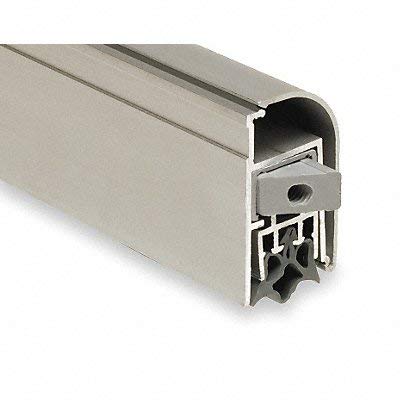
If you want an automatic bottom for a 42- or 48-inch door: The National Guard Automatic Door Bottom 3/8x48In Aluminum ($79) — This is the same lifting-seal idea as our upgrade pick, stretched to 48 inches. That extra foot is the whole point — it's the one automatic bottom here that covers a 42-inch entry or a commercial-width opening without splicing two units together. National Guard has built architectural door hardware for commercial construction for a long time, and the heavy-gauge aluminum housing is meant for doors that get opened hundreds of times a day. It's also the best choice for a home studio or a serious office, because a consistently dropping seal closes the acoustic path better than anything that drags. You give up money, and you take on the same fussy alignment as any automatic bottom. On a standard 36-inch residential door, the shorter Pemko is the more sensible buy.
The competition
These are the other products our research turned up in this category, not a survey of everything for sale. Each one solves a real problem — they just lost to a pick for the door most people are trying to seal, or they're built for a different door entirely.
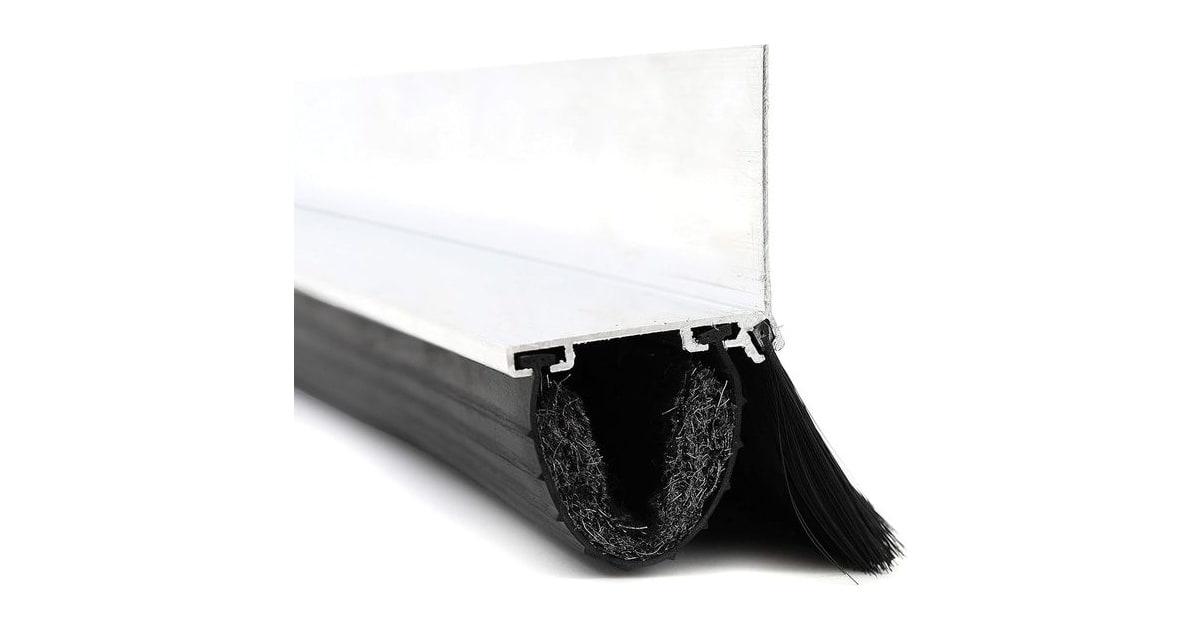
The Xcluder X2 Rodent Proof Overhead Sectional Door ($249.40) — The Xcluder X2 Rodent Proof Overhead Sectional Door Seal Kit is the serious answer to mice in the garage, and nothing else here competes with it on that. Its seal stacks a heavy rubber outer layer over a stainless-steel screen and a core of stainless fill fabric, so a rodent can't gnaw or compress its way through — soft vinyl and foam stop none of that. The kit includes the retainer, bottom seal, brush seal for the sides, and screws, and it trims to fit doors up to 16'4" wide. It lost the top spot because it only fits overhead sectional garage doors and it's far and away the most expensive thing here. If you've confirmed rodents are getting in under the garage door, buy it anyway.
The Frost King SG30W Frost King Plastic Garage ($20) — The Frost King SG30W is a 30-foot plastic weather-strip kit for the sides and top of a garage door — the vertical jambs and the head gap that a bottom seal leaves wide open. Those gaps let in wind, blowing rain, leaves, and bugs, and in an attached garage that shares a wall with your living space, that matters more than people expect. It screws on and it's flexible enough to follow the uneven concrete and out-of-plumb framing that garages always have. We didn't make it a pick because it's a garage-perimeter product rather than a solution for the entry door most readers are sealing, and the plastic hardens and cracks sooner than rubber would. For a garage that already has a decent bottom seal, it finishes the job cheaply.
Installation notes
Measure before you buy anything. Close the door, then check the gap at both corners and the middle with a ruler or a folded piece of paper — the widest reading is the number you're shopping against. While the door's open, look at the bottom edge for a kerf groove, because that single detail decides whether you need a slide-in insert or a screw-mount sweep. Clean the door bottom and the threshold before installing; grit under a seal wears it fast and keeps it from sitting flat. For peel-and-stick foam, the surface has to be dry and free of dust, and in cold weather a little warmth from a hair dryer helps the adhesive grab. After anything is installed, close the door and check for daylight at the corners. Corners are where seals fail first, and a 1/16-inch gap is plenty for an ant.
Questions we get
What's the difference between a door sweep and a threshold seal?
A sweep attaches to the bottom of the door itself and travels with it, pressing against the threshold when the door shuts. A threshold seal sits on the floor strip and stays put while the door closes down onto it. They block the same gap from opposite directions. On most modern entry doors, the threshold piece is the one that flattens out and needs replacing first.
How do I figure out what size I need?
Measure the gap under your closed door in three spots — both corners and the center — and use the largest number. New doors usually run 1/8 to 1/4 inch; a settled older door can hit 1/2 to 3/4 inch. Then measure the door's width, which is typically 30 to 36 inches at home and up to 48 inches for commercial openings. Buy for the widest gap and the full width, and trim down if needed.
Can I seal a door without drilling anything?
Yes, and three products here need no tools at all. The M-D kerf insert slides into an existing groove, the Suptikes stopper loops over the door bottom, and the M-D foam tape peels and sticks onto the frame. If your door has no kerf groove and you can't drill, the slide-on stopper is your best option. Peel-and-stick foam usually comes off clean, though older or delicate paint can hold onto a little residue.
How long should weatherstripping last?
It depends almost entirely on the material and how hard the door works. Foam generally gives you a few years before it loses its spring, vinyl sweeps run longer, and EPDM rubber or silicone can go a decade or more. Automatic door bottoms stretch that further because the seal never scrapes the floor. Sun exposure and heavy traffic shorten all of these.
What's best for a door that drags across carpet?
An automatic door bottom, without much debate. The Pemko and the longer National Guard both lift their seal clear before the door starts to swing, so it never touches the pile. A standard drag-style sweep mashes into carpet, goes permanently flat, and often stops sealing within one heating season on a busy entry.
Does weatherstripping actually help with noise?
It does, because sound moves through air gaps more efficiently than through solid material. Sealing the bottom of the door usually gives you the biggest single improvement, and adding closed-cell foam tape to the two jambs and the head takes it further. An automatic bottom seals most consistently, which is why it's the choice for a home office or studio. The door slab itself is still the limit — gap sealing won't turn a hollow-core door into a sound barrier.
How do I keep bugs from getting under the front door?
Any sweep that makes full-width contact with the threshold will stop most crawling insects. The M-D kerf insert handles doors with a groove, and the Frost King aluminum sweep handles everything else. The detail that matters is the corners — a gap as small as 1/16 inch at either end is a wide-open door for common household insects.
Why you should trust us
For this guide:
- We compared manufacturer specifications for every product here, focusing on stated gap coverage, seal material, and how each one attaches to a door.
- We read published guidance on air sealing and weatherstripping materials to understand why closed-cell foam, vinyl, and EPDM age so differently.
- We reviewed owner feedback across these listings for recurring failure patterns — flattened sweeps, wandering stoppers, and alignment trouble on automatic bottoms — and let those themes shape the flaws we call out.
- We read owner reviews on every listing, weighted toward the critical ones, because that is where the recurring failures show up.
- We have a systematic way of automatically fetching the latest prices, so the numbers on this page stay current.
- This is a research-focused guide, so the team may not own every product listed — though we often do own the top winners, which gives us extra context for the recommendations.
- We don't accept free products, and the retailer commission never changes which product we recommend.
Sources
Air Sealing Your Home — U.S. Department of Energy EnergySaver, U.S. Department of Energy
Weatherstripping Guide — U.S. Department of Energy EnergySaver, U.S. Department of Energy
Seal and Insulate with Energy Star — DIY Weatherization Guide, EPA Energy Star
Best Weatherstripping of 2026 — Tested and Reviewed, Bob Vila
Best Door Sweeps — Tested and Reviewed, This Old House
Amazon product listings and owner reviews for all 8 products
Manufacturer specification pages for each product
Some passages in this guide may be paraphrased with AI help. Prices are refreshed automatically.
More like this.
Continue exploring home reviews and recommendations.

The Best Weatherstripping Kits
Drafts announce themselves in small ways. A cold ribbon of air across your ankles at the front door. A curtain that stirs when nothing's open.…

The Best Stains and Sealers for Pressure Treated Decks
A deck stain has one real job: keep water and sun out of the boards. Pressure treated pine takes the worst of both. Rain pools on the flat surfaces, the…

The Best Asphalt Driveway Sealers
Your driveway takes more abuse than any other surface on your property. Sun bakes the binder out of the asphalt, water works into hairline cracks and…

The Best Garage Door Insulation Kits
A bare steel garage door is basically a heat sink bolted to your house. In July it soaks up sun all afternoon and radiates it into the space where your…

The Best Smart Wi-Fi Garage Door Openers
A garage door is the biggest moving thing most people own, and it's also the door you're most likely to leave open by accident. A smart opener fixes that.…

The Best Door Draft Stoppers
Cold air doesn't need much of an opening. A 1/8-inch gap under a standard 36-inch door moves about as much air as a 2.4-square-inch hole punched in your…