The Best Weatherstripping Kits
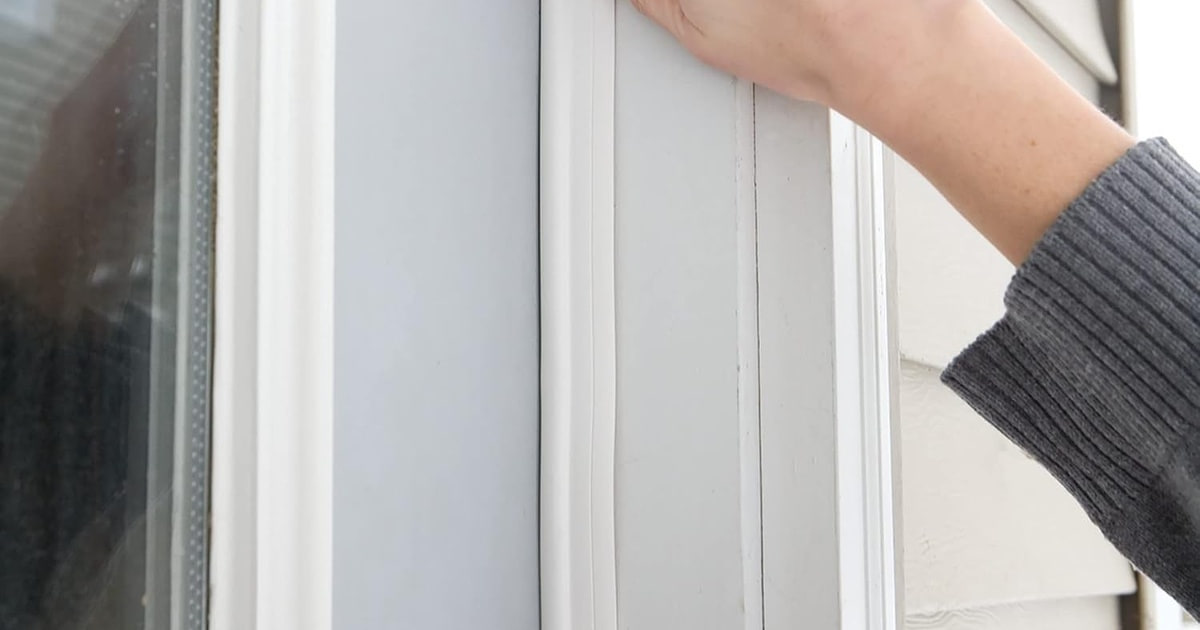
Drafts announce themselves in small ways. A cold ribbon of air across your ankles at the front door. A curtain that stirs when nothing's open. Weatherstripping is the cheap fix for all of it, and it works because the gaps are usually tiny. Sealing common leaks around doors and windows can cut a home's heating and cooling costs by as much as 20%, according to ENERGY STAR. Uncontrolled air leakage accounts for roughly a quarter to 40% of the energy a typical home burns, RMI estimates.
No kit solves everything, though. Adhesive foam tape compresses and quits within a year or two, and felt isn't much better. Peel-and-stick strips let go in a cold garage or on a dusty jamb. Screw-in and nail-in seals last far longer, but they leave holes, which matters if you rent. And nothing here fixes a door that's warped, sagging or hung crooked. Weatherstripping closes a gap. It can't square a frame, and a bad fit will show up again by spring.
So start with a draft test. Consumer Reports suggests running a hand along your frames, or watching a candle flame, before you buy anything. Then measure the perimeter, because running short partway through is the most common regret in owner feedback. Most drafty doors need two things: something along the top and sides, and something at the bottom. We think that the M-D Building Products Door Seal Kit is the best weatherstripping kit for most people, and that the Frost King V-Seal Weather-Strip is the one to buy if you want a fast, low-commitment fix.
Everything we recommend

A screw-on frame seal that stays put long after tape gives up

Quick, nearly invisible draft control for doors and windows

The sweep for a threshold that isn't flat anymore

The winter fix for single-pane windows you can't replace
Prices as of Oct 25, 6:48 AM PT · Details
At a glance
| Product | Seal material | Coverage | Price | |
|---|---|---|---|---|
| Frost King M13WH V-Seal Weather-Strip 7/8-Inch byBudget pick | V-seal weather-strip | 17 ft, 2-pack | $9.34 |
| MD Building Door Seal KitTop pick | Aluminum and vinyl | 36 x 84 in, 3 pieces | $24.15 |
| 3M Indoor Window Insulator Kit - FiveAlso great | — | Five 3 x 5 ft windows | $17.66 |
 | Suptikes 2 Pack Door Draft Stopper,Door SweepAlso consider | — | 2 x 39 in, 2-pack | $8.98 |
 | Duck Brand Vinyl Gasket Weatherstrip SealAlso in lineup | Vinyl | 17 ft | $14.99 |
| 42 Inch BlackUpgrade pick | — | 42 in, trim-to-fit | $49.99 |
 | Transparent Window Weather Sealing TapeAlso consider | — | 3 in x 55 yd | $17.99 |
Prices as of Oct 25, 6:48 AM PT · Details
How we picked
Material and seal. We favored vinyl, rubber and silicone compression seals over foam and felt, based on published guidance from This Old House and The Spruce. Foam tape flattens within a year or two, and that shows up constantly in owner feedback.
Gap compatibility. We checked each listing for the gap range it actually claims to close. Anything sold as a door sweep had to cover the 3/8-to-1-inch range where most under-door gaps land.
Install method. We looked at whether a kit needs adhesive, nails or screws, and whether the hardware comes in the box. Renters need peel-and-stick and pressure-fit options, so we kept both kinds in the lineup.
Coverage per kit. We counted the linear feet and piece lengths in each kit against a standard entry door and window. A kit that seals three sides is fine, as long as you know the fourth is still open.
Cold-weather behavior. Bob Vila puts silicone's working range at roughly minus 20 to 180 degrees Fahrenheit, wider than standard EPDM foam. For anything mounted on an exterior door, that flexibility decided close calls.
Top pick
A screw-on frame seal that stays put long after tape gives up
MD Building Door Seal Kit
This is the aluminum-and-vinyl seal that runs along the top and both sides of a standard door, held on with screws instead of glue. You get a 36-inch head piece, two 84-inch jamb pieces and the hardware, and it blocks drafts, dust, moisture and insects.
$24.15fromAmazonPrices as of Oct 25, 6:48 AM PT · Details
On an exterior door, screws beat adhesive. Tape has to hold through summer heat, freezing rain and a jamb that's never as clean as you think. It usually loses. This kit mounts to the frame with the screws in the box, so the seal stays exactly where you set it. That's the whole argument, and it's a strong one.
The sealing part is a vinyl bulb riding in an aluminum carrier. It squashes against the door face when you close up, then springs back. That's why compression seals hold their shape longer than foam tape, which flattens and stops sealing within a year or two. This Old House puts compression-style seals ahead of adhesive foam on exterior doors for both seal quality and longevity.
It's sized for a standard door, not a custom one. You get one 36-inch piece for the head and two 84-inch pieces for the jambs, each a bit over an inch wide. If your opening is smaller, aluminum cuts down with a hacksaw and a steady hand. If it's larger, this isn't your kit, so measure before you order rather than after.
Plan on an hour with a drill, a tape measure and a pencil. The usual method is to close the door, hold each piece against the slab until the bulb just touches, then mark and fasten. Snug, not crushed. Push too hard and the door drags. Leave it loose and you're back where you started. Owner feedback keeps circling that one adjustment.
Flaws but not dealbreakers
Those screws go into your door frame, and they leave holes. If you rent, that alone rules this out, and a peel-and-stick sweep or V-strip is the safer call. The silver aluminum also stays visible against white trim. You can paint it, but you're painting metal, so prep matters.
It seals the top and the two sides, and that's it. The bottom of your door is the leakiest edge in most houses, so budget for a sweep too. Family Handyman notes that a well-fitted sweep closes gaps as small as a quarter inch, which is exactly the kind of gap you can't see but can feel.
Budget pick
Quick, nearly invisible draft control for doors and windows
Frost King M13WH V-Seal Weather-Strip 7/8-Inch by
Frost King's V-seal folds into a shallow spring and tucks into the jamb or a window channel, where you barely notice it. Two 17-foot rolls cover a lot of house for very little, and it's the strip most hardware stores keep on the shelf.
$9.34fromAmazonPrices as of Oct 25, 6:48 AM PT · Details
Run your hand down the side of a closed door on a windy day. If you feel air, the gap is probably a fraction of an inch. V-seal is built for exactly that. The strip folds along its crease into a shallow spring, tucks into the jamb or the window channel, and pushes back against the door every time it shuts.
Two 17-foot rolls go a long way. That's several door jambs, a handful of window sashes, or a mix of both, which makes this the strip to buy when you don't yet know where all your drafts are. Frost King's V-strip is also one of the most widely stocked weatherstripping products at U.S. hardware retailers, so a mid-project refill is easy to find.
Vinyl outlasts felt by a wide margin. The Spruce puts felt at a year or two before replacement, against five-plus years for vinyl and metal-backed strips, and that gap shows up in owner feedback. Nobody buys felt twice. This isn't a lifetime seal on a busy exterior door, but on interior doors, window sashes and an attic hatch, it holds up fine.
Flaws but not dealbreakers
The adhesive wants a clean, dry, room-temperature surface, and it doesn't forgive dust or chalky old paint. Wipe the jamb with rubbing alcohol and let it dry. In a cold garage, warm the strip and the surface first, or plan on a corner curling up within a week.
On a door that already fits tightly, adding V-strip can make the latch stiff. That's normal for a day or two while the vinyl takes a set. If it's still hard to close after that, you probably sealed a spot that didn't need it.
Upgrade pick
The sweep for a threshold that isn't flat anymore
42 Inch Black
An adjustable aluminum sweep with two flexible fins, 42 inches long and made to trim. It closes under-door gaps from 3/8 to 7/8 inch, adds a drip edge and a drainage channel for driving rain, and goes on without taking the door down.
$49.99fromAmazonPrices as of Oct 25, 6:48 AM PT · Details
This is the sweep for a threshold that's stopped being flat. The carrier adjusts to close gaps from 3/8 inch to 7/8 inch, so you set it after the door is hung instead of hoping a fixed height lands right. Old houses settle. Thresholds wear down in the middle and stay high at the edges. An adjustable sweep is how you deal with that.
Two flexible fins do the sealing instead of one, and they flex independently across the span. That matters at the corners, where a single rigid blade tends to lift and leave a thin line of light you can spot from inside at night. Continuous contact is the entire point of a sweep, and the double-fin profile is a sensible way to get it.
It also handles water, which most sweeps ignore. A drip edge and a punched drainage channel push rain away from the bottom of the slab instead of letting it pool there. If your front door takes weather head-on, that's worth having. Swollen jamb bottoms and soaked entry rugs are the slow, annoying version of a water problem.
The 42-inch length covers a standard entry door with room to trim, and it's pre-notched to clear existing weatherstripping and a raised threshold. You install it without pulling the door off its hinges. That's a real convenience if you've ever wrestled a solid-core slab back onto three loose hinge pins by yourself.
Flaws but not dealbreakers
This is a newer listing with far less owner feedback behind it than the Frost King or 3M kits, so there's less of a track record to lean on. The specifications and the design both look sound. But we'd rather point you at something thousands of people have lived with, and this isn't that yet.
It's also the most expensive way here to seal one edge of one door. If your threshold is flat and your gap is consistent from side to side, a simple adhesive sweep does the same job for a fraction as much.
Also great
The winter fix for single-pane windows you can't replace
3M Indoor Window Insulator Kit - Five
A five-window shrink-film kit that turns single-pane glass into an insulated pocket of still air. You tape the film to the trim, shrink it tight with a hair dryer, and cut both heat loss and the condensation that frosts your sills.
$17.66fromAmazonPrices as of Oct 25, 6:48 AM PT · Details
Single-pane windows leak heat no matter how carefully you seal the frame, because the glass itself is the problem. Shrink film is the workaround. You tape a clear sheet to the trim, run a hair dryer over it until it pulls drum-tight, and you've built a still pocket of air in front of the glass that heat has a much harder time crossing.
One box covers five 3-by-5-foot windows. For most people that's the drafty bedroom, the stairwell and the back of the house handled in an afternoon. Good Housekeeping points to shrink-film kits as the standard fix for single-pane glass, and 3M is the name the whole category grew up around. Nothing about the install needs a tool you don't already own.
The condensation benefit gets overlooked. Warm indoor air hitting cold glass is what puts water on your sills and frost in the corners, and the film keeps that air off the glass entirely. If you've been wiping windows every morning or watching paint peel below a sash, this is the fix. It also argues for installing before the cold sets in, not during it.
Treat it as seasonal, not permanent. The film goes up in fall, comes down when you want the windows open again, and you buy another box the next time around. That's the deal. If you'd rather not repeat the chore forever, put the money toward the glass instead, because film is a stopgap for windows you can't replace yet.
Flaws but not dealbreakers
The tape is the weak link. Owners regularly report it releasing on textured, dusty or freshly painted trim, and some report it lifting paint on removal. Test a short piece somewhere inconspicuous first, and clean the trim before you commit to a whole window.
You also lose the window for the season. No cracking it for fresh air, no leaning out, and the film reads as slightly hazy plastic up close even when it's shrunk tight. In a main living room, that bothers some people more than the draft did.
3M covers this kit with a one-year limited warranty against defects in material and manufacture.
Who this is for
Buy now if you can feel air moving at a door or window, or if your heating bills climb faster than the weather explains. Weatherstripping is the rare home upgrade that pays back quickly and takes an afternoon. It's especially worth doing in an older house, where doors have shifted and the original seals are long gone. If you rent, stick to peel-and-stick and pressure-fit products, and photograph the trim before you start.
This guide covers doors and windows in a home you live in. It doesn't cover garage door bottom seals, RV and camper gaskets, automotive weatherstripping, or caulk and spray foam, which handle the fixed gaps around a frame rather than the moving joint. And if a door is visibly warped or won't latch, fix the door first. No seal compensates for a slab that no longer meets its jamb.
How we picked
Material: we favored vinyl, rubber and silicone compression seals over foam and felt, since foam flattens within a year or two and felt rarely lasts longer than that. Gap range: a kit has to state the gap it closes, and the sweeps here cover the 3/8-to-1-inch range where most door bottoms sit. Install: peel-and-stick for renters, screw-in and nail-in where permanence is fine, with no specialty tools needed either way. Coverage: we counted linear feet and piece lengths against a standard entry door, because a kit that seals three sides leaves the leakiest edge wide open. Cold: silicone stays flexible from roughly minus 20 to 180 degrees Fahrenheit, per Bob Vila, which matters for anything living on an exterior door.
Other weatherstripping kits worth considering
If you rent and can't put screws in the door: The Suptikes 2 Pack Door Draft Stopper,Door Sweep — Suptikes' sweep sticks to the bottom of the slab with adhesive, so there's no hardware and no holes. Two layers of seal wrap the edge, which helps with hallway noise as well as air, and it's rated for gaps up to an inch. You cut it to width with scissors. In cold weather, warming the strip with a hair dryer before you stick it is the difference between a seal that holds and one that peels by the weekend. What you give up is the fine adjustment a screw-mounted sweep offers.
If you want a seal that peels off clean: The Transparent Window Weather Sealing Tape — This is a wide roll of clear sealing tape for window sashes, door edges and the gaps around a window air conditioner. Transparent film disappears against glass in a way white foam never does, and the maker says it releases without residue. A 55-yard roll is far more than a single room needs, so expect leftovers. It's a good answer for a joint you don't plan to open. It's the wrong answer for a door you walk through every day.
The competition
Here's what our research surfaced, not everything on the market. Weatherstripping is a crowded, low-cost category full of near-identical strips, and the product below is worth knowing about even though it didn't earn a pick.
The Duck Brand Vinyl Gasket Weatherstrip Seal — Duck's tubular vinyl gasket is a nail-in seal, 17 feet of it, meant for door and window frames where you want something sturdier than tape. Nails hold better than adhesive, and the round gasket conforms nicely to a surface that isn't perfectly flat. But nailing is a permanent commitment, swinging a hammer in a door rabbet is awkward, and the M-D kit gives you a cleaner result on an entry door for about the same effort. Choose this one for a garage or a shed, where looks don't matter and holding power does.
Installation notes
Measure first. Add up the top, both sides and the bottom of every opening you plan to seal, then buy a bit more than that, because running short partway through is the most common complaint in owner feedback. Clean every surface with rubbing alcohol and let it dry fully. Adhesive fails on dust and chalky paint more often than it fails on cold. Do the top and sides first, then the bottom sweep, and close the door after each piece to check for drag. The old dollar-bill test still works: shut a bill in the door, and if it slides out freely, that spot isn't sealed. Check your work again after a full season of expansion and contraction.
Questions we get
What's the best weatherstripping for exterior doors?
Compression seals, meaning a vinyl or silicone bulb held in a rigid carrier, hold up best on a door you open every day. This Old House rates compression-style seals ahead of adhesive foam tape on both seal quality and longevity. Pair one with a bottom sweep, since a top-and-sides kit never touches the leakiest edge.
How long does weatherstripping last?
It depends almost entirely on the material. The Spruce puts felt at a year or two before replacement, against five-plus years for vinyl and metal-backed strips. Foam tape sits near the bottom, because it compresses and stops springing back. Check any seal once a year by closing a dollar bill in the door.
Can I install weatherstripping myself, or do I need a professional?
Almost anyone can do this. Every kit here goes on with a tape measure, scissors or a hacksaw, and sometimes a drill. Angi's figures put professional installation per door well above what a DIY retail kit costs, and the work itself is straightforward. Hire someone only if the door needs rehanging.
What's the difference between a door sweep and weatherstripping?
A sweep seals the gap under the door along the bottom edge. Weatherstripping usually means the seal along the top and the two sides, where the door meets the jamb. Most drafty doors need both, and doing only one leaves an obvious path for air. Family Handyman notes a good sweep closes gaps as small as a quarter inch.
What should renters use so they don't damage the door?
Stick with peel-and-stick and pressure-fit products, and skip anything with screws or nails. An adhesive door sweep plus V-strip along the jamb handles most rental drafts without touching the frame. Photograph the trim before you start. When you move out, warm the adhesive with a hair dryer and pull slowly rather than yanking it cold.
Does weatherstripping keep bugs out too?
Yes, and for some people that's the bigger win. The M-D kit lists insects right alongside drafts, dust and moisture, and a properly set sweep closes the quarter-inch gap that lets ants and spiders walk in under a door. It won't do anything for torn screens or gaps around utility penetrations, though.
Why you should trust us
For this guide:
- We read manufacturer specifications and dimensions for every kit in this lineup, alongside published guidance from ENERGY STAR, This Old House, Family Handyman, The Spruce, Bob Vila, Good Housekeeping and Consumer Reports.
- We compared material types, stated gap ranges and coverage lengths across the lineup to see which kits actually fit a standard door or window.
- We looked for recurring themes in owner feedback, especially adhesive failure in cold weather, sizing mistakes and tape that lifts paint on removal.
- We read owner reviews on every listing, weighted toward the critical ones, because that is where the recurring failures show up.
- We have a systematic way of automatically fetching the latest prices, so the numbers on this page stay current.
- This is a research-focused guide, so the team may not own every product listed — though we often do own the top winners, which gives us extra context for the recommendations.
- We don't accept free products, and the retailer commission never changes which product we recommend.
Sources
Weatherize Your Home - ENERGY STAR, ENERGY STAR / EPA
Weatherization - Department of Energy, U.S. Department of Energy
How to Weatherstrip a Door - This Old House, This Old House
The Best Weatherstripping - Bob Vila, Bob Vila
How to Install Door Weatherstripping - Family Handyman, Family Handyman
Best Window Insulation Kits - Good Housekeeping, Good Housekeeping
DIY Home Energy Audit Checklist - Consumer Reports, Consumer Reports
Types of Weatherstripping Explained - The Spruce, The Spruce
How Much Air Leaks Cost You - Rocky Mountain Institute / RMI, RMI (Rocky Mountain Institute)
Amazon Customer Reviews - Frost King V25H, Amazon (aggregated customer reviews)
Sealing Air Leaks - HomeAdvisor / Angi, Angi (HomeAdvisor)
Amazon product listings and owner reviews for all 7 products
Manufacturer specification pages for each product
Some passages in this guide may be paraphrased with AI help.
Product prices and availability are accurate as of the date/time indicated and are subject to change. Any price and availability information displayed on Amazon.com at the time of purchase will apply to the purchase of this product.
More like this.
Continue exploring home reviews and recommendations.

The Best Door Threshold Seals and Weatherstripping of 2026
You can feel a bad door seal before you can see it. Stand near the front door on a cold morning and there's a cool ribbon of air across your ankles. In…

The Best Indoor Hydroponic Herb Garden Kits
Fresh herbs are the one grocery item that always seems to rot before you use half the bunch. That's the pitch for a countertop hydroponic garden: you snip…

The Best Permanent LED Eave Lighting Kits
Permanent eave lights live under your roofline all year and do two jobs. Most nights they're a warm white accent that makes the house look finished and…

The Best Aluminum Cable Deck Railing Kits
Cable railing sells itself on one thing: you stop noticing the railing and start noticing the yard. Thin horizontal cables block a fraction of the view…

The Best Garage Door Insulation Kits
A bare steel garage door is basically a heat sink bolted to your house. In July it soaks up sun all afternoon and radiates it into the space where your…

The Best Concrete Crack Repair Kits for Driveways
A crack in your driveway isn't just ugly. It's an open door for water, and water is what turns a hairline into a trench. Rain seeps in, freezes, expands,…