The Best Permanent LED Eave Lighting Kits
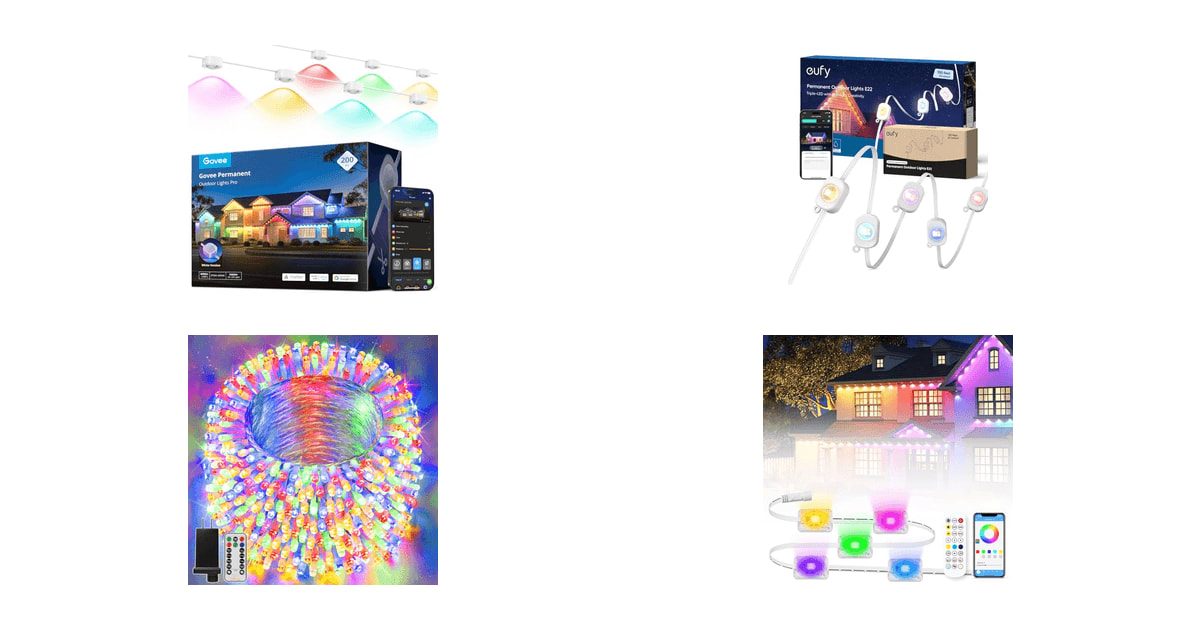
Permanent eave lights live under your roofline all year and do two jobs. Most nights they're a warm white accent that makes the house look finished and keeps the front walk from turning into a black hole. Then, a few times a year, they turn orange for Halloween or red and green for December, and you never touch a ladder. That's the whole appeal: you climb up once, and the seasonal ritual becomes a tap on your phone.
Here's the honest caveat. None of these consumer kits look like the professionally installed systems you've seen on big houses, where the LEDs sit inside an aluminum channel and vanish during the day. Consumer kits are discrete nodes on a wire, spaced roughly a foot and a half to two feet apart, and up close they read as dots rather than a smooth wash. They're also accent-bright, not security-bright. And the controller — not the LEDs — is the part most likely to quit on you.
You should also know that the install is the real project, not the shopping. Sticking the nodes takes seconds each; hiding the wire, planning splices and getting power to the right corner is what eats the weekend. We think that the Govee Permanent Outdoor Lights Pro is the best permanent LED eave lighting kit for most people, and that the eufy Permanent Outdoor Lights E22 is the one to buy if you already run eufy cameras or want the brightest light on the house.
Everything we recommend

The best-sealed, best-supported kit for most houses

Brighter light and camera tie-ins, with a fussier app

A low-cost way to try permanent lights, with real trade-offs
At a glance
| Product | Length | Waterproof Rating | Price | |
|---|---|---|---|---|
| Govee Permanent Outdoor Lights ProTop pick | 200ft | IP67 | $759.99 |
| eufy Permanent Outdoor Lights E22Runner-up | 150ft | IP67 | $279.99On sale |
 | Ollny Christmas Lights Outdoor WaterproofAlso in lineup | 328ft | IP44 | $29.99On sale |
| Permanent Outdoor Lights for HouseBudget pick | 150ft | P67 | $99.99 |
How we picked
Weather sealing. We treated IP67 at the nodes and connector joints as the bar, because published exposure comparisons show IP65 junctions picking up corrosion while IP67 joints stay clean. We checked the rating on the control box and adapter separately, since those are often lower than the lights.
Color technology. We favored individually addressable RGBIC over plain RGB, since only RGBIC shows multiple colors at once and animates them. Kits that ship an RGB-only version had to say so clearly in their own listing.
Node spacing and output. We compared how many LEDs each kit spreads across its stated length, and the lumens per node. Tighter spacing looks smoother from the yard, and higher output matters if you want the lights to do more than decorate.
App and voice control. We looked for Alexa and Google support at minimum, Matter for future-proofing, and some way to run the lights when the internet is out. Owner feedback about app reliability weighed as heavily as the feature list.
Mounting and service life. We wanted both adhesive and mechanical fasteners in the box, since adhesive-only installs fail in owner reports. We also compared rated hours, cut-and-extend flexibility, and how much wiring slack each design allows.
Top pick
The best-sealed, best-supported kit for most houses
Govee Permanent Outdoor Lights Pro
The Govee Permanent Outdoor Lights Pro puts individually addressable RGBWWIC nodes under your eaves, so you can run warm white all year and switch to red and green in seconds. It's the best-sealed kit here, and the easiest one to find help with when something goes sideways.
$759.99fromAmazonThe sealing is where this kit pulls ahead. The lights are rated IP67, meaning the nodes are certified for a meter of water for half an hour, and the control box is IP65. In published outdoor-exposure comparisons, kits with IP67 connector joints came through clean while IP65 joints showed oxidation at some junctions. If you live somewhere with sideways rain and a real freeze-thaw cycle, that gap matters more than any app feature.
Each node is individually addressable, and that's the distinction that trips people up. RGBIC lights show several colors at once along one run and can animate them, so you get actual candy-cane stripes or a chase that travels down the roofline. Plain RGB lights can only do one color at a time across the whole string. Govee also stacks warm and cool white diodes in the same housing, so your everyday setting is a real 2700K white, not a washed-out approximation.
The run is cuttable and extendable up to 200 feet total, with waterproof splice joints roughly every 16 feet. That flexibility is worth more than it sounds. Houses have bump-outs, dormers and a garage that sits at an odd angle, and a kit you can shorten in one place and stretch in another saves you from leaving a dark gap over the front door. Govee's guidance is to mount the nodes two to four inches off the wall for the triangular spread.
The ecosystem is the quiet reason to buy Govee. More people own these than any other consumer kit, which means when you're stuck on a corner splice at four in the afternoon, someone has already filmed the fix. Third-party clips and channel accessories exist. The lights work with Matter, Alexa and Google Assistant, and the app carries 75 scene modes so you're not building every holiday from scratch.
Flaws but not dealbreakers
The included VHB adhesive isn't enough on its own for a lot of people. Wire has weight, sun heats fascia, and owners consistently report nodes letting go over time unless they add the clips or screws. Plan on mechanical fasteners from the start, and stick to clean, dry fascia on a mild day. The power adapter is also indoor-rated only, so you need a route inside or a genuinely protected outlet — awkward on a detached garage.
This is accent lighting, not a floodlight. At roughly 50 lumens per node and about 20 inches of spacing on the 200-foot kit, it draws a clean line of points along your roof from the street. Walk up close and you'll see dots. If you're buying eave lights mainly as a perimeter deterrent, you'll want real security fixtures doing the heavy work and this doing the ambiance.
Budget a full weekend, and more if you're particular. The nodes go up fast; concealing the wire and the splice joints is the part that separates a clean install from a visible one, and it's where most of the frustration in owner feedback comes from.
Runner-upOn sale
Brighter light and camera tie-ins, with a fussier app
eufy Permanent Outdoor Lights E22
The eufy E22 uses a triple-LED node that's roughly twice as bright as our top pick, with a color temperature range wide enough to swing from candlelight to daylight. If you already own eufy cameras, the lights can fire a theme the moment someone walks up.
$279.99fromAmazonList priceBrightness is the headline. Each node combines RGB with warm and cool white diodes for up to 90 lumens, and the color temperature range runs from a deep 1500K amber all the way to 9000K. In practice that means you can set a low, candle-warm glow for a dinner on the patio, then push it to near-daylight when you're carrying groceries in from the driveway. Most kits give you one usable white; this one gives you a dial.
The camera tie-in is something no other kit here does. eufy's WonderLink feature lets the lights react when a eufy camera detects a person, so the eaves flash a theme as someone comes up the walk. It's a nice welcome for guests and a real deterrent cue for anyone who shouldn't be there. It only pays off if you're already in the eufy camera ecosystem, though — otherwise it's a feature you'll never turn on.
The kit ships as a 100-foot run plus a 50-foot run, which covers a typical single-family perimeter with a little slack. Mounting uses adhesive tape backed up by screw holes, and the sections join with barrel connectors that owners generally find solid. The app carries more than 80 preset themes, plus an AI mode where you describe the mood you want and it builds a scene for you.
Flaws but not dealbreakers
Weatherproofing is a step down from our top pick, and it's the reason this isn't first. The light strings and controllers are rated IP65 while the power adapter is IP67 — the inverse of what you actually want on an exposed soffit. Owner feedback includes units that started cycling on and off months after install, with support pointing at moisture in the connections. If your eaves take direct weather, mount the control box under real cover and treat every joint carefully.
The app is the weak link. Owners who love the hardware describe the software as merely okay, and there's no Matter support, so you're limited to Alexa and Google Assistant for voice. The community around these is also much smaller than Govee's, which means fewer tutorials when you hit an odd corner or a run that won't address correctly.
Budget pick
A low-cost way to try permanent lights, with real trade-offs
Permanent Outdoor Lights for House
This LANMOK kit covers 150 feet in three sections, with IP67 protection claimed from the LED beads through the power supply and a remote that works without any app. The nodes sit two feet apart, so it reads as a line of dots rather than a smooth wash.
$99.99fromAmazonThis is the kit for someone who wants to find out whether they'll actually use permanent lights. It's the least expensive way into the category, and it doesn't cut the corner that matters most: the listing rates the whole chain, beads through power supply, at IP67, with an operating range down to -22°F. That's a colder spec than either of our other picks claims. Three 50-foot sections give you 150 feet, which covers the front and one side of most houses.
It mounts with both adhesive and screws, and the manufacturer tells you to use both in humid climates. We like that honesty. Adhesive-only mounting is the single most common failure story in owner feedback across this whole category, and a kit that ships a screw kit and tells you to use it is setting you up better than one that pretends tape is enough.
The remote is worth more than it looks. Cloud services go down, routers get replaced, and app accounts get orphaned when a company loses interest in a product line. A kit you can drive from a physical remote keeps working through all of that. You still get app control with 16 million colors, preset modes and timers if you want them.
Flaws but not dealbreakers
Read the version carefully before you buy. The listing notes that the basic version shows one color at a time — that's plain RGB, not the individually addressable RGBIC our other picks use. You won't get candy-cane stripes or a chase down the roofline from it. This exact misunderstanding is the single biggest source of buyer disappointment in permanent lighting, so confirm what you're ordering.
The spacing is the other compromise: 75 LEDs across 150 feet works out to a node every two feet, noticeably sparser than the roughly 20-inch spacing on our top two picks. From the curb it's fine. From your own porch it's dotted. The rated life is also shorter, at 30,000 hours against 50,000 for the Govee.
There's no real track record here. It's a generic-brand listing with almost no owner history behind it, so we can't tell you how the controller holds up after two winters. There's also a wiring constraint worth planning around — the instructions ask you to keep total cable length within about eight feet of the power source, which limits where your outlet can be.
Who this is for
Buy a permanent kit if you put lights up every December and take them down every January, or if you've been paying someone to do it. The math gets convincing fast for a two-story house or anything with a steep roof, where the annual ladder work is the actual cost. These also make sense if you host guests, rent the place out, or just want the front of your house lit every night without a floodlight glaring into the bedroom.
Skip them if you rent, if your fascia is crumbling or due for paint, or if you want a genuinely invisible daytime installation — for that you need a professionally installed channel system, which costs many times what a DIY kit does and comes with a dealer contract. This guide covers consumer kits you buy and install yourself, so it doesn't cover dealer-installed systems, landscape lighting, or seasonal string lights you hang and remove.
How we picked
We ranked these on the things that decide whether a kit is still working in three years. Weather sealing: IP67 at the nodes and joints, checked separately from the control box and adapter, because that's where budget kits cut corners. Color technology: individually addressable RGBIC, which shows several colors at once, over plain RGB, which can't. Node spacing and output: how many LEDs cover the stated run and how bright each one is, since spacing decides whether you see a wash or a row of dots. App and voice control: Alexa and Google at minimum, Matter where possible, and some way to run the lights when the cloud is down. Mounting and service life: adhesive plus screws in the box, cut-and-extend flexibility, and rated hours.
The competition
This is what our research surfaced in this category, not a survey of everything for sale. Plenty of permanent lighting is sold through dealers rather than online listings, and those systems compete on a different set of terms.
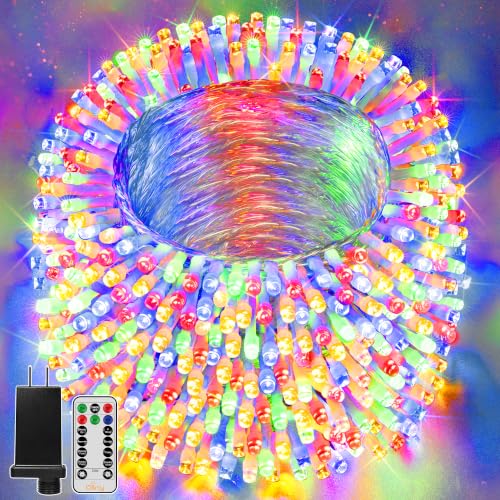
The Ollny Christmas Lights Outdoor Waterproof ($29.99) — The Ollny 328-foot string light set isn't a permanent eave kit, and it's worth being clear about that, because it turns up constantly in the same searches. It's a very long run of 1,000 multicolor LEDs with eight animation modes, four brightness levels and a remote — good, cheerful holiday lighting for wrapping a fence line or blanketing a yard. But it's rated IP44, which is splash resistance, not the submersion-grade sealing you want on a joint that sits under a soffit for years. There's no app, no addressable color control, and owners note the remote only works pointed at the control box. Buy it if you want a lot of light for a few weeks a year and you're fine taking it down. It won't survive being left up as a permanent installation.
Installation notes
Do the planning before you do the climbing. Walk the perimeter with a tape measure, mark where each run starts and stops, and locate an outlet — ideally a covered, GFCI-protected one, since every adapter here is happier out of the weather. Clean the fascia and let it dry fully; adhesive won't bond to chalky paint, dust or a cold surface. Use the screws as well as the tape, especially in humid or windy spots, because wire weight is what pulls nodes loose over time. Keep splice joints where you can reach them later, and tuck wire into a molding channel if you want the daytime look to stay clean. Test every section on the ground before it goes up — finding a dead node from a ladder is miserable.
Questions we get
What are permanent LED eave lights, and how are they different from holiday string lights?
Permanent kits are individually mounted LED nodes that attach to your fascia or soffit and stay there year-round. They're sealed for continuous outdoor exposure, run from an app or remote, and switch between warm white for everyday use and color for holidays. Holiday string lights are built to be hung and removed each season, with lower weather ratings and no per-node control.
What's the difference between RGB and RGBIC?
RGB lights show one color at a time across the whole run. RGBIC lights are individually addressable, so each node can be a different color simultaneously, which is what makes stripes, gradients and chasing animations possible. If you want alternating red and green at Christmas, you need RGBIC. This is the most common thing buyers get wrong, so check the listing before you order.
Can I install these myself, or do I need a professional?
Any of the kits here are a DIY job if you're comfortable on a ladder and can run an extension cord. The nodes stick on in seconds each; the work is measuring, hiding wire and planning splices. A single-story house is a weekend. If you have a steep two-story roof or you're not steady on a ladder, hire it out — a fall costs far more than the labor.
What IP rating do I need in a rainy or snowy climate?
Look for IP67 on the nodes and, critically, on the connector joints. IP65 covers rain hitting the light itself, but joints are where water finds its way in, and published exposure comparisons found corrosion at IP65 junctions that IP67 joints avoided. Check the control box and power adapter ratings separately, since they're often lower than the lights and usually need to sit under cover.
Will permanent eave lights raise my electricity bill?
Barely. A 100-foot run draws roughly 10 watts, so running it eight hours a night adds a trivial amount to a monthly bill. LED holiday lighting uses about 75 to 80 percent less energy than equivalent incandescent strings, according to the Department of Energy. Running these year-round costs less than most people expect.
How long do these last before something needs replacing?
The LEDs outlive everything else — our top pick is rated for 50,000 hours, which is well over a decade at eight hours a night. The controller is the part that fails first, and cloud service changes can strand an app-only system. That's why we weight offline or remote control: a kit that still works without the internet has a longer practical life than its spec sheet suggests.
Is a consumer kit worth it compared with a professionally installed system?
It depends on what bothers you. Dealer-installed systems like Jellyfish or Trimlight hide the LEDs in a channel so they disappear during the day, run much brighter, and come with a labor warranty — at many times the cost of a DIY kit. Consumer kits get you the same seasonal convenience for a fraction of that, but you'll see the nodes and the wire up close. If your HOA restricts exterior changes, the channel systems are the safer route.
Why you should trust us
For this guide:
- We read the manufacturer specification sheets for every kit here, checking the IP rating on the nodes, the control box and the power adapter separately rather than trusting the headline number.
- We compared published reviews of consumer permanent lighting kits, including outdoor-exposure comparisons of connector corrosion and rankings of app responsiveness and install ease.
- We looked for repeated themes in owner feedback — adhesive failures, water in the connections, and controllers that start cycling months after install — and weighted those over one-off complaints.
- We read owner reviews on every listing, weighted toward the critical ones, because that is where the recurring failures show up.
- We have a systematic way of automatically fetching the latest prices, so the numbers on this page stay current.
- This is a research-focused guide, so the team may not own every product listed — though we often do own the top winners, which gives us extra context for the recommendations.
- We don't accept free products, and the retailer commission never changes which product we recommend.
Sources
Best Permanent Outdoor Lights — Bob Vila, Bob Vila
Best Permanent Outdoor Lights Tested and Reviewed — This Old House, This Old House
Best Permanent Outdoor Lights — Tom's Guide, Tom's Guide
Best Permanent Christmas Lights for Your Home — Family Handyman, Family Handyman
Best Permanent Outdoor Lights — CNET, CNET
Jellyfish Lighting Review — Forbes Home, Forbes Home
Permanent Outdoor Lighting Installation Cost Guide — Angi, Angi
Christmas Light Installation Cost — Angi, Angi
LED Lighting Energy Savings — U.S. Department of Energy, U.S. Department of Energy
Average U.S. Retail Electricity Price — Energy Information Administration, U.S. Energy Information Administration
Govee Permanent Outdoor Lights H7021 — Official Product Page, Govee
Jellyfish Lighting How It Works — Official Site, Jellyfish Lighting
Amazon product listings and owner reviews for all 4 products
Manufacturer specification pages for each product
Some passages in this guide may be paraphrased with AI help. Prices are refreshed automatically.
More like this.
Continue exploring home reviews and recommendations.

The Best LED String Lights for the Holidays
String lights are the rare decoration you interact with every single day of the season. You plug them in at dusk, you glance at them while washing dishes,…

The Best Smart RGB LED Strip Lights for Bedrooms
Bedroom light gets used in a specific way. You want a soft glow behind the headboard at night, something bright enough to find a charging cable, and a…

The Best Rechargeable LED Work Lights
Most of the time you need a work light, both of your hands are already busy. You're under a hood chasing a dropped bolt, or up in an attic splicing wire,…

The Best Aquarium LED Lighting
The light over your tank does more work than anything else you'll buy for it. It decides whether your plants carpet the substrate or melt into brown mush,…

The Best LED Face Masks and Red Light Therapy Devices
Red light therapy asks very little of you and gives back slowly. You put on a mask, sit still for a few minutes, and repeat that several times a week for…

The Best LED Desk Lamps for Studying and Eye Comfort
If you read or work at a desk for hours, your lamp does more for your eyes than almost anything else on the desk. The problem isn't usually brightness.…