The Best LED Face Masks and Red Light Therapy Devices
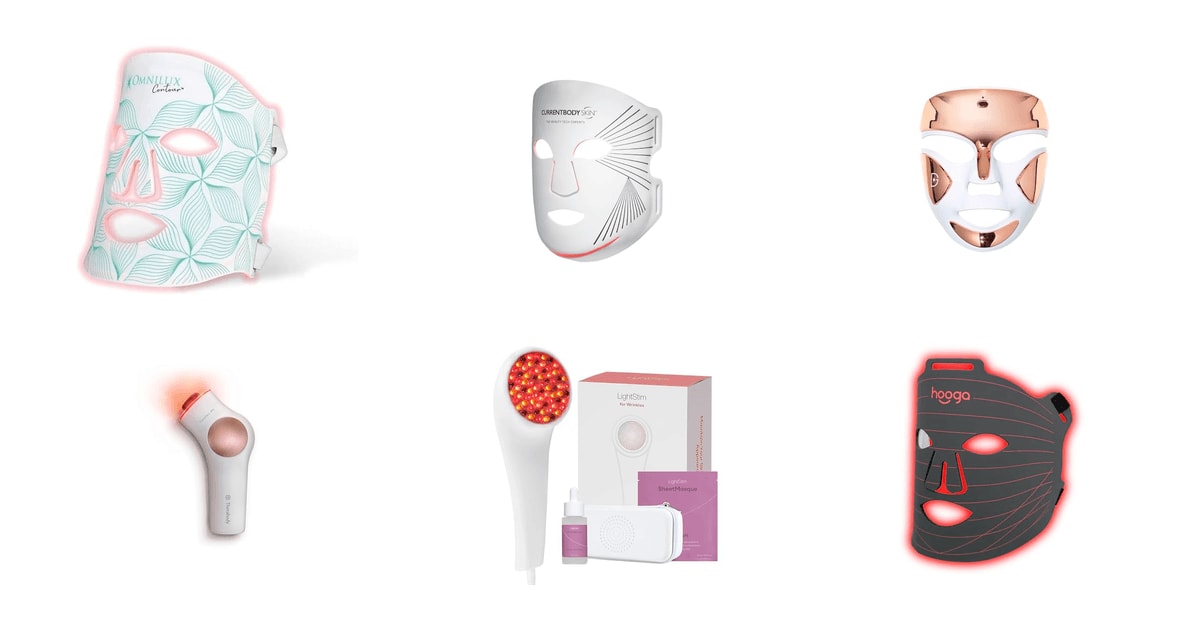
Red light therapy asks very little of you and gives back slowly. You put on a mask, sit still for a few minutes, and repeat that several times a week for a couple of months. The research behind it is real: red light around 630–660nm works at the skin's surface on collagen and tone, while near-infrared around 830–850nm reaches deeper tissue. But the benefit comes from dose, and dose comes from wavelength, power and consistency. A device that skips any of those three is just a warm glow on your face.
Here's the honest part. No at-home mask matches what a dermatologist's LED panel does — professional systems typically run 100–200 mW/cm², while consumer devices land closer to 10–50 mW/cm² at the skin. That means more sessions for the same total energy, and it means results are subtle. Fine lines soften, texture evens out, redness calms a little. Nobody's jaw gets redefined. Owners who report nothing usually gave up before the 8-to-12-week mark, and a fair number report their device dying inside a year.
We also want to be clear about what these devices don't fix: deep folds, sun damage that needs a laser, or acne that needs a prescription. If you're expecting a facelift, skip the whole category. We think that the Environ Omnilux Contour FACE is the best LED face mask for most people, and that the CurrentBody Skin LED Light Therapy Mask: Series 2 is the one to buy if you want the widest wavelength coverage and the best fit.
Everything we recommend

The best-supported clinical evidence in a mask you'll actually wear

More LEDs, a third wavelength and a fit tested on thousands of faces
Red and blue together, for lines and active breakouts at once

The right wavelengths for much less, with less track record

A handheld panel for the lines a mask can't quite reach
Prices as of Oct 22, 7:36 AM PT · Details
At a glance
| Product | Price | |
|---|---|---|
| Environ Omnilux Contour FACETop pick | $442.99 |
| CurrentBody Skin LED Light Therapy Mask: SeriesRunner-up | Check price |
| Dr Dennis Gross DRx SpectraLite FaceWare ProAlso great | $455 |
 | TheraFace Therabody TheraFace PRO - Microcurrent FacialAlso consider | Check price |
| LightStim for Wrinkles LED Red Light TherapyUpgrade pick | $186.75 |
| Hooga Red Light Therapy MaskBudget pick | $179 |
Prices as of Oct 22, 7:36 AM PT · Details
How we picked
Wavelength accuracy. We required devices to emit within the therapeutic windows the literature supports — 630–680nm for red and 800–880nm for near-infrared. Anything outside those bands got treated as a bonus, not a benefit.
Power and dose. We looked at LED count and published irradiance figures, using the roughly 30 mW/cm² threshold from Good Housekeeping Institute testing as a rough floor. A device that can't deliver energy won't work no matter how long you wear it.
FDA clearance. Class II clearance means a device went through 510(k) premarket notification and demonstrated substantial equivalence to a predicate. Most masks sold on Amazon haven't, and we weighted cleared devices accordingly.
Fit and coverage. We favored flexible silicone over rigid shells, because contoured masks reach the cheeks, chin and sides of the nose that rigid ones bridge over. Comfort determines whether you finish a 12-week protocol.
Reliability signals. We read owner feedback across all shortlisted products for recurring hardware complaints. Battery and charging failures came up often enough in this category that we treated them as a category-wide caveat rather than a single-product flaw.
Top pick
The best-supported clinical evidence in a mask you'll actually wear
Environ Omnilux Contour FACE
The Omnilux Contour FACE is a flexible silicone mask running 633nm red and 830nm near-infrared, the two wavelengths with the strongest research behind them. It's FDA-cleared, it molds to your cheeks and jaw, and the maker's own trial data is unusually specific about what to expect.
$442.99fromAmazonPrices as of Oct 22, 7:36 AM PT · Details
Omnilux picked the two wavelengths the literature actually supports, and stopped there. A 2019 review in Photobiomodulation, Photomedicine, and Laser Surgery pins the therapeutic optical windows for skin at 630–680nm and 800–880nm. The Contour FACE sits at 633nm and 830nm — dead center in both. Plenty of masks pile on amber, green and whatever else photographs well. This one doesn't, and that restraint is the point.
The company's published clinical data is more specific than most brands bother to be. In its trial, 87% of participants reported improved skin texture and 79% saw visible wrinkle reduction after four weeks of three-times-weekly use. That's manufacturer data, so read it with appropriate skepticism. But it lines up with independent work — a controlled trial in the Journal of Clinical and Aesthetic Dermatology found significant improvement in wrinkle severity and collagen density after eight weeks at 633nm.
The silicone body is what makes the protocol survivable. Rigid plastic masks bridge across your cheekbones and leave the sides of your nose and the curve of your chin sitting in shadow. This one drapes. If you're going to wear something for ten minutes, three times a week, for three months, it needs to be comfortable enough that you don't start finding reasons to skip. Owners consistently describe it as easy to keep up with.
It's a mask, not a machine. No app, no session tracking, no companion ecosystem. You turn it on, it runs its cycle, it shuts off. For a device whose entire value depends on you using it dozens of times, simple is a feature.
Flaws but not dealbreakers
Fit runs large. Owners with smaller faces report the chin section not sealing properly, which means that part of the face gets less light than the rest.
The failure mode here is the battery, and it's the same story across this whole category. A meaningful share of owner feedback describes units that stop powering on. Register the device and keep your receipt.
Some owners use it daily for months and report no visible change at all. Red light therapy has real responders and real non-responders, and no spec sheet tells you which one you are before you buy.
Runner-up
More LEDs, a third wavelength and a fit tested on thousands of faces
CurrentBody Skin LED Light Therapy Mask: Series
The CurrentBody Series 2 packs 236 LEDs across three wavelengths — 633nm red, 830nm near-infrared and 1072nm deep near-infrared — into flexible liquid silicone. It's the most thoroughly engineered fit in this group, and the one to pick if you want maximum coverage.
Check priceatAmazonPrices as of Oct 22, 7:36 AM PT · Details
The headline number is 236 LEDs, and LED count matters more than it sounds like it should. Irradiance is dose, and a mask that can't put enough energy on your skin won't get there no matter how long you sit under it. Good Housekeeping Institute testing found devices above 30 mW/cm² at the skin produced more consistent improvements in texture and tone than weaker ones. Density is how you clear that bar.
The third wavelength is the interesting bet. Alongside the well-established 633nm and 830nm, CurrentBody adds 1072nm deep near-infrared. That sits just outside the 800–880nm window the literature is firmest about, so treat it as a bonus rather than a proven upgrade. The two core wavelengths are doing the work you're paying for.
CurrentBody says the Best-Fit silicone shape was developed by testing on thousands of faces, and owner feedback backs that up — people call out the fit and the cordless design specifically. It travels well. Each mask ships with an NFC card tied to that individual unit, which is a nice touch for anyone who wants to confirm what they actually received.
If you're deciding between this and our top pick, the split is simple. Omnilux has the stronger independent clinical trail. CurrentBody has more LEDs, a wider wavelength spread and the better fit. Either one will do the job if you're consistent.
Flaws but not dealbreakers
Battery and charging failures come up repeatedly in owner reports, sometimes within the first month. Customer service seems to resolve these, but you may spend some time on it.
Some people peel or flake after the first few sessions as cell turnover picks up. It settles down, but if your skin barrier is already compromised, ease in with shorter sessions.
This is the most expensive mask in the lineup by a wide margin, and the incremental gain over our top pick is modest.
Also great
Red and blue together, for lines and active breakouts at once
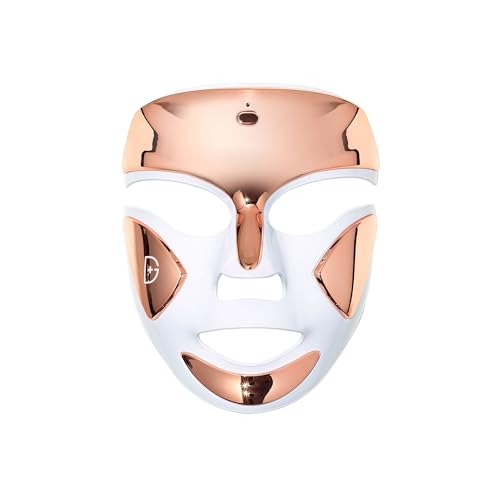
Dr Dennis Gross DRx SpectraLite FaceWare Pro
The Dr. Dennis Gross SpectraLite FaceWare Pro runs 100 red LEDs for collagen and 62 blue LEDs for acne, separately or together, in a three-minute cycle. It's FDA-cleared and the only pick here that addresses active breakouts at their bacterial source.
$455fromAmazonPrices as of Oct 22, 7:36 AM PT · Details
Red light does nothing for an active breakout. Blue light does. Research in the Journal of Investigative Dermatology found blue light at 415–445nm achieves a 99% kill rate against Cutibacterium acnes, the bacteria behind inflammatory acne. If you're dealing with fine lines and breakouts at the same time — which describes a lot of people in their late twenties and thirties — this is the only device in the lineup that covers both.
The three-minute cycle is the selling point and the caveat in one. It's short enough that you'll actually do it after cleansing, every night, without negotiating with yourself. But dermatologists cited by Healthline generally want at least ten minutes at consumer power levels to hit the roughly 3–6 J/cm² threshold. Three minutes is a real commitment to consistency rather than intensity, so plan on the long haul.
It's rigid rather than flexible, which is the tradeoff for the LED count and the dual-light hardware. It sits on your face with a head strap instead of draping over it. Coverage along the jaw and the sides of the nose isn't as complete as the silicone masks manage.
The brand was founded by a dermatologist and the device is FDA-cleared, which matters here. The FDA classifies cleared LED therapy devices as Class II, requiring 510(k) notification — a bar most overseas-manufactured masks on Amazon never clear.
Flaws but not dealbreakers
Charging problems dominate the negative owner feedback, and they're common enough that you should plan around them. The unit needs a USB-A power source with the included USB-C cable; charging directly from a USB-C source or a high-powered brick can damage the battery. Several owners report failures around the one-year mark.
The rigid shell isn't as comfortable as flexible silicone, and it won't conform to a narrow or unusually wide face.
Budget pick
The right wavelengths for much less, with less track record
Hooga Red Light Therapy Mask
The Hooga mask uses tri-chip LEDs emitting 630nm and 660nm red plus 850nm near-infrared, in a flexible, lightweight body with adjustable straps. It costs a fraction of the premium masks and covers the wavelengths that matter most.
$179fromAmazonPrices as of Oct 22, 7:36 AM PT · Details
Hooga puts 630nm, 660nm and 850nm on your face, and those are the numbers you want. In vitro and in vivo work published in Lasers in Medical Science shows 660nm red light increases fibroblast collagen synthesis — that's the mechanism the whole category rests on. On wavelength selection alone, this mask isn't compromising.
What you give up is verification, not wavelengths. Hooga doesn't publish irradiance figures the way the premium brands do, and there's no FDA clearance or independent clinical trial behind this mask. You're trusting the spec sheet. That's a genuine gap, and it's most of why this is the budget pick rather than a contender for the top spot.
The physical design is genuinely good. It's flexible, it's light — around six and a half ounces by owner accounts — the straps adjust, and it charges over USB-C. Owners consistently describe it as comfortable enough to wear while doing something else, which is exactly what a device you need to use forty times needs to be.
If you're not sure red light therapy is for you, start here. Spending a lot on your first mask makes it harder to walk away, and a meaningful number of people simply don't respond.
Flaws but not dealbreakers
The owner feedback pool is small compared to the established brands, so long-term reliability is genuinely unknown. Some owners report individual LEDs going dark almost immediately.
Without published irradiance data, you can't confirm the mask clears the roughly 30 mW/cm² threshold that Good Housekeeping's testing associated with more consistent results.
Upgrade pick
A handheld panel for the lines a mask can't quite reach
LightStim for Wrinkles LED Red Light Therapy
LightStim for Wrinkles is an FDA-cleared handheld with 72 LEDs across four wavelengths — 605, 630, 660 and 855nm — emitted simultaneously. You hold it against one area at a time, which makes it the tool for nasolabial folds, crow's feet and forehead lines.
$186.75fromAmazonPrices as of Oct 22, 7:36 AM PT · Details
A mask spreads its light evenly; this concentrates it where you want it. Masks treat your whole face at one intensity, including the parts that don't need it. The LightStim goes where the problem is. If the lines beside your mouth bother you more than anything else, holding a dedicated panel there beats hoping the mask's coverage reaches that far.
The MultiWave design fires 605, 630, 660 and 855nm at the same time, spanning the red band and reaching into near-infrared. Per the manufacturer's FDA clinical studies, 100% of participants showed significant improvement in fine lines and wrinkles at eight weeks, and 92% saw further reduction three months after the trial ended. Those are the company's own figures, but the eight-week timeline matches independent research on 633nm therapy.
It's small enough to pack, and it doesn't need a flat surface or an outlet nearby. Nobody wants to check a rigid face mask in a suitcase. This fits in a carry-on.
The tradeoff is time. Treating a full face section by section takes far longer than putting on a mask and waiting. If you want whole-face coverage, buy a mask. If you want to target, buy this.
Flaws but not dealbreakers
You have to hold it, area by area, which turns a ten-minute mask session into something considerably longer.
Owner sentiment on this one is more mixed than for the top masks, and it's an older design that hasn't seen a refresh.
It's a spot treatment. Using it as your only device means most of your face gets no light at all.
Who this is for
Buy one of these if you have fine lines, uneven texture or mild dullness, and you're willing to use a device three to five times a week for at least eight weeks before deciding whether it worked. That's the honest entry requirement. If you're managing active inflammatory acne alongside early aging, the Dr. Dennis Gross mask is the one that addresses both. If you're curious but unconvinced, start with the Hooga and spend more later if you respond.
Skip this category if you want deep wrinkles erased, significant sun damage reversed, or acne severe enough that a dermatologist would prescribe for it — LED therapy is a supplement to those treatments, not a substitute. This guide covers face-focused LED devices you can buy on Amazon right now. It doesn't cover full-body panels, beds or professional in-office systems, and it doesn't cover devices that use light as one feature among many rather than as the treatment itself.
How we picked
Wavelength: we required 630–680nm red and 800–880nm near-infrared, the two optical windows the photobiomodulation literature actually supports. Power: we weighed LED count and any published irradiance figures against roughly 30 mW/cm² at the skin, the level Good Housekeeping Institute testing tied to more consistent results. Clearance: FDA Class II clearance means a 510(k) filing happened, and most masks on Amazon skip it. Fit: flexible silicone conforms to cheeks and chin where rigid shells bridge over them, and comfort is what gets you through a 12-week protocol. Reliability: we read owner feedback for recurring hardware complaints, which in this category means batteries and charging.
Other led face masks and red light therapy devices worth considering
If you want light therapy plus massage and microcurrent in one device: The TheraFace Therabody TheraFace PRO - Microcurrent Facial — The TheraFace PRO is an eight-in-one handheld that combines LED light therapy with percussive facial massage, microcurrent and cleansing, all on magnetic snap-on rings, with a companion app of esthetician-designed routines. Therabody says it's clinically proven to lift, firm and reduce fine lines over 12 weeks. As a light therapy device specifically it's outmatched — the treatment head is small, and it can't approach the LED count or coverage of a full mask. But owners who use it for jaw tension and TMJ alongside the skincare features get real value from the combination. Buy it as a multi-tool that includes light, not as a light therapy device.
The competition
This is what our research surfaced in this category on Amazon, not a map of everything sold. A few well-regarded panels and masks aren't listed here simply because they weren't part of this lineup.
Worth saying plainly: the biggest differences among the masks that made our picks are fit, LED density and the strength of the evidence behind each brand. Wavelength selection is where most reputable devices converge, so it's rarely the thing that separates them.
How to actually get results
Consistency beats intensity here, and it isn't close. Plan on three to five sessions a week for at least eight weeks before you judge anything — the controlled trial in the Journal of Clinical and Aesthetic Dermatology found significant change at the eight-week mark, not at two. Use it on clean, dry, bare skin; serums and sunscreen scatter light before it reaches you. Wear the eye protection your device includes, even if the light seems mild. If you use retinol or prescription tretinoin, apply it after your session rather than before. And baby the battery: use the cable and power source the manufacturer specifies, don't run it down to empty repeatedly, and don't leave it charging overnight on a high-powered brick. Charging failures are the single most common way these devices die.
Questions we get
Do LED face masks actually work for wrinkles?
The mechanism is real. Research in Lasers in Medical Science shows 660nm red light increases fibroblast collagen synthesis, and a controlled trial in the Journal of Clinical and Aesthetic Dermatology found significant improvement in wrinkle severity and collagen density after eight weeks of 633nm therapy. The results are subtle, though — softer fine lines and more even texture, not a transformation. Some people see nothing at all.
How long before I see results?
Expect eight to twelve weeks of consistent use, at three to five sessions a week. Omnilux's own trial data reports texture improvements at four weeks, but the independent research points to eight. A single session does nothing lasting, and owners who report no results usually stopped somewhere in the first month.
What's the difference between red and blue light?
Red light at 630–660nm works on collagen, texture and tone at the skin's surface, and near-infrared at 830–850nm reaches deeper tissue. Blue light at 415–445nm does something entirely different — research in the Journal of Investigative Dermatology found it achieves a 99% kill rate against the bacteria behind inflammatory acne. Red light won't clear a breakout. If you need both, get a device with both.
Can I use an LED mask every day?
Yes, and most manufacturers design their protocols around three to five sessions a week rather than daily use. LED therapy is non-invasive and doesn't damage skin the way an exfoliating acid does. Some people flake or peel during the first week as cell turnover picks up. If that happens, drop to shorter sessions until your skin settles.
Are at-home masks as good as in-office treatments?
No. Professional LED systems typically run 100–200 mW/cm², while consumer devices deliver roughly 10–50 mW/cm² at the skin. You're getting a smaller dose per session, so you need many more sessions to approach the same total energy. The upside is that home devices let you accumulate that dose over months at your own pace.
Is red light therapy safe with retinol or tretinoin?
Generally yes, but sequence matters. Use the mask on clean, bare skin first — actives and serums scatter light before it reaches the tissue you're trying to treat. Apply your retinol or tretinoin afterward. If your skin is already irritated from a retinoid, give the barrier a few days to recover before adding sessions.
Why you should trust us
For this guide:
- We read manufacturer specifications and published clinical data for every device in this lineup, and cross-checked wavelength claims against peer-reviewed photobiomodulation research including work in Lasers in Medical Science and the Journal of Clinical and Aesthetic Dermatology.
- We reviewed FDA device classification criteria to confirm which products carry Class II clearance and which rely on unverified manufacturer claims.
- We compared recurring themes in owner feedback across all shortlisted products, paying particular attention to reports of battery and charging failures.
- We read owner reviews on every listing, weighted toward the critical ones, because that is where the recurring failures show up.
- We have a systematic way of automatically fetching the latest prices, so the numbers on this page stay current.
- This is a research-focused guide, so the team may not own every product listed — though we often do own the top winners, which gives us extra context for the recommendations.
- We don't accept free products, and the retailer commission never changes which product we recommend.
Sources
Red Light Therapy: Does It Work? — Cleveland Clinic, Cleveland Clinic
Best LED Face Masks, Tested by Editors — Allure, Allure
Best LED Face Masks of 2026 — Byrdie, Byrdie
LED Light Therapy Devices Review — Good Housekeeping Institute, Good Housekeeping Institute
Low-Level Laser (Light) Therapy (LLLT) for Treatment of Hair Loss (PMC) — PubMed Central, PubMed Central / Photomedicine and Laser Surgery
Effect of Low-Level Laser Therapy on Collagen Synthesis — NCBI, PubMed Central / Lasers in Medical Science
Best LED Face Masks, According to Dermatologists — Healthline, Healthline
Omnilux Contour Face Clinical Study — Omnilux, Omnilux (Manufacturer)
Red Light Therapy: Uses, Benefits, and Side Effects — Healthline, Healthline
Best Red Light Therapy Devices — Wirecutter (NYT), Wirecutter
A Controlled Trial of LED Therapy for Facial Rejuvenation — Journal of Clinical and Aesthetic Dermatology, Journal of Clinical and Aesthetic Dermatology
Red and Near-Infrared Light Therapy Review — Photobiomodulation, Photomedicine, and Laser Surgery, Photobiomodulation, Photomedicine, and Laser Surgery Journal
Amazon product listings and owner reviews for all 6 products
Manufacturer specification pages for each product
Some passages in this guide may be paraphrased with AI help.
Product prices and availability are accurate as of the date/time indicated and are subject to change. Any price and availability information displayed on Amazon.com at the time of purchase will apply to the purchase of this product.
More like this.
Continue exploring beauty reviews and recommendations.

The Best Red Light Therapy Devices for Home Use
Red light therapy sounds exotic, but the routine is dull in the best way. You sit or stand in front of a panel for 10 to 20 minutes, a few times a week,…

The Best Face Masks
A face mask is skincare on a schedule you'll actually keep. You put it on, you wait ten or twenty minutes, and you rinse. Nothing else in a routine hands…

The Best SAD Light Therapy Lamps
By the time the sun sets before dinner, a lot of us are dragging. Seasonal affective disorder affects roughly 5% of American adults and can stretch across…

The Best Permanent LED Eave Lighting Kits
Permanent eave lights live under your roofline all year and do two jobs. Most nights they're a warm white accent that makes the house look finished and…

The Best Smart RGB LED Strip Lights for Bedrooms
Bedroom light gets used in a specific way. You want a soft glow behind the headboard at night, something bright enough to find a charging cable, and a…

The Best Rechargeable LED Work Lights
Most of the time you need a work light, both of your hands are already busy. You're under a hood chasing a dropped bolt, or up in an attic splicing wire,…