The Best Red Light Therapy Devices for Home Use
Red light therapy sounds exotic, but the routine is dull in the best way. You sit or stand in front of a panel for 10 to 20 minutes, a few times a week, and you keep at it for a couple of months. The research points to two wavelengths over and over: 660nm red, which works mostly on skin, and 850nm near-infrared, which reaches deeper into muscle and joint tissue. Most goals benefit from both. Everything else comes down to how much light actually lands on you, and whether the device is pleasant enough that you'll keep using it.
Here's the honest part. No home panel is a medical device, and the marketing runs well ahead of the evidence. FDA registration for a wellness panel isn't clinical approval — the Cleveland Clinic notes red light has clearance for mild-to-moderate acne, fine lines and androgenic alopecia, and not for systemic conditions. Irradiance numbers are the other soft spot. Brands love to quote output at zero inches, a distance nobody treats from. Examine.com's review of the photobiomodulation literature puts the useful floor around 20 mW/cm² at your actual treatment distance, applied three to five times a week.
So buy for the routine you'll actually keep. A mid-size panel handles your face, shoulders and knees without taking over the living room. A full-body panel saves real time if you want your back, hamstrings and chest in one go. A wearable wrap makes more sense when one cranky knee is the whole reason you're shopping. We think that the Hooga PRO300 is the best red light therapy device for most people, and that the Mito Red MitoMIN 2.0 is the one to buy if you're mainly treating your face and neck.
Everything we recommend

Enough panel for face, knees and back, without owning the room

A tidier, better-documented panel for face and neck work

Full-body coverage and four wavelengths, if you've got the space

Wraps around a bad knee so the light stays where it hurts
At a glance
| Product | Wavelength | LED Count | Price | |
|---|---|---|---|---|
 | Red Light Therapy for Male & FemaleAlso in lineup | 660/850nm | — | $119 |
| Mito Red LightRunner-up | 660/850nm | 60 LEDs | $249 |
| Hooga Red Light Therapy Panel DeviceTop pick | 660/850nm | 60 LEDs | $299 |
 | BONTANNY Portable Red Light TherapyAlso consider | 660/850/1060nm | 12 LEDs | $132.99On sale |
| Kineon Move+ Red Light Therapy WrapAlso great | 660/808nm | 3 Modules | $499 |
| Hooga Red Light Therapy Panel DeviceUpgrade pick | 630/660/810/850nm | 300 LEDs | $1,399 |
How we picked
Both key wavelengths. We required 660nm red and 850nm near-infrared, the two most studied wavelengths, since red works mostly on skin and near-infrared reaches muscle and joint. Devices offering only one are covering half the studied spectrum.
Irradiance at real distance. We looked for output figures quoted at six or twelve inches rather than at the panel face. Examine.com's review of the literature identifies roughly 20 mW/cm² at treatment distance as the minimum useful dose.
Coverage that fits the goal. We matched form factor to purpose: targeted wraps and handhelds for a single joint, mid-size panels for face and torso, full-body panels for systemic recovery. Session time falls sharply as coverage grows.
Testing and transparency. We favored brands that publish independent spectrometer or irradiance reports and are clear that FDA registration is a general wellness listing, not clinical approval. Vague wattage claims counted against a device.
Warranty and build. Quality LED chips are rated for 50,000-plus hours, so we set a two-year warranty as the floor and read owner feedback for fan noise, flicker complaints and quality-control patterns.
Top pick
Enough panel for face, knees and back, without owning the room
Hooga Red Light Therapy Panel Device
The PRO300 uses 60 dual-chip LEDs that each emit 660nm red and 850nm near-infrared, so both wavelengths hit the same spot instead of alternating across the board. It's flicker-free, has a digital timer with separate red and near-infrared controls, and links to other PRO panels if you want more coverage later.
$299fromAmazonDual-chip LEDs are the quiet reason this panel punches above its size. Cheaper panels alternate red diodes and near-infrared diodes across the board, so what you get depends on where you're standing. Every LED here emits both. Point it at your knee and that knee gets red and near-infrared at once. It's a small design choice with a real payoff in even coverage.
Owners who bought this as their first serious panel tend to describe the same arc: skeptical for a couple of weeks, then quietly hooked. Sore tendons and muscle recovery come up more often in their feedback than skin does. That tracks with the research — a systematic review in Frontiers in Physiology found moderate-to-large pain reductions across trials for osteoarthritis, tendinopathy, neck pain and chronic low back pain.
The size is manageable for a bedroom or a garage gym, and a stand comes in the box. Independent red and near-infrared controls matter more than they sound like they do. You can run red only for skin work in the evening, then both wavelengths after a hard session. The built-in timer means you're not squinting at your phone counting down the minutes.
Hooga covers it for three years, which is longer than a lot of panels in this class and a decent proxy for how long the company expects the diodes to hold up. The PRO panels also connect to each other. If you get into this and want more coverage, adding a second panel beats replacing one you've outgrown.
Flaws but not dealbreakers
It's not a full-body panel, whatever the listing copy suggests. At a sensible treatment distance you're lighting up a torso-sized area, not head to toe. Plan on moving it — or moving yourself — if you want your back and then your legs in the same session.
The cooling fans run during sessions. They're not loud, but you'll hear them, so this isn't the device for a silent room. Hooga also doesn't publish much detail about output at specific distances, which makes dialing in a precise dose more guesswork than it should be.
The PRO300 comes with a three-year manufacturer warranty.
Runner-up
A tidier, better-documented panel for face and neck work
Mito Red Light
The MitoMIN 2.0 is a 12-by-9-inch panel with 60 LEDs at 660nm and 850nm, and you can run red only, near-infrared only, or both. Mito Red has it independently third-party tested for power and spectral output, which is still uncommon in this category.
$249fromAmazonSet it on a desk or a dresser, aim it at your face, and you're done in ten minutes. Mito Red states about 21,720 joules across the panel in that session. That's a comfortable amount of light for skin work, and a 12-week randomized trial of 660nm red light reported a 25 to 36 percent improvement in fine lines and overall skin texture against sham, with no adverse events.
Third-party testing is the reason it earns the runner-up spot. Plenty of brands quote irradiance figures that come from a spec sheet and nowhere else. Mito Red sends its panels out for independent verification of power and spectral output. That doesn't make the light stronger. It does mean the numbers you're comparing across brands are more likely to be real ones.
Compared with our top pick, this is the smaller, more focused tool. It's a face-and-neck panel that can handle a shoulder or a knee, not something you stand in front of. If your goals are skin tone, texture and one stubborn joint, that shape is right. If you want systemic recovery after hard training, you'll spend a lot of the session repositioning it.
People with skin conditions — eczema, slow-healing wounds, surgical scars — turn up often in the owner feedback, and they're the ones who stick with it longest. The panel is FSA and HSA eligible, which quietly changes the math if you have funds sitting there. The digital controls and quiet fans make it easy to leave set up on a bathroom counter.
Flaws but not dealbreakers
It's heavy for its size and there's no handle, a complaint owners raise repeatedly. Carrying it from the bathroom to the bedroom is a two-hands, mind-your-grip job. Not a dealbreaker if it lives in one place, genuinely annoying if it doesn't.
Coverage is the real ceiling. Ten minutes on your face is easy. A whole-body routine with a panel this size turns into half an hour of moving it around, which is exactly the kind of friction that kills a habit.
Upgrade pick
Full-body coverage and four wavelengths, if you've got the space
Hooga Red Light Therapy Panel Device
The ULTRA1500 is a floor-standing panel with 300 quad-chip LEDs putting out 630nm and 660nm red plus 810nm and 850nm near-infrared. A touchscreen handles brightness, timing and a pulsed mode, and the red and near-infrared channels adjust separately.
$1,399fromAmazonBuy this one if standing in front of it for ten minutes is the entire point. At nearly six feet long, it covers you from shoulders to shins in a single session. That's the difference between a routine you keep and one you quietly abandon. Nobody sticks with a protocol that means dragging a small panel to six different positions before breakfast.
Four wavelengths widen what reaches your tissue. The 630nm and 660nm work on skin; 810nm and 850nm go deeper into muscle and joint. Near-infrared is where most of the recovery evidence sits — a trial in Lasers in Medical Science found 850nm applied before exercise cut delayed-onset soreness by 43 percent and improved peak torque recovery by 18 percent in trained athletes.
Brightness control is more useful than it sounds. Owners consistently report that full power is almost too much up close, and that dialing it back lets them sit nearer without drying out their skin. You can also run red and near-infrared at different levels in the same session, so a gentle skin dose and a strong recovery dose don't have to be two separate sittings.
Hooga backs it with a three-year warranty, US-based support and a 60-day trial. The trial matters more here than usual. A panel this size is a commitment of floor space as much as anything else, and two months is long enough to find out whether it becomes part of your day or a very bright coat rack.
Flaws but not dealbreakers
It's big, and you'll feel that in an apartment. It's also narrower than some owners would like — excellent top-to-bottom, less generous side to side, so a broad area like your back still takes a couple of positions.
Quality control looks less consistent than we'd like. A minority of owners describe units arriving dented or with a touchscreen that never lit up, and getting hold of support took persistence. The warranty and trial window cover you, but budget some patience if you draw a bad one.
The ULTRA1500 has a three-year manufacturer warranty and a 60-day trial period.
Also great
Wraps around a bad knee so the light stays where it hurts
Kineon Move+ Red Light Therapy Wrap
The Move+ is a wearable strap with three modules combining 660nm red light and 808nm infrared. You fasten it directly onto a knee, elbow or shoulder, run it for 5 to 15 minutes, and carry on with your evening instead of sitting still in front of a panel.
$499fromAmazonContact beats distance when one joint is the whole problem. A panel loses a lot of energy across six or twelve inches of air. The Move+ sits against your skin, wrapped around the joint, so the light goes where you put it. If you're shopping because of a knee that complains on stairs, that's a more sensible design than a panel you have to sit in front of.
It's hands-free in a way panels aren't. You can wear it while you cook dinner or watch something. Owners recovering from surgery, or working through a bone bruise that won't quit, are the most enthusiastic group in the feedback. Kineon's own pilot data reports 72 percent of participants noting meaningful knee pain reduction after four weeks of daily 15-minute sessions.
The kit is thought through. You get three modules, an adjustable strap, a travel case and a charging dock, so it packs for a trip without ceremony. Setup is simple enough that older owners report managing the assembly and charging without help. It's HSA and FSA eligible, same as our runner-up.
Flaws but not dealbreakers
The feedback is more polarized than for anything else here. For every owner who credits it with getting them off a cane, there's another who felt nothing at all and had trouble getting a reply from customer service. That split is worth knowing before you commit.
It treats a small area, by design. Three modules cover a knee nicely and do nothing for your back or your face. The end-of-session beep is also loud enough that owners using it to relax find it jarring.
Who this is for
This guide is for anyone who wants to run red light therapy at home — for skin and fine lines, for post-workout recovery, or for a joint that aches every morning. If you're new to it, start with a mid-size panel and a realistic timeline. Most peer-reviewed protocols run 10 to 20 minutes, three to five times a week, over 8 to 12 weeks before results are measurable. If you want something dramatic in a fortnight, you'll be disappointed no matter what you buy.
It's not for treating a diagnosed medical condition on your own. Red light has FDA clearance for mild-to-moderate acne, fine lines and androgenic alopecia, and the Cleveland Clinic is clear that it isn't approved for cancer, depression or other systemic illness. We stuck to home devices you can buy and set up yourself, so professional beds, laser clinics and full-body saunas are out of scope. Face masks are out too — they're a different category with different trade-offs.
How we picked
Wavelengths: both 660nm red and 850nm near-infrared, because they act on different tissue depths and most goals want both. Irradiance: output quoted at a real treatment distance of six to twelve inches, with roughly 20 mW/cm² as the working floor for clinically observable results. Coverage: a form factor that matches the goal, since a wrap on one knee and a six-foot panel solve very different problems. Transparency: independent third-party spectral or power testing, and honesty about what FDA registration does and doesn't mean. Durability: LED chips rated for tens of thousands of hours, a warranty of at least two years, and owner feedback free of repeated flicker, noise or quality-control complaints.
Other red light therapy devices for home use worth considering
If you want something that fits in a carry-on: The BONTANNY Portable Red Light Therapy ($132.99) — The BONTANNY BO-60 is a palm-sized handheld with 12 triple-chip LEDs at 660nm, 850nm and 1060nm, running off a 3000mAh battery for about three hours cord-free. That third wavelength is unusual at this size, and BONTANNY states over 75 mW/cm² at three inches with no flicker and no measurable EMF. That's real output for something under a pound, and a travel case is included. What you give up is area. You're treating a hand, a knee or a patch of face at a time, so a whole-body routine isn't happening. Owners also gripe about the power switch, which is small and stiff — fine on a hotel nightstand, frustrating if arthritis is the reason you bought it.
The competition
This is what our research surfaced, not a survey of everything on the market. Red light therapy is crowded and moves fast, and plenty of competent panels never made the list simply because there was no independent testing to check their claims against and not enough consistent owner feedback to judge them by.
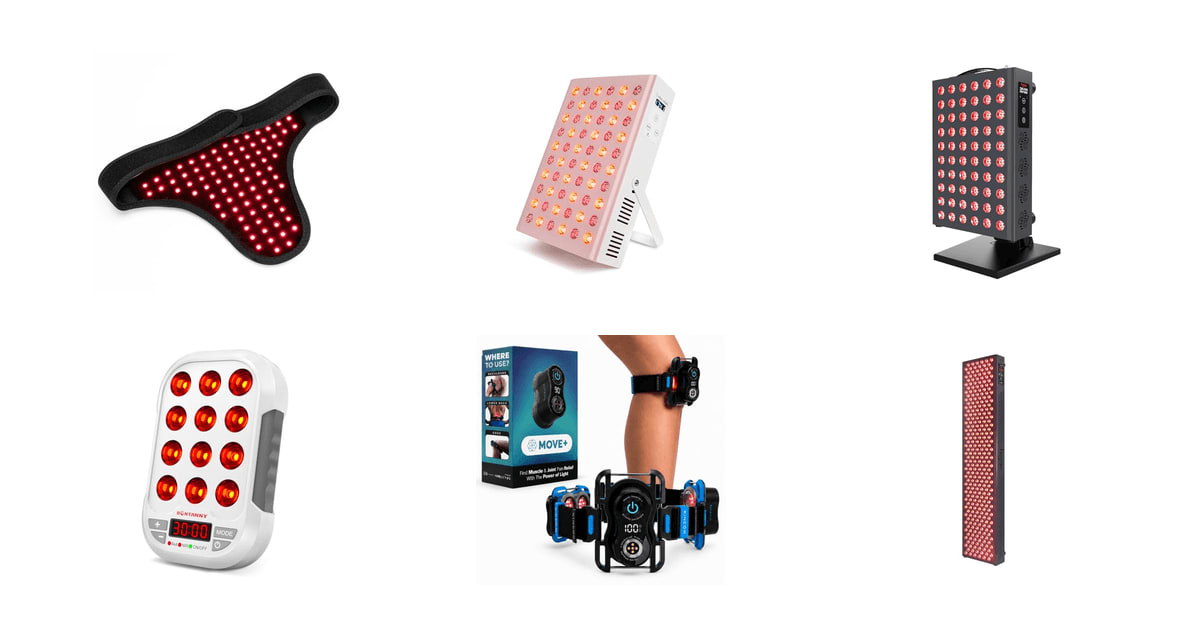
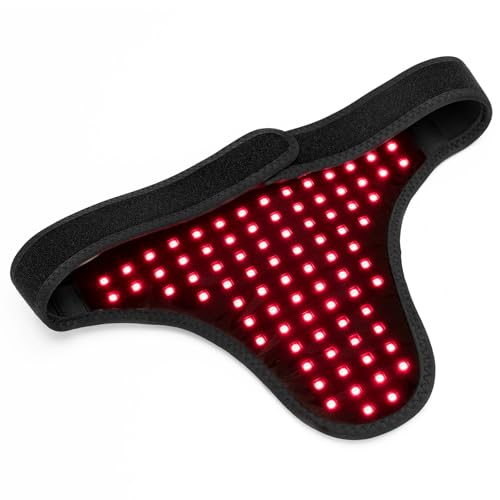
The Red Light Therapy for Male & Female ($119) — The Clouhead is a wearable 660nm and 850nm device with an 18-minute default timer, a heating function and a shape built for sensitive, private areas rather than faces or backs. It's a narrow niche, and for that niche it's more comfortable and more discreet than aiming a panel at yourself — the strap adjusts, an extender comes in the box, and the controls are a single button. But there's no published irradiance figure and no third-party testing to point at, and the owner feedback is mixed, with some people reporting they felt lightheaded afterward. If that specific use case is why you're shopping, it's worth a look. For general skin or recovery goals, any of our picks does more.
Session and safety basics
Consistency beats intensity. Most peer-reviewed protocols run 10 to 20 minutes, three to five times a week, and the measurable results show up somewhere around 8 to 12 weeks — so pick a distance, set the timer and stop fiddling. Six to twelve inches is the usual treatment range, and closer isn't automatically better; owners of high-output panels report dry skin when they crowd them. Use it on bare skin, since light doesn't do much through a t-shirt. You don't strictly need goggles for red and near-infrared, but a strong panel is uncomfortably bright, so close your eyes or wear eye protection. Wipe the panel down now and then, and keep the fan vents clear of dust.
Questions we get
What wavelengths actually matter — 660nm or 850nm?
Both, for most people. The 660nm red wavelength works mainly on skin and surface tissue, which is where the collagen and fine-line evidence comes from. The 850nm near-infrared penetrates deeper into muscle and joint, which is where the recovery and pain evidence sits. A device with only one is covering half the studied spectrum.
How long should a session be, and how often?
Most published protocols use 10 to 20 minutes per area, three to five times a week. Higher-irradiance panels get you there faster; lower-power devices need 20 to 30 minutes. The bigger variable is consistency — the trials that show meaningful change run for 8 to 12 weeks, so treat it as a habit rather than a fix.
How far should I stand from the panel?
Six to twelve inches is the standard range, and it's the distance any irradiance figure should be quoted at. Closer isn't better past a point; several owners of high-output panels report dry, irritated skin when they sit too near. Start at twelve inches, and move closer only if you want to shorten the session.
Is it safe to use every day?
Daily use is generally considered safe at typical home doses, and the clinical trials report very few adverse events. That said, more isn't better — photobiomodulation appears to have a dose sweet spot, and piling on extra minutes doesn't add benefit. Three to five sessions a week is what most protocols use, so daily is an option rather than a requirement.
Does red light therapy actually work, or is it hype?
The evidence is real but narrower than the marketing implies. A meta-analysis of 46 randomized controlled trials found photobiomodulation significantly reduced musculoskeletal pain versus sham, and dermatology trials show measurable improvement in fine lines and skin texture. What it isn't is a treatment for systemic disease. Expect a modest, gradual effect on skin, soreness and joint discomfort.
Do I need a full-body panel, or is a small device enough?
It depends entirely on the target. One achy knee or a face-and-neck routine is well served by a wrap or a mid-size panel. If you want systemic recovery across your back, legs and chest, a small panel means a long session of constant repositioning — and that's the routine people quit. Buy the coverage that matches your actual goal.
Do I need to wear goggles?
Red and near-infrared light isn't UV, and there's no established retinal damage risk at home-device intensities. But a strong panel is genuinely uncomfortable to look at, and squinting through a ten-minute session is no fun. Close your eyes or wear eye protection, especially with high-output panels at close range.
Why you should trust us
For this guide:
- We read the manufacturer spec sheets and published irradiance claims for every device here, and gave weight to the ones with independent third-party spectral or power testing behind them.
- We compared those claims against peer-reviewed photobiomodulation research, including a systematic review in Frontiers in Physiology, a randomized trial of 850nm light in Lasers in Medical Science, and dermatology trials of 660nm red light.
- We read through owner feedback for each product looking for repeated themes — fan noise, weight, quality control, customer service — rather than isolated complaints.
- We read owner reviews on every listing, weighted toward the critical ones, because that is where the recurring failures show up.
- We have a systematic way of automatically fetching the latest prices, so the numbers on this page stay current.
- This is a research-focused guide, so the team may not own every product listed — though we often do own the top winners, which gives us extra context for the recommendations.
- We don't accept free products, and the retailer commission never changes which product we recommend.
Sources
Red Light Therapy: Benefits, Side Effects & Uses — Healthline, Healthline
Low-Level Laser (Light) Therapy on Muscle Tissue: Performance, Fatigue, and Repair — PubMed, PubMed / Photomedicine and Laser Surgery
Best Red Light Therapy Devices — Forbes Health, Forbes Health
Red Light Therapy — Cleveland Clinic Health Library, Cleveland Clinic
Photobiomodulation evidence review — Examine.com, Examine.com
Best Red Light Therapy Devices, Tested by Experts — Medical News Today, Medical News Today
Photobiomodulation Therapy for Pain Management — Frontiers in Physiology, Frontiers in Physiology
NASA Light-Emitting Diode Medical Applications — PubMed, PubMed / Whelan et al., 2001
PlatinumLED BioMax Series Third-Party Lab Testing Results, PlatinumLED Therapy Lights
Photobiomodulation Market Size & Forecast 2024–2030, Grand View Research
Red Light Therapy for Skin Rejuvenation: Randomized Clinical Trial — Journal of Clinical and Aesthetic Dermatology, Journal of Clinical and Aesthetic Dermatology
Kineon MOVE+ Clinical Evidence and Science, Kineon
Amazon product listings and owner reviews for all 6 products
Manufacturer specification pages for each product
Some passages in this guide may be paraphrased with AI help. Prices are refreshed automatically.
More like this.
Continue exploring health reviews and recommendations.

The Best LED Face Masks and Red Light Therapy Devices
Red light therapy asks very little of you and gives back slowly. You put on a mask, sit still for a few minutes, and repeat that several times a week for…

The Best SAD Light Therapy Lamps
By the time the sun sets before dinner, a lot of us are dragging. Seasonal affective disorder affects roughly 5% of American adults and can stretch across…

The Best Hand Grip Strengtheners for Therapy
Hand strength shows up in the small stuff. Opening a jar, turning a key, holding a coffee cup without thinking about it. When an injury, surgery, or…

The Best Cold Therapy Knee Wraps
A knee that's just been operated on, twisted on a trail run, or flared up after a long day swells fast. Cold slows that down. But how you deliver the cold…

The Best Golf Launch Monitors for Home Use
A launch monitor turns a bucket of balls into information. You stop guessing whether that 7-iron flew 150 or 165, and you start seeing the real gaps…

The Best Anti-Snoring Mouthpieces and Devices
Snoring is one of those problems you rarely notice yourself. Your partner does. And once it's a nightly thing, the fixes people reach for first - a…