The Best Cold Therapy Knee Wraps
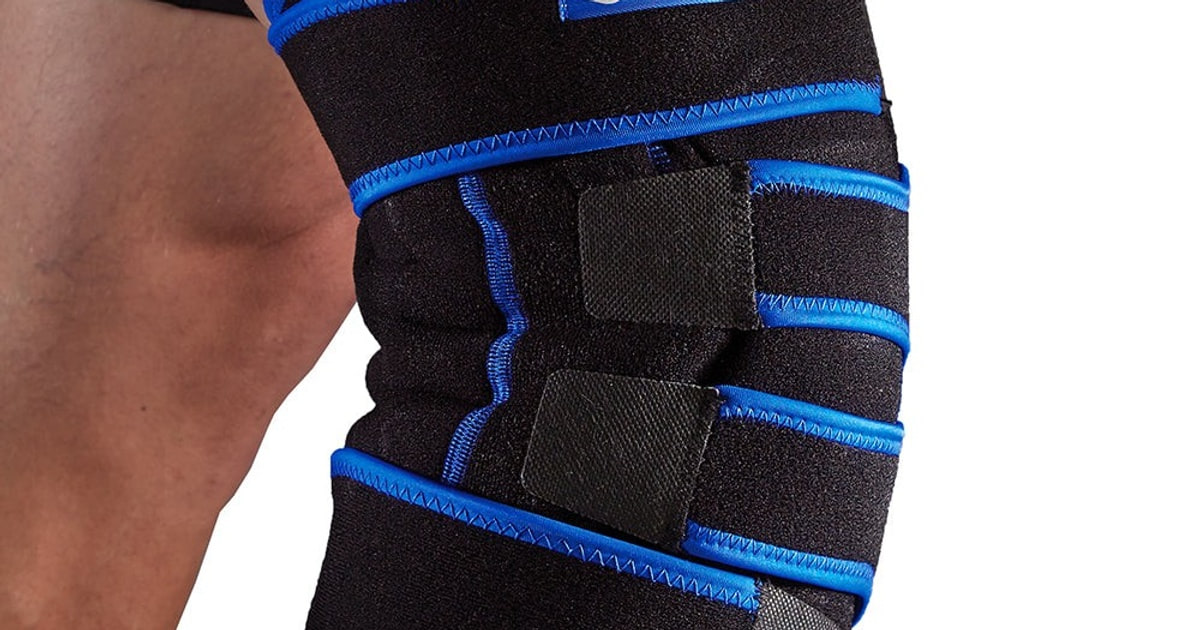
A knee that's just been operated on, twisted on a trail run, or flared up after a long day swells fast. Cold slows that down. But how you deliver the cold matters more than most people expect. A bag of frozen peas held on with an ace bandage slides off the second you shift on the couch, and it warms up in ten minutes. A proper wrap contours to the joint, holds itself in place, adds a little compression, and keeps a barrier between the gel and your skin so you don't burn yourself.
Here's the honest part: no wrap in this category stays cold as long as you want it to. Passive gel packs drift out of the useful temperature range after about 15 to 25 minutes, which is roughly the length of one session anyway. If your recovery plan calls for icing four to six times a day, you'll spend a lot of time waiting on the freezer. Buying a second set of packs is the usual workaround. Active circulating systems solve the problem, but they need a pump, a power outlet, and real money.
Fit is the other recurring headache. A knee can swell well past its normal size after surgery, and pull-on sleeves that fit fine at baseline simply won't go on. We think that the Game Ready 19914 Straight Knee Wrap is the best cold therapy knee wrap for most people recovering from knee surgery, and that the Vive Knee Ice Pack Wrap in black and blue is the one to buy if you want strong front-and-back coverage without a machine.
Everything we recommend

Deeper, longer cold if your surgeon prescribed it

Front and back coverage, no machine required

The same wrap in gray, for badly swollen knees

Full wraparound coverage for athletes who ice often

Slide it on, ice, done — cheap and quick
At a glance
| Product | Therapy Type | Size/Fit | Price | |
|---|---|---|---|---|
| Game Ready 19914 Straight Knee WrapTop pick | Cold Compression | One Size Fits Most | $527 |
 | Brownmed Polar Ice Large Knee Wrap -Also consider | Cold Therapy | Standard | $32.55 |
| Vive Knee Ice Pack Wrap - Cold/HotRunner-up | Hot Or Cold Therapy | One Size | $29.99 |
 | Southwest Technologies Elasto-Gel Therapy WrapAlso consider | Hot Or Cold | 9" X 24" | $44.30 |
| Shock Doctor ICE Pack Recovery Compression KneeUpgrade pick | Ice Or Heat | Large-X-Large | $61.99 |
| NatraCure Cold Therapy Compression Sleeve for InjuriesBudget pick | Cold Compression | Large | $9.74On sale |
 | Therapearl Back WrapAlso in lineup | — | 6x6x8 In | $14.99 |
| Vive Knee Ice Pack Wrap - Cold/HotAlso great | Hot Or Cold Therapy | — | $29.99 |
How we picked
Cold duration. We compared manufacturer claims on how long each wrap holds therapeutic temperature against what owners report in practice. Anything that couldn't cover a full 15- to 20-minute session without warming through didn't make the cut.
Anatomical coverage. We looked at where the gel actually sits — front only, front and back, or full wraparound — using product specs and owner photos. Posterior and lateral coverage matter for meniscus and IT band problems, so we favored wraps that reach past the kneecap.
Compression and fit. We prioritized adjustable straps over fixed sleeves, since swelling changes day to day. Published reviews and owner feedback both flag pull-on designs as unusable in the first week after knee surgery.
Solo application. We weighed how hard each wrap is to put on one-handed, drawing on owner comments about using them post-surgery. A wrap that needs a helper is a wrap you'll use less often than prescribed.
Skin safety. Every wrap here puts a fabric or gel barrier between the cold and your skin. We ruled out anything that expects bare-skin contact, since cryotherapy burns can start within about ten minutes.
Top pick
Deeper, longer cold if your surgeon prescribed it
Game Ready 19914 Straight Knee Wrap
This is the wrap that pairs with Game Ready's circulating cold-and-compression unit, the setup orthopedic clinics hand out after ACL and knee replacement surgery. It holds therapeutic cold indefinitely instead of for one 20-minute window, and it pumps and releases pressure to help move swelling out.
$527fromAmazonActive cold beats a frozen pack, and it isn't close. A gel pack starts warming the moment it leaves the freezer. Game Ready's temperature exchange unit circulates chilled water continuously, so the cold you feel in minute 25 is the same cold you felt in minute two. For the first 72 hours after knee surgery — the window where swelling and pain peak — that consistency is the whole point.
The compression is intermittent, not just tight. Instead of squeezing your knee and holding, the pneumatic system pumps and releases. Published clinical work on cold-compression after ACL reconstruction links that combination to lower pain scores and less reliance on pain medication than ice bags alone. It's the reason surgeons write it into discharge instructions rather than telling you to buy a wrap at the drugstore.
It works while you're in a CPM machine. The wrap is shaped for a straight-leg position and is built to sit alongside continuous passive motion therapy. If you're in the early phase of a knee replacement protocol, that's not a nice extra — it means you can ice on the schedule your PT wants without unwrapping and rewrapping around the machine.
One size, either leg, no guesswork. You don't pick a left or a right, and you don't measure your knee first. That matters more than it sounds when the thing swells and changes shape day to day. The wrap is designed to accommodate a joint that's noticeably larger than it was going into surgery.
Flaws but not dealbreakers
It's not a standalone product. The wrap is a component. Without the Game Ready control unit you have an expensive nylon sleeve and nothing to pump through it. If nobody has issued you the system, or your clinic doesn't rent one, this pick is off the table and you should skip to the passive wraps below.
The total cost is in a different league from everything else here. The wrap alone costs several times what the best passive wrap does, and the full system is a serious purchase. For a mild sprain, runner's knee, or day-to-day arthritis, it's badly overspecified. Many physical therapy clinics run Game Ready sessions in-house, which is worth asking about before you buy.
Availability is unreliable. This is medical-channel hardware, not a stocked consumer product, and it goes in and out of stock. If you need cold therapy this week, don't build your plan around getting one.
Runner-up
Front and back coverage, no machine required
Vive Knee Ice Pack Wrap - Cold/Hot
Vive's brace-style wrap uses three removable gel packs and four straps to cover the front and back of the knee at once. It's the passive wrap we'd point most people toward, and it does hot therapy too, which matters if you're managing arthritis rather than an injury.
$29.99fromAmazonMost cheap wraps only cool the front of your knee. This one gets the back too. If you're recovering from a meniscus repair or dealing with patellar tendinitis, that's where a lot of the trouble actually sits. Three removable Arctic Flex packs spread the cold around the joint instead of parking one cold slab on your kneecap and calling it treatment.
Four straps mean you can still move. You can tighten each one independently, so the wrap stays put when you shift on the couch or prop your leg up on a pillow. Owners who ice with their leg elevated consistently mention the packs staying where they put them, which is the whole problem with a bandage-and-gel-pack setup.
It does heat as well as cold. The same packs go in the microwave. For osteoarthritis, that's genuinely useful — heat before you get moving in the morning, cold after you've been on your feet. You're buying one thing instead of two.
It fits a wide range of knees. The listing covers circumferences up to 21 inches, and it works on either leg. The neoprene blend is machine washable, which you'll care about after a few weeks of daily use.
Flaws but not dealbreakers
Setup takes two hands. Threading and adjusting four straps the first time is fiddly. If you're fresh out of surgery, on crutches, or have limited grip strength, you'll probably want someone to help with the initial fit. Once it's dialed in, it's easier to get on and off.
The freeze cycle is the real limit. The packs need roughly 45 to 60 minutes in the freezer before they're ready again. If your protocol calls for icing several times a day, buy a spare set of packs or accept a lot of waiting.
Also great
The same wrap in gray, for badly swollen knees
Vive Knee Ice Pack Wrap - Cold/Hot
This is Vive's knee wrap in a gray colorway, with the same three gel packs and four-point strap system. The wide brace-style closure is the reason to pick it over a sleeve: it opens flat and wraps around a knee that's too swollen for anything you'd pull on.
$29.99fromAmazonA swollen knee doesn't fit a sleeve. In the first few days after a knee replacement, the joint can be dramatically larger than normal. Pull-on designs either won't go on at all or compress the leg painfully on the way up. This wrap opens flat, goes around, and cinches down — no fighting it over your calf.
Four wide straps spread the pressure out. Narrow straps dig into swollen tissue. These are broad enough to hold the packs firmly without creating a pressure line across the joint, and you set each one independently based on how tender that area is that day.
Front and back gel coverage carries over. Same three-pack Arctic Flex setup as the black-and-blue version, so you get posterior coverage where the menisci sit rather than just a cold pad on your kneecap.
Hot and cold from one wrap. Useful well past the acute phase. Once the swelling comes down and you're into stiffness-management territory, the same packs handle heat.
Flaws but not dealbreakers
It's the same product in a different color. If you're deciding between this and the black-and-blue Vive, pick whichever is in stock. There's no functional reason to prefer one, and buying both makes sense only if you want a second wrap so you're never waiting on the freezer.
Two-handed strap adjustment again. The brace-style closure that makes it work for swollen knees is also what makes it awkward to set up alone right after surgery.
Upgrade pick
Full wraparound coverage for athletes who ice often
Shock Doctor ICE Pack Recovery Compression Knee
Shock Doctor's brace surrounds the knee with four gel packs in the L/XL size, including the sides. If you're managing IT band pain or lateral knee soreness after training, that side coverage is the thing front-only wraps miss entirely.
$61.99fromAmazonThe lateral coverage is the reason to buy it. IT band pain sits on the outside of the knee, at the lateral femoral condyle. A front-pad wrap never touches it. Shock Doctor's pack layout wraps the sides as well as the front and back, so you're actually cooling the tissue that hurts.
You can get it on by yourself, fast. Z-Grip closures and Lycra pack pockets mean you're strapped in and icing in a couple of minutes without help. After a hard session, when you'd rather not fuss with a multi-piece setup, that's worth something.
It's built like sports gear, not a drugstore product. Premium neoprene and four-way stretch material, with a shape designed around the injuries athletes actually get — bruises, strains, sprains, tendinitis. Owners who use it several times a week tend to report it holding up rather than stretching out.
The pack count scales with size. L/XL ships with four gel packs, S/M with three. Buy the size that matches your leg, not the one with more packs — a loose brace puts the gel in the wrong place.
Flaws but not dealbreakers
It's the most expensive passive wrap here. If your pain is on the front of the knee or around the kneecap, the Vive covers that area for considerably less and does the job just as well. The premium only pays off if the sides and back genuinely matter for your injury.
It's bulky. This is a brace, not a sleeve. It takes up real room in a gym bag and it's not something you'll casually pack for a trip.
Every pack has to go back in the freezer. No getting around it. Ice, refreeze, wait. Plan on a spare set if you're icing multiple times a day.
Budget pickOn sale
Slide it on, ice, done — cheap and quick
NatraCure Cold Therapy Compression Sleeve for Injuries
NatraCure's sleeve is gel-infused fabric rather than a wrap with packs, so you freeze the whole thing and pull it on. There's nothing to strap or adjust, which is exactly what you want if you're icing an arthritic knee two or three times a day.
$9.74fromAmazonList priceSpeed is the whole appeal. No straps, no pack pockets, no fiddling. You pull it on and you're icing. If you ice out of habit rather than out of a surgical protocol, the friction of a strap-based brace is the thing that makes you skip sessions, and this removes it.
Cold goes all the way around. The gel is built into the sleeve, so you get continuous contact across the joint instead of cold spots where a pack sits and warm spots where it doesn't. It's not aimed at any one structure, but it's even.
It works on more than your knee. The same sleeve fits a forearm, a calf, an ankle, a shin. If you've got a household with more than one sore joint, or you want one thing that covers whatever hurts this week, that flexibility is real.
It's the least expensive way into reusable cold therapy here. No hardware, no replacement packs, nothing to lose under the couch.
Flaws but not dealbreakers
The whole sleeve goes in the freezer, so you can't ice twice in an hour. With a pack-based wrap you can swap in a fresh pack. Here you're waiting on the entire sleeve. For an acute protocol that calls for four to six sessions a day, that's a genuine problem unless you buy two.
It isn't shaped for a knee. Kneecap and posterior coverage are approximate. It's a tube of cold fabric, and it treats your knee like a cylinder — fine for general soreness, not for targeting a specific structure after surgery.
Compression is light. The sleeve holds itself on and that's about it. If swelling control is your goal, a strapped wrap does more. And the large size fits roughly a 16- to 18-inch circumference, which rules it out for a badly swollen post-op knee.
Who this is for
Buy one of these if you're heading into or coming out of knee surgery, nursing an acute sprain or strain, or managing arthritis that flares after you've been on your feet. Cold therapy does the most work in the first 48 to 72 hours after an injury or operation, when it slows the inflammatory response and dulls pain signals. It's also a reasonable daily tool for chronic knee pain, though it manages symptoms rather than changing what's happening to the cartilage underneath.
You don't need one if you're looking for a knee brace — none of these are built to stabilize a joint during activity, and the two are different purchases. This guide covers wearable cold wraps and one clinical cold-compression wrap, not ice machines sold as complete systems, not heating pads, and not braces. If a doctor has given you a specific icing protocol, follow it over anything here; if you have diabetic neuropathy or reduced sensation after surgery, talk to them before you start, because you may not feel a cold injury developing.
How we picked
Cold duration: we checked manufacturer temperature claims against what owners say happens by minute 20, and required a full session's worth of usable cold. Anatomical coverage: we read specs and owner photos to see where the gel actually lands, favoring wraps that reach the back and sides of the knee rather than just the kneecap. Compression and fit: adjustable straps beat pull-on sleeves, because a knee that's swollen after surgery changes size day to day and sleeves stop fitting. Solo application: we weighed how easily you can strap each one on alone, since a wrap that needs a second pair of hands gets used less than it should. Skin safety: every pick puts a barrier between gel and skin, and we passed on anything that doesn't.
Other cold therapy knee wraps worth considering
If you want the most comfortable wrap to wear: The Brownmed Polar Ice Large Knee Wrap - ($32.55) — Brownmed's Polar Ice wrap lines the inside with soft fleece, and that changes how a session feels. The cold-shock sting you get from gel against thin fabric is a big reason people pull a wrap off at minute eight, and this one lets you sit through the full 15 to 20 minutes without flinching. Hook-and-loop straps go on one-handed, which is genuinely useful if you're managing on your own after an injury, and the large size accommodates a swollen joint. What you give up is coverage: it doesn't reach the back of the knee the way the Vive does, and it's a passive gel pack, so it fades after about 20 minutes like everything else in its class.
If your knee is too swollen for any shaped wrap: The Southwest Technologies Elasto-Gel Therapy Wrap ($44.30) — The Southwest Technologies Elasto-Gel wrap is a 9-by-24-inch slab of high-glycerin gel under four-way stretch fabric, and its trick is staying pliable straight out of the freezer. Standard packs go rigid and then bridge over swollen tissue, leaving gaps where there's no cold contact and pressure points where there is. This one drapes. That makes it the right tool for a post-surgical knee that's outgrown every sleeve and brace you own. The catch is that there are no straps at all — you'll need an elastic bandage to hold it on, and wrangling a large flat pack one-handed is slow. It holds temperature for roughly 20 to 40 minutes, and it works hot as well.
The competition
This is what our research surfaced in a crowded category, not a census of everything sold. Cold therapy wraps turn over constantly, and plenty of near-identical gel braces exist under names you've never heard of. The product below is worth understanding because it comes up in knee-pain searches even though it isn't really a knee product.
The Therapearl Back Wrap ($14.99) — The TheraPearl Back Wrap uses gel beads rather than a flat gel fill, and the beads do hold a useful temperature a bit longer than a plain pack. It's freezer- and microwave-safe, nontoxic, and flexible enough to drape over a thigh or hamstring. But it's a back wrap. There's no knee shaping, no strap system, and the coverage area is laid out for a lumbar spine, so it slides around if you try to hold it on a joint that bends. It lost to every purpose-built wrap here on placement alone. You might still want one if your knee pain is really quad or hamstring soreness, or if you want a single hot-and-cold pack that moves between your back and your leg — just don't buy it expecting patellar or joint-line coverage.
How to use a cold wrap safely
Keep sessions to 15 to 20 minutes and leave at least 40 minutes between them. Going longer doesn't help — past 20 minutes you risk skin and nerve injury, and you can trigger a rebound increase in blood flow that works against the whole point. Never strip out the liner and put gel straight on your skin; a burn can start in about ten minutes, and faster if you're numb after surgery. Check the skin every five minutes the first few times until you know how you react. Pink is fine. Numbness, burning, or a color change past mild redness means take it off now and don't put it back on until the skin warms up. Don't sleep in one. Refreeze packs fully before reuse, and if your plan calls for icing four to six times a day, buy a spare set.
Questions we get
How long should I keep a cold wrap on my knee?
Fifteen to 20 minutes, with at least 40 minutes off before the next round. Longer sessions increase the risk of nerve and skin damage, and they can trigger a rebound blood-flow response that undoes the anti-inflammatory effect. Most post-surgical protocols call for four to six sessions a day in the first 48 to 72 hours. Don't stretch a session because it feels fine — after surgery you may not feel an injury developing.
What's the difference between a cold therapy wrap and a regular ice pack?
A wrap is shaped for the joint, straps on hands-free, adds compression, and puts a barrier between the gel and your skin. An ice pack just gets cold. That means holding it in place yourself, no compression to help move swelling out, and a higher chance of a burn if it shifts. Cold plus compression together reduces swelling and pain more than either one alone.
Is an active cold-compression system worth it over a gel pack?
For the first few days after major knee surgery, yes — published research on ACL patients links active cold-compression to meaningfully lower pain medication use compared with ice bags. For routine post-workout icing or arthritis, no. A well-designed passive wrap gets you most of the benefit for a small fraction of the cost. Ask your physical therapy clinic whether they run Game Ready sessions in-house before you buy a whole system.
Can I use a cold wrap after a total knee replacement?
Yes, and your surgeon will probably tell you to. Cold therapy is standard in knee replacement recovery, and active systems are often issued at discharge for the highest-swelling stretch. If you're using a passive wrap, pick a brace-style one with wide adjustable straps — the Vive wraps or the Elasto-Gel pack. Your knee may be far too swollen in the first week for any pull-on sleeve to go on.
Is cold or heat better for knee arthritis?
Both, at different moments. Cold is better after activity and during flare-ups, when inflammation is the problem. Heat is better for morning stiffness, because it loosens the muscles around the joint before you get moving. The usual advice is heat before activity, cold after. The Vive wraps, the NatraCure sleeve, and the TheraPearl pack all do both.
Is it safe to sleep with a cold wrap on?
No. Sleeping through a session means you can't notice numbness, burning, or skin changes until real damage is done. Gel packs warm to room temperature within about half an hour anyway, so you get no therapeutic benefit for the added risk. Disconnect active systems before bed too. Cold therapy is a timed, supervised treatment, not something to leave on overnight.
Why you should trust us
For this guide:
- We read manufacturer specifications and listing details for every wrap in this guide, comparing gel pack counts, coverage layout, strap systems and stated fit ranges.
- We reviewed published clinical literature on cryotherapy and cold-compression after knee surgery to understand where active systems separate from passive gel.
- We looked across owner feedback for recurring themes — how long the cold actually lasts, how hard each wrap is to put on alone, and how they hold up after repeated freeze cycles.
- We read owner reviews on every listing, weighted toward the critical ones, because that is where the recurring failures show up.
- We have a systematic way of automatically fetching the latest prices, so the numbers on this page stay current.
- This is a research-focused guide, so the team may not own every product listed — though we often do own the top winners, which gives us extra context for the recommendations.
- We don't accept free products, and the retailer commission never changes which product we recommend.
Sources
Cryotherapy in the Management of Musculoskeletal Injuries and Postoperative Pain, National Library of Medicine / PubMed
Ice Therapy After Knee Surgery: A Cochrane Systematic Review, Cochrane Library
POLICE Principle vs. RICE for Acute Soft Tissue Injury, British Journal of Sports Medicine
Cold Compression Therapy After ACL Reconstruction, Arthroscopy: The Journal of Arthroscopic & Related Surgery
Best Ice Packs for Knee Pain: What to Look For, Healthline
Knee Pain — Diagnosis and Treatment, Mayo Clinic
Total Knee Replacement — Recovery and Rehabilitation, American Academy of Orthopaedic Surgeons — OrthoInfo
Clinical Practice Guidelines: Knee Pain and Cryotherapy in Rehabilitation, American Physical Therapy Association
Amazon product listings and owner reviews for all 8 products
Manufacturer specification pages for each product
Some passages in this guide may be paraphrased with AI help. Prices are refreshed automatically.
More like this.
Continue exploring health reviews and recommendations.

The Best Vinyl Car Wrap Films
A color change used to mean a paint booth, a week without your car, and a bill that made you wince. Vinyl changed that. You can wrap a hood in an…

The Best Knee Braces for Running
Most running knee pain doesn't announce itself. It starts as a dull ache in the last mile, then shows up earlier each week, until stairs and long drives…

The Best SAD Light Therapy Lamps
By the time the sun sets before dinner, a lot of us are dragging. Seasonal affective disorder affects roughly 5% of American adults and can stretch across…

The Best Hand Grip Strengtheners for Therapy
Hand strength shows up in the small stuff. Opening a jar, turning a key, holding a coffee cup without thinking about it. When an injury, surgery, or…

The Best Knee Scooters for Foot Injuries
A broken foot changes your whole day. Crutches sound simple until you've used them for a week, and then your armpits ache, your wrists throb, and you…

The Best Red Light Therapy Devices for Home Use
Red light therapy sounds exotic, but the routine is dull in the best way. You sit or stand in front of a panel for 10 to 20 minutes, a few times a week,…