The Best Vinyl Car Wrap Films
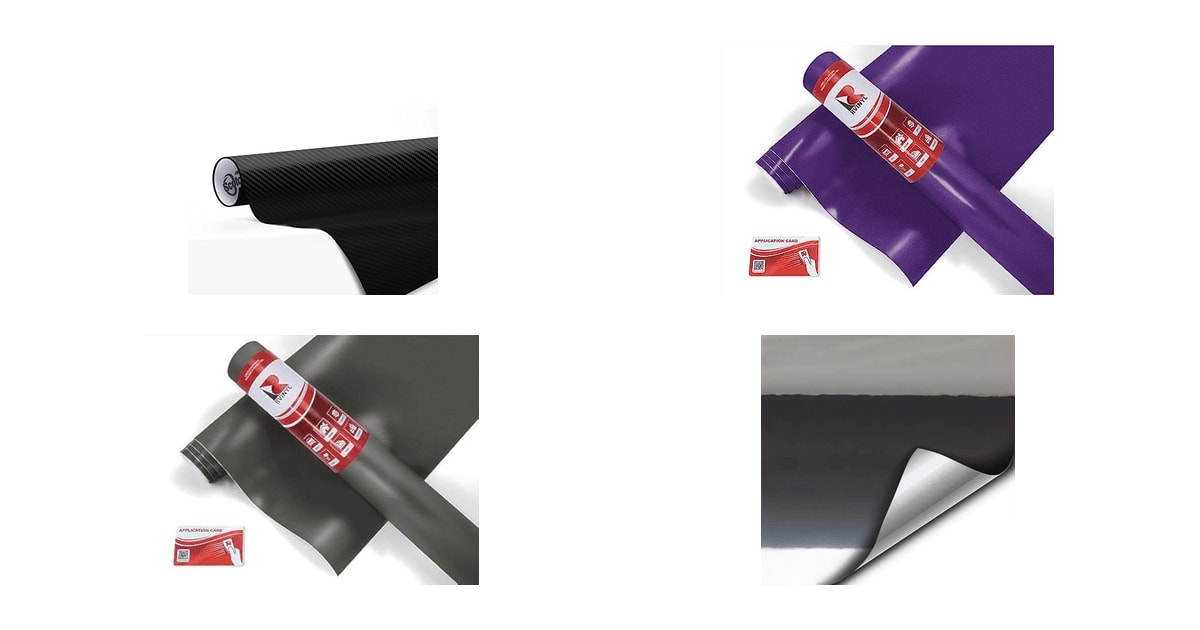
A color change used to mean a paint booth, a week without your car, and a bill that made you wince. Vinyl changed that. You can wrap a hood in an afternoon, cover an ugly emblem in ten minutes, or hand a shop a roll and get a whole car done without touching the factory paint underneath. But the film you choose decides almost everything about how the job goes. A good one slides into place and stays put. A bad one fights you at every curve and lifts by spring.
Here's the honest part: no wrap film is permanent, and none of them make a hard job easy. Even the best cast films need heat, patience, and a clean surface, and every one of them will eventually fade, chalk, or lift at the edges. Colors also don't always match the photo on your screen — owners across every brand here report shades that read warmer, lighter, or browner in daylight than they expected. Order a sample before you commit to a full car. That's not a knock on any single product; it's how vinyl works.
Cast films from the big three behave predictably, budget films behave unpredictably, and specialty finishes trade durability for drama. Knowing which trade you're making is most of the battle. We think that the 3M Scotchprint Series 1080 is the best vinyl car wrap film for most people, and that the Avery Dennison SW900 is the one to buy if your car has deep curves, flared fenders, or a body kit that a stiffer film won't follow.
Everything we recommend

The forgiving, widely stocked choice for almost any panel

Stretches further, so it follows deep curves without ghosting

Real cast film and excellent mattes, for less than the big two

Thick, cheap, and the right film to make mistakes on

Wild holographic color, if you accept it as a decorative film
At a glance
| Product | Roll Size | Finish | Price | |
|---|---|---|---|---|
| 3M Scotchprint Series 1080 Black Carbon FiberTop pick | 60in Wide | Black Carbon Fiber | $12.99 |
| RVINYL Avery Dennison SW900 566-M Satin PurpleRunner-up | 2ft x 5ft | Satin Purple Metallic | $37.39 |
| ORACAL 970RA Premium Vehicle Wrapping Cast FilmAlso great | 1ft x 5ft | Matte Metallic Charcoal | $23.46 |
| VViViD Supercast Black Conform Chrome Metallic FinishBudget pick | 1/2ft x 5ft | Chrome Metallic | $8.48 |
| AuMoHall Holographic Laser Blue Car Vinyl WrapAlso great | 53in x 7.8in | Holographic Laser Blue | $11.99 |
How we picked
Cast or calendered. We treated true cast construction as the requirement for anything wrapping a curved panel, since calendered film has dimensional memory and lifts at edges over time. Manufacturer spec sheets and listing descriptions told us which films qualify.
Stretch ceiling. We looked for published elongation figures at or above 130 percent for full-vehicle work, and higher for cars with flares and deep fascias. Below that threshold, published reviews and owner reports both describe stress whitening on anything past a flat panel.
Air-release adhesive. We only considered films with a structured air-egress system — Comply, Easy Apply, RapidAir or a brand equivalent — because without one, a bubble-free result depends entirely on squeegee skill. Owner feedback on films with weak channels is consistently frustrated.
Outdoor durability. We weighed published warranty terms on vertical surfaces alongside brand-stated UV stabilizer and topcoat construction. Films with no published durability data we treated as budget tier regardless of what the marketing claimed.
Owner-reported reality. We read customer feedback across all five listings for recurring themes rather than one-off complaints. Color accuracy and adhesive strength came up far more often than fading, which shaped several of the flaws above.
Top pick
The forgiving, widely stocked choice for almost any panel
3M Scotchprint Series 1080 Black Carbon Fiber
3M's 1080 is a 60-inch-wide cast film with air-release adhesive that lets trapped bubbles escape sideways instead of sitting under the surface. It's the film most shops default to, and the one that punishes a beginner's mistakes least.
$12.99fromAmazonThe adhesive is what you're really paying for. 3M's Comply system builds micro-channels into the glue so air escapes out the sides as you squeegee. In practice that means you can lay a large panel down, spot a bubble, and push it out instead of peeling the whole sheet back up. If you've only ever used craft vinyl, the difference is startling. It's the single feature that makes a first attempt on a hood look like something other than a first attempt.
This is the thickest of the three true cast films here at 3.5 mil, and you feel it. Thicker film shrugs off a squeegee corner that a thinner one would crease. It also handles the rock chips and door-edge scuffs of a daily driver better than the 3.0-to-3.2 mil competition. The trade-off shows up when you're on your back under a rear bumper — heavier film gets tiring on overhead and awkward work.
Shops that wrap whole cars care about something buyers rarely think about: whether two rolls from different production runs match. 3M's batch consistency is the reason a hood and a door bought months apart still read as the same color in sunlight. On a partial wrap you'll never notice. On a full car, a subtle hue shift between panels is the kind of mistake you can't unsee once you've spotted it.
The 60-inch width matters more than the spec sheet suggests. A full-size hood or a roof goes on in one piece, so you skip the seam entirely. Narrower rolls force you into overlaps that catch dirt and eventually lift. If you're wrapping anything larger than a mirror cap or an emblem, buy the widest roll you can and cut down, not the other way around.
Flaws but not dealbreakers
It's expensive, and there's no getting around that on a full vehicle. Material alone runs into serious money before you've bought a heat gun, a felt squeegee, or a bottle of isopropyl alcohol. For an emblem delete or an accent panel that's fine. For a whole car, price it out honestly first.
The catalog is enormous, and that cuts both ways. Owners regularly order a listing expecting one look and get another — the black carbon fiber option in particular has caught buyers who wanted visible weave texture and received a flat black instead. Read the exact finish name, not the marketing photo, and buy a small piece before you commit.
Color-shift and flip finishes are unforgiving of sloppy seams. The color changes with viewing angle, so two adjacent pieces laid at slightly different tensions won't match. That's an experienced-installer job, not a weekend one.
3M rates the 1080 Series for seven years on vertical surfaces.
Runner-up
Stretches further, so it follows deep curves without ghosting
RVINYL Avery Dennison SW900 566-M Satin Purple
Avery's SW900 is a dual-cast 3.2 mil film with its own air-release adhesive and a higher stretch ceiling than the 3M. It's the one professional installers reach for when a car's body has flares, scoops, and compound curves that punish a stiffer film.
$37.39fromAmazonEvery wrap film has a point where stretching it turns the color pale and cloudy — installers call it ghosting, and it's permanent. The SW900's higher elongation rating pushes that point further out. On a flared fender or a sculpted bumper cover, that extra margin is the difference between one clean piece and three cut pieces with visible seams. If your car has aggressive body lines, this is the reason to pick it.
Satin and metallic finishes are where this film earns its reputation. The surface texture is even and the color sits deep rather than flat, which shows up most under direct light — the exact condition where a mediocre finish looks cheap. The Satin Purple Metallic here is a good example of what the range does at its best. It's also why show-car builders keep it stocked alongside the 3M.
It's thinner than the 3M at 3.2 mil, and you should treat that as a real trade rather than a rounding error. Thinner film is lighter to hold overhead and easier to work over long sessions. It's also less forgiving when you drag it across a sharp body-line edge, and satin surfaces here will show micro-scratches from a bare plastic squeegee. Use a felt edge, every time.
Color accuracy is the recurring complaint owners raise about this listing, not adhesion or durability. Several report the shade reading lighter or duller in daylight than the product photos suggested. The film itself sticks well and resists tearing — it's the expectation gap that stings. Buy a small piece in your chosen color first and look at it outdoors.
Flaws but not dealbreakers
It costs roughly what the 3M does, so you're choosing on geometry, not on savings. If your car is mostly flat panels and gentle curves, the extra stretch buys you nothing.
Finish selection through general retail is narrower than 3M's. If you want a specific unusual color quickly, you may end up ordering through a specialty distributor and waiting.
The satin surface shows technique. Careless squeegee pressure leaves faint scratches that catch light at an angle, and they don't buff out the way they might on gloss.
Avery Dennison rates the SW900 for seven years outdoors on vertical surfaces.
Also great
Real cast film and excellent mattes, for less than the big two
ORACAL 970RA Premium Vehicle Wrapping Cast Film
Oracal's 970RA is a genuine cast film with its own RapidAir bubble-release liner, and its matte and satin finishes hold their own against anything here. You give up a couple of years of warranty and a bit of stretch to spend meaningfully less per foot.
$23.46fromAmazonThe matte and satin finishes are the reason to buy this film. Orafol's flat surfaces are even and consistent in a way that hides small application flaws, which is exactly what you want if this is your first serious wrap. Gloss options are a small step behind the 3M and Avery equivalents in depth. But if you're after a matte gray roof or a satin hood, you're not compromising much at all.
RapidAir works differently from the other two: the release liner physically stamps air channels into the adhesive during manufacturing. The result on your driveway is the same — air pushes out to the edges instead of pooling into a blister. The construction runs on the thinner side of the cast category, so give sharp edges a little more care and a little less pull than you would with the 3M.
Here's the practical case. On a full-size sedan you're covering fifty to seventy linear feet, and a lower per-foot cost compounds fast across that much material. Fleet operators and anyone wrapping a pickup or a three-row SUV feel it most. For a single accent panel the savings barely register, so buy this for scale rather than for a mirror cap.
The shorter warranty is the honest catch, and it matters more in some places than others. If you park outdoors in Phoenix or south Florida, those extra couple of years of coverage from 3M or Avery are worth paying for. If your car lives in a garage in Seattle, the gap is mostly theoretical.
Flaws but not dealbreakers
The stretch ceiling is lower than the Avery's, so deeply sculpted bumpers and flared arches are harder work. It'll do moderate curves confidently; it just runs out of room sooner on the extreme ones.
The color range is smaller than 3M's. If you have a specific specialty finish in mind, you may simply not find it here.
Gloss finishes look slightly flatter next to the premium pair when the two are side by side. On their own you'd never notice, but a two-tone job mixing brands will show it.
Orafol rates the 970RA for five years on vertical surfaces.
Budget pick
Thick, cheap, and the right film to make mistakes on
VViViD Supercast Black Conform Chrome Metallic Finish
VViViD's Supercast is the least expensive film here and, at 3.7 mil, also the thickest. It's a hybrid construction rather than true cast, so it's happiest on flat panels — and cheap enough that a botched first attempt costs you an afternoon, not a paycheck.
$8.48fromAmazonLearning to wrap takes ruined material. That's just true. The value of a low per-foot price isn't the money you save on the finished job — it's that you'll actually re-do a panel instead of living with a crease because the film cost too much to waste. Start on a roof or a trunk lid with this, get your heat-gun timing right, then buy the expensive roll for the car you care about.
On flat panels it looks better than it has any right to. Hoods, roofs, door skins, trunk lids — from ten feet away a careful install here is hard to tell from a premium film. The 3.7 mil thickness genuinely helps, resisting the nicks and edge damage that thinner budget films pick up in a parking lot. It's the curves where the construction shows.
Owners who wrap contoured pieces report exactly what the construction predicts: it doesn't want to follow deep transitions. Push it past its comfort zone and you get stress whitening or an edge that lifts a few months later, especially after a hot summer of thermal cycling. Relief cuts and patient heat help if you know the technique. If you don't yet, keep it to flat work.
The color complaint here is consistent and worth taking seriously. This is sold as black chrome, and a meaningful share of owners report it arriving with a distinctly bronze or warm brown cast instead. If black is the point, order a sample strip and look at it in daylight next to whatever you're matching. Several buyers liked the film itself and returned it purely over the shade.
Flaws but not dealbreakers
It's a calendered-plus hybrid, not true cast, and calendered material has memory. It wants to return to flat, which is why edges on curved surfaces lift over time. That makes it a poor choice for a full wrap on a modern car with sculpted panels.
The air-release channels are less effective than the systems on the three cast films. You'll fight more bubbles and need cleaner squeegee discipline.
Batch-to-batch color varies more than premium brands, and outdoor UV durability trails the cast films. Combined with the color-accuracy issues owners report, this is a film to buy in one order, for one project.
VViViD rates the film for four to seven years outdoors and up to ten years indoors.
Also great
Wild holographic color, if you accept it as a decorative film
AuMoHall Holographic Laser Blue Car Vinyl Wrap
AuMoHall's holographic film shifts through a rainbow as the light and your viewing angle change, and nothing in a standard cast catalog looks like it. It arrives as a small sheet and behaves like decorative material — great on trim, risky on a bumper.
$11.99fromAmazonNobody buys this for durability. You buy it because a hood, a set of mirror caps, or an interior trim panel in shifting prismatic blue gets a reaction that no solid color can match. The multi-layer construction stacks a metallic base, a micro-prismatic optical layer, and a gloss topcoat, which is why the effect works and also why it behaves differently from a standard pigmented film.
Adhesion is the real problem, and owners are blunt about it. The most common complaint by far is that it lifts, won't hold on contours, or peels back after it's down — some report that even with a heat gun it wouldn't stay put. Others get good results by working slowly, using a slip solution, and applying more heat than they expected. Read that split as a warning: this film demands technique and rewards small, flat, low-stress applications.
It's also just physically small. The sheet size here suits trim pieces, a dashboard panel, mirror caps, or a laptop lid — plenty of owners use it exactly that way and are happy. It's not a practical path to wrapping a car body, and the prismatic layer makes matching seams across a large area close to impossible anyway.
The prismatic layer that creates the effect is more vulnerable to sunlight than the stabilized pigments in a cast film. Expect the shift to dull noticeably faster than a solid color on a car that lives outdoors in strong sun. On a garaged show car or an interior piece, that's a fair trade for a look you can't get any other way.
Flaws but not dealbreakers
Adhesive strength is inconsistent enough that you should plan for a test piece before committing to anything visible. This is the single most-reported issue with the listing, and it isn't rare.
There's essentially no stretch to work with. It won't conform around a curve the way cast film does, so restrict it to flat and gently curved surfaces.
Roll-to-roll color consistency is unreliable, and the seam-matching problem compounds it. Treat it as accent material, not a coverage solution.
The listing doesn't state a warranty term.
Who this is for
This guide is for anyone changing the look of a car with vinyl — a full color change, a two-tone roof, a set of accent panels, or a blacked-out emblem. If you're patient and willing to buy a heat gun, a felt squeegee, and a bottle of 99 percent isopropyl alcohol, flat panels are genuinely within reach on a first attempt. If you want a whole modern car with sculpted body lines done well, budget twenty to forty hours or pay a shop, because the mirrors, handles and bumpers are where beginners lose material.
We're only covering color-change wrap films here. Paint protection film, printed advertising wraps, window tint, and headlight tint are all different products with different requirements, and none of them are in this lineup. We also can't tell you which specific color to buy. Screen photos and daylight disagree constantly across every brand in this category, so order a sample of your exact finish before you commit to a full roll — that one step prevents most of the disappointment owners report.
How we picked
Construction: cast film for anything curved, since calendered material has memory and lifts at the edges eventually. Stretch: at least 130 percent elongation for a full car, more if your body panels are deeply sculpted. Adhesive: a real air-release channel system, because without one a clean install depends on skill you may not have yet. Durability: published warranty terms on vertical surfaces plus stated UV stabilizer and topcoat construction, not marketing adjectives. Owner reality: recurring complaint themes across customer feedback, which is how color accuracy and weak adhesion ended up weighted as heavily as any spec.
The competition
This lineup is what our research surfaced among widely available wrap films, not a survey of everything on the market. Plenty of capable film sells through specialty distributors that never shows up in a general search, and several major brands offer finishes we simply couldn't evaluate from published information. Every product we looked at earned a pick above, because each one does something genuinely well for a specific buyer — the differences are about which trade-offs you're willing to make, not about which films are worth avoiding.
Installation notes
Clean the panel with 99 percent isopropyl alcohol right before you lay film down. Any wax, silicone or road film left behind is what makes an edge lift a month later, and it's the most common self-inflicted failure. Work between roughly 65 and 80 degrees Fahrenheit — cold adhesive is brittle and won't conform, and hot adhesive grabs before you can reposition. Use a felt-edged squeegee, especially on satin and metallic finishes, since a bare plastic edge leaves micro-scratches you can't buff out. Post-heat curves with a heat gun on medium and check the surface with an infrared thermometer, not your hand. Then come back a day later and look at every edge; lifting caught early can be reheated and pressed back down.
Questions we get
How much film do I need to wrap a whole car?
A standard sedan takes roughly 50 to 60 linear feet of 60-inch-wide film, and a full-size SUV or pickup runs closer to 65 to 75. Buy 10 to 15 percent extra for trim waste, overlaps and the piece you'll inevitably ruin. A compact hatchback usually lands in the 45 to 55 foot range. If your car has lots of character lines and flares, plan on the high end.
What's the difference between cast and calendered vinyl?
Cast film is made by pouring liquid PVC onto a casting sheet and letting it cure, which leaves it stress-free and able to stretch into curves and stay there. Calendered film is squeezed through heated rollers — faster and cheaper, but the material remembers being flat and slowly pulls back, lifting at curved edges. For a full wrap on any modern car, cast is the only safe answer. Calendered is fine for flat panels and accent pieces.
How long will a wrap last before it fades?
Premium cast films carry seven-year ratings on vertical surfaces, and the Oracal is rated for five. What you actually get depends mostly on sun exposure and washing habits. A garaged car cleaned with pH-neutral, wrap-safe soap often hits or beats those numbers. A car parked outdoors in Phoenix or the tropics will shift color sooner, and specialty finishes like chrome and holographic degrade fastest of all.
Can I do this myself, or should I pay a shop?
Air-release adhesives have made DIY wrapping far more realistic than it used to be, and a careful first-timer can get a clean result on a hood or a roof. Full cars are a different animal — installers put a complete wrap at 20 to 40 hours, and the mirrors, handles and bumpers are where it goes wrong. Start with one flat panel using cheap film to build your heat-gun and squeegee technique. If perfection matters and the film is expensive, a shop is money well spent.
Will removing a wrap damage my paint?
Properly installed premium vinyl on healthy factory paint should come off cleanly. The risk factors are paint that was already chipped or resprayed, film that's been on for many years while the adhesive bond strengthened, and rushing the removal. Warm the film with a heat gun and pull slowly at a shallow angle. Never peel in cold weather — brittle film tears instead of releasing, which is when paint actually comes with it.
Why doesn't the color match the product photos?
This is the single most common complaint across wrap films, and it isn't limited to cheap ones. Screen calibration, studio lighting and the metallic or prismatic layers in the film itself all shift how a color reads. Owners report it on budget chrome and on premium satin alike. Order a small sample of your exact finish, look at it outdoors next to your car, and only then buy the roll.
Why you should trust us
For this guide:
- We compared manufacturer specifications and listing details across all five films, focusing on construction type, thickness, stated elongation and air-release technology.
- We read published reviews and technical write-ups covering cast versus calendered behavior and outdoor durability in this category.
- We reviewed owner feedback on every listing here for recurring themes, which is how color accuracy and adhesive strength ended up shaping the flaws sections.
- We read owner reviews on every listing, weighted toward the critical ones, because that is where the recurring failures show up.
- We have a systematic way of automatically fetching the latest prices, so the numbers on this page stay current.
- This is a research-focused guide, so the team may not own every product listed — though we often do own the top winners, which gives us extra context for the recommendations.
- We don't accept free products, and the retailer commission never changes which product we recommend.
Sources
Best Vinyl Wrap Films - Detailed Comparison by TheWrapGang, TheWrapGang
3M 1080 vs 2080 Wrap Film: Key Differences Explained, 3M
Avery Dennison SW900 Supreme Wrapping Film Product Data Sheet, Avery Dennison
Oracal 970RA vs 975 Wrap Film Performance Data, Orafol
How Long Do Vinyl Wraps Last? Durability Testing Results, Wrapfolio
KPMF K75400 Technical Product Specification, KPMF
Vinyl Wrap Buying Guide 2026 - WrapBullys, WrapBullys
Cast vs. Calendered Vinyl: What Wrap Installers Need to Know, Sign Warehouse
Amazon product listings and owner reviews for all 5 products
Manufacturer specification pages for each product
Some passages in this guide may be paraphrased with AI help. Prices are refreshed automatically.
More like this.
Continue exploring electronics reviews and recommendations.

The Best Car Paint Protection Film Kits
Paint damage on a car almost never arrives all at once. It shows up as a rash of tiny chips on the leading edge of the hood, a scuff where your kid swings…

The Best DIY Car Window Tint Film
Window tint is one of the few car upgrades you notice every single day. A black interior parked in July stops being an oven. Glare off wet pavement at…

The Best Turntables for Budget Vinyl Listening
Vinyl asks something of you that streaming doesn't. You get up, flip the record, set the needle down. That ritual is most of the appeal, and a good budget…

The Best Cold Therapy Knee Wraps
A knee that's just been operated on, twisted on a trail run, or flared up after a long day swells fast. Cold slows that down. But how you deliver the cold…

The Best Wireless Presentation Clickers
A clicker sounds like a small thing until you've given a talk without one. You end up tethered to the laptop, tapping the space bar, half-turned away from…

The Best Portable External SSDs
A portable SSD is the drive you grab when your laptop is full, when a shoot wraps and the cards need clearing, or when a console runs out of room…