The Best Hand Grip Strengtheners for Therapy
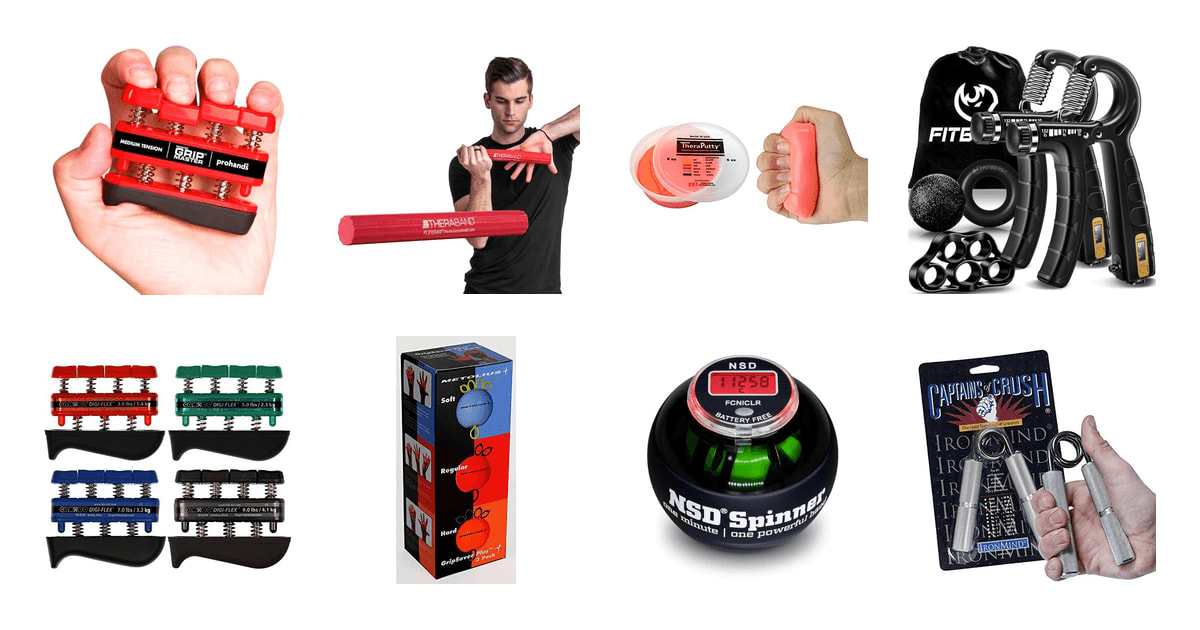
Hand strength shows up in the small stuff. Opening a jar, turning a key, holding a coffee cup without thinking about it. When an injury, surgery, or arthritis takes that away, you notice fast. A grip strengthener is one of the few home tools that can actually rebuild it, but only if you match the tool to the stage you're in. Squeezing something too stiff too early sets you back weeks. The right device meets your hand where it is and gets harder as you improve.
Here's the honest part: no single device covers a whole recovery. Putty is gentle enough for inflamed joints but gives you nothing to measure. Spring grippers give you numbers but can aggravate a hand that isn't ready. Extension tools train the muscles that open your fingers, and almost nothing else does. Most people end up owning two or three of these over a course of therapy, not one. And none of them replace an actual occupational therapist telling you what your hand needs.
We looked at how each of these tools is built, what published rehabilitation research says about the techniques behind them, and what owners report after months of daily use. We think that the Prohands Gripmaster is the best hand grip strengthener for therapy for most people, and that the THERABAND FlexBar is the one to buy if tennis elbow is what's actually bothering you.
Everything we recommend

Works one finger at a time, which is the whole point

The one tool with real trial evidence behind it, for elbows

Gentle enough for a hand that isn't ready for springs

A whole progression in one box, if you're following a protocol
At a glance
| Product | Resistance | Pack Size | Price | |
|---|---|---|---|---|
| Prohands Gripmaster Hand ExerciserTop pick | 7 lb Medium Tension | — | $21.95 |
| THERABAND FlexBar Resistance BarAlso great | 10 lbs Light | — | $14.99 |
| CanDo TheraPutty Standard Hand Exercise Putty forBudget pick | Red: Soft | — | $9.02 |
 | FitBeast Hand Grip Strengthener Workout KitAlso consider | Adjustable | 5 Pack | $12.99On sale |
| Digi-Flex Hand Exercisers Combo - Set ofUpgrade pick | 3-9 lb Range | Set of 4 | $73.99 |
 | Metolius GripSaver Plus - Assorted 3 PackAlso consider | 3 Densities | 3 Pack | $49.95 |
 | Manual Thumb Wind Start NSD Spinner GyroAlso consider | 24.9 lbs Resistance | — | $38.50On sale |
 | USAAlso in lineup | 120 lb / 54 kg | — | $34.95 |
How we picked
Clinical grounding. We favored tools that appear in occupational therapy protocols or have published trial evidence behind their technique. The FlexBar's Tyler Twist data was the strongest single piece of evidence we found in the category.
Resistance range. A therapy tool needs to sit below your current maximum and leave room to climb. We looked for products with a stated progression path, whether that's firmness grades, color-coded levels, or a family of tensions.
Flexion and extension. Training only the closing motion builds an imbalance that drives tendon problems. We gave weight to products that work the extensor side, either as their main job or as an included component.
Material safety. Latex-free and non-toxic ratings matter for pediatric, allergy-sensitive, and elderly users. We checked stated material specifications rather than marketing language.
Daily durability. Rehab means hundreds of repetitions a week for months. We read long-term owner feedback looking for sagging springs, cracked balls, and broken bands rather than first-week impressions.
Top pick
Works one finger at a time, which is the whole point
Prohands Gripmaster Hand Exerciser
The Gripmaster is a pocket-sized exerciser with four spring-loaded pistons, one per finger. That layout lets you work a weak ring finger without your index finger quietly doing the job for it, which is exactly what makes it a therapy tool instead of a gym toy.
$21.95fromAmazonThe per-finger pistons are the reason therapists reach for this one. On a standard gripper, your strongest fingers carry the load and your weakest ones coast. That's fine if you just want a firmer handshake. It's useless if you're rebuilding a specific digit after nerve damage or a stroke. Each piston here moves on its own, so a weak finger has to do its own work. Owners repeatedly mention buying it because a hand therapist told them to.
It's small enough to live next to your chair, which matters more than it sounds. The rehab evidence favors short daily sessions over occasional hard ones, and a tool you can grab during a TV show gets used. Several owners describe exactly that habit — squeeze a few sets, switch hands, put it back down. It weighs almost nothing and fits in a pocket, so it travels between clinic and home without ceremony.
The build holds up. ABS housing, stainless steel springs, santoprene contact pads — nothing exotic, but they're the right materials for something you'll compress hundreds of times a week. One owner reports a decade of use with the springs still even. That kind of longevity is unusual in this category, where plastic bodies tend to loosen and springs tend to sag.
Guitarists and other musicians have adopted it for the same reason therapists have. Independent finger control is the thing they need, and this is one of the few cheap tools that trains it directly. If you're managing repetitive strain from playing rather than recovering from an injury, it still applies.
Flaws but not dealbreakers
Each unit is one tension, so progressing means buying another one. This model is the 7 lb medium, which sits in the middle of the Gripmaster range. If your hand is fresh out of surgery or in an arthritis flare, 7 lb is too much — start with putty or a lighter tension and work up.
It's sized for average adult hands. Owners with unusually large or small hands sometimes find the spacing off, and the pistons don't adjust.
The listing doesn't state a warranty term for this model.
Also great
The one tool with real trial evidence behind it, for elbows
THERABAND FlexBar Resistance Bar
A twelve-inch rubber bar you bend and twist rather than squeeze. Used with the Tyler Twist eccentric protocol, it's the only tool here backed by a randomized controlled trial for lateral epicondylitis, and owners who stalled in conventional therapy often credit it with breaking the plateau.
$14.99fromAmazonIf tennis elbow is your problem, buy this before anything else. The Tyler Twist protocol — published in the Journal of Shoulder and Elbow Surgery — reported an 81% drop in pain and a 72% grip strength gain at six weeks, against 22% pain reduction for standard care. That's a stronger result than most treatments for the condition, and it comes from a piece of rubber you can throw in a bag.
The Red bar bends with about 10 lbs of resistance, which is the beginner rung. That's the right starting point after an injury, and it's also the point where the twist actually works — you need to be able to rotate the bar fully for the eccentric loading to happen. Owners who bought both Red and Green often report going back to Red for that reason.
It's not just an elbow tool. The same twisting and bending work applies to golfer's elbow, wrist tendonitis, and general forearm conditioning, and several owners picked it up after thumb or wrist surgery. There's nothing to set up, nothing to charge, and it wipes clean.
Technique is the whole thing here, and the packaging won't teach it to you. The Tyler Twist is an eccentric wrist extension — you load the bar with the good arm and let the injured arm resist as it unwinds. Simply squeezing or bending it does very little. Look up the protocol properly before your first session.
Flaws but not dealbreakers
Ten pounds is genuinely light if you already have decent forearm strength. Some owners graduate to Green within a few weeks, which means a second purchase.
Don't start during an acute flare. The eccentric loading is meant for the sub-acute phase, once heat and swelling have settled. Beginning too early tends to make things worse.
Budget pick
Gentle enough for a hand that isn't ready for springs
CanDo TheraPutty Standard Hand Exercise Putty for
A tub of latex-free putty in one of six color-coded firmness grades. It trains pinch, squeeze, extension, and rolling all in one medium, and it's the tool occupational therapists hand out first for arthritis, post-surgical hands, and early fine-motor work.
$9.02fromAmazonPutty comes first because springs can hurt you. A spring gripper loads an inflamed joint abruptly. Putty resists you smoothly and stops the instant you stop, which is the safety property that matters when you're managing arthritis or a hand that's two weeks out of a cast. More than 58 million American adults have doctor-diagnosed arthritis, and for most of them this is where hand therapy starts.
One tub covers movements that would take three separate devices otherwise. You can pinch it, roll it, press it flat, spread it open with your fingers, or bury coins in it and dig them out. That last one sounds like a party trick; it's a standard fine-motor drill. For stroke recovery in particular, the sensory feedback of working something soft does things a spring can't.
The formulation is latex-free, gluten-free, casein-free and non-toxic, which is why it ends up in pediatric clinics and daycare rooms as well as hand therapy. Owners buy it for allergy-sensitive kids and for parents in their nineties. It doesn't dry out if you keep the lid on.
Grade selection matters more than people expect. Red is labeled soft, but a few owners find Green — nominally medium — more pliable, so don't treat the color scale as gospel. If you're starting from an inflamed or post-surgical hand, go softer than the chart suggests. You can always buy up.
Flaws but not dealbreakers
Each firmness is a separate purchase, so a full progression costs more than the single-tub price implies.
It picks up lint, hair and crumbs the moment it touches a table. Keep it in the container and work over a clean surface, or you'll be picking debris out of it for weeks.
There's no way to measure what you did. If you want numbers, you'll eventually need a spring device alongside it.
Upgrade pick
A whole progression in one box, if you're following a protocol
Digi-Flex Hand Exercisers Combo - Set of
Four Digi-Flex units at 3, 5, 7, and 9 lbs, color-coded the way clinical prescriptions are written. Each unit trains individual finger flexion through eight buttons and full-hand grip in the same body, so one set carries you from early recovery to functional strength.
$73.99fromAmazonMost people don't need four resistance levels at once. If you're following a written post-surgical protocol, you do — and buying them one at a time means your progression stalls every time you outgrow a unit. This set removes that problem. Red to Green to Blue to Black maps onto the language therapists already use, so a note that says advance to Green needs no translation.
Each unit does two jobs at once. The eight graduated buttons let you press individual fingers, and the body itself works as a full-hand gripper. That dual mode is why Digi-Flex units show up in hospital hand departments. You're not choosing between isolated digit work and power grip; you get both from the same piece of plastic.
Progression is the entire mechanism behind strength rehab, and having the next step already on the shelf makes you more likely to take it. Grip strength peaks around age 30 to 34 and declines steadily after; recovering toward an age-adjusted norm takes months of graded loading, not weeks. A set built as a ladder fits that timeline better than a single unit does.
Worth being clear about what you're paying for. This is institutional-grade equipment priced for clinics that run it across many patients. If you're one person who needs one resistance level, the Gripmaster covers you for a fraction of the outlay.
Flaws but not dealbreakers
It's the most expensive option here by a wide margin, and three of the four units will sit unused for months at a time.
Four separate units are bulky compared with anything else on this list. It's not what you toss in a bag for the office.
Owner feedback on this specific set is thin — far fewer people have weighed in than on the mass-market options, so there's less collective experience to draw on.
Who this is for
Buy one of these if you're rebuilding hand function after surgery, a stroke, a fracture or a nerve injury, if you're managing arthritis, or if repetitive work is starting to cost you grip. Grip strength is a well-validated health marker — a 5 kg decline tracks with a 16% higher risk of all-cause mortality across a 139,691-adult international study — and it falls roughly 1 to 1.5% a year after 40 without intervention. Ten to fifteen minutes a day is the standard home program. Frequency beats intensity, every time.
This guide covers handheld therapy and strengthening tools you can use at home between appointments. It doesn't cover dynamometers, splints, braces, or clinical modalities like ultrasound, and it isn't a substitute for an evaluation. If you're in an active flare, in the first week after surgery, or you don't yet know what's wrong with your hand, talk to a therapist before you buy resistance of any kind. The most common mistake in hand therapy is starting too heavy, and it's a mistake that costs weeks.
How we picked
Clinical grounding: we favored tools with published evidence or a place in established OT protocols over marketing claims. Resistance range: the tool has to start below your current maximum and give you somewhere to go, whether through firmness grades or graduated tensions. Flexion and extension: opening the hand against resistance matters as much as closing it, and flexion-only training builds the imbalance behind overuse injuries. Material safety: latex-free and non-toxic specs are non-negotiable for kids, allergy-sensitive users and anyone putting this near their mouth. Daily durability: we read long-term owner feedback for the failure modes that show up at month six, not week one.
Other hand grip strengtheners for therapy worth considering
If you need extension work specifically: The Metolius GripSaver Plus - Assorted 3 Pack ($49.95) — The Metolius GripSaver Plus pairs a squeeze ball with a finger extension loop, in three densities. Extension is the neglected half of hand training, and climbers recovering from pulley injuries or cooks whose hands stay curled all day get real relief from pushing outward against resistance. The catch is quality control: owners report the lightest band snapping early, and the middle ball cracking within a week in at least one case. The lightest density is also too easy for most adults, which effectively makes it a two-piece set.
If you want several tools in one purchase: The FitBeast Hand Grip Strengthener Workout Kit ($12.99) — The FitBeast kit bundles two adjustable grippers with rep counters, a finger stretcher band, a grip ring and a stress ball. The adjustable range runs from 10 lbs up to 132 lbs, which covers general conditioning through athletic work, and the counters help if your program prescribes set repetitions. None of the pieces is as specialized as a dedicated therapy tool, the counters are fiddly to reset, and the top of the range has no business near a recovering hand. Think of it as maintenance equipment, not rehab equipment.
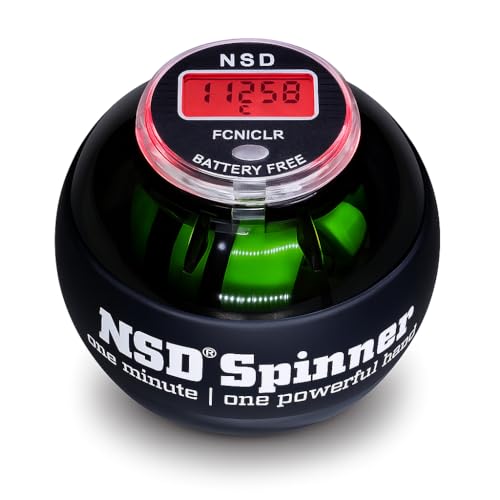
If you want resistance that scales itself: The Manual Thumb Wind Start NSD Spinner Gyro ($38.50) — The NSD Spinner is a gyroscopic ball that gets harder the faster you spin it — up to about 24.9 lbs at 18,000 RPM — so it adjusts to you without any equipment changes. The built-in counter gives you a number to chase, and it works the whole chain from fingers to shoulder in one motion. But it demands baseline grip and coordination to start and keep going. Owners without either find it frustrating, and one describes it as flatly unusable for an older beginner. It's a mid-to-late recovery tool at best.
The competition
This is what our research surfaced across the therapy and grip-training category, not a census of everything sold. One product didn't make the picks or the honorable mentions, and it's here for a specific reason rather than a lack of quality.
The USA ($34.95) — The IronMind Captains of Crush Point Five is a superb gripper and the wrong tool for almost everyone reading this guide. At roughly 120 lbs to close, it's a strength-training instrument, not a rehabilitation device — the machined aircraft-aluminum handles are in a different durability class from anything else here, and the COC line is the informal standard for verifying grip strength. But there is no adjustment, no lighter setting, and no gentle way in. It belongs after discharge, once a therapist has cleared you for progressive loading and you've closed something lighter first. If you're already past rehab and want a milestone to train toward, it's the obvious choice.
How to use these safely
Start softer than you think you need. The single most common error in home hand therapy is picking a resistance you can just barely manage, which inflames tendons and joint capsules and adds weeks to recovery. The standard OT baseline is three sets of fifteen repetitions, once daily, with a minute or two between sets — advance to the next grade only when that feels genuinely easy, usually two to four weeks per level after surgery. Stop immediately if you get numbness, tingling, or pain radiating into your fingers. During an active arthritis or tendonitis flare, pause resistance work entirely and stick to range-of-motion movement. Keep putty sealed between sessions, and wipe rubber tools down so they don't get slick.
Questions we get
What should I use for arthritis?
Start with therapy putty in an extra-soft or soft grade. It gives you gentle resistance across squeezing, pinching, stretching and rolling without the abrupt joint loading that spring grippers apply to inflamed tissue. Occupational therapists almost always begin arthritic hands on putty before introducing any spring device. During an active flare, stop strengthening entirely and do range-of-motion work only.
Can these help with carpal tunnel?
Yes, with the right tool and the right timing. Gentle putty work that stretches and strengthens the flexor tendons is appropriate; high-resistance spring grippers can worsen nerve compression during the acute phase. Nerve gliding exercises alongside light putty are the usual home program. Stop using anything that produces numbness, tingling or pain radiating into your fingers, and check with your therapist before adding progressive resistance.
How often should I train?
Ten to fifteen minutes daily, usually structured as three sets of fifteen repetitions with a minute or two of rest between sets. Frequency matters more than intensity here — daily moderate sessions outperform occasional heavy ones in the rehabilitation evidence. Most discharge programs run six to twelve weeks after an injury. Follow whatever your own therapist prescribed, since protocols vary a lot by condition.
What resistance should I start with after surgery?
The lightest thing available for whichever tool type you're using — an extra-soft putty grade, the lowest spring tension in a product's range, or the 3 lb Red unit in a graduated set. Move up only when three sets of fifteen feel effortless, which typically takes two to four weeks per level. Starting too heavy is the most common post-surgical mistake and it causes micro-trauma to structures that are still healing.
Is putty or a spring gripper better?
They do different jobs and most people use both, in order. Putty gives continuous low-load resistance across pinch, grip, extension and rolling, plus sensory feedback that's valuable in neurological and fine-motor recovery — that's why it comes first. Spring devices like the Gripmaster and Digi-Flex give you defined, repeatable resistance levels, which is what you need once measurable progressive overload becomes the goal.
Should I train extension too, or just squeezing?
Train both. Opening your fingers against resistance is as important as closing them, and flexion-only training builds an extensor weakness that contributes to overuse injuries including tennis elbow and climbing pulley strains. The GripSaver Plus is the most targeted extension tool here. The FitBeast kit includes a basic finger stretcher band if you'd rather not buy a dedicated device.
How long until I notice a difference?
Most people see measurable grip improvement within four to six weeks of consistent daily work, with meaningful functional gains by eight to twelve weeks. The FlexBar trial data hit its main results at the six-week mark. Recovering to pre-injury strength after hand surgery can take three to six months depending on the injury and how complex the repair was.
Why you should trust us
For this guide:
- We read published rehabilitation research on eccentric elbow protocols and grip strength as a health marker, alongside occupational therapy guidance on progression and material safety.
- We compared manufacturer specifications for every product here — resistance ranges, materials, dimensions and stated firmness grades.
- We reviewed owner feedback across all eight listings, looking for repeated failure modes and for who each tool actually worked for.
- We read owner reviews on every listing, weighted toward the critical ones, because that is where the recurring failures show up.
- We have a systematic way of automatically fetching the latest prices, so the numbers on this page stay current.
- This is a research-focused guide, so the team may not own every product listed — though we often do own the top winners, which gives us extra context for the recommendations.
- We don't accept free products, and the retailer commission never changes which product we recommend.
Sources
Grip Strength as a Predictor of Cardiovascular Mortality — PURE Study: each 5 kg decrease in grip strength associated with 16% higher all-cause mortality risk across 139,691 adults in 17 countries, The Lancet (Leong et al., 2015)
Addition of Wrist Extensor Eccentric Exercise to Standard Treatment for Lateral Epicondylosis — Tyler Twist FlexBar protocol: 81% pain reduction and 72% grip strength improvement after 6 weeks vs. 22% in standard-care controls, Journal of Shoulder and Elbow Surgery (Tyler et al., 2010)
Grip Strength Normative Data Across Age and Sex — Male dominant-hand grip peaks at 116 lbs at age 30–34, declining to approximately 90 lbs by age 65; female averages decline from 70 lbs to 54 lbs over the same range, Journal of Hand Therapy
Arthritis Prevalence and Statistics — More than 58 million American adults have doctor-diagnosed arthritis, making hand rehabilitation devices among the most broadly needed therapeutic tools in the U.S., Centers for Disease Control and Prevention (CDC)
Grip Strength Decline and Functional Independence in Older Adults — Grip strength declines 1–1.5% per year after age 40; regular hand strengthening significantly extends maintenance of functional independence in activities of daily living, NIH / National Center for Biotechnology Information
Amazon product listings and owner reviews for all 8 products
Manufacturer specification pages for each product
Some passages in this guide may be paraphrased with AI help. Prices are refreshed automatically.
More like this.
Continue exploring health reviews and recommendations.

The Best Workout Gloves and Lifting Grips
Your hands are the weak link in most lifts long before your back or legs are. Skin tears at the base of the fingers, calluses catch on knurling, and a bar…

The Best Red Light Therapy Devices for Home Use
Red light therapy sounds exotic, but the routine is dull in the best way. You sit or stand in front of a panel for 10 to 20 minutes, a few times a week,…

The Best Cold Therapy Knee Wraps
A knee that's just been operated on, twisted on a trail run, or flared up after a long day swells fast. Cold slows that down. But how you deliver the cold…

The Best SAD Light Therapy Lamps
By the time the sun sets before dinner, a lot of us are dragging. Seasonal affective disorder affects roughly 5% of American adults and can stretch across…

The Best Rechargeable Hand Warmers
Cold hands ruin an otherwise good day outside. A rechargeable hand warmer is a small lithium battery wrapped in a metal or plastic shell that heats up on…

The Best Heated Motorcycle Grips
Cold hands ruin a ride faster than anything else. Your fingers go numb, your grip gets sloppy, and you start planning stops around gas-station hand…