The Best Aquarium LED Lighting
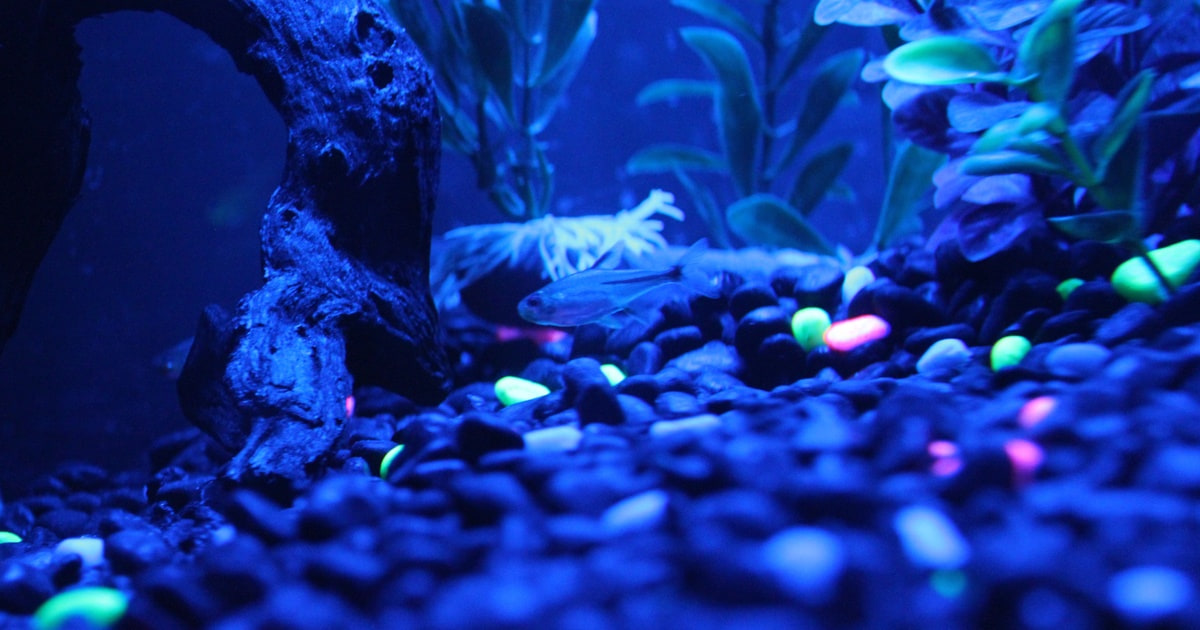
The light over your tank does more work than anything else you'll buy for it. It decides whether your plants carpet the substrate or melt into brown mush, whether your corals color up or go pale, and whether the fish you paid for actually look like the photos. It also decides how much algae you scrape off the glass every weekend. A good fixture isn't just brighter than a cheap one. It puts the right wavelengths in the right places, on a schedule your tank can live with.
Here's the honest part: no single light is right for every tank. Freshwater plants and reef corals want different spectrums and wildly different intensities, so a fixture that grows a gorgeous carpet of dwarf hairgrass will starve an SPS colony. And more power isn't automatically better. Reef Builders points to sudden jumps in light intensity as a leading cause of coral bleaching, and on planted tanks too much light just feeds algae. Almost every fixture here also treats mounting hardware as an afterthought.
We sorted these by what's actually in your tank, because that's the only way this question has an answer. For most freshwater planted tanks, we think the Fluval Plant 3.0 is the best aquarium LED lighting for most people, and that the AquaIllumination Prime 16 HD is the one to buy if you're lighting a nano or mid-size reef instead.
Everything we recommend

Enough light for real plants, without a learning curve

The easiest way into real reef lighting

Serious output and channel-level control for high-tech tanks

Real plant spectrum and a built-in timer, for very little
Prices as of Oct 25, 6:48 AM PT · Details
At a glance
| Product | Tank type | Coverage / size | Price | |
|---|---|---|---|---|
| NICREW C10 Plant Aquarium LightBudget pick | — | 12-18 in | $18.99 |
 | CURRENT USA 48-60" Inch Satellite Freshwater LEDAlso in lineup | Freshwater | 48-60 in | $195.99 |
| Fluval Plant 3.0 LED Planted Aquarium LightingTop pick | — | 15-24 in | $149.99 |
| Chihiros WRGB II PRO LED Aquarium LightUpgrade pick | — | 120cm | $674.29 |
 | TWINSTAR S Line 450S WRGB LED AquariumAlso consider | — | 18-22 in tanks | $139.99 |
| AquaIllumination Prime 16 HD LED Saltwater ReefAlso great | Saltwater reef | 24 x 24 in | $264.99 |
 | Kessil A360XE Tuna Sun Freshwater Aquarium LEDAlso consider | — | 24 x 24 in | $499 |
Prices as of Oct 25, 6:48 AM PT · Details
How we picked
Light output and PAR. We compared published PAR figures from manufacturers against the thresholds hobbyists actually use, roughly 50 to 100 PAR at the sand for softies and 100 to 250-plus for SPS. For planted tanks, we looked for enough output to run carpeting plants without forcing you to.
Spectrum for the tank. Freshwater and reef fixtures aren't interchangeable, so we checked spectrum claims on each spec sheet against what the tank type needs. Planted lights had to include real deep red, not just white and blue.
Scheduling and control. We favored fixtures that ramp sunrise and sunset instead of snapping on, since published guidance and owner feedback both tie hard on-off cycles to stressed fish. App control counted most where slow acclimation ramps matter.
Mounting and coverage. We read the stated coverage footprint and mounting hardware for every fixture, and flagged the ones that sell legs or arms separately. A light that doesn't reach your tank's corners isn't the right size.
Build near water. We looked for aluminum housings, real heat sinking and any stated splash resistance, because saltwater spray and condensation kill fixtures that skip it.
Top pick
Enough light for real plants, without a learning curve
Fluval Plant 3.0 LED Planted Aquarium Lighting
The Fluval Plant 3.0 covers 15 to 24 inches with 22 watts across six wavelength bands, and its app builds a full sunrise-to-moonlight day. Fluval rates the 24-inch model at roughly 91 PAR at the substrate, which is enough for carpeting plants.
$149.99fromAmazonPrices as of Oct 25, 6:48 AM PT · Details
Most people want a light that grows plants without becoming a hobby of its own. That's what this one does. You set a start time, an end time, and a couple of ramp points in the app, and you're finished. Fluval also ships preset habitat configurations like Tropical, Planted and Lake Malawi, so if you don't want to think about spectrum at all, you can pick one and walk away.
Fluval rates the 24-inch version at around 91 PAR at the substrate, which lands it in medium-to-high light territory. In practice that means you can grow the demanding stuff, including foreground carpets, if you're running CO2. It also means you have headroom you don't have to use. Dim it to 60 percent and you've got a comfortable low-tech community tank that won't turn green on you.
The six band waves matter more than the number suggests. You get deep reds and blues alongside white, so plant pigments actually get fed instead of just being lit up. Fish look right too. Reds read as red, not orange, and a school of cardinal tetras under this light is genuinely worth the money on its own.
The 120-degree dispersion spreads light corner to corner instead of dropping a bright pool in the middle. That's the difference between plants that grow evenly and plants that lean toward the center of the tank. Practical Fishkeeping suggests mounting fixtures roughly 4 to 8 inches above the water to avoid hotspots, and the extendable brackets give you room to work with that.
Flaws but not dealbreakers
The Bluetooth app is the weak spot. It's fine once your schedule is set, but connecting can be fussy, and you have to be standing near the tank. There's no Wi-Fi and no remote access, so adjusting your lights from the couch is out.
This is a freshwater light. The spectrum isn't tuned for saltwater, the output won't push through a deep reef tank's water column, and the housing isn't built for constant salt spray. If you keep corals, skip to the Prime 16 HD.
Also great
The easiest way into real reef lighting
AquaIllumination Prime 16 HD LED Saltwater Reef
The AquaIllumination Prime 16 HD is a compact puck fixture with a 24-by-24-inch spread and wireless control from your phone. For a nano or mid-size reef, one unit does the job that used to take a full bar-style light.
$264.99fromAmazonPrices as of Oct 25, 6:48 AM PT · Details
Reef lighting is where budgets go to die, and the Prime 16 HD is the smallest sensible entry point. AquaIllumination rates it to cover roughly 16 to 24 inches of tank footprint per fixture, which Marine Depot's guidance lines up with: most nano reefs under 20 gallons are fine on a single puck-style light in the 20-to-40-watt range. One unit over a 20-gallon cube is a complete lighting system.
The wireless control is the real reason to buy this over a cheaper reef light. You get full dimming and spectrum adjustment from your phone, which matters more here than on a freshwater tank. Reef Builders recommends ramping a new fixture up over two to four weeks when you introduce it, and doing that by hand on a knob is miserable. Programming a slow climb takes a few minutes.
Reef keepers on Reef2Reef generally target 100 to 250-plus PAR at the sand bed for SPS coral, and 50 to 100 for softies and LPS. The Prime 16 HD comfortably handles the softer end of that range on a nano, and it'll reach into SPS territory if you mount it closer and run it hard. That's a wide enough window that the light can grow with your tank.
It's small. That sounds like a minor thing until you've looked at a rimless tank cluttered with a giant panel and a tangle of mounting arms. The puck form factor keeps the fixture out of the way and out of your sightlines, which is most of why nano reefers keep picking it.
Flaws but not dealbreakers
One fixture covers a nano. It doesn't cover a four-foot tank. If your reef is bigger than about two feet in either direction, you need two of these or a bar-style light, and the cost stacks fast.
Mounting is sold separately, and it's not optional. The fixture ships without a way to hang it or clamp it, so budget for a rail mount, a flex arm or a hanging kit before you order.
The output is enough to bleach corals if you go straight to full power. That's true of any reef light in this class, but it's worth saying plainly: ramp it up slowly or you'll lose colonies.
Upgrade pick
Serious output and channel-level control for high-tech tanks
Chihiros WRGB II PRO LED Aquarium Light
The Chihiros WRGB II Pro pushes up to 11,170 lumens with independent red, green and blue channels in the app. Aquascapers commonly cite 130 to 190 PAR at 12 inches on full brightness, which is high-tech CO2 territory.
$674.29fromAmazonPrices as of Oct 25, 6:48 AM PT · Details
If you're injecting CO2 and dosing ferts, the ceiling on the Fluval starts to feel low. This is where the Chihiros earns the price gap. Planted-tank hobbyists commonly report 130 to 190 PAR at roughly 12 inches from the fixture on the top setting, which is more light than most tanks need and exactly the point. You want headroom you're choosing not to use.
Independent RGB channel control is the feature you'll actually use every week. Instead of one brightness slider, you get red, green and blue separately. Push red for stem plant coloration. Pull green back when the tank starts looking washed out. Aquascapers use this to dial in how a specific tank photographs, and once you've had it, a single-channel light feels blunt.
The build backs up the price. The housing is aluminum in black, and the legs are stainless steel and adjustable, which is a real difference on a rimless tank where the light is part of the furniture. Chihiros sells it in five lengths from 30cm to 120cm, so you can match a tank rather than settling for the closest size.
One caution about all that output. On a planted tank, overdriving PAR is the fastest route to a green nightmare. Aquarium Co-Op suggests a photoperiod of roughly 6 to 8 hours a day for most planted community tanks, and starting well under full brightness. The app makes that easy to schedule, but the discipline is on you.
Flaws but not dealbreakers
It draws real power. The range runs from 37 to 138 watts depending on the model, and the big units run hot enough that you'll notice them in a small room in summer.
This light will grow algae if you treat it casually. The output that makes it great for a CO2 tank is genuinely too much for a low-tech setup left at default settings.
Control is Bluetooth-only through the My Chihiros app, so you need to be near the tank to change anything. The app also isn't the most polished thing on your phone.
Budget pick
Real plant spectrum and a built-in timer, for very little
NICREW C10 Plant Aquarium Light
The NICREW C10 puts 9 watts of 6500K white, 460nm blue and 665nm deep red over a 12-to-18-inch tank, with two dimmable channels and a built-in day-night cycle. For a low-light community tank, that's most of what you need.
$18.99fromAmazonPrices as of Oct 25, 6:48 AM PT · Details
Cheap aquarium lights usually cut the same corner: they skip deep red, because red diodes cost more. The C10 doesn't. You get true 665nm red alongside 6500K white and 460nm blue, which is the combination plants actually photosynthesize with. That's a real spectrum, not a marketing bullet, and it's why this light grows java fern and anubias while a generic white LED bar just makes them look lit.
The timer is built in, so there's no app to fight with and nothing to pair. You set your on and off times once. It ramps up gradually in the morning and dims down at night rather than snapping on like a light switch, which is kinder to your fish and looks a lot better in a living room.
Two dimmable channels give you more control than the price suggests. Channel one handles white and red, channel two handles blue, and each runs from 0 to 100 percent. Turn the blue down and warm the tank up. Push it for a cooler, crisper look. It's not per-color RGB tuning, but it's enough to make the tank look the way you want.
The aluminum housing has heat sinks built in, and NICREW rates it as water-resistant against daily splash and humidity. On a lid-less tank that gets a splash every time you feed, that matters. It's the sort of thing budget fixtures skip and then fail on in a year.
Flaws but not dealbreakers
Nine watts over an 18-inch span is low light, and you should treat it that way. Java fern, anubias, crypts and mosses will do fine. A carpet of dwarf hairgrass won't.
The size range tops out at 18 inches, so this isn't an option for a standard 40-breeder or anything longer. There's no way to link units or run them from one schedule either.
Who this is for
This guide is for anyone shopping for a single fixture over a freshwater or reef aquarium, whether it's your first 10-gallon community tank or a high-tech aquascape you've been planning for months. If you're keeping hardy plants and a school of tetras, the budget end here is genuinely enough. If you're injecting CO2, or you keep corals, you'll want to spend more, and the difference will show up in your tank within a couple of months.
Skip this if your tank came with a hood that has integrated lighting you're happy with. Also skip it if you're lighting a paludarium, a terrarium or a pond, since those need different spectrums and different waterproofing than anything here. We've covered fixtures sized from small nano tanks up to five-foot aquariums, but we haven't tried to cover multi-fixture arrays for very large or very deep systems. Those need per-tank planning rather than a recommendation.
How we picked
We started from what actually goes wrong with aquarium lights and worked backward. Output: we compared published PAR and lumen figures against the thresholds hobbyists use, since a light that can't reach the substrate is decorative. Spectrum: freshwater planted fixtures needed genuine deep red, and reef fixtures needed the intensity to punch through a saltwater column. Control: we favored gradual sunrise and sunset ramps over hard timers, and gave extra weight to app control where slow acclimation matters. Coverage and mounting: we checked stated footprints and noted every fixture that sells its legs or arms separately. Build: aluminum housings, real heat sinks and stated splash resistance, because condensation and salt creep ruin cheap fixtures fast.
Other aquarium led lighting worth considering
If you want that shimmer effect over a planted tank: The Kessil A360XE Tuna Sun Freshwater Aquarium LED — The Kessil A360XE Tuna Sun is a puck-style fixture with the densest LED array Kessil makes, and the payoff is the rippling shimmer you see in a natural stream. Flat panel lights can't reproduce it. It covers 24 by 24 inches for moderate planting or 20 by 20 for heavy planting at 90 watts, and Kessil rates it 15 percent brighter than the A360X it replaces without drawing more power. The Tuna Sun spectrum runs white, red and amber, which makes fish coloration pop. What you give up is granular control. There's no RGB channel tuning, and you'll want a separate controller for scheduling. It's also a lot of money for a single point source over a wide tank.
If you want a slim fixture that disappears over a rimless tank: The TWINSTAR S Line 450S WRGB LED Aquarium — The Twinstar S Line 450S is about as unobtrusive as a serious planted light gets, at roughly 16.9 by 3.9 inches in a titanium finish. It runs 40 watts and 2700 lumens over an 18-inch tank, with a 400-to-780nm spectrum that adds plant-growth diodes to fill the gaps standard WRGB arrays leave. Competitive aquascapers credit the Twinstar spectrum with slower green and black beard algae growth over long tank journals, though that's community consensus rather than a controlled finding. The included Bluetooth controller handles 4-channel tuning, 60-minute sunrise ramps and a Boost mode. It's expensive for the size, and it only fits tanks up to a 19.7-inch mounting span.
The competition
This is what our research surfaced, not a complete map of the aquarium lighting market. Plenty of good fixtures aren't here, particularly from smaller reef-focused brands and direct-import sellers. The light below didn't make the picks, but it might still be right for a specific tank.
The CURRENT USA 48-60" Inch Satellite Freshwater LED — The Current USA Satellite Freshwater LED Plus is a long-running favorite for a reason. It's a sleek, low-profile aluminum bar with 6500K whites plus full RGB, and its 24-hour wireless controller does something most lights in its class don't: simulated cloud cover and lightning-style storm effects, which are usually reserved for pricier app-controlled fixtures. The sliding docking legs make it easy to fit odd tank widths, and this 48-to-60-inch version covers long tanks the Fluval can't reach. It lost to our picks on plant growth. The output is tuned for color rendition rather than PAR, so it's a great-looking light over a community tank and a weak one over a planted setup. It's also infrared remote rather than app control, which means line of sight and a remote you'll eventually lose. Buy it if you want drama and shimmer over a big freshwater tank with easy plants or none at all.
Installation and setup notes
Mount the fixture roughly 4 to 8 inches above the water. Practical Fishkeeping recommends that range, and it's a good rule: closer creates a hotspot under the middle of the light, farther and your substrate plants go hungry. Start your photoperiod short. Aquarium Co-Op suggests around 6 to 8 hours a day for most planted community tanks, and if algae shows up, cut the duration before you cut the intensity. On a reef, ramp a new fixture up over two to four weeks rather than running it at target intensity on day one, since sudden jumps are a leading cause of bleaching. Wipe salt creep and condensation off the housing every few weeks. And check whether your fixture includes mounting hardware before you order, because several here don't.
Questions we get
Do reef tanks need a different light than freshwater tanks?
Yes, and it's not a small difference. Reef corals need heavy blue and violet output at much higher intensity to drive their symbiotic algae, while planted tanks need deep red and a broader visible spectrum. Reef keepers commonly target 100 to 250-plus PAR at the sand bed for SPS coral, versus far less for most plants. A freshwater fixture over a reef will keep fish alive and corals will slowly starve.
How many hours a day should aquarium LED lights be on?
Aquarium Co-Op recommends roughly 6 to 8 hours a day for most planted community tanks. That's usually enough for healthy plant growth without giving algae the extra runway it needs. If you're seeing green film on the glass, shorten the photoperiod first before you start dimming. Splitting the day into two blocks with a siesta in the middle also works well for some tanks.
What is PAR and why does it matter?
PAR stands for photosynthetically active radiation, and it measures the light that plants and corals can actually use for photosynthesis. Brightness to your eye and PAR aren't the same thing, which is why lumens are a poor way to shop. What matters is PAR at the substrate or sand bed, not at the fixture, because water absorbs light as it goes down. Deeper tanks need more output at the top to hit the same number at the bottom.
Can too much aquarium light cause algae?
It's one of the most common causes. Excess light with nutrients that plants can't keep up with is essentially an invitation to algae. On a reef, overdriving intensity causes a different problem: Reef Builders identifies abrupt jumps in PAR from a new fixture as a leading cause of coral bleaching, and recommends a 2-to-4-week acclimation ramp. Start lower than you think you need on either kind of tank.
Do I need an app-controlled light or is a basic timer enough?
For a low-light community tank, a built-in timer with sunrise and sunset ramps is genuinely enough, and the NICREW C10 does exactly that. App control earns its price in two situations. If you're running a high-tech planted tank and want to tune individual color channels, or if you're acclimating corals and need to raise intensity gradually over weeks, doing it by hand gets old fast.
How far above the water should the light be mounted?
Practical Fishkeeping advises roughly 4 to 8 inches above the water surface. Too close and you get a bright hotspot under the fixture with dim corners. Too far and light scatters before it reaches substrate-level plants. Most fixtures here ship with extendable legs that land you in that range, but check whether mounting hardware is included, since several reef lights sell it separately.
Why you should trust us
For this guide:
- We read manufacturer spec sheets and published PAR figures for every fixture in this guide, and compared them against the intensity thresholds that planted-tank and reef hobbyists commonly cite.
- We reviewed guidance from Aquarium Co-Op, Reef Builders, Practical Fishkeeping and Marine Depot on photoperiod, coral acclimation, mounting height and tank sizing.
- We looked at recurring themes in owner feedback and community discussion, particularly around app reliability, mounting hardware sold separately, and algae problems tied to running fixtures too bright.
- We read owner reviews on every listing, weighted toward the critical ones, because that is where the recurring failures show up.
- We have a systematic way of automatically fetching the latest prices, so the numbers on this page stay current.
- This is a research-focused guide, so the team may not own every product listed — though we often do own the top winners, which gives us extra context for the recommendations.
- We don't accept free products, and the retailer commission never changes which product we recommend.
Sources
Aquarium Lighting Guide: PAR, Spectrum, and What Plants Actually Need, Aquarium Co-Op
Fluval Plant 3.0 LED Specifications, Fluval (Manufacturer)
Chihiros WRGB II Series Product Specs, Chihiros (Manufacturer)
Current USA Satellite Freshwater LED Plus Product Page, Current USA (Manufacturer)
AI Prime 16HD Technical Specifications, AquaIllumination (Manufacturer)
Kessil A360X Tuna Sun Spec Sheet, Kessil (Manufacturer)
EcoTech Marine Radion XR15 G6 Pro Overview, EcoTech Marine (Manufacturer)
Best Reef Tank Lighting: PAR Comparison and Buying Advice, Reef2Reef Community
How Much Light Does a Planted Aquarium Need?, Practical Fishkeeping
LED Lighting for Coral Growth: What the Research Shows, Reef Builders
Aquarium Lighting 101: Timers, Spectrums, and Photoperiods, The Spruce Pets
Marine Depot Learning Center: Choosing a Reef Light, Marine Depot
Amazon product listings and owner reviews for all 7 products
Manufacturer specification pages for each product
Some passages in this guide may be paraphrased with AI help.
Product prices and availability are accurate as of the date/time indicated and are subject to change. Any price and availability information displayed on Amazon.com at the time of purchase will apply to the purchase of this product.
More like this.
Continue exploring pet reviews and recommendations.

The Best Smart RGB LED Strip Lights for Bedrooms
Bedroom light gets used in a specific way. You want a soft glow behind the headboard at night, something bright enough to find a charging cable, and a…

The Best LED String Lights for the Holidays
String lights are the rare decoration you interact with every single day of the season. You plug them in at dusk, you glance at them while washing dishes,…

The Best LED Face Masks and Red Light Therapy Devices
Red light therapy asks very little of you and gives back slowly. You put on a mask, sit still for a few minutes, and repeat that several times a week for…

The Best Rechargeable LED Work Lights
Most of the time you need a work light, both of your hands are already busy. You're under a hood chasing a dropped bolt, or up in an attic splicing wire,…

The Best Permanent LED Eave Lighting Kits
Permanent eave lights live under your roofline all year and do two jobs. Most nights they're a warm white accent that makes the house look finished and…

The Best Aquarium UV Sterilizers
A UV sterilizer is a lamp in a tube that your water flows past, and nothing else on the tank does its job. It kills the free-floating stuff: the…