The Best Aquarium UV Sterilizers
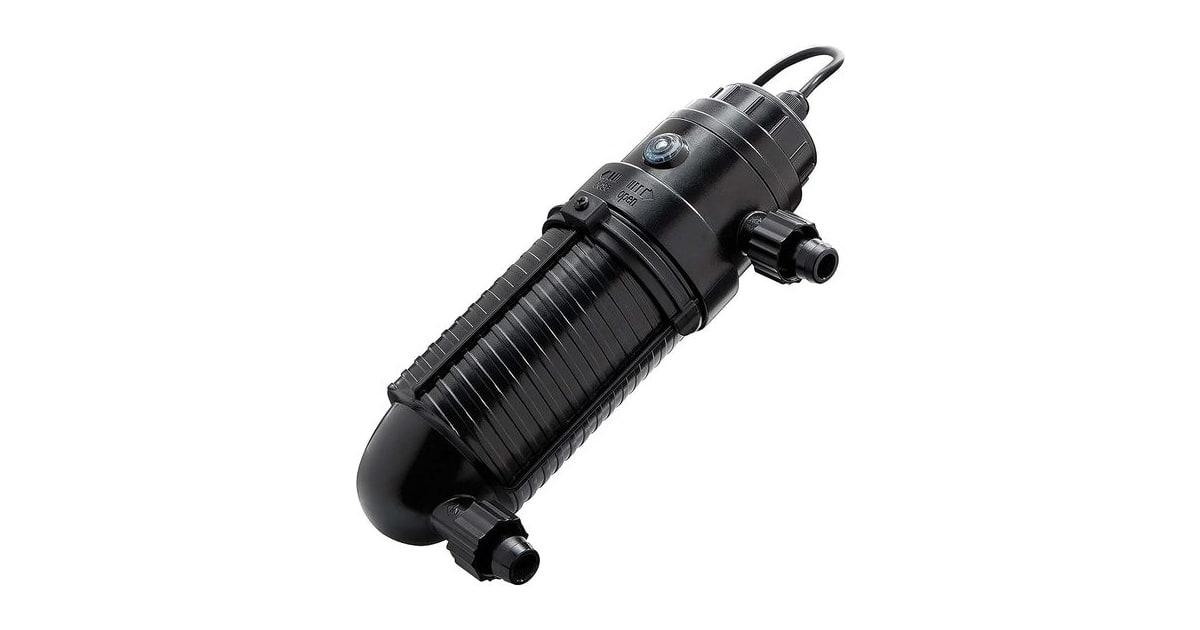
A UV sterilizer is a lamp in a tube that your water flows past, and nothing else on the tank does its job. It kills the free-floating stuff: the green-water algae cells that turn a display tank into pea soup, plus some of the bacteria and parasite larvae drifting between fish. You plumb it into a canister line or hang it off the back, plug it in, and mostly forget it. Sized right, the water clears in a few days and stays clear.
But no sterilizer fixes a tank. It only treats water that actually passes through the tube, so anything clinging to the glass, the rocks or your fish is untouched. It won't remove ammonia, nitrite or nitrate, and it won't replace your filter. Hair algae on the driftwood will keep growing. The real catch is dose: a unit that clears green water at full pump speed may deliver nowhere near enough UV-C to touch a parasite, because the water rushes past the lamp too fast.
So buy for the problem you actually have. Cloudy or green water needs only a light dose, and a small inline unit handles it. Killing parasites in a quarantine tank needs more wattage, a slower flow, and a housing that survives salt. We think that the Coralife Turbo-Twist 3X is the best aquarium UV sterilizer for most people, and that the AquaUltraviolet Advantage 2000+ is the one to buy if you want a unit built to run in a damp cabinet for years.
Everything we recommend

Enough dose for green water, if you keep the flow slow

A tougher build and more watts, if you can plumb it inline

Filter and lamp in one box, with some rough edges

Serious wattage for pathogen work, in a big awkward tube
Prices as of Oct 25, 6:48 AM PT · Details
At a glance
| Product | UV wattage | Maker's size rating | Price | |
|---|---|---|---|---|
| SunSun HW703B 370GPH Pro Canister Fish TankBudget pick | 9 watts | 370GPH | Check price |
| Coralife Turbo-Twist 3X Aquarium UV SterilizerTop pick | 9 watts | Up to 125 gallons | $118.68 |
| Lifegard Aquatics 55-Watt Pro-MAX High Output UVUpgrade pick | 55 watts | — | $614.29 |
 | Jecod Jebao PU-18 UVC Pond and AquariumAlso in lineup | 18 watts | 2200 gallon pond | $74.95 |
| AquaUltraviolet Advantage 2000+ Inline 3/4" Barb -Runner-up | 15 watts | Small ponds, aquariums | $234.78 |
Prices as of Oct 25, 6:48 AM PT · Details
How we picked
Dose, not watts. We compared each unit's lamp wattage against the flow rate its maker recommends, because dwell time sets the dose. University of Florida IFAS Extension figures put algae control around 2,000 to 6,000 μW·s/cm² and most bacteria and parasites near 30,000.
Sleeve and bulb access. We read manuals and owner feedback on how the quartz sleeve comes apart and how the lamp comes out. Mineral scale on the sleeve blocks UV-C even with a brand-new bulb, so a sterilizer you dread opening is one you won't maintain.
Housing and water type. We checked what each housing is made of and whether the maker rates it for salt. Reef and marine keepers are generally steered toward titanium or 316 stainless over PVC to avoid long-term corrosion.
Install footprint. We looked at length, port sizes and mounting options against the space under a typical stand. A hang-on bracket and a 27-inch inline tube are not the same purchase.
Cost of ownership. We weighed annual lamp replacement and the heat a high-wattage unit adds to a closed system, since both keep costing you long after the box is open.
Top pick
Enough dose for green water, if you keep the flow slow
Coralife Turbo-Twist 3X Aquarium UV Sterilizer
The Turbo-Twist 3X runs a 9-watt lamp through a spiral chamber that makes water take the long way past the bulb, and it's rated for tanks up to 125 gallons. It hangs on the back or plumbs inline, and it's the unit most freshwater keepers reach for first.
$118.68fromAmazonPrices as of Oct 25, 6:48 AM PT · Details
The twist chamber is the whole point. Instead of running straight down a tube, water spirals around the lamp, which stretches the time each drop spends in the UV-C. Dwell time sets your dose, not wattage alone. Coralife rates the unit for roughly 175 gallons per hour, and that's the number to respect. Run a canister wide open through it and you'll still clear green water, but not much more.
Say you've got a 55-gallon tank that's gone pea-green after a week of afternoon sun. This is the fix. Nine watts at a slow flow puts you comfortably past the 2,000 to 6,000 μW·s/cm² that free-floating algae cells need, going by University of Florida IFAS Extension figures. Owners dealing with green water consistently report the tank clearing within a few days of plugging one in.
It's also the easiest unit here to live with. The lamp twists out from one end, so you're not unbolting plumbing to change a bulb, and the sleeve wipes clean in a couple of minutes. An indicator light on the housing tells you the lamp is lit. That's not the same as telling you it's still putting out useful UV-C, which is a different problem.
Buy it for algae, not for Ich. Bacteria and many fish parasites need something closer to 30,000 μW·s/cm², per the same extension guidance, and nine watts at aquarium flow rates won't reliably get there. Marine Ich is harder still, since only the free-swimming theront stage is exposed to the lamp at all. For that job you want more wattage and a much slower pass.
Flaws but not dealbreakers
The 175-gallon-per-hour ceiling is the real constraint. Most canister filters push two or three times that, so you'll need a valve to throttle the line or a tee to bleed some flow past the unit. A lot of buyers skip that step, then wonder why nothing changed. The plastic housing is fine in freshwater and acceptable in salt, but it isn't what you'd pick for a reef sump you plan to keep for a decade.
Plan on a fresh lamp every 6 to 12 months. Practical Fishkeeping notes that UV-C output fades well before a bulb stops glowing, so that reassuring indicator light will happily vouch for a lamp that's stopped doing much. At 11 inches long, the housing also needs a real spot behind or under the tank.
Runner-up
A tougher build and more watts, if you can plumb it inline
AquaUltraviolet Advantage 2000+ Inline 3/4" Barb -
This is the 15-watt inline version of Aqua Ultraviolet's Advantage 2000+, made in the United States and aimed at small ponds, aquariums and water features. It uses 3/4-inch barbs with no hang-on option, so you're committing to hose runs and a cabinet.
$234.78fromAmazonPrices as of Oct 25, 6:48 AM PT · Details
Aqua Ultraviolet has been building units for the pond trade for a long time, and the Advantage series shows it. The housing is a thick, plain tube with a barb on each end. Nothing about it is clever, and that's the appeal. There are fewer parts to crack, warp or seep in a stand cabinet that stays damp all year, which is where most sterilizers quietly die.
Fifteen watts changes what you can ask of it. At the same flow rate as a 9-watt unit, you're delivering more dose on every pass, which pushes you toward the range where bacteria and free-swimming parasite stages come into play. Aqua Ultraviolet points the series at bacteria, viruses and protozoa. Whether you actually get there still depends on how slowly you run water through the tube.
This is the one we'd steer a quarantine keeper toward first. If you're bringing in new fish every few weeks and running a bare holding tank on a small pump, your flow is already gentle, and gentle flow is exactly what raises dose per pass. Reef and pond keepers use the same trick on purpose: throttle the line, gain contact time, get more out of the same lamp.
The install is the price of admission. There's no bracket, no hang-on mount and no quick-disconnect, so you're cutting hose, clamping barbs and finding a home for a 13-inch tube. If your tank sits on an open stand, that's a genuine problem. If you've got a sump or a pond vault, it's a non-issue and you'll never think about it again.
Flaws but not dealbreakers
Fifteen watts is modest for something sold on pond duty, and the model name reads a lot bigger than the lamp is. Read the wattage, not the number. It's also the least flexible unit here: barbed inline only, no mounting hardware, and the listing doesn't mention a window or indicator for confirming the lamp is lit, so you'll be pulling an end cap or trusting a timer.
Parts tend to come through pond suppliers rather than the pet-store shelf. That's fine if you order a lamp before you need it, and annoying if your water goes cloudy on a Saturday.
Budget pick
Filter and lamp in one box, with some rough edges
SunSun HW703B 370GPH Pro Canister Fish Tank
The HW703B is a four-stage canister filter rated at 370 gallons per hour with a 9-watt UV lamp built into the head. If you're starting from scratch, or replacing a tired filter anyway, you get filtration and sterilization for a fraction of what two separate units run.
Check priceatAmazonPrices as of Oct 25, 6:48 AM PT · Details
Buying one box instead of two is the whole argument. A canister plus a separate inline sterilizer means two purchases, two cords and a plumbing job. The HW703B puts the lamp in the filter head, so there's nothing to tee into and nothing to size. For a beginner staring down a green 40-gallon tank, that's the difference between fixing it this weekend and reading forum threads about hose barbs.
The filter half is competent. Three large media baskets take whatever you want to run, and 370 gallons per hour is plenty of turnover for a 40 to 75-gallon tank. Owners describe it as quiet once it's shut in a cabinet, which matters if the tank shares a wall with your couch. A starter media kit comes in the box, so you're not making a second shopping trip.
The UV half is the compromise. Nine watts sits in the filter's full flow path, so water moves past that lamp fast, and you can't slow it down without choking your filtration at the same time. Expect it to clear green water and take the edge off drifting bacteria. Don't expect parasite control, because the dose per pass just isn't there.
Owner feedback on this line is mixed, and it's worth going in clear-eyed. The recurring themes are lid gaskets that need seating carefully, priming that takes patience, and the occasional early failure. Buy it somewhere returns are easy. Plenty of people run these for years without drama, but the build isn't in the same conversation as the Aqua Ultraviolet unit.
Flaws but not dealbreakers
Reliability is the question mark. Complaints cluster around seepage at the lid seal and pumps that quit sooner than they should, and this is the unit here that draws the most of them. There's also no way to tune the UV, since dose and turnover are locked to the same impeller.
Changing the lamp means opening the filter head rather than twisting a bulb out of a dedicated housing. It's a wetter, fussier job, and you'll be doing it every 6 to 12 months.
Upgrade pick
Serious wattage for pathogen work, in a big awkward tube
Lifegard Aquatics 55-Watt Pro-MAX High Output UV
Lifegard's Pro-MAX is a 55-watt high-output sterilizer in a 27-inch, 3-inch-diameter black housing with a white reflective sleeve inside. This is what you buy when the problem is disease in a large system, not algae in a 40-gallon tank.
$614.29fromAmazonPrices as of Oct 25, 6:48 AM PT · Details
Wattage is how you buy dose at real flow rates. High-output amalgam lamps produce considerably more UV-C per watt than standard low-pressure tubes, which is the case Emperor Aquatics makes for the design, and 55 watts of it means you don't have to strangle your return pump to get a useful dose. That's the line between a pathogen-control unit and an algae clarifier.
The flow-through body helps too. The inlet comes in at an angle and the ports are sized to keep restriction low, so you give up less head pressure than you would forcing water around a twist chamber. On a 180-gallon reef with a sump, that's the difference you feel. Every bit of restriction you add is turnover you don't get.
The white reflective sleeve is the detail worth paying for. It bounces UV-C back through the water instead of letting it die against a dark wall, which raises the effective dose without adding a single watt. Small choices like that are why this unit turns up in reef builds and fish rooms rather than pond starter kits.
Check the dimensions before you commit, though. Twenty-seven inches long and three inches across is a lot of tube, and it wants a horizontal run under the tank or along a sump wall. It's rated to 30 PSI, so pressurized plumbing is fine. But if your stand is a cabinet full of buckets and dosing containers, measure first and be honest with yourself.
Flaws but not dealbreakers
For most tanks this is overkill, and overkill has a specific cost: a 55-watt lamp running around the clock draws more power and dumps more heat into the water than a 9-watt unit ever will. In a small closed system, that heat becomes your problem in July.
Size is the other tax. Twenty-seven inches of housing plus hose runs rules out a lot of stands, and there's no hang-on option to fall back on. High-output lamps also cost more to replace than standard tubes, and you're replacing them on the same annual schedule as everyone else.
Who this is for
Buy a sterilizer if your water is green, hazy or milky and your filtration is otherwise sound. Buy one if you quarantine new fish, breed, or run a reef where a single pathogen outbreak takes out months of work. Skip it if you're fighting hair algae on rocks or high nitrates, because a sterilizer only touches what drifts through the tube. And skip it if your tank is cloudy because it's overstocked or overfed. Fix that first, or you'll be sterilizing a symptom.
This guide covers plug-in UV-C units for home aquariums and small to mid-size ponds, whether they hang on the back or plumb inline. We're not covering commercial pond systems, ozone reactors, protein skimmers, or replacement lamps and service parts sold on their own. We also stuck to units with listings we could confirm, which means some well-regarded reef-grade sterilizers sold through specialty suppliers aren't here.
How we picked
Dose: we matched lamp wattage against each maker's recommended flow rate, since slower water means more UV-C per pass, and algae dies at a far lower dose than parasites do. Maintenance: we favored units whose quartz sleeve and lamp come apart without draining the plumbing, because scale on the sleeve blocks UV-C even when the bulb still glows. Materials: we checked housings for salt tolerance, where titanium and 316 stainless beat plastic over the long haul. Footprint: we compared length, port sizes and mounting hardware against the space in a real stand. Upkeep: we counted the annual lamp swap and the heat a high-wattage unit adds to a closed system.
The competition
This is what our research surfaced, not a census of the category. Plenty of capable sterilizers sell through pond and reef specialists rather than general retail, and we only wrote about units whose listings we could confirm. So treat what follows as the field we compared, not the whole market.
The Jecod Jebao PU-18 UVC Pond and Aquarium — The Jecod Jebao PU-18 is an 18-watt inline clarifier built for ponds, with a glass window for checking the lamp and fittings that step from 3/4 inch up to 1-1/2 inches. That hose flexibility is genuinely handy, and the wattage lands between our top pick and the Lifegard. The catch is the rating: 2,200 gallons of pond from 18 watts assumes clarifier duty, meaning algae rather than pathogens, and at the flow a pond that size needs, dwell time gets short. If green pond water is your only complaint and you've got hose to spare, it'll do the job. For a display tank or a quarantine setup, the Coralife is easier to live with and the Aqua Ultraviolet is better built.
Installation and upkeep
Put the sterilizer last in line, after your mechanical and biological filtration, on the return side. Cloudy water shades the microbes you're trying to hit, so you want the particles gone first. Then throttle the flow. A valve on the inlet is the simplest upgrade you can make to any sterilizer, because slowing the water raises the dose on every pass. Pull the quartz sleeve every couple of months and wipe the mineral film off with vinegar, since scale blocks UV-C even when the lamp still glows brightly. Replace the lamp every 6 to 12 months whether it lights or not. And leave it running around the clock. Cycling it shortens lamp life and gives algae a window to rebound.
Questions we get
Do I actually need a UV sterilizer?
Most tanks don't need one. You need one if you get recurring green water, if you quarantine new fish, or if you run a reef where a pathogen outbreak would be expensive. If your water is clear and your fish are healthy, a sterilizer solves a problem you don't have.
What size UV sterilizer do I need for a 55-gallon tank?
For green water on a 55-gallon tank, a 9-watt unit like the Coralife Turbo-Twist 3X is plenty. What matters more is flow: keep the water moving through it at or below the rate the maker specifies, which is about 175 gallons per hour for that unit. If you want parasite control instead of clarity, step up in wattage and slow the flow further.
Can a UV sterilizer kill Ich?
Partly, and only if the dose is high enough. University of Florida IFAS Extension notes that just the free-swimming theront stage of marine Ich is exposed to UV-C, since the parasite hides in fish tissue or inside a cyst the rest of the time. Killing it also needs a dose near 30,000 μW·s/cm², far more than algae requires. Treat a sterilizer as one layer of protection, not a cure.
How often should I replace the bulb?
Every 6 to 12 months, regardless of whether it still lights up. UV-C output drops off long before the lamp goes dark, so a glowing bulb tells you almost nothing about its dose. Clean the quartz sleeve on the same schedule, because mineral scale blocks UV-C just as effectively as a dead lamp.
Will it kill the beneficial bacteria in my filter?
No. Your nitrifying bacteria live on surfaces, in your media, gravel and rocks, not floating in the water column. A sterilizer only affects what passes through the tube. That said, it also does nothing for ammonia, nitrite or nitrate, so your biological filtration still does all of that work.
Should the sterilizer go before or after my canister filter?
After. Run it on the return side so it's treating water that's already had the particles pulled out, because suspended debris shades the microbes you're targeting. Adding a valve between the filter and the sterilizer also lets you slow the flow through the lamp without slowing your whole filter.
Why you should trust us
For this guide:
- We read manufacturer specifications and manuals for every unit here, alongside university extension guidance on the UV doses needed for algae versus bacteria and parasites.
- We compared each unit's lamp wattage against its maker's recommended flow rate to judge how much dose it can plausibly deliver per pass.
- We read owner feedback across these listings for recurring themes like leaks, lamp life and sleeve scaling, and used those patterns to shape the flaws we call out.
- We read owner reviews on every listing, weighted toward the critical ones, because that is where the recurring failures show up.
- We have a systematic way of automatically fetching the latest prices, so the numbers on this page stay current.
- This is a research-focused guide, so the team may not own every product listed — though we often do own the top winners, which gives us extra context for the recommendations.
- We don't accept free products, and the retailer commission never changes which product we recommend.
Sources
UV Sterilization in Aquaculture Systems — IFAS Extension, University of Florida IFAS Extension
Practical Fishkeeping: How UV Sterilizers Work and When You Need One, Practical Fishkeeping
Advanced Aquarist: UV Sterilization for Reef Tanks Revisited, Advanced Aquarist / Reefs.com
Coralife Turbo-Twist UV Sterilizer Owner's Manual & Specifications, Coralife (Manufacturer Spec Sheet)
TMC Vecton UV Sterilizer — UV Dose Technology Explained, Tropical Marine Centre (Manufacturer)
Aqua Ultraviolet Advantage 2000 Specifications, Aqua Ultraviolet (Manufacturer)
Emperor Aquatics Smart HO UV Sterilizer Technical Data, Emperor Aquatics (Manufacturer)
Reef2Reef Forum: UV Sterilizer Sizing and Flow Rate Megathread, Reef2Reef Community Forum
Tropical Fish Hobbyist: Do You Really Need a UV Sterilizer?, Tropical Fish Hobbyist Magazine
Cryptocaryon irritans (Marine Ich) Life Cycle and UV Susceptibility, University of Florida IFAS Extension
Koi Health Advisor: Sizing a Pond UV Clarifier Correctly, Koi Health Advisor (Dr. Erik Johnson)
Lifegard Aquatics Pro-Series UV Sterilizer Specifications, Lifegard Aquatics (Manufacturer)
Amazon product listings and owner reviews for all 5 products
Manufacturer specification pages for each product
Some passages in this guide may be paraphrased with AI help.
Product prices and availability are accurate as of the date/time indicated and are subject to change. Any price and availability information displayed on Amazon.com at the time of purchase will apply to the purchase of this product.
More like this.
Continue exploring pet reviews and recommendations.

The Best UV LED Nail Lamps
A gel manicure only works if the gel actually cures. That's the whole job of a nail lamp, and it's why the wrong one can waste an hour of careful…

The Best Aquarium CO2 Systems
Plants in an aquarium run out of carbon long before they run out of light. Add CO2 and the change shows up within a few weeks: stems grow faster, carpets…

The Best Aquarium LED Lighting
The light over your tank does more work than anything else you'll buy for it. It decides whether your plants carpet the substrate or melt into brown mush,…

The Best Aquarium Heaters
A heater is the least interesting thing in your tank and the most likely to cause a disaster. Fish don't need water that's warm on average. They need it…

The Best Aquarium Filters for Freshwater Tanks
A freshwater filter is the one piece of equipment in your tank that never gets a break. It runs every hour of every day, pushing water through foam and…

The Best Aquarium Protein Skimmers
A protein skimmer does one job. It pulls dissolved organic waste out of your water before it breaks down into nitrate and phosphate. Fish waste, uneaten…