The Best Aquarium Heaters
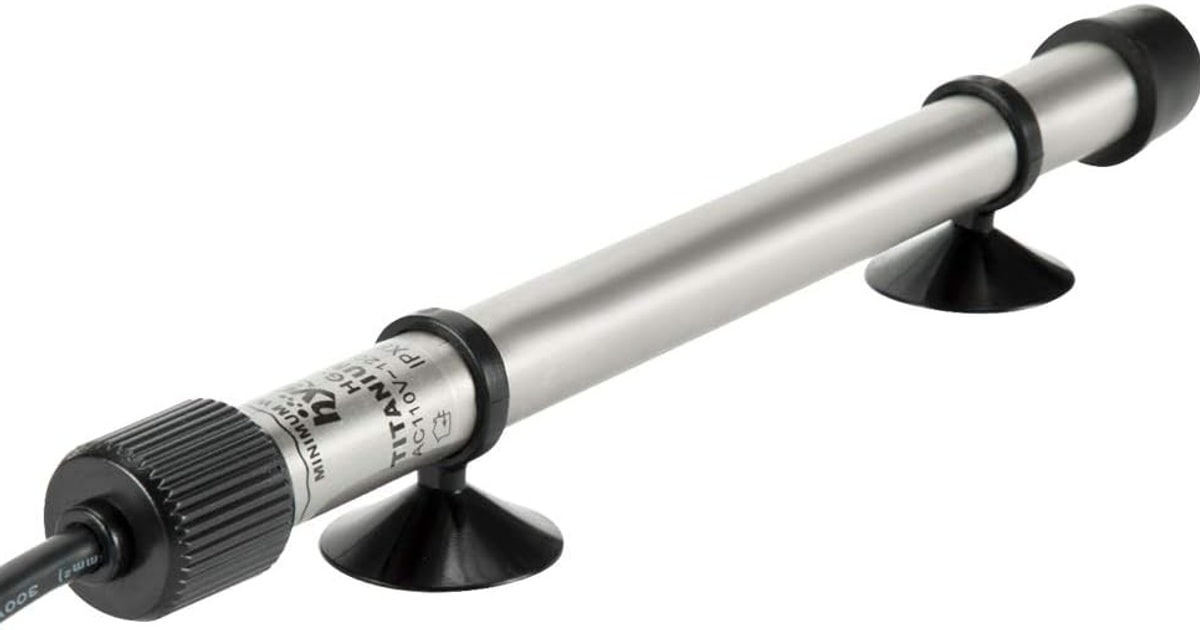
A heater is the least interesting thing in your tank and the most likely to cause a disaster. Fish don't need water that's warm on average. They need it steady, night after night, when the room cools and the furnace hasn't kicked on yet. Most tropical community fish sit happily between 76 and 80 degrees, and a few degrees of swing every night is the kind of slow stress that shows up weeks later as ragged fins and a fish that won't eat.
Here's the honest part. No aquarium heater is a set-and-forget device. Dials drift out of calibration, digital probes only know the water right where they sit, and the failure everyone dreads is a heater stuck in the on position. Practical Fishkeeping calls that stuck-on failure one of the most common causes of sudden mass fish deaths in home tanks. So whatever you buy, hang a separate thermometer at the far end of the tank and actually look at it.
We read manufacturer spec sheets, published reviews from fishkeeping outlets, and the complaints owners keep repeating, then checked each heater against the tank size it claims to cover. We favored shatter resistance, a real safety cutoff, and a temperature you can read without guessing. We think that the Fluval E 100 Watt Electronic Heater is the best aquarium heater for most people, and that the EHEIM Jager Aquarium Thermostat Heater 150W is the one to buy if you'd rather have a plain dial that keeps running for years.
Everything we recommend

The clearest readout here, if you don't mind a bulky tube

An old-school dial that just keeps working

Fewer features, but it's tough and easy to live with

Titanium and a touchpad controller for a finicky reef tank

Titanium heat for a big tank, controller included
Prices as of Oct 25, 6:48 AM PT · Details
At a glance
| Product | Wattage | Element material | Price | |
|---|---|---|---|---|
| Fluval E 100 Watt Electronic HeaterTop pick | 100 W | — | $57.94 |
| EHEIM Jager Aquarium Thermostat Heater 150WRunner-up | 150 W | — | $35.99On sale |
 | Cobalt Aquatics Neo-Glass Aquarium Heater 75wAlso consider | 75 W | Borosilicate glass | $37.95 |
 | Finnex HMU Digital Aquarium Titanium Heater SeriesAlso in lineup | 500 W | Titanium | $68.29 |
| hygger 500W Titanium Aquarium Heater for SaltAlso great | 500 W | Titanium | $82.99 |
| Aqueon Pro Adjustable HeaterBudget pick | 100 W | — | $62.95 |
| JBJ U.S.A. TrueTemp G2 Titanium Aquarium HeaterUpgrade pick | 300 W | Titanium | $111 |
Prices as of Oct 25, 6:48 AM PT · Details
How we picked
Wattage per gallon. We checked each model's wattage against the tank range it's sold for, using the 3 to 5 watts per gallon rule that Aquarium Co-Op and most retailers recommend. Anything badly oversized for its stated range got flagged.
Shatter resistance. We favored titanium and hard resin bodies over plain glass, since a cracked tube near live rock or substrate is the failure that ruins a tank. Where a heater uses glass, we looked for a shock-resistant or borosilicate spec.
Safety cutoffs. We looked for a stated dry-run shutoff, an auto shut-off or a high-temperature alert on the spec sheet. Published reviews and owner feedback both point at stuck-on heaters as the failure that kills fish.
Reading and setting. We preferred heaters that show you the actual water temperature rather than only a dial position, and we gave credit for recalibration collars or external controllers that let you correct drift instead of guessing around it.
Top pick
The clearest readout here, if you don't mind a bulky tube
Fluval E 100 Watt Electronic Heater
The Fluval E 100 puts the real water temperature on a screen you can read from across the room, and a colored ring flags the tank when it runs too warm or too cool. It's the rare heater that tells you something's wrong before your fish do.
$57.94fromAmazonPrices as of Oct 25, 6:48 AM PT · Details
The Fluval E takes the guesswork out of a dial. It reads the water with two sensors and shows the number on an LCD you can see from the couch. You set your target in half-degree steps, so you're not nudging a plastic knob and hoping for the best. If you've ever squinted at a dial and wondered whether the tank was really sitting at 78, that alone is worth the swap.
The colored ring around the top is the part owners end up liking most. It glows one color when the water sits where you set it, and changes when the tank runs hot or cold. You'll catch it while you're walking past with your coffee. That's much earlier than you'd notice a fish acting off, and early is the whole game with a heater problem.
It isn't the most accurate heater here. Fluval rates the E series within about a degree, and the JBJ controller claims tighter than that. For a community tank of tetras and corydoras, a degree doesn't matter. It matters if you're conditioning fish to spawn. Most people reading this aren't, and a degree of slop you can see beats half a degree you can't.
The built-in fish guard matters if you keep bottom dwellers. Plecos and loaches press themselves against warm surfaces and can end up with burns. The E wraps a guard around the tube, so nothing rests flush against the hot part. It's the kind of small detail you never think about until you've lost a fish to it.
Flaws but not dealbreakers
It's a big piece of hardware. The E 100 runs a bit over 15 inches long, so in a 20-gallon tank it eats a real chunk of the back wall, and you're not hiding it behind a sponge filter. If your tank is heavily planted or carefully aquascaped, figure out where it goes before you buy.
More electronics means more that can quit. The readout also only knows the water where the unit sits, so with weak circulation the far corners can run cooler than the screen suggests. Aim your filter return or a powerhead across it. And 100 watts covers roughly a 20 to 30 gallon tank at the usual 3 to 5 watts per gallon, so step up the model for anything bigger.
Runner-upOn sale
An old-school dial that just keeps working
EHEIM Jager Aquarium Thermostat Heater 150W
The Jager is a plain glass tube with a dial, built in more or less the same form for decades. It shuts itself off if the water drops below it, and the TruTemp collar lets you correct the dial when it wanders away from your thermometer.
$35.99fromAmazonTypical pricePrices as of Oct 25, 6:48 AM PT · Details
Ask around a fish club and someone will still be running a Jager they bought a long time ago. Long-term hobbyists report five years and more out of these with almost no recalibration. That track record is the reason it's on this list. Nothing about the design is clever, and that turns out to be exactly the point.
The dry-run cutoff is the feature that saves you from yourself. Evaporation drops the water line, someone forgets a top-off, and a lesser heater keeps cooking away in open air until the glass cracks. The Jager's thermo safety control shuts it down when the level dips too low. If your tank sits under a bright light that pulls an inch a week, that beats any readout.
The TruTemp collar is the other quiet advantage. Hang a separate thermometer, notice the tank reads 77 when the dial says 78, then twist the collar until the two agree. Basic dial heaters give you no way to close that gap. You just live with it and remember to add a degree in your head every time.
It's glass, which normally gives us pause, but Eheim uses shock resistant, shatter proof glass rated for fresh or marine water. It's still not titanium. A hard knock from a rock you're rearranging can end it, and glass down at the substrate line is exactly where reef keepers get nervous. In a freshwater tank without boisterous cichlids, owners rarely report breakage.
Flaws but not dealbreakers
There's no display at all. You set a dial and trust it, which makes a separate thermometer mandatory rather than optional. Some units arrive reading a couple of degrees off, and correcting that with the TruTemp collar is on you. It's a five-minute job, but it's a job.
The 150-watt version here suits roughly a 30 to 50 gallon tank. It's also fussy about placement. It needs water actually moving past it, and at nearly 14 inches it gets awkward in a shallow tank.
Budget pick
Fewer features, but it's tough and easy to live with
Aqueon Pro Adjustable Heater
The Aqueon Pro is a shatterproof dial heater you can find on the shelf at most pet stores, fully submersible for fresh or salt water. You give up any readout, and you get a body that survives being knocked around plus a real electronic thermostat.
$62.95fromAmazonPrices as of Oct 25, 6:48 AM PT · Details
Buy this one if you've already broken a heater. The body is hard resin instead of glass, so it survives the gravel vac clipping it and the rock that shifts when you rescape. Owners who've once cleaned shattered glass out of a planted tank tend not to go back. For a first tank, or a tank a kid helps with, that's the whole argument.
The thermostat inside is electronic rather than a bimetal strip. That's the difference between a heater that kicks on within a degree of your setting and one that lets the tank drift around. A light on the top tells you when it's drawing power. It's not a temperature readout, but it does tell you at a glance whether the thing is doing anything.
The dial is the weak spot, and it's a fixable one. Owners regularly report the printed numbers landing a degree or two off the actual water. Hang a thermometer, mark where the dial really needs to sit with a scrap of tape, and you're finished. Every dial heater asks this of you, so it's not a reason to walk away.
Flaws but not dealbreakers
No display and no external controller support means a thermometer is the only way you'll know anything. Aqueon also doesn't call out a dry-run cutoff the way Eheim does, so keep the water line above it and top off before it gets close.
At 100 watts it covers roughly 20 to 30 gallons. Owners with bigger tanks sometimes run two, which is a sound plan, though the dial-to-dial variation between units means you'll fuss with both to get them agreeing.
Upgrade pick
Titanium and a touchpad controller for a finicky reef tank
JBJ U.S.A. TrueTemp G2 Titanium Aquarium Heater
The JBJ TrueTemp G2 puts a titanium element in the water and a touchpad controller outside it, with an auto shut-off and a high-temperature alert. If you keep coral or you're breeding fish, this is the level of control that keeps a bad night from turning into a catastrophe.
$111fromAmazonPrices as of Oct 25, 6:48 AM PT · Details
A separate controller is your best defense against a stuck-on heater. The element does one job, which is make heat when the box tells it to. The controller watches its own probe and cuts power. Reef keepers push this arrangement constantly for exactly that reason. If the heating element fails closed, something outside the tank is still there to pull the plug.
Titanium is why this belongs in salt water. Salt is hard on glass seals and hard on everything else, and a cracked glass tube next to live rock scatters shards through a sandbed you'll be picking apart for weeks. The JBJ element resists corrosion, won't shatter, and spreads heat evenly along its length instead of blasting one hot spot.
Accuracy is the other reason to spend up. The TrueTemp line is rated to around half a degree, against the two to three degrees of drift that's normal on a basic dial heater. For a tank of guppies that's overkill. For a mixed reef, or a pair of fish you're trying to bring into spawning condition, half a degree is the line between predictable and not.
It remembers your settings, which sounds trivial until the power flickers. The controller holds its target through an outage and picks up where it left off. The high-temperature alert warns you instead of surprising you, and the system carries an ETL listing. This 300-watt version is matched to roughly a 70 to 90 gallon tank, right in line with the usual watts-per-gallon math.
Flaws but not dealbreakers
This is a newer generation, and there's almost no owner feedback on it yet. The long reliability record that makes the Eheim so easy to recommend simply doesn't exist here. What we can say comes from the specification sheet and from how earlier TrueTemp controllers have held up.
You're also adding a box, an outlet and a second probe cord to a tank that probably has too many cords already. For a 20-gallon community tank with a handful of tetras, that's a lot of machinery aimed at a problem you don't have.
Also great
Titanium heat for a big tank, controller included
hygger 500W Titanium Aquarium Heater for Salt
The hygger runs a stubby titanium rod off an external thermostat, and it comes with its own probe plus a display showing set and actual temperature side by side. It's rated for a 60 to 120 gallon tank, which makes it an easy answer for a large freshwater or marine setup.
$82.99fromAmazonPrices as of Oct 25, 6:48 AM PT · Details
What you're really buying is a controller that happens to come with a heater. The thermostat sits outside the tank, reads a separate probe, and switches the element on and off for you. Set your target once and it handles the rest. Both temperatures show on the display at the same time, so you can see the gap without doing any math.
The titanium rod is short, and that matters more than it sounds. At about 12 inches it tucks behind a rock or a spray bar in a way a 15-inch glass tube never will. Titanium also shrugs off salt, and hygger puts the service life at three years or more. Just don't run it in a sump. hygger says not to, and that's an easy instruction to follow.
The controller sets anywhere from 32 to 104 degrees in one-degree steps, and one button flips between Celsius and Fahrenheit. The included thermometer probe reads to about a fifth of a degree. This isn't the tightest control on the list, and it isn't trying to be. It's a wide, forgiving range with a hard cutoff, which is what a big tank needs most.
Flaws but not dealbreakers
Five hundred watts is a lot of heat for a 60-gallon tank. At three to five watts per gallon that wattage really suits something closer to a hundred gallons, so at the small end of hygger's range a stuck-on failure would climb fast. If your tank is near 60 gallons, buy a lower wattage in the same line.
The cords are the other annoyance. There's a power lead, a controller lead and a thermometer lead, and the thermometer cord is shorter than the others. Work out your outlet and cabinet layout before it shows up.
Who this is for
This guide is for anyone keeping tropical fish in an unheated room, which is nearly everyone. If you're setting up your first 10 or 20 gallon tank, a heater is not the place to economize, because it's the one piece of equipment that can cook a tank overnight. If you keep a reef, or you're breeding, you'll want the tighter accuracy and the external controller that come with the upgrade pick. And if you've already lost fish to a heater that stuck on, skip straight to a model that separates the controller from the element.
This isn't the guide for you if you keep goldfish, white cloud minnows or other coldwater species in a room that stays above about 65 degrees, since those tanks often need no heater at all. We also stuck to in-tank heaters here. Inline heaters that plumb into canister filter tubing, and standalone controllers you pair with a heater you already own, are their own category and aren't covered. Whatever you buy, budget for a separate thermometer too.
How we picked
We started from the specs and worked outward. Wattage: we matched each heater's rating against its advertised tank range using the 3 to 5 watts per gallon rule of thumb, sizing up for cold rooms. Durability: titanium and hard resin beat plain glass, and where glass appears we wanted a shock-resistant or borosilicate spec. Safety: we looked for a stated dry-run cutoff, auto shut-off or overheat alert, since a heater stuck on is the failure that empties a tank. Control: we favored a visible water temperature over a bare dial, plus some way to correct drift, whether that's a recalibration collar or an external controller. Reputation: we weighed long-run owner feedback and published reviews over marketing copy.
Other aquarium heaters worth considering
If you want a simple heater for a nano tank: The Cobalt Aquatics Neo-Glass Aquarium Heater 75w — The Neo-Glass is Cobalt's plain-tube heater, not the flat titanium Neo-Therm the brand is better known for. It's borosilicate glass around a ceramic radiator, fully submersible, and Cobalt rates the thermostat within 0.7 degrees, which is tighter than most dial heaters even claim. At 75 watts it's pointed at tanks up to about 20 gallons. The catch is that it's new enough that there's barely any owner feedback to lean on, and what exists is lukewarm. Take it if you want a readable scale in a small tank. Take the Eheim if you'd rather have a long track record.
The competition
This is what our research surfaced, not a census of everything on the market. Plenty of decent heaters never made the shortlist, and some good brands sell mostly through local fish stores. Here's the one that made our list and then lost out.
The Finnex HMU Digital Aquarium Titanium Heater Series — The Finnex HMU is a 500-watt titanium heater with a digital controller and a flame-retardant guard around the element, and on paper it lines up closely with the hygger. Titanium in a large saltwater tank is the right instinct, and Finnex has been building aquarium gear for a long time. What holds it back is owner feedback, which is thin and uneven. Several owners report the reading drifting multiple degrees away from separate thermometers within weeks, and others report the controller misbehaving outright. If you're already committed to Finnex and want one of the smaller 50 to 300 watt versions, it's a fair gamble. For a tank you can't afford to lose, we'd take the hygger or the JBJ instead.
Installation and safety notes
Put the heater where water actually moves past it, near your filter outflow or a powerhead, so it warms the whole tank instead of one corner. Hang a separate thermometer at the opposite end and glance at it when you feed. Before pulling a heater out for a water change, unplug it and let it sit 15 to 30 minutes. Yanking a hot tube into the air is how glass cracks and coatings fail. On tanks over about 40 gallons, two smaller heaters at opposite ends beat one big one. Heat spreads more evenly, and if one dies the other buys you time to notice. Keep the water line topped off too, since evaporation is what exposes an element to open air.
Questions we get
What size heater do I need for a 20-gallon tank?
Figure 3 to 5 watts per gallon, so a 20-gallon tank wants something in the 60 to 100 watt range. Go toward the higher end if the tank sits in a drafty room, near a window, or in a basement that drops at night. A slightly oversized heater cycles less and holds temperature better than one running flat out.
Are titanium aquarium heaters better than glass?
For most people, yes. Titanium won't shatter when a rock shifts or a gravel vac clips it, and it doesn't corrode in salt water, which is why reef keepers treat it as the default. Glass heaters from good brands are still fine in a calm freshwater tank. The risk with glass is concentrated in tanks with large fish, heavy rockwork, or a substrate the tube rests against.
How do I know if my aquarium heater is broken?
The tell is a separate thermometer disagreeing with the heater's setting, especially if the gap keeps growing. An indicator light that never turns off, or never turns on, is the other warning sign. If the water is climbing past your set point, unplug the heater immediately and float bags of cool water rather than doing a fast, large water change.
Do I need a separate thermometer if my heater has a digital display?
Yes. The display reads the water at the probe, so it can be right about one spot and wrong about the tank. A cheap glass or digital thermometer at the opposite end catches both bad circulation and a sensor that's drifted. It's the single most useful few dollars in this hobby.
Should I use one large heater or two smaller ones in a big tank?
In tanks over roughly 40 gallons, two smaller heaters at opposite ends are the better setup. Heat distributes more evenly, and if one fails off, the other keeps the tank livable while you sort it out. Two smaller units also can't overheat the tank as fast as one oversized heater stuck in the on position.
What temperature should a tropical fish tank be set to?
Most tropical community fish do well between 76 and 80 degrees, held steady. Stability matters more than the exact number, so pick a target in that band and leave it alone. Check your specific species first, since discus want it warmer and some tetras and loaches prefer the cooler end.
Why you should trust us
For this guide:
- We read the manufacturer specification sheets and product listings for every heater here, comparing stated wattage, tank range, element material and safety cutoffs.
- We compared published guidance from fishkeeping outlets and retailers, including the watts-per-gallon rules and the case for splitting heat across two units in large tanks.
- We tracked recurring themes in owner feedback, particularly reports of dial calibration drift and controller failures, and weighed those against each model's claimed accuracy.
- We read owner reviews on every listing, weighted toward the critical ones, because that is where the recurring failures show up.
- We have a systematic way of automatically fetching the latest prices, so the numbers on this page stay current.
- This is a research-focused guide, so the team may not own every product listed — though we often do own the top winners, which gives us extra context for the recommendations.
- We don't accept free products, and the retailer commission never changes which product we recommend.
Sources
Best Aquarium Heaters — Buying Guide and Reviews, The Spruce Pets
How to Choose the Right Aquarium Heater Wattage, Aquarium Co-Op
Best Aquarium Heaters Reviewed and Tested, This Fish Tank
Titanium vs Glass Aquarium Heaters: What's the Difference?, Fishkeeping World
Choosing a Heater for Your Reef Tank, Reef2Reef Community
Heater Safety: Preventing Overheating and Tank Fires, Practical Fishkeeping
Fluval E-Series Heater Product Specifications, Fluval (Manufacturer)
Eheim Jager TruTemp Heater Technical Data, Eheim (Manufacturer)
Cobalt Aquatics Neo-Therm Heater Specs and Accuracy Testing, Cobalt Aquatics (Manufacturer)
Why Your Aquarium Heater Isn't Keeping Temperature Stable, Aquarium Co-Op
r/Aquariums Heater Recommendation Megathread, Reddit r/Aquariums
Best Titanium Aquarium Heaters for Large Tanks, Saltwater Aquarium Blog
Amazon product listings and owner reviews for all 7 products
Manufacturer specification pages for each product
Some passages in this guide may be paraphrased with AI help.
Product prices and availability are accurate as of the date/time indicated and are subject to change. Any price and availability information displayed on Amazon.com at the time of purchase will apply to the purchase of this product.
More like this.
Continue exploring pet reviews and recommendations.

The Best Aquarium CO2 Systems
Plants in an aquarium run out of carbon long before they run out of light. Add CO2 and the change shows up within a few weeks: stems grow faster, carpets…

The Best Aquarium LED Lighting
The light over your tank does more work than anything else you'll buy for it. It decides whether your plants carpet the substrate or melt into brown mush,…

The Best Aquarium Protein Skimmers
A protein skimmer does one job. It pulls dissolved organic waste out of your water before it breaks down into nitrate and phosphate. Fish waste, uneaten…

The Best Quiet Aquarium Air Pumps
An air pump is one of the few pieces of aquarium gear you hear all day. It sits outside the tank, humming away in a living room or a foot from your…

The Best Aquarium Filters for Freshwater Tanks
A freshwater filter is the one piece of equipment in your tank that never gets a break. It runs every hour of every day, pushing water through foam and…

The Best Aquarium UV Sterilizers
A UV sterilizer is a lamp in a tube that your water flows past, and nothing else on the tank does its job. It kills the free-floating stuff: the…