The Best Aquarium Protein Skimmers
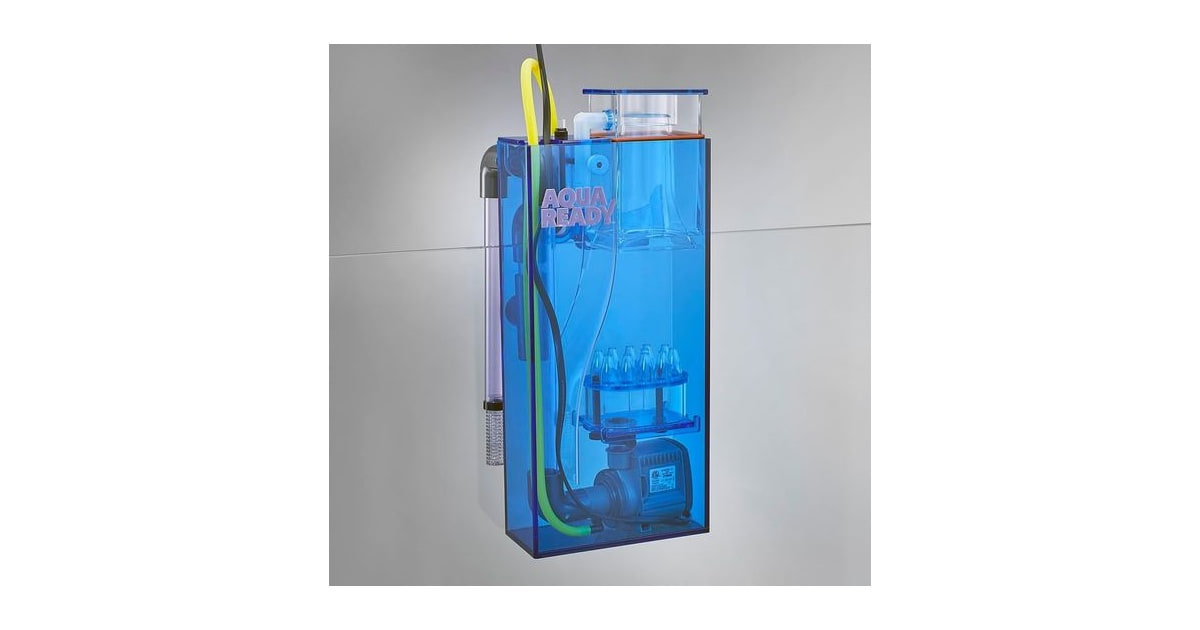
A protein skimmer does one job. It pulls dissolved organic waste out of your water before it breaks down into nitrate and phosphate. Fish waste, uneaten pellets, the film that collects on the surface — a skimmer strips a lot of that out and dumps it into a cup you empty. You'll see the difference in clearer water, less algae on the glass, and corals that hold their color. It's the piece of gear most reef keepers say they'd buy first if they had to start over.
Here's the part the boxes leave out. Every skimmer is fussy for a while. Bulk Reef Supply's equipment guides describe a one-to-three-week break-in before foam production settles down, and plenty of beginners return a perfectly good unit during that stretch. Even after it stabilizes, you're still adjusting the water level, wiping the neck, and emptying a cup of something that smells genuinely awful. No skimmer here is set-and-forget. And manufacturer tank ratings are written for ideal conditions, not for your tank.
So size up. Hobbyists on Reef2Reef keep landing on the same rule: buy a skimmer rated for a tank one and a half to two times your display volume, because real bioload doesn't behave like a spec sheet. A slightly oversized skimmer runs calmer and needs emptying less often. An undersized one just falls behind and never catches up. We think that the Reef Octopus Classic 150INT is the best aquarium protein skimmer for most people, and that the AquaReady HOB-1.5 is the one to buy if your tank has no sump.
Everything we recommend

The reliable in-sump workhorse for a mid-size reef

Skims a sumpless tank well, but it hangs in plain view
Fits an all-in-one back chamber and asks very little
German build and a DC controller, if noise bothers you
Prices as of Oct 25, 6:48 AM PT · Details
At a glance
| Product | Pump type | Tank size rating | Price | |
|---|---|---|---|---|
| Reef Octopus Classic 150INT Protein SkimmerTop pick | Pinwheel pump | Up to 150 gallons | $389.99 |
| AquaReady Hang On Back Protein Skimmer forRunner-up | Pinwheel, 11 watts | Up to 75 gallons | Check price |
| ESHOPPS Nano SkimmerBudget pick | SICCE needle wheel | Nano tanks | $152.49 |
 | Bubble Magus MiniQ Hang on Back AquariumAlso in lineup | DC needle brush, 2W | — | $79.99 |
| Tunze 9410.001 DC DOC SkimmerUpgrade pick | DC pump with controller | — | $499.99 |
Prices as of Oct 25, 6:48 AM PT · Details
How we picked
Pump and bubbles. Marine Depot's buying guide puts needle-wheel and cone-style impellers at the center of the current market, having largely replaced venturi-only designs. We favored skimmers using those designs, since fine microbubbles are what makes skimming work at all.
Honest sizing. We read every manufacturer's tank rating as an optimistic number rather than a promise. Following hobbyist consensus on Reef2Reef, we looked for units with headroom of roughly one and a half to two times a buyer's actual display volume.
Fit and footprint. Specification sheets gave us footprint, height, rim thickness and minimum tank depth for each listing. A skimmer that doesn't physically fit your sump or your back chamber is disqualified no matter how well it skims.
Noise in the room. Published equipment coverage from Reef Builders notes that DC pumps run quieter and adjust more finely than fixed-speed AC pumps. We treated that as a real advantage for tanks in bedrooms and living rooms.
Parts and warranty. We weighted stated warranty terms and how widely replacement pumps, impellers and cups are sold. A skimmer is a pump in a tube, and pumps eventually need parts.
Top pick
The reliable in-sump workhorse for a mid-size reef
Reef Octopus Classic 150INT Protein Skimmer
This is the in-sump skimmer most reef keepers end up with. It's rated for tanks up to 150 gallons, runs an Aquatrance 2000 pinwheel pump into a full cone body, and takes up a footprint just over 12 by 9 inches — narrow enough for most sumps.
$389.99fromAmazonPrices as of Oct 25, 6:48 AM PT · Details
Reef Octopus built this one to be boring, and that's the point. The Aquatrance 2000 pinwheel pump uses the same basic design that's been running on reef sumps for years, which means impellers, bodies and cups stay easy to find when something wears out. You're not betting on a startup here. If a part gives up in three years, you'll still be able to replace it without hunting forums for a used one.
The body is a full cone, six inches across, feeding a bubble diffusing chamber and a turbulence-reducing plate at the base. That combination keeps the foam column steady instead of surging. Steady matters more than aggressive. A skimmer that thrashes tends to throw half-wet foam into the cup, then overflow the first time you feed heavily.
Rated to 150 gallons, it's a comfortable fit for a 75- or 90-gallon reef with fish you actually feed. That's the sizing headroom the Reef2Reef crowd keeps arguing for — buy for one and a half to two times your display volume and the skimmer coasts rather than straining. On a 100-gallon system with heavy stocking it's still enough, which is more than you can say for most units wearing a 150-gallon label.
The footprint is the quiet win. At 12.4 by 8.7 inches, it slides into the skimmer section of most mid-size sumps without forcing you to move baffles. Height is 22 inches, though, so measure your cabinet before you order. You need clearance to lift the cup straight up, and that's the dimension people forget until the box is open.
Flaws but not dealbreakers
It's an AC pump, so you get one speed. There's no dialing flow down overnight or nudging the foam drier without going back to the water-level adjustment. Owners also describe the usual break-in stretch: a week or two of wildly inconsistent foam, sometimes microbubbles leaking into the sump, before it finds its rhythm.
The cup isn't especially large for a skimmer this size. Feed a big fish load and you'll be emptying it every few days instead of weekly. Combined with 22 inches of height, that's an awkward reach in a low stand.
Runner-up
Skims a sumpless tank well, but it hangs in plain view
AquaReady Hang On Back Protein Skimmer for
Most first saltwater tanks don't have a sump, and this one solves that. It clamps onto the back glass, handles up to 75 gallons with a light bioload or 40 with a heavy one, and runs an 11-watt pinwheel pump that stays quiet enough for a living room.
Check priceatAmazonPrices as of Oct 25, 6:48 AM PT · Details
Check two measurements before anything else. Your rim has to be three-quarters of an inch thick or less, and the tank needs at least 10-7/8 inches of height for the skimmer to sit properly. Those numbers rule out a lot of rimmed starter tanks. If yours clears them, this is the simplest way to add real skimming without cutting into your stand or plumbing a sump.
The bioload ratings on this listing are the honest kind. AquaReady quotes 75 gallons light, 60 medium and 40 heavy — three numbers instead of one flattering one. Use the heavy figure. If you keep a tang and feed twice a day on a 40-gallon system, you're at the top of what this can pull, and that's exactly where the Reef2Reef sizing rule says you should sit.
Inside, a bubble plate spreads the air-water mix and stretches contact time, which is what actually gets organics to stick to bubble surfaces. The pump draws 11 watts. That's low enough that it won't add meaningful heat to a small tank in a warm room, and quiet enough that you'll hear your return pump first. The collection cup adjusts, so you can push it toward wetter or drier foam.
It's also the only pick here that works on a tank sitting on a bookshelf. Hang-on-back skimmers export less waste than an in-sump cone of similar rating, and that's a design limit rather than a defect. But if your alternative is no skimmer at all, the gap barely matters.
Flaws but not dealbreakers
It hangs off the back of your display, so it's visible, and it adds four or five inches behind the tank. Push your stand flat against a wall and you may not fit at all. Owner feedback runs mixed, too: some people describe a cup that needs emptying constantly once the tank matures, others fight microbubbles until the water level is dialed in. Plan on a fiddly first couple of weeks.
There's no controller and no speed adjustment on the pump. Everything you tune, you tune with cup height and the outlet.
Budget pick
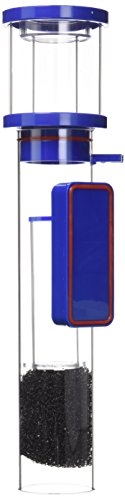
Fits an all-in-one back chamber and asks very little
ESHOPPS Nano Skimmer
If you run a 10- or 20-gallon all-in-one, this drops straight into the back chamber. It's about five inches long and two wide, mounts on a magnet so you can slide it to the right water height, and uses a SICCE needle-wheel pump backed by a three-year warranty.
$152.49fromAmazonPrices as of Oct 25, 6:48 AM PT · Details
The SICCE pump is the reason to pick this over a no-name nano skimmer. SICCE is an Italian pump maker whose motors turn up all over reef gear, and Eshopps backs this one for three years. On a skimmer this small, the pump basically is the product. Everything else is a molded plastic tube and a cup.
The magnetic mount solves the real nano problem. Back chambers vary in depth, and a skimmer sitting at the wrong water height either drowns or blows dry. Here you slide it up or down until the foam column looks right, then leave it. No shims, no zip ties, no drilling a chamber wall you can't reach.
A removable bubble trap catches most microbubbles before they head back into the display, which isn't optional on a nano — a 15-gallon tank shows every stray bubble. The footprint is five by two inches, so you can still fit a heater and a bag of carbon in the same chamber. Tight, but workable.
Flaws but not dealbreakers
Owner feedback here is genuinely uneven, and the complaints cluster on fit. Plenty of all-in-one tanks have back chambers narrower or shallower than the listing implies, and buyers find that out after unboxing. Measure your chamber twice, then measure the water depth. The other recurring theme is noise from the venturi air line, which you can usually quiet with a small muffler but shouldn't have to.
And it's a nano skimmer. Past roughly 30 gallons it's out of its depth, and no amount of tuning changes that.
Eshopps lists a three-year warranty on the SICCE needle-wheel pump.
Upgrade pick
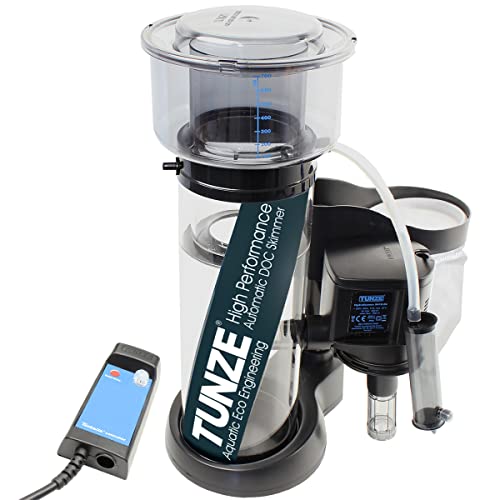
German build and a DC controller, if noise bothers you
Tunze 9410.001 DC DOC Skimmer
Buy this one if your sump sits under a living-room tank and you can hear everything it does. It's made in Germany, runs a DC pump with a controller, and measures about 16 inches tall by 10 by 7 — compact for a skimmer at this level.
$499.99fromAmazonPrices as of Oct 25, 6:48 AM PT · Details
You pay a real premium for this, and for a lot of tanks that isn't smart money. But sit in a quiet room at night next to a fixed-speed AC skimmer and you'll understand the appeal. Reef Builders' equipment coverage points at the same trend: DC skimmers cost more, and hobbyists keep buying them anyway for quieter running and finer control over foam.
The controller is the feature, not the pump. With a DC skimmer you dial speed up or down to shift between wet and dry foam, instead of chasing it with the water-level valve every time your bioload changes. Feed heavy for a week and nudge it up. Leave town with an auto-feeder and nudge it down. That's the flexibility an AC pump can't give you.
Tunze has been building skimmers in Germany for a long time, and the DOC line is the part of the catalog people hold onto rather than flip. This unit is an update to their top-selling DOC model. That history matters for a purchase like this — you want a company still selling impellers and gaskets years from now, and Tunze's reputation for parts support is a big part of why owners justify the spend.
The size is deceptive. At 16.3 inches tall and under 10 inches on its longest side, it fits sumps that won't take a 22-inch cone. If your stand is short, and plenty of 40-breeder and 75-gallon stands are, that height alone can settle the decision for you.
Flaws but not dealbreakers
The listing is thin. Tunze doesn't publish a tank rating on this page, so you're relying on the model number and a dealer to tell you where it lands, which is an odd position at this tier. Ask before you buy rather than guessing from the dimensions.
Parts move through a specialty dealer network rather than big-box shelves, so order spares ahead instead of expecting to drive somewhere. A controller is also one more component that can fail, and when it does the skimmer stops rather than just slowing down.
Who this is for
This guide is for saltwater and reef keepers. If you run a freshwater tank, skip it — skimmers need salt water to build stable foam, and they do essentially nothing in fresh. Buy one now if you're upgrading from the stock filtration in an all-in-one, if you've just added a sump, or if your nitrates keep creeping up no matter how often you change water. Skimming won't fix overfeeding. But it buys you margin, and margin is what keeps a reef stable.
Hold off if your tank is fish-only with a light load and numbers that don't move, or if a heavily planted refugium is already pulling nutrients down for you. We've stuck to skimmers you can buy from a mainstream retail listing, which means some highly regarded specialty units — big controller-driven cones for 200-gallon systems, boutique brands sold only through reef shops — aren't covered here. If you're building at that scale, you're already shopping specialty stores anyway.
How we picked
Pump design: Marine Depot's buying guide puts needle-wheel and cone-style impellers at the center of today's market, so we favored those over older venturi-only designs. Sizing: we treated published tank ratings as optimistic and looked for headroom, following the Reef2Reef habit of buying for one and a half to two times your display volume. Fit: footprint, height and rim thickness decide whether a skimmer works in your setup at all, so we pulled those numbers from every specification sheet. Noise: DC pumps run quieter and adjust more finely than fixed-speed AC, which matters when the tank shares a room with your couch. Support: we weighted stated warranties and how easy replacement pumps and impellers are to find years down the line.
The competition
This is what the research surfaced, not a census of the market. Protein skimmers run deep as a category, and plenty of well-regarded units from specialty reef brands never show up on a general retail listing at all. Here's the one we looked at closely and didn't pick.
The Bubble Magus MiniQ Hang on Back Aquarium — The Bubble Magus MiniQ is the smallest thing here by a wide margin, at 3.22 by 2.08 by 8.9 inches with a 2-watt DC needle-brush pump running off a standard USB plug. Bubble Magus rates it to process 19.8 gallons per hour, which tells you the scale — this is for a pico or a very tight all-in-one back chamber. The USB power is genuinely clever, since you can keep it running from a phone charger or a power bank when the lights go out. We picked the Eshopps Nano instead because a SICCE pump with a three-year warranty is a stronger foundation, and owner feedback on the MiniQ skews toward fit and durability complaints. If your back chamber is too narrow for anything else, though, this might be the only skimmer that goes in.
Setup and maintenance
Give a new skimmer one to three weeks before you judge it. Bulk Reef Supply's guides describe the same break-in curve every time: erratic foam, stray microbubbles, sometimes nothing at all, then it settles. Don't chase it with the valve every day. Once it stabilizes, empty the cup before it fills, because overflow is the most common way a skimmer floods a stand. Wipe the neck with a paper towel every week or two — skimmate film on the neck kills foam climb faster than anything else. Every few months, pull the pump, soak the impeller in vinegar, and rinse the air intake line. If foam suddenly dies, check that line first. It's almost always plugged with salt creep.
Questions we get
Do I really need a protein skimmer for a saltwater tank?
For a reef tank with corals, yes, it's the most effective way to export waste before it becomes nitrate and phosphate. For a lightly stocked fish-only tank with disciplined water changes, you can get by without one. The skimmer buys you margin when you overfeed or lose a fish behind the rock. Most people who skip it end up adding one later.
What size protein skimmer do I need for a 75-gallon tank?
Look at units rated for roughly 110 to 150 gallons. Hobbyist consensus on Reef2Reef is to size for one and a half to two times your display volume, since manufacturer ratings assume ideal conditions and light feeding. An oversized skimmer runs calmer and fills the cup more slowly. An undersized one never catches up.
Hang-on-back or in-sump: which should I get?
If you have a sump, use it — in-sump cone skimmers export meaningfully more waste than hang-on-back models of similar rating, and they stay out of sight. Hang-on-back is the right answer when you don't have a sump and don't want to build one. Just check your rim thickness and tank height first, and accept that it'll be visible behind the display.
Why is my new skimmer barely making foam?
It's almost certainly breaking in. Bulk Reef Supply's equipment guides put that period at one to three weeks while surfactants build in the water and the skimmer body loses its factory slickness. Resist the urge to keep adjusting the water level daily. If it's still dead after three weeks, check the air line for a blockage before you assume the pump is bad.
Is a DC pump worth the extra cost?
It depends on where your sump lives. A DC pump lets you dial speed up or down to shift between wet and dry foam without touching the water level, and it runs noticeably quieter than a fixed-speed AC pump. Reef Builders notes that hobbyists increasingly pay the difference for exactly those two reasons. If your tank sits in a basement or a garage, an AC pump is fine.
Do freshwater aquariums need protein skimmers?
No. Skimming depends on salt water's surface tension to hold stable foam, and in fresh water the bubbles collapse before they can carry anything out. A freshwater skimmer would just be an aerator. Use mechanical and biological filtration plus water changes instead.
Why you should trust us
For this guide:
- We read manufacturer specification sheets and product documentation for every skimmer here, alongside equipment guides from Marine Depot, Bulk Reef Supply and Reef Builders.
- We compared the sizing advice hobbyists give each other on Reef2Reef against the tank ratings brands publish, and leaned toward the community's habit of sizing up.
- We read owner feedback for each listing to find the complaints that repeat rather than the one-off gripes.
- We read owner reviews on every listing, weighted toward the critical ones, because that is where the recurring failures show up.
- We have a systematic way of automatically fetching the latest prices, so the numbers on this page stay current.
- This is a research-focused guide, so the team may not own every product listed — though we often do own the top winners, which gives us extra context for the recommendations.
- We don't accept free products, and the retailer commission never changes which product we recommend.
Sources
Reef Octopus Classic Series Skimmers, CoralVue / Reef Octopus
Protein Skimmer Buying Guide, Marine Depot
Protein Skimmers Category, Bulk Reef Supply
Protein Skimmer Recommendations & Reviews, Reef2Reef Forum
AquaMaxx HOB-1 Protein Skimmer, AquaMaxx
Tunze DOC Skimmer 9410/9411 Series, Tunze
Nyos Quantum Skimmer Series, Nyos
Skimz Monzter Internal Skimmers, Skimz
How Protein Skimmers Work, Practical Fishkeeping
Reef Builders Equipment Reviews, Reef Builders
Fluval Sea SP Skimmer Series, Fluval
Eshopps Protein Skimmers, Eshopps
Amazon product listings and owner reviews for all 5 products
Manufacturer specification pages for each product
Some passages in this guide may be paraphrased with AI help.
Product prices and availability are accurate as of the date/time indicated and are subject to change. Any price and availability information displayed on Amazon.com at the time of purchase will apply to the purchase of this product.
More like this.
Continue exploring pet reviews and recommendations.

The Best Aquarium LED Lighting
The light over your tank does more work than anything else you'll buy for it. It decides whether your plants carpet the substrate or melt into brown mush,…

The Best Quiet Aquarium Air Pumps
An air pump is one of the few pieces of aquarium gear you hear all day. It sits outside the tank, humming away in a living room or a foot from your…

The Best Aquarium Filters for Freshwater Tanks
A freshwater filter is the one piece of equipment in your tank that never gets a break. It runs every hour of every day, pushing water through foam and…

The Best Aquarium UV Sterilizers
A UV sterilizer is a lamp in a tube that your water flows past, and nothing else on the tank does its job. It kills the free-floating stuff: the…

The Best Aquarium CO2 Systems
Plants in an aquarium run out of carbon long before they run out of light. Add CO2 and the change shows up within a few weeks: stems grow faster, carpets…

The Best Aquarium Heaters
A heater is the least interesting thing in your tank and the most likely to cause a disaster. Fish don't need water that's warm on average. They need it…