The Best Indoor Hydroponic Herb Garden Kits
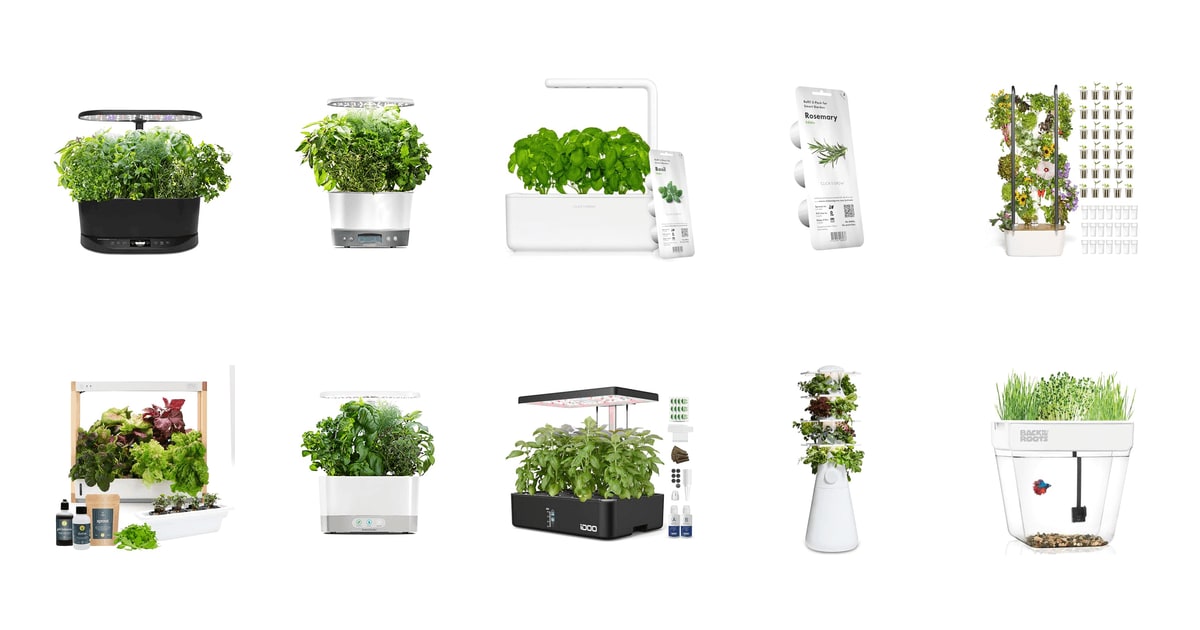
Fresh herbs are the one grocery item that always seems to rot before you use half the bunch. That's the pitch for a countertop hydroponic garden: you snip what you need, and the plant keeps making more. These kits handle the parts people get wrong — the light, the watering, the feeding schedule — so mostly you top off a reservoir and trim. If you cook a few times a week, a working basil plant three feet from the stove genuinely changes what you reach for.
No kit here is set-and-forget, though. Seed pods are the honest weak point across every brand, and owners of nearly every system report a pod or two that just never sprouts — irritating when the pods are proprietary and you bought a matched set. Reservoirs grow algae if you ignore them for a month. Grow arms run out of height before dill does. And the running cost of pods and nutrients is where these gardens quietly get expensive.
So think about how much you'll actually harvest before you buy the biggest thing on the shelf. Six pods is plenty for one cook who wants basil, parsley, and mint on hand. Twelve starts to make sense if you're feeding a family salads or want a few slots always regrowing. We think that the AeroGarden Bounty Basic is the best indoor hydroponic herb garden kit for most people, and that the AeroGarden Harvest is the one to buy if you want the same growing system in a smaller, less expensive package.
Everything we recommend
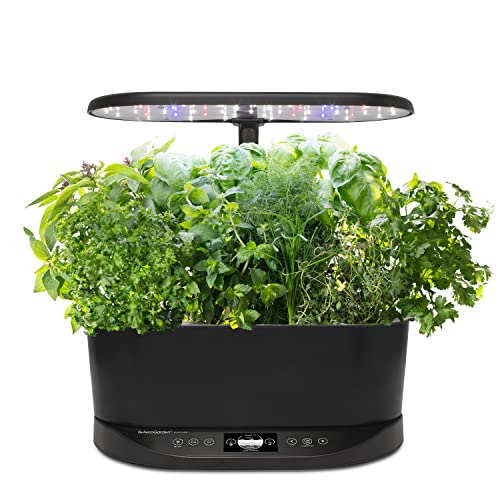
Nine pods, a bright light, and app control for a real supply
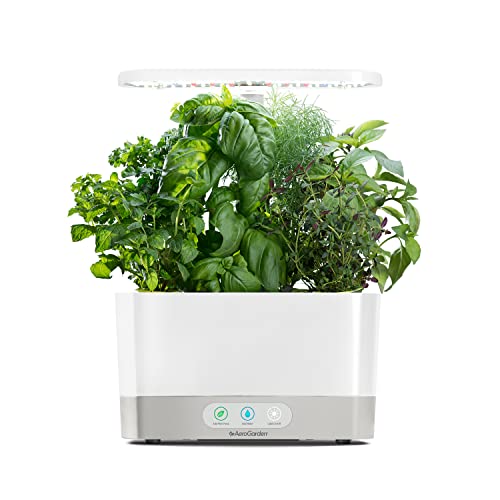
The same growing system in a smaller, simpler package

Twelve pods and any seeds you like, with rougher finish

Add water, walk away, and skip nutrient mixing entirely
Prices as of Oct 27, 8:28 AM PT · Details
At a glance
| Product | Plant Capacity | Led Wattage | Price | |
|---|---|---|---|---|
| AeroGarden Bounty Basic - Indoor Garden withTop pick | 9 Plants | 30W | Check price |
 | AeroGarden Harvest Elite 360 Indoor Garden HydroponicAlso in lineup | 6 Plants | 20W | $54.37On sale |
| Click & Grow Indoor Herb Garden KitAlso great | — | — | $112.49On sale |
 | Click and Grow Smart Garden Rosemary PlantAlso in lineup | 3-Pack Pods | — | $14.95 |
 | Gardyn Home 4 Vertical Hydroponics Growing SystemAlso consider | 30 Plants | — | $899 |
 | Rise Gardens Personal Rise Garden Hydroponic IndoorAlso in lineup | 12 Plants | — | $349 |
| AeroGarden Harvest Indoor Garden Hydroponic System withRunner-up | 6 Plants | 20W | Check price |
| iDOO Mothers Day GiftsBudget pick | 12 Plants | 22W | $99.99 |
 | Lettuce Grow Farmstand Nook 4ft.7” Vertical HydroponicAlso consider | 20 Seedlings | — | $749 |
 | Back to the Roots Indoor Aquaponic GardenAlso in lineup | — | — | Check price |
Prices as of Oct 27, 8:28 AM PT · Details
How we picked
Light and headroom. We compared spec sheets for wattage, spectrum, and how high the light arm sits above the deck. Anything that traps a plant at six inches gets ruled out fast, so adjustable arms and taller clearance counted heavily.
Pod count and refills. We looked at how many plants each system holds against reservoir size, since a big deck on a small tank means constant topping off. A week or more between refills is the threshold most households can live with.
Ongoing pod cost. We checked whether each system accepts ordinary seeds or locks you into branded pods. Open compatibility isn't required, but a proprietary system has to be reliable enough to justify the tie-in.
Setup and daily fuss. We read owner feedback for how long assembly takes and how much nutrient work each system asks of you. Gardens that ask you to remember a schedule tend to get abandoned by month three.
Reliability signals. We scanned owner reports for repeated failure modes — dud seed pods, pumps that quit, mold in the trays, apps that lose the connection. Patterns across many owners mattered more than any single account.
Top pick
Nine pods, a bright light, and app control for a real supply
AeroGarden Bounty Basic - Indoor Garden with
The Bounty Basic holds nine plants under a 30-watt light, with app control and a display that tells you when to add water and plant food. It's what we'd put on a kitchen counter if you want a working herb supply rather than one novelty basil plant.
Check priceatAmazonPrices as of Oct 27, 8:28 AM PT · Details
Nine pods is the difference between a garnish and a habit. Six-pod gardens fill up fast — basil, parsley, mint, and you're already crowded. With nine you can keep three slots on basil for pesto and still run cilantro, thyme, and a couple of lettuce plants. The bigger water bowl and grow deck also stretch the time between refills, which matters more than it sounds when the week gets away from you.
The 30-watt full-spectrum light is the strongest here, and it's why the Bounty keeps showing up at the top of published roundups. AeroGarden says plants germinate several times faster than they would in soil, and owner accounts of basil at cutting height in three to four weeks line up with that. The timer runs the light on its own, so nothing depends on your memory.
Vacation mode is a small feature that earns its keep. Before a week away you drop the garden into a low-water holding pattern, and you come home to plants that are still alive instead of a tray of crisp stems. The Wi-Fi connection adds Alexa and Google Home control too, so you can dim the light from the couch when it's glaring across the dinner table.
The ecosystem is the real reason to pick AeroGarden over a generic clone. Pods arrive pre-seeded and matched to the light schedule, replacement parts exist, and support tends to answer when something fails. Owners also routinely skip the pods entirely and plant their own seeds in blank sponges, so you're not locked in. A working default plus an escape hatch is a rare combination in this category.
Flaws but not dealbreakers
The pods are the ongoing cost, and they add up quietly. Every refill is a proprietary purchase unless you move to blank sponges and your own seeds, which works but takes some trial and error on germination timing. Dud pods are the complaint owners raise most often across AeroGarden's line — one or two in a starter kit that simply never come up. Support usually replaces them, but you've lost a few weeks.
It's also big. Measure your cabinet clearance before ordering, because the light arm needs real headroom above a deck that already sits high. And the app can be fussy: owners describe having to re-pair the unit after firmware updates, which is a nuisance if you lean on the scheduling.
Runner-up
The same growing system in a smaller, simpler package
AeroGarden Harvest Indoor Garden Hydroponic System with
The Harvest is AeroGarden's entry model: six pods, a 20-watt light, an automatic timer, and a starter herb kit so you can plant the day it lands. You give up Wi-Fi and three pods, but the actual growing is the same.
Check priceatAmazonPrices as of Oct 27, 8:28 AM PT · Details
Six pods sounds limiting until you write down what you actually cook with. Basil, parsley, dill, thyme, Thai basil, and mint — that's the Gourmet Herb kit in the box, and it covers most weeknight cooking. The Harvest is the smallest thing here that still takes plants to a full twelve inches, so it tucks behind a sink or into a corner without much negotiation.
Published reviews and owner feedback point the same direction: this one just works. Setup runs a few minutes, sprouts show up inside a week, and people who've kept them running for years describe them as boring in the best way. Plenty of owners also use them to start seedlings for an outdoor bed in spring, which isn't the advertised job but works fine.
The touch control panel handles the whole schedule. It nudges you when the water is low or the plant food is due, and there's no app in the loop to break. If you'd rather not put another device on your home network, that's not a compromise — it's the point.
Flaws but not dealbreakers
The grow arm is your ceiling. Tall, fast herbs like dill will brush the light bar weeks before they'd naturally slow down, so you end up trimming for clearance rather than for the kitchen. Basil, parsley, and mint stay comfortably under it.
The feature set is bare next to the Bounty: no Wi-Fi, no app, no voice control. Six pods also forces choices. Run three basil pods for a decent pesto harvest and you've spent half the garden on one herb.
Budget pick
Twelve pods and any seeds you like, with rougher finish
iDOO Mothers Day Gifts
The iDOO fits twelve plants under a 22-watt light on an arm that rises as they grow, and it takes ordinary seeds in generic sponges. The plastic feels cheap next to an AeroGarden, but the growing part does its job.
$99.99fromAmazonPrices as of Oct 27, 8:28 AM PT · Details
The adjustable light arm is what makes this a real garden and not a gadget. Fixed-arm budget units turn into a ceiling around week four, right when things get interesting. The iDOO's light raises to about eleven inches, so basil and arugula run their normal course before you're cutting for clearance. That one mechanism is why it holds up against gardens that cost several times as much.
Open seed compatibility is the other reason to buy it. Any seed packet plus a bag of generic grow sponges will do, which completely changes the math on keeping twelve pods planted all year. Owners plant everything in these — four kinds of basil, arugula, bok choy — and germination within a few days is a common report.
There's a small fan above the deck that moves air across the leaves and pulls heat out during germination, plus a 4.5-liter tank that stretches a week or two between refills in active growth. A window on the side shows the level, so you're not lifting the deck to check. Little things, but they're the difference between a garden you tend and one you resent.
Flaws but not dealbreakers
Fit and finish is where the savings show. The plastic, the panel, and the general feel sit a clear step below AeroGarden and Click & Grow, and the light is adequate rather than strong once a full canopy fills in and the lower leaves start shading.
There's no app and no smart home control, and the support story is thinner than the big brands' — a failed pump is more of a gamble here. Assembly also takes longer than the box implies, so set aside an evening and expect some fiddling with the pump line.
Also greatOn sale
Add water, walk away, and skip nutrient mixing entirely
Click & Grow Indoor Herb Garden Kit
Click & Grow builds the seeds and the fertilizer straight into the growing medium, so there's no liquid plant food to measure and no dosing schedule to keep. It's the smallest and simplest system here, and the hardest one to kill.
$112.49fromAmazonTypical pricePrices as of Oct 27, 8:28 AM PT · Details
If mixing nutrients is the part that puts you off, this removes it entirely. You drop in a pod, fill the reservoir, and plug it in. The wicking system pulls water up as the plant wants it, and the fertilizer is already in the soil. No pH kit, no measuring cup, and nothing to get wrong in week three when you've stopped paying attention.
It's also the tidiest option by a wide margin. AeroGarden decks get messy as roots fill the bowl and nutrient water sloshes around underneath. Click & Grow's sealed pods keep everything contained, which matters when the garden shares a counter with your cutting board. The narrow, tall shape also suits a windowsill or a bookshelf better than a wide bowl does.
The pod catalog runs deep — more than fifty varieties, including lavender, chili peppers, and wild strawberries, plus seedless pods if you'd rather plant your own. Click & Grow replaces pods that don't germinate, and owners describe running these for the better part of a year without much thought. That's the whole appeal.
Flaws but not dealbreakers
Capacity is the trade-off, and it's a real one. Three pods means one herb at a time, honestly, so if you cook with basil and cilantro and thyme you'll want a second unit or a bigger garden. The kit ships with three basil pods, which tells you the intended scale.
Pods cost more per plant than seeds and sponges do, and third-party seeds only work if you buy the seedless pods. Experienced growers lose control too: the feeding is baked in, so you can't push a plant harder during a growth spurt or back off when one is struggling.
Who this is for
Buy one of these if you cook with fresh herbs and keep throwing out half a bunch, or if you have no outdoor space and want something green that also feeds you. They're a good fit for apartments, offices, and dorm rooms, and they're forgiving enough that a total beginner can get basil in three or four weeks. They're also a genuinely good gift, because the recipient doesn't need to know anything to succeed.
Skip them if you want to grow tomatoes, peppers to maturity, or anything with deep roots — countertop systems are built for herbs, lettuces, and microgreens, and everything else is a stretch. This guide covers indoor hydroponic and aquaponic kits that include their own grow light and water system. It doesn't cover grow tents, standalone LED panels, or windowsill pots, and it doesn't cover pod refills and nutrients, which you buy separately once you've settled on a system.
How we picked
We judged every garden here on the same short list. Light and headroom: wattage, spectrum, and how much room a plant has before it hits the bar — adjustable arms won points. Pod count and refills: capacity measured against reservoir size, because a wide deck on a shallow tank means daily attention. Ongoing pod cost: whether the system takes ordinary seeds and sponges, or ties you to branded pods it had better deserve. Setup and daily fuss: how long assembly really takes and how much nutrient work you're signing up for. Reliability signals: the failure modes owners report over and over — pods that never sprout, pumps that quit, algae, and apps that drop the connection.
Other indoor hydroponic herb garden kits worth considering
If you want to grow most of your own greens: The Gardyn Home 4 Vertical Hydroponics Growing System — The Gardyn Home 4 is a different scale of thing — thirty plants in about two square feet of floor, on a vertical tower with sunrise and sunset lighting and automatic watering. Its Kelby AI coach watches the columns with onboard cameras and flags trouble before you'd spot it, which is a real advantage nobody else offers. But it's the most expensive system here by a wide margin, the AI coaching runs on a subscription after the trial, and it needs both a power outlet and Wi-Fi to work at all. Owner reports also include a camera that arrived dead. Worth it only if you'll fill every slot.
If your counters are full but your floor isn't: The Lettuce Grow Farmstand Nook 4ft.7” Vertical Hydroponic — The Lettuce Grow Farmstand Nook stands nearly five feet tall and takes over a corner instead of your prep space. It's self-watering and self-fertilizing, ships with LED grow lights, a Bluetooth smart timer, a pH kit, and twenty live seedlings rather than seeds, so you're harvesting sooner. The height also means dill and basil can reach full size without ever meeting a light bar. You give up portability, you need a level floor and a nearby outlet, and it's a serious commitment for someone who only wants basil and mint.
The competition
These are the other systems our research turned up, not a full census of the category — new countertop gardens appear constantly and most are variations on the same few designs. Each of these lost to a pick for a specific reason, but a couple of them still make sense for particular people.
The AeroGarden Harvest Elite 360 Indoor Garden Hydroponic — The Harvest Elite 360 is the prettiest AeroGarden here: a round stainless bowl that rotates so every pod gets even light, plus vacation mode and a nicer illuminated display than the base Harvest. On paper it's the better buy. In practice, owner feedback on this specific model is noticeably rockier than on the plain Harvest, with repeated accounts of pods that never germinate and plants that stall or rot early. The growing hardware is fine — the seed pods are the weak link. Choose it if the round stainless design is what sells you, and expect to ask for a replacement pod or two.
The Rise Gardens Personal Rise Garden Hydroponic Indoor — The Personal Rise Garden holds twelve plants on a countertop and comes with a nursery, pH balance, and a full starter kit, and its app sends dosing reminders and tracks each plant's cycle. The modular design also lets you add tiers later instead of buying a whole new garden. What keeps it out of the picks is the support record: owners describe missing parts, slow or absent replacements, black mold turning up in the trays, and an app that doesn't always connect. It costs considerably more than the iDOO for the same pod count, which raises the bar it fails to clear.
The Back to the Roots Indoor Aquaponic Garden — The Back to the Roots Indoor Aquaponic Garden isn't really a herb machine — it's a three-gallon fish tank with a growing tray on top, where fish waste feeds the plants and the roots clean the water. It ships with radish and wheatgrass seeds, a dechlorinator, fish food, and a STEM curriculum, and microgreens are ready in about ten days. As a living science lesson for a curious kid, it's excellent and unlike anything else here. As a source of cooking herbs, the tray is small and the yield is modest, and you're now caring for fish as well as plants.
Care and maintenance
The reservoir is what needs your attention. Once every few weeks, pull the deck, dump the old water, and wipe the bowl before refilling — nutrient water grows algae and slime, and owners who skip this are the ones reporting black mold and sad roots. Keep the light arm just above the canopy rather than parked at the top; too much gap gives you leggy, stretched stems. Harvest by trimming the top growth above a leaf pair instead of stripping whole branches, and the plant keeps producing for months. When a pod finally exhausts itself, pull it, rinse the grow basket, and replant. And if a pod never sprouts at all, contact the brand — most replace them free.
Questions we get
Which kit is best if I've never grown anything before?
Click & Grow, because the fertilizer is already inside the pod and there's nothing to measure or schedule. You add water and plug it in. If you'd rather have more pods and don't mind mixing liquid plant food every couple of weeks, the AeroGarden Harvest is nearly as forgiving and gives you six plants instead of three.
Are these worth it compared with buying herbs at the store?
If you cook with fresh herbs regularly, yes. A store bundle of basil gets used up in a few days, while a single healthy pod gives you cuttings for months. The break-even depends on how much you harvest, so a garden that sits half-empty won't pay for itself — buy the size you'll actually fill.
How long does basil take to grow?
Expect germination in roughly four to seven days and harvestable leaves at six to eight inches in about three to four weeks under a full-spectrum LED. Keep trimming the top growth and the plant stays productive for several months. Basil and mint are the fastest performers in these systems; rosemary and thyme take considerably longer.
Can I use my own seeds instead of buying branded pods?
Usually. AeroGarden sells blank grow sponges that accept any seed, and generic sponges are widely available. Click & Grow offers seedless pods for the same purpose, and the iDOO is designed around ordinary seeds from the start. The catch is that branded pods are pre-seeded and tuned to the light schedule, so your own seeds may need some experimentation on depth and timing.
Which herbs actually do well in a hydroponic garden?
Basil, mint, parsley, cilantro, chives, and dill all thrive, with basil and mint the fastest and most productive. Rosemary and thyme grow reliably but slowly, so don't panic when a rosemary pod takes two weeks to show anything. Skip root vegetables and large fruiting plants — countertop systems don't have the depth or the light for them.
How much noise do they make?
Most countertop gardens run a small circulation pump on a timer, and owners generally describe it as a low hum you stop noticing. That's quiet enough for a kitchen or home office. If you're putting one in a bedroom, look for a system with independent pump timing so you can keep it off overnight.
Why you should trust us
For this guide:
- We read the manufacturer specifications and listing details for every garden here, comparing light wattage, pod capacity, reservoir volume, and grow height clearance side by side.
- We compared published reviews and category roundups to see which systems reviewers keep returning to and which ones they warn about.
- We read through owner feedback on each model, looking for failure modes that show up repeatedly — seed pods that never sprout, pumps that quit, algae in the reservoir, and apps that drop the connection.
- We read owner reviews on every listing, weighted toward the critical ones, because that is where the recurring failures show up.
- We have a systematic way of automatically fetching the latest prices, so the numbers on this page stay current.
- This is a research-focused guide, so the team may not own every product listed — though we often do own the top winners, which gives us extra context for the recommendations.
- We don't accept free products, and the retailer commission never changes which product we recommend.
Sources
The Best Indoor Garden Systems of 2026 — Wirecutter, Wirecutter / NYT
Best Hydroponic Herb Gardens, Tested by CNET Editors, CNET
Best Indoor Herb Gardens 2026 — Good Housekeeping, Good Housekeeping
We Tested 11 Indoor Hydroponic Gardens — The Spruce, The Spruce
Best Indoor Garden Kits for Fresh Herbs — Better Homes & Gardens, Better Homes & Gardens
Indoor Herb Garden Reviews 2026 — Tom's Guide, Tom's Guide
Hydroponic Herb Garden Buying Guide — Popular Science, Popular Science
Best Indoor Gardens for Every Budget — Food52, Food52
Amazon product listings and owner reviews for all 10 products
Manufacturer specification pages for each product
Some passages in this guide may be paraphrased with AI help.
Product prices and availability are accurate as of the date/time indicated and are subject to change. Any price and availability information displayed on Amazon.com at the time of purchase will apply to the purchase of this product.
More like this.
Continue exploring home reviews and recommendations.

The Best Smart Garden Systems for Fresh Herbs
Fresh herbs go bad fast. You buy a clamshell of basil for one recipe, use a third of it, and find the rest slimy in the crisper a week later. A smart…

The Best Raised Garden Bed Kits
A raised bed changes gardening in two boring, useful ways. You control the soil instead of fighting whatever clay or sand came with your yard, and you…

The Best Indoor Air Quality Monitors
You can't see most of what you breathe at home. Cooking throws fine particles across the kitchen. A closed bedroom door pushes CO2 past the point where…

The Best Can Openers
A can opener is one of those tools you don't think about until it fails you. Then you're standing over a half-open can of tomatoes, working the wheel back…

The Best Bedside Sleepers for Babies
For the first few months, your baby sleeps in short bursts and wakes up hungry. The American Academy of Pediatrics recommends room-sharing without…

The Best Pocket Hole Jigs
Pocket hole joinery is the shortcut that actually works. You drill an angled hole, drive a screw, and you've got a joint strong enough for a bookcase, a…