The Best Can Openers
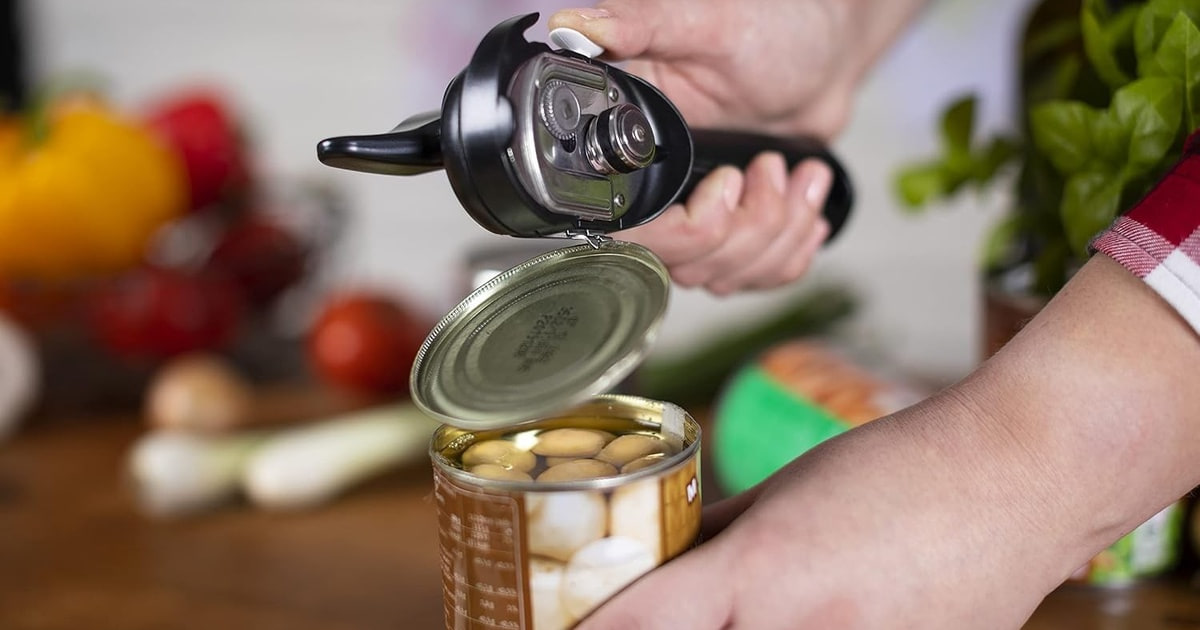
A can opener is one of those tools you don't think about until it fails you. Then you're standing over a half-open can of tomatoes, working the wheel back and forth, hoping it bites. Most households open a few cans a week — beans, tuna, soup, coconut milk — and the difference between a good opener and a bad one shows up every time. You want it to grab the rim, turn without a fight, and let go of the lid without cutting you. A cheap one stops doing that after about a year.
No can opener is perfect. Smooth-edge models leave a safe rim, but they take a can or two to learn, and they can slip on a dented or unusually thick seam. Top-cut steel openers bite instantly and last for years, but they hand you a lid with an edge like a saw blade. Electrics do the work for you, and they claim counter space and an outlet forever. Every cutting wheel dulls eventually, too. Pick the compromise you can live with.
Start with how you'll use it. If arthritis or a weak grip is the real problem, an electric is worth the counter space and nothing else comes close. If you cook a lot and hate clutter, a good manual lives in a drawer and still works in a power outage. Households with kids should lean smooth-edge. We think that the OXO Good Grips Smooth Edge Can Opener is the best can opener for most people, and that the Kuhn Rikon Auto Safety LidLifter is the one to buy if you want the opener to lift the lid off for you.
Everything we recommend

Smooth edges and comfortable handles, for a little more money

Touch-free lid removal, in a lighter plastic body

Heavy steel that just keeps working, sharp lid and all

One-touch opening, if you can spare the counter space
At a glance
| Product | Power Source | Blade Material | Price | |
|---|---|---|---|---|
| Kuhn Rikon Auto Safety LidLifter/Can Opener withRunner-up | — | — | $28.75 |
| Hamilton Beach Smooth Touch Electric Automatic CanAlso great | Electric | — | $39.96 |
 | Black & Decker CO100WM SpaceMaker Under-the-Cabinet CanAlso in lineup | — | — | $138.84On sale |
| EZ-DUZ-IT 3028 Deluxe Can Opener with GripsBudget pick | — | Carbon Steel | $13.99On sale |
 | Swing-A-Way Comfort Comfort Grip Can Opener -Also in lineup | — | — | $13.99 |
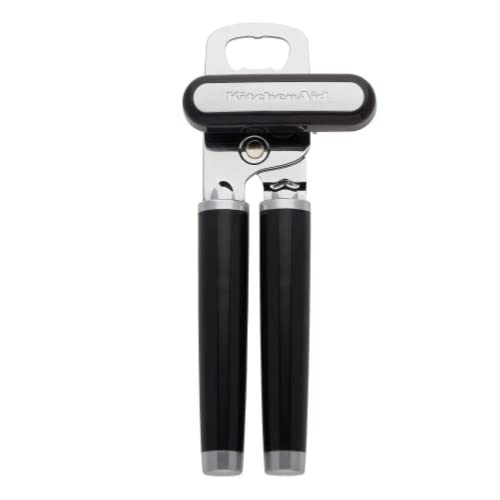 | KitchenAid Classic Multifunction Can Opener and BottleAlso in lineup | — | Stainless Steel | $14.99 |
 | Cuisinart CCO-55 DeluxeAlso consider | Electric | Power Cut Blade | $34.30On sale |
 | Hamilton Beach Walk 'n Cut Electric CanAlso consider | Electric | Removable Blade | $34.99 |
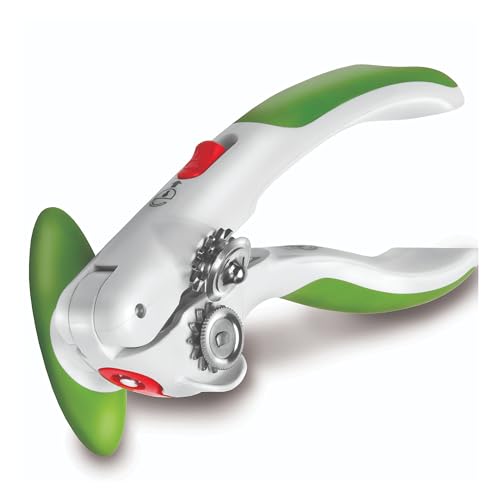 | Zyliss Lock N' Lift Manual Can OpenerAlso consider | Manual | Stainless Steel | $24.95 |
| OXO Good Grips Smooth Edge Can OpenerTop pick | — | Stainless Steel | $24.69 |
How we picked
Cut style and safety. We separated side-cutting smooth-edge openers from traditional top-cut designs, since only one of them leaves a lid you can handle. For any household with kids or older users, smooth-edge was close to a requirement.
Grip and effort. We looked at handle shape, knob size and mechanism type in the specs, then checked owner feedback for how often people mention hand strain or slipping. Openers that only work with a strong grip got flagged, not disqualified.
Build and materials. All-steel frames and steel cutting wheels outlast plastic gearing, so we weighted materials heavily. For electrics, we looked for a stable base, a proven motor and a housing that wipes clean.
Cleaning. Removable cutting assemblies and exposed wheels you can reach with a brush beat sealed designs that trap residue. Published reviews and owner comments both single this out as the thing that decides whether an opener stays sanitary.
Space it takes. A manual opener costs you drawer space; an electric costs you counter space and an outlet. We treated that as a real trade-off rather than a footnote, especially for small kitchens.
Top pick
Smooth edges and comfortable handles, for a little more money
OXO Good Grips Smooth Edge Can Opener
The OXO Good Grips Smooth Edge cuts the lid free from the side, so neither the lid nor the can rim ends up sharp. Add a soft-grip knob, non-slip handles, and built-in pliers for lifting the lid out, and it's the one we'd hand to almost anyone.
$24.69fromAmazonThe lid comes off with no sharp edge anywhere. The wheel cuts along the side seam instead of through the top metal, which leaves both the rim and the lid smooth. You can press that lid back on to store leftovers in the fridge. The wheel also stays outside the can, so it never touches your food and never comes away coated in tomato sauce or tuna oil.
The handles are why your hand doesn't ache halfway through. OXO builds this one with a soft-grip knob and non-slip handles that stay put in a wet hand. The side-wind mechanism is oversized, so each turn moves more of the cut with less force. If you're opening cans for a family a few nights a week, that's the difference between a chore and a two-second job.
The built-in pliers keep your fingers away from the lid entirely. Once the cut finishes, you squeeze the handles to grab the lid and drop it straight in the recycling. No prying with a fork, no lid sliding into the soup. It's a small thing, and you'll appreciate it the first time you open a can of anything with liquid in it.
It's the opener published reviews keep landing on. Independent reviewers and owners tend to agree here: the mechanism turns smoothly for years, the stainless wheel holds its edge, and there's a bottle opener in the handle. Owners who've carried theirs through two or three kitchens show up often in the feedback, which is about the best durability signal you can get from research alone.
Flaws but not dealbreakers
You still have to turn a knob. This is a manual opener, so it asks for a working grip and some wrist motion. If arthritis makes twisting painful, the soft handles help but they don't fix the problem — an electric does. That's the main reason we don't call it the right pick for absolutely everyone.
The first can or two can feel awkward. Side-cutting openers clamp differently than the top-cut opener you grew up with, and owners who report trouble usually describe the wheel not biting until they reseat it on the rim. Line it up and turn firmly. It's also hand-wash only, so the wheel needs a scrub now and then.
Runner-up
Touch-free lid removal, in a lighter plastic body
Kuhn Rikon Auto Safety LidLifter/Can Opener with
The Kuhn Rikon Auto Safety LidLifter cuts from the side like the OXO does, then grips and lifts the lid clear so you never touch metal or food. A built-in ring-pull tool handles pop-top cans, which is a genuinely nice extra if your fingers hate those tabs.
$28.75fromAmazonThe LidLifter is the part you'll actually notice. After the cut, the tool holds the lid and lifts it away in one motion. No fork, no fishing, no lid dropping into the chili. If you've ever tipped a can of pineapple over the sink just to shake the lid loose, this is the fix for that.
The ring-pull tool solves a problem most openers ignore. Pull tabs are their own small misery, especially with cold hands or short nails. The Kuhn Rikon has a dedicated hook for them, so you lever the tab up without bending a fingernail back. It sounds trivial until it's sitting in your drawer and you stop dreading pop-tops.
The knob asks for very little force. Kuhn Rikon builds the knob and gears to move with a light hand, and owners with weaker grips consistently report it's easier to work than a stiff all-steel opener. It's a reasonable middle ground if an electric feels like overkill but a traditional manual is genuinely hard for you to turn.
Flaws but not dealbreakers
The body is plastic, and it feels like it. Next to an all-steel opener, this one is light and it flexes a little under pressure. Owners who wear theirs out usually describe the housing or a gear giving up rather than the wheel going dull. Treat it as a kitchen tool, not something to muscle through a dented industrial can.
It costs more than a plain steel opener and takes practice. You're paying for the safety design and the lid lifter, and side-cut alignment takes a can or two to get right. If all you want is a wheel that bites the top and turns, this isn't the one to buy.
Budget pickOn sale
Heavy steel that just keeps working, sharp lid and all
EZ-DUZ-IT 3028 Deluxe Can Opener with Grips
The EZ-DUZ-IT 3028 is heavy-gauge chromed steel with a carbon-steel wheel and gear-driven action, the same basic design commercial kitchens have leaned on for decades. It costs a fraction of what the picks above do, and it'll probably outlast them.
$13.99fromAmazonList priceSteel is the whole argument here. The frame is heavy-gauge chromed steel and the cutting wheel is carbon steel, so there's no plastic gear to strip and no housing to crack. Cheap openers almost always fail at exactly those two points, often within a year. Restaurants buy this design because replacing openers every few months gets old fast.
The gear action is smoother than a no-frills tool has any right to be. Gear-driven openers turn steadily instead of skipping around the rim, and published reviews rate this one against openers several times as expensive. The rubberized handles aren't plush, but they're thick enough to spread the pressure across your palm instead of digging into it.
Nothing on it can break, because there's nothing on it. No magnet, no bottle opener, no lid lifter, no locking arm. That's an advantage if you want a drawer tool that behaves the same way in ten years as it does today. If you keep a camping bin or an emergency kit, buy a second one and forget about it.
Flaws but not dealbreakers
The lid it leaves is sharp. This is a traditional top-cut design, so the disc that comes off has a real cutting edge, and so does the rim you're left holding. Keep it away from kids, and don't go reaching into the trash after you drop a lid in. If that bothers you, buy one of the smooth-edge picks instead.
No extras, and it's hand-wash only. There's no magnet to catch the lid, so it lands wherever gravity takes it. Warm soapy water and a brush at the wheel keeps it clean, and it needs that after anything sticky. The dishwasher will dull the carbon steel and pit the plating over time.
Also great
One-touch opening, if you can spare the counter space
Hamilton Beach Smooth Touch Electric Automatic Can
The Hamilton Beach Smooth Touch does the work for you: line up the can, press the lever with one hand, and it cuts the lid free from the side. It takes extra-tall cans, opens pop-tops without you touching the tab, and leaves a smooth lid you can reuse as a cover.
$39.96fromAmazonOne hand, one motion, and you're done. You set the can under the head and press the lever down. No clamping, no turning, no stopping halfway to reposition. If you're cooking with a kid on your hip or your hands are slick with oil, that matters more than it sounds like it should on paper.
It's the rare electric that also handles pop-top cans. Pull tabs tear, splash, and slice fingers. This one cuts pop-top lids the same way it cuts regular ones, so you end up with a clean smooth lid instead of a bent tab and a jagged edge. Owners with cat food or canned tuna in daily rotation bring this up a lot.
Cleaning is a lift-off, not a project. The cutting assembly comes away from the machine, which is the difference between actually washing it and wiping around it. That's a real hygiene edge over a manual opener with a fixed wheel. It also swallows extra-tall cans, so a big can of tomatoes doesn't need tilting or a second attempt.
Flaws but not dealbreakers
It lives on your counter, near an outlet, forever. This thing is over three pounds and about ten inches tall, so it's not going in a drawer between uses. In a small kitchen, that's a genuine cost. A manual opener does the same job from a drawer and keeps working when the power's out.
The lever mechanism is the part that wears. Owners who lean on theirs for years report the press-down action going loose or getting fussy about engaging the rim. Dented cans give it trouble, too. It's still the most convenient opener here, but don't expect the decade you'd get from a steel manual.
Who this is for
Buy now if your current opener skips around the rim, needs two hands and a grudge, or leaves half-cut lids. That's a dull wheel, and it's more likely to slip and cut you than a new one is. This guide covers manual and electric openers for home kitchens, including smooth-edge safety designs, all-steel classics, an under-cabinet mount and a cordless hands-free unit. If grip strength is your main issue, skip straight to the electric options.
You can hold off if you open a can a month and your opener still bites cleanly on the first turn. There's no upgrade here that changes your life. We also don't cover commercial crank-mounted openers, military-style pocket openers, or the jar-opening tools that often show up in the same search — those are different products with different priorities.
How we picked
Cut style: side-cutting smooth-edge designs leave no sharp rim or lid, which is the single biggest safety difference between openers and close to mandatory with kids around. Grip and effort: we read specs on knob size, handle material and mechanism, then checked owner feedback for repeated mentions of hand strain, slipping and wheels that won't bite. Materials: steel frames and steel wheels last; plastic gearing is where cheap openers die, usually within a year. Cleaning: a wheel you can reach with a brush, or a cutting assembly that lifts off, beats anything sealed or fiddly. Space: we weighed drawer storage against counter space and outlet access, because in a small kitchen that decides the purchase.
Other can openers worth considering
If you want a compact smooth-edge opener with a lid magnet: The Zyliss Lock N' Lift Manual Can Opener ($24.95) — The Zyliss Lock N' Lift locks onto the rim so the cut stays even, cuts from the side for a smooth edge, and holds the lid on a magnet so it never lands in your food. It's small, light and easy to stash in a crowded drawer. What you give up is heft — the body is lighter than the OXO's, and owners note the wheel area collects residue and needs regular scrubbing. Very large cans aren't its strength either.
If gripping and turning are the actual problem: The Hamilton Beach Walk 'n Cut Electric Can ($34.99) — The Hamilton Beach Walk 'n Cut sits on the can rim, drives itself all the way around, then stops and shuts off on its own. It's cordless and rechargeable, so it works at the table, in a camper, or anywhere without an outlet, and it's small enough to keep in a drawer. A magnet holds the lid up out of the food, and the blade assembly detaches for cleaning. The catch is that it needs a clean, flat rim to track properly, so dented or odd-shaped cans can throw it off.
If you want an electric that does more than open cans: The Cuisinart CCO-55 Deluxe ($34.30) — The Cuisinart CCO-55 adds a knife sharpener and a bottle opener to a chrome-housed electric with a wide, non-tipping base and a removable activation lever for cleaning. Cuisinart backs it with a three-year limited warranty. It's a top-cut design, though, so you're left with a sharp lid, and owners report the cut going inconsistent on small or dented cans. Treat the built-in sharpener as a quick touch-up, not a replacement for a real one.
The competition
This is what our research surfaced, not a census of everything for sale. All three of these are genuinely usable openers, and plenty of people are happy with them. They lost to the picks on safety, on cleanup, or on how much of your kitchen they ask you to give up.
The Swing-A-Way Comfort Comfort Grip Can Opener - ($13.99) — The Swing-A-Way Comfort Grip is the other all-steel classic: a high-carbon gear-driven wheel, a skip-proof feed, cushioned handles that suit most hand sizes, and a bottle opener built in. It's been a kitchen fixture for generations and makes a great backup or gift. We give the nod to the EZ-DUZ-IT on sheer sturdiness among top-cut openers, and both leave you a sharp lid. If the cushioned grips appeal to you more than a heavier frame, buy this one instead — you won't regret it.
The KitchenAid Classic Multifunction Can Opener and Bottle ($14.99) — The KitchenAid Classic Multifunction is a well-made manual with a razor-sharp stainless wheel, an oversized turning knob, soft ergonomic handles and a bottle opener. It feels more substantial than a bargain opener and looks the part next to matching appliances. But it's a top-cut design, so the lid edge is sharp, and that razor-sharp wheel wants careful handling when you wash it. If you want one drawer tool for cans and bottles and smooth edges aren't a priority, it's a fair choice.
The Black & Decker CO100WM SpaceMaker Under-the-Cabinet Can ($138.84) — The Black & Decker SpaceMaker CO100WM mounts under a cabinet and stays there, which clears your counter permanently — the whole reason it exists. In a galley kitchen or a small apartment, that's a legitimate win, and the one-touch operation is genuinely hands-free. It's also the most expensive opener here, it needs screws and a nearby outlet, and it's harder to clean than a countertop electric because you're working overhead. Renters and anyone unwilling to drill should skip it. If you're committed to the under-cabinet setup, this is the option in this group.
Care and maintenance
Most openers die at the cutting wheel, and most of that is grime. After anything sticky — condensed milk, tomato paste, tuna in oil — rinse the wheel and gear under hot water and scrub with a brush before the residue dries hard. Hand-wash your manual openers. A dishwasher dulls carbon-steel wheels and pits the plating over time, and openers that sit wet in the rack start to rust at the pivot. Dry them right away instead. On an electric, pull the cutting assembly off, wash it separately, then wipe the housing. And pay attention to effort: when an opener starts skipping around the rim or leaving a jagged, half-cut lid, the wheel is finished. Replace it rather than fighting it, because a dull wheel is the one that slips.
Questions we get
What's the best can opener if you have arthritis or a weak grip?
The Hamilton Beach Walk 'n Cut is the easiest option, because it does the whole job itself — you set it on the rim and press a button, with no twisting or squeezing. The Hamilton Beach Smooth Touch is the countertop version of the same idea, needing only a light press on a lever. If you'd rather stay manual, the OXO's soft-grip handles and the Kuhn Rikon's easy-turning knob both ask for less force than a traditional steel opener.
Are electric can openers better than manual ones?
It depends on what's bothering you. Electrics are more convenient for frequent use and much easier if hand strength is limited, but they claim counter space, need an outlet, and generally don't last as long as a steel manual. A good manual opener is more durable, easier to clean, and works during a power outage. Most households are well served by a quality manual like the OXO.
What's a smooth-edge can opener, and is it worth it?
Smooth-edge openers cut along the side seam of the lid instead of through the top metal, so neither the lid nor the can rim ends up sharp. You also get a lid that sits back on the can for fridge storage. It's worth it if kids or older relatives handle cans, or if you've ever nicked a finger on a lid. The OXO Good Grips Smooth Edge and the Kuhn Rikon Auto Safety LidLifter are the two to look at.
How long should a can opener last?
A quality all-steel manual should give you five to ten years of normal home use, and plenty of owners report far longer. Electrics tend to run three to seven years depending on the motor and how hard you use them. The real signal isn't age — it's behavior. Replace any opener once the wheel skips, slips, or needs noticeably more muscle than it used to.
Can you put a can opener in the dishwasher?
Usually not, and it's the fastest way to ruin one. Carbon-steel cutting wheels dull and rust, and plating on steel frames pits after repeated cycles. The EZ-DUZ-IT, Swing-A-Way and OXO are all hand-wash tools. On electrics, the removable cutting assembly is the part you wash, and you should check the manual before it goes anywhere near the dishwasher.
Why you should trust us
For this guide:
- We read published reviews and roundups from major kitchen-focused outlets and compared where their picks agreed and where they didn't.
- We went through manufacturer specifications and listing details for every opener here, covering cut style, materials, dimensions and cleaning method.
- We read owner feedback for each model and looked for repeated failure patterns — stripped gears, wheels that stop biting, lids that won't release — rather than one-off complaints.
- We read owner reviews on every listing, weighted toward the critical ones, because that is where the recurring failures show up.
- We have a systematic way of automatically fetching the latest prices, so the numbers on this page stay current.
- This is a research-focused guide, so the team may not own every product listed — though we often do own the top winners, which gives us extra context for the recommendations.
- We don't accept free products, and the retailer commission never changes which product we recommend.
Sources
The Best Can Openers — Wirecutter / NYT Cooking, Wirecutter
Best Can Openers Tested by Food Network Kitchen, Food Network
Good Housekeeping Institute: Best Can Openers 2025, Good Housekeeping
Serious Eats: The Best Can Openers, Tested and Reviewed, Serious Eats
Consumer Reports: Can Opener Ratings and Reviews, Consumer Reports
America's Test Kitchen: Best Can Openers, America's Test Kitchen
Arthritis Foundation: Kitchen Tools for Arthritis, Arthritis Foundation
Reviewed.com (USA Today): Best Can Openers, Reviewed.com
Amazon product listings and owner reviews for all 10 products
Manufacturer specification pages for each product
Some passages in this guide may be paraphrased with AI help. Prices are refreshed automatically.
More like this.
Continue exploring home reviews and recommendations.

The Best Electric Wine Openers
Opening a bottle shouldn't be a workout. But if your hands ache, or you're pouring for eight people at once, a waiter's corkscrew gets old fast. An…

The Best Smart Wi-Fi Garage Door Openers
A garage door is the biggest moving thing most people own, and it's also the door you're most likely to leave open by accident. A smart opener fixes that.…

The Best Spray Foam Insulation Cans
A can of foam is a small fix for one of the biggest problems in your house. Air leakage accounts for 25 to 40 percent of heating and cooling losses in a…

The Best Foldable Walking Canes
A cane only helps if you actually have it with you. That's the whole case for a folding one: it collapses into three or four sections, drops into a tote…

The Best Car Trash Cans
Trash in a car doesn't announce itself. It accumulates - a receipt in the door pocket, a coffee lid in the cup holder, three straw wrappers under the…

The Best Gas Cans and Fuel Spouts
A gas can is one of those things you never think about until it fights you. You're standing over a mower deck with a hot muffler, the spout won't seat,…