The Best Foldable Walking Canes
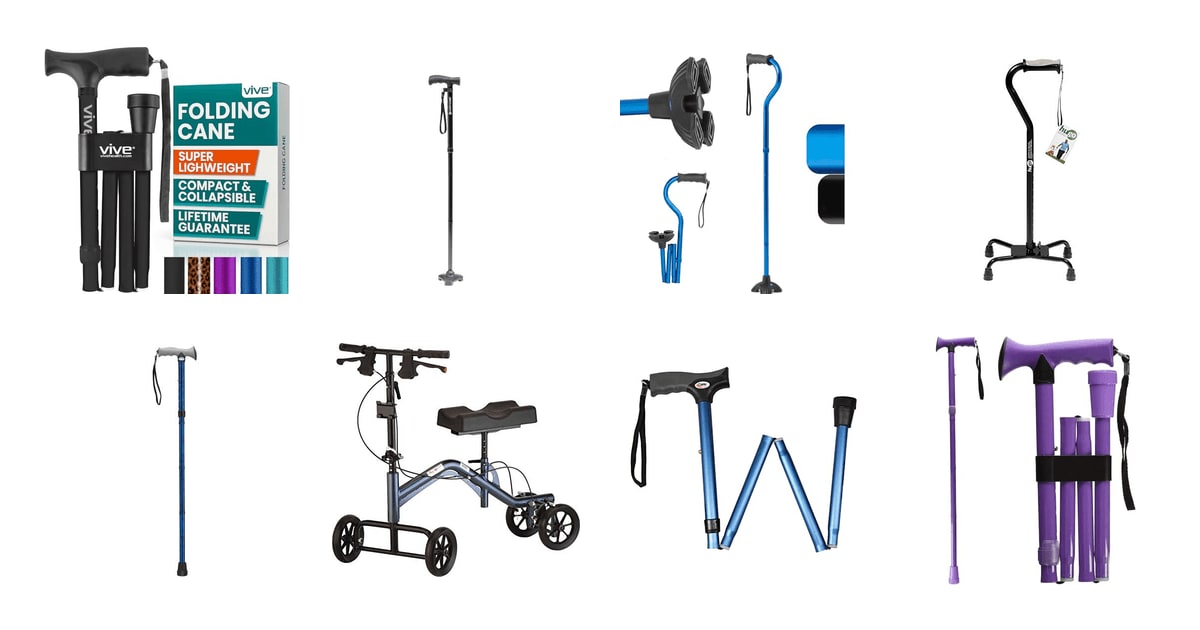
A cane only helps if you actually have it with you. That's the whole case for a folding one: it collapses into three or four sections, drops into a tote bag or a glove box, and comes back out when the sidewalk turns uneven or your knee starts complaining halfway through the grocery store. The good ones lock solid, adjust to your height with a push button, and grip hard floors without skating. The bad ones rattle at the joints and make you doubt every step, which defeats the point entirely.
Here's the honest caveat: no folding cane is as rigid as a solid one-piece stick. Every fold point is a joint, and joints flex a little under load. Most people never notice, but if you lean hard on a cane all day, you'll feel a slight give that a fixed cane doesn't have. Weight limits are also lower than you'd expect — 250 pounds is the norm, and that's a hard ceiling, not a suggestion. And a cane can't fix a gait problem. Getting the height and the technique right matters more than which model you buy.
So pick for how you'll actually use it. If you want one cane for daily walking that folds small and doesn't fight your hand, that's one answer. If you need real stability on gravel and grass, that's another. We think that the Vive Folding Cane is the best foldable walking cane for most people, and that the HurryCane Freedom Edition is the one to buy if you spend a lot of time walking outdoors on uneven ground.
Everything we recommend

The easiest one to grab, unfold and trust every day
Better footing on gravel and grass, at the cost of bulk

Kinder to sore wrists, and it never ends up on the floor

A dependable spare, minus the strap and the frills
At a glance
| Product | Weight Capacity | Height Range | Price | |
|---|---|---|---|---|
| Vive Folding Cane - Foldable Walking CaneTop pick | 250 lbs | — | $22.99 |
| HurryCane Freedom Edition Foldable Walking Cane withRunner-up | — | 30.5-37.5 in | $37.62On sale |
| Medline Offset Folding CaneAlso great | 350 lbs | 32-36 in | $20.99 |
 | Hugo Mobility Adjustable Quad Walking Cane forAlso in lineup | 300 lbs | 28-39 in | $34.18 |
| Drive Medical Adjustable Height Aluminum Folding CaneBudget pick | 300 lbs | 32-36 in | $18.62 |
 | NOVA Medical Products Heavy Duty & ExtraAlso in lineup | — | 35.25-41.25 in | $534.95 |
 | Carex Soft Grip Folding Cane - FoldableAlso consider | 250 lbs | 33-37 in | $19.78On sale |
 | HealthSmart Folding Walking StickAlso consider | 250 lbs | 33-37 in | $19.25 |
How we picked
Handle and wrist load. We compared handle geometry across the lineup — offset, derby and T-handle — against published occupational therapy guidance on which designs reduce wrist torque. Canes meant for all-day use needed either an offset handle or a cushioned grip, not bare rubber.
Fold and lock security. We looked at how many sections each cane breaks into and how the lock engages, since a joint that clicks loosely is a fall waiting to happen. Three-section bungee designs deploy faster; four-section designs pack smaller.
Base and traction. We sorted the lineup by base type: single rubber tip for light balance help, four-point for freestanding indoor use, pivoting tripod for uneven outdoor ground. Every pick needed a slip-resistant tip rated for hard floors.
Capacity and height fit. We checked stated weight capacity and adjustment range against the standard 250-pound, 33-to-37-inch baseline, and gave credit to canes that go higher or lower. Anything a shorter or heavier adult couldn't fit properly lost ground.
Owner-reported durability. We read owner feedback for patterns around joint wobble, tip wear and button failure rather than one-off complaints. Repeated reports of looseness at the locking section were disqualifying for a top spot.
Top pick
The easiest one to grab, unfold and trust every day
Vive Folding Cane - Foldable Walking Cane
The Vive folds at three points into something that fits in a purse or a carry-on, and it locks back into a rigid cane in seconds. The contoured grip and wrist strap are the two things budget canes skip, and they're the two things you'll notice most.
$22.99fromAmazonIt folds small and comes back fast. Three fold points mean fewer sections to line up than the four-fold designs here, and the bungee pulls it straight almost on its own. Published reviews consistently call it one of the quickest folding canes to deploy. That matters more than it sounds. If getting your cane out takes fumbling, you'll leave it folded, and a folded cane doesn't stop falls.
The grip is shaped for a hand, not for a photo. The contoured ergonomic grip spreads pressure across your palm instead of concentrating it in the web between thumb and forefinger. Owners who walk for twenty or thirty minutes at a stretch report noticeably less hand cramping than with a plain crook handle. If your hands ache after a long walk, this is where that ache usually starts.
The wrist strap earns its keep. You need both hands more often than you'd think — opening a door, digging out a wallet, holding a railing. The integrated strap lets the cane hang there instead of clattering to the floor. Bending down to retrieve a dropped cane is itself a fall risk, so a strap is a small safety feature disguised as a convenience.
It adjusts in one-inch steps from 33 to 37 inches. That covers roughly five feet to just over six feet, which is most adults. The push-button lock seats firmly, and the anodized aluminum frame resists corrosion, so a damp umbrella stand or a car trunk in summer won't pit it. The slip-resistant tip also takes standard replacements, including tripod and ice tips if winter is a problem where you live.
Flaws but not dealbreakers
The 250-pound limit is a real ceiling. That's the category standard, but it rules this cane out for heavier users, and it isn't something to fudge. Overloading a push-button joint is how locking mechanisms fail. If you're near or above that number, look at the Medline instead.
It won't stand up on its own. With a single tip, you're leaning it against a chair or a counter every time you sit down, and it slides off about as often as you'd guess. A four-point base solves this. If you spend most of your cane time indoors, that's worth weighing.
Tall users will max it out. Thirty-seven inches is the top of the range, which runs out around 6'1". Above that, you'll be reaching down for the grip, and that hunches your shoulder and makes the cane less useful, not more.
Vive backs this cane with a lifetime guarantee.
Runner-upOn sale
Better footing on gravel and grass, at the cost of bulk
HurryCane Freedom Edition Foldable Walking Cane with
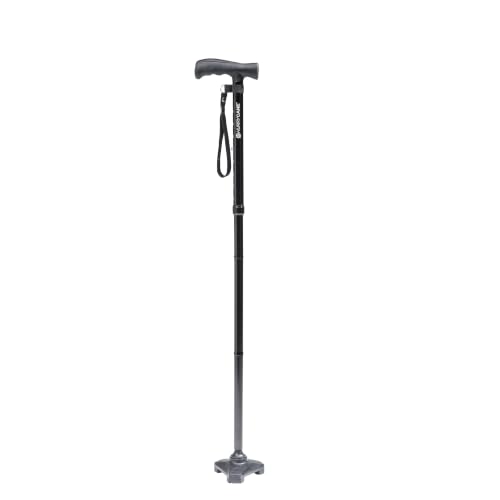
The HurryCane's pivoting base keeps all three contact points flat on the ground even when the ground isn't flat. If you walk outside on sidewalks, lawns and uneven pavement, that's a genuine stability advantage over a single rubber tip.
$37.62fromAmazonList priceThe base moves so you don't have to. The WhisperFlex joint lets the 4.25-inch SteadiGrip foot pivot in any direction, so it stays flush against a sloped driveway or a cracked sidewalk instead of catching on one edge. That's the exact moment single-tip canes slide out. If most of your walking happens outdoors, this is the design difference that matters.
Three points beat one for side-to-side steadiness. A single tip gives you a pivot; a tripod base gives you a footprint. For anyone whose balance wobbles laterally rather than just forward and back, published guidance on cane selection points toward wider base contact. You feel it most on the first step out of a car or off a curb.
It has the widest height range here. From 30.5 to 37.5 inches, it fits shorter adults that most 33-inch-minimum canes leave stranded, and it goes taller than the Vive at the top end. If you've bought a cane before and found the lowest setting still too long, this is the one to try.
It still folds, and it stands up. Collapsed, it's 13.7 inches — bag-sized, if not pocket-sized. And the base is stable enough that the cane stands on its own when you set it down, which means no leaning it against a wall and no bending over to pick it up.
Flaws but not dealbreakers
It's heavier and chunkier than the single-tip canes. All that base hardware adds up, and the folded bundle is wider than a simple three-section stick. Packing it in a small purse isn't happening. For a cane you carry more than you use, that's the wrong trade.
The T-handle doesn't help arthritic wrists much. It's comfortable and it suits a range of grip strengths, but it sits directly over the shaft, so your wrist still absorbs some sideways torque with every step. An offset handle does that job better. If wrist pain is your main complaint, the Medline is the smarter pick.
The base can be awkward indoors. A wider foot is more likely to clip a door threshold or snag on a thick rug. Owners of pivoting-base canes commonly mention needing a few days to stop catching it on furniture legs.
Also great
Kinder to sore wrists, and it never ends up on the floor
Medline Offset Folding Cane
The Medline pairs an offset handle with a four-point base, so your weight sits over the shaft instead of torquing your wrist, and the cane stands upright when you let go. It also supports the most weight of anything here.
$20.99fromAmazonThe offset handle is the fix for wrist pain. The grip sits forward of the shaft, so your load travels straight down the cane rather than levering sideways through your wrist joint. That sideways torque is what makes crook and derby handles ache after a while. Occupational therapy guidance routinely favors offset handles for arthritis, and this is the folding cane that has one.
It stands on its own, and that's a safety feature. The flexible four-point tip holds the cane upright when you set it down at a table or a counter. No hanging it on a doorknob, no propping it in a corner, no bending down to retrieve it — and that last one is a real fall risk for anyone unsteady enough to need a cane. Owners mention this more than any other feature.
It carries 350 pounds, the highest rating in this guide. Most folding canes stop at 250. If you're above that, this is effectively your only folding option here, and it still weighs just 1.15 pounds itself. The gel-cushioned grip is firm enough not to squirm under your hand but soft enough to take the sting out of hard tile.
It folds for a suitcase. Despite the wider base, it collapses down to travel size and pushes to 32 to 36 inches in one-inch steps. That range runs a touch shorter than the Vive's, which suits smaller adults and rules out very tall ones.
Flaws but not dealbreakers
The wide base gets in its own way sometimes. Those extra couple of inches of footprint can catch on a raised threshold or tip on plush carpet if you plant it carelessly. Indoors it's mostly a habit adjustment, but it's a real one.
It's bulkier folded than the three-section canes. The base doesn't collapse, so the folded bundle is wider and less purse-friendly. Fine for a suitcase, awkward for a handbag.
Blue is your only choice. Cosmetic, but for something you carry every day and set on the table at a restaurant, some people care. Owners who wanted a neutral finish say so.
Budget pick
A dependable spare, minus the strap and the frills
Drive Medical Adjustable Height Aluminum Folding Cane
The Drive Medical folds into four parts with a clip to keep the bundle tidy, and the gel grip is softer than the plain rubber you'd expect at this level. There's no wrist strap and no carrying sleeve, but the cane itself does its job.
$18.62fromAmazonIt's the straightforward choice for a second cane. Extruded aluminum tubing, a push-button height adjustment from 32 to 36 inches, and a 300-pound capacity — more than the 250 most folding canes here manage. Drive Medical supplies hospitals and physical therapy clinics, so replacement parts and tips are easy to find.
The gel grip is a genuine upgrade over hard rubber. It gives slightly under your hand and takes the buzz out of walking on tile or concrete. For anyone with mild hand stiffness who doesn't need full offset-handle geometry, that's often enough.
Four folds and a clip keep it neat. The included plastic clip holds the folded sections together so the cane doesn't unspool in your bag or under a car seat. It's a small thing that budget canes usually skip, and it's the difference between a tidy bundle and a tangle.
It's the right cane to keep in the car. If you mostly walk fine but want support for the parking lot, a long museum, or a bad day, this is the one to stash and forget about. You're not out much if it lives in a trunk for a year.
Flaws but not dealbreakers
No wrist strap, and you'll miss it. Loosen your grip and it hits the floor. For anyone with reduced hand strength, that's the exact scenario a strap exists to prevent. You can add a universal strap cheaply, but it should have come with one.
Four fold points deploy slower than three. Not dramatically, but if you're opening and closing the cane a dozen times a day, the extra fumbling adds up compared with a bungee three-section design.
The Blue Crackle finish is polarizing. It's distinctive, which is a nice way of saying not everyone wants it. There's no carrying sleeve either, so the folded cane goes into your bag bare.
Who this is for
Buy a folding cane if you need real support some of the time and want the cane out of your way the rest of the time — for travel, for errands, for a bag or a glove box. It's also the right first cane for someone easing into using one, because it's discreet and easy to store. If you lean on a cane continuously at home and never need to pack it, a fixed one-piece cane is slightly more rigid and usually cheaper, and there's no shame in that being the better answer for you.
This guide covers single-tip, tripod and four-point canes rated for roughly 250 to 350 pounds. It doesn't cover walkers, rollators, crutches or carbon-fiber canes, which are lighter than aluminum but sit outside what most buyers shop for. A cane also isn't a substitute for a gait assessment. If you're recovering from a stroke, a hip replacement or a fall, ask a physical therapist which base type you actually need before you buy — picking the wrong one can disrupt your gait and make things worse.
How we picked
We built the shortlist around five things. Handle: offset geometry keeps your weight over the shaft and off your wrist, while gel and foam grips beat bare rubber for anyone with stiff hands. Fold and lock: fewer sections deploy faster, more sections pack smaller, and every joint has to seat with a solid click before you put weight on it. Base: a single tip is fine for light balance help, a four-point base stands on its own indoors, and a pivoting tripod stays flat on uneven ground outside. Capacity and fit: 250 pounds and a 33-to-37-inch range are the norms, so canes that go heavier or shorter earned extra credit. Durability: owner feedback about joint wobble or a loose-clicking lock counted heavily, because that's the failure that actually hurts someone.
Other foldable walking canes worth considering
If you want the lightest cane that still has a wrist strap: The Carex Soft Grip Folding Cane - Foldable ($19.78) — The Carex Soft Grip weighs 0.7 pounds, and you feel that difference on a long walk or when the cane is hanging off your arm at the pharmacy counter. The soft derby handle compresses under your grip, which takes pressure off sore knuckles better than a rigid handle does, and the wrist strap is included. What you give up is base stability — it's a single tip, so no freestanding, and the derby shape doesn't unload your wrist the way the Medline's offset handle does. For mild-to-moderate arthritis and shorter walks, it's a comfortable daily cane. For severe wrist pain over longer distances, the offset handle is the better answer.
If you want the most packable cane for travel: The HealthSmart Folding Walking Stick ($19.25) — The HealthSmart folds in four places, weighs 8 ounces, and comes with a sleeve so it doesn't get grubby rattling around in a suitcase. It's the easiest cane here to bring along when you're not sure you'll need it, and it's FSA eligible, which some buyers care about. The gel-like handle and wrist strap are more than you'd expect at this weight. But four fold points mean four flex points, and some owners describe a slight give under load that a three-section cane doesn't have. It's within its 250-pound rating and safe, but it can feel less planted. We'd use it as a travel backup rather than a primary daily cane.
The competition
This is what our research surfaced in this category, not a complete map of every cane on the market. The two products below either lost to a pick on a specific point or serve a genuinely different need, and both are worth knowing about before you decide.
The Hugo Mobility Adjustable Quad Walking Cane for ($34.18) — The Hugo Mobility Adjustable Quad Walking Cane is the most stable thing in this lineup, full stop. Its K-shaped four-point base rotates for left- or right-handed use, it has 11 height settings covering 28 to 39 inches, and heavy-gauge anodized aluminum makes it feel more rigid than any folding cane here. It also has a reflective strap for walking after dark. But it doesn't fold — the listing says so plainly — so it won't go in a bag, a carry-on or a car door pocket, which is the one thing this guide is about. The wide base is also cumbersome in narrow hallways and small bathrooms. If portability doesn't matter and you need maximum stability after a stroke or with a significant balance disorder, this is the cane to get; if you need that stability and portability, the HurryCane is the closest compromise.
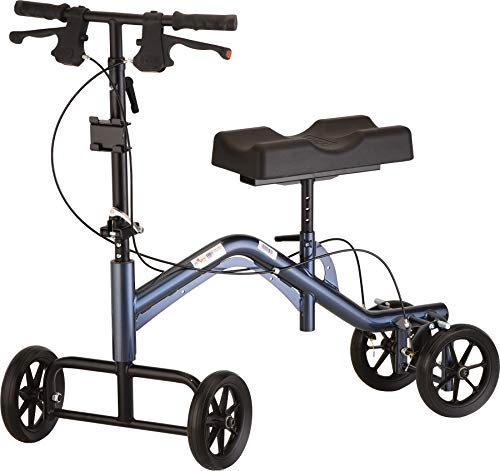
The NOVA Medical Products Heavy Duty & Extra ($534.95) — The NOVA Heavy Duty & Extra Tall isn't a cane at all — it's a knee scooter, built for non-weight-bearing recovery from ankle, foot or Achilles injuries. It fits users up to 6'8", which is unusual, and it has locking hand brakes and 8-inch all-terrain wheels that handle rough pavement better than most scooters. At 32 pounds with a 400-pound capacity, it's a serious piece of equipment, and the steering column folds down for a car trunk. But it does nothing for general balance support or arthritis, and it's only appropriate when a doctor has told you to keep weight off one leg. If that's your situation and you're tall enough that standard scooters don't fit, it's a good crutch alternative. Otherwise it's the wrong tool.
Fit, technique and upkeep
Height matters more than the model you choose. Stand up straight in the shoes you actually wear, arms loose at your sides, and set the cane so the grip lines up with the bony crease on the pinky side of your wrist. Your elbow should bend about 15 to 20 degrees. Too tall and you'll hunch a shoulder; too short and you'll lean forward — both make falls more likely, not less. Hold the cane in the hand opposite your weaker leg, and move the cane and that leg forward together as a unit. It feels wrong at first and it's clinically correct. Check the tip every few months and replace it when the tread wears smooth. And if the joint wobbles, clicks loosely or shows wear at the locking section, retire the cane — don't try to fix it.
Questions we get
What's the difference between a folding cane and a regular cane?
A folding cane breaks into three or four sections so it fits in a bag, a purse or a carry-on. A fixed cane is one solid shaft — slightly more rigid, but there's nowhere to put it when you're not using it. If you travel or only need support part of the time, folding wins. If you use a cane continuously at home, a fixed one is fine and often cheaper.
Are folding canes as sturdy as fixed canes?
Within their rated weight capacity and with the lock fully engaged, yes — they're safe. The joints do introduce a small amount of flex that a solid shaft doesn't have, and some people notice it. Always push the button until it seats fully before you put weight on the cane. If it ever wobbles at a joint or clicks loosely, stop using it and replace it.
What height should my cane be?
Stand upright in your regular shoes with your arms relaxed. The top of the cane should reach the bony bump on the pinky side of your wrist. At that setting your elbow bends about 15 to 20 degrees when you grip it. If it feels off after adjusting, check that the push-button is fully engaged rather than half-depressed, and ask a pharmacist or physical therapist to confirm the setting.
Which handle is best if I have arthritis?
An offset handle, which is why the Medline is our pick for sore wrists. The grip sits forward of the shaft so your weight goes straight down the cane instead of torquing your wrist sideways, and that sideways torque is what makes hands ache with crook and derby handles. A soft, compressible grip like the Carex's helps with pinch pressure but doesn't change the load path. If you walk more than half an hour at a stretch with significant wrist pain, get an occupational therapist's read.
Can a folding cane support someone over 250 pounds?
Most can't — 250 pounds is the standard ceiling and it's a hard limit, not a guideline. Overloading the push-button joint can make it fail under load, which is exactly the fall you're trying to prevent. The Medline Offset Folding Cane is rated to 350 pounds and the Drive Medical to 300, so those are your options here. The Hugo quad cane handles 300 but doesn't fold.
Does insurance or an FSA cover a cane?
Medicare Part B treats a basic cane as durable medical equipment and can cover it when a physician certifies it's medically necessary and you buy from a Medicare-enrolled supplier. Canes are also generally FSA and HSA eligible — the HealthSmart listing states this explicitly. Using pre-tax funds effectively discounts the purchase by your marginal tax rate. Confirm coverage with your plan administrator or Medicare before you buy.
How do I know whether I need a single-tip cane or a quad cane?
A single tip is right for mild balance help or taking some load off one leg. A quad or four-point base is for when a single tip isn't enough — after a stroke, with a significant balance disorder, or if you keep tipping and catching a single-tip cane. Don't upgrade yourself. A physical therapist can do a gait assessment, and using the wrong base type can actually disrupt your walking pattern.
Why you should trust us
For this guide:
- We compared manufacturer specifications across all eight listings — handle geometry, fold count, height range, weight capacity and base design — against the standards this category has settled on.
- We read published reviews and occupational therapy guidance on cane handle types and base selection to understand which design differences change real-world wrist load and stability.
- We reviewed owner feedback for recurring themes around joint wobble, grip comfort and tip wear, and used those patterns to shape the flaws sections rather than relying on spec sheets alone.
- We read owner reviews on every listing, weighted toward the critical ones, because that is where the recurring failures show up.
- We have a systematic way of automatically fetching the latest prices, so the numbers on this page stay current.
- This is a research-focused guide, so the team may not own every product listed — though we often do own the top winners, which gives us extra context for the recommendations.
- We don't accept free products, and the retailer commission never changes which product we recommend.
Sources
Best Walking Canes — Wirecutter, New York Times, Wirecutter
Older Adult Fall Prevention Data and Statistics — CDC Injury Center, Centers for Disease Control and Prevention
Falls in Older Adults: Economic and Health Burden — CDC, Centers for Disease Control and Prevention
Best Walking Canes for Seniors — Verywell Health, Verywell Health
Walking Canes Buying Guide — AARP, AARP
Durable Medical Equipment Coverage — Medicare.gov, Medicare.gov
Occupational Therapy Practice Guidelines for Productive Aging in the Community — AOTA, American Occupational Therapy Association
Physical Therapy Gait Training After Total Hip Arthroplasty — Journal of Arthroplasty, The Journal of Arthroplasty
Amazon product listings and owner reviews for all 8 products
Manufacturer specification pages for each product
Some passages in this guide may be paraphrased with AI help. Prices are refreshed automatically.
More like this.
Continue exploring health reviews and recommendations.

The Best Foldable Treadmills for Small Spaces
A treadmill in a small apartment is a negotiation. It has to be big enough that you'll actually use it, and small enough that it doesn't eat your living…

The Best Rollator Walkers
A rollator earns its keep in small moments. The trip from the bedroom to the kitchen before dawn. The line at the pharmacy, where having a seat means you…

The Best Walk-In Closet Organizer Systems
A walk-in closet is the one room in your house that nobody else sees, which is exactly why it goes bad so fast. Builder-grade setups usually give you one…

The Best Can Openers
A can opener is one of those tools you don't think about until it fails you. Then you're standing over a half-open can of tomatoes, working the wheel back…

The Best Car Trash Cans
Trash in a car doesn't announce itself. It accumulates - a receipt in the door pocket, a coffee lid in the cup holder, three straw wrappers under the…

The Best Spray Foam Insulation Cans
A can of foam is a small fix for one of the biggest problems in your house. Air leakage accounts for 25 to 40 percent of heating and cooling losses in a…