The Best Rollator Walkers
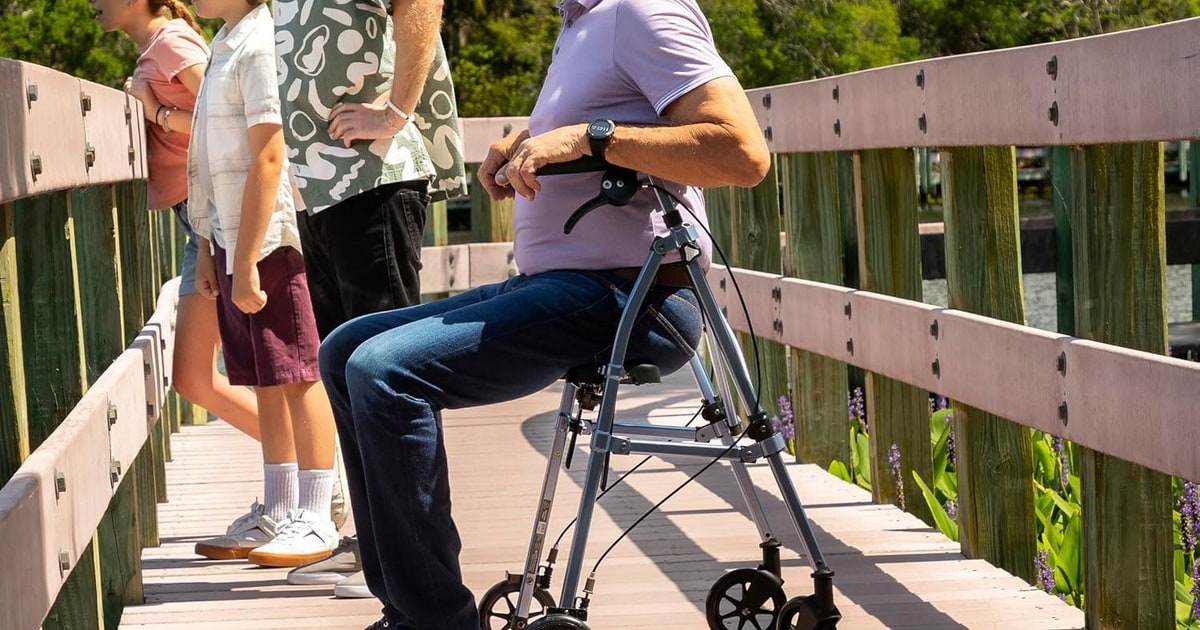
A rollator earns its keep in small moments. The trip from the bedroom to the kitchen before dawn. The line at the pharmacy, where having a seat means you don't have to give up and go home. Four wheels, hand brakes and a place to sit can turn a walk that felt risky into one that feels routine. More than 1 in 4 adults over 65 falls each year, and falls are the leading cause of fatal and non-fatal injuries in that group, according to the CDC. Good wheels and good brakes are safety equipment, not extras.
No rollator does everything well. A light frame is easy to lift into a trunk, and it also feels twitchy on a cracked sidewalk. Eight-inch wheels roll over thresholds beautifully, and they make the folded package bulkier. Seats wide enough to actually rest on add pounds, while the perch seats that save weight aren't comfortable for long. And every model here ships with a fit range, not a custom fit. If you're well under 5 feet 2 or over 6 feet 2, check the handle height numbers before you look at anything else.
Start with where you'll really use it. Mostly indoors, on flat floors? A light frame with 6-inch wheels is plenty. Out on sidewalks, curb cuts and gravel? Go bigger on the wheels and accept the extra pounds. Then check the weight capacity, because it swings a lot from model to model, and make sure the handles can reach your wrist crease when your arms hang at your sides. We think that the Drive Medical Compact Folding Rollator is the best rollator walker for most people, and that the Drive Medical Nitro Sprint is the one to buy if you fold and load it several times a day.
Everything we recommend

Big wheels for outdoors, but it still folds down small

One-handed fold and better brakes, at the cost of weight

A light, simple frame if you mostly stay indoors

Stand up straight instead of hunching over the handles

Folds to a tiny footprint for travel and tight closets
Prices as of Oct 24, 6:27 AM PT · Details
At a glance
| Product | Frame weight | Weight capacity | Price | |
|---|---|---|---|---|
 | NOVA Cruiser 2 Lightweight Rollator Walker forAlso consider | 10.85 lb | 250 lb | $180 |
| Drive Medical Nitro Sprint Rollator Walker withRunner-up | 19 lb | — | $199.99 |
 | Vive Mobility Lightweight Walker for Seniors -Also in lineup | 9.5 lb | 300 lb | $99.99 |
| Drive Medical Compact Folding Rollator with SeatTop pick | 15.4 lb | 300 lb | $95.92 |
| Vive Mobility Upright Walker with Seat -Upgrade pick | 20 lb | 300 lb | $189.99 |
| Stander Wonder Rollator PlusAlso great | 14.5 lb | 250 lb | $263.62 |
| Medline Freedom Mobility Lightweight Folding Aluminum RollatorBudget pick | 12.6 lb | 250 lb | $68.07 |
Prices as of Oct 24, 6:27 AM PT · Details
How we picked
Wheels and terrain. We compared wheel diameters across every listing, because 8-inch wheels roll over thresholds and sidewalk cracks that 6-inch wheels catch on. Anything meant for outdoor use needed larger wheels to stay on our list.
Weight and folding. We read manufacturer specifications for frame weight and folded dimensions, then looked at what owners say about lifting each one into a trunk. One-hand folds got extra credit, since caregivers name that as a daily pain point.
Fit and capacity. We checked stated handle height ranges and weight capacities on every spec sheet. Capacity runs from 250 to 300 pounds in this group, and a rollator that can't reach your wrist crease is the wrong rollator no matter how good it is.
Brakes and control. Loop locking brakes are the standard, and we favored models that lock securely for sitting. Extra control modes for downhill walking counted in a model's favor.
Seat and storage. We compared seat dimensions, padding and backrests against what owner feedback says about resting comfort. Bags, pouches and cane holders broke ties between otherwise similar frames.
Top pick
Big wheels for outdoors, but it still folds down small
Drive Medical Compact Folding Rollator with Seat
The 8-inch wheels roll over sidewalk cracks and door thresholds that stop smaller wheels cold, and the aluminum frame still collapses to a narrow package for the trunk. You also get a padded backrest, a detachable bag and a cane holder, with a 300-pound capacity.
$95.92fromAmazonPrices as of Oct 24, 6:27 AM PT · Details
The 8-inch wheels are the whole argument for this one. Sidewalk expansion joints, the metal strip between your kitchen tile and the living room carpet, the lip at the bottom of a doorway. Small wheels catch on all of it, and the frame jolts in your hands when they do. Bigger wheels roll over instead of stopping short. If any part of your day happens outdoors, that difference shows up on every single trip.
At 15.4 pounds it sits right in the middle of the pack, a few pounds heavier than the lightest frames here and a few pounds lighter than the heaviest. That's light enough for most people to lift into a trunk with two hands. It's also heavy enough to feel planted when you put real weight on the grips. The frame is rated to 300 pounds, which covers more users than the 250-pound models.
Folded, it comes down to roughly 15 by 9 by 25 inches. That fits behind the driver's seat, in a hall closet, or beside a restaurant table without tripping the server. Owners who switched from a hospital-style walker with tennis balls on the back legs consistently mention how much better this turns in tight rooms, and how much steadier it feels than the basic models handed out through insurance.
The small stuff is the stuff you'll use daily. There's a padded backrest to lean into once you sit, and a parking brake you engage by pushing down on the handbrake, so the walker stays put while you lower yourself onto the seat. The bag detaches. A cane holder comes in the box. The handles adjust for reach. None of it is clever. It's just the short list of things people miss when a rollator doesn't have them.
Flaws but not dealbreakers
The fold is the sore spot. Getting it down to that ultra-compact size means loosening hardware, and several owners report having to back screws all the way out before it will collapse completely. If you load and unload a rollator four times a day, that's a genuine annoyance, and it's the main reason to look at the Nitro Sprint's one-handed fold instead.
The seat is firm and on the small side, so think two-minute rest at the pharmacy counter rather than an afternoon at a street fair. Drive Medical doesn't state a warranty term on this listing either, so read the paperwork in the box before you assume you're covered.
Runner-up
One-handed fold and better brakes, at the cost of weight
Drive Medical Nitro Sprint Rollator Walker with
This one folds with a single hand, which matters enormously if you're the person hoisting it in and out of a car all day. The braking system adds a slowdown mode for hills, and there are three mounting spots for the bag plus a port for a cane or cup holder.
$199.99fromAmazonPrices as of Oct 24, 6:27 AM PT · Details
Fold it with one hand. That's the pitch, and for a lot of caregivers it's the entire decision. You can hold a door, a purse or your parent's arm and still collapse the frame. Anyone who has wrestled a two-hand fold at the curb in the rain while traffic waits knows exactly why this is worth paying attention to.
The brakes are the best set here. Along with the usual free-rolling and park settings, there's a slowdown mode that adds steady drag. On a sloped driveway or a long ramp, that keeps the rollator from running ahead of you, instead of making you squeeze the loop brakes the whole way down. If hills make you nervous, this is the feature to buy.
The seat is wide and padded, with a contoured backrest behind it, so it's a better place to sit for a few minutes than the perch seats on the travel models. Storage is flexible too. The bag mounts in three positions, and there's an accessory port for a cane, a phone holder or a cup. Small conveniences, but you'll rearrange them to suit how you shop.
Drive Medical's Nitro line is one of the most widely owned rollator families around, and owner feedback skews steady rather than dramatic. People describe it as sturdy, easy to adjust and easy to live with. That's about the highest praise a mobility aid gets.
Flaws but not dealbreakers
It's 19 pounds, the heaviest standard rollator here and nearly four pounds more than our top pick. Over a trunk lip, you feel every one of them. If lifting is the hard part of your day, the one-handed fold may not fully cancel out the extra heft.
The listing doesn't state a weight capacity or a wheel diameter, which is frustrating on a purchase where both matter. If you're near the upper end of typical capacity ranges, or you need to know exactly what you're rolling on, ask the seller before you order. It also costs more than the simpler frames on this list.
Budget pick
A light, simple frame if you mostly stay indoors
Medline Freedom Mobility Lightweight Folding Aluminum Rollator
At 12.6 pounds this is one of the lightest rollators here that still has a genuine padded seat and storage underneath it. The handles drop to 29.5 inches, lower than most, which makes it one of the few that fits shorter users properly.
$68.07fromAmazonPrices as of Oct 24, 6:27 AM PT · Details
This is the light one that still gives you a real seat. Plenty of featherweight rollators cut the seat down to a narrow perch. Medline keeps a 12-by-12-inch padded seat with storage tucked underneath, and the whole thing still weighs 12.6 pounds. For an apartment, a church basement or a grocery run, that combination is hard to beat.
Fit is where it quietly wins. The handles adjust from 29.5 to 36 inches, the lowest starting height in this group, so it works for people around 5 feet tall who find most rollators sit too high. The seat adjusts from 18 to 23 inches off the floor as well, which matters more than you'd think when standing back up is the hard part.
The brake handles are shaped for hands that don't grip well. You push up to brake and push down to lock the wheels, and the grips are textured rather than slick. If arthritis is part of the picture, spend a minute practicing both motions before your first outing, because the direction is the opposite of what some people expect.
Flaws but not dealbreakers
The 250-pound capacity rules it out for larger users, and it's a firm limit, not a suggestion. The 6-inch wheels are the other compromise. They're fine on tile, carpet and smooth pavement, but a broken sidewalk or a gravel shoulder will bump and stall them.
The listing describes a padded seat and adjustable arms but never mentions a backrest, so plan on resting without one. There's no cane holder either. This is a plain frame that does the basics well, and not much beyond that.
Upgrade pick
Stand up straight instead of hunching over the handles
Vive Mobility Upright Walker with Seat -
Instead of grips you press down on, this one has contoured armrests that carry your weight through your forearms, so you walk upright rather than folded forward. It's rated to 300 pounds, rolls on 8-inch wheels and adjusts for people from about 5 feet 2 to 6 feet 4.
$189.99fromAmazonPrices as of Oct 24, 6:27 AM PT · Details
Watch someone push a standard rollator for a block and you'll see the hunch. Hands down on the grips, shoulders rolled forward, eyes on the pavement. Upright walkers are built around forearm platforms instead, so your weight goes through your elbows and your spine stays vertical. For people with kyphosis, spinal stenosis or nagging neck and shoulder pain, that posture change is the entire reason to buy one.
Standing tall changes what you can see. Eyes forward means you spot the curb, the puddle and the dog before you reach them, instead of discovering them at your feet. It also means you can hold a conversation without craning your neck. Owners of upright walkers routinely describe feeling less worn out after the same walk, which fits what the posture is doing to your back and shoulders.
The specifications back up the ambition. Handles adjust from 45 to 52 inches, the seat is 17.5 inches wide, and the frame is rated to 300 pounds. The 8-inch wheels handle sidewalks and thresholds the way our top pick does. A detachable shoulder bag comes with it, and the frame folds down to fit in a trunk or across a back seat.
Give yourself a week with it. Walking upright feels strange at first if you've spent months leaning forward, and the armrests need careful adjustment before your shoulders settle. It's worth asking a physical therapist to set the height with you if you have access to one, since the whole benefit depends on getting that dimension right.
Flaws but not dealbreakers
It's the biggest and heaviest thing here at 20 pounds, and it stands 52 inches tall at full extension. In a small sedan trunk or a narrow apartment doorway, that bulk is a daily inconvenience rather than a one-time complaint.
Forearm support doesn't suit everyone. If you have shoulder impingement, elbow pain or limited arm strength, resting your weight on armrests all afternoon can hurt more than it helps. And an upright design costs more than a comparable standard rollator, so it's worth being confident that posture is your actual problem before you commit.
Vive backs this walker with a one-year guarantee.
Also great
Folds to a tiny footprint for travel and tight closets
Stander Wonder Rollator Plus
Stander says this collapses to a 10-by-11-inch footprint, about three times smaller than an average rollator, and it weighs 14.5 pounds. It arrives fully assembled, with a narrow perch seat and a back strap for quick rests while you're out.
$263.62fromAmazonPrices as of Oct 24, 6:27 AM PT · Details
Nothing else here folds this small. A 10-by-11-inch footprint slides into an overhead bin, behind a plane seat, into a coat closet or between the wall and a bed. If you fly to see grandchildren, take cruises, or live somewhere with no spare corner, that number is the one that matters most.
It shows up ready to go. No bolts, no diagrams, no hunting for the right Allen key. Pull it out of the box, set the padded handles anywhere from 33 to 36 inches, and walk. Adjust them so the grips meet your wrist crease with your arms hanging loose, which is the fitting rule physical therapists use.
For everyday errands it does the job honestly. The 6-inch wheels are steady on store floors and decent pavement, the rear brakes lock so the frame stays put when you sit, and the perch seat gives you somewhere to land while you wait for a table or catch your breath halfway down a long aisle.
Flaws but not dealbreakers
That seat is 18.5 inches wide but only 6 inches deep, and it's rated to 250 pounds. It's a lean, not a sit. If your walks include real rest stops, one of the wider padded seats will serve you much better.
The handles only drop to 33 inches, so shorter users may find it rides high no matter how they set it. And the 6-inch wheels are what you'd expect: fine indoors, unhappy on cracked concrete and grass.
Who this is for
Buy a rollator if walking has started to feel unsteady, if you get winded and need to sit down partway through an errand, or if you're recovering from hip, knee or back surgery and want to move around your own house without hovering near the furniture. Adult children shopping for a parent are the other big group here, and for you the folding mechanism and the frame weight probably matter more than anything on the spec sheet. If a doctor has told you that you need weight-bearing support through your arms, or that you shouldn't put weight on one leg at all, a rollator is the wrong tool and you should ask about a standard walker or crutches instead.
This guide covers four-wheeled rolling walkers with hand brakes, the kind you push in front of you and can sit on. We've included one upright model with forearm armrests, since it solves a specific posture problem that standard rollators make worse. We're not covering knee scooters, transport chairs, wheelchairs, non-wheeled walkers or bariatric frames rated above 300 pounds. If you need capacity beyond that, look specifically for heavy-duty models, which manufacturers rate as high as 400 to 500 pounds.
How we picked
Wheels: we compared stated wheel diameters, favoring 8-inch wheels for anyone who goes outdoors and accepting 6-inch wheels only on indoor-focused frames. Weight and fold: manufacturer specifications gave us frame weight and folded size, owner feedback covered how each one loads into a car, and one-hand folds got credit. Fit: we checked handle height ranges against typical user heights, since grips should meet your wrist crease when your arms hang naturally. Capacity: we read every spec sheet for weight limits, which range from 250 to 300 pounds in this group. Brakes: we looked for loop brakes that lock firmly for sitting, and rewarded models with added downhill control. Comfort: we compared seat size, padding and backrests against what owners say about actually resting on them.
Other rollator walkers worth considering
If you want the lightest frame that still has a seat: The NOVA Cruiser 2 Lightweight Rollator Walker for — The NOVA Cruiser 2 weighs about 10.85 pounds, less than anything else here, and it still carries a 2-inch padded seat with a storage pouch underneath. NOVA aims it at early gait training, and it makes sense in that role: light, stable and simple, with a Lock n' Load mechanism that holds it folded so it doesn't flop open in the trunk. NOVA also covers the frame with a lifetime limited warranty. The catch is the braking. Instead of loop hand brakes, it uses 5-inch front wheels with rear rubber tips that stop the walker when you press down on them. That's fine indoors and on smooth pavement, but it gives up the locking control you want on a slope. The handles fit users roughly 5 feet 3 to 6 feet, with a 250-pound capacity.
The competition
These are the models our research surfaced, not everything sold today. Rollators are a crowded category, and manufacturers rebadge similar frames constantly. If a model you're considering isn't here, check its wheel diameter, frame weight, handle height range and stated capacity against the picks above, and you'll usually be able to place it quickly.
The Vive Mobility Lightweight Walker for Seniors - — The Vive Mobility Lightweight Walker is the outlier in this group, and it isn't really a rollator. It's a narrow rolling walker with hand brakes and an open frame, deliberately built without a seat or rear bars so you can stride through it naturally. At 9.5 pounds with a 300-pound capacity and a lifetime frame guarantee, it's genuinely impressive hardware, and the slim profile suits cramped hallways and crowded rooms. But no seat means no rest stop, and the handles start at 36 inches, which is too high for many shorter users. Consider it if you're steady enough that sitting isn't the issue and you mainly want something skinny and light to get through tight doorways.
Care and maintenance
Rollators need less attention than you'd guess, but the parts that fail are the ones that matter. Check the brakes every few weeks by squeezing the loops and rolling the frame forward. If the wheels still turn, the cable has stretched, and most models have a small barrel adjuster near the handle that takes up the slack. Look at the wheels too, since hair, carpet fibers and grit wrap around the axles and make steering feel heavy. Pick that out with scissors. Wipe the frame and seat with a damp cloth and mild soap, and dry it before folding, especially after rain. Once a month, make sure the height pins are fully seated and the folding hardware is snug. If a wheel wobbles or a brake won't hold on a slope, stop using it until it's fixed.
Questions we get
Are rollator walkers covered by Medicare?
Often, yes. Medicare Part B typically covers 80% of the Medicare-approved amount for a rollator classified as durable medical equipment, once you've met your Part B deductible and a physician has prescribed it. You'll owe the remaining 20% unless supplemental insurance picks it up. The catch is that you generally need to buy through an approved supplier, so check before you order anything online.
What's the difference between a rollator and a standard walker?
A standard walker has four legs, no wheels or just two front wheels, and you lift or push it forward with each step. A rollator has four wheels, hand brakes and usually a seat, so it rolls continuously alongside your stride. Rollators are faster and less tiring, but they don't provide the same rigid weight-bearing support. If your doctor wants you leaning heavily on the frame, a standard walker is the safer choice.
What size wheels are best, 6-inch or 8-inch?
Six-inch wheels are fine if you stay on smooth indoor floors and level pavement, and they keep the folded package smaller. Eight-inch wheels roll over sidewalk cracks, door thresholds, curb cuts and packed gravel far more smoothly, which is why our top pick uses them. If any meaningful part of your walking happens outside, pay the small weight penalty and go with the bigger wheels.
How do I choose the right rollator height?
Stand up straight in the shoes you normally wear, with your arms hanging loose at your sides. The hand grips should sit right at the crease of your wrist. That's the fitting standard physical therapists use, and it puts a slight bend in your elbows when you grip the handles. Handles set too high push your shoulders up, and too low forces you to hunch, which is one of the most common reasons people find a rollator uncomfortable.
How much weight can a rollator hold?
Most standard rollators are rated for 250 to 300 pounds, and everything in this guide falls in that range. Reinforced heavy-duty or bariatric models go considerably higher, often 400 to 500 pounds or more, with wider frames and seats to match. Treat the stated capacity as a hard limit rather than a guideline, and remember that anything you load into the basket counts toward it.
Are upright walkers actually better than standard rollators?
Better for some people, not for everyone. Upright walkers use forearm armrests so you stand vertically instead of leaning over the grips, which helps a lot with kyphosis, spinal stenosis and chronic neck or upper back pain. They're heavier, bulkier and more expensive than standard rollators, and resting your weight on your forearms bothers people with shoulder or elbow trouble. If posture isn't your problem, a standard rollator is lighter and easier to live with.
Why you should trust us
For this guide:
- We read manufacturer specification sheets for every model here, comparing frame weight, folded dimensions, handle height ranges, wheel diameter and stated weight capacity side by side.
- We reviewed published guidance from the CDC on fall risk in older adults, Medicare's rules on durable medical equipment coverage, and physical therapy fitting standards from the Arthritis Foundation.
- We read owner feedback across these listings for recurring themes about folding difficulty, brake performance, seat comfort and how each frame handles thresholds and uneven pavement.
- We read owner reviews on every listing, weighted toward the critical ones, because that is where the recurring failures show up.
- We have a systematic way of automatically fetching the latest prices, so the numbers on this page stay current.
- This is a research-focused guide, so the team may not own every product listed — though we often do own the top winners, which gives us extra context for the recommendations.
- We don't accept free products, and the retailer commission never changes which product we recommend.
Sources
Older Adult Falls Data and Statistics, CDC
Falls Prevention Facts & Statistics, National Council on Aging (NCOA)
Walkers and Canes Coverage, Medicare.gov
Durable Medical Equipment (DME) Coverage, Medicare.gov
Assistive Devices for Mobility, National Institute on Aging (NIH)
Choosing an Assistive Device: Cane, Walker, or Rollator, Arthritis Foundation
Rollators vs. Walkers: What's the Difference?, WebMD
How to Choose a Walker or Rollator, Verywell Health
Best Rollator Walkers, Tested by Physical Therapists, Healthline
Fall Prevention in Older Adults: Guide, Mayo Clinic
Upright Walkers vs. Standard Rollators, LifeWalker Mobility Products
U.S. News 360 Reviews: Best Rollators, U.S. News & World Report
Amazon product listings and owner reviews for all 7 products
Manufacturer specification pages for each product
Some passages in this guide may be paraphrased with AI help.
Product prices and availability are accurate as of the date/time indicated and are subject to change. Any price and availability information displayed on Amazon.com at the time of purchase will apply to the purchase of this product.
More like this.
Continue exploring health reviews and recommendations.

The Best Foldable Walking Canes
A cane only helps if you actually have it with you. That's the whole case for a folding one: it collapses into three or four sections, drops into a tote…

The Best Walk-In Closet Organizer Systems
A walk-in closet is the one room in your house that nobody else sees, which is exactly why it goes bad so fast. Builder-grade setups usually give you one…

The Best Under-Desk Treadmills
Sitting still for eight hours is the default of desk work, and most of us feel it by mid-afternoon. An under-desk treadmill is a way out that doesn't…

The Best Power Towers for Home Gyms
A power tower earns its floor space by doing three things you can't easily do anywhere else at home: pull-ups, dips, and hanging knee raises. Those three…

The Best Probiotics and Fermented Foods for Gut Health
Your gut doesn't care much about marketing. It responds to what you feed it, most days, over months. So the useful question isn't which probiotic is…

The Best Sleep Aids and Gadgets
Sleep problems rarely have one cause. Sometimes the room's too bright, sometimes a neighbor's TV bleeds through the wall, and sometimes your brain just…