The Best Probiotics and Fermented Foods for Gut Health
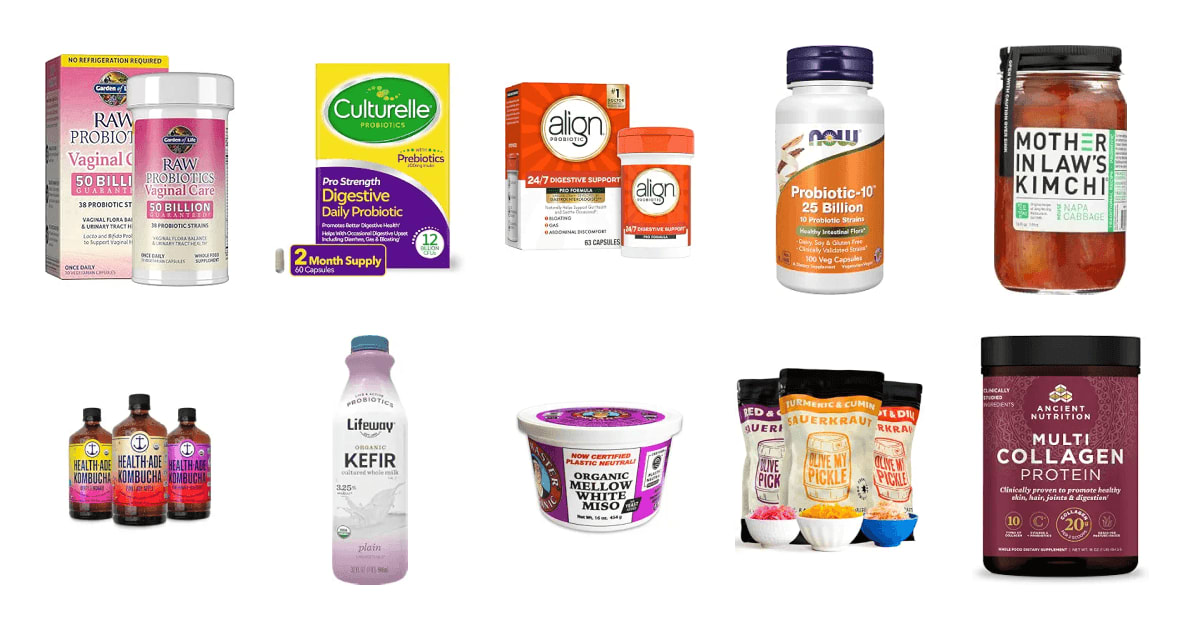
Your gut doesn't care much about marketing. It responds to what you feed it, most days, over months. So the useful question isn't which probiotic is strongest — it's which one you'll actually take every morning without thinking about it. A capsule you keep by the coffee maker beats a powder you forget in the back of a cabinet. Fermented foods work the same way. If you like the taste, you'll finish the jar. If you don't, it quietly goes bad behind the milk.
Here's the part the labels won't tell you: nobody can promise what a given probiotic will do for you specifically. Gut bacteria are personal. A strain that settles one person's stomach does nothing noticeable for their partner. CFU counts describe what went into the capsule at manufacturing, not what survives your stomach or sticks around afterward. These are supplements and foods, not medicine, and the claims aren't reviewed the way drug claims are. Give anything you try four to six weeks before you judge it.
So we looked for products with a clearly named strain, labeling that commits to something, and enough owner feedback to spot the real failure modes. We favored things people keep taking: shelf-stable capsules, foods that taste good enough to finish. We think that the Culturelle Pro Strength Daily Probiotic is the best gut health product for most people, and that the Align Probiotic ProFormula is the one to buy if occasional bloating and gas are the symptom you actually want gone.
Everything we recommend

One well-studied strain instead of a long ingredient list

A different strain, pointed squarely at bloating and gas

Ten strains and a bottle that lasts, without the premium

Probiotics you drink, with real protein attached
At a glance
| Product | CFU Count | Strains | Price | |
|---|---|---|---|---|
 | Garden of Life Raw Probiotics Vaginal CareAlso consider | 50 Billion CFU | 38 Strains | $33.59On sale |
| Culturelle Pro Strength Daily Probiotics For DigestiveTop pick | 12 Billion CFU | 1 Strain | $30.99 |
| Align ProbioticRunner-up | — | 1 Strain | $56.99 |
| NOW Foods SupplementsBudget pick | 25 Billion CFU | 10 Strains | $25.05 |
 | Mother in Law's Kimchi House Napa CabbageAlso in lineup | — | — | Check price |
 | Health-Ade Fan Favorite Variety Pack Kombucha TeaAlso consider | — | — | $49.95 |
| Lifeway Organic Whole Milk Kefir - 10gAlso great | 25-30 Billion CFU | 12 Cultures | $4.64 |
 | Miso Master Organic Mellow White MisoAlso in lineup | — | — | $14.79On sale |
 | Real Fermented & Probiotic Sauerkraut for GutAlso consider | — | — | $46.47 |
 | Ancient Nutrition Collagen Powder Protein with ProbioticsAlso in lineup | 4B CFU/2 Scoops | — | $45.01 |
How we picked
A named strain. We favored products that tell you exactly which organism you're getting, like Lactobacillus rhamnosus GG or Bifidobacterium 35624, over proprietary blends that hide behind a total count. A named strain is the only way to check whether any research actually applies to what's in the bottle.
Dose that fits the job. We read the spec sheets for CFU counts and treated anything in the 10 to 25 billion range as sensible for daily maintenance. Higher counts only earned points when the product had a clear reason for them, such as targeted or post-antibiotic support.
Survivability and storage. Published research and manufacturer documentation both point to stomach acid as the main obstacle, so we preferred acid-resistant strains and packaging built to protect potency. Shelf-stable formulas got preference because refrigerated ones are the first to be abandoned.
Something you'll finish. For fermented foods we weighed owner feedback on taste, texture and how well the product survives shipping, because a jar you don't enjoy delivers nothing. Consistency over months matters more here than any single number on the label.
Honest labeling. We looked for products whose stated ingredients match what buyers describe finding in the jar, and we counted recurring complaints about mismatched descriptions against a product. Third-party quality certification helped where clinical research on the exact blend was thin.
Top pick
One well-studied strain instead of a long ingredient list
Culturelle Pro Strength Daily Probiotics For Digestive
Culturelle Pro Strength is a one-a-day capsule built around Lactobacillus rhamnosus GG, the most heavily studied probiotic strain there is. It skips the long strain roster and the refrigeration, which makes it the easiest thing here to actually keep taking.
$30.99fromAmazonCulturelle bets on one strain rather than a crowd, and for most people that's the right bet. Lactobacillus rhamnosus GG has more than a thousand published studies and three decades of research behind it, and it's the strain clinicians name most often when someone asks what to take. You're not paying for a roster of bacteria nobody has looked at closely. You're paying for the one that's been looked at hardest.
Each capsule carries 12 billion CFUs plus inulin, a prebiotic fiber that gives the bacteria something to eat once they arrive. That's a moderate dose for this shelf, and moderate is fine for daily maintenance. The very high counts make more sense after a course of antibiotics or during a bad stretch. For keeping things steady, you don't need them, and a bigger number on the box isn't a bigger result.
We'd hand this to a first-timer because it asks almost nothing of you. The capsules are small and tasteless, one a day, no fridge. Owners routinely mention taking it on trips and never thinking about it, which is exactly the behavior that makes a probiotic worth buying. Bottles that need cold storage get left at home. This one goes in a toiletry bag and keeps working.
Owner feedback skews toward unglamorous stuff: more predictable mornings, less gas after a heavy meal, fewer bad days away from home. Plenty of people say they can tell within a week or two. Plenty of others say they can't point to a dramatic change but keep reordering anyway. Both reactions sound right for a probiotic. If yours is the second one, that isn't a failure.
Flaws but not dealbreakers
One strain is a narrow tool. If you're dealing with something more complicated than occasional gas and irregularity, or you've just finished a course of antibiotics, a multi-strain formula with a higher count is a more sensible starting point. The label also doesn't break out where the 12 billion CFUs sit, though with a single strain that's less of a question than it is elsewhere.
The inulin is worth flagging. Prebiotic fiber feeds bacteria, but it's also a FODMAP, and sensitive guts sometimes get more bloating from it before they get less. Owners fairly often describe a rough few days at the start that then settles. If it hasn't settled after a week or so, the prebiotic is the likely culprit.
Runner-up
A different strain, pointed squarely at bloating and gas
Align Probiotic
Align ProFormula is built on Bifidobacterium 35624, a strain its scientists chose out of 1,500 candidates and have studied for more than twenty years. It works slowly and steadily, and it's the one to try when bloating is your main complaint.
$56.99fromAmazonBifidobacterium species live mainly in the large intestine, which is where a lot of bloating and gas complaints start. That's the argument for Align over a Lactobacillus-only capsule: it's aiming at a different neighborhood. The company says it screened 1,500 candidates before settling on 35624, and it has stuck with that one strain ever since rather than reformulating around whatever's fashionable.
Align is the slow one, and you should accept that going in. Owners who are happy with it usually describe a change somewhere around the two- to four-week mark, not the second morning. If you want something that announces itself immediately, this will feel like nothing is happening. The people who end up loyal to it are the ones who gave it a full month before deciding.
The practical details are good. It's a two-month supply of easy-to-swallow vegetarian capsules, gluten free, shipped in a desiccant bottle so it doesn't need the fridge. This is also the brand gastroenterologists have recommended for years, so a lot of people arrive here after a doctor's appointment rather than a search. That matters if you'd rather not gamble on a name you've never heard.
Flaws but not dealbreakers
On a per-day basis it's one of the more expensive capsules in this guide, and it's a single strain, so you're paying a premium for specificity rather than breadth. Owners notice. If your yearly cost matters more to you than the particular strain, the NOW bottle covers similar ground for considerably less.
The gradual onset cuts both ways. When something isn't working you find out slowly, which means a month spent on the wrong product before you move on. And if your problem is post-antibiotic recovery rather than everyday bloating, a broader multi-strain formula is the better first move.
Align guarantees an effective level of probiotics through the best-by date printed on the bottle.
Budget pick
Ten strains and a bottle that lasts, without the premium
NOW Foods Supplements
NOW Probiotic-10 puts 25 billion CFUs from ten acid-resistant strains into a bottle of 100 vegetarian capsules. It's the sensible choice if you want broad strain coverage and a long-running supply, and you'd rather not pay brand-name money for it.
$25.05fromAmazonThis is the most bottle for the least fuss. A hundred capsules is a long run at one a day, and the ten strains cover both the Lactobacillus and Bifidobacterium sides of the gut. NOW selected strains known to colonize the human GI tract and to hold up in stomach acid. For general maintenance rather than a specific complaint, that's the shape you want.
NOW manufactures in its own facilities and holds an NPA A-rated GMP certification, which means the lab methods, stability work and potency testing all get audited by someone outside the company. A lot of inexpensive supplement brands can't say that. It's dairy free, soy free and gluten free too, so it clears the usual dietary constraints without you hunting for a special version.
Owner feedback here is mostly about regularity — people who get backed up after dairy, or after a stretch of eating badly, and use this as a reset. Some mention picking it up on a doctor's or dermatologist's suggestion, which isn't something you often hear about an inexpensive bottle. Nobody calls it dramatic. It's the one you take and forget about.
Flaws but not dealbreakers
The specific ten-strain blend doesn't have the individual clinical record that GG or 35624 do. You're trusting a category of well-known organisms rather than a body of research on this exact combination. The label also doesn't tell you how the 25 billion CFUs divide across the ten strains, so you can't compare doses strain by strain.
A hundred capsules is a long time for live cultures to sit in a cabinet. Potency drifts down as the best-by date gets closer, so keep the bottle somewhere cool and dry, and resist buying two at once to save yourself a reorder.
Also great
Probiotics you drink, with real protein attached
Lifeway Organic Whole Milk Kefir - 10g
Lifeway's plain organic kefir carries twelve live cultures and 25 to 30 billion CFUs per cup, plus 10 grams of protein and a solid hit of calcium and vitamin D. It's food rather than a supplement, and it does a job no capsule can.
$4.64fromAmazonKefir is fermented milk, and it brings beneficial yeasts along with the bacteria — a wider cast than yogurt manages. Per cup you're getting a dose in the same range as a strong capsule, except it arrives with protein, calcium and vitamin D attached. That's the real case for drinking your probiotics instead of swallowing them: breakfast does two jobs at once.
Buy the plain version, even though it's the harder one to love. It's tangy and thick, closer to drinkable yogurt than to milk, and the first glass is a genuine surprise. Blend it with fruit and the tang mostly disappears. Owners who stay with it long term nearly always land on the smoothie routine rather than drinking it straight from the bottle.
It's up to 99% lactose free, because the cultures work through most of the lactose during fermentation. That doesn't make it safe if you have a milk allergy — the proteins are still there — but plenty of people who can't handle a glass of milk do fine with kefir. Start with a small pour anyway. A full cup on day one can be rough on a gut that isn't used to it.
Flaws but not dealbreakers
It's refrigerated and perishable, so a 32-ounce bottle becomes a quiet deadline. If you drink it a few times a week rather than daily, you'll end up pouring some down the sink. The flavor also keeps developing in the fridge, so the last glass is noticeably tangier than the first.
Shipping a chilled dairy product is always a gamble on the cold chain, and it's useless to you if you avoid dairy entirely. In that case a capsule, or the sauerkraut below, is the better route.
Who this is for
This guide is for anyone who wants to support everyday digestion — the occasional bloating, the irregularity that follows a bad week of eating, the stomach that gets unpredictable when you travel. If that's you, one shelf-stable capsule a day plus a fermented food you genuinely like will cover most of what's available to a non-prescription approach. Start with one product and stay on it. Cycling through four different bottles in a month tells you nothing about any of them.
This isn't for you if you're managing a diagnosed condition, if symptoms are severe or new, or if you're immunocompromised — talk to a doctor first, because live cultures aren't risk-free for everyone. We also don't cover children's formulas, infant products or prescription-grade preparations, all of which need different strains and doses. And a probiotic won't outrun a diet with no fiber in it. Feed the bacteria you're paying for, or they won't stay.
How we picked
We weighed five things. Named strain: we favored products that identify the exact organism rather than hiding a count behind a proprietary blend, since that's the only way to know whether the research applies. Dose: 10 to 25 billion CFUs is plenty for daily maintenance, and higher counts had to justify themselves. Survivability: acid-resistant strains and packaging built for potency beat big numbers that never make it past your stomach. Palatability: for fermented foods, taste and shipping reliability decide whether you finish the jar. Labeling: products whose descriptions match what buyers actually receive, backed by outside quality certification where clinical data on the specific blend is thin.
Other probiotics and fermented foods for gut health worth considering
If you want your probiotics to feel like a treat: The Health-Ade Fan Favorite Variety Pack Kombucha Tea ($49.95) — Health-Ade's variety pack is organic kombucha with live cultures and the organic acids that fermentation produces, and it's a genuinely good swap for an afternoon soda. The variety pack solves the main problem with kombucha, which is that you can't tell from a label whether you'll like a flavor. What you give up is dose consistency and cost per serving — twelve bottles go fast, and a daily habit gets expensive compared with a capsule. The carbonation and acidity can also bother a sensitive stomach on an empty one, so drink it with food.
If you'd rather eat your ferments than swallow them: The Real Fermented & Probiotic Sauerkraut for Gut ($46.47) — Olive My Pickle's three-pack is raw, unpasteurized sauerkraut in Carrot and Dill, Red and Ginger, and Classic Caraway, lab-verified at 14 billion CFUs of lactobacillus. That's a real dose from a food, and the resealable pouches beat wrestling with a big jar. The flavors are the point: if plain kraut has always been too aggressive, the ginger and dill versions land softer. It needs the fridge, it's salty by necessity, and a forkful with dinner is a habit you have to build. But it's the best fermented-vegetable option here for someone starting out.
If you want targeted vaginal and urinary support: The Garden of Life Raw Probiotics Vaginal Care ($33.59) — Garden of Life's Raw Probiotics Vaginal Care is a different product than the rest of this guide — 50 billion CFUs across 38 strains, with Bulgarian yogurt and kefir concentrates, aimed at vaginal and urinary tract health rather than general digestion. Owners who buy it for that specific reason are unusually enthusiastic, often describing it as the one that finally worked after several other brands didn't. It's expensive for a daily habit, the capsules are large, and the label doesn't break out counts by strain. As a general gut probiotic, our picks make more sense.
The competition
This is what our research surfaced in this category, not a census of everything sold. These three are all reasonable products; they lost to the picks for specific reasons, and each still makes sense for a particular person.
The Mother in Law's Kimchi House Napa Cabbage — Mother in Law's House Napa Cabbage kimchi is made the traditional way, fermented in-house with seedless Korean gochugaru, whole leaves and no MSG. When people love it they really love it. But the reviews split harder than anything else here: some buyers, including Korean ones, find the flavor unexpectedly sour or simply off, and batch-to-batch variation is part of naturally fermented food. The bigger issue is the label. It contains anchovy fish sauce and beef bone broth, which buyers looking for a vegan or vegetarian ferment have been caught out by. Buy it if you eat fish and beef and want assertive, sour, restaurant-style kimchi.
The Miso Master Organic Mellow White Miso ($14.79) — Miso Master Mellow White is unpasteurized, organic, koji-fermented soybean paste, aged 30 days, and it's a genuinely living food. It's also a seasoning, which is why it isn't a pick — you use a spoonful in soup or a marinade, not a measured daily dose, and the heat of a boiling pot kills the cultures anyway. Add it off the heat if the probiotics matter to you. Soy allergies rule it out, the sodium is high by design, and some buyers report receiving a paste darker and stronger than 'mellow white' suggests. As a pantry staple that happens to be fermented, it's excellent.
The Ancient Nutrition Collagen Powder Protein with Probiotics ($45.01) — Ancient Nutrition's Multi Collagen Protein combines ten collagen types from beef, chicken, fish and fermented eggshell membrane with soil-based probiotics and a big dose of vitamin C. It mixes cleanly into coffee or a smoothie, and it's unflavored enough to disappear. The catch is the probiotic side: two scoops deliver 4 billion CFUs, well under what any of our capsule picks provide, and you can't adjust the collagen and probiotic ratio separately. Buy it if you already want collagen for skin, nails and joints and see the cultures as a bonus. Don't buy it as your gut health product.
Storage and daily use
Live cultures are perishable even when the label says shelf stable. Keep capsules somewhere cool and dry — a bedroom drawer works, the bathroom cabinet doesn't, because steam gets into everything. Buy one bottle at a time instead of stocking up, since potency drifts down as the best-by date approaches. Fermented foods stay refrigerated and sealed between uses, and a clean fork every time keeps stray bacteria out of the jar. If you're on antibiotics, space your probiotic two to three hours away from each dose so it isn't wiped out on arrival, and keep taking it for a few weeks after you finish. Then give the whole thing four to six weeks before you decide whether it's doing anything.
Questions we get
How long before I notice anything?
Most people who respond notice something in the first one to two weeks, usually more predictable digestion rather than a dramatic change. The fuller picture takes four to six weeks of daily use. Responses vary a lot with your current gut makeup, your diet and your stress levels, so don't judge a product after three days. Take it at the same time daily and eat some fiber, which is what the bacteria live on.
Are fermented foods as good as supplements?
They do different jobs. Fermented foods like kefir, kimchi and sauerkraut bring live cultures plus fiber, vitamins and the compounds fermentation creates, but the dose varies batch to batch. Supplements give you a specific strain at a stated count, which is what you want if you're aiming at a particular symptom. Doing both is the common recommendation, and it's the one we'd follow.
Can I take probiotics if I'm lactose intolerant?
Yes. Most capsules, including all three of our capsule picks, are dairy free — check the label, since it's usually stated plainly. Fermented dairy is more interesting than it sounds: kefir is up to 99% lactose free because the cultures consume most of the lactose during fermentation, and many lactose-intolerant people handle it fine. That's different from a milk allergy, though, since the milk proteins remain.
Do probiotics need to be refrigerated?
Most modern capsules don't. Culturelle, Align and NOW Probiotic-10 are all designed to be shelf stable, with desiccant packaging that protects the cultures until the best-by date. Cold storage can still extend potency, and it doesn't hurt. Fermented foods are a different story — kefir, kimchi, sauerkraut and unpasteurized miso all need the fridge, permanently.
What's the difference between prebiotics and probiotics?
Probiotics are the live bacteria themselves. Prebiotics are non-digestible fibers, like the inulin in Culturelle, that feed the bacteria already living in your gut. One is the seed, the other is the fertilizer. Plenty of products combine them, which usually helps — though if you're prone to bloating, added prebiotic fiber can make things worse before it makes them better.
Should I take probiotics while I'm on antibiotics?
It's a reasonable idea, since antibiotics clear out beneficial bacteria along with the problem ones. Space the probiotic two to three hours from each antibiotic dose so it isn't destroyed before it can do anything. Keep taking it for several weeks after the course ends, which is when the recovery actually happens. If you're on antibiotics for something serious, run it past whoever prescribed them.
Why you should trust us
For this guide:
- We read the manufacturer specifications, strain documentation and label claims for every product here, and compared what each one actually commits to versus what it merely implies.
- We reviewed published research summaries for the named strains and gave preference to products that identify their organisms rather than hiding them inside a proprietary blend.
- We read through owner feedback looking for recurring problems rather than praise — start-up bloating, cold-chain failures in shipping, and labels that don't match what arrives in the jar.
- We read owner reviews on every listing, weighted toward the critical ones, because that is where the recurring failures show up.
- We have a systematic way of automatically fetching the latest prices, so the numbers on this page stay current.
- This is a research-focused guide, so the team may not own every product listed — though we often do own the top winners, which gives us extra context for the recommendations.
- We don't accept free products, and the retailer commission never changes which product we recommend.
Sources
Amazon product listings and owner reviews for all 10 products
Manufacturer specification pages for each product
Some passages in this guide may be paraphrased with AI help. Prices are refreshed automatically.
More like this.
Continue exploring health reviews and recommendations.

The Best Probiotic Supplements
Most people buy a probiotic hoping for something simple: less bloating after dinner, a more predictable morning, a gut that bounces back faster after…

The Best Water Flossers for Gum Health
Your gums bleed a little when you brush, and your dentist keeps asking whether you floss. You've got plenty of company. The CDC reports that 47.2% of U.S.…

The Best Swimming Goggles
A pair of goggles is the difference between a swim you enjoy and one you cut short. When the seal works, you stop thinking about your face entirely and…

The Best Sleep Tracker Rings
A sleep ring earns its place by being something you forget you're wearing. That's the whole pitch. A watch on your wrist gets in the way when you roll…

The Best Soccer Rebounders for Backyard Training
A rebounder turns a patch of grass into a training partner that never gets tired. You strike the ball, it comes back at a predictable angle, and you touch…

The Best Smart Scales for Body Composition
A smart scale earns its place by making the boring part automatic. You step on, it reads your weight, and the number lands in an app before you've…