The Best Sleep Tracker Rings
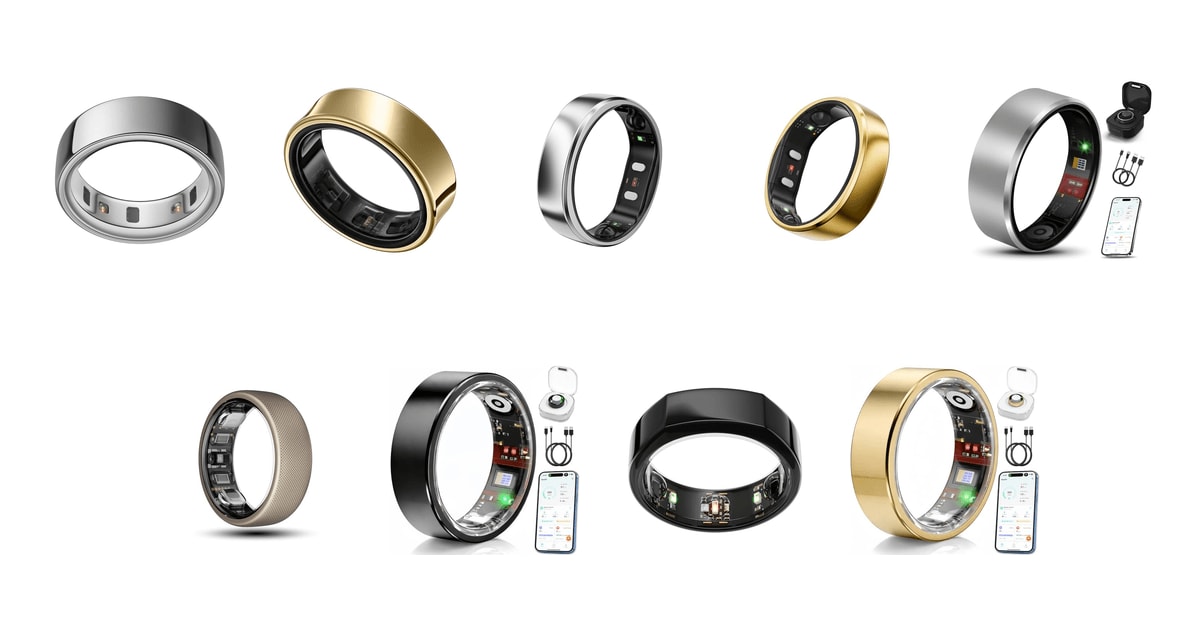
A sleep ring earns its place by being something you forget you're wearing. That's the whole pitch. A watch on your wrist gets in the way when you roll over, and a chest strap is a non-starter for most people. A ring just sits there, reading your pulse from your finger — which happens to be one of the better spots on your body for a clean optical signal. Overnight it logs your heart rate, your heart rate variability, your blood oxygen, and how much you moved. In the morning you get a number and a chart.
Here's the honest part. None of these rings measure your sleep the way a sleep lab does. A lab reads your brain waves; a ring reads your pulse and your movement, then makes an educated guess about which stage you were in. The trends are useful. Any single night's REM number is not. And every ring here shares two frustrations owners report again and again — battery capacity that fades noticeably inside the first year or two, and sizing that's specific to the brand, so you can't just use your wedding-band size.
Sizing matters more than you'd think, because a loose ring loses sensor contact and a tight one wakes you up at 3 a.m. Nearly every brand sells a sizing kit, and it's worth the wait. We think that the Oura Ring 4 is the best sleep tracker ring for most people, and that the RingConn Gen 2 is the one to buy if you'd rather not pay a monthly fee to see your own data.
Everything we recommend

The deepest sleep data, if you'll pay monthly for it

No subscription, long battery, and overnight breathing screening

Thin enough that you'll actually keep it on overnight

The natural pick if your phone is a Galaxy
Prices as of Oct 27, 8:28 AM PT · Details
At a glance
| Product | Battery Life | Subscription | Price | |
|---|---|---|---|---|
| Oura Ring 4 - Silver - SizeTop pick | Up to 8 Days | $5.99/Mo | $349 |
| SAMSUNG Galaxy RingAlso great | Up to 7-Day | — | $395 |
| RingConn Gen 2 AirBudget pick | 10-Day Battery Life | No App Fee | $199 |
| RingConn Gen 2Runner-up | 12-Day Battery Life | No APP Subscription | $282.96 |
 | Amazfit Helio Smart Ring Health TrackerAlso consider | 1.4-Hr Charge | No Subscription | $158.71 |
 | Smart Ring Health & Fitness Tracker forAlso in lineup | Multi-Day Battery | No Subscription Fee | $49.99 |
 | Oura Ring Gen3 Heritage - Black -Also consider | 5-7 Days Battery Life | $5.99/Mo | $269.99On sale |
 | Smart Ring Health & Fitness Tracker forAlso in lineup | Multi-Day Battery | No Subscription Fee | $49.99 |
Prices as of Oct 27, 8:28 AM PT · Details
How we picked
Sleep staging evidence. We looked for rings whose staging algorithms have been compared against polysomnography in published research rather than validated only in-house. Rings with no external evidence had to earn their place on comfort, battery, or price instead.
Sensor coverage. The baseline we wanted was blood oxygen, HRV, and skin temperature, since those three drive most of the useful overnight insights. Respiratory rate and stress tracking were treated as bonuses, not requirements.
Total cost of ownership. We separated rings that charge nothing after purchase from rings that gate your data behind a recurring fee. A subscription ring has to be meaningfully better at reading sleep to justify itself.
Overnight comfort. We weighted thickness, weight, and material heavily, because owner feedback shows that a ring you notice at 3 a.m. is a ring you stop wearing. Titanium and sub-3mm profiles scored best.
Battery over time. Spec-sheet runtime matters less than what owners see after a year, so we read long-term feedback for capacity fade and replacement policies. Rings that die overnight after ten months lose the sleep data you bought them for.
Top pick
The deepest sleep data, if you'll pay monthly for it
Oura Ring 4 - Silver - Size
The Oura Ring 4 tracks more than 50 metrics from an eight-sensor array, including blood oxygen, HRV, and skin temperature shifts. It's the ring with the most published validation behind its sleep staging, and the app does the most with what it collects.
$349fromAmazonPrices as of Oct 27, 8:28 AM PT · Details
Oura has the strongest research record in this category, and it shows in the sleep staging. Independent studies have compared consumer ring staging against polysomnography, and PPG-plus-accelerometer arrays of this type have come out among the better performers. That doesn't make it a medical device. It does mean that when the app tells you your deep sleep dropped, there's more behind that claim than a movement sensor and some marketing.
The Gen 4 adds daytime stress tracking and improved blood oxygen sensing over the Gen 3. Both run off Smart Sensing, which adjusts how the sensors read you rather than sampling on a fixed schedule. Practically speaking, you get a continuous picture instead of snapshots. If you're the kind of person who wants to see whether a late glass of wine actually wrecked your recovery, this is the ring that will tell you.
The all-titanium body is genuinely comfortable for round-the-clock wear, and owners with sensitive skin report fewer problems than they've had with silicone bands. There's no screen and nothing vibrates. You'll forget it's on your hand, which is the point — a tracker you take off at night tracks nothing. It's water resistant, so showers and swimming are fine.
Oura's women's health suite is the most developed of anything here. Cycle prediction and ovulation tracking lean on skin temperature deviation, which is a signal most of the cheaper rings simply don't collect. Several owners describe cycle tracking as the feature that justified the whole purchase for them. The ring is also HSA/FSA eligible, which softens the sting a little.
Flaws but not dealbreakers
The membership is the real cost. Buying the ring gets you the hardware and one month of access; after that, the data lives behind a recurring fee, and if you stop paying, the app goes quiet. Some people are fine with this. Plenty of others find it galling to rent access to their own biometrics, and it's the single most common complaint in owner feedback.
Battery degradation is the other pattern worth knowing about. A meaningful share of long-term owners describe the same arc: seven to nine days of runtime at the start, then five, then a ring that needs charging every day or two before the second year. Oura's support has replaced rings for some of these owners, but not everyone gets there without a fight, and a few describe the ring simply malfunctioning over time.
There's no display, no GPS, and no notifications. This is a sensor, not a smartwatch. And you can't just buy your size — you need the Oura Ring 4 sizing kit first, which adds days before your ring ships. The Gen 3 kit doesn't transfer; the sizing is different.
Oura ships the ring with a one-month membership included for new members, but the listing does not state a hardware warranty term.
Runner-up
No subscription, long battery, and overnight breathing screening
RingConn Gen 2
The RingConn Gen 2 tracks sleep stages, HRV, stress, and blood oxygen with no app fee, ever. It's the only ring here built specifically to flag the oxygen dips associated with sleep apnea, and it runs 10 to 12 days between charges.
$282.96fromAmazonPrices as of Oct 27, 8:28 AM PT · Details
The sleep apnea screening is the reason to pick this one. RingConn built continuous overnight blood oxygen analysis specifically to catch desaturation patterns, developed with university and hospital input. If your partner has mentioned that your breathing goes strange at night, this gives you something concrete to bring to a doctor. It's a screening aid, not a diagnosis — but it's a real starting point, and nothing else at this level offers it.
You pay once and you're done. Every feature stays unlocked for the life of the ring, which changes the math considerably against Oura over three or four years. Owners who switched from subscription trackers keep saying the same thing: it isn't only about the money, it's about not owing anyone a monthly payment to look at your own sleep. The ring also takes over-the-air updates, so the feature set grows.
Battery life is the best in this guide. RingConn quotes 10 to 12 days depending on ring size, and owners generally confirm it. Larger sizes go longer because there's more room for cells. The charging case extends things far beyond that, so a week away from home doesn't mean packing another cable. Water resistance is rated to 100 meters, so swim with it.
It's a little chunkier than the Air version because the sensor package is bigger. Most owners adapt within a few days. If you're used to wearing a wedding band, you'll barely register it; if you've never worn a ring at all, give yourself a week before deciding.
Flaws but not dealbreakers
The app is functional but not lovely. It doesn't have the polish of Oura's or Samsung Health's, and some owners find the interface less intuitive than reviews had led them to expect. One recurring frustration is that if you also wear a smartwatch, the app may pull in that device's data in ways that muddy which readings actually came from the ring.
The black finish scratches. Owners who work with their hands report visible marks within weeks. Silver and gold hide wear better. Battery capacity also fades here — around the one-year mark is where complaints cluster, though RingConn has a decent record of replacing rings for people who ask.
Budget pick
Thin enough that you'll actually keep it on overnight
RingConn Gen 2 Air
At 2mm thick and 2.5 grams, the RingConn Gen 2 Air is the least intrusive ring in this guide. It tracks sleep, heart rate, stress, blood oxygen, and cycles with no app fee, and it runs about 10 days per charge.
$199fromAmazonPrices as of Oct 27, 8:28 AM PT · Details
The single biggest reason people abandon sleep trackers is that they're aware of them all night. The Air is RingConn's answer to that: a 2mm profile and two and a half grams, which is less than most wedding bands. Owners who bounced off an Apple Watch or a Galaxy Watch for exactly this reason tend to be the happiest with it. You put it on and stop thinking about it.
You give up very little to get here. It still tracks sleep stages, HRV, blood oxygen, stress, activity, and menstrual cycles, and it still charges nothing for the app. The staging isn't as refined as Oura's at the margins, but for someone trying to figure out whether they're actually sleeping seven hours or lying to themselves, it's plenty. Ten days of battery on a 90-minute charge is genuinely excellent.
This is the ring we'd hand a first-timer. There's no subscription decision to agonize over, the comfort problem is solved out of the gate, and the price of entry is low enough that if you decide rings aren't for you, you haven't lost much. The IP68 rating covers showers, rain, swimming and diving, so there's no daily routine to change.
Flaws but not dealbreakers
The app draws the sharpest criticism. Some owners chose the Air specifically because reviews praised the software and came away feeling misled — the insights layer is thinner than what Oura or Samsung Health provide, and navigation takes some learning. If a polished app is the thing you care about most, weigh that.
The gold colorway reads much darker in person than in the listing photos, closer to a dark bronze. If you're matching it to gold jewelry, pick a different finish. And the same one-year battery pattern shows up in owner feedback here as elsewhere, though RingConn's replacement record is one of the better ones in this category.
Also great
The natural pick if your phone is a Galaxy
SAMSUNG Galaxy Ring
The Samsung Galaxy Ring pairs a titanium body with Samsung Health, cross-referencing overnight ring data against anything your Galaxy Watch collects during the day. No subscription, seven days of battery, and Gemini-powered sleep coaching.
$395fromAmazonPrices as of Oct 27, 8:28 AM PT · Details
If you already live in Samsung's world, this ring slots in without friction. Samsung Health stitches together your overnight ring biometrics and your daytime watch data into one view, which is something no other ring here can do. The Gemini-powered sleep coaching is more contextual than most — it tells you what to change, not just what happened.
There's no subscription, and that's a real advantage over Oura. Everything unlocks the day you buy it. The concave titanium design resists scratches better than flat-profile rings, it's water resistant, and at just over five grams it's among the lightest in this guide. Owners consistently describe forgetting they have it on. It's also HSA/FSA eligible, ring and sizing kit both.
Sizing works the same way as everywhere else — buy the Samsung sizing kit first, and you get a credit toward the ring itself. Samsung's sizes don't match jewelry sizes, so skipping this step is how people end up doing returns.
Flaws but not dealbreakers
It's Android only. Not Android-preferred — Android only. If you carry an iPhone, this ring isn't for you, and the full AI coaching layer really wants a Galaxy phone specifically.
Battery longevity is the serious concern, and it's the reason we didn't rank this higher. Owner feedback converges hard on a pattern: excellent for the first several months, then somewhere around ten to twelve months the ring stops holding a charge, in some cases dying overnight — which kills the one feature most people bought it for. Samsung will replace the battery, but the turnaround and the cost have left owners unhappy. This ring's rating profile is the weakest of our picks, and battery life is why.
There's no skin temperature sensor, so you don't get the illness and cycle signals that Oura and RingConn provide. The third-party app ecosystem is also narrower than Oura's.
Who this is for
Buy a sleep ring if you want overnight data and you've already decided a watch is too much hardware to sleep in. These are best for spotting trends — whether your recovery is trending down across a hard training week, whether your temperature is drifting before you get sick, whether you're really getting the sleep you think you are. If you want a device that also shows notifications, maps your run, or tells the time, buy a smartwatch instead. Rings don't have screens.
Don't buy one expecting a diagnosis. No ring here is cleared to diagnose sleep apnea, and any night-by-night REM figure should be read as an estimate. If you suspect a real sleep disorder, a ring is a reason to call a doctor, not a substitute for one. This guide covers finger-worn sleep and recovery trackers only — we're not comparing wrist wearables, chest straps, or under-mattress sensors, and we've stuck to rings currently sold on Amazon.
How we picked
We weighed five things across the lineup. Sleep staging evidence: whether the algorithm has been compared against clinical polysomnography by someone other than the manufacturer. Sensor coverage: blood oxygen, HRV, and skin temperature as the working baseline, with respiratory rate and stress tracking as extras. Total cost of ownership: whether the app is included forever or rented monthly, since a subscription ring needs to be genuinely better to be worth it. Comfort: thickness, weight, and material, because a ring you feel at 3 a.m. ends up in a drawer. Battery over time: not the number on the box, but what owners report after a year of daily wear.
Other sleep tracker rings worth considering
If you want Oura's app for less outlay: The Oura Ring Gen3 Heritage - Black - — The Gen3 Heritage runs the sensor platform that built Oura's reputation — validated sleep staging, continuous HRV, skin temperature deviation, blood oxygen — and gives you the same app the Gen 4 uses. What you give up is the Gen 4's daytime stress tracking and its improved oxygen sensing, plus some certainty about how long Oura will keep updating a phased-out generation. You still pay the monthly membership; that doesn't change. It's a sensible move if the Gen 4 is out of stock in your size, or if the newer sensors don't matter to you. Note that the Gen 3 uses its own sizing kit, not the Gen 4 one.
If you already wear an Amazfit watch: The Amazfit Helio Smart Ring Health Tracker — The Helio has a titanium alloy body, no subscription, and it feeds straight into the Zepp app alongside whatever your Amazfit watch collects. It adds an EDA sensor for stress that most rings in this range skip, plus VO2 Max estimates and recovery load. It charges in about 1.4 hours. The catch is battery life: the spec is around five days, but owner reports skew much shorter, with some describing a day and a half of real use. Workout auto-detection is unreliable enough that several owners log sessions manually. Buy it for the Zepp integration, not as a standalone.
The competition
These are the other rings our research surfaced, not a census of everything sold. Each of them lost to a pick for a specific reason, and in a couple of cases there's still a buyer for whom the trade-off makes sense.
The Smart Ring Health & Fitness Tracker for — The VIYONA smart ring is an inexpensive tracker that covers sleep, heart rate, blood oxygen, stress, and cycle tracking with no app fee and IP68 water resistance. Owners generally like it, and several describe it as a workable stand-in for a far pricier ring. But it doesn't do HRV-based readiness or recovery scoring, the sleep stage detail is shallow compared with our picks, and workouts have to be started by hand on your phone. Sizing runs unpredictably — plan on possibly exchanging once. It's a fine way to find out whether you'll tolerate wearing a ring at night before spending more.
The Smart Ring Health & Fitness Tracker for — This is the same VIYONA ring in a different size, and everything above applies. Buy whichever size actually fits your finger; there's no functional difference between the two listings. Measure carefully first, since VIYONA doesn't ship a sizing kit and relies on you reading a chart.
Fit and sizing
Order the sizing kit before you order the ring, every time. Ring sizes from these brands don't match jewelry sizes, and a ring that fits perfectly at noon can feel tight at 3 a.m. because fingers swell overnight. Wear your candidate size for a full day and night — not just a quick try-on — and pick based on how it feels while you're asleep, not while you're standing at the counter. Fit isn't only about comfort. The optical sensor needs steady skin contact to read your pulse, so a ring that slides around gives you worse data, not just a looser feel. Most people get the best readings on the index finger. Wipe the ring and the sensor side dry after showers, and charge it during a morning shower rather than overnight so you never miss a night of tracking.
Questions we get
Which sleep tracker ring is the most accurate?
The Oura Ring 4 has the strongest evidence behind it, with sleep staging that's been compared against clinical polysomnography in published research. Its eight-sensor array covers blood oxygen, HRV, skin temperature, and respiratory rate, which gives its algorithms more to work with than budget rings have. That said, no consumer ring reads brain activity, so treat stage-by-stage numbers as good estimates rather than facts.
Do sleep tracker rings require a subscription?
Most don't. The Samsung Galaxy Ring, both RingConn models, the Amazfit Helio, the VIYONA rings, and the Milavan all include full app access with no ongoing fee. Oura is the exception — both the Ring 4 and the Gen3 Heritage include one month of membership for new members, and after that you pay monthly to keep using the app. If you stop paying, you keep the ring but lose the insights.
How does a ring figure out my sleep stages?
It uses optical sensors on the underside of the ring to read your pulse and heart rate variability, plus a motion sensor to track how much you move. Software then interprets those two signals together to estimate when you shifted between light, deep, and REM sleep. A clinical sleep study reads brain activity directly with electrodes, which is why lab results and ring results won't always agree.
Can a ring detect sleep apnea?
The RingConn Gen 2 is built to flag the overnight oxygen desaturation patterns associated with apnea, and it's the only ring in this guide designed specifically for that. But it's a screening aid, not a diagnostic device — no consumer smart ring is cleared to diagnose sleep apnea. If it flags something, or if your partner notices your breathing stopping at night, that's a reason to see a doctor and get a proper sleep study.
What is HRV, and why does the ring care about it?
Heart rate variability measures the tiny differences in timing between consecutive heartbeats. It's one of the more useful proxies for how well your nervous system has recovered. Higher overnight HRV generally means you're rested; a sustained drop can show up before you consciously feel run-down, sometimes flagging illness or accumulated training stress a day or two early.
How long do these batteries actually last?
On the spec sheet, roughly 5 to 8 days for Oura and Samsung and 10 to 12 for the RingConn models. In practice, expect less as the ring ages. Owner feedback across nearly every brand here describes capacity dropping noticeably somewhere in the first year or two, occasionally to the point where the ring can't survive a night. Charge during your morning shower so you never lose a night's data.
Why you should trust us
For this guide:
- We read manufacturer spec sheets and listing details for all nine rings, comparing sensor coverage, battery claims, water resistance ratings, and subscription terms side by side.
- We reviewed published coverage of smart ring sleep staging accuracy, including research comparing consumer ring output against clinical polysomnography.
- We read through owner feedback for each listing, paying particular attention to recurring themes around long-term battery capacity, app quality, sizing, and finish durability.
- We read owner reviews on every listing, weighted toward the critical ones, because that is where the recurring failures show up.
- We have a systematic way of automatically fetching the latest prices, so the numbers on this page stay current.
- This is a research-focused guide, so the team may not own every product listed — though we often do own the top winners, which gives us extra context for the recommendations.
- We don't accept free products, and the retailer commission never changes which product we recommend.
Sources
Best Smart Rings 2026 — Tom's Guide, Tom's Guide
Best Sleep Tracker Rings 2026 — Wareable, Wareable
Oura Ring Gen 4 Review — CNET, CNET
Samsung Galaxy Ring Review — The Verge, The Verge
Ultrahuman Ring AIR Review — PCMag, PCMag
Smart Ring Sleep Tracking Accuracy Study — Nature Scientific Reports 2024, Nature Scientific Reports
RingConn Gen 2 Review — Android Authority, Android Authority
Movano Evie Ring Review — Healthline, Healthline
Amazon product listings and owner reviews for all 8 products
Manufacturer specification pages for each product
Some passages in this guide may be paraphrased with AI help.
Product prices and availability are accurate as of the date/time indicated and are subject to change. Any price and availability information displayed on Amazon.com at the time of purchase will apply to the purchase of this product.
More like this.
Continue exploring health reviews and recommendations.

The Best Fitness Trackers for Sleep Tracking
You spend about a third of your life asleep, and until recently you had almost no way to know what happened during those hours. A sleep tracker changes…

The Best Bedside Sleep Trackers
You spend a third of your life asleep and remember almost none of it. That's the appeal of a bedside sleep tracker. It fills in the blanks: when you…

The Best Phone Tripods and Ring Lights
Good video comes down to two boring things: your phone has to hold still, and your face has to be lit. That's it. Everything else - the camera in your…

The Best Ring Lights for Content Creators
A ring light does one job: it puts even light straight onto your face so your camera isn't guessing. That matters most in the rooms creators actually work…

The Best Fitness Trackers and Activity Bands
A fitness tracker earns its keep in the small moments. You glance down and see you've been sitting for three hours. You wake up and find out why you feel…

The Best Fitness Trackers and Heart Rate Monitors
A fitness tracker only helps if you actually wear it. That sounds obvious, but it's the thing most people get wrong. The band that counts every calorie is…