The Best Bedside Sleep Trackers
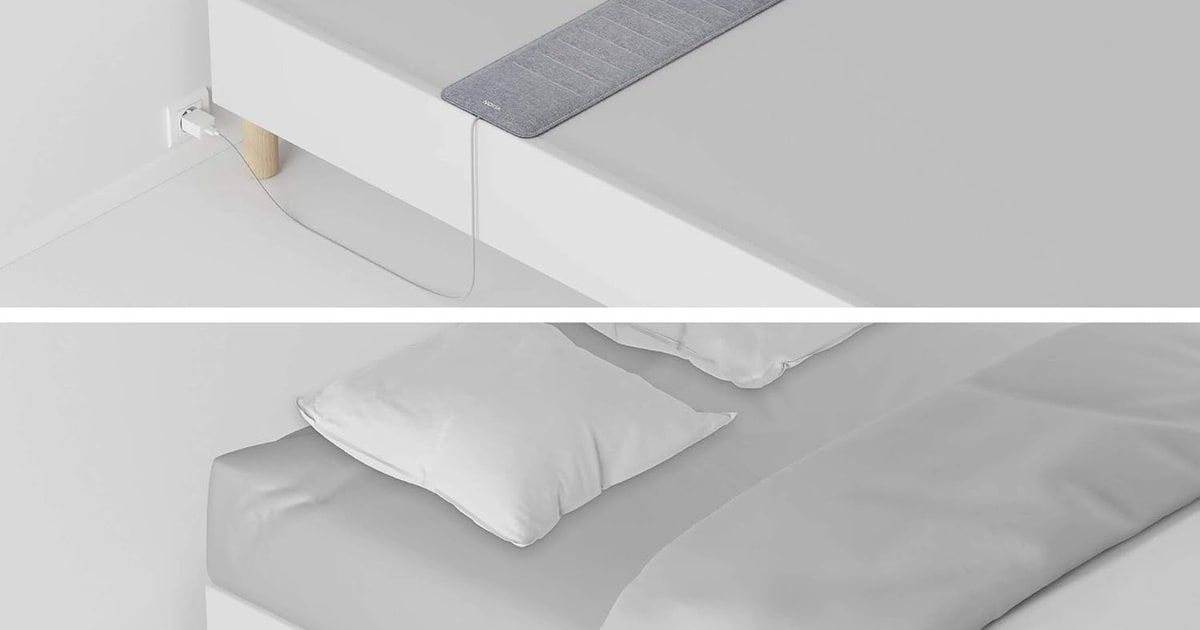
You spend a third of your life asleep and remember almost none of it. That's the appeal of a bedside sleep tracker. It fills in the blanks: when you actually fell asleep, how many times you surfaced, whether you snored through the part your partner keeps bringing up. The best ones ask nothing of you. You don't charge them, you don't strap anything on, and after the first week you forget they're there. That last part matters more than any single number on the chart.
Here's the part the marketing skips. No consumer tracker reads your brain waves, so sleep stages are estimates built from movement, heart rate and breathing. Research summarized by the Sleep Foundation puts these devices within about 90% agreement on total sleep time, and much further off when separating deep sleep from light. Treat the nightly deep-sleep figure as a rough trend, not a grade. These are wellness gadgets, not diagnostic tools, and none of them can tell you whether you have sleep apnea.
So buy for the habit, not the dashboard. A tracker you never think about gives you months of consistent data, and consistency is what makes a trend worth reading. Weigh how it sits with your mattress, whether it listens for snoring, and what it costs to keep using year after year. We think that the Withings Sleep is the best bedside sleep tracker for most people, and that the Sleepace Nox is the one to buy if you want bare-bones cycle and breathing data and don't need snore detection.
Everything we recommend

The fullest picture, if you can live with fussy placement

Core sleep and breathing data, with the extras stripped out

A bedside display for your wind-down, with no tracking at all
Prices as of Oct 24, 6:27 AM PT · Details
At a glance
| Product | Placement | Snore detection | Price | |
|---|---|---|---|---|
| Withings Sleep - Sleep Tracking Pad UnderTop pick | Under mattress | Snoring | $199.95 |
| Google Nest Hub 7” Smart Display withAlso great | — | — | $137.99 |
| Sleepace NoxBudget pick | — | — | Check price |
Prices as of Oct 24, 6:27 AM PT · Details
How we picked
Staging accuracy. We compared published lab and clinical results, including an actigraphy comparison from RTINGS and a polysomnography validation study, against each company's own claims. Because deep-sleep staging is unreliable across the whole category, we weighted total sleep time and heart rate more heavily.
Nothing to wear. We only considered trackers that work under the mattress, under the sheet or from a nightstand. If a device asks you to charge it and strap it on, it belongs in a different guide.
Snore and breathing. Snore capture and breathing-rate tracking have become standard at the mid-range, so we treated their absence as a genuine deduction. We checked spec sheets and published reviews for what each device actually records.
Mattress compatibility. We read owner feedback looking for the failure mode that ruins these products: a sensor that stops reading through thick or very soft foam. Fussy placement counted against a product.
Cost of ownership. We looked at whether tracking stays usable without a recurring fee, and whether a couple needs to buy two units. Hardware you rent or eventually replace costs more over time than the first purchase suggests.
Top pick
The fullest picture, if you can live with fussy placement
Withings Sleep - Sleep Tracking Pad Under
A thin pad slides under your mattress and tracks sleep cycles, heart rate and snoring without ever touching you. Getting the placement right takes some fiddling, but once it's under there, you'll stop thinking about it and just read the app in the morning.
$199.95fromAmazonPrices as of Oct 24, 6:27 AM PT · Details
It tracks the things you'd actually ask about. Sleep cycles, how long you were down, heart rate through the night, and snoring episodes you'd otherwise only hear about secondhand. Withings pulls all of it from a pneumatic sensor that reads the mechanical wave each heartbeat sends through your body. You get a morning score and a chart, and nothing sits on your wrist.
Independent lab work backs up the basics. RTINGS found its sleep-stage calls lined up with actigraphy-based methods roughly 78% of the time, which is respectable for a device that never touches you. In a clinical study published in the Journal of Clinical Sleep Medicine, it flagged apnea events with 89% sensitivity against polysomnography. That's screening, not diagnosis, and Withings is careful to say so.
You genuinely can't feel it. The pad weighs a little over half a pound and sits under the mattress, not under you, and published reviews of pads like this one consistently report no change in how a bed feels or firms up. If you've skipped sleep tracking because a wristband bugs you at 3 a.m., that's the whole pitch. Nothing to charge, nothing to remember at bedtime.
It also fits into the rest of your health routine. The Health Mate app keeps your nights next to weight, steps and blood pressure if you own other Withings gear, and it passes data along to Apple Health and Google Fit. If you're the sort of person who wants one app for everything, that consolidation is worth more than a slightly prettier sleep graph.
Flaws but not dealbreakers
Placement is picky. The pad has to sit under the mattress at chest height, centered on your side of the bed, and if it drifts or your mattress is very thick or very soft, you'll get nights with missing or strange data. Owner feedback splits hard on exactly this. People who got it seated correctly rarely think about it again, and people who didn't spent weeks re-adjusting.
It tracks one sleeper. Each pad covers one side of the bed, so a couple who both want data need two of them, which doubles what the setup costs. And the sleep stages are still estimates. If you want a number you can hand to a doctor, this isn't it. Withings sells it as a wellness device, not a diagnostic one.
Budget pick
Core sleep and breathing data, with the extras stripped out
Sleepace Nox
A thin sensor strip lies under your fitted sheet and reports sleep stages, heart rate and breathing rate with no screen and nothing to wear. You give up snore capture and a polished ecosystem, but you keep the part that actually changes behavior: a consistent nightly trend.
Check priceatAmazonPrices as of Oct 24, 6:27 AM PT · Details
The Nox strip sits under your fitted sheet rather than under the mattress, so it doesn't much care whether you sleep on a thick foam slab or a firm hybrid. A piezoelectric sensor reads the small movements your body makes, and CNET reports that it refreshes respiratory rate about every 30 seconds through the night. That's a finer-grained breathing trend than most bedside gear bothers with.
Buy it for the trend line, not the detail. You get sleep stages, time asleep, heart rate and breathing, and that covers most of what a normal person will ever act on. What you don't get is snore capture, apnea risk scoring or a deep app ecosystem. If your question is whether last week's late nights actually cost you sleep, this answers it.
It's also the least documented product here, and that's a real caveat. Sleepace publishes less than Withings does, the Amazon listing says almost nothing, and independent lab work on the Nox is thin next to what's been written about bigger names. We're recommending it on the strength of the design and the category evidence behind under-sheet sensor strips, not on a stack of third-party results.
Flaws but not dealbreakers
Support and software are the weak spot. Sleepace is a much smaller company than Withings, and app updates and long-term server support are a fair worry for anything that leans on a cloud account. If you want a tracker you'll still be using five years from now, that risk is worth pricing in.
There's no snore or sound recording. If your reason for buying is a partner's complaint or a nagging suspicion about apnea, this is the wrong tool and the Withings is the one to get.
Also great
A bedside display for your wind-down, with no tracking at all
Google Nest Hub 7” Smart Display with
This is a 7-inch smart display for your nightstand, not a tracker: it handles alarms, timers, photos and voice control from across the room. If you'd rather fix your bedtime habits than chart them, it's the one device here that helps with the routine itself.
$137.99fromAmazonPrices as of Oct 24, 6:27 AM PT · Details
It's a nightstand tool, not a sleep sensor. You talk to it instead of picking up your phone, which is the whole point at 11 p.m. Set an alarm, start a wind-down routine, ask what time your first meeting is, all without a bright screen in your hand. For plenty of people, that swap does more for bedtime than any chart does.
The seven-inch screen is sized for a nightstand rather than a kitchen counter, so it doesn't take over a small bedside table. Photos cycle when it's idle, and timers and voice control work from across the room without you touching anything. Nothing here asks you to learn a new app or check a score in the morning.
Read the listing closely before you buy this one. It's the first-generation H1A in Korean-market bulk packaging, so the packaging and documentation may not match a domestic retail unit. The hardware is the same widely reviewed display people have used for years, but it has none of the radar-based Sleep Sensing that arrived with the second-generation model.
Flaws but not dealbreakers
The big one: this listing doesn't track your sleep. Sleep Sensing runs on the Soli radar chip in the second-generation Nest Hub, which detects breathing and motion from up to three feet away, and this first-generation unit doesn't have it. If tracking is why you're shopping, buy one of the picks above instead. This isn't a substitute for either.
There's also a microphone sitting next to your pillow, which not everyone wants in a bedroom. And bulk packaging tends to mean less straightforward support than a standard retail box if something goes wrong.
Who this is for
Buy a bedside tracker if you're curious about your nights and unwilling to wear anything to bed. That's most people, honestly. Consumer Reports found that around 60% of shoppers researching sleep trackers now prefer non-wearable options, and comfort is the reason they give. It's also a good fit if you snore, or if you've been told you do, and you'd rather have data than an argument. Athletes chasing recovery metrics will want more sensitivity than either pick here offers.
Skip these if what you really want is a diagnosis. As Verywell Health notes, consumer sleep trackers are marketed as wellness devices and aren't intended to identify sleep disorders, and a supervised sleep study remains the only way to confirm apnea. This guide covers bedside and under-mattress trackers only. We're not covering wrist wearables, smart rings, full smart mattress systems that replace your bed, or the sleep features already built into your phone.
How we picked
Accuracy: we leaned on published lab work and clinical validation rather than marketing claims, and weighted total sleep time and heart rate above deep-sleep staging, which is shaky across every consumer device. Nothing to wear: everything we considered works under the mattress, under the sheet or from the nightstand. Snore and breathing: sound capture and breathing-rate tracking are common enough now that missing them counts against a product. Compatibility: we read owner feedback about thick and soft mattresses, because a sensor that can't read through your bed is useless no matter how good the app is. Cost over time: subscriptions, a second unit for your partner, and hardware you eventually replace matter more than the first purchase.
The competition
This is what our research surfaced, not a census of the category. Several well-known bedside trackers weren't part of the lineup we could confirm, and a few products that turn up in sleep-tracker searches turn out to be something else once you read the listing closely.
Placement and setup
Placement is most of the battle. An under-mattress pad wants to sit at chest height, centered on your side of the bed, with the cable running out toward the nightstand. Off by a foot and you'll see gaps in the night. Under-sheet strips are more forgiving, but they can slide, so check yours when you change the bedding. Both types read the signal from your heartbeat and breathing through the mattress, and thick or very soft foam makes that harder. If your data looks patchy for a week, move the sensor before you blame the device. Keep the app updated, since staging algorithms improve through firmware, and give any new tracker two weeks before you judge it. One night tells you nothing.
Questions we get
Are bedside sleep trackers as accurate as wrist-worn wearables?
For total sleep time they're comparable, and published summaries put good consumer trackers within roughly 90% agreement on that metric. For sleep stages, everything is an estimate, whether it's on your wrist or under your mattress. The real edge a bedside tracker has is compliance. It works every night, including the ones where you'd have forgotten to charge a watch.
Can a bedside sleep tracker detect sleep apnea?
It can screen, not diagnose. The Withings Sleep flagged apnea events with 89% sensitivity against polysomnography in a clinical study, which is strong for a consumer device. But these are unregulated wellness products, not diagnostic tools. If your tracker keeps flagging breathing disturbances, bring that to a doctor and ask about a real sleep study.
Do sleep trackers actually improve your sleep?
Not on their own. A tracker shows you the pattern, and you still have to change something, usually your bedtime or when you stop drinking coffee. Most people get their money's worth in the first month by spotting one obvious culprit, then settle into checking the weekly trend. If the nightly score starts making you anxious at bedtime, that's a real effect, and it's a good reason to stop looking.
Do these work with a thick memory-foam mattress?
Sometimes, and this is the most common reason people give up on them. Under-mattress pads read the mechanical signal your heartbeat and breathing send through the bed, and dense foam muffles it. Under-sheet strips like the Sleepace Nox dodge the problem entirely, since they sit above the mattress. If your bed is thick or very plush, favor the under-sheet design.
What works best for couples sharing a bed?
Two sensors, one per side. Under-mattress and under-sheet devices track whoever is above them, so a couple who both want data need two units and two accounts. That doubles the hardware, but it's the only reliable way to keep one person's restless night out of the other's report. Bedside sonar and radar units struggle here, because telling two sleepers apart from across the room is hard.
Do I need a subscription?
Not for either pick in this guide. Withings and Sleepace both give you core sleep data in a free app. Some premium systems, especially smart mattress covers, put their better analytics and continued firmware updates behind a recurring fee, which adds up considerably over a few years of ownership. Check that carefully before you buy any tracker that's built into a bed.
Why you should trust us
For this guide:
- We read manufacturer spec sheets alongside published lab and clinical results, including an actigraphy comparison from RTINGS, a polysomnography validation study in the Journal of Clinical Sleep Medicine, and accuracy summaries from the Sleep Foundation.
- We compared each listing's stated sensor type, placement and tracked metrics against what independent reviewers report the device actually records, which is how we caught the Nest Hub generation mismatch.
- We read owner feedback for recurring themes, particularly complaints about sensor placement and mattress thickness.
- We read owner reviews on every listing, weighted toward the critical ones, because that is where the recurring failures show up.
- We have a systematic way of automatically fetching the latest prices, so the numbers on this page stay current.
- This is a research-focused guide, so the team may not own every product listed — though we often do own the top winners, which gives us extra context for the recommendations.
- We don't accept free products, and the retailer commission never changes which product we recommend.
Sources
Withings Sleep Analyzer Review, RTINGS.com
The Best Sleep Trackers, Tested, Wirecutter
Best Sleep Tech of 2026, CNET
Sleep Tracker Buying Guide, Tom's Guide
How Accurate Are Consumer Sleep Trackers?, Sleep Foundation
Eight Sleep Pod 4 Ultra Review, The Verge
Validation of Ballistocardiography for Sleep Staging, Journal of Clinical Sleep Medicine
Best Smart Beds and Sleep Systems, PCMag
Google Nest Hub Sleep Sensing Explained, Google Nest Support
Sleep Number 360 Smart Bed Review, Good Housekeeping
Do Sleep Trackers Actually Work?, Verywell Health
Emfit QS Recovery Tracking Overview, DC Rainmaker
Amazon product listings and owner reviews for all 3 products
Manufacturer specification pages for each product
Some passages in this guide may be paraphrased with AI help.
Product prices and availability are accurate as of the date/time indicated and are subject to change. Any price and availability information displayed on Amazon.com at the time of purchase will apply to the purchase of this product.
More like this.
Continue exploring electronics reviews and recommendations.

The Best Bedside Sleepers for Babies
For the first few months, your baby sleeps in short bursts and wakes up hungry. The American Academy of Pediatrics recommends room-sharing without…

The Best Fitness Trackers for Sleep Tracking
You spend about a third of your life asleep, and until recently you had almost no way to know what happened during those hours. A sleep tracker changes…

The Best Sleep Tracker Rings
A sleep ring earns its place by being something you forget you're wearing. That's the whole pitch. A watch on your wrist gets in the way when you roll…

The Best Smartwatches and Fitness Trackers of 2026
A smartwatch earns its place on your wrist in small moments. It taps you when a text lands so you don't dig out your phone. It counts a swim, logs a run,…

The Best GPS Trackers for Vehicles
A GPS tracker earns its keep on ordinary days, not dramatic ones. You want to know your kid got to practice. You want to see whether the work van sat idle…

The Best Hidden Car GPS Trackers
A hidden GPS tracker earns its keep in one bad moment. Your car isn't in the driveway, and you'd like to tell the police where it went instead of filling…