The Best Hidden Car GPS Trackers
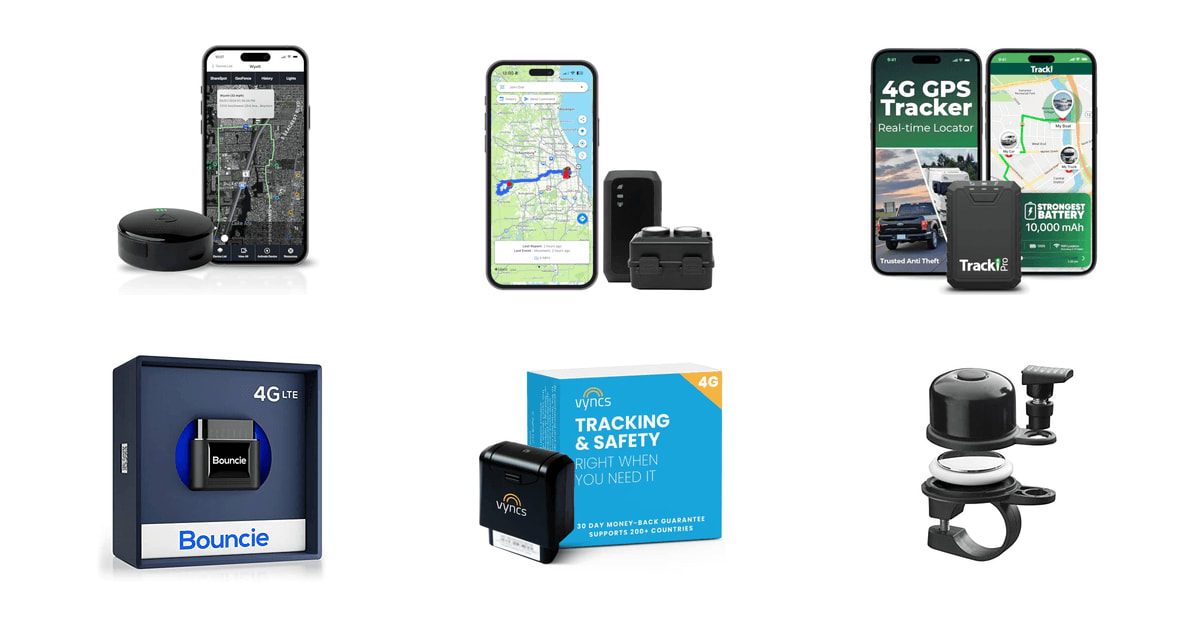
A hidden GPS tracker earns its keep in one bad moment. Your car isn't in the driveway, and you'd like to tell the police where it went instead of filling out a form and hoping. The same little box also tells you whether your teenager actually drove to the library, or where your work truck has been parked all afternoon. What matters most isn't the feature list. It's whether the thing reports fast enough to be useful, stays powered, and sits somewhere a thief won't look.
Here's the honest part: no tracker in this category is magic. Every one of these needs a cellular subscription, so the real cost piles up over two or three years and often passes what you paid for the hardware. GPS gets confused in underground garages and steel parking decks. Battery models eventually need recharging, which means pulling them out from under your car. And a determined thief who knows what to look for can find and kill any of them.
We think that the LandAirSea 54 is the best hidden car GPS tracker for most people, and that the Optimus 3.0 is the one to buy if you need to stash a tracker and forget about it for weeks.
Everything we recommend

Small, magnetic, and fast enough to follow a moving car

Up to two months of runtime before you touch it again

Months of battery for trailers and equipment, but it's big
Plug it in once; great for teen drivers, weak for theft

Slap it on and go, but recharge it often
At a glance
| Product | Power source | Fastest updates | Price | |
|---|---|---|---|---|
| LandAirSea 54 GPS Tracker - Made inTop pick | Battery, magnetic | Every 3 seconds | $14.95On sale |
| Optimus 3.0 GPS Tracker Bundle - VehicleAlso great | — | Every 10 seconds | $26.95 |
| Tracki Pro GPS Tracker for VehiclesUpgrade pick | 10,000mAh battery | 15 seconds | $18.99On sale |
| Bouncie GPS Tracker for Vehicles with Real-TimeRunner-up | OBD2 port | Up-to-the-minute | $89.99 |
 | Vyncs - GPS Tracker for VehiclesAlso consider | — | 20-second updates | $79.99 |
 | AIRBELL Bicycle Bell for Apple AirTag 22.2Also in lineup | AirTag (not included) | — | $13.99 |
| Brickhouse Security Spark Nano GPS Tracker forBudget pick | Rechargeable battery | Real-time | $17.95 |
How we picked
Update frequency. We compared published update intervals on each manufacturer's spec sheet, because a tracker that reports once a minute can't follow a moving car. Anything slower than one-minute default reporting didn't make the cut.
Power and runtime. We read manufacturer battery ratings alongside owner feedback about real-world runtime, since motion activation and update rate change the numbers drastically. We looked for either multi-week battery life or a power source that never needs attention.
Size and concealment. Listed dimensions tell you a lot about whether a device will actually fit in a wheel well or behind a trim panel. Devices that only work in a visible, easily unplugged location got marked down for anti-theft use.
Network and coverage. After carriers shut down their 3G networks, older trackers stopped connecting. We only considered devices whose specs confirm 4G LTE or LTE-M support, and we noted international coverage where manufacturers state it.
Total cost over time. Every cellular tracker here needs a subscription, and over two or three years that service usually costs more than the hardware. We compared plan structures and contract terms rather than hardware cost alone.
Top pickOn sale
Small, magnetic, and fast enough to follow a moving car
LandAirSea 54 GPS Tracker - Made in
The LandAirSea 54 is a puck about the size of a stack of poker chips, with a magnet inside and a waterproof shell. It updates as often as every three seconds, which is the difference between following a stolen car and guessing where it went.
$14.95fromAmazonList priceThree-second updates are the feature that actually matters for theft. Most trackers ping once a minute. That's fine for a trip log and nearly useless if a car is moving. The 54's fastest setting reports every three seconds, so a dispatcher gets a direction of travel instead of a stale dot. You can dial it back to save battery when the car is just parked in your driveway.
It's 2.25 inches square and about three quarters of an inch thick — roughly the footprint of a cookie. That's small enough for a wheel well, a bumper cavity, or the gap behind a plastic trim panel. The magnet is internal, so there's no bracket to snag, and the case is waterproof, which matters if you're mounting it somewhere that sees road spray and winter salt.
Motion activation handles the battery problem reasonably well. When the car sits still long enough, the tracker sleeps; when it moves, it wakes and starts reporting. If your car commutes and then parks all night, you'll get far more real-world runtime than the spec sheet implies. Owners who leave it on the fastest update setting all day, though, report recharging it frequently.
The warranty is the quiet reason we'd buy this one. LandAirSea covers manufacturing defects for the life of the device, which is unusual in a category full of disposable plastic. Historical playback goes back a year, so you can reconstruct where a vehicle has been over months, not just last week. That's genuinely useful for a business owner sorting out a dispute about a route.
Flaws but not dealbreakers
A subscription is required, and it's the biggest line item over time. Plans are cheaper annually than month to month, and there's no contract, but you should price three years of service before you decide this is the affordable option. It usually isn't.
Owner feedback is mixed in a specific way: a meaningful share of buyers hit activation and billing frustrations, or found the app's refresh behavior inconsistent on slower plans. The hardware gets better marks than the service side. If you want flawless customer support, this isn't the one.
Battery life drops hard at the fastest update rate. Three-second reporting is a tool for an active situation, not a setting you leave on permanently.
LandAirSea offers an unconditional lifetime warranty covering manufacturing defects encountered during normal use.
Also great
Up to two months of runtime before you touch it again
Optimus 3.0 GPS Tracker Bundle - Vehicle
The Optimus 3.0 reports at ten-second intervals when you need detail and runs up to two months on its default one-minute setting. Twin magnets hold it firmly to a frame rail, so you can mount it once and mostly leave it alone.
$26.95fromAmazonIf the thing you dread is crawling under your car every two weeks to recharge a tracker, this is your pick. At its default one-minute update rate, Optimus rates the battery at up to two months. That's the practical difference between a device you maintain and one you install. For a classic car that sits in storage, or a trailer parked behind a shop, it's the right trade.
Twin magnets are stronger than what you get on most pucks this size. Two magnets instead of one means a wider, more even grip on a frame rail or inner fender. Owners who mount under-chassis report it staying put on rough roads, which is the whole ballgame for a tracker you can't see. The case is a bit chunkier than the LandAirSea at just over three inches long, so pick your hiding spot with that in mind.
You still get ten-second updates when you want them. That's slower than the LandAirSea's three seconds but fast enough to follow a car across town, and you can switch between fast and economical settings depending on whether you're watching an active problem or just logging trips. Instant alerts come by text or email, which beats having to open an app to find out something happened.
Owner sentiment skews more positive here than for most trackers in this lineup, with the recurring praise being that it just keeps reporting. The common complaints are about the subscription and the dated-feeling web software, not about the device dropping off the map.
Flaws but not dealbreakers
It's noticeably bigger than the LandAirSea — about three inches long and half a pound. That rules out some of the tightest hiding places, and under-bumper mounting takes more thought.
The tracking software looks and feels older than the apps from the OBD-II competitors. It works, but if you want a polished interface with maps that feel modern, you'll be a little disappointed.
A monthly subscription is required, same as the rest of the cellular trackers here.
Upgrade pickOn sale
Months of battery for trailers and equipment, but it's big
Tracki Pro GPS Tracker for Vehicles
The Tracki Pro carries a 10,000mAh battery rated at two to seven months of active tracking, or up to a year asleep. It's the one to get for a trailer, boat, or piece of equipment that sits for long stretches and needs to be found if it walks off.
$18.99fromAmazonList priceThe battery is the entire point of this tracker. Ten thousand milliamp-hours is phone-power-bank territory, and Tracki rates it at two to seven months of active reporting at one- to five-minute intervals, or up to twelve months in sleep mode. If you own a trailer that lives behind a fence for a season, you can mount this once and check it next spring.
It's also the most flexible on placement, with a built-in magnet, an included screw mount, and a weatherproof case. On a trailer tongue or inside a toolbox, the screw mount is the better choice — magnets and washboard gravel roads eventually disagree. The Wi-Fi fallback helps a bit indoors, where pure GPS usually gives up, though you shouldn't count on it in a concrete parking deck.
For small fleets, the alert set is the deepest here: speed, geofence, movement, idle time, impact, and low battery, delivered by SMS, email, or push. Coverage spans 185-plus countries on 4G LTE Cat-1 with a built-in global SIM. If your trucks cross borders, that matters more than a few seconds of update latency.
The honest trade is size. At 3.54 by 2.48 by 1.46 inches and about 18 ounces, it's a brick compared to the LandAirSea. For covert anti-theft on a sedan, that's a real problem. For a dually, a boat trailer, or a skid steer, nobody's going to notice it.
Flaws but not dealbreakers
It's the largest device in this guide by a wide margin. If your goal is hiding a tracker somewhere a thief won't think to feel around, the size works against you.
The stated battery range is wide — two months to seven — because it depends heavily on your update interval. Plan for the low end if you want frequent pings.
Subscription required, and owner feedback flags plan structure and upsells as a recurring annoyance. Read the plan terms carefully before you activate.
Runner-up
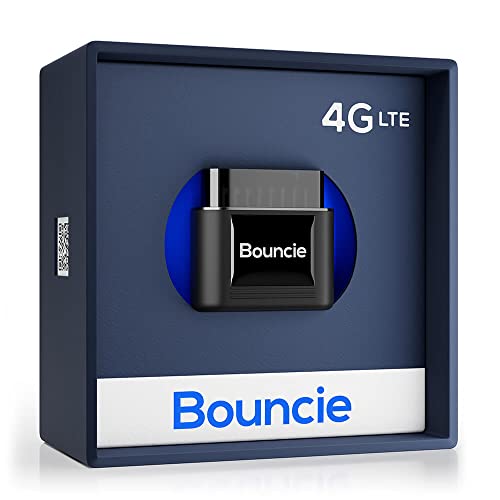
Plug it in once; great for teen drivers, weak for theft
Bouncie GPS Tracker for Vehicles with Real-Time
The Bouncie plugs into your OBD-II port, so there's no battery to recharge and no magnet to lose. You get unlimited trip history, driving-behavior alerts, engine fault codes and crash detection — just not much concealment.
$89.99fromAmazonInstallation takes about ten seconds. Find the OBD-II port under the dash — any vehicle from 1996 on has one — and push the Bouncie in. It draws power from the car, so it never dies and never needs a charge. For a parent watching a new driver, that removes the one maintenance task people actually forget.
The driving data is better than anything else here. Bouncie logs speed, hard braking, rapid acceleration and idle time, then color-codes the route so you can see at a glance where someone was doing 70 in a 45. It reads engine diagnostic codes too, which has saved owners from ignoring a check-engine light. Crash detection sends an SMS on impact.
Owner feedback is the strongest of any product in this lineup, and the themes are consistent: setup was simple, the app is clear, and it keeps working. Several buyers running rental or Turo vehicles report owning many units. The recurring gripe is occasional brief outages, usually resolved without intervention.
The catch is concealment, and it's a big one. An OBD-II tracker sits in the first place an experienced thief checks, and it unplugs with one hand. Bouncie is excellent at telling you how your car is being driven and mediocre at telling you where it went after someone stole it. If anti-theft recovery is your only goal, buy a magnetic puck instead.
Flaws but not dealbreakers
It isn't really hidden. The OBD-II port is a known location, and anyone who's dealt with trackers before will check it. A splitter cable and some wire routing can help, but you're working against the design.
Location updates aren't as granular as the fast magnetic trackers. It's built around trips and behavior, not second-by-second pursuit.
Monthly subscription required, though it's among the simpler plans here with no activation or return fees.
Budget pick
Slap it on and go, but recharge it often
Brickhouse Security Spark Nano GPS Tracker for
The Brickhouse Spark Nano is a magnetic 4G LTE tracker in a rugged water-resistant case you can stick under a car in seconds. Battery life is the weak spot: about two weeks standby, or roughly a week at an hour of tracking a day.
$17.95fromAmazonThe appeal is how little thought installation takes. The magnetic case grabs a frame rail or inner fender, and you're tracking within minutes — no wiring, no OBD port, no splitter cable. If you need a tracker on a borrowed trailer this weekend, or you want to monitor one vehicle for a short stretch, this is the least fussy way to do it.
Where it falls down is runtime, and you should know that going in. Brickhouse rates it at roughly 14 days standby, 14 hours of continuous tracking, or about a week of typical use at an hour of tracking per day. Compared with the Optimus at up to two months, that's a lot of crawling under your car. For long-term covert placement, it's the wrong tool.
The case itself is the strong part. It's rugged and water resistant, built for the underside of a vehicle where it sees salt, spray and gravel. Owners mounting under-chassis in winter weather generally report the housing holding up. The 4G LTE radio works on major carriers with international coverage, so the 3G shutdown isn't a concern.
Owner marks sit in the middle of this lineup. The pattern is that people who use it as a short-term, slap-on device are happy, and people who expected set-and-forget runtime are not. Buy it for the former and you'll be fine.
Flaws but not dealbreakers
Battery life is the shortest here. A week of typical use means a recharge routine, and recharge routines are how trackers end up dead in a drawer.
A subscription is required, so the low hardware cost doesn't stay low once you add service.
Listed package dimensions are much larger than the device itself, which makes it hard to judge the actual footprint before it arrives. Plan your hiding spot after you see it.
Who this is for
Buy a hidden GPS tracker if you own a vehicle that gets stolen often, you're handing keys to a new driver, you keep a classic car in storage, or you run a few work trucks and want to know where they are. Trailer, boat and RV owners get the most obvious benefit, since those sit unattended for weeks and have no built-in security. If your car already has a factory connected-services app with location tracking, check that first — you may be paying for something you have.
This guide covers aftermarket cellular GPS trackers you install yourself and hide on or in a vehicle. It doesn't cover professionally installed hardwired systems, stolen-vehicle recovery services that require a subscription to a monitoring center, or Bluetooth item-finder tags, which aren't a substitute for cellular GPS in a theft. One more thing, and it isn't optional: only track a vehicle you own or have clear legal authority over. Many states make it a crime to place a tracker on someone else's car, and if a vehicle is stolen, give the location data to police rather than going after it yourself.
How we picked
We built this guide from manufacturer specifications, published reviews and recurring themes in owner feedback, weighing five things. Update frequency: how often the device reports, since a once-a-minute ping can't follow a car in motion. Power and runtime: manufacturer battery ratings checked against what owners say they actually get, or whether the unit draws power from the vehicle instead. Size and concealment: listed dimensions, judged against the real hiding places on a car — wheel wells, bumper cavities, behind trim. Network coverage: confirmed 4G LTE or LTE-M support, because the 3G shutdown stranded a generation of older trackers. Total cost: subscription structure and contract terms over two to three years, not just the price of the box.
Other hidden car gps trackers worth considering
If you want a year of service bundled in: The Vyncs - GPS Tracker for Vehicles ($79.99) — The Vyncs plugs into the OBD-II port and includes a year of service with the activation fee, then renews annually — a different math than monthly billing, and often cheaper over time. It reports a location update every 20 seconds through a once-a-minute server push, logs unlimited trips, reads fuel economy and fault codes, and covers 200-plus countries. It's a solid pick for a family watching a teen driver. What it gives up is the interface: owner feedback consistently flags a slow web app and frustrating customer support, and the overall satisfaction pattern is the weakest in this lineup. It's also an OBD-II device, so it has the same concealment problem as the Bouncie — easy to find, easy to unplug.
The competition
Here's what our research surfaced in this category — not everything on the market, just the devices that came up repeatedly in published reviews and owner discussion. A product landing here isn't necessarily bad. It usually means a pick does the same job with fewer compromises, or it serves a narrower buyer than most people shopping for a hidden car tracker.
The AIRBELL Bicycle Bell for Apple AirTag 22.2 ($13.99) — The AIRBELL is a bicycle bell with a hidden compartment sized for an Apple AirTag — a clever bit of design for bike theft, and worth knowing about if that's your problem. It's fiber-reinforced plastic, rings at 85 dB, fits 22.2mm handlebars, and the AirTag isn't included. But it's a bike accessory, not a car tracker, and the bigger issue is what's inside it. An AirTag isn't real-time GPS; it reports only when a nearby Apple device happens to pass it, and both Apple and Google now push unwanted-tracker alerts that can warn a thief something is on board. For a bike parked in a city with lots of iPhones around, it's a reasonable layer. For recovering a stolen car, it isn't the right tool.
Installation and placement notes
Where you hide it matters more than which one you buy. Good spots share three traits: metal to grip, shelter from direct road spray, and a sightline a thief won't check in the first thirty seconds. Inner fender wells, the cavity behind a plastic bumper cover, under a rear seat, and the gap above a spare tire all work. Avoid the engine bay, where heat shortens battery life, and avoid anything within arm's reach of the OBD-II port, since that's the first place a professional looks. If you're using a magnetic unit, wipe the mounting surface clean first — road grime cuts holding strength more than people expect. Check battery level on a schedule you'll actually keep, and recharge before the low-battery alert, not after. For OBD-II trackers, a splitter cable lets you tuck the device up behind the dash instead of leaving it hanging in plain view.
Questions we get
Are hidden GPS trackers for cars legal?
Tracking a vehicle you own is generally legal in the United States. Placing a tracker on a car you don't own or have authority over is a different matter — many states criminalize it, and advocacy groups that work on stalking issues treat covert tracking as a serious harm. If you share a vehicle with someone, the safe answer is to tell them. When in doubt, ask a lawyer in your state rather than guessing.
Where's the best place to hide a GPS tracker on a car?
Inner fender wells, the cavity behind a bumper cover, under a rear seat, or in the spare tire well all work well. You want metal for a magnet to grab, some shelter from direct road spray, and a spot that isn't obvious to someone doing a quick sweep. Skip the engine bay, where heat eats battery life. And skip anywhere a thief can reach in seconds.
Do hidden GPS trackers work without a subscription?
Cellular GPS trackers need a data plan to send location, so essentially all of them require some form of paid service. Some bill monthly, some bundle a year of service into an activation fee. Bluetooth tags like AirTags don't need a subscription, but they also aren't real-time GPS. Over two or three years, the service usually costs more than the device.
Is an AirTag good enough to track a stolen car?
No. Apple's own documentation says the AirTag relies on nearby Apple devices in the Find My network rather than reporting its own location in real time. If a stolen car is parked somewhere without iPhone traffic, you get nothing. Apple and Google also added unwanted-tracker alerts, so a thief with a phone may be warned that an unknown tag is traveling with them.
Do GPS trackers work in parking garages or underground?
Usually not well. GPS needs a view of the sky, and concrete decks and basements block it. Some trackers fall back to cellular tower triangulation or nearby Wi-Fi networks, which gives you a rough area rather than a precise spot. Expect the last reported position before the car went inside, not a live dot on level four.
Should I hardwire a tracker or use a battery model?
It depends on what you're protecting against. Battery models hide anywhere and leave no wiring to trace, but they need recharging on a schedule. Hardwired and OBD-II units never die, but they sit in predictable places a thief can find and unplug. For pure anti-theft, a hidden battery tracker is the stronger choice; for watching a teen driver, the plug-in convenience usually wins.
Why you should trust us
For this guide:
- We read manufacturer specification sheets for every tracker here, comparing stated update intervals, battery ratings, cellular bands and case dimensions.
- We reviewed published coverage of GPS trackers along with recurring themes in owner feedback, paying particular attention to complaints about subscription terms, app reliability and real-world battery life.
- We consulted public guidance from Apple on how the Find My network works, FCC information on the 3G shutdown, NICB and FBI data on vehicle theft, and NNEDV Safety Net material on the legality of tracking devices.
- We read owner reviews on every listing, weighted toward the critical ones, because that is where the recurring failures show up.
- We have a systematic way of automatically fetching the latest prices, so the numbers on this page stay current.
- This is a research-focused guide, so the team may not own every product listed — though we often do own the top winners, which gives us extra context for the recommendations.
- We don't accept free products, and the retailer commission never changes which product we recommend.
Sources
Vehicle Theft Trends - NICB, National Insurance Crime Bureau
Vehicle Tracking and Anti-Theft Guidance - FTC Consumer Advice, Federal Trade Commission
Unwanted Tracking Alerts - Apple Support, Apple
Stalking and Tracking Technology - National Network to End Domestic Violence, NNEDV Safety Net
Vehicle Theft Statistics - FBI Crime Data Explorer, FBI
Vehicle Anti-Theft Devices - Consumer Reports, Consumer Reports
Hyundai/Kia Theft Resources - IIHS Highway Loss Data Institute, IIHS-HLDI
Manufacturer spec sheets (LandAirSea, Spytec, Optimus, Tracki, Bouncie, Vyncs, Brickhouse), Manufacturer
Wireless network sunset notices - FCC, FCC
Amazon product listings and owner reviews for all 7 products
Manufacturer specification pages for each product
Some passages in this guide may be paraphrased with AI help. Prices are refreshed automatically.
More like this.
Continue exploring electronics reviews and recommendations.

The Best GPS Trackers for Vehicles
A GPS tracker earns its keep on ordinary days, not dramatic ones. You want to know your kid got to practice. You want to see whether the work van sat idle…

The Best Dog GPS Trackers
A dog who bolts doesn't give you much time to react. A tracker on the collar turns a frantic hour of shouting their name into a map you can actually…

The Best Pet GPS Trackers
A tracker earns its keep in the ten minutes after a door gets left open. That's the whole pitch. You want to open an app and see a dot moving down the…

The Best Pet GPS Trackers and Smart Collars
Most dogs never need a tracker until the one afternoon they do. A gate gets left open, a thunderstorm hits, a squirrel wins. In that moment you don't want…

The Best GPS Navigation Systems for Cars
A dedicated car GPS does one job, and it does it without asking anything of your phone. It already has the map onboard, so it keeps calling out turns…

The Best Marine GPS Fish Finders
A fish finder earns its keep on the slow days. When nothing's biting, the screen tells you whether you're sitting over flat mud or a submerged brush pile…