The Best Pet GPS Trackers

A tracker earns its keep in the ten minutes after a door gets left open. That's the whole pitch. You want to open an app and see a dot moving down the street, not a last-known location from forty minutes ago. How fast that dot updates, whether the collar works where you actually live, and how much the thing weighs on a small animal's neck matter far more than the feature list on the box. A cat who slips out at dusk and a hunting dog who ranges half a mile into timber need genuinely different hardware.
Here's the part nobody puts on the packaging: no tracker in this category works everywhere. Cellular units go quiet in canyons and back-forty farmland. Bluetooth tags only report when a stranger's phone wanders past, which is great downtown and close to useless on a country road. Satellite units that work anywhere need their own handheld receiver and weigh too much for a cat. Batteries that last months do so by checking in less often, which is exactly the wrong trade during an escape. You're picking which limitation you can live with.
We looked at what owners report over months of use, what the specs actually promise, and where each type of network quietly fails. Most people want live location on a phone, in a town or suburb, on a pet under thirty pounds. We think that the Tractive Smart Cat GPS Tracker is the best pet GPS tracker for most people, and that the Fi New Series 3+ is the one to buy if you have a dog and you're tired of charging a collar every few days.
Everything we recommend

Fastest live updates, in a size a cat can actually wear
Weeks between charges, if your pet is a dog
No subscription ever, if you're on iPhone and live in town

Works where cell service doesn't, at a size only dogs can wear

A boundary your dog respects, without digging a trench
Prices as of Oct 22, 7:36 AM PT · Details
At a glance
| Product | Battery Life | Subscription | Price | |
|---|---|---|---|---|
| Tractive Smart Cat GPS TrackerTop pick | Up to 5 Days | Required | $24.50 |
| Fi New Series 3+ Smart Dog TrackerRunner-up | — | 12 Month Included | Check price |
| Apple AirTagBudget pick | 1+ Year | — | $89 |
| Garmin T 5X Dog DeviceUpgrade pick | Up to 80 Hours | — | Check price |
 | Whistle and GoAlso in lineup | — | — | $1.29 |
| Halo Collar 5 Wireless Dog Fence &Also great | All-Day Battery | Required | $524 |
 | SpotOn GPS Wireless Dog Fence CollarAlso consider | 25-40+ Hours | No Subscription | $899 |
 | Life360 Tile Sticker - Small Bluetooth TrackerAlso consider | — | — | $44.99 |
 | Samsung SmartTag2Also in lineup | 1.5 Year Battery | — | $52.69 |
 | 2026 GPS Tracker for PetAlso in lineup | Long Battery Life | No Monthly Fee | Check price |
Prices as of Oct 22, 7:36 AM PT · Details
How we picked
Network type. We separated cellular, satellite and Bluetooth crowd networks first, because that choice determines where a tracker works at all. Owner feedback consistently shows cellular units failing in rural areas and Bluetooth tags failing outside dense neighborhoods.
Update speed. For escape recovery we wanted location refreshes measured in seconds, not minutes. A tracker that pings once a minute can place a running dog a block from where the alert says it is.
Weight and fit. We checked listed weights against pet size and treated anything much above an ounce as unsuitable for cats and dogs under ten pounds. Breakaway collars and proper mounting hardware counted in a product's favor.
Ongoing cost. Subscription-required trackers keep charging you long after purchase, so we weighed that against no-fee options rather than comparing hardware alone. Included membership periods factored in.
Durability. IP67 or IPX7 water resistance was the floor, since pets swim, roll in mud and get rained on. We also read owner reports about buckles, clasps and collars failing after months of use.
Top pick
Fastest live updates, in a size a cat can actually wear
Tractive Smart Cat GPS Tracker
The Tractive Cat Mini is a cellular tracker that refreshes your pet's location every two to three seconds during live tracking, and it weighs under an ounce. It's the rare unit light enough for a cat and fast enough to chase down a dog on the run.
$24.50fromAmazonPrices as of Oct 22, 7:36 AM PT · Details
Update speed is the one spec that matters during an escape, and Tractive wins it. Two to three seconds between pings means the dot on your map is roughly where your pet is right now. Trackers that refresh once a minute can put a running animal a full block from where the app says. That gap is the difference between catching up and starting a search.
It's tiny. At about nine-tenths of an ounce, it clears the weight threshold that makes cat collars workable at all, and it's rated for cats from roughly six and a half pounds up. A breakaway collar comes in the box, which matters more than it sounds — you don't want a cat snagged on a fence by the thing meant to keep her safe. Most cellular trackers are simply too heavy for this job.
The safe-zone alerts are the feature you'll use daily. Draw a boundary around your yard, and you get a push notification when your pet crosses it, before you've noticed anything is wrong. Location history and territory maps show you where an outdoor cat actually spends her afternoons, which is either reassuring or alarming depending on your neighbor's garage.
Owners who've run these for years are the most convincing evidence here. People report keeping the same unit going for three and four years of daily outdoor use, through rain and rough handling — it's waterproof and it holds up. The wellness side tracks sleep and activity and flags unusual changes, which is a nice extra rather than a reason to buy.
Flaws but not dealbreakers
Battery is the recurring complaint, and it's a real one. The five-day figure is a best case; owners describe recharging every two or three days when a pet is genuinely active, and live tracking with the light and sound running drains it fast. You'll build a habit of charging it, the way you charge a watch.
It needs a subscription, forever, and there's no version that works without one. Plans are modest per month but they never stop. The battery-saving feature also leans on setting up a home Wi-Fi zone, which some owners find fiddly to configure.
Cellular coverage is the hard limit. In deep rural areas and remote wilderness, the map goes stale, and some owners report stretches of hours where the tracker simply doesn't report in. If your pet's escape route heads toward the middle of nowhere, buy something satellite-based instead.
Runner-up
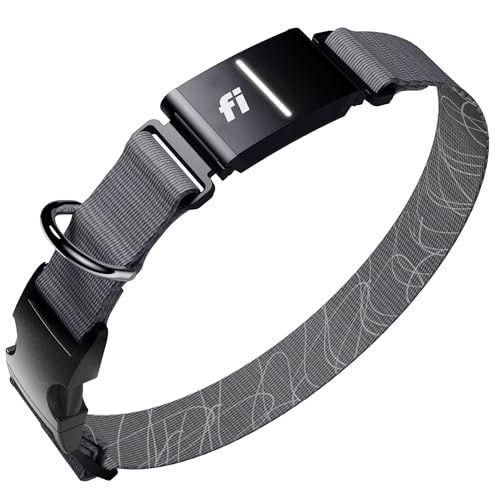
Weeks between charges, if your pet is a dog
Fi New Series 3+ Smart Dog Tracker
The Fi Series 3+ is a dog collar with GPS built in, and its headline trick is battery life measured in weeks rather than days. It also tracks barking, scratching, eating and rest, giving you a picture of your dog's habits alongside location.
Check priceatAmazonPrices as of Oct 22, 7:36 AM PT · Details
If charging a collar every few days would defeat you, buy this one. Owners consistently describe going weeks between charges in normal use, and Fi claims up to three months in power-saving mode. That's a different relationship with the device. You stop thinking about it, which means it's actually charged the day your dog bolts.
The escape alerts fire fast. Set a virtual fence around your property and you'll get notified within seconds of a boundary crossing, then continuous updates every few seconds while your dog is loose. Owners describe using exactly this to catch a wandering dog blocks away before anything happened. A purchase includes a year of membership, so you're not paying twice out of the gate.
The behavior tracking is more useful than it sounds. Barking, licking, scratching, drinking and rest all get logged, and a change in the pattern is often the first hint something's off. You can also stash vet records and vaccine paperwork in the app. It works with iPhone and Android, and there's an Apple Watch view for live location.
It's built like a collar rather than a gadget clipped to one. That means it fits properly and stays put on a dog that swims and rolls in things. There's an LED for night walks. Third-party bands are widely available if you want a different look.
Flaws but not dealbreakers
It's a dog product, full stop. At roughly two and a half ounces plus collar, it's too much hardware for a cat or a very small dog, and Tractive is the better answer there.
Rural accuracy is where owners get frustrated. Several report geofence alerts that either fire when nothing happened or fail to fire when the dog left, and the pattern shows up most in areas with thin cell coverage. In town it's dependable; on acreage it isn't the tool for the job.
After the included year, you're on an annual plan. Coverage is US-focused, so it's a poor choice if you travel internationally with your dog.
Budget pick
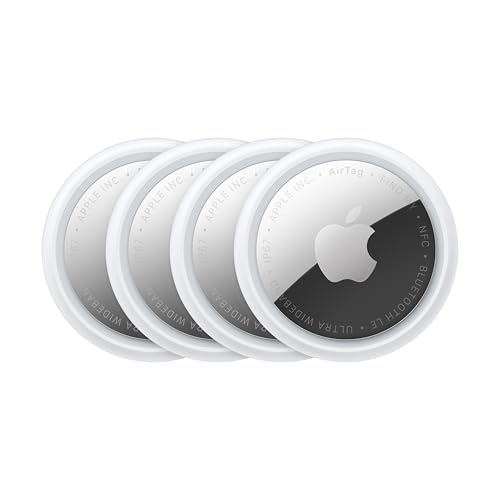
No subscription ever, if you're on iPhone and live in town
Apple AirTag
AirTags aren't real GPS trackers — they report location only when someone else's Apple device passes nearby. In a city or dense suburb, that happens constantly, and the four-pack costs less per unit than anything else here with zero ongoing fees.
$89fromAmazonPrices as of Oct 22, 7:36 AM PT · Details
The value proposition is simple: you never pay a monthly bill. Every cellular tracker in this guide charges you indefinitely. An AirTag charges you once, then runs about a year on a coin cell you swap yourself. Over a few years that difference is enormous, and you get four of them, so the spares can live on your keys and your luggage.
Where it shines is the last hundred feet. Precision Finding uses ultra wideband to give you an arrow and a distance readout, walking you straight to the tag, and the second-generation model extends that range and adds a noticeably louder speaker. Owners describe it as genuinely accurate once you're close. If your cat is hiding under a deck, this is the feature that finds her.
Be clear-eyed about how it works. There's no GPS chip talking to a satellite. The tag broadcasts, and any passing iPhone quietly relays the position to you. On a city block that's near-continuous coverage. On a rural road at 2 a.m., it may be hours between updates, if you get one at all.
You'll need a mount. Apple doesn't sell a pet collar holder, so plan on a third-party one, and pick an IP67-rated case if your dog swims — the tag alone isn't built for that. It's iPhone-only, which rules it out entirely for Android households.
Flaws but not dealbreakers
It is not a tracker for a pet that runs. Passive detection can't follow a moving animal, and there are no geofence alerts, so nothing tells you the pet has left. It finds a stationary pet who's hiding, not a fleeing one.
Coverage collapses outside populated areas. Owners note that positions lag behind reality even in normal use, and the lag gets much worse where fewer Apple devices are around.
No Android support at all, and no pet-specific design. You're adapting a general-purpose item tracker to a job it wasn't built for.
Upgrade pick
Works where cell service doesn't, at a size only dogs can wear
Garmin T 5X Dog Device
The Garmin T 5X talks to GPS and GLONASS satellites directly, not cell towers, and tracks up to nine miles line of sight. For hunting dogs and backcountry work it's the only category here that functions at all, with no subscription ever.
Check priceatAmazonPrices as of Oct 22, 7:36 AM PT · Details
No cell tower, no problem — this is the whole reason it exists. Every cellular tracker in this guide goes blind in a canyon or deep timber. The T 5X doesn't, because it isn't asking a network for permission. Hunters and field-trial handlers have relied on Garmin's dog gear for decades, and owners with twenty-year-old receivers still in service are common.
Range is the other differentiator. Nine miles line of sight is far beyond anything cellular, and battery runs up to eighty hours, with a remote sleep mode you trigger from the handheld to stretch it further. LED beacon lights help you spot a dog at dusk. It's rated water-resistant to ten meters, which covers everything short of a boat accident.
The catch is that you need a Garmin handheld or Alpha unit to see the map — there's no phone app. That's a second purchase, and owners routinely mention buying one alongside the collar. On the other hand, a single Alpha can follow multiple dogs at once, which is the standard setup for anyone running a pack.
There's no subscription, ever. Over five or six years of ownership that changes the math against any monthly-fee tracker considerably, even though the collar itself is the priciest hardware here.
Flaws but not dealbreakers
It's heavy and bulky — well over a pound with the collar. This is field equipment for medium and large working dogs. Do not put it on a cat or a small dog.
The handheld requirement is a real barrier. If you were hoping to look at your phone, this isn't your tracker, and the total outlay once you add a receiver is substantial.
Setup and updates run through Garmin's desktop software rather than an app, which feels dated next to Tractive or Fi.
Also great
A boundary your dog respects, without digging a trench
Halo Collar 5 Wireless Dog Fence &
The Halo Collar 5 doesn't just track — it enforces GPS boundaries with sound, vibration and optional static feedback. For yards where a physical fence isn't allowed or practical, it's the most refined virtual fence you can buy for a medium or large dog.
$524fromAmazonPrices as of Oct 22, 7:36 AM PT · Details
Containment is a different job from tracking, and Halo is built for it. You draw a fence of any shape in the app, around irregular property lines that buried wire could never follow, and the collar warns your dog as she approaches. Owners with fence-jumping and yard-digging escape artists describe the behavior stopping within weeks. That's the outcome you're paying for.
The positioning hardware is unusually good. It uses dual-frequency L1 and L5 satellites with ground-station corrections, updating twenty times per second, which is what makes a boundary hold steady instead of drifting. You can store multiple fences, so a dog who splits time between two houses or hikes with you keeps the same setup everywhere.
Training is included and you'll need it. A program built with Cesar Millan walks you through teaching the dog what the tones mean, and owners who put in the daily sessions report it works. Owners who expected the collar to do the work on its own are the ones writing the frustrated reviews. Battery runs all day and recharges in about an hour.
It tracks too. AlwaysOn GPS is standard with every plan, so you get live location and instant alerts if your dog approaches or crosses the line, not just the correction.
Flaws but not dealbreakers
Cell coverage is the weak point, and owners are blunt about it. Away from Wi-Fi and a strong signal, alerts stop arriving reliably. Several rural owners report the app struggling to connect at all. If you live on acreage with thin service, look at SpotOn instead.
This is expensive twice — the collar and then a required membership, with no features at all until you pick a plan. Nothing works out of the box.
It's large and heavy, wrong for dogs under about twenty pounds and useless for cats. And it demands real training time; skip that and you've bought a costly tracker with a boundary your dog ignores.
Who this is for
Buy a tracker if your pet gets out, or could. That's outdoor cats, escape-artist dogs, anyone whose fence has a gap, and anyone whose front door opens onto a busy street. It's also worth it if you simply want to stop guessing where a roaming cat spends her day. If your pet lives strictly indoors and never bolts, you don't need one — and if you do buy anyway, a no-subscription Bluetooth tag is the sensible level of commitment.
This guide covers wearable location devices: cellular trackers, satellite trackers, Bluetooth crowd-network tags and GPS containment collars. Two of the picks are fences rather than trackers, and we've flagged which is which, because they solve different problems. We don't cover microchips, which are for identification after someone else finds your pet, not for finding your pet yourself. Nor do we cover buried-wire fence systems or camera-based monitors.
How we picked
Network type: Cellular, satellite and Bluetooth crowd networks fail in different places, and that choice matters more than any feature, so we sorted by it first. Update speed: For a pet on the run we wanted refreshes in seconds; a once-a-minute ping can be a block off. Weight and fit: Anything much over an ounce is wrong for a cat or a small dog, and breakaway collars counted for something. Ongoing cost: Subscription trackers keep billing you indefinitely, so we weighed that against no-fee alternatives instead of comparing hardware in isolation. Durability: IP67 or IPX7 was the floor, and we read owner reports on clasps, buckles and collars that gave out after a few months.
Other pet gps trackers worth considering
If you want a GPS fence on rural acreage: The SpotOn GPS Wireless Dog Fence Collar — The SpotOn Omni connects to satellites rather than cell towers, and its Off-Grid mode builds fences with no service or internet at all — which is why farm and ranch owners choose it over Halo. You can draw fences from half an acre up past a hundred thousand, with unlimited saved locations and no required subscription. Owners running livestock guardian dogs on hundreds of acres describe it as the only thing that works. Battery goes forty-plus hours without a subscription. It's the most expensive hardware here, it's bulky and wrong for small dogs, and a recurring complaint is the collar buckle coming open — owners report losing collars in the field that way. Boundary accuracy can also wander under heavy canopy.
If you want a cheap backup that weighs almost nothing: The Life360 Tile Sticker - Small Bluetooth Tracker — The Tile Sticker is an adhesive Bluetooth tag light enough for any cat collar, and it ships in a two-pack with no required subscription for basic finding. Owners slip them into pet collar pouches and treat them as insurance behind a real tracker. In a dense neighborhood the Tile and Life360 network can surface a last-known location quickly. But the honest reading of owner feedback is that it only works when another app user walks past — range is around 250 feet, there's no geofencing in the free tier, and in the suburbs it's spotty. The Life360 app also draws complaints. Buy it as a second layer, not a first.
The competition
This is what our research turned up across the major categories, not a census of every tracker sold. The pet tracking market churns constantly, especially at the budget end, where new brands appear and vanish within a year. The products below are real options that lost to a pick for specific reasons — but a few of them are the right call for particular households.
The Samsung SmartTag2 — The Samsung SmartTag2 is the AirTag answer for Galaxy households: ultra wideband precision finding, native SmartThings integration, IP67 water and dust resistance, and roughly a year and a half on a coin cell. That durability rating is a genuine edge over most Bluetooth tags for a dog who swims. It loses to the AirTag on the thing that matters most for a crowd-sourced tag — network density, which trails Apple's meaningfully in most areas — and it works only with Galaxy devices, not Android broadly. This particular listing is a global edition without US warranty. If your house runs on Samsung phones and you want a no-fee tag, it's the one to get.
The 2026 GPS Tracker for Pet — This IOYDC tracker promises real-time location with no SIM card and no monthly fee, at about a third of an ounce with IP67 waterproofing, 72-hour route history and location sharing with family or a dog walker. On paper it's an appealing gap-filler. But it's a new brand with little track record, the listing's claims about how it achieves subscription-free real-time tracking aren't clearly explained, and there's no meaningful body of long-term owner feedback to check them against. Given that a tracker's whole value shows up on the worst day you have, we'd rather send you to a brand with years of reports behind it.
The Whistle and Go — Whistle's collar-mounted trackers pair cellular GPS with health monitoring — activity, sleep, and scratch and lick detection that can flag a skin issue or joint pain early — and that combination is genuinely useful for a senior dog or a breed prone to those problems. It's a reasonable alternative to Fi if health data is your priority. In this lineup, though, it loses on the basics: it's heavier than GPS-only trackers, too much for dogs under about ten pounds, its location updates are slower than Tractive's in an active escape, and the behavioral insights need weeks of baseline data before they mean anything. And it carries a subscription on top of the hardware.
Fit, charging and setup
Two habits make a tracker actually work. First, charge it on a schedule instead of waiting for the low-battery alert — pick a night, plug it in, and stick to it, since the day it dies is the day you'll need it. Second, check the collar fit weekly. Owners lose more trackers to a loose buckle or a slipped collar than to any technical failure, and a breakaway collar that's too roomy will do exactly what it's designed to do at the wrong moment. Two fingers should slide under the strap, no more. Walk your geofence boundary before you trust it, and set it slightly inside your property line so alerts fire while there's still time. For containment collars, do the daily training sessions the manufacturer prescribes; skipping them is the single most common reason owners end up disappointed. Rinse mud off the contacts before charging.
Questions we get
What's the best pet GPS tracker for a cat?
The Tractive Cat Mini, by a wide margin. It's under an ounce, it's rated for cats from about six and a half pounds, and it comes with a breakaway collar so your cat can't get hung up on a branch. Most cellular trackers are simply too heavy to put on a cat's neck. If you want no subscription and live somewhere dense, a Tile Sticker in a collar pouch is the lightweight fallback.
Do any pet trackers work without a monthly subscription?
Yes — the Garmin T 5X, Apple AirTag, Samsung SmartTag2 and the IOYDC tracker all skip recurring fees, and SpotOn's fences work without a plan. The trade-offs differ, though. Bluetooth tags depend on strangers' phones passing nearby, and the Garmin needs a separate handheld receiver instead of your phone. Free of subscription doesn't mean free of compromise.
How accurate are these, really?
Cellular GPS trackers generally land within ten to thirty feet under open sky, and closer in a clear yard than under trees or between buildings. Bluetooth tags aren't measuring position at all — they report where a passing phone spotted them, which puts your pet on a block rather than at an address. Dedicated satellite units like the Garmin are the most precise in open country. Every one of them degrades under heavy canopy.
What should I get for a dog under ten pounds?
The Tractive Cat Mini, despite the name — it's the lightest cellular tracker here and small dogs wear it fine. Avoid anything much over an ounce and a half for a pet that size, since collar weight worn all day is a real strain. The Fi collar, Halo and SpotOn are all far too heavy. A Tile Sticker is the featherweight option if Bluetooth coverage where you live is good enough.
Can I just put an AirTag on my dog's collar?
You can, with a third-party holder that clips to a D-ring, and plenty of owners do. Get an IP67-rated case if your dog swims, because the AirTag on its own isn't sealed for that. Just be honest about what you're getting: it will help you find a pet who's hiding nearby, but it won't follow one who's running, and it won't alert you when she leaves the yard.
What's the actual difference between a GPS tracker and a Bluetooth tag?
A GPS tracker figures out its own position and sends it to you over a cell or satellite network, so it works whether or not anyone else is around. A Bluetooth tag just broadcasts, and it's only located when another user's phone happens within a few hundred feet. In a city that's often enough. On a rural road it can mean hours of silence, or nothing at all.
Why you should trust us
For this guide:
- We compared manufacturer specifications across all ten trackers, focusing on update intervals, listed weights, water resistance ratings and what each subscription actually unlocks.
- We read owner feedback for recurring failure patterns rather than one-off complaints, which is how the battery, rural coverage and collar-buckle issues in this guide surfaced.
- We grouped products by network type first — cellular, satellite and Bluetooth crowd network — because published reviews and owner reports agree that this determines where a tracker works at all.
- We read owner reviews on every listing, weighted toward the critical ones, because that is where the recurring failures show up.
- We have a systematic way of automatically fetching the latest prices, so the numbers on this page stay current.
- This is a research-focused guide, so the team may not own every product listed — though we often do own the top winners, which gives us extra context for the recommendations.
- We don't accept free products, and the retailer commission never changes which product we recommend.
Sources
Best GPS Dog Collar and Pet Tracker, Wirecutter / The New York Times
The Best Pet GPS Trackers for 2026, PCMag
Best Pet Trackers, Tom's Guide
Best Pet GPS Trackers Tested by Editors, Good Housekeeping
Best Pet GPS Trackers, CNET
Tractive GPS 5 Official Product Page and Specifications, Tractive
Fi Series 3 Smart Dog Collar Specifications, Fi
Garmin T 5x Dog Device — Official Specs, Garmin
Amazon product listings and owner reviews for all 10 products
Manufacturer specification pages for each product
Some passages in this guide may be paraphrased with AI help.
Product prices and availability are accurate as of the date/time indicated and are subject to change. Any price and availability information displayed on Amazon.com at the time of purchase will apply to the purchase of this product.
More like this.
Continue exploring pet reviews and recommendations.

The Best Pet GPS Trackers and Smart Collars
Most dogs never need a tracker until the one afternoon they do. A gate gets left open, a thunderstorm hits, a squirrel wins. In that moment you don't want…

The Best Dog GPS Trackers
A dog who bolts doesn't give you much time to react. A tracker on the collar turns a frantic hour of shouting their name into a map you can actually…

The Best Hidden Car GPS Trackers
A hidden GPS tracker earns its keep in one bad moment. Your car isn't in the driveway, and you'd like to tell the police where it went instead of filling…

The Best GPS Trackers for Vehicles
A GPS tracker earns its keep on ordinary days, not dramatic ones. You want to know your kid got to practice. You want to see whether the work van sat idle…

The Best Geocaching GPS Handhelds of 2026
Geocaching starts out as a phone hobby. Then you chase a cache into a hemlock stand, your blue dot starts drifting in lazy circles, and your battery…

The Best Marine GPS Fish Finders
A fish finder earns its keep on the slow days. When nothing's biting, the screen tells you whether you're sitting over flat mud or a submerged brush pile…