The Best Dog GPS Trackers
A dog who bolts doesn't give you much time to react. A tracker on the collar turns a frantic hour of shouting their name into a map you can actually follow. Roughly ten million pets go missing in the United States every year, and dogs without a microchip or a tracker often don't make it home. What you want from one of these is boring reliability: a location that updates fast, an alert the moment your dog leaves the yard, and a battery you don't have to think about.
None of these are magic. Almost all of them lean on a cell network, so coverage on your street matters more than any spec on the box. GPS drifts, too. Expect tens of feet of error under heavy tree cover or inside a house, which is why owners of nearly every brand describe the occasional phantom escape alert. Most also need a subscription, so the device itself is only part of what you'll pay over a couple of years. Budget for the service before you fall for a feature list.
So pick for your situation, not for the longest spec sheet. City and suburb dogs are well served by almost anything with a real cellular radio. Rural property, thick woods and hunting country are a different story, and that's where network choice — or skipping the network entirely — decides whether the thing works at all. We think that the Fi Series 3+ is the best dog GPS tracker for most people, and that the Tractive Smart Dog GPS Tracker is the one to buy if you want live location updates every couple of seconds.
Everything we recommend
Months of battery and fast escape alerts for everyday dogs

Second-by-second live tracking, if you don't mind weekly charging

For hunting country with no cell service at all
At a glance
| Product | Weight | Range | Price | |
|---|---|---|---|---|
| Fi Series 3+ Dog GPS CollarTop pick | — | No Range Limit | $228 |
| Tractive Smart Dog GPS TrackerRunner-up | 0.08 lbs | Unlimited Range | $55.30On sale |
| Garmin Alpha 300i Handheld with inReach® TechnologyAlso great | 0.08 lbs | Up to 9 Miles | $849.99 |
 | SpotOn Nova GPS Dog Fence CollarAlso consider | 0.84 lbs | — | $999 |
 | Halo Collar 5 GPS Wireless Dog FenceAlso in lineup | 0.26 lbs | — | $524On sale |
 | Apple AirTagAlso consider | 0.09 lbs | Up to 1.5X Range | $89On sale |
How we picked
Network and coverage. We compared what each device actually connects to — LTE-M, standard cellular, satellite, or a private radio link — because that decides whether it works where you live. Anything that depends on crowdsourced Bluetooth got treated as a finder, not a tracker.
Battery and charging. We read manufacturer runtime claims next to what owners consistently report, since the two rarely match. Anything you'd have to charge more than once a week in normal use lost points.
Alerts and accuracy. Published testing puts good assisted-GPS trackers around 8 to 15 feet in open sky, degrading to 25 to 50 feet indoors or under canopy. We wanted fast escape alerts and update rates quick enough to follow a moving dog.
Fit and sealing. We looked at weight, minimum dog size and the water rating on the spec sheet. For dogs under about ten pounds, a heavy module is a comfort problem, not a preference.
Ongoing cost and app. Nearly all of these need a subscription, so we noted what stops working without one and how family sharing and setup are handled. Owner feedback about support and app reliability counted here too.
Top pick
Months of battery and fast escape alerts for everyday dogs
Fi Series 3+ Dog GPS Collar
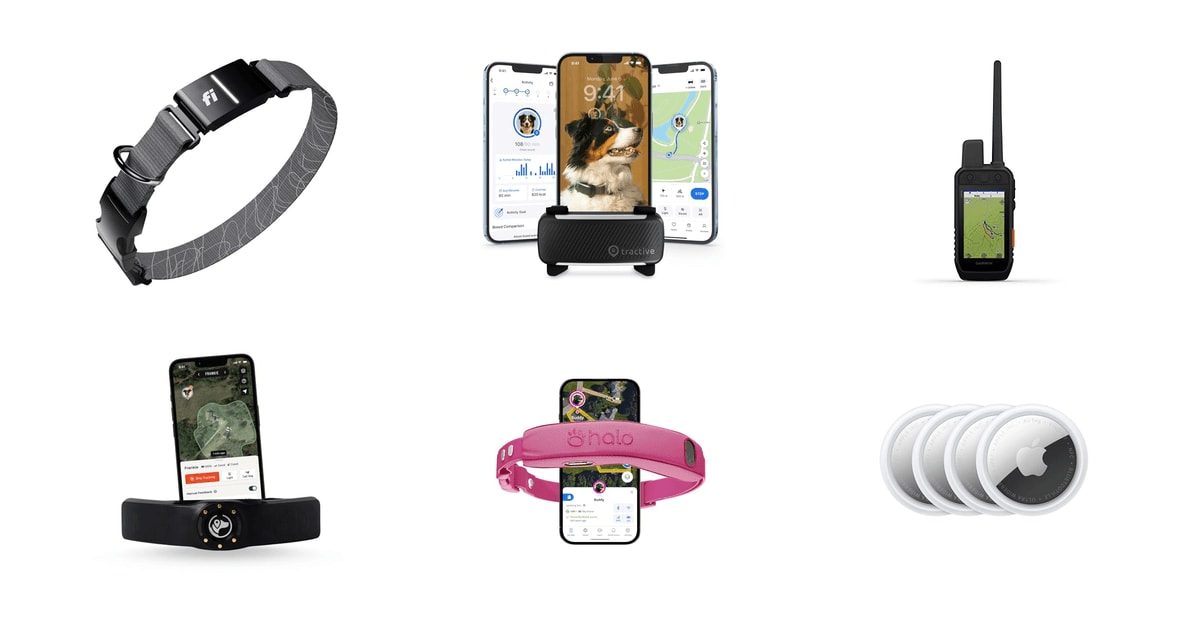
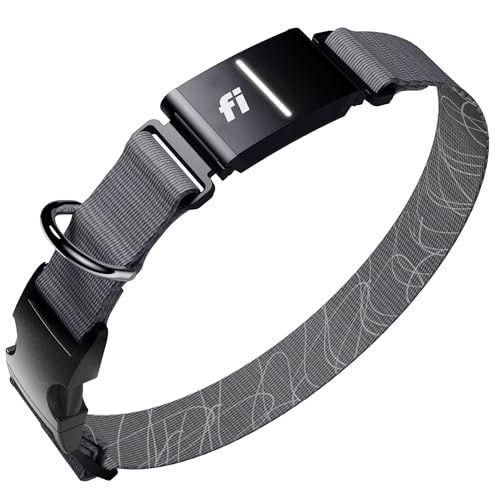
The Fi Series 3+ is a full collar with the tracker built into the band, and it runs for weeks between charges instead of days. You get instant escape alerts, step and sleep tracking, an LED for dark walks, and a year of service included.
$228fromAmazonThe battery is the reason to buy it. Fi rates the Series 3+ for up to three months in standard mode, and owners who've gone through two or three generations of the collar describe charging it every few weeks rather than every few days. That matters more than it sounds. A tracker you forget to charge is a tracker that's dead on the night your dog slips the gate.
It's also a real collar, not a puck you zip-tie onto one. The tracking module sits in a stainless-steel frame rated IP68, so swimming, mud and a soaking walk are all fine. Third-party bands fit the module if you want a different look. The built-in LED sounds like a gimmick and turns out to be genuinely useful on dark early-morning walks.
Fi runs on LTE-M, and that's a real edge outside the city. LTE-M is designed for low-power devices and pushes through buildings and terrain better than standard LTE on the same power budget. In practice you get a better shot at a fix from the back of a wooded lot or the inside of a stranger's garage. It isn't a guarantee. It is the right network for this job.
The app does the ordinary things well. Escape alerts arrive quickly, a dedicated lost-dog mode tightens the update rate, and the activity and sleep trends are readable instead of a wall of charts. Everyone in the house can follow along from their own phone. Setup takes a few minutes, and this listing includes twelve months of service, so you're not picking a plan before you've opened the box.
Flaws but not dealbreakers
Coverage is the catch, and Fi doesn't escape it. Owners on rural property report the collar putting them in the general vicinity rather than on the dog, and false escape alerts show up in feedback here as they do for every brand in this guide. If your house already drops calls, treat this as a lost-dog tool rather than a fence.
The included year of service does run out. After that it's a recurring bill for as long as you want tracking, and the smart features go quiet without it. This particular listing is the Large size in gray, so measure your dog's neck before you order.
Runner-upOn sale
Second-by-second live tracking, if you don't mind weekly charging
Tractive Smart Dog GPS Tracker
Tractive's tracker clips onto the collar your dog already wears and refreshes their location every two to three seconds in Live mode. It adds heart and respiratory rate monitoring, bark and sleep alerts, and virtual fences, and it works on cellular networks in well over a hundred countries.
$55.30fromAmazonList priceLive mode is the headline. Most trackers update about once a minute, which is fine for a map pin and useless when you're running across a field after a dog. Tractive refreshes every two to three seconds, so the arrow on your phone moves the way your dog moves. Owners with wooded rural acreage credit that refresh rate with actually catching up to a loose dog instead of chasing stale pins.
It's small, light, and works with whatever collar you already like. The unit weighs a little over an ounce, and Tractive rates it for dogs over eight pounds. There's no proprietary band to buy and no color to match. If your dog is comfortable in the collar they've got, this bolts on and stays out of the way.
The health features are a bonus rather than the reason to buy. It watches heart and respiratory rate, learns your dog's normal sleep, activity and barking, then flags changes. Treat that as a nudge to call your vet, not a diagnosis. Virtual fences and location history fill out the rest, and the louder beeper doubles as a recall cue if your dog is already trained to a tone.
Coverage across borders is the quiet strength. Tractive works in a long list of countries on the same account, so it's the sensible pick if you drive your dog into another country or move around a lot. Plans come in tiers, and longer commitments cost less per month, which is worth sorting out before you activate.
Flaws but not dealbreakers
The battery claim and real life don't quite line up. Tractive rates it for up to fourteen days, and owners more often describe about a week — less if you lean on Live mode, which drains it fast. Plan on charging it every weekend and you won't be caught out.
Alerts can lag. Owner feedback regularly mentions escape notifications arriving late enough to matter, and some describe frustrating support experiences when a device or a plan goes wrong. It's also subscription-only. Without an active plan, the hardware does nothing.
Also great
For hunting country with no cell service at all
Garmin Alpha 300i Handheld with inReach® Technology
The Alpha 300i is a handheld that talks straight to Garmin's dog collars over its own radio, with no cell network in the middle. It follows up to twenty dogs as far as nine miles out and can send two-way messages and an SOS over satellite.
$849.99fromAmazonThis is the only pick here that doesn't care whether you have a signal. The Alpha uses a dedicated radio link between the handheld and the dog collar, so it keeps working in canyons, deep timber and country where your phone shows one bar on a good day. If your dog works somewhere your carrier gave up on, nothing else in this guide comes close.
The numbers are built for real hunting. Garmin rates it for up to twenty dogs at once, out to nine miles line-of-sight depending on the collar, with updates as quick as every 2.5 seconds. The 3.5-inch touchscreen stays readable in direct sun, and the physical buttons let you make a fast change without pulling off a glove.
The inReach side gets overlooked. The handheld sends two-way messages and an interactive SOS over the global Iridium satellite network and can reach Garmin's search-and-rescue coordination center. If you hunt alone, that's a safety device for you, not just a tracker for your dog. It needs its own active subscription to work.
Owner feedback is consistent about the jump from the older Alpha: the bigger screen and the newer interface make this one far easier to live with. Pairing to a collar takes seconds and the link holds up over long days. Most people charge the handheld and the collar after every outing, which is the normal rhythm for gear like this.
Flaws but not dealbreakers
The handheld is only half a system. Dog collars are sold separately, so buying this alone leaves you with nothing to track. Budget for the collar — or two — as part of the decision.
It's also a lot of device. Owners repeatedly describe menus and options designed for field trials rather than for someone who wants a pin on a map, and both premium maps and satellite messaging want their own subscriptions. If you just need to know where your Labrador got to in the neighborhood, this is the wrong tool.
Who this is for
Buy one of these if your dog has ever gotten out, or if you'd rather not find out how they'd handle it. Escape artists, high-anxiety rescues, working dogs and anyone with a big unfenced property get the most out of a real cellular tracker. If your dog lives on leash in an apartment and never slips a collar, you probably don't need a subscription for peace of mind — a microchip and a tag cover you.
This guide covers trackers that tell you where your dog is. Two of our other recommendations are virtual fences, which are a different product with a different job: keeping a dog inside a boundary you draw, usually with a warning tone and an optional correction. They're worth a look if containment is your actual problem, but don't buy a fence expecting the tracking to behave like a dedicated tracker. We also don't cover microchips, which can't be located at a distance, or GPS collars sold only through professional trainers.
How we picked
Network: we favored devices with a real radio behind them — LTE-M, satellite or a private link — over anything that leans on crowdsourced Bluetooth. Battery: we weighed rated runtime against what owners actually describe, and anything needing more than a weekly charge lost ground. Alerts and accuracy: we wanted update rates fast enough to follow a moving dog and escape alerts that fire quickly, knowing published testing puts good trackers at roughly 8 to 15 feet in open sky and much worse under canopy. Fit and sealing: weight, minimum dog size and the IP rating all had to suit the dog wearing it. Ongoing cost: we noted what each subscription unlocks and what stops working without it.
Other dog gps trackers worth considering
If you want a virtual fence instead of a tracker: The SpotOn Nova GPS Dog Fence Collar ($999) — The SpotOn Nova draws boundaries with dual-band GPS and holds them in places buried wire struggles — wooded lots, uneven ground, a property line that isn't a rectangle. You can make unlimited fences of any shape, add keep-out zones around a pool or garden, and get 1:1 help from a certified trainer, which is more useful than it sounds because these collars only work if the dog is trained to them. SpotOn cites 99.3% containment across aggregate user data. What you give up is tracking polish: it's a heavier collar, a smaller company's app, and owner feedback includes real stories of drift and misfired corrections. It's the choice when your problem is keeping a dog home, not finding one.
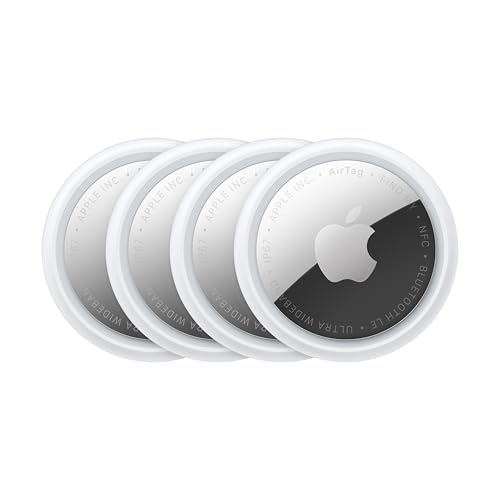
If you refuse to pay a subscription: The Apple AirTag ($89) — An AirTag on the collar costs you nothing per month and rides on the Find My network, which spans more than a billion Apple devices. In a dense neighborhood that's genuinely effective, and the second-generation tag is louder and reaches farther with Ultra Wideband, so the last hundred feet of the search go quickly. But be honest about what it is: there's no GPS and no cellular radio inside, so it only reports a position when someone else's iPhone happens to pass nearby. On a rural road or a hiking trail, that can mean hours of nothing. It's a finder for a dog who wandered two streets over, and it needs a collar mount you buy separately.
The competition
This is what our research surfaced, not a census of the category. Plenty of trackers exist that we didn't have listing details for, and new ones appear constantly.
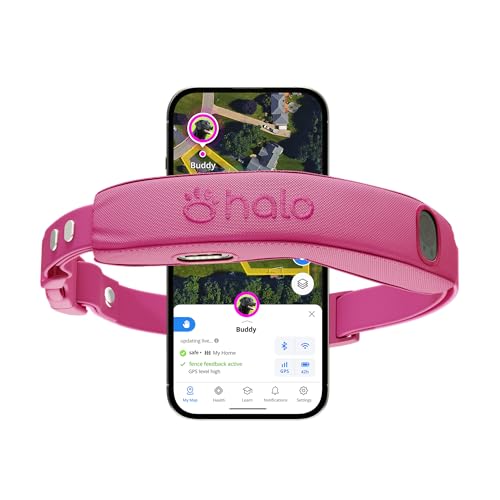
The Halo Collar 5 GPS Wireless Dog Fence ($524) — The Halo Collar 5 is a wireless fence with GPS tracking attached, and on paper it's impressive: L1 and L5 satellite bands with ground-station corrections, a claimed two-foot accuracy, unlimited stored fences, and a training program built into the app. Owners with digging beagles and fence-hopping farm dogs describe it working exactly as advertised. It didn't beat a pick because its weak spot is the same place people most need it. Feedback from rural buyers repeatedly describes alerts and app functions failing once the dog leaves Wi-Fi range and cell signal thins out, and app reliability complaints are common enough to notice. If you've got solid coverage, a suburban yard and a dog you want trained to a boundary, it's still worth considering.
Fit and daily use
Fit matters more than people expect. The collar should ride high on the neck with room for two fingers underneath. A loose collar lets the module swing, which reads activity badly and can rub a bald patch over a few weeks. Check it often on a growing puppy. Rinse the tracker after pond or beach days, since these are sealed against water but not against dried salt and grit working into the seams. Pick a charging habit you'll actually keep rather than waiting for a low-battery warning you might miss. And test everything before you need it: walk to the end of the street, open live tracking, and confirm the map does what you expect.
Questions we get
Do dog GPS trackers work in rural areas with no cell service?
Most don't, because the GPS chip finds the location but a cell network is what sends it to your phone. If your dog roams somewhere with no signal, the Garmin Alpha 300i is the answer — it uses its own radio link to the dog collar and doesn't touch a carrier network at all. Among cellular trackers, LTE-M devices like the Fi Series 3+ hold on better than standard LTE, but they still need a tower somewhere.
Is there a good dog tracker with no monthly subscription?
An AirTag is the only real no-subscription option, and it's a compromise rather than a bargain. It has no GPS and no cellular radio, so it reports a position only when another Apple device passes close enough to relay it. That works well in a city or a busy suburb and poorly on a country road. Every true GPS tracker here requires a plan, because you're paying for the cellular data.
How long do the batteries actually last?
It varies enormously by how the device connects. Fi rates the Series 3+ for up to three months in standard mode, which is the outlier in this group. Tractive claims up to fourteen days, and owners more commonly get about a week — dropping to a couple of days if you use Live tracking heavily. Assume real-world runtime lands below the number on the box.
What should I look for if my dog is under ten pounds?
Weight, first and foremost. A module heavy enough to swing on a small dog's neck can change how they move and rub their skin over time, so look for something around an ounce or less. Tractive rates its tracker for dogs over eight pounds and is the lightest option among our picks. The Fi collar and the fence collars are all built for larger dogs.
Are these waterproof enough for a dog who swims?
Our picks are. The Fi Series 3+ carries an IP68 rating in a stainless-steel frame, and Tractive rates its tracker as fully waterproof, so pond swims and downpours are fine for both. Rinse the module with fresh water after salt water or muddy days. The one thing that isn't waterproof on any of these is the charging contact area — dry it before you dock it.
Why you should trust us
For this guide:
- We read the manufacturer spec sheets for every device here and compared network type, update rate, battery claims, weight and water resistance side by side.
- We went through published reviews and owner feedback across all of these brands, looking for the complaints that repeat — rural coverage gaps, late escape alerts and batteries that fall short of their rating.
- We leaned on independent GPS accuracy testing and on documented differences between LTE-M and standard cellular to judge which claims hold up away from open sky.
- We read owner reviews on every listing, weighted toward the critical ones, because that is where the recurring failures show up.
- We have a systematic way of automatically fetching the latest prices, so the numbers on this page stay current.
- This is a research-focused guide, so the team may not own every product listed — though we often do own the top winners, which gives us extra context for the recommendations.
- We don't accept free products, and the retailer commission never changes which product we recommend.
Sources
Best GPS Dog Collar 2026 — Wirecutter (New York Times), Wirecutter
Best GPS Dog Trackers of 2026 — CNET, CNET
Best GPS Dog Collars, Tested — Forbes Vetted, Forbes Vetted
Best GPS Dog Trackers 2026 — PCMag, PCMag
Best Dog GPS Trackers — Tom's Guide, Tom's Guide
Best Pet GPS Trackers — TechRadar, TechRadar
Garmin Alpha 300i In-Depth Review — GPS Tracklog, GPS Tracklog
Pet Wearables Market Size & Forecast 2025–2030 — Grand View Research, Grand View Research
LTE-M IoT Connectivity Standards — GSMA Intelligence, GSMA Intelligence
U.S. Pet Ownership & Demographics Report — American Pet Products Association (APPA), APPA
Amazon product listings and owner reviews for all 6 products
Manufacturer specification pages for each product
Some passages in this guide may be paraphrased with AI help. Prices are refreshed automatically.
More like this.
Continue exploring pet reviews and recommendations.

The Best Pet GPS Trackers
A tracker earns its keep in the ten minutes after a door gets left open. That's the whole pitch. You want to open an app and see a dot moving down the…

The Best Pet GPS Trackers and Smart Collars
Most dogs never need a tracker until the one afternoon they do. A gate gets left open, a thunderstorm hits, a squirrel wins. In that moment you don't want…

The Best GPS Trackers for Vehicles
A GPS tracker earns its keep on ordinary days, not dramatic ones. You want to know your kid got to practice. You want to see whether the work van sat idle…

The Best Hidden Car GPS Trackers
A hidden tracker is a boring purchase right up until the morning your car isn't where you left it. Then it's the difference between filing a report and…

The Best Hiking GPS Devices
A hiking GPS earns its place in your pack on the days your phone can't help. Cold drains a phone battery fast. Rain turns a touchscreen into a smudge. And…

The Best Motorcycle GPS Navigation Devices
A phone in a handlebar clamp works right up until it doesn't. Then you're squinting at a washed-out screen in afternoon sun, or watching the map freeze…