The Best Pet GPS Trackers and Smart Collars
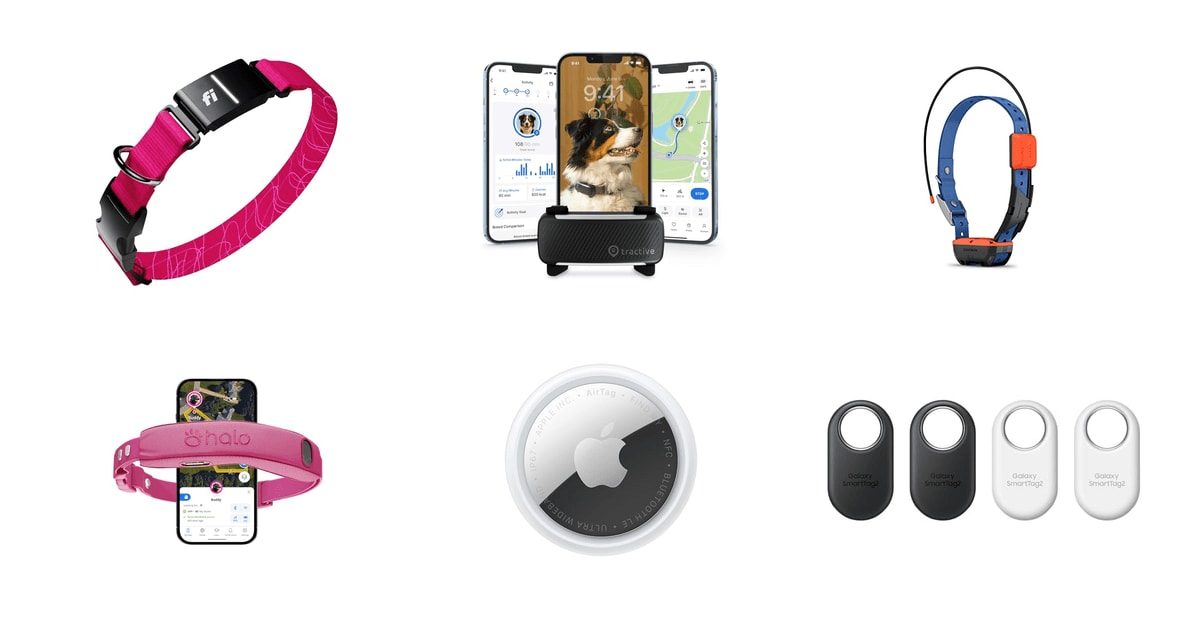
Most dogs never need a tracker until the one afternoon they do. A gate gets left open, a thunderstorm hits, a squirrel wins. In that moment you don't want a guess about which way your dog went. You want a map that updates while you're pulling on your shoes. That's the whole job of a pet GPS tracker, and the good ones do it well enough that you'll stop rehearsing worst-case scenarios every time the mail carrier comes. Everything else these devices do — step counts, sleep charts, bark logs — is gravy.
Here's the catch nobody puts on the box. Every real-time tracker leans on the cell network, so it's only as good as the signal where your dog actually runs. Owners in rural areas report the same story again and again: the map goes stale right when it matters. Subscriptions are unavoidable too, and they never stop. And no tracker prevents anything on its own. It tells you where your dog went, which is useful, but it isn't a fence and it isn't a recall command.
So the choice comes down to coverage where you live, how much weight your dog can carry, and how long you can go between charges. A tracker that dies in three days helps nobody. Neither does a rugged one that needs a handheld you don't own. We think that the Fi Series 3+ is the best pet GPS tracker for most people, and that the Tractive Smart Dog GPS Tracker is the one to buy if you want heart and respiratory monitoring plus coverage that travels with you.
Everything we recommend

Weeks of battery, sturdy hardware, and an app you'll actually open

Vitals, bark alerts and coverage that works overseas
A wireless boundary your dog learns, if your signal is strong

Nine miles of range in the backcountry, with no service plan
At a glance
| Product | Update Interval | Range | Price | |
|---|---|---|---|---|
| Fi Series 3+ Dog GPS CollarTop pick | — | No Range Limit | $105.93 |
| Tractive Smart Dog GPS TrackerRunner-up | 2-3 Sec | Unlimited | $55.30On sale |
| Garmin Alpha® T 20Also great | 2.5 Sec | 9 Miles | $299.99 |
| Halo Collar 5 GPS Wireless Dog FenceUpgrade pick | 20x/Sec | — | $524On sale |
 | Apple AirTagAlso consider | — | 1.5X Precision | $24On sale |
 | Samsung SmartTag2Also in lineup | — | — | $52.50 |
 | GPS Tracker for DogsAlso in lineup | — | Unlimited Range | $31.99 |
How we picked
Network and coverage. We favored devices on LTE-M or better, the standard Tom's Guide recommends after U.S. carriers shut down 3G. We also gave weight to international roaming, since a tracker that stops at a border isn't much use to owners who travel.
Battery in real use. Published testing and manufacturer specs both show a huge gap between activity mode and continuous live GPS — as much as 90 days versus a week. We looked for devices that stay useful in both modes rather than only the flattering one.
Alert speed. Good Housekeeping's field work across 50 U.S. zip codes measured how fast geofence escape alerts arrive, and we leaned on those results. Anything slower than about half a minute stops being an alert and starts being a notification.
Weight and fit. Veterinary guidance holds that a wearable shouldn't exceed about 5% of an animal's body weight, so we compared listed weights against realistic dog and cat sizes. That ruled several otherwise capable devices out for anything under 20 pounds.
Cost over time. Nearly every real-time tracker needs a recurring cellular plan, so we treated the service as part of the product rather than a footnote. Devices that include service up front, or skip it entirely, got credit for it.
Top pick
Weeks of battery, sturdy hardware, and an app you'll actually open
Fi Series 3+ Dog GPS Collar
This is the collar we'd put on a healthy, escape-prone dog and mostly forget about. It charges every few weeks instead of every few days, shrugs off swimming and mud, and pushes an escape alert to your phone within seconds when your dog crosses the line you drew.
$105.93fromAmazonThe battery is the reason to pick this one. PCMag's testing put the Fi at about 90 days in always-on activity mode and about a week with continuous live GPS running. Those are two very different numbers, and the second one is what you'll see during an actual search. But for daily wear, charging a collar every couple of months instead of every few days is the difference between a tracker you use and one that sits dead in a drawer.
Escape alerts are the other half of the pitch. In Good Housekeeping's field checks across 50 U.S. zip codes, the Fi tied with Tractive for the fastest alert after a dog crossed a geofence, at roughly 11 seconds. Eleven seconds is about the time it takes to set down a coffee cup. That gap is where a tracker earns its keep, because dogs move fast and yours has a head start.
The hardware feels like it was built by someone who has met a dog. A stainless-steel frame protects the module, and the listing rates it IP68 and IP66K, so swimming, downpours and a mud-hole detour are all fine. There's an LED for dark walks. And it runs on LTE-M, the network standard Tom's Guide now treats as the minimum after U.S. carriers retired 3G and stranded a generation of trackers.
Twelve months of service comes in the box, which is unusual in a category built on recurring fees. That doesn't make the subscription disappear — year two is on you — but it does let you find out whether coverage at your house is any good before you're committed. Walk the fence line, the woods behind the park, the route your dog takes when he bolts. If the map holds up there, you're set.
Flaws but not dealbreakers
The rural complaint is real and it comes up a lot. Owners outside strong LTE coverage report the location drifting, and escape alerts firing when the dog never left the yard — or staying quiet when he did. If your property sits at the edge of a carrier map, no software fix saves you. Check your own signal where your dog actually gets loose before you count on this.
It's also a dog product, full stop. Cat owners report that most of the interesting features get switched off, and the collar is heavy for a small animal anyway. This particular listing is a large band in pink, so measure your dog's neck against the size chart rather than assuming.
Runner-upOn sale
Vitals, bark alerts and coverage that works overseas
Tractive Smart Dog GPS Tracker
Tractive refreshes your dog's location every two to three seconds and adds something no other pick offers: heart and respiratory rate trends. It clips onto the collar you already own, weighs just over an ounce, and works on cellular networks across most of the world.
$55.30fromAmazonList priceIf you travel with your dog, this is the easy call. Tractive says it runs on more than 175 cellular networks in over 190 countries, the broadest roaming footprint of anything here. A tracker that goes dark at a border isn't much of a safety net. Take it to a rental cabin two states over or to family abroad, and it keeps reporting without you buying a second device.
The update rate is the fastest of any pick. CNET's field work clocked live updates every two to three seconds with median accuracy around 8 meters in open terrain. In practice, that means the dot on your map moves the way your dog moves instead of jumping in stale hops. When you're following a dog through a treeline, smooth matters more than precise.
The vitals monitoring is genuinely different. It watches heart and respiratory rate, sleep and barking, then flags patterns outside your dog's normal. It won't diagnose anything and you shouldn't treat it like a vet. But a dog who suddenly barks all afternoon while you're at work is telling you something, and this notices when you're not home to hear it.
It's also the lightest way here to get true cellular GPS, and it rides on a collar you already like rather than replacing it. Tractive rates it for dogs over 8 pounds. The spec sheet claims up to 14 days of battery, though owners who lean on live mode report closer to a week. Plan around the smaller number and you won't be caught out.
Flaws but not dealbreakers
Notification delays are the recurring owner complaint. Several describe escape alerts arriving minutes late, which is a long time in dog minutes. Others describe friction with how the subscription is sold and renewed. The alert speed Good Housekeeping measured was excellent, but that was an average across a lot of zip codes, and yours may not be one of the good ones.
The clip-on design also means one more thing to lose. It's a separate module riding on your collar, not part of it, and owners occasionally report it working loose during rough play. Check it the way you'd check a tag, especially after a wrestling session at the park.
Upgrade pickOn sale
A wireless boundary your dog learns, if your signal is strong
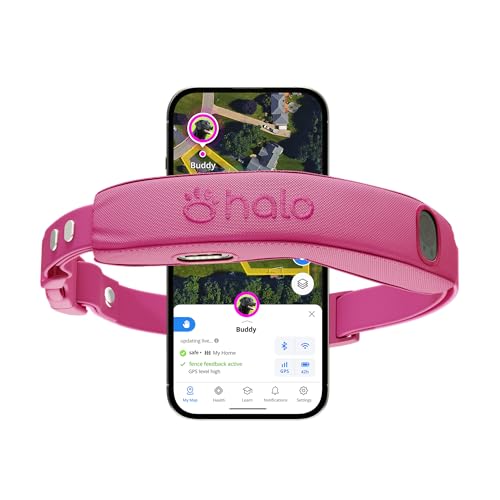
Halo Collar 5 GPS Wireless Dog Fence
Halo is the only pick that tries to keep your dog home rather than just tell you where he went. It draws GPS fences you can place almost anywhere, then warns your dog with sound, vibration and optional static as he gets close to the line.
$524fromAmazonList priceThis is a containment system first and a tracker second. You draw boundaries on a map — around the yard, the trailhead, the neighbor's chicken coop — and the collar handles the rest with a tiered warning: a tone, then vibration, then an optional static correction. For a digger or a fence-hopper, that's a different job than a dot on a map, and it's the one that keeps the dog in the yard.
The positioning hardware is the most serious here. Halo says the collar combines dual-frequency L1 and L5 satellite signals with real-time corrections from ground stations for accuracy within about two feet, and updates position twenty times per second. Boundary accuracy matters more than tracking accuracy. A fence that wanders ten feet either way teaches your dog nothing except that the rules are random.
There's a training program built in, developed with Cesar Millan, and you should plan on using it. A GPS fence isn't a switch you flip on a Saturday. Dogs need a couple of weeks of short, structured sessions to connect the tone with the boundary, and owners who skip that step tend to be the ones writing disappointed reviews. Forbes Advisor has given Halo's fence system its top rating in the category.
Flaws but not dealbreakers
Halo needs cell or Wi-Fi coverage to do most of its work, and owners in thin-signal areas say so loudly. Alerts stop arriving once the dog leaves the Wi-Fi bubble. The irony is hard to miss: rural properties are exactly where a wireless fence sounds most appealing, and exactly where it struggles most.
App reliability is the other recurring gripe — connection errors, slow loading, the occasional lockout. Nothing works without a subscription either, since GPS, fences and tracking all switch on only after you choose a plan. And this is the bulkiest collar here, which rules it out for small dogs.
Also great
Nine miles of range in the backcountry, with no service plan
Garmin Alpha® T 20
Garmin's tracking collar skips cellular entirely and talks straight to a handheld receiver, so it keeps working where every other pick goes dark. That handheld is a separate and costly purchase, which makes this a specialist's tool rather than a neighborhood one.
$299.99fromAmazonNo cell tower, no problem. Every other pick here quits when the bars run out. Garmin's collar pairs directly with a compatible Alpha or Astro handheld and reports at up to nine miles, with updates as often as every 2.5 seconds. For a hunting dog working a ridgeline or a trail dog ranging ahead, that's the difference between a real tool and a paperweight.
There's no subscription, which changes the math over a dog's lifetime. You buy the collar, you buy the handheld, and then you stop paying. If you already own a compatible Garmin unit, you're most of the way there. If you don't, the handheld costs considerably more than the collar, and that's the whole catch with this system.
The collar itself is built for weather and brush. It's universally sized with a user-replaceable flex band, so one collar fits a beagle or a shorthair. A big multicolor LED lets you pick your dog out at dusk, which is genuinely useful when three dogs are working the same field. Battery life stretches automatically by easing off updates when your dog stops moving.
It's the wrong tool for a suburban yard. There's no phone app doing the tracking, no step counts, no sleep charts, no escape alert while you're at the office. You have to be holding the handheld for any of it to work. Sporting-dog owners already know this. Everyone else should read it as a warning label.
Flaws but not dealbreakers
The handheld requirement is the flaw, and it's a big one. Without an Alpha or Astro in your hand, the collar does nothing at all. Budget for both, and confirm compatibility with the exact model you own before you buy anything.
It's also the heaviest and bulkiest option here — fine on a 60-pound pointer, far too much for a corgi. And the everyday conveniences owners like elsewhere, from health trends to a map you can check from your desk, simply aren't part of this deal.
Who this is for
Buy one of these if your dog escapes, if you hike or hunt off-leash, or if you live near a busy road and the what-ifs keep you up. Roughly a third of U.S. dog owners have bought or plan to buy a tracker, according to the American Pet Products Association's national survey, and the reason is almost always one bad afternoon they don't want to repeat. If your dog is a homebody who never leaves a fenced yard, you can skip this and spend the money on a better fence.
This guide covers wearable location trackers and smart collars for dogs. Cat owners should be careful here: most of these devices are too heavy for a cat under about 8 pounds, and several disable their best features on cats anyway. We also cover Bluetooth item tags, but only to be clear about what they are — they find things near other phones, not dogs running through a soybean field. If you need true real-time location in open country, a tag isn't the answer.
How we picked
We built the shortlist around a handful of things that actually decide whether a tracker helps you on the worst day. Network: LTE-M or better for real-time tracking, since 3G devices lost service when U.S. carriers pulled the plug, plus roaming coverage for owners who travel. Battery: honest numbers in both activity mode and continuous live GPS, because the second one is what you'll lean on during a search. Alert speed: geofence escape notifications fast enough to matter, judged against published field measurements. Weight and fit: under the veterinary guideline of about 5% of body weight, with sizing that suits real dogs. Total cost: the subscription counted as part of the product, not a surprise. Durability: an IP rating that survives swimming, rain and mud.
Other pet gps trackers and smart collars worth considering
If you want a no-fee tag for city and suburb walks: The Apple AirTag ($24) — The Apple AirTag isn't a GPS tracker and shouldn't be sold to you as one. It reports its position by piggybacking on nearby iPhones — over a billion of them worldwide, per Apple — so it's remarkably good downtown and functionally useless on a rural road at 2 a.m. There's no subscription and the battery runs more than a year on a coin cell you can swap yourself. Owners like the Precision Finding feature, which walks you in with arrows once you're close. As a backup on a collar that already has a real tracker, or for a city dog who never gets more than a block away, it's reasonable. Just note that a collar mount is a separate purchase, and that the tag can't tell you your dog left the yard.
The competition
These are the other listings our research turned up, not a survey of everything sold. Each one lost to a pick for a specific reason, and a couple of them are worth a second look if your situation is unusual.
The Samsung SmartTag2 ($52.50) — The Samsung SmartTag2 is the Android answer to the AirTag: Bluetooth plus ultra-wideband, IP67 rated, and a battery that lasts well over a year. Same category, same limits — it finds things near other Galaxy phones, and Samsung's finding network is smaller than Apple's, which matters most in the low-density places where you'd actually need it. This particular listing is a global edition without U.S. warranty coverage. If you're on a Galaxy phone and want a cheap backup tag on the collar, it's fine. As a dog's primary tracker, it isn't.
The GPS Tracker for Dogs ($31.99) — The BOMERAHE collar markets itself as a GPS tracker with no monthly fee and unlimited range, and that framing oversells what it does. It works through Apple's Find My network, so it's a Bluetooth tag built into a nylon collar rather than a cellular device — the same proximity limits apply, and it won't send you an escape alert. It's IP67 rated, trims to fit, and there's real appeal in a collar with the tag already integrated instead of dangling. Owner feedback is positive but thin so far. If you want Find My on your dog without a separate mount, it does that job, but don't expect it to find a dog who's genuinely gone.
Fit and everyday care
Fit does more for reliability than any spec. Two fingers should slide under the collar with a little resistance — looser and the module rotates under the neck, where it struggles to see satellites, and tighter and you'll get rubbing within a week. Check the skin underneath every few days for the first month, especially on dogs with fine coats. Rinse the collar after saltwater or pond swims even when it's IP68 rated, since grit works into the seams. Pick a charging habit and stick to it, like Sunday nights, because a dead tracker is worse than none at all. And keep a physical ID tag on the collar. Batteries die, networks drop, and a phone number on metal always works.
Questions we get
Which of these work without a monthly subscription?
The Garmin Alpha T 20 needs no service plan, but it only works when paired with a compatible Alpha or Astro handheld, which you buy separately. The Apple AirTag, Samsung SmartTag2 and BOMERAHE collar are also subscription-free, but they're Bluetooth tags rather than GPS trackers. Every device here that does true real-time cellular tracking requires a recurring plan.
Can I just put an AirTag on my dog's collar?
You can, and in a dense city it works surprisingly well, because AirTags report their position through nearby iPhones. In a rural area or anywhere foot traffic is sparse, there's nothing to report through and the tag goes silent. It also can't tell you when your dog leaves the yard. Treat it as a backup, not a substitute for a cellular tracker.
How accurate are pet GPS trackers?
Accurate enough to point you at the right yard, not the right bush. CNET's field work found median accuracy around 8 meters for Tractive in open terrain, and tree cover, buildings and hills all make that worse. Halo claims tighter accuracy for its fence boundaries thanks to dual-frequency satellites and ground-station corrections. Think of the map as a search radius that shrinks as you get closer.
Do these work in rural areas with no cell signal?
Cellular trackers do not, and this is the single biggest source of owner disappointment across every brand here. The device may still record a position, but it can't send it to your phone without a signal. The Garmin system is the exception, since it transmits straight to a handheld receiver at up to nine miles with no network involved. Check coverage at your own property before you commit.
What's the difference between a GPS tracker and a Bluetooth tag?
A GPS tracker reads its own position from satellites and sends it over a cellular network, so it works anywhere with coverage regardless of who else is around. A Bluetooth tag has no idea where it is and waits for a stranger's phone to notice it and report in. Tags cost less and need no subscription, but their usefulness scales with how many compatible phones are nearby.
Are these waterproof enough for a dog who swims?
The Fi carries IP68 and IP66K ratings, Tractive is rated fully waterproof, and the Garmin collar is built for field conditions, so all three handle swimming and rain. IP67 devices like the SmartTag2 and the BOMERAHE collar tolerate brief immersion but aren't meant for repeated dips. Rinse any collar with fresh water after saltwater or muddy ponds, and dry the charging contacts before you set it on the base.
Why you should trust us
For this guide:
- We read published testing and field reports from PCMag, CNET, Good Housekeeping, Tom's Guide and Forbes Advisor, alongside each manufacturer's own specifications for battery life, network type and water resistance.
- We compared listed weights, ingress ratings and location update intervals across every product here, and weighed them against the veterinary guideline that a wearable shouldn't exceed about 5% of an animal's body weight.
- We read owner feedback looking for repeated themes — rural coverage gaps, late escape alerts, subscription friction — rather than isolated complaints.
- We read owner reviews on every listing, weighted toward the critical ones, because that is where the recurring failures show up.
- We have a systematic way of automatically fetching the latest prices, so the numbers on this page stay current.
- This is a research-focused guide, so the team may not own every product listed — though we often do own the top winners, which gives us extra context for the recommendations.
- We don't accept free products, and the retailer commission never changes which product we recommend.
Sources
Best GPS Dog Collars and Trackers — Wirecutter (NYT), Wirecutter
The Best GPS Pet Trackers for 2026 — PCMag, PCMag
Best GPS Dog Trackers — CNET, CNET
Best GPS Dog Collars — Forbes Advisor, Forbes Advisor
Best GPS Dog Collars — Good Housekeeping, Good Housekeeping
Best Smart Dog Collars — Tom's Guide, Tom's Guide
Best Pet GPS Trackers — The Spruce Pets, The Spruce Pets
Garmin T 5x GPS Dog Tracker — Official Spec Page, Garmin
Tractive GPS Coverage Map and Network Details, Tractive
APPA National Pet Owners Survey 2025–2026, American Pet Products Association (APPA)
Pet Wearable Market Size & Forecast 2024–2030 — Grand View Research, Grand View Research
Whistle Science & Health Monitoring Research, Whistle
Amazon product listings and owner reviews for all 7 products
Manufacturer specification pages for each product
Some passages in this guide may be paraphrased with AI help. Prices are refreshed automatically.
More like this.
Continue exploring pet reviews and recommendations.

The Best Pet GPS Trackers
A tracker earns its keep in the ten minutes after a door gets left open. That's the whole pitch. You want to open an app and see a dot moving down the…

The Best Dog GPS Trackers
A dog who bolts doesn't give you much time to react. A tracker on the collar turns a frantic hour of shouting their name into a map you can actually…

The Best GPS Trackers for Vehicles
A GPS tracker earns its keep on ordinary days, not dramatic ones. You want to know your kid got to practice. You want to see whether the work van sat idle…

The Best Hidden Car GPS Trackers
A hidden tracker is a boring purchase right up until the morning your car isn't where you left it. Then it's the difference between filing a report and…

The Best Dog Training Collars
A training collar is really a communication device. You press a button, and your dog gets a signal from the far side of the yard, the field, or the park.…

The Best Remote Vibration Dog Training Collars
A vibration collar is a tap on the shoulder from across the yard. You press a button, your dog feels a short buzz on the neck, and you get their attention…