The Best Remote Vibration Dog Training Collars
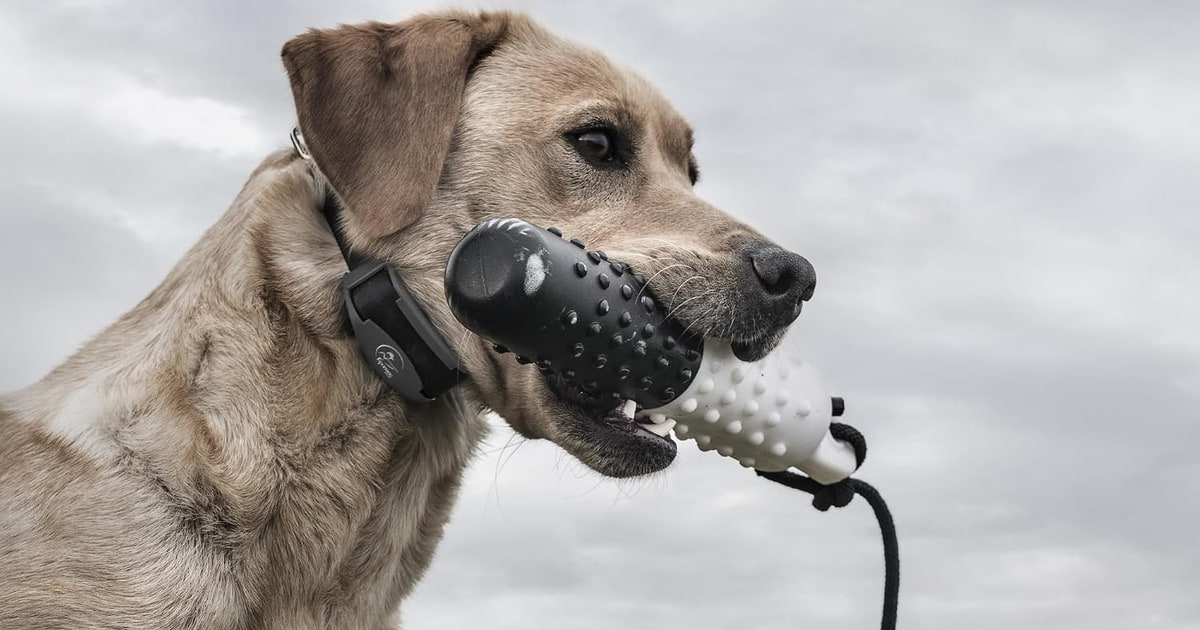
A vibration collar is a tap on the shoulder from across the yard. You press a button, your dog feels a short buzz on the neck, and you get their attention without shouting. That's useful when a dog is deaf, when wind swallows your voice at the park, or when your recall cue keeps losing to a squirrel. The best remote trainers make that buzz easy to send, easy to adjust, and hard to trigger by accident. Everything else comes down to fit, waterproofing, and whether the range holds up outside an empty field.
Here's the honest part: no collar teaches your dog anything. It's a signal, and the meaning comes from what you do right after it. A widely cited University of Lincoln study published in PLOS ONE found that dogs trained with e-collars showed more stress-related behavior, including yawning, lowered posture and whining, than dogs trained with rewards. AVSAB's position statement recommends using these tools under a board-certified veterinary behaviorist or certified applied animal behaviorist. And every range number printed on every box comes from open ground, so plan on less in a neighborhood.
So we focused on the collars that give you the gentlest usable signal, a receiver your dog can actually wear all afternoon, and a remote you can work without looking down. Pro brands earned their reputation here, but a couple of them ask for a lot, and a basic collar is enough for plenty of households. We think that the Mini Educator ET-300 is the best remote vibration dog training collar for most people, and that the Dogtra ARC-X is the one to buy if your dog swims, works in mud, or has a coat thick enough to swallow a bulky receiver.
Everything we recommend

Precise low-level signaling in a receiver small dogs can wear

A slimmer, tougher receiver if your dog swims or has a thick coat
Rougher edges and optimistic range, at a fraction of the cost

Rugged three-dog control if you train in the field with gloves
Fewer levels and less range, but built for water and brush
At a glance
| Product | Range | Stim Levels | Price | |
|---|---|---|---|---|
| E-Collar Mini Educator ET-300 Remote Dog TrainingTop pick | 1/2 Mile | 100 Levels | $199.99 |
| Dogtra 1900X E-Collar for Dog Training -Runner-up | 3/4 Mile | 100 Levels | $254.99 |
| SportDOG FieldTrainer 425X Remote TrainerAlso great | 500 Yards | — | $103.99On sale |
 | PetSafe 300 Yard Remote Training CollarAlso consider | 300 Yards | 15 Levels | $80.44 |
| Garmin Delta XC Bundle - Dog TrainingUpgrade pick | 1/2 Mile | 18 Levels | $269.99 |
 | E-Collar Technologies FOB Educator Remote Dog TrainingAlso in lineup | — | 100 Levels | $289.99 |
| Bousnic Dog Shock Collar - 3300Ft DogBudget pick | 3300 Ft | 99 Levels | $39.99 |
How we picked
Standalone vibration. Vibration and tone had to work as independent signals, on their own buttons or modes, not as an afterthought buried behind a static dial. Any collar you can run without ever using static stayed on the list.
Level granularity. We looked at how many stimulation and vibration steps each maker specifies, because more steps mean you can settle on a gentler signal. Manufacturer specs range from 8 steps to 100, and that spread is the single biggest difference between the pro brands and the budget ones.
Range you'll actually get. We treated every advertised range as an open-field figure, because that's how it's measured. Published field evaluations report suburban performance well under the printed number, so we favored collars with a reputation for holding range under interference.
Waterproofing. We compared stated ratings, from IP67 and IPX7 submersion up to Dogtra's IPX9K jet-and-heat certification. Anything below full submersion protection on the receiver was disqualified.
Fit and receiver size. We checked each maker's minimum dog weight, neck range, contact point options and receiver dimensions. A receiver that rocks around on a small or short-haired dog loses contact, and contact is the whole game.
Top pick
Precise low-level signaling in a receiver small dogs can wear
E-Collar Mini Educator ET-300 Remote Dog Training
The Mini Educator ET-300 gives you 100 stimulation levels plus standalone tone and vibration, so you can find the quietest signal your dog notices and stop there. The receiver is small, the remote floats, and certified trainers name this collar more than any other.
$199.99fromAmazonOne hundred levels let you start so low your dog barely notices. Most collars hand you 8 to 21 steps, which means every press is a jump. E-Collar Technologies rates level 1 as imperceptible to most dogs, and trainers who work with soft or anxious dogs lean on exactly that. You creep up until you see an ear twitch, then you stay there. That's the whole argument for a wide range: you get to find the quietest thing that works.
Tone and vibration work on their own, so you never have to touch static. Both sit on the remote next to the stimulation dial, and plenty of owners run this collar as a buzz-and-beep communicator and nothing more. If your dog is deaf, that's the entire feature set you need. If you train with rewards, vibration gives you a marker that carries across a field when your voice won't.
The receiver is small enough for a 10-pound dog. E-Collar Technologies sizes the ET-300 for dogs 10 pounds and up with necks from 5 to 22.5 inches, and the Biothane strap is 3/4 inch wide, 30 inches long, and trimmable. It's waterproof and doesn't hold pond smell. A night tracking light on the receiver helps when your dog drifts into the dark end of the yard.
The remote is shaped like a stopwatch, and it floats. It's 2.6 inches across and 1.1 inches thick, it's waterproof, and it hangs on a lanyard. You can work it one-handed while you're holding a leash, a ball or a coffee. Drop it in the pond and it comes back up. The system also ships with a finger clicker, which tells you something about who designed it.
The blunt-stimulation waveform is why trainers keep naming this collar. E-Collar Technologies says its patented pulse is broader and less sharp than conventional e-collar output, with lower peak voltage spikes and less of that sudden sting. That's a manufacturer claim and we can't confirm it. But it comes up again and again in professional trainer reviews as the practical difference between this collar and cheaper hardware.
Flaws but not dealbreakers
That tiny remote cuts both ways. A 2.6-inch disc is easy to palm and easy to hide, and owners with smaller hands love it. In winter gloves it's fiddly, and finding the dial by feel takes practice. If you train in cold, wet fields all season, a full-size handheld is the friendlier tool.
It's not a puppy collar and it's not for toy breeds. E-Collar Technologies says the ET-300 isn't intended for puppies and sets a 10-pound floor. Owners of thick-coated or long-haired dogs also have to be fussy about contact point placement, or the signal gets inconsistent.
You pay a lot more than a no-name collar with similar bullets. On paper, budget collars claim more modes, more steps and more range. What you're buying here is consistency, support and a receiver that doesn't quit after a wet season, which is a hard thing to see in a spec list.
Runner-up
A slimmer, tougher receiver if your dog swims or has a thick coat
Dogtra 1900X E-Collar for Dog Training -
The Dogtra ARC-X carries an IPX9K waterproof rating, the toughest civilian water standard, in a curved receiver that weighs 2.75 ounces. You get 100 levels, a dedicated vibration mode, and 3/4 mile of range from a remote built for weather.
$254.99fromAmazonIPX9K is the highest civilian water rating, and almost nothing else here has it. Most rivals stop at IPX7, which covers a dunk in a pond. IPX9K means the receiver shrugs off high-pressure, high-temperature jets at close range. In practice that's a collar you can hose the mud off without thinking, and one that keeps working through rain, snow and repeated retrieves.
The receiver is slim enough to disappear under a thick coat. Dogtra says the ARC-X is 30 percent slimmer than its 1900X and weighs 2.75 ounces, with a curved back that sits flush against the neck. That matters more than it sounds. A bulky box rocks around on a running dog, breaks contact, and gives your dog something to think about besides you.
You get 100 levels plus a separate vibration mode, not vibration buried in a menu. The ARC-X offers Nick, Continuous and XPP vibration, with Boost and Level Lock so you can cap the top of the range before you hand the remote to anyone else. If you want to run vibration-only, you can set it up that way and leave it.
It's built for people who use it every day. Dogtra gives the remote a double-layered casing, and the system reaches 3/4 mile and expands to three dogs. An LED beacon and audible tone on the receiver help you keep track of a dark-coated dog in brush or at dusk.
Flaws but not dealbreakers
Small dogs are out. Dogtra specifies 15 pounds and up. If you've got a beagle-sized dog or smaller, the ET-300's 10-pound floor and lighter receiver make more sense.
Multi-dog capability isn't included. The remote handles three dogs, but you're buying the extra receivers separately, and Dogtra receivers aren't cheap add-ons. Buy this for one dog and treat the expansion as a maybe.
There's more to learn here. Between Boost, Level Lock and three output modes, the first week involves reading the manual. That's fine for a serious trainer and mildly annoying for someone who just wants a buzz button.
Budget pick
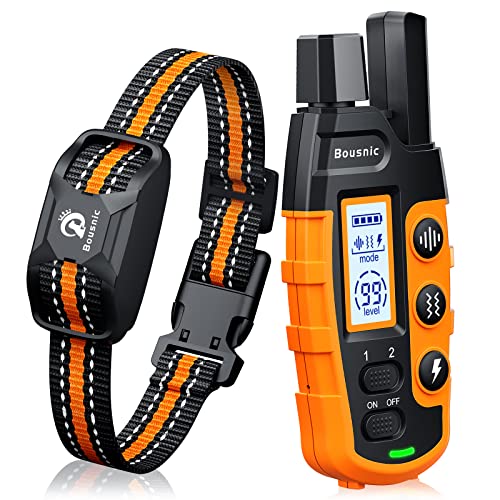
Rougher edges and optimistic range, at a fraction of the cost
Bousnic Dog Shock Collar - 3300Ft Dog
The Bousnic training collar gives you beep, vibration and static with far more steps than its price suggests, plus a receiver that fits dogs from 5 to 120 pounds. It's the sensible starting point if you mostly want a remote buzz and a long stretch between charges.
$39.99fromAmazonIt has real vibration control, not one buzz setting. Bousnic splits its modes into 8 beep levels, 16 vibration levels and 99 static levels. Sixteen steps of vibration is unusual at this end of the market, and it's the feature that matters if you plan to skip static entirely. You can find a buzz your dog notices without one that startles them.
The size range covers almost any dog you'd put a collar on. Bousnic rates the receiver for dogs from 5 to 120 pounds, which takes in small terriers and big shepherds alike. The remote runs two dogs on separate channels out of the box, so a two-dog household doesn't need a second purchase.
The battery goes a long time between charges. Bousnic says the receiver lasts up to 15 days in working modes and the remote runs over a month. If you're the kind of person who forgets to charge things, that's the difference between a training tool and a paperweight. A security on/off switch keeps the remote from firing in your pocket.
The receiver is rated IP67, so rain and a swim are fine. That's full submersion protection for a collar in this bracket. For neighborhood walks, backyard recall and the occasional creek, it's enough.
Flaws but not dealbreakers
The 3300-foot range claim is an open-field number. Outdoor Life's field evaluation of budget remote trainers found real-world effective range in suburban settings, with normal radio interference, averaged well below what the packaging promised, and that premium collars from Dogtra and SportDOG held range more consistently. Assume you get a fraction of the printed figure between houses.
The remote isn't waterproof. Bousnic says to keep the handheld away from water, so a rainy training session means covering it up. Our other picks all use waterproof transmitters, and one of them floats.
Professional trainers consistently steer people toward the pro brands. Certified trainers recommend Educator and Dogtra over unbranded budget collars for precision and long-term reliability. This one earns its spot for casual use, not for a working dog you rely on.
Upgrade pick
Rugged three-dog control if you train in the field with gloves
Garmin Delta XC Bundle - Dog Training
The Garmin Delta XC bundle runs up to three dogs from one blocky, three-button handheld you can work without taking your gloves off. You get 18 levels of momentary and continuous stimulation plus tone and vibration, and three saved training configurations.
$269.99fromAmazonThree dogs, one remote, no menu diving. You set the handheld for one, two or three dogs, and Garmin gives you three correction and training configurations for different problems. If you're running a couple of dogs and each one needs a different setup, switching is quick. That's the specific job this remote is built for.
The handheld is made for cold hands. It's a rugged three-button controller with a rubberized feel, roughly 5.4 inches long, and that's deliberate. Where the ET-300 asks you to find a small dial by touch, this one asks you to press a big button. In January, with gloves on, that's not a small difference.
You still get tone and vibration alongside 18 stimulation levels. Momentary and continuous both cover the full range, so vibration and tone can carry your day-to-day signals while stimulation stays parked. Range runs to a half mile, which is more than most people need and about right for open country.
The dog device handles weather and different coats. Garmin rates it IPX7, so a swim or a downpour is fine, and the bundle includes both long and short replaceable contact points for a 3/4-inch collar. Short points for a smooth coat, long ones for a dog you can lose your hand in.
Flaws but not dealbreakers
Eighteen levels is coarse next to 100. For a soft dog, the gap between one step and the next can be the difference between nothing and too much. If you want the finest possible control at the low end, the Educator or the Dogtra gives you more room.
IPX7 is good, not best in class. It covers submersion, but the ARC-X's IPX9K rating handles pressure washing and heat that this one isn't rated for. For a dog that lives in mud, that gap is worth thinking about.
The multi-dog part costs extra. The bundle covers one dog. Adding a second and third means buying more dog devices, and Garmin hardware is the most expensive here to begin with.
Also greatOn sale
Fewer levels and less range, but built for water and brush
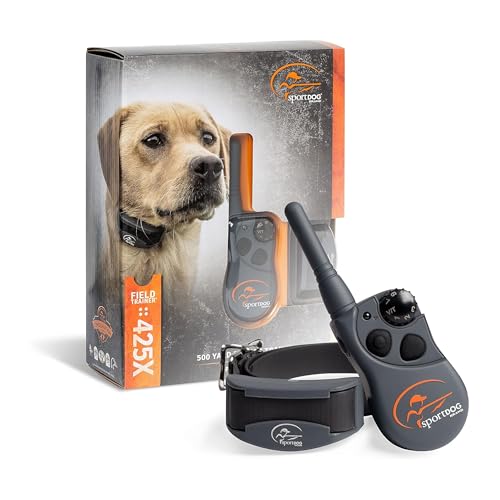
SportDOG FieldTrainer 425X Remote Trainer
The SportDOG FieldTrainer 425X is submersible to 25 feet and sized for a bird dog's daily routine, with tone and vibration on dedicated buttons. Range tops out at 500 yards, which covers most upland work and nearly all backyard training.
$103.99fromAmazonList priceDryTek waterproofing is the headline, and it's not marketing fluff. SportDOG rates the receiver as submersible to 25 feet. For a dog that hits every pond, ditch and duck blind in sight, that's the number to look at. Owners of retrievers gravitate to this line for exactly that reason, and the strap holds up to the same abuse.
Tone and vibration get their own buttons on the remote. You aren't cycling through a mode list while your dog is running. The 425X pairs those with 21 static levels, so you've got a wide-enough spread for most dogs while keeping the two non-static signals one thumb press away.
The receiver is small and light for a field collar. It's about 2.6 inches long and roughly two ounces, so it sits fine on a springer or a mid-size lab without flopping. The handheld is shaped to run one-handed while the other hand holds a leash, a lead or a shotgun.
It holds range better than budget hardware under interference. Outdoor Life's field evaluation noted that premium collars from SportDOG and Dogtra kept range more consistent in conditions where cheap collars faded. Five hundred yards you can count on beats 3,000 feet you can't.
Flaws but not dealbreakers
Five hundred yards is the shortest range among our field picks. For upland hunting and yard work it's plenty. For a dog that ranges out across open country, the Garmin and the Dogtra both reach considerably farther.
Twenty-one levels is a coarser dial than 100. You'll still find a workable low setting for most dogs. For a genuinely sensitive dog, the smaller steps on the Educator or the Dogtra give you more room to be gentle.
Running three dogs means buying two more collars. The remote supports it, but nothing extra is in the box, and SportDOG receivers add up quickly.
Who this is for
Buy one of these if you need a reliable way to reach your dog when your voice can't, and you've already got the basics of recall on a long line. That's most often owners of deaf or hard-of-hearing dogs, people with a high-drive dog who tunes out at the park, sporting-dog owners who work at distance, and reward-based trainers who want a remote marker. It also covers multi-dog households, where one remote and a shared set of signals beats juggling two devices.
Skip this if you're hoping a buzz will fix aggression, reactivity or separation anxiety. AVSAB is clear that electronic training tools, vibration devices included, should be used under a board-certified veterinary behaviorist or certified applied animal behaviorist, and fear-based problems are exactly where things go sideways. This guide also sticks to remote-operated trainers you control by hand. It doesn't cover automatic bark collars, invisible-fence systems or GPS tracking collars, and we've left out add-on receivers sold without a remote.
How we picked
We started from manufacturer specifications and narrowed by five things. Standalone vibration: tone and vibration had to work as their own signals, on their own controls, so you can run the collar without static at all. Level granularity: we counted the steps each maker publishes, since 100 levels let you find a signal your dog barely registers and 8 levels do not. Real-world range: every advertised figure comes from open ground, and published field evaluations show suburban performance falling well short, so we favored collars known to hold up under interference. Waterproofing: full submersion protection on the receiver was the floor, with Dogtra's IPX9K jet rating as the ceiling. Fit: minimum weight, neck range, contact point length and receiver bulk decide whether the signal reaches your dog at all.
Other remote vibration dog training collars worth considering
If you want a straightforward collar from a big pet brand: The PetSafe 300 Yard Remote Training Collar ($80.44) — The PetSafe 300 Yard Remote Training Collar keeps things simple. You get an audible tone, vibration and 15 levels of static with a safety lock on the higher settings, all on a waterproof digital remote with tactile buttons that's comfortable to hold for a long session. PetSafe rates the battery at up to 40 hours and says both pieces charge in about two hours, and the company runs U.S.-based phone, email and chat support, which is genuinely useful for a first-time e-collar owner. The system expands to two dogs with a second collar. What you give up is precision and reach: 300 yards is the shortest range here, and 15 static steps make for bigger jumps than the 100-level pro collars. For neighborhood recall with a medium or large dog, that's a fair trade.
The competition
This is what our research turned up, not a census of the category. Remote trainers get released and rebranded constantly, and plenty of capable collars never crossed our path. Here's the one that made the shortlist and didn't make the cut.
The E-Collar Technologies FOB Educator Remote Dog Training ($289.99) — The Educator FE-580B FOB is the same E-Collar Technologies platform as our top pick, wrapped around one unusual idea: a wireless hands-free button you can wear or mount, so you can send a signal without reaching for a remote. It has the 100 adjustable levels, plus tone, vibration and rising modes, a waterproof transmitter and collar, and an LED tracking light. It lost to the ET-300 on simplicity. Most people don't need a second control surface to keep charged and keep track of, and the extra button is one more thing to lose in tall grass. But if your hands are always full, or a physical limitation makes a small dial hard to operate, the hands-free button is a real accessibility feature and worth the trade.
Fit and daily wear
Fit decides whether any of this works. The receiver goes high on the neck, just under the jaw, snug enough that you can slide two fingers under the strap and no looser. Too loose and the contact points bounce, so your dog gets an inconsistent signal and learns to ignore it. Rotate the receiver a couple of inches every few hours and take it off overnight. Leaving a collar in one spot for a long day can cause pressure sores, and most makers cap continuous wear well short of that. Use the long contact points on thick or long coats and the short ones on smooth coats. Rinse and dry the receiver after a muddy retrieve, and charge both pieces before a session rather than mid-walk.
Questions we get
Are remote vibration dog training collars humane?
Vibration itself carries no risk of pain at reasonable intensities, and the AKC lists vibration among the few remote tools suited to deaf dogs for that reason. The concern is how any remote tool gets used. A University of Lincoln study in PLOS ONE found more stress behavior in dogs trained with e-collars than in dogs trained with rewards, and AVSAB recommends professional guidance before you start. Use the lowest setting your dog notices, pair it with something good, and get help if your dog is fearful.
What's the difference between a vibration collar and a shock collar?
A vibration collar buzzes, the same sensation as a phone on a table. A static collar delivers a mild electrical stimulation. Most collars sold today do both plus a tone, which is why the labels blur. Every pick here lets you use tone and vibration on their own and leave static switched off, and plenty of owners run them that way permanently.
What's the best vibration collar for a deaf dog?
For a deaf dog, you want a strong, adjustable buzz and a receiver that fits well enough to stay in contact. The Mini Educator ET-300 is our pick because vibration and tone sit right on the remote and the receiver works down to 10-pound dogs. Introduce the buzz as a cue that means look at me, followed by a treat, before you ever use it at distance.
How far do these actually work in a neighborhood?
Well short of the box. Every advertised range is measured in an open field, and published field evaluations report real-world suburban range averaging far below the printed figure once houses, cars and Wi-Fi interference get involved. A collar rated at 3,000-plus feet may give you a few hundred yards down a residential street. Buy more range than you think you need.
How do I introduce the collar without scaring my dog?
Let your dog wear the receiver unpowered for a few days first, so the collar itself means nothing. Then start indoors at the lowest vibration setting, buzz once, and immediately give a treat. You're teaching the buzz to predict something good before it ever means come here. If your dog startles, freezes or hides, stop and talk to a certified trainer or veterinary behaviorist.
Can puppies wear a vibration training collar?
Manufacturers set their own limits and some say no outright. E-Collar Technologies specifies that the ET-300 isn't intended for puppies and sets a 10-pound minimum, and Dogtra rates the ARC-X for dogs 15 pounds and up. Most trainers wait until a dog reliably knows the cue on a long line before adding a remote signal, which usually means well past puppyhood.
Why you should trust us
For this guide:
- We read the manufacturer specifications for every collar here, comparing waterproof ratings, stimulation and vibration level counts, receiver dimensions, minimum dog weights and stated range.
- We weighed those specs against published field evaluations and against guidance from the AKC, AVSAB, the Whole Dog Journal and peer-reviewed research on e-collar training stress.
- We leaned on recurring themes in owner feedback for the things a spec sheet never tells you, like whether a remote works in gloves and how far a range claim falls once you're between houses.
- We read owner reviews on every listing, weighted toward the critical ones, because that is where the recurring failures show up.
- We have a systematic way of automatically fetching the latest prices, so the numbers on this page stay current.
- This is a research-focused guide, so the team may not own every product listed — though we often do own the top winners, which gives us extra context for the recommendations.
- We don't accept free products, and the retailer commission never changes which product we recommend.
Sources
Best Dog Training Collars 2026 — Wirecutter, Wirecutter / The New York Times
E-Collar Training Guide for Dogs — American Kennel Club, American Kennel Club
The Welfare Consequences and Efficacy of Training Pet Dogs with Remote Electronic Training Collars (Cooper et al., 2014) — PLOS ONE, PLOS ONE / University of Lincoln
AVSAB Position Statement on the Use of Punishment for Behavior Modification in Animals — American Veterinary Society of Animal Behavior, American Veterinary Society of Animal Behavior (AVSAB)
Best Dog Training Collars — Forbes Advisor, Forbes Advisor
Best Remote Training Collars for Hunting Dogs — Outdoor Life, Outdoor Life
How E-Collars Work: Vibration, Tone, and Stimulation Explained — Whole Dog Journal, Whole Dog Journal
Why Educator Blunt Stimulation Technology Differs from Conventional E-Collars — E-Collar Technologies, E-Collar Technologies (manufacturer)
Dogtra ARC Product Page and Specifications — Dogtra, Dogtra (manufacturer)
SportDOG FieldTrainer SD-425X Specifications — SportDOG, SportDOG (manufacturer)
Garmin Delta Sport XC Product Page — Garmin, Garmin (manufacturer)
Best Dog Training Collars Reviewed — PetMD, PetMD
Amazon product listings and owner reviews for all 7 products
Manufacturer specification pages for each product
Some passages in this guide may be paraphrased with AI help. Prices are refreshed automatically.
More like this.
Continue exploring pet reviews and recommendations.

The Best Dog Training Collars
A training collar is really a communication device. You press a button, and your dog gets a signal from the far side of the yard, the field, or the park.…

The Best Dog Training Treats
Training treats are less about nutrition than about arithmetic. A ten-minute session can run 80 to 150 rewards, so the size of each one decides whether…

The Best Dog Crates for Crate Training
A crate is the most useful piece of gear you'll buy for a new dog, and it's also the one people get wrong most often. Get the size right and the crate…

The Best Pet GPS Trackers and Smart Collars
Most dogs never need a tracker until the one afternoon they do. A gate gets left open, a thunderstorm hits, a squirrel wins. In that moment you don't want…

The Best Quiet Ceiling Fans With Remote Control
A ceiling fan is one of the few appliances that runs while you sleep, so noise is the thing that decides whether you love it or resent it. A good one…

The Best Vibration Plates for Recovery
A vibration plate is a simple thing: a motorized deck you stand on while it shakes. For recovery, that shaking is meant to loosen tight muscles, nudge…