The Best Large Hamster Cages
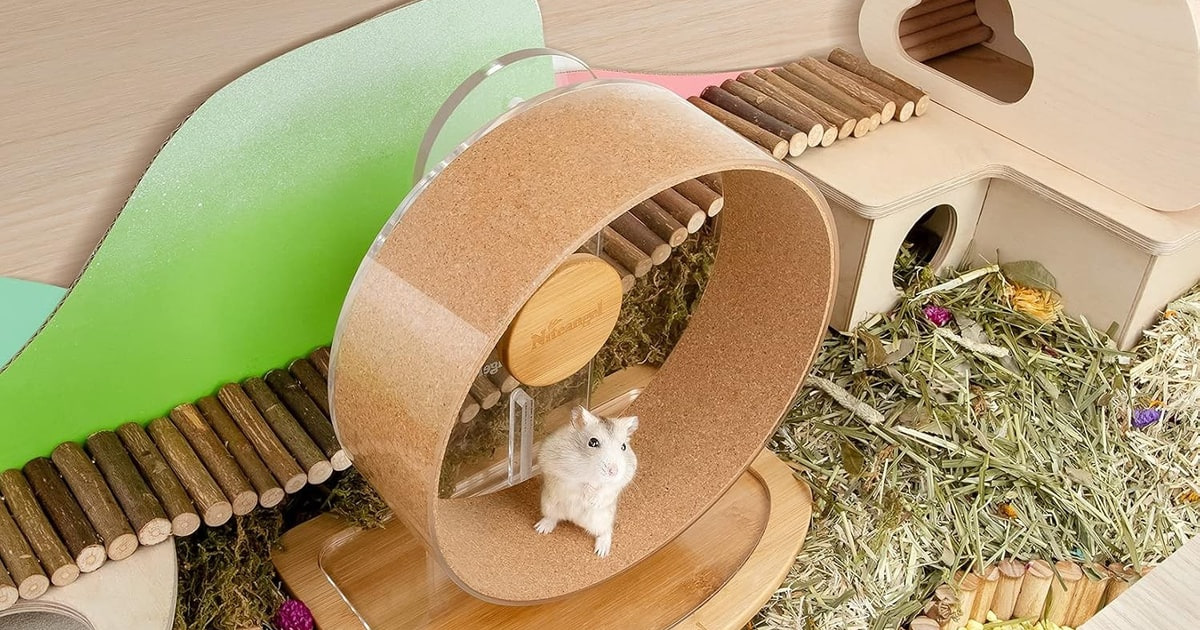
A hamster cage isn't furniture. It's the entire world your animal lives in, and two things matter more than everything else combined: how much uninterrupted floor it has, and how deep the bedding can go. Hamsters burrow. Give one six inches of substrate and it'll dig tunnels and sleep in them. Give it two inches and a plastic tube, and you'll hear it chewing the bars at three in the morning instead. Floor space and bedding depth do more for a hamster's day than any wheel you can buy.
Here's the honest problem with this category: most of what's sold as a hamster cage is too small. The market is built around what fits on a shelf at a chain store, so the majority of options land well under the space that European welfare standards and behavior research point to. The ones that do clear the bar are heavy and wide, and they're a pain to move once they're full of bedding. You'll usually buy the wheel and the hides separately, too.
So shop for the space you actually have, and measure the spot before you order. Bar spacing matters just as much: a gap that safely holds a Syrian can trap a Roborovski's head. If you're keeping dwarfs, check that number before you look at anything else. We think that the Niteangel Vista is the best large hamster cage for most people, and that the Prevue Universal Small Animal Home Suburban 5528 is the one to buy if you're on a tight budget or keeping dwarf hamsters.
Everything we recommend

A deep bedding tray and doors that swing wide open

Dwarf-safe bar spacing and honest floor space
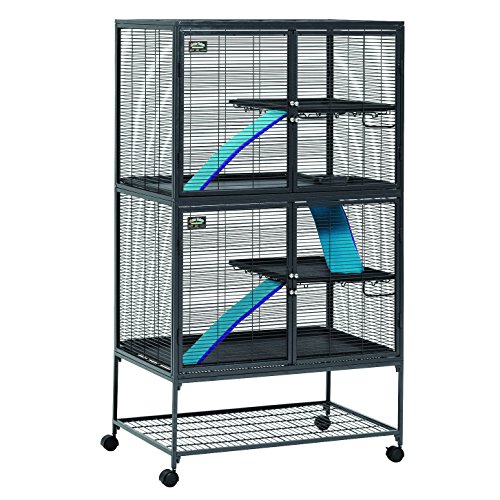
Two full levels and the easiest cleaning here
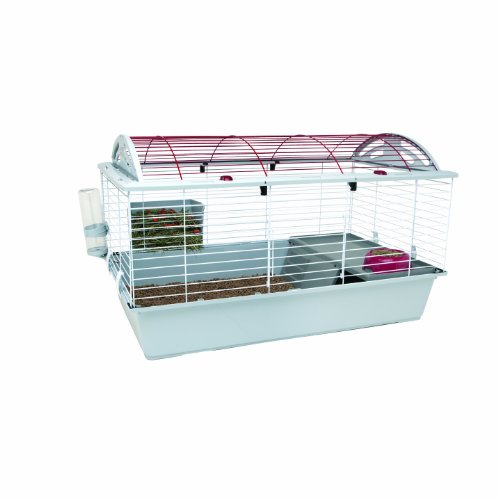
The largest floor plan here, with a shallow base to fix
At a glance
| Product | Footprint (LxW) | Height | Price | |
|---|---|---|---|---|
| Niteangel Vista Hamster Cage W/Oblique Opening CageTop pick | 32.9x17.2in | 21.1in | $219.95 |
| Prevue Pet Products Universal Small Animal HomeBudget pick | 32.5x19.0in | 23.0in | $129.99 |
| MidWest Homes for Pets Critter Nation DoubleUpgrade pick | 36.0x24.0in | 63.0in | $329.99 |
 | Savic Geneva Modern Hamster Cage GreyAlso in lineup | 23.5x11.5in | 17.5in | $104.96 |
| Living World - Deluxe Hybrid HabitatAlso great | 37.8x22.5in | 22.0in | $165.99 |
 | PawHut Large Hamster Cage with Deep TemperedAlso consider | 23.5x15.8in | 22.5in | $102.95On sale |
 | IRIS USA Large Portable Wire Rabbit CageAlso consider | 33.1x20.7in | 22.2in | $89.52On sale |
 | Niteangel Natural Wooden Hamster Mouse Tunnel TubeAlso in lineup | — | — | $8.99 |
 | Hamster Cage ChewproofAlso consider | 32.0x16.0in | 16.0in | $121.49On sale |
How we picked
Usable floor space. We compared listed base dimensions against the minimum enclosure sizes used in European welfare standards and cited in behavior research. Cages that couldn't clear the minimum on floor area alone didn't make the picks, no matter how many levels they stacked on top.
Bedding depth. We looked at how deep each base tray or tank is, because burrowing is a core behavior rather than an optional extra. Cages with shallow pans stayed in contention only when a simple, well-documented owner modification could raise the fill line.
Bar spacing and safety. We took bar spacing straight from manufacturer specifications and flagged which cages suit Syrians only. We also noted bare wire shelves and ramps, which owner reports repeatedly link to foot injuries.
Cleaning access. We favored wide front doors, slide-out trays, and non-porous surfaces, since published reviews and owner feedback both point to awkward access as the reason cleaning gets postponed. Small top-only hatches counted against a cage.
Build and chew resistance. We weighed frame construction, coatings, and materials against owner reports of gnawed corners, swollen wood, and stained plastic. Anything with exposed thin plastic at hamster height was treated as a durability risk.
Top pick
A deep bedding tray and doors that swing wide open
Niteangel Vista Hamster Cage W/Oblique Opening Cage
The Vista is a wooden-base cage built around burrowing, with a tray deep enough for a real tunnel system and clear panels on three sides. The angled front door makes daily spot-cleaning something you'll actually keep up with.
$219.95fromAmazonThe deep base tray is the whole reason to buy this cage. Most cages give you a shallow plastic pan and call it a day. The Vista's MDF aspen and birch base holds several inches of substrate without bowing, which is what a hamster needs to dig a burrow instead of scraping at the floor. That single design choice is what separates a cage your hamster lives in from a cage it just sits in.
The angled front door turns cleaning into a two-minute job. Straight-panel cages make you reach down and over a wall of bedding, which is exactly why people put off cleaning. The inclined door on the Vista opens toward you at a slant, so you can scoop a wet corner, swap a hide, or drop in a piece of chew wood without dismantling anything. Owners who've moved from top-lid cages consistently say this is the difference.
You can see everything, which matters more than it sounds. The Vista uses transparent PET panels on three sides and an acrylic roof panel with a vent. Watching your hamster build tunnels and drag bedding around is most of the fun, and it's also how you catch a problem early. A hamster that stops using its burrow or starts sleeping in the open is telling you something.
It goes together without tools and stays solid. The wooden boards are thick, the slots are cut tight, and rubber rings take the wobble out of the joints. Niteangel builds this as a slot-together kit, so you're not fighting bent wire panels or stripped screws. Once it's assembled it feels like a piece of furniture, not a wire crate that flexes when your hamster climbs.
Flaws but not dealbreakers
Wood and hamster urine are not natural friends. The base is coated, but if a hamster picks one corner as its bathroom and you leave it, the substrate stays damp and the board can swell over time. Owners who put a small ceramic or glass sand dish in the favored corner report far fewer problems. Plan to scoop that spot every couple of days rather than waiting for the weekly clean.
It's heavy and it doesn't move. The cage weighs over thirty pounds empty, and a full load of substrate adds a lot more. Once you've set it up and filled it, sliding it to vacuum behind isn't happening without help. Pick the spot carefully — away from direct sun, radiators, and a busy doorway — before you pour in a single bag of bedding.
This size isn't the largest in the line. The Vista comes in several footprints, and the smaller one is the version most people find first. It's a genuine upgrade over anything sold at a chain pet store, but if you're keeping a big adult Syrian and you have the wall space, the larger footprints in the series give it more room to run.
Budget pick
Dwarf-safe bar spacing and honest floor space
Prevue Pet Products Universal Small Animal Home
The Suburban 5528 is a straightforward wire cage with 3/8-inch bar spacing, which makes it one of the few large options here that's genuinely safe for dwarf hamsters. It's plain, but it clears the space bar most starter cages don't.
$129.99fromAmazonThe 3/8-inch wire spacing is the headline. Most large cages use half-inch bars or wider, which is fine for a Syrian and dangerous for a Roborovski or a Chinese hamster. Those small breeds squeeze through gaps you'd swear were too narrow, or get their heads stuck trying. If you're keeping dwarfs and you want real floor space, this cage is one of very few that solves both problems at once.
You get a lot more floor than a chain-store starter kit. At roughly 32 by 19 inches, the base gives a hamster room to run a lap, forage, and keep its nest away from its bathroom. That last part matters — hamsters naturally separate those areas, and cramped cages don't let them. It's a clear step up from the 20-inch tanks that get sold as complete hamster homes.
Two big doors, front and roof. The front access door is wide enough to reach the far corner, and the rooftop door lets you drop in food or lift out a hide without opening the whole face. For a hamster that's still learning to trust you, being able to choose your approach angle makes taming easier.
The included ramps and platforms are a real starting point. Two platforms and two ramps come in the box, so you can add vertical routes on day one instead of ordering more parts. Prevue's clip-together assembly has no pinch points or gaps at the seams, which is a detail cheaper wire cages routinely get wrong.
Flaws but not dealbreakers
The plastic base pan stains and holds smell. Porous plastic soaks up urine over months, and no amount of scrubbing fully brings it back. Owners deal with this by using a sand bathroom dish in the corner the hamster picks, which keeps most of the mess off the pan itself. It's an annoyance, not a dealbreaker.
The base isn't as deep as a dedicated burrowing tray. You can fill it, but you'll be pushing substrate against the wire above the pan line, and some of it will end up on your floor. A clear acrylic or plexiglass band around the lower bars fixes this cheaply and is a common owner modification.
Bare wire platforms and ramps need covering. Hamster feet are small and wire mesh can cause sores and injuries over time. Cut a piece of cork bark, fleece, or thin wood to sit on each platform before your hamster moves in.
Upgrade pick
Two full levels and the easiest cleaning here
MidWest Homes for Pets Critter Nation Double
The Critter Nation is a heavy, welded-frame double unit whose full-width doors open the entire front of each level. If cleaning is the reason you dread cage maintenance, this is the fix — but it's Syrian-only and it takes over a corner.
$329.99fromAmazonFull-width double doors change how often you clean. Both levels open across their entire front face. No reaching over a wall, no shoulder-deep contortions through a small hatch, no knocking over the water bottle on the way out. Owners who've lived with small-door cages describe the switch as the single biggest quality-of-life improvement, and cages that are easy to clean simply get cleaned more often.
It's built like shop furniture, not a pet product. The frame is square welded tube, the wire is heavy gauge, and the whole thing rolls on locking casters. A determined Syrian can chew a thin wire cage into a safety hazard over a year; this one shrugs it off. The casters also mean you can roll it out to vacuum behind, which none of the other large cages here let you do.
Two levels give you somewhere to put enrichment. Shelves, ramps with soft covers, and two leak-proof pans come in the box. That lets you keep the lower level as a deep burrowing floor and use the upper level for the wheel, a sand bath, and climbing routes. Vertical space isn't a substitute for floor space, but it's a genuine addition once the floor is sorted.
It's modular, so it grows with you. You can run it as a single unit or a double, and MidWest sells this frame for rats, chinchillas, and ferrets too. If your household picks up another small animal later, you're not starting over.
Flaws but not dealbreakers
Half-inch bar spacing rules out dwarf hamsters. A Syrian is safely contained; a Roborovski or a winter white is not. Owners who keep dwarfs in this frame line the lower level with a deep bin or acrylic panels, which works but adds cost and effort. If you're keeping dwarfs, buy something with tighter spacing instead.
The pans are too shallow for serious burrowing on their own. They're leak-proof and easy to pull, but they're not deep tubs. Most owners drop a storage bin into the lower level to get real substrate depth. Factor that in before you decide this is the complete solution.
It is very large and very heavy. At 36 by 24 inches and over five feet tall, it needs a dedicated corner and a floor that can take the weight. Assembly is a two-person job, and you won't be carrying it up a narrow staircase alone.
Also great
The largest floor plan here, with a shallow base to fix
Living World - Deluxe Hybrid Habitat
The Living World Deluxe Hybrid has the biggest footprint of any cage in this guide and comes with a water bottle, food dish, and hay guard. The catch is a base too shallow for deep burrowing, so you'll want to add a substrate barrier.
$165.99fromAmazonNo other cage here gives you this much floor. At nearly 38 by 22.5 inches, the Deluxe Hybrid clears the space targets that most of the category misses outright. Floor area is the single most useful thing you can buy a hamster, and this is an affordable route to a lot of it. A Syrian can build a nest at one end and keep its bathroom at the other without ever crossing paths.
It arrives with the basics already in the box. A drip-proof water bottle, a tip-proof food dish, a hay guard, and a balcony with an access ramp all come included, and the bottle and hay guard mount outside the cage so they don't eat into floor space. For a first hamster, that's one fewer shopping trip and one fewer thing to get wrong.
Top and front access make handling flexible. The wire top lifts for full access when you're doing a deep clean, and the front door works for daily feeding and hellos. A hamster that's nervous about hands coming from above can be coaxed out through the front instead.
Assembly takes minutes and needs no tools. Four plastic clips join the wire top to the plastic base. The hybrid design also means the lower few inches are solid, so bedding stays in and drafts stay out — a real advantage if the cage sits on the floor of a cool room.
Flaws but not dealbreakers
The base is far too shallow for a proper burrow. This is the cage's one serious weakness. Out of the box, you can't get anywhere near the substrate depth that keeps a hamster from developing repetitive bar-chewing. Add an acrylic or corrugated plastic band around the lower wire so you can pile bedding higher, and do it before your hamster moves in.
The wire top invites chewing. Understimulated hamsters gnaw bars, and the wire sides here are within easy reach from a hide or a platform. Deep bedding, a proper wheel, and a few chew woods usually stop it. If a hamster is already a committed bar-chewer, a solid-sided cage is the better answer.
The included accessories are starter-grade. The dish and bottle work fine, but the balcony and ramp are lightweight plastic and the build overall feels less substantial than the wooden and welded-frame options here.
Who this is for
This guide is for anyone moving a hamster out of a starter kit and into something it can actually live in — first-time owners buying once and buying right, and experienced keepers replacing a cage that's been chewed, stained, or outgrown. It's aimed at single-hamster housing, since Syrians must live alone and even dwarf pairs frequently need separating. If you keep dwarfs, read the bar spacing notes closely; several of the roomiest cages here are Syrian-only unless you modify them.
It isn't for you if you're set on a DIY bin cage or a converted aquarium. Both can work well and both can be cheaper, but they need work we can't recommend generically, and glass tanks bring ventilation and weight trade-offs of their own. We also don't cover travel carriers, playpens, or accessories — just the enclosure your hamster lives in full time. If you're keeping rats, chinchillas, or rabbits, a couple of these frames suit them too, but sizing for those species is a different question.
How we picked
We started from specifications and published guidance rather than a shopping list. Floor space: we checked every listed base dimension against the minimum enclosure sizes in European welfare standards, and treated anything below that as disqualifying. Bedding depth: we checked how much substrate each tray can hold before it spills, because burrowing is what keeps a hamster from chewing bars. Bar spacing: we pulled the manufacturer's number for every wire cage and flagged the ones that are safe for Syrians but not dwarfs. Cleaning access: we preferred wide front doors and slide-out trays over small top hatches, since owner feedback ties awkward access directly to skipped cleanings. Materials: we favored coated wire, sealed wood, tempered glass, and acrylic over thin plastic that stains or gets gnawed.
Other large hamster cages worth considering
If you want to watch your hamster tunnel through deep bedding: The PawHut Large Hamster Cage with Deep Tempered ($102.95) — The PawHut's tempered glass bottom is the best burrowing base here. Glass doesn't stain, doesn't absorb odor, and wipes clean with a damp cloth, so it stays clear after months of use — and you get to watch the tunnel system take shape from the side. It also ships with a wheel, a hut, a food bowl, and a water bottle, which is more than most cages include. What you give up is floor area: at roughly 23.5 by 16 inches, the footprint is well under our picks, and the multi-tier wire section above the glass doesn't make up for it. It's also heavy and awkward once filled, and the upper wire section isn't tight enough for dwarfs.
If your hamster has already chewed through a cage: The Hamster Cage Chewproof ($121.49) — The PROLEE is built from coated high-density wood with clear acrylic windows, and there's no wire to gnaw at all. Owners of persistent chewers report the coated board simply doesn't interest their hamsters, which makes this a sensible answer to a genuinely destructive animal. The acrylic panels also give you a wide view of nesting and foraging. The trade-offs are real, though: at 32 by 16 inches, the floor plan falls short of the top pick, the 16-inch height limits how much bedding you can pile in, and ventilation comes mostly from the top opening, so keep an eye on humidity in a warm room. Acrylic scratches over time, too.
If you want a wide cage you can roll out of the way: The IRIS USA Large Portable Wire Rabbit Cage ($89.52) — The IRIS USA cage is sold for rabbits, and that works in a hamster's favor — the tray is roomier and deeper than most purpose-built hamster pans, and the base measures about 33 by 21 inches. Side latches pop the tray out for cleaning, the smooth plastic doesn't hold smells the way rougher pans do, and the wheels mean you can move it without emptying it. The problem is access: it's top-only, and reaching down from above mimics how a predator comes at a hamster, which stresses animals that aren't fully hand-tamed. Any wire floor sections need full substrate coverage, and you should verify the spacing yourself before using it with dwarfs.
The competition
This is what our research surfaced in the large-cage category, not a survey of everything on the market. Plenty of good enclosures — especially European models and DIY bin conversions — never show up in US listings at all. Here's what didn't make the cut and why.
The Savic Geneva Modern Hamster Cage Grey ($104.96) — The Savic Geneva is nicely made. Savic is a Belgian brand with a long history of building to EU welfare rules, and it shows in the details: a transparent lower tank that slides out in one motion for a full substrate change, a secure top door, and a folding ladder that lets you close off the upper story. It comes with a bottle, bowl, wheel, and ladder, too. The problem is size. At roughly 23.5 by 11.5 inches, its footprint is the smallest here by a wide margin and doesn't come close to the space a Syrian needs. It's a well-built cage in a size this guide can't recommend for long-term hamster housing.
Setup and cleaning
Set the cage up where it's going to live before you fill it — once there's twenty pounds of substrate in the base, you're not moving it. Keep it off direct sun, away from radiators, and out of the path of a TV speaker, since hamsters hear far below what you do. Fill the base as deep as it will hold, using unscented paper bedding or aspen; never pine or cedar. Then watch where your hamster picks as its bathroom and put a small dish of chinchilla sand there. Scoop that corner every couple of days and you can leave the rest of the burrow alone for weeks. Full substrate changes destroy the tunnel system and stress the animal, so do them rarely and save a handful of old bedding to seed the new.
Questions we get
How big does a Syrian hamster's cage really need to be?
Treat about 450 square inches of unbroken floor as the absolute minimum and 800 or more as the target you're aiming for. German standards, which are the strictest in wide use, sit at the low end of that range as a legal floor and recommend considerably more. Levels and shelves don't count toward it — floor space means floor space.
What bar spacing is safe for dwarf hamsters?
Dwarf, Roborovski, and Chinese hamsters need bar spacing of a quarter inch or less. Most large wire cages are built with half-inch spacing for Syrians and rats, which is wide enough for a dwarf to escape through or get its head caught in. The Prevue Suburban 5528 is the tightest-spaced cage in this guide at 3/8 inch, and it's the one we'd point dwarf owners toward first.
How deep should the bedding be?
Six inches is the working minimum, and eight to ten lets a hamster dig tunnels that hold their shape. Below that, the digging instinct has nowhere to go, and that's when repetitive bar-chewing and pacing tend to start. The PawHut's glass base and the Niteangel Vista's wooden tray handle deep fills best among the cages here.
Is a 40-gallon breeder tank big enough?
A 40-gallon breeder measures about 36 by 18 inches, which comes to roughly 648 square inches. That clears the minimum but sits below the target, so it's workable as a stopgap rather than a permanent home. Tanks also need a well-ventilated mesh lid, and they're heavy and hard to clean around.
Which of these is easiest to keep clean?
The MidWest Critter Nation, by a clear margin. Its full-width doors open the entire front of each level, so you can reach every corner without leaning over a wall of bedding. The Niteangel Vista's angled front door is the next best thing and works better in a smaller room.
Do multi-level cages count as extra space?
Not toward the floor-space figure. Hamsters run and burrow horizontally, so a second story adds enrichment but doesn't substitute for a bigger base. Use upper levels for the wheel, a sand bath, and climbing routes, and keep the ground floor as an uninterrupted burrowing zone.
Why you should trust us
For this guide:
- We compared manufacturer specifications for every cage in this guide against the enclosure-size and bar-spacing standards used in European welfare guidance and cited in hamster behavior research.
- We read published reviews and pet-care guidance from established animal welfare organizations to see which cages come up repeatedly and on what grounds.
- We worked through owner feedback for each listing to find the failure modes that show up again and again — stained pans, swollen wooden corners, bare wire shelves, and cages too heavy to reposition once filled.
- We read owner reviews on every listing, weighted toward the critical ones, because that is where the recurring failures show up.
- We have a systematic way of automatically fetching the latest prices, so the numbers on this page stay current.
- This is a research-focused guide, so the team may not own every product listed — though we often do own the top winners, which gives us extra context for the recommendations.
- We don't accept free products, and the retailer commission never changes which product we recommend.
Sources
Best Hamster Cages — Wirecutter (NYT), Wirecutter / New York Times
Best Hamster Cages of 2026 — The Spruce Pets, The Spruce Pets
RSPCA Hamster Housing and Environment Guidelines, RSPCA
ASPCA Small Pet Care — Hamster Housing, ASPCA
Stereotypic Behaviour and Welfare in Hamsters — Applied Animal Behaviour Science, ScienceDirect / Applied Animal Behaviour Science
Effects of Bedding Depth on Hamster Welfare — Gebhardt-Henrich et al., Applied Animal Behaviour Science, ScienceDirect / Applied Animal Behaviour Science
German Minimum Enclosure Standards for Small Rodents — Tierärztliche Vereinigung für Tierschutz (TVT), TVT — Tierärztliche Vereinigung für Tierschutz
Hamster Housing Care Sheet — Hamster Society Singapore, Hamster Society Singapore
Amazon product listings and owner reviews for all 9 products
Manufacturer specification pages for each product
Some passages in this guide may be paraphrased with AI help. Prices are refreshed automatically.
More like this.
Continue exploring pet reviews and recommendations.

The Best Bird Cages for Parakeets and Cockatiels
A cage isn't furniture. It's the room your bird lives in, sleeps in, and eats in, and for most parakeets and cockatiels it's where they spend the majority…

The Best Backyard Batting Cages
A backyard cage changes the math on practice. Instead of driving to a facility and paying for a half-hour slot, your kid walks out the back door and takes…

The Best Squat Racks and Power Cages for Home Gyms
A squat rack is the piece of equipment your whole home gym gets built around. It holds the bar at the right height, catches it when a set goes sideways,…

The Best Cat Trees for Large Breeds
A 20-pound Maine Coon uses a cat tree differently than a 9-pound tabby does. He doesn't hop onto a perch - he launches, lands hard, and then wants to…

The Best Cat Trees For Large Cats
A big cat changes what a cat tree has to do. A 20-pound Maine Coon doesn't step onto a perch - he lands on it, and the whole frame feels it. Platforms…

The Best Orthopedic Dog Beds for Large Breeds
A big dog spends most of the day lying down. Senior large breeds sleep 16 to 18 hours a day, which means the surface under them is doing more work than…