The Best Backyard Batting Cages
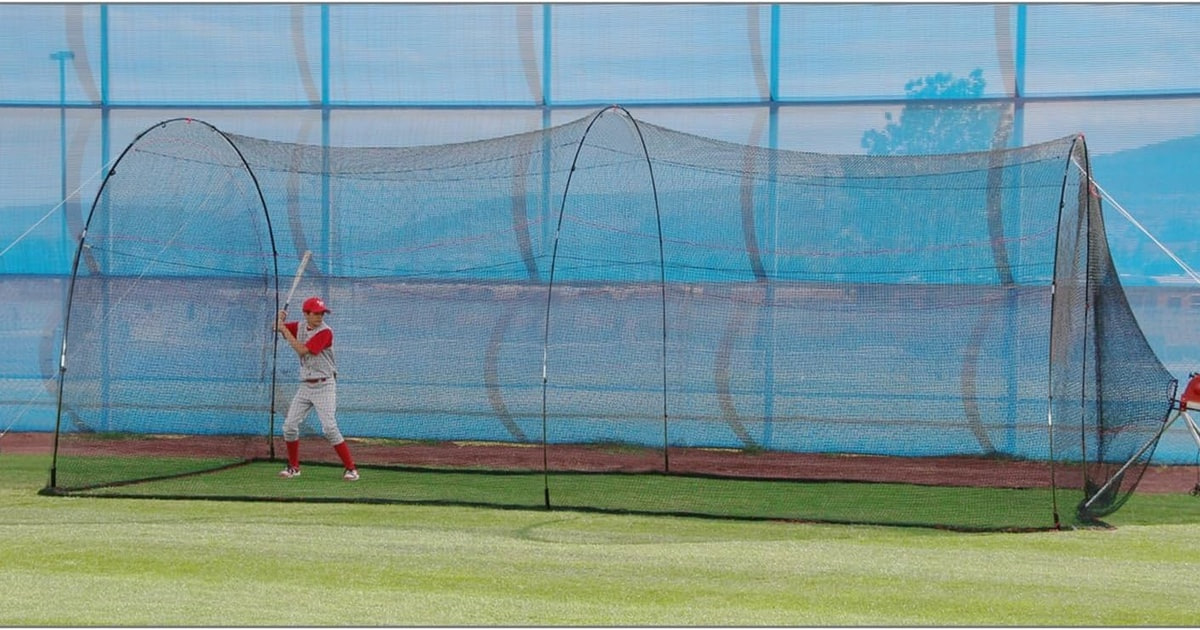
A backyard cage changes how often your kid swings. Instead of waiting for the next team practice, they take 60 cuts before dinner. That's the whole point. But the cage has to survive a summer thunderstorm, a 14-year-old with an aluminum bat, and the neighbor's window. What you're really buying is netting and poles — how thick the twine is, how the knots hold, and whether the frame stays up when the wind picks up. Size matters less than most listings suggest.
No backyard cage does everything. The portable ones go up in an afternoon and fold into a bag, but fiberglass rods flex, plastic stakes pull loose in soft ground, and a season of sun makes light netting brittle. The sturdy ones ask for a weekend, level ground, and a permanent spot you can't mow. And almost none of them are long enough for real live pitching — 22 to 30 feet is batting-practice distance, not a mound. Every cage here is a compromise somewhere.
So start with your yard, not the product page. Measure the flattest stretch you've got, add a few feet of clearance behind the back net, then find out whether your HOA has anything to say about a 10-foot net structure. Think about who's hitting, too. A nine-year-old on a tee needs far less cage than a travel-ball sophomore pulling line drives. We think that the Cimarron Sports Outdoor #24 Batting Cage is the best backyard batting cage for most people, and that the Apex Sports Portable Batting Cage is the one to buy if you need to take it down and store it.
Everything we recommend

A real steel-cornered tunnel that stays up all season

Nearly the same hitting space, and it packs into a bag

A fold-up backstop for tee work when a cage won't fit

Machine-ready, if you already own the matching pitcher
At a glance
| Product | Cage dimensions | Netting | Price | |
|---|---|---|---|---|
| Franklin Sports MLB 5' x 5' FlexBudget pick | 5' x 5' | All-weather heavy duty | $75.59 |
| Cimarron Sports Outdoor #24 Batting Cage TwistedTop pick | 30' x 12' x 10' | #24 twisted, knotted | $1,502.69 |
| HEATER Sports PowerAlley Baseball & Softball BattingAlso great | 22' x 12' x 8' | 1" nylon netting | $198.15 |
 | Trigon Sports "Ole 96er Pro Fungo ScreenAlso in lineup | 8' x 8' | 32mm knotted polyester | $797.50 |
| Apex Sports Portable Batting Cage 22x12x8 FtRunner-up | 22ft x 12ft x 8ft | 3-ply polyester, 1.25" | $149.95On sale |
How we picked
Netting and knots. We compared stated twine weight, ply, mesh size and knot type across spec sheets, since that's what decides whether a nick turns into a hole. Twisted, knotted netting ranked above stretchy single-ply nets for anything past tee work.
Frame and anchoring. We looked at pole material and diameter, corner hardware, and what each kit includes for staking down. Steel corners and real tie-down ropes counted for more than a bag of plastic stakes.
Space it needs. We checked footprint and height against ordinary suburban yards, and favored cages that state their dimensions plainly so you can measure your grass before you buy.
Machine compatibility. We gave credit for a stated machine hole or harness, because feeding a pitching machine from outside the net is the safest way to run one at home.
Weather and upkeep. We read manufacturer claims about water and UV resistance next to owner feedback about how these cages hold up after a season outdoors, plus whether the maker states a warranty on the net.
Top pick
A real steel-cornered tunnel that stays up all season
Cimarron Sports Outdoor #24 Batting Cage Twisted
This is a 30-by-12-by-10-foot tunnel with twisted, knotted polymer netting and powder-coated steel frame corners, so it behaves like a cage instead of a big net. It asks for a weekend and a level patch of yard, but it's the setup here built to live outside.
$1,502.69fromAmazonThe netting is the reason to buy this cage. Cimarron uses a twisted, knotted polymer twine in a #24 weight, which is heavier than the stretchy single-ply nets on pop-up cages. Twisted, knotted twine holds its shape when a bat clips it, and the knots keep one cut from running across a whole panel. The listing also says the net doesn't absorb water and won't shrink, which is what finishes off cheaper nets after a wet fall.
Three top ropes run the length of the roof, and full rope borders wrap the edges. That sounds like trim detail. It isn't — sag is what makes a net rub against the frame and wear through, and it's the first thing that goes wrong on long tunnels. You also get 18-foot tie-down ropes with stakes and end caps for the poles, so the pole ends aren't grinding on the netting.
Thirty feet gives you a genuinely usable amount of room. A hitter stands in, a coach can front-toss from a knee, and there's space for a machine at short distance. The 4-foot door matters more than it sounds like it should, because you're in and out picking up balls a dozen times a session, and ducking under a net flap gets old fast. Twelve feet of width also lets you set up righty and lefty stations.
It's the pick that makes you commit, though. The 1 1/2-inch frame goes together with corner fittings and ground stakes, and once it's staked and tied down, you're not moving it for a backyard party. If you've got a flat strip along a fence line you don't mind giving up, that's an easy trade. If your only open ground is where everyone eats and plays, look at the Apex instead.
Flaws but not dealbreakers
Plan on a long afternoon with a helper. Getting a 30-foot net up over a frame by yourself is miserable, and the frame has to be squared up on reasonably level ground before anything comes tight. Uneven yards make it worse, and you'll end up shimming a corner with pavers.
A #24 net is a solid mid-weight, not a commercial one. Programs taking hundreds of swings a day with wood and high-end alloy bats generally move to #36 or heavier, and any net that lives in full sun gets chalky eventually. Expect to replace the net long before the frame. The listing also doesn't mention a pitching-machine opening, so a machine has to sit inside the cage or feed through the open end.
Cimarron covers the net with a two-year limited warranty.
Runner-upOn sale
Nearly the same hitting space, and it packs into a bag
Apex Sports Portable Batting Cage 22x12x8 Ft
A 22-by-12-by-8-foot pop-up cage on fiberglass poles, with a 3.5-by-2-foot hole cut for a pitching machine. It gives up the steel corners and two feet of ceiling, but two people can stand it up in an afternoon and strike it before the first frost.
$149.95fromAmazonList priceMost families don't actually want a permanent structure in the yard. You want a cage for the season and your lawn back afterward. This one packs into a carry bag with eight stakes and supporting nets, and the poles are fiberglass rather than steel, so one adult can haul the whole kit around the side of the house without a dolly.
The machine hole is what earns this the runner-up spot. A 3.5-by-2-foot opening lets a pitching machine sit outside the netting and feed through, which keeps whoever's loading it out of the line of fire and keeps the machine away from foul tips. You can also put a machine or a screen inside the cage if you'd rather. Either way, you're not improvising with zip ties and a tarp.
The net is 3-ply stretchable polyester with a 1.25-inch mesh, and that does two useful things. It absorbs a hard line drive instead of kicking it straight back at the hitter's shins. And 1.25 inches is tight enough to hold a real baseball or a 12-inch softball, so you aren't stuck with dimpled practice balls.
Against the Cimarron, you're trading height and rigidity. Eight feet of ceiling is fine for a tee and a line-drive swing, less fine for a tall hitter who gets under one and clips the roof. And 12.7-millimeter fiberglass poles bend in a gust where steel corners don't. In a lot of yards that flex is a feature — it's forgiving when a kid runs full speed into the side.
Flaws but not dealbreakers
The poles and plastic stakes are the weak link. In sandy or soft soil you'll want to swap in longer steel stakes, and the smart habit is taking it down ahead of a storm rather than hoping. Leave a pop-up cage standing through a windy winter and you'll be shopping for replacement poles.
Twenty-two feet isn't much runway. It covers tee work, front toss and a machine at short range, but you can't recreate a pitch from real distance, and a ball off the sweet spot hits the back net in a blink. Setup is also a two-person job in practice, whatever the box suggests.
Budget pick
A fold-up backstop for tee work when a cage won't fit
Franklin Sports MLB 5' x 5' Flex
This is a 5-by-5-foot fiberglass-rod backstop that pops open in under a minute and lives in a travel bag. It won't contain a full cage session, but for a young player hitting off a tee or warming up a throwing arm, it's the right amount of equipment.
$75.59fromAmazonThis isn't a cage, and that's fine. If you've got a small yard, a long driveway or a kid who's eight, a 5-by-5 backstop catches tee swings, soft toss and warm-up throws without taking over the property. It weighs a little over eight pounds and comes with a travel bag, so your player can carry it to the park themselves.
Setup is the best thing about it. Flexible fiberglass rods attach to the netting and the whole thing tensions itself — no tools, no stakes, no squaring up a frame. Franklin describes the netting as all-weather and heavy duty, and owner feedback skews positive, mostly from parents using it with younger players rather than hitters who drive the ball.
Use it for exactly what it is. A tee, a bucket of balls, a kid taking 50 swings while you make dinner — that's the job it's good at. Put a fence or a garage wall behind it, angle it so the misses head away from the street, and it'll get you through a couple of seasons of backyard work.
Flaws but not dealbreakers
Five by five is a small target, and a mis-hit goes right past it. Don't set this up on the street side of the yard, and don't let a younger sibling stand behind the hitter. It catches what you aim at, not everything that comes off the bat.
The fiberglass rods are the part that fails. Flex is what makes setup so easy, and it's also what snaps after a season of being stuffed into a bag wet. Treat it as a replaceable item rather than a long-term investment, and store it indoors when it's not in use.
Also great
Machine-ready, if you already own the matching pitcher
HEATER Sports PowerAlley Baseball & Softball Batting
A 22-by-12-by-8-foot cage on half-inch fiberglass rods, with a harness built in to hold a Heater pitching machine against the outside of the netting. If you already own one of those machines, it's the simplest path to machine pitching in the backyard.
$198.15fromAmazonThe harness is the whole argument here. It holds the machine outside the net and feeds the ball in, so nobody stands inside the cage next to something that's firing. Heater sells the short throwing distance as a reaction-time drill, which is a fair way to use it — compressed timing teaches a quicker trigger. Just don't confuse it with live-pitch distance, because it isn't close.
Owner feedback is blunt about the setup. The cage goes up with half-inch fiberglass rods, ground stakes and a lot of cord, and the recurring theme from owners is vague instructions and a first assembly that eats an afternoon. Several mention the supplied tie cord being flimsy and worth replacing with paracord. Once it's standing, people are generally happy with how the netting plays.
The dimensions land in the same place as the Apex: 22 by 12 by 8 feet, with 1-inch-mesh nylon netting that's fine for a tee, front toss and a machine at short range. At around 29 pounds it's a bit heavier to move. The real difference is the harness, so if you don't own a Heater machine, there's not much reason to choose this over the Apex.
Flaws but not dealbreakers
Durability is the soft spot. Owner feedback includes cages that held up for a season and then came apart on reassembly, rods that broke early, and frustration with getting help when something failed. A fair number of those stories involve the cage living outside year-round, which is a reasonable thing to ask of a backyard cage.
The instructions are the other steady gripe. Plan on two people, a few hours and some patience with hooks and ties that don't line up the way the diagram implies. This isn't a thing you quietly put up alone before the kids are awake.
Who this is for
Buy now if you've got a player who wants more swings than practice provides, and a reasonably flat patch of yard you can give up for the season. Parents of youth baseball and softball players get the most out of these — a tee, a bucket of balls and a net turns 20 idle minutes into real work. High school and travel-ball hitters can use the same cages for front toss and short-distance machine pitching, which is most of what in-season hitting actually looks like.
Skip it if your only open ground is the family's one usable space, or if you were hoping to recreate a full pitcher-to-batter distance. Nothing here gets you to 55 or 70 feet. This guide covers backyard-scale cages and hitting nets you can buy and put up yourself. It isn't about commercial tunnels, poured-footing installations, or the pitching machines themselves — those are separate purchases with their own tradeoffs.
How we picked
We built the shortlist from manufacturer spec sheets, product descriptions and owner feedback, weighing five things. Netting: stated twine weight, ply, mesh size and knot type, since twisted and knotted twine survives a clipped bat better than stretch mesh. Frame: pole material and diameter, corner hardware, and whether the kit comes with stakes and tie-downs that can actually hold it down. Fit: a footprint and height that work in a normal yard, stated clearly enough to measure against. Machine use: a hole or harness that keeps a pitching machine and its operator outside the netting. Weather: what the maker claims about water and UV resistance, what owners say after a season outside, and whether the net carries a warranty.
The competition
This is what our research surfaced, not a map of everything sold. Batting cage searches drag in a lot of gear that isn't a cage — protective screens, replacement nets, even storage racks — so the list of true competitors is shorter than the search results make it look.
The Trigon Sports "Ole 96er Pro Fungo Screen ($797.50) — The Trigon "Ole 96er" Pro is a protective screen, not a cage. It's an 8-by-8-foot frame of 2-inch square galvanized steel on pneumatic wheels, with a knotted polyester net, and its job is keeping a batted ball off the coach throwing batting practice or the machine doing it. It won't contain anything behind the hitter, so it can't replace a pick here. But if you already have a cage or a wide-open field and your real problem is protecting whoever's feeding balls, it's a serious piece of equipment — at roughly 72 pounds with turf-friendly tires, it's built for a program rather than a weekend pop-up.
Installation and upkeep
Pick your spot before you open the box. You want the flattest ground you can find, a few feet of clearance behind the back net, and nothing breakable inside the foul-ball cone. Stake everything, including the pop-ups, and swap plastic stakes for long steel ones if your soil is soft. Dry the net before it goes in a bag, because mildew does more damage to netting than line drives do. Take portable cages down for the winter and ahead of any storm with real wind — sun, ice and snow load age a net far faster than hitting does. At the start of each season, walk the roofline and check the knots and ropes, then patch small cuts with net twine before they run.
Questions we get
How long should a backyard batting cage be?
A 22-foot cage covers tee work, front toss and a machine at short distance, which is what backyard hitting usually is. Thirty feet, like our top pick, is a comfortable middle — room for a hitter, a feeder and a machine without crowding. If you want a pitcher throwing from a regulation distance, you're into 55-to-70-foot territory, and that's rarely a backyard project.
What size batting cage do I need for a pitching machine?
Width and the feed opening matter more than length. Look for at least 12 feet of width so the machine and the hitter aren't on top of each other, and ideally a hole or harness so the machine sits outside the netting. Check your machine's manual for the minimum distance it's rated for, then measure that inside the cage before you buy.
What net gauge is best for a batting cage?
Higher numbers mean thicker twine, so #21 is light duty, #24 handles youth and high school swings, and #36 or heavier is what busy facilities use. Knot type counts as much as the number: twisted, knotted netting keeps a cut from spreading, while stretchy single-ply nets tend to tear along a line. For a backyard cage, #24 is plenty.
Can I use real baseballs in a portable hitting net?
Usually yes, as long as the mesh is tight. A 1-to-1.25-inch mesh holds a baseball or a 12-inch softball, which covers both pop-up cages here. The risk with light nets isn't the ball punching through the mesh — it's the ball missing a small backstop entirely, or a hard liner rocking a fiberglass frame. Use dimpled practice balls with the smallest nets if there's a window nearby.
Do I need a permit or HOA approval for a backyard batting cage?
Ask before you buy, because the answer varies by town and by association. A staked pop-up net usually reads as temporary equipment, while a 10-foot steel-framed tunnel can count as an accessory structure. Check your HOA rules and call the local building department if you're anchoring anything permanently. It's much easier than taking one down after a complaint.
Can I leave a batting cage up all year?
A steel-cornered cage with a weather-rated net can usually stay up in a mild climate. A fiberglass pop-up shouldn't, and that's where most of the failure stories come from. Snow load and constant UV are hard on light netting and flexible rods. If you want something close to year-round, buy the sturdier frame and still pull the net off for the worst stretch of winter.
Why you should trust us
For this guide:
- We read the manufacturer spec sheets and product descriptions for every cage here, lining up stated netting weight, ply, mesh size, pole diameter and frame material side by side.
- We went through owner feedback where it exists, looking for repeated themes about assembly, wind, anchoring and how the netting holds up after a season outdoors.
- We read owner reviews on every listing, weighted toward the critical ones, because that is where the recurring failures show up.
- We have a systematic way of automatically fetching the latest prices, so the numbers on this page stay current.
- This is a research-focused guide, so the team may not own every product listed — though we often do own the top winners, which gives us extra context for the recommendations.
- We don't accept free products, and the retailer commission never changes which product we recommend.
Sources
Baseball equipment and net guides (to be verified), Baseball equipment retailer education content (verify; may be affiliate)
Net gauge and ply explanations (to be sourced), JUGS Sports manufacturer information
Youth sports safety guidance, American Academy of Pediatrics (HealthyChildren.org)
Baseball and softball safety, American Orthopaedic Society for Sports Medicine
Youth baseball pitching and workload guidance, MLB and USA Baseball Pitch Smart
Product testing and reviews, Consumer Reports (verify whether it covers batting cages)
Amazon product listings and owner reviews for all 5 products
Manufacturer specification pages for each product
Some passages in this guide may be paraphrased with AI help. Prices are refreshed automatically.
More like this.
Continue exploring health reviews and recommendations.

The Best Bird Cages for Parakeets and Cockatiels
A cage isn't furniture. It's the room your bird lives in, sleeps in, and eats in, and for most parakeets and cockatiels it's where they spend the majority…

The Best Large Hamster Cages
A hamster spends almost its whole life inside one box, so the box matters more than anything else you'll buy. What it needs is floor - one long, unbroken…

The Best Pickleball Sets for Your Backyard
A pickleball set lives or dies on how fast you can get it out of the closet. If the net takes twenty minutes to assemble, you'll play twice all summer. If…

The Best Portable Backyard Volleyball Nets
A backyard volleyball net earns its keep by staying put. You want to stake it, pull the lines tight, and then forget it exists for three hours while…

The Best Soccer Rebounders for Backyard Training
A rebounder turns a lonely backyard into a practice partner. Your kid kicks, the ball comes back, and the touch-after-touch repetition that builds a first…

The Best Backyard Shed Kits
A shed solves a problem you probably live with every day. The mower is wedged behind the car. Rakes fall over every time you reach for the hose. Bags of…