The Best Backyard Shed Kits
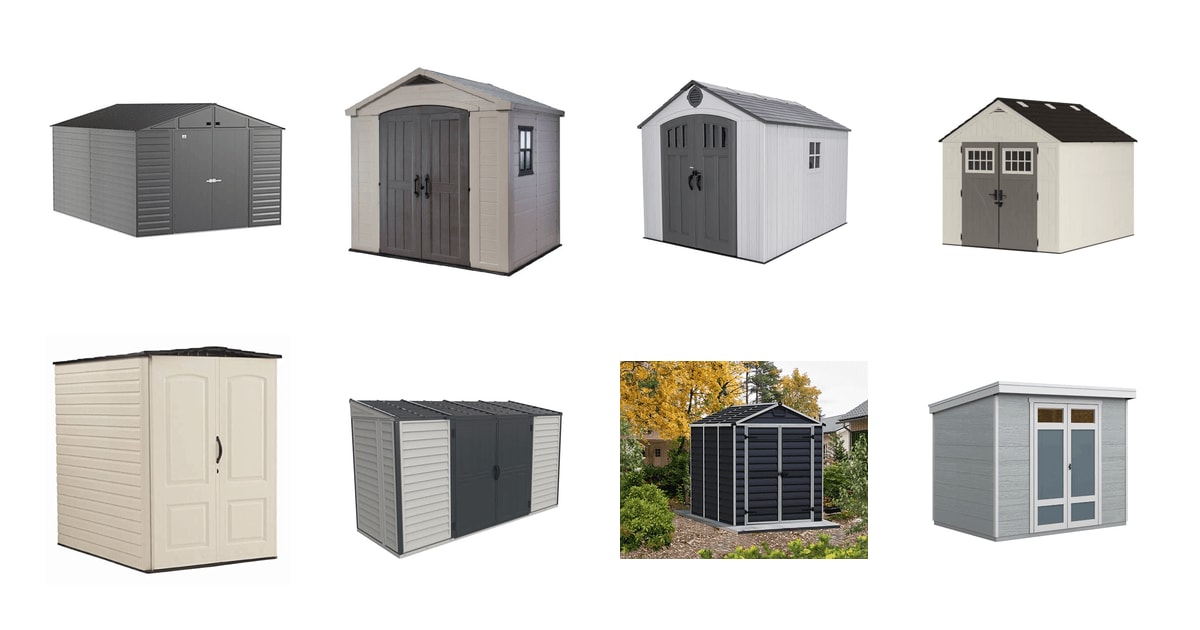
A shed solves a problem you probably live with every day. The mower is wedged behind the car. Rakes fall over every time you reach for the hose. Bags of soil sit on the patio because there's nowhere else. A good kit gives that stuff a dry home and buys your garage back. What matters most isn't the brochure photo — it's whether the doors are wide enough to roll a mower through, whether the roof sheds snow, and whether you can actually finish the build in a weekend.
Here's the honest part: no shed kit arrives easy. Even the well-engineered ones want two people, a full day, and a dead-level base you have to build yourself. Gravel pads and concrete slabs aren't included, and a few kits don't include a floor either. Instructions range from decent to maddening, and owners of nearly every brand report holes that don't quite line up. Plan for a second pair of hands and a longer afternoon than the box promises.
We think that the Lifetime 8x10 Outdoor Storage Shed is the best shed kit for backyard storage for most people, and that the Keter Factor (8x6 ft) is the one to buy if you want a roomy resin shed with a floor included and a smaller bill to go with it.
Everything we recommend

Roomy, low-upkeep storage you can stand up inside
Nearly as much room, less to haul and assemble

The brightest interior, and it handles a riding mower
A narrow shed for tools when the yard has no room

Real wood you can paint to match the house
At a glance
| Product | Footprint | Material | Price | |
|---|---|---|---|---|
 | Arrow Shed Select 10' x 14' OutdoorAlso in lineup | 10' x 14' | Galvanized steel | $923.07 |
| Keter FactorRunner-up | 8x6 ft | Polypropylene resin | $999.99On sale |
| Lifetime Outdoor Storage ShedTop pick | 8x10 ft | — | $1,478.85 |
| Suncast 8x10 Ft. Outdoor Storage Shed -Also great | 8' x 10' | Steel-reinforced resin | $1,599 |
| Rubbermaid Weatherproof Outdoor Storage ShedBudget pick | 5'x6' | — | $900.47 |
 | Duramax SideMate Plus Pro 10x4 Vinyl OutdoorAlso consider | 10x4 | Vinyl | $989 |
 | Palram - Canopia Skylight 6' x 8'Also consider | 6' x 8' | — | $899 |
| Handy Home Products Highland 8x6 Modern WoodenUpgrade pick | 8x6 | — | $1,599.99 |
How we picked
Material and weathering. We compared manufacturer material claims across resin, galvanized steel, vinyl and wood, and favored shells described as UV-protected and rot- and rust-proof. Family Handyman notes that steel is prone to denting and can corrode where the coating gets scratched, so steel had to earn its place on footprint or price alone.
Usable space vs. footprint. We read published cubic-foot capacities and exterior dimensions together, because a shed that fits your lot matters more than one that fits your wish list. Consumer Reports puts a push mower plus tools in roughly a 6x5 to 8x6 shed, so we treated that as the floor for general backyard storage.
Floor and foundation. Popular Mechanics notes that most kits need a level base — gravel, concrete or pressure-treated skids — and that some resin kits skip the floor entirely. We checked each listing for whether a floor comes in the box and flagged the ones that don't.
Doors and loading. We compared stated door openings and wall heights against the things people actually roll in: a mower, a wheelbarrow, a bike with the seat up. Narrow or short openings pushed a shed toward tool-storage duty instead of general backyard storage.
Assembly and security. We weighed manufacturer assembly estimates against recurring owner feedback about panel alignment and instruction quality, then checked for a padlock loop, deadbolts or a locking handle. Kits where owners consistently report fighting the roof got noted as flaws rather than disqualified.
Top pick
Roomy, low-upkeep storage you can stand up inside
Lifetime Outdoor Storage Shed
The Lifetime 8x10 pairs high-density polyethylene panels with steel wall supports and a steep roof you can walk around under. You get a built-in floor, roof skylights, screened vents, an adjustable shelf, and doors that take a padlock plus two interior deadbolts.
$1,478.85fromAmazonThis is the kit that covers the most common shed jobs at once. At 8 by 10 feet, there's room for a push mower, a wheelbarrow, long-handled tools and a stack of bins without playing Tetris every time you need the shovel. Consumer Reports notes that lawn and garden gear is the main reason people buy a shed at all, and this one swallows that load with space left over for seasonal stuff.
The high-pitched roof does two jobs. It drains rain and snow fast instead of letting it pool, and it gives you real headroom in the middle, so you're not stooping to reach the back wall. Heavy-duty steel trusses hold that shape. For anyone who plans to use the shed as a work spot and not just a box, that walk-around interior changes how often you'll actually go in.
The floor is part of the kit, which saves you a decision and a trip to the lumber yard. It's HDPE, so it resists oil, stains and slipping — useful if you park a mower inside and it drips. You still need a level base underneath. But you won't be cutting plywood or sealing anything.
Maintenance is close to nothing. The panels are UV-protected to slow fading and cracking, and the exterior is stain-resistant and never needs painting. Compare that to a wood shed, which wants sealing or repainting on a schedule you'll forget. Screened vents move air and keep wasps and mice from moving in, and the adjustable shelf gets small tools off the floor.
Security is better than average here. The doors are steel-reinforced with an extra-large opening, there's a padlock loop outside, and two deadbolts on the inside of the left door. That's enough to keep a curious neighbor kid out and to make a thief work. No plastic shed is a vault — but this one isn't a suggestion either.
Flaws but not dealbreakers
It's heavy and it's a project. The shipped kit runs well over 400 pounds, and the assembly uses high-grade metal screws throughout, which means a lot of driving and a lot of panel wrangling. Set aside a full day with a helper, and don't start at 4 p.m.
Ten feet by eight is a real footprint. On a small lot, that may eat more lawn than you want to give up, and it may sit closer to a property line than your town allows. Measure first, then check your setback rules.
You'll still need a level base. A compacted gravel pad or a slab is the usual answer, and that's extra cost, time and dirt work before the shed goes up.
Lifetime offers a 10-year limited warranty on its outdoor storage sheds.
Runner-upOn sale
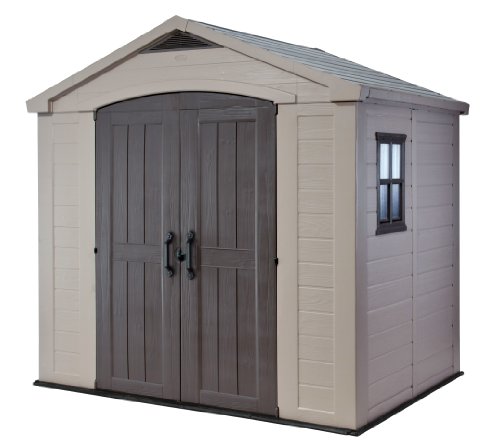
Nearly as much room, less to haul and assemble
Keter Factor
The Keter Factor gives you 285 cubic feet behind an 8-by-6-foot footprint, with polypropylene resin panels, steel reinforcement, a skylight and vents. At about 150 pounds, it's far less shed to wrestle into place than our top pick.
$999.99fromAmazonList priceIf your yard is tighter than your ambitions, this is the shed to look at. The 8-by-6 footprint takes a real bite out of clutter without taking over the lawn, and 285 cubic feet is plenty for a mower, a trimmer, patio cushions and the pool noodles that currently live in your hallway.
The resin construction is the selling point, and it's not marketing fluff. Keter builds these from polypropylene with steel reinforcement, and the panels are weather-resistant, waterproof and UV-protected — they won't peel, rot or rust. That's the practical case for resin over wood and steel generally: nothing to paint, nothing to scrape, nothing to touch up where a scratch let water in.
The wood-look finish matters more than you'd think. A shed sits in your sight line from the kitchen window for the next decade, and this one reads less like a storage bin than a plain plastic box would. If your spouse has opinions about what goes in the backyard, this is an easier sell.
A skylight brings in daylight, and the vents keep air moving so the inside doesn't smell like a damp basement by August. Combined with the lighter weight, it's a kit two people can handle in a day without renting anything or calling in a favor.
Flaws but not dealbreakers
Owner feedback on this one is genuinely mixed, and the complaints cluster around the same places: panels that don't seat cleanly, fasteners that fight back, and roof sections that need coaxing. Take the instructions slowly and check for square as you go.
At 8 by 6 with a 95-inch peak, headroom is decent but the walls aren't tall. Loading a wheelbarrow or a tall tool chest is tighter than in our top pick, and a riding mower is out of the question.
Resin sheds aren't the answer for heavy snow country. If your area gets real accumulation, compare a published snow-load rating to your local design requirement before you commit.
Also great
The brightest interior, and it handles a riding mower
Suncast 8x10 Ft. Outdoor Storage Shed -
The Suncast Tremont packs 547 cubic feet into an 8-by-10 footprint, with six skylights, door windows and vents. Steel-reinforced resin panels, a floor base and lockable double doors come in the box, and the parts arrive pre-cut and labeled.
$1,599fromAmazonIf you want a shed that feels like a room, this is the one. Six skylights plus large door windows mean you can see what you're grabbing without a flashlight, and the barn-style roof gives the interior a shape that doesn't feel like a closet. For potting, repotting or tinkering on a bike, natural light is the difference between using the space and just storing in it.
The capacity claim is the headline here — 547 cubic feet of walk-in space. Suncast pitches it for motorcycles, tractors, mowers and golf carts, and the footprint supports that. If you've been eyeing a riding mower or already own one, this is the kit on our list most likely to fit it.
Assembly is designed to be less of an ordeal. The parts arrive pre-cut and labeled, and setup needs minimal tools. That doesn't make it a one-person afternoon — it's still a big build — but labeled parts remove the step where you spread 90 panels on the lawn and try to decode a picture.
Upkeep is the usual resin story, and that's a compliment. The shell resists fading, rust and rot, and there's no painting or sealing in your future. The floor base is included, so the only prep left is getting the ground flat.
Flaws but not dealbreakers
It's as big as our top pick and heavier to move around the yard in pieces. Two people, a full day, and a clear staging area are the realistic requirements.
The vanilla color shows dirt and pollen more than a gray or taupe shed does. Expect to hose it down once or twice a season if you want it to look new.
Six skylights are great for light and less great for heat. On a hot afternoon, the inside gets warm, and anything sensitive — paint cans, seeds, adhesives — is better stored elsewhere.
Budget pick
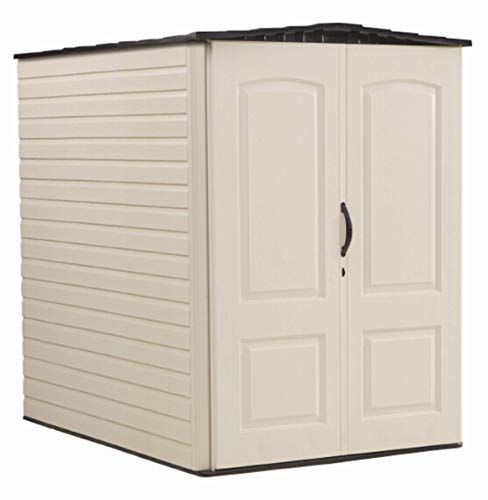
A narrow shed for tools when the yard has no room
Rubbermaid Weatherproof Outdoor Storage Shed
Rubbermaid's vertical shed fits a 5-by-6-foot patch and stands 77 inches tall, with double-wall plastic construction. It's built for push mowers, long-handled tools, brooms and ladders, and the wall panels accept shelves and hooks.
$900.47fromAmazonSome yards simply don't have room for an 8-by-10 building, and that's who this is for. It tucks against a fence or the side of the house and still takes the rake, the shovel, the broom and the push mower off your patio. If your storage problem is clutter rather than volume, this solves it for a fraction of the footprint.
The wall system is the clever part. Each panel holds up to 75 pounds with Rubbermaid's anchors, so you can add pegboard, shelves, hooks or a sports rack and build the inside around your actual tools. A vertical shed only works if you use the height, and this one gives you a way to.
Double-wall construction makes it dent- and leak-resistant, and there's nothing to paint or seal. Assembly needs no special tools, which — on a list where every other kit wants a drill and a long afternoon — is a genuine relief.
Owner feedback on these has stayed broadly positive over a long run on the market, and the pattern is consistent: people buy them for lawn gear and keep them for years. It's not exciting. It's the shed that quietly does its job.
Flaws but not dealbreakers
You can't walk into it. At 77 inches tall and 55 inches wide, you reach in from the front, which means the thing at the back is the thing you'll stop using.
A lock isn't included, so budget for a padlock if you plan to store anything worth taking.
Forget a riding mower, a wheelbarrow or bulky furniture. This is a tool locker with a roof, not a small building.
Upgrade pick
Real wood you can paint to match the house
Handy Home Products Highland 8x6 Modern Wooden
The Handy Home Highland 8x6 is a framed wood shed with a complete floor kit, a Palram roof, wide double doors with transom windows and a locking T-handle. It ships unfinished, so you choose the color and finish yourself.
$1,599.99fromAmazonBuy this one if how the shed looks matters as much as what it holds. Resin and steel come in whatever colors the factory picked. This arrives as unfinished wood, so you paint or stain it to match your siding and trim, and after a weekend it reads as part of the house instead of a thing parked behind it.
The kit is more complete than most wood sheds. You get floor framing with OSB decking, so there's no separate floor purchase, plus a Palram roof and wide double doors with transom windows that let daylight in at eye level. The T-handle locks, which is more than some plastic kits manage out of the box.
Inside, 8 by 6 with framed walls gives you something resin can't: studs to screw into. Hang a shelf unit, run hooks for long-handled tools, mount a bike rack wherever you want it. That vertical storage is how a small shed holds a surprising amount.
The trade-off is honest and worth stating plainly. Wood needs sealing or repainting on a schedule, where resin needs nothing. You're taking on maintenance in exchange for looks and customization.
Flaws but not dealbreakers
This is the heaviest and most demanding build here — roughly 650 pounds of kit, two adults minimum, four to eight hours, power tools you supply, and intermediate skills. If you've never framed anything, borrow someone who has.
It ships unfinished and unpainted, so the project isn't over when the roof goes on. Budget a day for primer and paint, and plan to repeat it every few years.
Handy Home doesn't sell it in Florida, because the 2x3 framing doesn't meet the state's hurricane standards. If you're anywhere with serious wind, take that as information about the structure, not just a shipping rule.
Who this is for
Buy a shed kit now if your mower, tools and bags of soil are living somewhere they shouldn't — the garage, the patio, under a tarp. These kits are for homeowners who want dry, lockable storage without hiring a contractor or pouring a custom building. They suit gardeners, DIYers, and anyone whose yard gear has outgrown the space it has.
Hold off if you don't have a flat spot and aren't ready to build one, because every kit here needs a level base you provide. Skip these entirely if you want a workshop with power and insulation, a garage you can park a car in, or a structure rated for hurricane-force wind — those are different purchases. We also kept this guide to kits a couple of determined people can assemble at home, so it leaves out custom-built and professionally installed sheds. One more thing to handle before you order: the International Residential Code exempts one-story detached accessory structures of 200 square feet or less from building permits, but many local jurisdictions set a lower threshold — commonly 120 square feet — and setback rules from property lines apply no matter the size.
How we picked
We built our shortlist from manufacturer spec sheets, published reviews and recurring themes in owner feedback, then judged every kit on the same points. Material: resin and vinyl shells that are described as rot-, rust- and UV-proof took priority over steel, which Family Handyman notes dents easily and can corrode where the coating is scratched. Usable space: we read capacity and exterior dimensions together, using Consumer Reports' 6x5-to-8x6 benchmark for a push mower plus tools as a baseline. Floor and foundation: we checked whether a floor comes in the kit, since Popular Mechanics notes that some resin kits don't include one and all of them need a level base. Loading: stated door openings and wall heights had to clear a mower or a wheelbarrow, not just a rake. Weather ratings: we looked for published snow- and wind-load figures, because Duramax and other manufacturers publish them per model and buyers in snowy regions need to compare them to local requirements. Security and upkeep: a padlock loop, deadbolt or locking handle counted, and so did a finish that never needs painting.
Other backyard shed kits worth considering
If you want a shed that fits in a side yard: The Duramax SideMate Plus Pro 10x4 Vinyl Outdoor ($989) — The Duramax SideMate Plus Pro is only about 50 inches deep but runs 10 feet wide, which is the shape of the strip between your house and the fence. It opens across the long face with a double door roughly 60 inches wide, so loading is easier than on side-opening models. It's vinyl over a metal-reinforced structure, tested to a 20-pound-per-square-foot snow load, and a galvanized foundation frame comes in the box. What you give up is depth — you can't walk in, and a mower only fits if it's a narrow push model. Finished flooring is also sold separately, so you'll be supplying that yourself.
If you want a potting shed full of daylight: The Palram - Canopia Skylight 6' x 8' ($899) — The Palram-Canopia Skylight 6x8 uses polycarbonate roof panels on an aluminum frame, so light pours in while the exterior stays opaque. The roof blocks up to 100 percent of UV rays, the floor is anti-slip, and at 113 pounds it's the lightest kit here to move around the yard. The frame won't rust and the panels are built to take hail and heat without cracking. But owner feedback on this one skews harder than on anything else we looked at, with repeated frustration over the build. If you want the greenhouse feel, go in expecting a fussy assembly.
The competition
These are the kits our research surfaced that didn't make the cut — not a map of everything sold. Shed lineups shift constantly, and plenty of good sheds come from regional lumber yards and custom builders that never show up in a national search.
The Arrow Shed Select 10' x 14' Outdoor ($923.07) — The Arrow Select 10x14 is the biggest shed here and the only galvanized steel one, with 71-inch walls, vented gables and swing doors with a keyed lock. On paper it's a lot of building for the money, and the horizontal siding looks sharper than old-school corrugated steel. But owner feedback is rough and consistent: thin panels that arrive dented or scratched, holes that don't align, and picture-only instructions that have people re-bending brackets to make doors close. Several owners with real building experience still describe it as a multi-day job needing three people. Family Handyman also notes that steel dents and can rust where the coating is damaged, which is exactly what shipping scuffs do. Consider it only if you need this much covered space, you're patient, and you'd rather spend a long weekend fighting panels than pay more for resin.
Site prep and installation notes
Start with the ground, not the box. Nearly every kit here needs a level base — a compacted gravel pad, a concrete slab or pressure-treated skids — and an out-of-square foundation is why panels and doors refuse to line up later. Build the pad a few inches larger than the shed's footprint so water drains away from the walls, and check it with a long level before you open the hardware. Plan on two people and a full day for a mid-size resin shed; wood kits take longer. Anchor the finished shed to the pad or ground with the manufacturer's recommended hardware, because an empty plastic shed is a sail in a storm. Then confirm your setback distance from property lines, and keep the shed out from under trees that drop limbs.
Questions we get
Do I need a permit to build a shed in my backyard?
Often not, but check locally before you order. The International Residential Code exempts one-story detached accessory structures of 200 square feet or less from building permits, and many towns follow that. Plenty of jurisdictions set a lower bar, commonly 120 square feet. Even a permit-exempt shed still has to respect setback rules from property lines and easements.
What's the best shed material: resin, metal, vinyl or wood?
Resin is the best default for most people. It's rust-proof, rot-proof and never needs painting, which is most of the maintenance headache gone. Galvanized steel is usually the lowest-priced category but dents easily and can corrode where the coating gets scratched. Vinyl splits the difference with good weather resistance, and wood looks best and takes paint, but you'll be sealing or repainting it for as long as you own it.
How big of a shed do I need for lawn equipment?
For a push mower plus hand tools, a 6x5 to 8x6 shed covers it, according to Consumer Reports. Lawn and garden gear is the single most common reason people buy a shed in the first place. If you're adding bikes, patio furniture or a wheelbarrow, step up to an 8x10. A riding mower needs a walk-in shed with a wide door — the Suncast Tremont is the one here built for that.
What kind of foundation does a shed kit need?
A level base, and you're building it. The usual options are a compacted gravel pad, a concrete slab or pressure-treated skids, and Popular Mechanics notes that most kits require one. Some resin kits don't include a floor at all, so read the listing carefully. Budget time and money for the pad — it's the step people skip and then regret when the doors won't latch.
How long does it take to assemble a shed kit?
Plan on a full day for two people for a mid-size resin shed, which matches both manufacturer and reviewer estimates. Wood kits like the Handy Home Highland list four to eight hours with two adults, power tools and intermediate skills — and that's before painting. Big steel sheds often take longer than advertised; owners frequently describe multi-day builds. Whatever the box says, don't start in the afternoon.
Are resin sheds strong enough for heavy snow?
Some are, but you have to check the number. Manufacturers publish snow-load ratings per model — the Duramax SideMate Plus Pro, for instance, is tested to 20 pounds per square foot — and you should compare that to your area's design snow load. A steeply pitched roof like the Lifetime's helps by shedding snow instead of holding it. In heavy-snow regions, clear the roof after big storms rather than trusting the rating alone.
Do plastic sheds fade or get brittle in the sun?
Good ones resist it. The resin sheds here are built with UV protection specifically to slow fading and cracking, and Palram's polycarbonate roof blocks up to 100 percent of UV rays. Cheap, unprotected plastic is what chalks and goes brittle. Expect some color softening over many years of full sun, but not the crumbling you may be picturing.
Why you should trust us
For this guide:
- We read manufacturer spec sheets and listing details for every shed here, comparing materials, dimensions, stated capacities, door openings, included floors and published snow-load ratings.
- We drew on published reporting from Popular Mechanics, Family Handyman and Consumer Reports on shed materials, foundations and sizing, plus the permit thresholds in the International Residential Code.
- We reviewed recurring themes in owner feedback — especially around assembly difficulty, panel alignment and instruction quality — to shape the flaws and caveats in each write-up.
- We read owner reviews on every listing, weighted toward the critical ones, because that is where the recurring failures show up.
- We have a systematic way of automatically fetching the latest prices, so the numbers on this page stay current.
- This is a research-focused guide, so the team may not own every product listed — though we often do own the top winners, which gives us extra context for the recommendations.
- We don't accept free products, and the retailer commission never changes which product we recommend.
Sources
Best Outdoor Storage Sheds - Consumer Reports, Consumer Reports
Best Outdoor Storage Sheds - Wirecutter, Wirecutter
Best Storage Sheds - Popular Mechanics, Popular Mechanics
Best Storage Sheds - Family Handyman, Family Handyman
International Residential Code, Section R105.2 (work exempt from permit), International Code Council
Keter Factor Shed product specifications, Keter (manufacturer)
Lifetime 8x10 Shed specifications and warranty, Lifetime (manufacturer)
Duramax Imperial specifications, Duramax (manufacturer)
Amazon product listings and owner reviews for all 8 products
Manufacturer specification pages for each product
Some passages in this guide may be paraphrased with AI help. Prices are refreshed automatically.
More like this.
Continue exploring lifestyle reviews and recommendations.

The Best Electric Smokers for Backyard BBQ
Smoking meat used to mean babysitting a fire for twelve hours. An electric smoker takes that job away. You set a temperature, load some wood chips, and…

The Best Backyard Gas Grills
A gas grill earns its keep on a Tuesday, not just on the Fourth of July. You want it to light on the first try, get hot enough to sear a steak, and hold a…

The Best Mosquito Traps and Backyard Bug Zappers
Mosquitoes aren't a problem you solve in an afternoon. A biting female lives a few weeks, lays hundreds of eggs in a bottle cap's worth of water, and…

The Best Pickleball Sets for Your Backyard
A pickleball set lives or dies on how fast you can get it out of the closet. If the net takes twenty minutes to assemble, you'll play twice all summer. If…

The Best Soccer Rebounders for Backyard Training
A rebounder turns a lonely backyard into a practice partner. Your kid kicks, the ball comes back, and the touch-after-touch repetition that builds a first…

The Best Portable Backyard Volleyball Nets
A backyard volleyball net earns its keep by staying put. You want to stake it, pull the lines tight, and then forget it exists for three hours while…