The Best Backyard Gas Grills
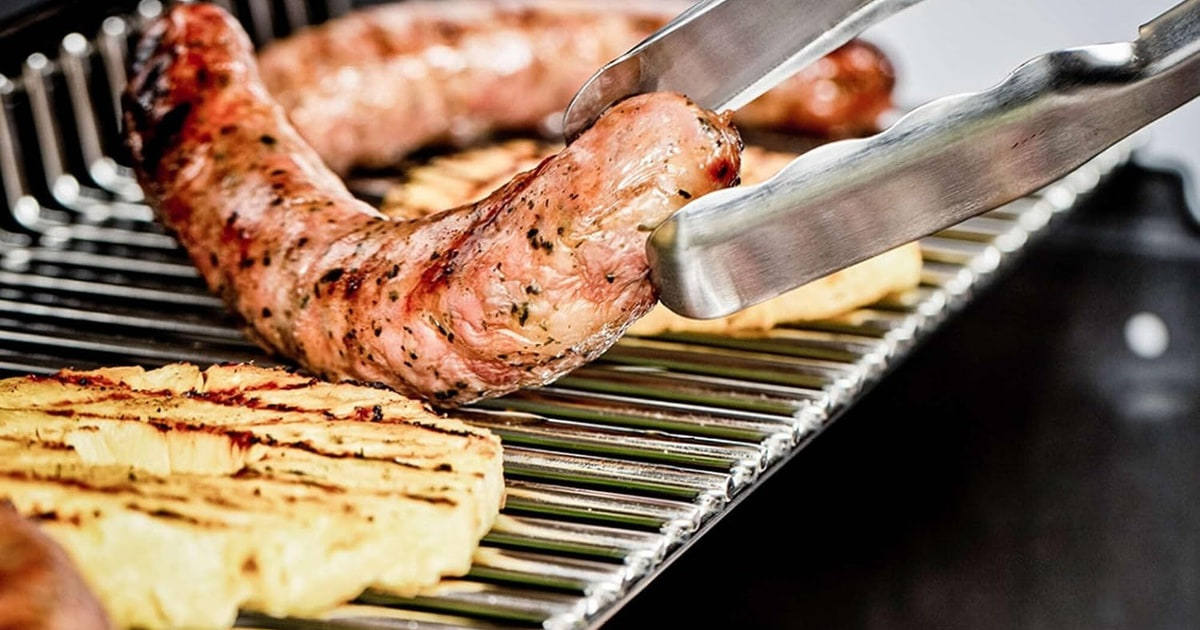
A gas grill earns its keep on a Tuesday, not just on the Fourth of July. You want it to light on the first try, get hot enough to sear a steak, and hold a steady medium while chicken thighs finish. The grills that make people happy over years aren't the ones with the biggest BTU number on the box. They're the ones with even heat across the grate, grease management that doesn't turn into a chore, and burners that survive a few winters outside. Capacity matters too, but only if you actually cook for a crowd.
Here's the honest part: no gas grill does everything. Standard burners top out somewhere around 550 to 650°F at the surface, which is fine for burgers and short of what a steakhouse broiler does. Big five-burner grills give you room but often spread the same heat thinner. Cheaper stainless — the 430-grade kind — starts showing surface rust within a year or two in humid or coastal air, while 304-grade holds up far longer. And every one of these is a multi-hour assembly job unless you pay someone.
We looked at what published reviews, manufacturer specs and long-term owner feedback agree on, then weighed heat evenness against build quality and warranty coverage. The picks below cover a small yard, a big family, a steak obsessive and a permanent outdoor kitchen. We think that the Weber Genesis E-335 propane grill is the best backyard gas grill for most people, and that the Weber Spirit E-325 is the one to buy if you have a smaller patio or you're buying your first real grill.
Everything we recommend

Even heat, a real sear zone, and a warranty that outlasts the grill

Nearly the same build quality in a footprint that fits a small patio

Infrared sear and a real rotisserie, if you cook for a crowd
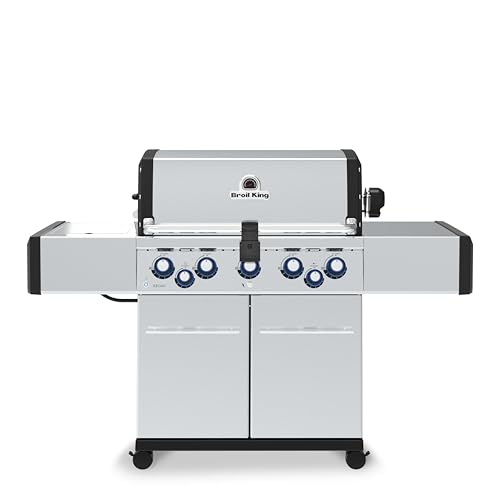
Five burners and reversible grates for natural-gas households
At a glance
| Product | Price | |
|---|---|---|
| Weber® Genesis E-335 Gas Grill for OutdoorTop pick | $1,099On sale |
| Weber® Spirit® E-325 Gas GrillBudget pick | $499On sale |
| Napoleon P500RSIBPSS-3 Prestige 500 RSIB Propane GasUpgrade pick | $1,879 |
| Broil King 958347 Regal S 590 ProAlso great | $1,859On sale |
 | Weber Genesis E-335 Gas Grill for OutdoorAlso consider | $1,149 |
 | Charbroil® Performance Series™ 5-Burner Cabinet Gas GrillAlso in lineup | $918.99 |
 | Lynx Professional 36" Built-in Natural Gas GrillAlso in lineup | $7,669 |
How we picked
Even heat first. We weighted published heat-consistency findings and owner reports of hot and cold spots above raw BTU numbers. A grill that holds within roughly 15 degrees across the grate beats one with a bigger number on the box.
BTU per square inch. Serious Eats puts the useful range at 80 to 100 BTU per square inch of primary cooking area. We checked each grill's output against its actual grate size rather than trusting the headline BTU figure.
Grates and flare-ups. We favored porcelain-enameled cast iron for heat retention and looked for heat tents, sear plates or infrared barriers. America's Test Kitchen found such systems cut flare-ups roughly 40 to 50 percent.
Corrosion resistance. Reviewed.com reports that 430-grade stainless shows surface rust within 12 to 18 months in humid or coastal air, while 304-grade lasts five years or more. We read owner feedback for rust-through and burner failure patterns.
Warranty and parts. We compared what each warranty actually covers, not just its length, and looked for owner accounts of getting replacement parts. Coverage that excludes the body or burners isn't worth much.
Top pickOn sale
Even heat, a real sear zone, and a warranty that outlasts the grill
Weber® Genesis E-335 Gas Grill for Outdoor
The Genesis E-335 gives you three PureBlu burners, a dedicated high-heat sear zone, a side burner for sauces, and porcelain-enameled cast-iron grates. It's the grill we'd point almost anyone toward if they plan to keep it more than a few seasons.
$1,099fromAmazonList priceEven heat is the whole ballgame, and this is where Weber's Genesis line built its reputation. Wirecutter's heat-consistency work found the E-335 held surface temperatures within about 15 degrees across the entire grate — a benchmark result for grills its size. In practice that means the burgers at the front edge finish when the ones in the middle do. You stop shuffling food around to dodge cold corners.
The sear zone is the part you'll notice first. It's a wider, hotter strip designed for the moment you want crust, and it heats fast even though the cookbox is large. Owners upgrading from older Genesis models consistently say this one gets hot quicker despite the extra square inches. If you cook steaks more than occasionally, that's the single feature worth paying for.
Porcelain-enameled cast iron holds and radiates heat better than plain stainless bars, which is why the sear marks come out deeper at the same surface temperature. The Flavorizer bars underneath catch drippings, vaporize them for smoke flavor, and steer grease away from the burners. America's Test Kitchen found that heat tents of this type cut flare-ups roughly 40 to 50 percent. Fewer flare-ups means less scorched chicken skin.
The 10-year warranty is the broadest in mainstream gas grilling. It covers burners, grates, Flavorizer bars, igniter, lid and body — not just the parts that never fail. Consumer Reports reliability surveys put Weber at the top for burner longevity after three or more years of ownership, and owner reports of 10- and 15-year Genesis grills are common. That coverage is a big part of why this costs more than a similar-looking grill.
Day to day, the details add up. The grease tray slides out from under the cookbox so cleanup takes a minute instead of a project. The storage locker swallows a chimney starter and a stack of tools. And the grates accept Weber's Crafted inserts — a pizza stone, a griddle, a dual-sided sear grate — if you want to push past burgers without buying a second appliance.
Flaws but not dealbreakers
Assembly is the recurring complaint, and it's a fair one. Owners describe a multi-hour job with a manual that's hard to follow in spots, and setting the cookbox onto the base genuinely takes two people. Weber's 3D assembly app helps, though a few owners found it didn't quite match their model.
Only part of the grill is stainless steel. Some long-time Weber owners are frustrated that the sheet metal underneath eventually rusts out even when the burners keep going. A cover and a sheltered spot go a long way here, especially if you live somewhere damp.
It's big. At nearly five feet wide with the side tables up, it eats a chunk of a small deck, and this is the propane version — you'll be swapping tanks rather than tapping a gas line.
Weber covers the E-335 with a 10-year warranty on the burners, cooking grates, Flavorizer bars, igniter, lid and body.
Budget pickOn sale
Nearly the same build quality in a footprint that fits a small patio
Weber® Spirit® E-325 Gas Grill
The Spirit E-325 is a three-burner grill with the same porcelain-enameled cast-iron grates and 10-year warranty as its bigger sibling, plus Boost Burners in the sear zone. It's the sensible first real grill, or the right size if your deck is tight.
$499fromAmazonList priceIf you're cooking for four, this is enough grill. Owners describe it as exactly right for getting a round of burgers off quickly, and the footprint is close to a two-burner while the cooking area is meaningfully larger. You give up the side burner and the storage locker, not the fundamentals.
Weber's build quality survives the price cut, which is the reason to buy this over a similarly sized no-name grill. You still get porcelain-enameled cast-iron grates, the same grease management approach, and the same 10-year limited warranty. Owner feedback from people who'd been replacing cheap grills every season or two is blunt about the difference. Good Housekeeping Institute testing also found a Spirit-series grill lit on the first try across every ambient condition they tried.
The Boost Burners are the interesting addition — Weber rates them at 40 percent more power in what it calls the largest sear zone in its class. Owners back that up, describing a sear strip that runs very hot next to burners that still hold a gentle medium. That two-zone split is what you need for a thick steak: crust one side, then move it over to finish.
Snap-Jet ignition lets you light each burner one-handed, which sounds trivial until you're holding a platter. And the Weber Works side rails take snap-on accessories — a bottle holder, extra tool hooks, a light — so you can claw back some of the prep space the smaller cart gives up.
Flaws but not dealbreakers
Several owners wish it were a few inches wider for what it costs. If you regularly cook for more than about six people, you'll be running two rounds.
Assembly again takes a few hours, and at least one buyer received a unit missing hardware and got bounced between Amazon and Weber support trying to sort it out. Check the box contents before you start.
The Spirit E-325 carries a 10-year limited warranty.
Upgrade pick
Infrared sear and a real rotisserie, if you cook for a crowd
Napoleon P500RSIBPSS-3 Prestige 500 RSIB Propane Gas
The Napoleon Prestige 500 RSIB adds an 1,800°F infrared side burner, an 18,000-BTU infrared rear burner and a heavy-duty rotisserie kit to a four-burner stainless grill. It's for people who entertain often and want more than burgers.
$1,879fromAmazonThe SIZZLE ZONE infrared side burner is the reason to want this grill. Napoleon rates it to 1,800°F surface temperature in about 30 seconds — roughly triple what a standard gas burner reaches. On a one-inch ribeye that's a hard crust in under a minute per side, which no conventional burner here can match. If steakhouse sear is what you're chasing, this is the shortcut.
Capacity is the other half of the argument. You get 500 square inches of main grate, 260 more on the warming rack, and 140 on the side burner. Napoleon says that's 31 burgers at once on the main surface alone. Four stainless burners put out 48,000 BTU, and stainless sear plates sit between the burners and the food to spread heat and vaporize drippings.
The rotisserie isn't an afterthought. The 18,000-BTU infrared rear burner and heavy-duty spit kit come in the box, and owners who'd written off rotisserie attachments on other grills as gimmicks say this one actually works. A whole chicken over that burner is genuinely different from one sitting on a grate.
JETFIRE ignition lights each main burner individually, and there's a back channel between burners so they can cross-light if an igniter gets stubborn. That's a small piece of engineering that pays off in year four. Owners several years in report the grill still looking and working well, including one whose grill got blown onto its side in a windstorm and kept going.
Flaws but not dealbreakers
The cabinet doesn't match the firebox. Multiple owners describe the base and doors as thinner and less impressive than the cooking hardware above them, and some arrived dented or scratched. The grill part is built like a tank; the furniture around it isn't.
It's heavy — nearly 200 pounds — and wide. Assembly runs an afternoon, and the heavy pieces really want a second person.
This is the propane version. If you want to run it off a house gas line, that's a different model, not a conversion you should improvise.
Also greatOn sale
Five burners and reversible grates for natural-gas households
Broil King 958347 Regal S 590 Pro
The Broil King Regal S590 Pro runs on natural gas, puts 55,000 BTU across five dual-tube stainless burners, and adds a rear rotisserie burner with an auto-reversing motor. Its reversible V-grids let you choose sear marks or basting.
$1,859fromAmazonList priceIf you already have a natural gas line on the deck, this is the most complete grill here that's built for it. A 10-foot hose comes in the box. You never buy a tank again, and Bob Vila's figures suggest households grilling three or four times a week save a meaningful amount annually on fuel compared with propane.
The dual-tube burners are Broil King's answer to the front-to-back temperature drift that plagues wide grills. Ports run along each side of a tube-in-tube design, so heat is meant to arrive evenly at both the front edge and the back. Across 625 square inches of primary space plus a 250-square-inch warming rack, that matters — The Spruce Eats notes that five-burner grills over 600 square inches can hold three distinct heat zones at once, which is how you feed eight people without staggering.
The reversible stainless V-grids are a nice touch you'll use more than you expect. Pointed side up gives you sear marks; flip them and the V-channels catch juices and baste as they run. Consumer Reports reliability surveys rank Broil King alongside Weber among the highest owner-recommended brands after three-plus years, and one owner living a quarter mile from the ocean reports it still looking new with a cover and regular cleaning.
There's a 10,000-BTU side burner for sauces and a 15,000-BTU rear burner with a premium rotisserie kit and an auto-reversing motor included. It's assembled in North America from domestic and globally sourced components, which shows up in the general heft — this thing is over 200 pounds.
Flaws but not dealbreakers
Burner durability is the worry. More than one owner reports burners rusting out within a year or two, and at least one struggled to get replacement parts to honor the warranty. That's the opposite of the Weber experience, and it's the main reason this isn't our top pick.
Heat output divides owners. Most call it plenty hot; a few say it takes too long to bring steaks up and that their indoor grill runs hotter. Expect capable rather than blistering, unless you're using the rear burner.
One buyer received a four-burner unit against a five-burner listing, so confirm the exact configuration and finish before you order.
Who this is for
This guide is for anyone buying a freestanding propane or natural gas grill for a backyard, deck or patio — whether you're replacing a rusted-out unit, buying your first real grill, or stepping up because you host a lot. If you grill more than a handful of times a season, spending more on even heat and a serious warranty pays back. If you grill twice a summer, almost anything with cast-iron grates will do, and you should buy small.
We're not covering charcoal, pellet or portable grills here, and we didn't dig into griddles or smokers. If you want an outdoor kitchen with a built-in unit, note that drop-in grills need a non-combustible surround and specific clearances — check your local code before you buy anything permanent. And if app connectivity is the main thing you want, a separate wireless meat thermometer gets you most of the benefit on any grill here.
How we picked
Even heat: we prioritized published heat-consistency findings and owner reports of hot spots over headline BTU figures. BTU per square inch: we checked output against actual grate size, using the 80–100 BTU per square inch range as a sanity check. Grates and flare-ups: porcelain-enameled cast iron for heat retention, plus heat tents or sear plates, which cut flare-ups substantially. Corrosion: we looked at stainless grade and read owner feedback for rust-through, since 430-grade steel rusts far sooner than 304 in humid air. Warranty and parts: we compared what coverage actually includes and whether owners could get replacement parts when something failed.
Other backyard gas grills worth considering
If you want our top pick plumbed into a house gas line: The Weber Genesis E-335 Gas Grill for Outdoor ($1,149) — This is the same Genesis E-335 — same PureBlu burners, same sear zone, same cast-iron grates and Flavorizer bars — configured for natural gas instead of propane. If you have a line on the deck or you're willing to have one run, it's the version to get. You never haul a tank again, and grilling several times a week costs less over a year. The trade-off is that you lose portability entirely, and installation is a real expense up front. One long-time owner does note the familiar Weber complaint that only part of the grill is stainless, so keep it covered.
The competition
These are the grills the research surfaced alongside our picks, not a survey of everything for sale. A few didn't make the cut on durability, one is a different category of purchase entirely, and one is here mainly because it comes up constantly in searches for large family grills.
The Charbroil® Performance Series™ 5-Burner Cabinet Gas Grill ($918.99) — The Char-Broil Performance Series 5-Burner is the big-capacity, low-cost option people usually land on when they need room for a crowd. On paper it's appealing: 495 square inches of primary space, four top-ported stainless burners plus a 10,000-BTU side burner, porcelain-coated cast-iron grates, a lid thermometer and genuinely easy assembly. But durability is where it falls apart in owner feedback — reports of burners failing inside a year, parts rusting within the warranty window, and flame problems that customer service couldn't resolve. It may still make sense if you need maximum grate area right now and accept replacing it in a few seasons, but that math rarely beats buying a smaller grill that lasts.
The Lynx Professional 36" Built-in Natural Gas Grill ($7,669) — The Lynx Professional 36-inch is a built-in natural gas grill with ceramic burners, a Trident sear burner and a rotisserie — the kind of unit that anchors a masonry outdoor kitchen rather than rolling onto a deck. It's a different purchase from everything else here: you're committing to a permanent installation, a non-combustible surround, a gas line and code compliance before the grill even arrives. If you're building an outdoor kitchen and want restaurant-grade stainless, it belongs on your list. For a backyard where the grill needs to be usable next weekend, our picks make more sense.
Care and maintenance
Most grills die of neglect, not use. Burn the grates clean for 10 or 15 minutes after you cook, brush them while they're hot, then wipe cast-iron grates with a thin coat of high-smoke-point oil so the porcelain-enameled surface stays slick and rust-free. Pull the grease tray every few cooks — a full one is both a fire hazard and the reason your grill smells. Once a season, take the grates and heat tents out, scrape the crust off the sear plates or Flavorizer bars, and vacuum the cookbox. Check the burner ports for clogs while you're in there, since blocked ports are the usual cause of uneven flame. And buy the cover. Owner feedback across every brand here points the same direction: covered grills that live somewhere sheltered last years longer, especially in coastal or humid air.
Questions we get
How many BTUs do I actually need?
Ignore the total and do the division. Serious Eats puts the useful range at 80 to 100 BTU per square inch of primary cooking area, so a 500-square-inch grate wants roughly 40,000 to 50,000 BTU. A grill advertising a huge BTU figure on a small grate is mostly burning propane you paid for.
Is Weber worth the extra money over Char-Broil or Nexgrill?
For most people, yes — the difference shows up in years three through ten, not in week one. Consumer Reports reliability surveys rank Weber highest for burner longevity after three-plus years, and Weber's 10-year warranty covers burners, grates, igniter, lid and body. Cheaper grills often need replacing after a few seasons, which erases the savings.
What's the difference between a 3-burner and a 5-burner grill?
Mostly capacity and how many heat zones you can run at once. A three-burner handles a family of four comfortably and gives you a hot side and a cool side. Five-burner grills over 600 square inches can hold three distinct zones — high, medium and low — which is how you feed eight or more without cooking in shifts.
What's the best gas grill here for searing steaks?
The Napoleon Prestige 500, because of its infrared SIZZLE ZONE side burner rated to 1,800°F. Standard gas burners top out around 550 to 650°F at the surface, so an infrared burner is a genuinely different tool. If you don't want to spend that much, the Genesis E-335's dedicated sear zone paired with cast-iron grates gets you respectable crust.
Can I convert a propane grill to natural gas?
Sometimes, but it's not a DIY swap on most modern grills — the orifices and regulator have to change, and doing it wrong is dangerous. Bob Vila pegs conversion as a parts-plus-installation job, and households grilling three or four times a week can recover that in fuel savings over time. The safer route is buying the natural gas version outright, as several grills here offer both.
How do I prevent flare-ups?
Start with a grill that has heat tents, sear plates or Flavorizer bars — America's Test Kitchen found these cut flare-up incidents roughly 40 to 50 percent by vaporizing drippings before they hit the burners. Beyond that, trim heavy fat caps, keep the grease tray empty, and clean the cookbox seasonally. If flames do jump, move the food to a cool zone rather than spraying water.
Why you should trust us
For this guide:
- We read manufacturer specifications and warranty terms for every grill here, and compared each one's BTU output against its actual primary cooking area rather than the headline number.
- We drew on published findings from Wirecutter, Consumer Reports, America's Test Kitchen, Good Housekeeping, Serious Eats and Reviewed.com on heat consistency, flare-up management, ignition reliability and stainless steel corrosion.
- We read through owner feedback for recurring themes — assembly difficulty, burner longevity, rust-through and parts availability — and weighted repeated complaints more heavily than one-off experiences.
- We read owner reviews on every listing, weighted toward the critical ones, because that is where the recurring failures show up.
- We have a systematic way of automatically fetching the latest prices, so the numbers on this page stay current.
- This is a research-focused guide, so the team may not own every product listed — though we often do own the top winners, which gives us extra context for the recommendations.
- We don't accept free products, and the retailer commission never changes which product we recommend.
Sources
The Best Gas Grills — Wirecutter / New York Times, Wirecutter
Best Gas Grills of 2026 — Serious Eats, Serious Eats
Best Gas Grills 2026 — Good Housekeeping, Good Housekeeping
Gas Grill Reviews & Ratings — Consumer Reports, Consumer Reports
2025 HPBA Industry Study — Hearth, Patio & Barbecue Association, HPBA
Napoleon Prestige PRO 500 Specifications — Napoleon, Napoleon (Manufacturer)
Weber Genesis E-335 Specifications & Features — Weber, Weber (Manufacturer)
Best Gas Grills — America's Test Kitchen, America's Test Kitchen
Backyard Gas Grill Reviews — The Spruce Eats, The Spruce Eats
Propane vs. Natural Gas Grills: Pros and Cons — Bob Vila, Bob Vila
Char-Broil TRU-Infrared Technology Overview — Char-Broil, Char-Broil (Manufacturer)
Stainless Steel Grades for Outdoor Grills — Reviewed.com, Reviewed / USA Today
Amazon product listings and owner reviews for all 7 products
Manufacturer specification pages for each product
Some passages in this guide may be paraphrased with AI help. Prices are refreshed automatically.
More like this.
Continue exploring lifestyle reviews and recommendations.

The Best Gas and Charcoal Grills
Most of what a grill does is unglamorous. Burgers on a Tuesday. Chicken thighs for four people who are already hungry. Roughly two-thirds of American…

The Best Gas Grills for Outdoor Entertaining
A grill that's fine for two pork chops on a Tuesday falls apart when twelve people show up. You need enough grate space to get everything off at once,…

The Best Gas Cans and Fuel Spouts
A gas can is one of those things you never think about until it fights you. You're standing over a mower deck with a hot muffler, the spout won't seat,…

The Best Mosquito Traps and Backyard Bug Zappers
Mosquitoes ruin summer evenings in a very specific way. You're fine for ten minutes, and then you're slapping your ankles and going inside. The devices…

The Best Electric Smokers for Backyard BBQ
Smoking meat used to mean babysitting a fire for twelve hours. An electric smoker takes that job away. You set a temperature, load some wood chips, and…

The Best Backyard Shed Kits
A shed is a purchase you think about twice: once when you buy it, and again every time you dig past the snowblower to reach the hedge trimmer. What…