The Best Pellet Grills
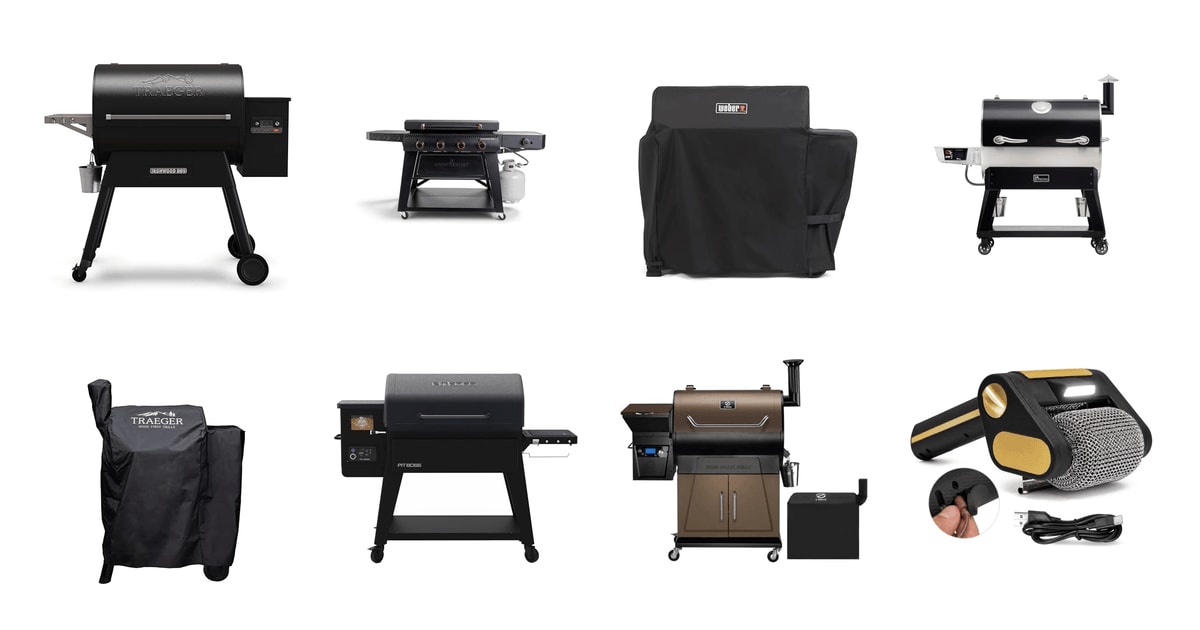
A pellet grill runs on compressed hardwood and a small electric brain. An auger feeds pellets into a firepot, a fan pushes the heat around, and a controller decides how fast to feed. What you get is real wood smoke with the babysitting of an oven. You set 225°F, you walk away, and eight hours later there's bark on a pork shoulder. If you've ever stayed up half the night adjusting vents on a charcoal smoker, that difference is the whole pitch.
Here's the honest part. No pellet grill sears like a hot gas grill or a bed of coals, and most of them stop around 450 to 500°F. Smoke output is cleaner and milder than what an offset burning wood logs produces, which some people love and some people miss. They all need electricity, so you're tethered to an outlet. And pellets have to stay dry — a damp bag swells and jams the auger, usually at 3 a.m. on the one cook you cared about.
So think about how you actually cook before you spend. Feeding four people on Sundays is a very different job than feeding twenty at a graduation party. Capacity, peak temperature and whether the app talks over Wi-Fi or Bluetooth are the three things that separate these grills. We think that the recteq Flagship 1600 is the best pellet grill for most people who cook a lot, and that the Z GRILLS 700D6 is the one to buy if you want real PID temperature control without spending big.
Everything we recommend
The most capable smoker here, if you have the room
Nearly the same grate space, with a searing plate

Real PID control and a cover, for far less money

The best app in the category, if you cook by phone
At a glance
| Product | Cook Space | Temp Range | Price | |
|---|---|---|---|---|
| Traeger Ironwood 885 Wood Pellet Grill &Also great | 885 Sq In | 165–500°F | $1,008.28On sale |
 | Camp Chef Gridiron Pro- 36" Outdoor GriddleAlso consider | 2304 sq in | — | $599.99 |
 | Weber® Searwood® 600 XL Pellet Grill CoverAlso in lineup | — | — | $94.99 |
| recteq Pellet Grill Smoker - Flagship 1600Top pick | 1667 Sq. In. | 180ºF-700ºF | $1,349.99On sale |
 | Traeger Grills BAC503 Full-Length Grill Cover GrillAlso in lineup | — | — | $83.21On sale |
| Pit Boss 1600 Navigator Series WiFi &Runner-up | 1,593-Sq. in. | 180°F to 500°F | $1,111.12On sale |
| Z GRILLS 2025 Electric Pellet Grill &Budget pick | 700 sq in | 180°F to 450°F | $579On sale |
 | KGTJGCJ Bristle Free Grill Brush for YoderAlso in lineup | — | — | $97.99 |
How we picked
Temperature control. We looked for PID-style controllers rather than simple on-off relays, since published reviews and owner feedback both point to PID as the difference between a 5-degree band and a 30-degree swing. Manufacturer-stated hold tolerance mattered, and so did whether owners reported the grill actually meeting it.
Cooking capacity. We compared stated grate area against realistic loads — racks of ribs, whole chickens, full packer briskets. Anything under about 700 square inches struggles past eight people, so we treated that as the floor.
Peak heat and searing. We noted the top of each grill's range and whether it has a flame broiler or similar direct-flame path. A 450°F ceiling browns food; it doesn't crust it, and we weighted that heavily.
Connectivity. Wi-Fi lets you check a cook from inside the house; Bluetooth ties you to about thirty feet. We favored Wi-Fi on grills meant for overnight cooking and read owner feedback on how reliably each app connects.
Build and support. We read owner reports on steel thickness, assembly, cold-weather behavior and what happened when something failed. Warranty length and how easy the company is to reach both factored in.
Top pickOn sale
The most capable smoker here, if you have the room
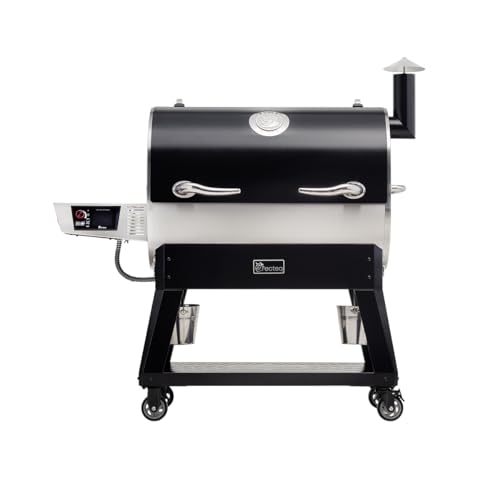
recteq Pellet Grill Smoker - Flagship 1600
The Flagship 1600 gives you 1,667 square inches, a 180 to 700°F range and a PID controller rated to hold within 5°F. It's a lot of grill, and it's the one to buy if you regularly cook for a crowd or want to sear and smoke on the same machine.
$1,349.99fromAmazonList priceThis is the rare pellet grill that doesn't make you choose between smoking and searing. The range runs from 180°F all the way to 700°F. At the bottom you can cold-smoke cheese or run a long, gentle brisket. At the top you get a real crust on a ribeye — something most pellet grills simply can't do. Every other grill in this guide stops at 450 or 500°F. That 200-degree gap is the single biggest reason to pick this one.
The cooking space is the other reason. At 1,667 square inches you can fit multiple briskets, a couple of pork butts and still have room left over. Owners who cook for small businesses and big family parties describe loading four briskets and pork shoulders at once. If you've ever run out of grate space with guests waiting, you know how much that matters.
The hopper holds 40 pounds, which recteq rates for up to 40 hours of continuous cooking. Practically speaking, that means you fill it once and sleep through an overnight brisket. No alarm, no 2 a.m. trip to the patio in a bathrobe. The Wi-Fi app shows probe temperatures and lets you nudge the setpoint from bed, and owners report it connects and stays connected without much fuss.
Owners consistently describe it as built like a tank. The body is stainless steel, and recteq points to the same construction as its long-running RT-700. That reputation matters here — people who've owned an RT-700 for five years and upgraded to this one are the ones saying it holds temperature the same way. recteq also backs it with a bumper-to-bumper warranty, and the brand's customer support turns up repeatedly in owner feedback as a reason to buy.
Flaws but not dealbreakers
It's the most expensive grill here by a wide margin, and it's genuinely huge. Before you order, measure your deck. It weighs 230 pounds, so assembly is a two-person job even though several owners managed it alone. If you cook four to six servings on weekends, you're paying for capacity you'll never use — a smaller grill makes the same smoke flavor at 225°F.
A few owners wish it had another rack and an easy way to dump pellets when switching from a mild wood to something bolder. There's no clean-out port, so swapping from apple to hickory means scooping the hopper by hand. Minor, but annoying if you like to change flavors between cooks.
recteq backs the Flagship 1600 with a bumper-to-bumper warranty.
Runner-upOn sale
Nearly the same grate space, with a searing plate
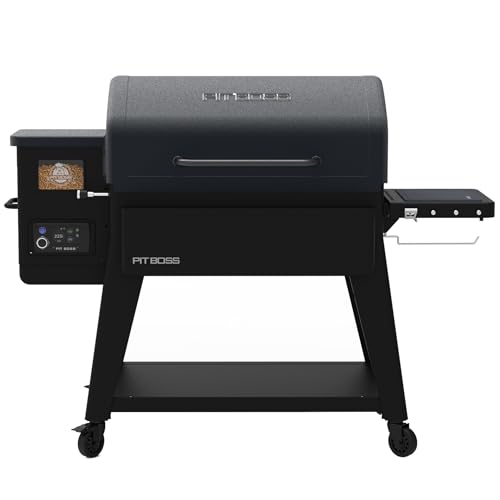
Pit Boss 1600 Navigator Series WiFi &
The Pit Boss 1600 Navigator gives you 1,593 square inches, a flame broiler for direct-heat searing and both Wi-Fi and Bluetooth, for a lot less than the recteq. It's the large-capacity pick if a 500°F ceiling is enough for you.
$1,111.12fromAmazonList priceThe capacity story is almost identical to our top pick. You're giving up about 74 square inches — a rounding error when you're already loading multiple racks of ribs. What you save is substantial. For most people who host big cookouts a few times a summer, that trade lands in this grill's favor.
The flame broiler is what makes this more than a smoker. It's a sliding plate that opens a slot over the firepot so flames hit the food directly. You still top out at 500°F, so it won't match the recteq's ceiling. But for burger char and a decent steak crust, direct flame does more than a high number on a dial. Smoke low, slide the plate, finish hot.
The 30-pound hopper has a viewing window, which sounds like a gimmick until you're four hours into a cook and want to know if you need to top off. You just look. Pit Boss also runs both Wi-Fi and Bluetooth, so when your patio sits at the edge of your router's range, the Bluetooth connection picks up the slack. The touchscreen controller is easier to read than a rotary dial in the dark.
A five-year warranty is the longest coverage in this guide, and it's not a small thing on an appliance that lives outdoors through winter. Owners describe thick metal and sturdy construction, and several mention it's far heavier than expected — a good sign for heat retention, less good when you're wrestling it off the pallet.
Flaws but not dealbreakers
The app is the weak spot. Owners describe it as usable but unpolished, and it's a clear step below Traeger's software. If you plan to run the grill mostly from your phone, that gap will bug you.
There's a scattering of auger failures in owner feedback — pellets stop feeding, and the grill stops working. It's not the common outcome, but it's the failure mode that turns up when this grill goes wrong. Register the warranty and don't wait past the return window if something feels off in the first weeks.
Pit Boss covers the 1600 Navigator with a five-year warranty.
Budget pickOn sale
Real PID control and a cover, for far less money
Z GRILLS 2025 Electric Pellet Grill &
The Z GRILLS 700D6 pairs a PID controller with dual-wall insulation, two meat probes and a grill cover in the box. It's 700 square inches and stops at 450°F, but for low-and-slow cooking it does the same job as grills costing far more.
$579fromAmazonList pricePID control at this price is the whole reason to look here. Cheap pellet grills used to swing 30 or 40 degrees because the controller just switched the auger on and off. A PID controller adjusts fuel and airflow continuously instead, and Z GRILLS puts its current version in this one. At 225°F, the smoke you get off this grill isn't meaningfully different from what a much pricier machine produces.
The dual-wall insulated bottom is the kind of feature that usually appears a tier up. It holds heat when the air turns cold, which cuts pellet use and keeps the grill from working overtime in January. Owners in cold climates note it takes longer to come up to temperature than a smaller grill, but it gets there and stays there.
Two meat probes come in the box, so you can watch a brisket flat and a pork butt at the same time without buying a separate thermometer. The LCD is large enough to read in bright sun. And there's a twist-open door on the back of the hopper — you dump the leftover pellets in seconds when you want to switch from cherry to hickory. Our top pick doesn't have that.
Then there's the cover. Z GRILLS includes one, which no other grill here does. A purpose-fit cover is the accessory people skip and then regret when the control board takes a winter of rain. Getting it in the box removes a decision and a separate purchase.
Flaws but not dealbreakers
450°F is the real ceiling on what this grill can do. You'll get browning, not crust. If searing matters to you, plan on finishing steaks in a cast-iron skillet — which works fine, but it's an extra step and an extra pan to scrub.
There's no Wi-Fi. Monitoring happens over Bluetooth, so you need to be within roughly thirty feet. That undercuts the point of remote monitoring on an overnight cook unless your bedroom is close to the patio.
A handful of owners report temperature runaway — the grill climbing past setpoint and not coming back down, usually after a cleaning. It's not the typical experience, and Z GRILLS' customer service comes up repeatedly in owner feedback as responsive. Still, watch the first few cooks closely.
At 700 square inches you're feeding maybe eight to ten people comfortably. Past that, you're cooking in shifts.
Also greatOn sale
The best app in the category, if you cook by phone
Traeger Ironwood 885 Wood Pellet Grill &
The Traeger Ironwood 885 pairs 885 square inches with WiFIRE, the most polished connected-grilling app anyone makes. Super Smoke Mode pushes extra smoke without raising temperature, and the D2 controller plus double-wall insulation keep it steady in winter.
$1,008.28fromAmazonList priceSoftware is usually an afterthought on outdoor gear. Not here. The Traeger app gives you live probe readings, push alerts when you hit target, a guided recipe library and remote temperature control from anywhere with a signal — not just Bluetooth range. Owners who came from charcoal describe the phone control as the thing that changed how they cook. If you want to start a cook, drive to a kid's game and watch the numbers from the bleachers, this is the one.
Super Smoke Mode is a genuinely useful feature, not marketing. It pushes more smoke into the chamber without raising the temperature, which matters on a brisket where you want deeper smoke penetration during the first hours. Traeger only puts it on the Ironwood and Timberline lines. Nothing else in this guide has an equivalent.
The capacity works out to roughly 10 chickens, 7 rib racks or 9 pork butts across two tiers. That's a real cook-for-a-crowd number even though it's the second-smallest grill here on paper — the two-tier layout uses vertical space that single-level grills waste. The D2 controller and double-wall insulation keep it steady when the weather turns, and owners report it preheats faster than expected.
This is also the most broadly supported brand here. Traeger has a dealer network across the country, pellets on shelves at hardware stores, and a long track record. If you'd rather drive somewhere for a part than wait on a shipment, that's worth something.
Flaws but not dealbreakers
It stops at 500°F, which puts real searing out of reach. It's also the pricier way to buy 885 square inches when the Pit Boss offers nearly twice the space for less.
Traeger recommends its own pellets for best performance, which is an ongoing cost you don't have with grills that shrug at whatever hardwood you feed them. Plenty of owners use other brands without trouble, but it's the manufacturer's line.
Assembly needs two people to stand it upright, and a few owners found factory screws that needed tightening out of the box. Not hard to fix, just worth knowing before you start.
Who this is for
Buy a pellet grill if you want wood smoke without tending a fire. It's the right appliance for brisket, pork shoulder, ribs and whole birds — anything that benefits from hours at a low, steady temperature. It's a reasonable everyday grill too, since most of these will roast a chicken or bake a pizza. If you mostly cook hot dogs and quick weeknight burgers, though, a gas grill lights faster and costs less per session. And if what you're after is the deep, layered smoke of an offset burning real logs, no pellet grill will fully get you there. It gets close, with a fraction of the attention.
This guide covers backyard pellet grills, plus a flat-top griddle and a few maintenance items that turned up alongside them. It doesn't cover offset smokers, kamado cookers, electric cabinet smokers or portable tailgating models. Every grill here needs a standard outlet within reach of where it'll sit, so if your patio has no power, sort that out first.
How we picked
We weighed five things across every listing, published review and owner report we could find. Temperature control: PID controllers that hold a tight band beat relay-style controllers that hunt up and down, and we checked whether owners confirmed the manufacturer's claim. Capacity: we translated square inches into real loads — rib racks, chickens, packer briskets — and treated roughly 700 square inches as the minimum for a family. Searing: a 450°F ceiling browns, a flame broiler or a 700°F ceiling crusts, and that gap decides whether you need a second appliance. Connectivity: Wi-Fi means you can check an overnight cook from bed, while Bluetooth means standing in the yard. Build and support: steel thickness, cold-weather behavior, warranty length and how the company responds when a part fails.
Other pellet grills worth considering
If you want high-heat searing a pellet grill can't do: The Camp Chef Gridiron Pro- 36" Outdoor Griddle ($599.99) — The Camp Chef Gridiron Pro is a 36-inch propane flat-top, not a smoker. There's no wood smoke and no set-and-forget controller — you manage the fire yourself. What it does is the exact thing pellet grills struggle with: smash burgers with real crust, eggs and hash for a crowd, stir-fry, anything that wants direct contact with hot steel. The surface arrives factory-seasoned, so you skip the break-in that ruins a lot of first griddle experiences. A flamethrower ignition lights it fast, the hinged lid blocks wind and covers the surface between cooks, and the included side burner handles sauces and sides. Owners with Blackstone experience say the flame control here is better. Pair it with a smoker and you've covered every technique. Two warnings: it's awkward for one person to assemble, and it's a pain to clean well.
The competition
These are the products that came up alongside the picks — not a survey of everything sold. Two are covers built for grills that aren't in this guide, and one is a cleaning tool. They're here because protecting and maintaining a grill matters as much as choosing one, and because a cover that fits the wrong grill is worse than no cover at all.
The Weber® Searwood® 600 XL Pellet Grill Cover ($94.99) — The Weber Searwood 600 XL Pellet Grill Cover is the factory cover for exactly one grill, and it's not a grill we recommend here. If you already own a Searwood 600 XL, it's the right choice — owners describe a snug fit, Velcro straps that hold in wind, and color that survives a full summer of sun. The recurring complaint is length: it runs an inch or two short, so rain and dust still reach the bottom shelf. It also costs more than most covers. Skip it if you own anything else, since a cover that doesn't fit leaves gaps where water pools.
The Traeger Grills BAC503 Full-Length Grill Cover Grill ($83.21) — The Traeger BAC503 is the official full-length cover for the Pro 575 and Pro 22 — again, grills that aren't in this guide. It's heavy all-weather material, water-resistant, and form-fitted enough that it goes on and comes off without a fight. Owner feedback on this one is unusually consistent and unusually positive, including from people in Florida sun who watched cheaper covers crack in a season. If you own a Pro 575 or Pro 22, buy it. If you own an Ironwood 885 or anything else, it won't fit.
The KGTJGCJ Bristle Free Grill Brush for Yoder ($97.99) — The KGTJGCJ Bristle Free Grill Brush is a motorized cleaner with a stainless roller instead of wire bristles, which solves a real problem: loose bristles break off wire brushes, stick to grates and end up in food, and they've caused injuries serious enough to need surgery. This one spins a 304 stainless roller at 350 RPM on a rechargeable battery, with an LED for cleaning after dark and a removable head that goes in the dishwasher. The listing names the Yoder YS640s, so check your grate profile before ordering. It's expensive for a brush, it's heavier than a manual one, and there's essentially no owner feedback to lean on yet — which is why it's here rather than higher up.
Care and maintenance
Clean the grates while they're still warm. Residue lifts off in seconds then; let it cool and you're soaking and scrubbing. Old grease left on the grates turns bitter and shows up in the next cook, so make it a habit rather than a project. Empty the drip tray or grease bucket after every session — a full one is a grease fire waiting to happen. Vacuum ash out of the firepot and barrel floor every three to five cooks; pellet grills make far less ash than charcoal, but it builds up and eventually chokes the fire. Every five to ten cooks, wash the grates with warm soapy water and wipe on a thin coat of oil. And store pellets somewhere dry and indoors. Moisture swells them, swollen pellets jam the auger, and a jammed auger ends an overnight cook.
Questions we get
What's the best pellet grill for a beginner?
The Z GRILLS 700D6 is the easiest starting point. Its PID controller holds temperature automatically from 180 to 450°F, two meat probes come in the box, and so does a cover — which is the accessory most first-time buyers forget. If you want to monitor a cook from inside the house, step up to the Pit Boss 1600 Navigator for Wi-Fi and far more grate space.
Is a pellet grill worth it over a gas grill?
For most people who care about smoke flavor, yes. A pellet grill makes real hardwood smoke automatically and holds a low temperature for hours, which a gas grill can't do at any price. The trade-off is peak heat and fuel cost — gas lights faster, runs hotter and costs less per session. If you grill quick weeknight dinners more than you smoke, gas still makes sense.
Can you actually sear a steak on a pellet grill?
It depends on the grill. The recteq Flagship 1600 reaches 700°F, which is genuinely hot enough for a proper crust. The Pit Boss 1600 Navigator's flame broiler exposes food to direct flame, which gets you close. Most pellet grills cap at 450 to 500°F and brown without crusting — use a reverse sear there, smoking at 225°F until the inside hits about 120°F, then finishing as hot as the grill will go for a minute or so per side.
How long does a bag of pellets last?
At 225°F, most pellet grills burn one to two pounds an hour, so a 20-pound bag covers roughly 10 to 20 hours of low-and-slow cooking. Wind, cold and how well the grill is insulated all move that number a lot. The Z GRILLS 700D6's dual-wall bottom helps in cold weather, and the recteq's 40-pound hopper is rated for up to 40 hours of continuous cooking, which is why it's the one for overnight brisket.
Do pellet grills work in freezing weather?
They do, but they work harder. Insulation and heavier steel are what matter below freezing — the Z GRILLS 700D6's dual-wall bottom and the Traeger's double-wall construction both target that. Expect pellet consumption to roughly double on an uninsulated grill in the cold. Keep your pellets somewhere dry no matter what, because damp pellets swell and jam the auger.
Which wood pellets go with which meat?
Hickory and mesquite are bold and stand up to beef brisket, chuck roast and lamb. Apple and cherry are sweeter and milder, which suits pork ribs, pork shoulder, chicken and turkey. Oak is the neutral all-rounder and gets blended in to stretch pricier specialty pellets. Don't put mesquite on fish or delicate poultry — it flattens the flavor instead of adding to it.
Why should I avoid wire grill brushes?
Bristles break off wire brushes during use and stick to the grates. They're thin enough to end up in food and be swallowed without anyone noticing, and they've caused internal injuries that required medical treatment. A bristle-free design like the KGTJGCJ roller has no loose wire to shed. Whatever you cook on, it's worth switching.
Why you should trust us
For this guide:
- We compared manufacturer specifications for every grill here — grate area, temperature range, hopper capacity, controller type and warranty terms — and lined them up against what published reviews say about each brand.
- We read through owner feedback for each listing, looking for repeated themes around assembly, cold-weather behavior, app reliability and what actually fails, rather than isolated complaints.
- We did not use, install or run any of these grills ourselves; every claim here traces back to a spec sheet, a published review or patterns in owner reports.
- We read owner reviews on every listing, weighted toward the critical ones, because that is where the recurring failures show up.
- We have a systematic way of automatically fetching the latest prices, so the numbers on this page stay current.
- This is a research-focused guide, so the team may not own every product listed — though we often do own the top winners, which gives us extra context for the recommendations.
- We don't accept free products, and the retailer commission never changes which product we recommend.
Sources
Best Pellet Grills of 2026 — Wirecutter, Wirecutter
Best Pellet Grills: Tested and Rated — AmazingRibs.com, AmazingRibs.com
Best Pellet Grills — Consumer Reports, Consumer Reports
Traeger Ironwood 885 Long-Term Review — Serious Eats, Serious Eats
Weber Searwood XL 600 Review — The Spruce Eats, The Spruce Eats
Amazon product listings and owner reviews for all 8 products
Manufacturer specification pages for each product
Some passages in this guide may be paraphrased with AI help. Prices are refreshed automatically.
More like this.
Continue exploring lifestyle reviews and recommendations.

The Best Pellet Grills and Smokers
A pellet grill is a wood-fired oven that happens to live on your patio. You dump hardwood pellets in the hopper, set a number on a dial, and an auger…

The Best Pellet Stoves
Heating with pellets is a daily habit, not a set-and-forget system. You fill a hopper with bagged wood pellets, set a burn level or a temperature, and the…

The Best BBQ Grills
A grill earns its keep on ordinary weeknights, not just on the Fourth of July. You want it to light on the first try, get hot enough to sear a couple of…

The Best Gifts for Grill Masters and BBQ Lovers
Grilling is one of the few hobbies where almost everyone you know has some skin in the game. The Hearth, Patio & Barbecue Association puts grill or smoker…

The Best Wireless Bluetooth Grill Thermometers
A wireless thermometer changes how you cook more than almost any other grill accessory. You stop lifting the lid every ten minutes. You stop cutting into…

The Best Gas Grills for Outdoor Entertaining
A grill that's fine for two pork chops on a Tuesday falls apart when twelve people show up. You need enough grate space to get everything off at once,…