The Best Pellet Stoves
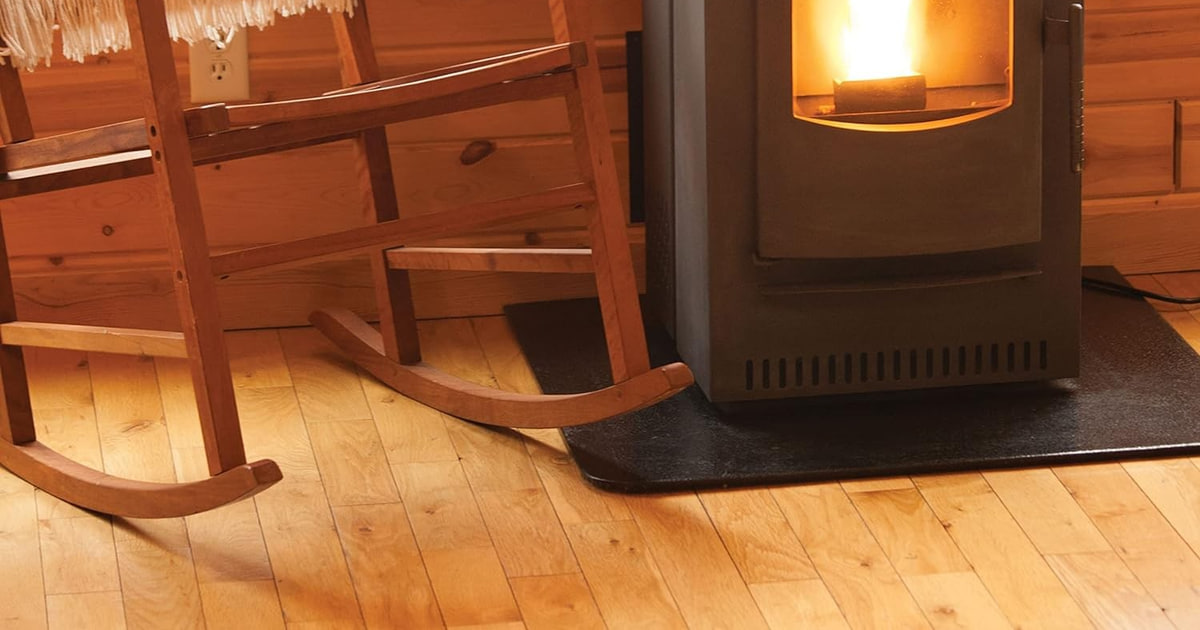
Heating with pellets is a daily habit, not a set-and-forget system. You fill a hopper with bagged wood pellets, set a burn level or a temperature, and the stove feeds itself for a day or two. In a cold snap that's a real comfort: the room stays warm, the fuel is cheap by the ton, and you're not watching a propane gauge. But you're also hauling forty-pound bags, emptying an ash pan, and wiping soot off glass. The stove that fits your life is the one whose chores you'll actually keep up with.
Every pellet stove asks something of you. They all run on household current, so a power cut stops the heat until the lights come back. They all warm a house from a single point, which means the room with the stove gets toasty while the back bedroom stays chilly. And they all make noise — an auger clicking, a blower humming — that gets louder as you turn up the heat. Cleaning isn't optional either. Skip the ash pan for a week and you'll feel the output drop.
So the real question is how much house you're asking one stove to warm. A big hopper and a high BTU rating buy you overnight burns and whole-floor coverage. A small, quiet unit is better company in a living room you actually sit in. Match output to square footage first, then worry about controls and looks. We think that the Comfortbilt HP22-N is the best pellet stove for most people, and that the Castle Serenity 12327 is the one to buy if you're heating a single room or supplementing central heat.
Everything we recommend

Whole-home heat and a big hopper, if you don't mind manual tweaks
Quiet, compact warmth for one room — not a whole house

The spare part worth owning before the cold sets in
At a glance
| Product | Price | |
|---|---|---|
| Harman 3-20-677200 Finned Heating Cartridge Igniter ElementAlso great | $22.95 |
 | QuadraFire Mt. Vernon AE Pellet Stove ControlAlso in lineup | $699.95 |
| Comfortbilt HP22-N Pellet Stove Black EPA ApprovedTop pick | $2,249 |
 | US Stove 80602 Bay Front 5660 CombustionAlso in lineup | $85 |
 | Englander Pellet Stove Complete Gasket Replacement KitAlso in lineup | $82.99 |
| Castle Wood Pellet Stove Serenity 12327 IndoorBudget pick | Check price |
How we picked
Heat output and coverage. We compared manufacturer BTU ratings and square-footage claims against the common sizing rule of 40 to 45 BTU per square foot in newer construction and 50 to 55 in older homes. A stove had to have real headroom over its target space, not just barely clear it.
Hopper capacity. We looked for hoppers large enough to run overnight without a refill, which in practice means 80 pounds or more for whole-home use. Smaller hoppers are fine for zone heating but commit you to a daily chore.
Controls and thermostat. We favored stoves with a built-in controller offering thermostat and scheduling modes over manual-only five-speed designs. Published reviews and owner feedback both point to automatic setpoint control as the feature that decides how much you fuss with a stove.
Cleaning and upkeep. We read owner feedback for how often ash pans fill, how easily glass cleans, and whether the firebox has hidden chambers that trap ash. Easy-pull ash pans and simple fireboxes cut daily maintenance to a few minutes.
Noise in the room. Auger and blower motors typically put a pellet stove in the 45 to 60 decibel range, which is fine in a basement and tiring in a bedroom. We treated a quieter rating as a genuine advantage for stoves meant to live in a main room.
Top pick
Whole-home heat and a big hopper, if you don't mind manual tweaks
Comfortbilt HP22-N Pellet Stove Black EPA Approved
The HP22-N is a full-size freestanding stove rated for up to 2,800 square feet, with an 80-pound hopper that gets you through a cold night without a refill. It's EPA approved and the programmable thermostat controller is built in, so you're not buying a separate wall unit.
$2,249fromAmazonIt heats more house than most stoves its size. Comfortbilt rates the HP22-N for up to 2,800 square feet at 50,000 BTU, which is generous coverage for a single freestanding unit. If your open main floor runs 1,800 to 2,200 square feet, that headroom is what you want on the coldest nights. A stove sized exactly to your space ends up running flat out all winter, and parts wear faster when it does.
The 80-pound hopper is the spec that changes your day. Smaller stoves ask for a refill every 20 to 25 hours, so one chore lands in the middle of your evening and another before bed. Two full bags fit in this hopper, which covers an overnight burn at moderate settings with room left over. You load it, you forget about it, and you top it off in the morning with your coffee.
The built-in controller does the thermostat work for you. Set a target temperature and the stove holds it, or program a weekly schedule so it eases off while you're at work and comes back up before you get home. Auto ignition means no gel starters and no crouching with a lighter. Owners of stoves in this tier consistently name auto start and thermostat mode as the features they'd miss most.
It's built like the heavy appliance it is. At 285 pounds and 40 inches tall, this is a real installation, not something you slide into place alone. Plan on two strong people and a floor that can take it. The upside of all that mass is a firebox and blower that actually push heat across a room instead of just glowing at you. Venting runs through an exterior wall, which is manageable if you're comfortable with basic flue work.
Flaws but not dealbreakers
It won't correct itself when the weather swings. The HP22-N burns at a fixed rate for each of its five heat levels. Premium stoves with self-regulating combustion trim the air-to-fuel ratio in real time; this one doesn't. On a night that starts mild and drops to single digits, you'll get up and bump the heat level yourself, or wake up cooler than you'd like.
Pellet use runs higher than on self-modulating stoves. Published comparisons put the fuel savings from real-time combustion control at roughly a quarter to a third at medium settings. Across a season of two or three tons, that's a noticeable share of your fuel bill, and it narrows the gap against pricier stoves. If you're heating hard for six months a year, run that math before you commit.
It's deep, wide, and needs clearance. At 26 inches deep and 24 across, plus the required clearance to combustible walls, this stove takes over a corner of a room. Small living rooms and mobile homes are a poor fit. Check the manufacturer's clearance table against your actual wall before you order, not after the freight truck shows up.
Budget pick
Quiet, compact warmth for one room — not a whole house
Castle Wood Pellet Stove Serenity 12327 Indoor
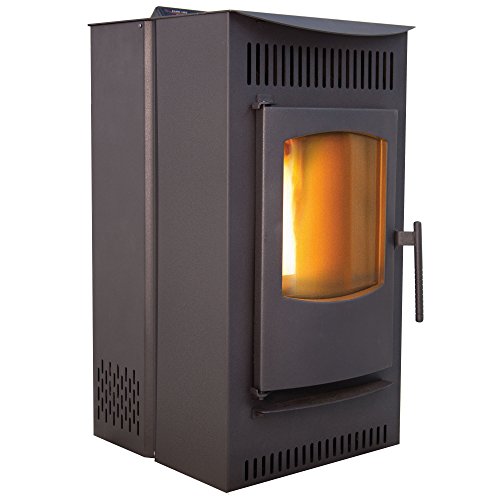
The Serenity 12327 is a small freestanding stove built for zone heating: one living room, a bedroom, or a cabin. It's the quietest option here, and the Smart Controller gives you five manual burn levels, a thermostat mode, and a weekly heating schedule.
Check priceatAmazonIt's quiet enough to sit next to. Most pellet stoves hum along around the level of a nearby conversation, and after a few hours that hum wears on you. The Serenity is the outlier, rated at roughly 32 decibels — closer to a quiet library than a running furnace. If the stove is going in the room where you watch TV or sleep, that difference matters more than any number on the spec sheet.
The Smart Controller does more than the size suggests. You get three ways to run it: five manual burn levels, a thermostat mode that heats to your setpoint and then drops to low to hold it, and a weekly calendar. That last one is the quietly useful one. Set it to come up before you do, and the room's already warm when your feet hit the floor.
It's designed to be easy to clean. Castle built the firebox without tubes, corrugations or hidden chambers, so there's less place for ash to collect. Daily upkeep is a pull of the ash pan and a wipe of the glass, and that's about it. If stories of hour-long cleanings have put you off pellet heat, this is the friendlier end of the category.
It fits where a full-size stove can't. At about 18 inches wide and under two feet deep, the Serenity tucks into a corner that a 24-inch stove would swallow whole. At 186 pounds it's still heavy, but it's the one stove here that two people can reasonably wrestle into place. Cabins, additions, three-season porches and old houses with small rooms are its natural home.
Flaws but not dealbreakers
Twenty-five thousand BTU is a room, not a house. The Serenity covers about 1,500 square feet in a well-insulated home, and meaningfully less in an older one with a drafty attic. Ask it to be the only heat in a two-story house through a hard cold snap and it'll run wide open and still lose ground. Buy it as a zone heater and you'll be happy with it.
The 40-pound hopper means a daily refill. One bag in, one day out — that's the rhythm, and it's shorter when you're running it hard. There's no overnight-plus-a-workday burn the way there is with an 80-pound hopper. If you travel midweek, or you just hate a standing chore, that's a fair strike against it.
Availability has been unreliable. This model has spent long stretches listed as unavailable, which makes it hard to plan a heating season around. If you find one in stock and it suits your room, don't sit on it. Otherwise call local hearth dealers, who often hold inventory that never shows up online.
Also great
The spare part worth owning before the cold sets in
Harman 3-20-677200 Finned Heating Cartridge Igniter Element
This is a replacement igniter cartridge for Harman pellet stoves, not a heater. If you already burn pellets in a Harman, it's the part most likely to quit on you mid-winter, and keeping one on a shelf turns a cold weekend into a short repair.
$22.95fromAmazonThe igniter is usually the first thing to fail on a Harman. Auto ignition works by pushing air across a hot rod until the pellets catch, and that rod heats and cools every single time the stove starts. Owners of auto-start stoves consistently name the igniter as the part they've had to replace, often in the middle of a cold stretch. Nothing else has to be wrong with the stove for it to go.
Having one on the shelf saves you a cold weekend. When an igniter quits, the stove still burns — you just have to light it by hand with starter gel every time, which gets old by the second day. Ordering the part in January means waiting on shipping while you crouch in front of the firebox with a lighter. Buy it in the fall and it sits there until the day you need it.
The swap is within reach if you're handy. It's a cartridge-style part, so the job is unplugging the stove, pulling the old unit and seating the new one — no combustion tuning, no flue work. Follow the procedure in your manual and let the stove cool completely first. If you'd rather not touch it, a hearth technician can handle it in one visit, and you'll already have the part in hand.
Flaws but not dealbreakers
It fits Harman stoves and nothing else. Pellet stove igniters aren't interchangeable across brands — the cartridge shape, the mount and the wiring all differ from one manufacturer to the next. If you burn pellets in a Comfortbilt, a Castle or an Englander, this isn't your part. Check your model number against the fitment list before you order, because a near-match won't seat properly.
It's a wear part, not an improvement. A new igniter gets your stove back to where it started. It won't burn cleaner, run quieter or use less fuel. And if the stove won't light for some other reason — a clogged burn pot, damp pellets, a failing control board — a fresh igniter fixes none of that. Rule those out before you start pulling parts.
Who this is for
Buy a pellet stove if you're heating with propane, heating oil or electric baseboard and don't have natural gas at the curb. That's where the running costs swing hardest in your favor, and where a stove pays back a real installation. It's also a good fit if you want heat that keeps working when the utility bill spikes, and you don't mind a standing weekly chore. Skip it if you're rarely home, if your house is chopped into small closed rooms that a single-point heat source can't reach, or if your power goes out often — every stove here stops dead without electricity.
This guide covers freestanding pellet stoves that vent through an exterior wall. It doesn't cover fireplace inserts, which need a masonry opening and a professionally installed liner, and it doesn't cover multi-fuel stoves that burn corn or other biomass. It also isn't a shopping guide to replacement parts, though several turn up in this lineup: igniters, blowers, control boards and gasket kits are useful things to own, but not something you buy instead of a stove. We flag them below so nobody orders one expecting heat.
How we picked
Heat output: we matched BTU ratings and coverage claims against standard sizing guidance — roughly 40 to 45 BTU per square foot in a well-insulated home, more in older construction — and looked for headroom rather than a stove sized right to the edge. Hopper capacity: 80 pounds or more buys you an overnight burn, while a 40-pound hopper means a bag a day. Controls: built-in thermostat and weekly scheduling beat manual-only five-speed dials, because that's the difference between setting a stove and babysitting it. Cleaning: we favored easy-pull ash pans and simple fireboxes with nowhere for ash to hide. Noise: most stoves hum at the level of a nearby conversation, and anything meaningfully quieter is worth a lot in a room you sit in.
The competition
This is what the research turned up in this lineup, not a survey of everything sold. Worth being blunt about a wrinkle here: most of the listings that matched a pellet stove search are replacement parts — blower motors, control boards, gasket kits — sold under stove model numbers. They're covered below so you don't buy one expecting a heater. That leaves a narrow field of two actual freestanding stoves, and they land in different places: one for a whole floor, one for a single room. Premium self-regulating stoves from Harman and Quadra-Fire are worth a look at a hearth dealer if you want combustion that trims itself, but no complete unit from either brand appears here.
The QuadraFire Mt. Vernon AE Pellet Stove Control ($699.95) — This is a replacement control board assembly for Quadra-Fire units — the brain that runs the auger, the blowers and the ignition sequence. It isn't a stove, so it can't compete with the picks on heat, and it's a far bigger repair than an igniter swap. Buy it only if a technician has already traced your no-start or erratic-feed problem to the board. If you're guessing, get the diagnosis first; boards are the expensive way to be wrong.
The US Stove 80602 Bay Front 5660 Combustion ($85) — This is a replacement combustion exhaust blower motor for US Stove and Vogelzang models, the fan that pulls smoke out through the vent pipe. Again, not a stove, so it isn't a pick. It's the part to buy when your stove starts smoking into the room, throws draft errors, or the exhaust fan gets loud and rough. Match the model number carefully, because a blower that moves the wrong volume of air will throw your burn off.
The Englander Pellet Stove Complete Gasket Replacement Kit ($82.99) — This is a gasket replacement kit for Englander stoves — the rope seals around the door and ash pan that keep air from leaking into the firebox. It's maintenance, not a heater, so it doesn't belong beside the picks. Still, if your glass sooties over fast or the fire won't settle down at low burn, worn gaskets are a likely culprit and a cheap thing to rule out. Plan on an afternoon and a scraper.
Care and maintenance
Pellet stoves reward small, regular habits. Empty the ash pan every one to three days when you're burning hard, and wipe the glass weekly before the film bakes on and stops coming off. Every ton or two of pellets, do a deeper clean: scrape the burn pot, brush the heat exchanger baffles, and vacuum the exhaust passages with an ash vacuum, never a shop vac. Keep your pellets dry and up off a concrete floor, since damp fuel clogs a burn pot fast and can void a manufacturer's warranty. Put a carbon monoxide detector within about fifteen feet of the stove and test it before every heating season. And book a professional inspection once a year, ahead of the cold, not during it.
Questions we get
Can a pellet stove heat an entire house, or just supplement central heat?
A correctly sized stove can absolutely be your primary heat. The Comfortbilt HP22-N is rated for up to 2,800 square feet, which covers most single-story homes with room to spare. The catch is that pellet stoves heat from one spot by convection and radiation, so a house with closed-off rooms, multiple floors, or poor airflow will have cold corners even when the stove is sized right for total square footage.
Do pellet stoves need electricity, and what happens in a power outage?
Yes, every one of them. The auger motor, convection blower and control board all run on 120-volt household current. When the power drops, the stove shuts down and won't restart until it's back — which is the big weakness compared with a gravity-fed wood stove. If your area loses power often, pair the stove with a small generator or a battery backup sized for a few hundred watts of continuous draw.
How often do you have to clean a pellet stove?
Empty the ash pan every one to three days of heavy use and clean the glass about weekly. Every ton or two of pellets, do a full internal clean of the burn pot, heat exchanger baffles and exhaust passages. Add a professional inspection once a year before the heating season. On a stove with an easy-pull ash pan, like the Castle Serenity, daily upkeep is a five-minute job.
What BTU rating do I need for my home?
For a well-insulated house, figure roughly 40 to 45 BTU per square foot. That puts a room or small space under 1,000 square feet in the 20,000 to 30,000 BTU range, where the Castle Serenity's 25,000 BTU lands, and a 1,500 to 2,500 square foot home in the 45,000 to 55,000 range, where the Comfortbilt HP22-N sits. Add 10 to 15 percent if your house is older or the attic insulation is thin.
What kind of pellets should I buy?
Premium-grade pellets meeting PFI certification — 10 percent moisture or less, 1 percent ash or less — are what these stoves are built for. Hardwood pellets give you slightly more heat per ton and leave less ash than softwood, though certified softwood burns cleanly too. Never burn damp pellets: they clog burn pots, tank your efficiency, and void most warranties.
What's the difference between a pellet stove and a pellet insert?
A freestanding stove goes anywhere you can run exhaust venting through an exterior wall, which is most rooms. An insert slides into an existing masonry fireplace and vents up the chimney, which looks tidier but needs a professionally installed liner and a lot more labor. Everything in this guide is freestanding, so it's more flexible on placement and much simpler to install.
Why you should trust us
For this guide:
- We read manufacturer specifications and published reviews for every freestanding pellet stove in this lineup, comparing BTU ratings, coverage claims, hopper capacity and control features side by side.
- We weighed recurring owner feedback themes — refill frequency, blower noise, ash cleanup and stock availability — more heavily than marketing language on the listings.
- We flagged the listings that turned out to be replacement parts rather than complete stoves, so it's clear which ones can't heat a room on their own.
- We read owner reviews on every listing, weighted toward the critical ones, because that is where the recurring failures show up.
- We have a systematic way of automatically fetching the latest prices, so the numbers on this page stay current.
- This is a research-focused guide, so the team may not own every product listed — though we often do own the top winners, which gives us extra context for the recommendations.
- We don't accept free products, and the retailer commission never changes which product we recommend.
Sources
Best Pellet Stoves of 2026 — This Old House, This Old House
Best Pellet Stoves Tested and Reviewed — Bob Vila, Bob Vila
Best Pellet Stoves — Popular Mechanics, Popular Mechanics
EPA Phase 2 Certified Wood Heaters — Burn Wise Program, U.S. Environmental Protection Agency
Wood and Wood Waste as Energy — EIA Energy Explained, U.S. Energy Information Administration
Amazon product listings and owner reviews for all 6 products
Manufacturer specification pages for each product
Some passages in this guide may be paraphrased with AI help. Prices are refreshed automatically.
More like this.
Continue exploring appliances reviews and recommendations.

The Best Pellet Grills
A pellet grill runs on compressed hardwood and a small electric brain. An auger feeds pellets into a firepot, a fan pushes the heat around, and a…

The Best Pellet Grills and Smokers
A pellet grill is a wood-fired oven that happens to live on your patio. You dump hardwood pellets in the hopper, set a number on a dial, and an auger…

The Best Ultralight Backpacking Stoves
A backpacking stove is the one piece of gear you use every single day on trail, usually twice. It's the first thing you reach for at 6 a.m. when your…

The Best Portable Camping Stoves
A camping stove is the difference between a hot dinner and a cold bag of trail mix. It's also one of the few pieces of gear you'll use every single day of…

The Best Food Dehydrators
A dehydrator is a slow appliance that quietly saves you money. It pulls 80 to 95 percent of the moisture out of food, which drops water activity below the…

The Best Fireplace Heaters
A fireplace heater does two jobs at once, and you'll care about both. It warms the room you're actually sitting in, and it gives that room something to…