The Best Bread Makers
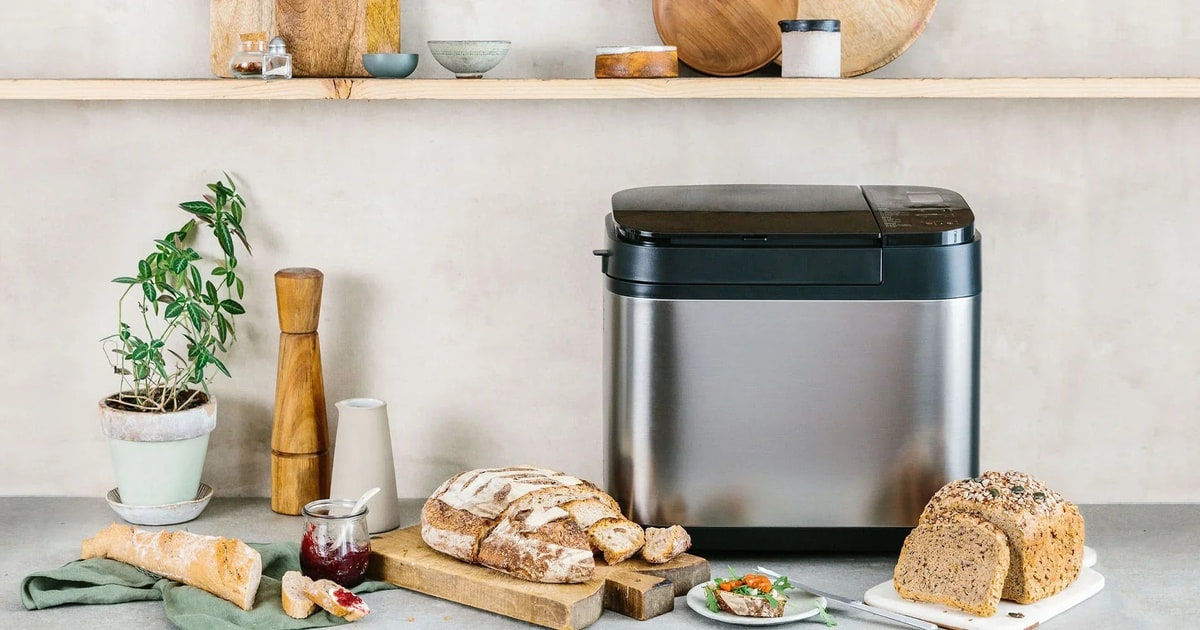
A bread maker earns its counter space by making one thing easy: a warm loaf you didn't have to think about. You dump in flour, water, salt, and yeast, press a button, and walk away. The machine kneads, rests, rises, and bakes on its own schedule. Most models let you set a delay timer the night before, so the smell of baking bread wakes you up. And you control what goes in, which matters if you're dodging preservatives, cutting salt, or feeding someone who can't eat gluten.
No bread machine makes a bakery loaf. The pan shape gives you a tall, boxy crumb rather than a wide oval, the crust stays softer than what a hot oven gives you, and almost every machine leaves a hole in the bottom where the kneading paddle sat. Kneading is loud for a few minutes at a stretch. These machines are also bulky, and the heavy ones aren't fun to lift in and out of a cabinet. If any of that bothers you, it'll bother you on every model here.
We looked at what published reviews, manufacturer specs, and owner feedback say about even browning, program range, pan design, and how these machines hold up after a few years. We think that the Zojirushi Virtuoso Plus is the best bread maker for most people, and that the Breville Custom Loaf is the one to buy if you bake often and want to fold fruit and nuts into your loaves without babysitting the cycle.
Everything we recommend

Even browning and hands-off consistency, if you can pay for it

More programming freedom, and it drops in your fruit and nuts
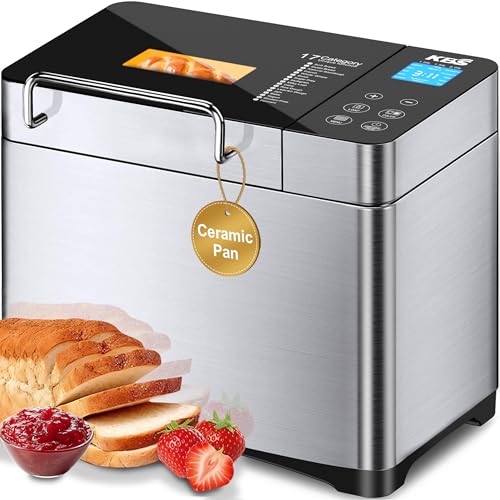
The widest program list here, at a fraction of the cost
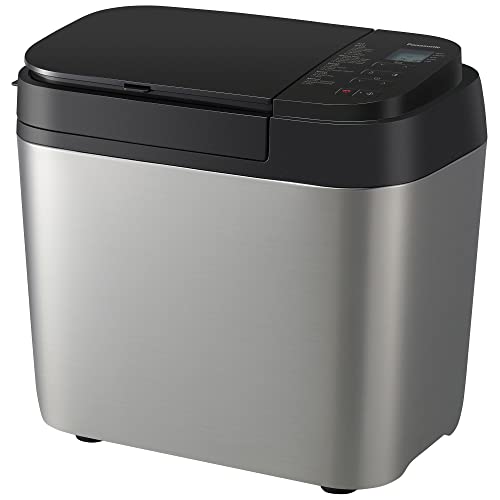
Smart sensors and a slim body for a crowded counter
At a glance
| Product | Capacity | Wattage | Price | |
|---|---|---|---|---|
| Zojirushi Bb PDC20BA Virtuoso Plus 2 LbTop pick | 2 lb | 700W | $454 |
| Breville BBM800XL Custom Loaf Bread Maker MachineRunner-up | — | — | $399.95 |
| Panasonic Bread MachineAlso great | — | — | $269On sale |
| KBS Pro 710W 2.2LB Bread MakerBudget pick | 2.2 lb | 710W | $139.98On sale |
How we picked
Even baking. We compared heating designs across spec sheets, since a lid element or convection fan is what separates a browned top crust from a pale one. Published evaluations from Wirecutter and the Good Housekeeping Institute both point to heat from above as the biggest single factor.
Paddle and pan design. Owner reviews across Amazon, Best Buy, and Williams Sonoma return to the same complaint: the hole the kneading paddle leaves. We favored collapsible paddles and looked closely at pan coatings, which are the first thing to wear out.
Programs that matter. We treated gluten-free as a real requirement, not a checkbox, because those cycles use longer hydration rests and different temperature curves. Dough, sourdough, and jam modes counted; a dozen near-identical white bread presets did not.
Capacity and footprint. We looked for at least a 2-pound loaf for families and checked published dimensions against typical counter depth and cabinet clearance. A machine that lives in a cabinet is a machine you stop using.
How it holds up. Consumer Reports' owner reliability data shows a real gap between Japanese-engineered machines and budget-tier ones after three years of regular use. We weighed that against price rather than pretending it doesn't exist.
Top pick
Even browning and hands-off consistency, if you can pay for it
Zojirushi Bb PDC20BA Virtuoso Plus 2 Lb
The Virtuoso Plus is the rare bread maker with heaters on the bottom and in the lid, so the top of the loaf browns instead of going pale. Two kneading blades handle stiff whole-grain dough, and the course list covers gluten-free, vegan, salt-free, and sugar-free baking.
$454fromAmazonThe dual heaters are the whole point. Nearly every other machine bakes with a single element under the pan, which is why so many bread machine loaves come out with a pale, soft top. The Virtuoso Plus adds a second heater in the lid, so heat comes from above too. Wirecutter and the Good Housekeeping Institute both point to that design as the reason it browns more evenly than single-element competitors.
Two kneading blades do a better job with heavy dough. Whole wheat and multigrain doughs are stiff, and one small paddle can leave dry flour packed in the corners. The Virtuoso Plus uses double blades that work the dough more thoroughly. If your household eats mostly whole-grain bread, that's the difference between a proper rise and a dense brick with a floury seam.
The course list covers the diets people actually cook for. You get Multigrain, Whole Wheat, Rapid Whole Wheat, Gluten Free, Salt Free, Sugar Free, and Vegan settings. Gluten-free programs matter more than they sound: they use longer rest periods and different temperature curves, and gluten-free dough run on a standard cycle usually collapses or never rises properly in the first place.
You don't always have to plan a day ahead. The Rapid courses turn out a white or whole wheat loaf in about two hours and twenty-five minutes. That's not the machine's best work — fast cycles always give you a tighter crumb — but it's there when you decide at four in the afternoon that dinner needs bread.
It should still be working in five years. Consumer Reports' owner reliability data shows Japanese-engineered machines from Zojirushi and Panasonic reporting meaningfully fewer mechanical failures after three or more years of regular use than budget-tier machines. If you bake weekly, that gap is the thing you'll feel long after you've forgotten what you paid.
Flaws but not dealbreakers
It's big, and it's heavy. At roughly 18 inches wide and 24 pounds, this is the largest and heaviest pick here. It bakes a horizontal loaf, so it eats counter width rather than height. You're not going to want to stow it in a low cabinet and haul it out every Sunday. Give it a permanent spot or skip it.
Two blades mean two holes. The double kneading blades that handle stiff dough so well also leave two cavities in the bottom of every loaf instead of one. You can fish the blades out before the bake if you're paying attention, but that means standing by the machine mid-cycle, which defeats the point of the delay timer.
It's the most expensive machine here by a wide margin. If you bake a loaf every couple of months, you won't get your money back in bread. This one makes sense for people baking weekly or more, especially whole-grain or gluten-free loaves where the even heat and thorough kneading actually change the result.
Runner-up
More programming freedom, and it drops in your fruit and nuts
Breville BBM800XL Custom Loaf Bread Maker Machine
The Custom Loaf pairs 13 automatic programs with nine slots for recipes you save yourself, plus a paddle that folds down before baking to shrink the hole. An automatic dispenser adds raisins, nuts, or cheese at the right moment instead of the start.
$399.95fromAmazonThe collapsible paddle fixes the complaint everyone has. The Custom Loaf mixes on a platform that folds in before the bake begins, so the dough closes over it and expands. You still get a mark, but not the deep crater most machines leave. Across owner reviews on Amazon, Best Buy, and Williams Sonoma, that bottom hole is the single most common gripe about bread machines.
The mix-in dispenser saves your add-ins from getting pulverized. Throw raisins in at the start and the paddle chops them into paste. The Breville's compartment holds up to two-thirds of a cup of nuts, dried fruit, seeds, or cheese and releases it at the right point in the cycle. If you like a studded loaf rather than a speckled one, this is the feature to buy for.
You can save your own recipes. Beyond 13 automatic programs — including gluten-free, yeast-free, crusty loaf, dough and pasta, and jam — there are nine custom settings where you set knead, rise, and bake times and store them. Three crust shades and three loaf sizes stack on top of that. Most machines let you pick a preset. This one lets you build one.
A blackout won't ruin the loaf. The Custom Loaf holds 60 minutes of backup power, so a brief outage doesn't leave you with a pan of dead dough. That's a small thing until it happens during a summer storm at hour three of a four-hour cycle.
Flaws but not dealbreakers
It heats from the bottom only. The Good Housekeeping Institute scored bread makers on crust color, crumb texture, rise height, interior doneness, and flavor, and the Breville landed second behind the Zojirushi. The gap comes down to heat from above. Expect a slightly paler top crust on the light and medium settings.
There's a learning curve. Nine programmable settings and a manual mode are wasted on someone who wants to press start and leave. If you've never used a bread machine, you'll spend the first few loaves with the manual open. Buy the simpler machine and you'll bake more often.
It's a big appliance. At over 16 inches wide, it's not much smaller than the Zojirushi on the counter. Measure before you commit, especially if you plan to leave it out.
Budget pickOn sale
The widest program list here, at a fraction of the cost
KBS Pro 710W 2.2LB Bread Maker
The KBS Pro runs 17 automatic programs plus a custom setting, covering sourdough, yogurt, jam, and cake alongside the usual breads. A 710-watt motor, convection heating, a ceramic pan, and a nut dispenser are unusual at this end of the market.
$139.98fromAmazonList priceSeventeen programs is more range than most mid-priced machines offer. Basic, gluten-free, sourdough, French, whole wheat, multigrain, cake, jam, yogurt, and dough are all preset, and a custom setting lets you go off-menu. If you're curious about what a bread machine can do beyond sandwich loaves, this is the one that lets you find out cheaply.
The ceramic pan is easier to live with than nonstick. KBS uses a ceramic-coated pan and paddle rather than a Teflon-style coating. Ceramic releases loaves cleanly and wipes out with a soft sponge. It's also the part of any bread machine that wears first, so starting with a better surface matters more than it sounds.
A 710-watt motor and convection heating punch above the price. The extra wattage helps with stiff whole-grain dough, and circulating hot air cuts down on hot spots and pale patches. Convection fans trim roughly eight to ten minutes off a standard cycle, too. The pan takes a 2.2-pound loaf, enough for a family of four for a couple of days.
The everyday features are all here. You get a 15-hour delay timer, three crust shades, a keep-warm function, an automatic nut and raisin dispenser, and a viewing window. Load it before bed and there's bread when you get up. That single habit is what turns a bread machine from a novelty into something you use.
Flaws but not dealbreakers
Budget machines don't age as well. Consumer Reports' owner reliability data shows budget-tier bread makers reporting more mechanical failures after three or more years than the Japanese-built machines. If you plan to bake several times a week for a decade, spend up. If you bake now and then, this is plenty.
The paddle doesn't collapse. You'll get the standard hole in the bottom of every loaf unless you pull the paddle out mid-cycle. Use the included hook, and don't pry at the ceramic pan with anything metal — chipped coating is how these pans die.
The glass touch panel looks nicer than it feels. Flat touch controls show every fingerprint and give you no click to confirm a press. It's a small annoyance, not a dealbreaker.
KBS backs the machine with two years of after-sales support and sells replacement pans separately.
Also greatOn sale
Smart sensors and a slim body for a crowded counter
Panasonic Bread Machine
The Panasonic SD-R2550 reads both the dough's temperature and the room's, then stretches or shortens rise and rest times to match. Twenty presets cover sourdough, brioche, cake, pizza, and pasta dough, and it's under 10 inches deep.
$269fromAmazonList priceIt adjusts for your kitchen, not a lab. Dough behaves differently in a chilly January kitchen than in a humid August one, which is why the same recipe can rise beautifully one week and sulk the next. The double temperature sensor tracks internal and room temperature and auto-adjusts rise and rest times. You get more consistency without changing anything you do.
The kneading blade is built for firm dough. Panasonic shapes the blade to work stiff dough against ribs molded into the pan, so hard-to-blend ingredients get mixed properly instead of riding along in a dry pocket. That's the same problem the Zojirushi solves with two blades, handled a different way.
Twenty settings covers more than bread. Whole wheat, sourdough, brioche, gluten-free, cakes, pizza dough, and pasta dough are all preset, and manual time settings let you tune kneading and fermentation yourself. A dedicated raisin and nut dispenser drops add-ins at timed intervals so they end up spread through the loaf.
It takes up less counter than the other picks. Just under 10 inches front to back, it tucks against a backsplash where the wide horizontal machines can't. At 16.5 pounds it's also light enough to move without a plan. In a small kitchen or an apartment, that's often the deciding factor.
Flaws but not dealbreakers
It's tall. At more than 14 inches high, it won't slide under most wall cabinets, and you need clearance to open the lid on top of that. Narrow doesn't mean small. Measure your vertical space, not just your counter depth.
It heats from the bottom. Like most machines, it has no lid element, so the top crust browns less than the Zojirushi's. Bumping to the darkest crust setting helps, though it darkens the sides at the same time.
Twenty presets is a lot to learn. If you want to press one button forever, you'll use three of them and ignore the rest. The manual modes reward people who like to tinker and mostly confuse people who don't.
Who this is for
Buy a bread maker if you'd eat homemade bread more often but won't stand over a mixer to get it. It's the right tool if you're managing gluten, sodium, or sugar and you're tired of reading ingredient labels, and it's a genuine convenience if you want fresh bread waiting when you wake up. Families who go through two loaves a week get the most out of one. So do people who mostly want the machine to knead — dough cycles for pizza, rolls, and pasta are the features owners keep using long after the novelty wears off.
Skip it if you want a crackling artisan crust or a wide oval loaf, because no machine here makes one. Skip it too if counter space is scarce and you'd only bake a few times a year; a sheet pan and a no-knead recipe will do that job for free. This guide covers countertop bread machines that mix, rise, and bake a loaf start to finish. It doesn't cover stand mixers with dough hooks, ovens, or proofing boxes, all of which need you in the kitchen for the whole process.
How we picked
Even baking: we favored machines whose heating design — a lid element or a convection fan — addresses the pale top crust that single-element machines leave, a point both Wirecutter and the Good Housekeeping Institute make. Paddle and pan design: collapsible paddles and durable pan coatings solve the flaw owners complain about most, the hole in the bottom of every loaf. Programs that matter: a real gluten-free cycle with extended hydration rests, plus dough, sourdough, and jam modes; padding the count with near-identical presets didn't help. Capacity and footprint: at least a 2-pound loaf for a family, checked against real counter depth and cabinet clearance. How it holds up: Consumer Reports' owner reliability data shows fewer mechanical failures after three years from Japanese-built machines, and we weighed that against what each machine costs.
The competition
This is what our research surfaced among currently listed machines, not a survey of everything on the market. Several well-regarded models — including convection machines from Cuisinart and the collapsible-paddle Breadman — came up repeatedly in published reviews, but we couldn't confirm current listings for the machines themselves, only accessories and parts. Those are noted below rather than written up as options.
Care and cleaning
Unplug the machine and let the pan cool before you touch it. Lift the pan straight out, then twist the paddle free — if dough has baked around the shaft, fill the pan with warm water and let it soak for fifteen minutes rather than prying. Every machine here comes with a hook for pulling a stuck paddle out of a finished loaf. Wash the pan and paddle by hand with a soft sponge; the dishwasher wrecks nonstick and ceramic coatings, and dishwasher damage usually isn't covered. Wipe crumbs out of the baking chamber with a dry cloth once it's cool, and never run water into the housing. Store the machine with the lid propped open for a few hours after baking so moisture doesn't sit inside.
Questions we get
Is a bread maker worth buying?
It's worth it if you'll use it weekly. The math works best for households eating gluten-free, low-sodium, or specialty bread, where store options are limited and expensive. A full bake cycle uses roughly 0.4 to 0.5 kWh, against an estimated 1.5 to 2.0 kWh for a conventional oven baking one loaf. If you bake twice a year, it's just a big box in your cabinet.
What's the best bread maker for a complete beginner?
Start with the KBS Pro. Its presets do the thinking for you, the recipe book gets you through the first month, and you're not risking much if bread baking turns out not to be your thing. Follow the recipe order exactly — liquids first, yeast last and away from the salt — and your first loaf will be fine.
Can bread machines make gluten-free bread?
Yes, but only on a dedicated gluten-free cycle. Those programs use extended rest periods so the starches fully hydrate, plus adjusted temperature curves. Run gluten-free dough on a standard setting and it typically collapses or never rises properly. All four of our picks have a gluten-free program.
What size bread maker do I need for a family of four?
A 2-pound machine is the right target. That's roughly a sandwich loaf and change — enough for a few days of school lunches and toast. The Zojirushi, Breville, and Hamilton-sized 2-pounders all fit that need, and the KBS goes slightly larger at 2.2 pounds. A 1.5-pound machine works for one or two people who bake often enough to keep it fresh.
What is a collapsible kneading paddle, and does it matter?
It's a paddle that folds flat before the baking stage instead of standing upright the whole time. The dough closes over it, so you get a shallow mark rather than a deep cavity in the bottom of the loaf. That hole is the most common complaint in bread machine owner reviews. The Breville Custom Loaf is the pick here with that design.
Can a bread machine make sourdough, pizza dough, or jam?
Most can, though the programs vary. The KBS runs sourdough, jam, and yogurt cycles, and the Panasonic handles sourdough, pizza, and pasta dough. For sourdough, the machine manages timing and temperature for you, but you still have to keep the starter alive yourself. Dough-only cycles are the feature owners tend to use most, since you shape and bake in your oven.
Why you should trust us
For this guide:
- We read published evaluations from Wirecutter, the Good Housekeeping Institute, America's Test Kitchen, Serious Eats, and The Spruce Eats, including a five-criteria comparison covering crust color, crumb texture, rise height, interior doneness, and flavor.
- We compared manufacturer specifications for heating design, program lists, pan capacity, dispenser volume, and dimensions across every machine in this guide.
- We looked at recurring themes in owner feedback and Consumer Reports reliability data, particularly complaints about paddle holes and reports of mechanical failure after three or more years.
- We read owner reviews on every listing, weighted toward the critical ones, because that is where the recurring failures show up.
- We have a systematic way of automatically fetching the latest prices, so the numbers on this page stay current.
- This is a research-focused guide, so the team may not own every product listed — though we often do own the top winners, which gives us extra context for the recommendations.
- We don't accept free products, and the retailer commission never changes which product we recommend.
Sources
Best Bread Machines – Wirecutter, Wirecutter
Best Bread Machines Tested – Good Housekeeping Institute, Good Housekeeping Institute
Best Bread Machines – The Spruce Eats, The Spruce Eats
Best Bread Machines – Serious Eats, Serious Eats
Bread Machine Equipment Reviews – America's Test Kitchen, America's Test Kitchen
Bread Machine Ratings – Consumer Reports, Consumer Reports
Zojirushi BB-PDC20 Virtuoso Plus – Official Product Page, Zojirushi (manufacturer)
Panasonic SD-YR2550 Bread Maker – Official Product Page, Panasonic (manufacturer)
Breville BBM800XL Custom Loaf – Official Product Page, Breville (manufacturer)
Cuisinart CBK-200 Convection Bread Maker – Official Product Page, Cuisinart (manufacturer)
Hamilton Beach 29888 Digital Bread Maker – Official Product Page, Hamilton Beach (manufacturer)
Amazon product listings and owner reviews for all 4 products
Manufacturer specification pages for each product
Some passages in this guide may be paraphrased with AI help. Prices are refreshed automatically.
More like this.
Continue exploring appliances reviews and recommendations.

The Best Bread Machines
A bread machine turns baking into a chore you can ignore. You dump in flour, water, yeast, salt and a little oil, press a button, and walk away. Three…

The Best Bread Machines
Fresh bread from a machine is really about mornings. You load flour, water, salt and yeast the night before, set the timer, and wake up to a warm loaf and…

The Best Bread Machines
A bread machine earns its counter space by removing every step you don't enjoy. You dump in flour, water, salt and yeast, press a button, and walk away.…

The Best Portable Espresso Makers for Travel
Bad hotel coffee is a small daily tax on travel. A portable espresso maker is the fix: a hand-pumped cylinder that takes fine grounds and hot water and…

The Best Portable Ice Makers
A countertop ice maker solves one specific problem: your freezer can't keep up. Maybe your fridge's built-in maker died, or it produces a trickle when you…

The Best Coffee Makers
Your coffee maker is the appliance you use most and think about least. It runs every single morning, usually before you're awake enough to troubleshoot…