The Best Bread Machines
A bread machine turns baking into a chore you can ignore. You dump in flour, water, yeast, salt and a little oil, press a button, and walk away. Three hours later the kitchen smells like a bakery and you've got a loaf with five ingredients you can pronounce. The good ones knead thoroughly, hold a steady rise temperature, and brown the crust evenly. The mediocre ones do all of that a little worse, and you notice it in a gummy center or a pale, wrinkled top.
Here's the honest part: no bread machine makes bread that looks like it came from a bakery. Every loaf has a paddle hole in the bottom. Vertical machines produce tall, narrow loaves that make oddly shaped sandwiches. Even the horizontal models bake in a rectangular pan with straight walls, so you won't get a crackly free-form boule. Gluten-free results vary wildly by recipe, and the fast cycles trade crumb quality for speed. If you want an open, irregular sourdough crumb, you'll still be using your oven.
We looked at loaf shape, kneading power, program range, dispenser design, pan coating and how these machines hold up after a few hundred cycles. We think that the Zojirushi Virtuoso Plus is the best bread machine for most people, and that the KBS Pro 710W is the one to buy if you want most of that capability without spending near the top of the market.
Everything we recommend

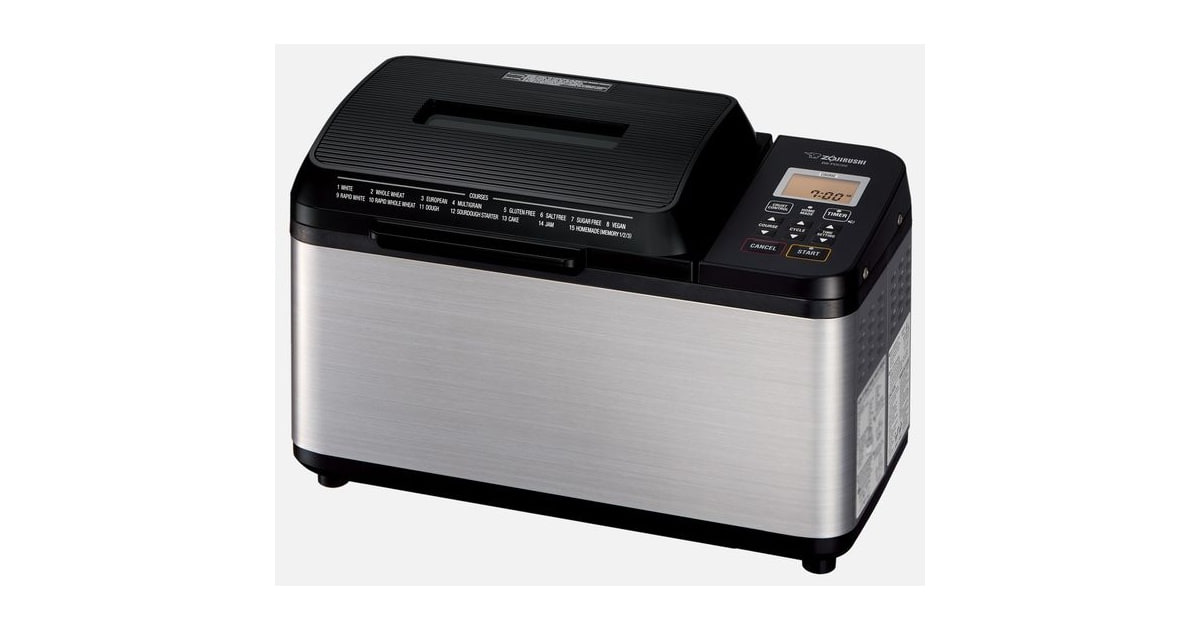
The most consistent loaf shape and the most durable pan
Nearly everything the pricier machines do, for far less
The basics done competently, in a small footprint

Four loaf sizes and custom programs you can save

A true small loaf for kitchens without counter space
At a glance
| Product | Capacity | Wattage | Price | |
|---|---|---|---|---|
| Zojirushi Bb PDC20BA Virtuoso Plus 2 LbTop pick | 2 lb | 700W | $454.95 |
 | Panasonic Bread MachineAlso consider | — | — | $298.97On sale |
| Breville BBM800XL Custom Loaf Bread Maker MachineUpgrade pick | — | — | $399.95 |
| KBS Pro 710W 2.2LB Bread MakerRunner-up | 2.2 LB | 710W | $135.99On sale |
| Zojirushi Bb HAC10 Home Bakery Mini BreadmakerAlso great | 1 lb | 450W | $294 |
| Hamilton Beach Automatic Bread Maker MachineBudget pick | 2 lb | — | $109.95 |
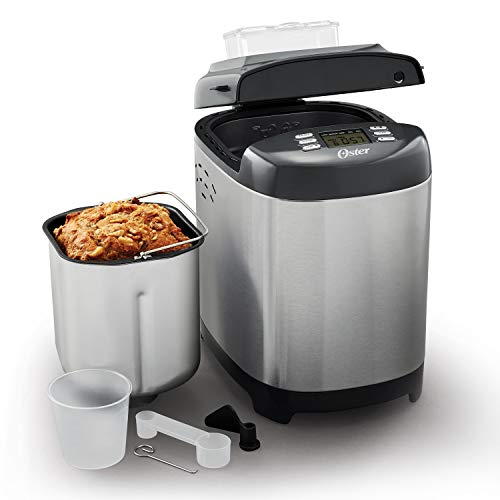 | Oster Bread Maker with ExpressBakeAlso consider | 2 lb | — | $171.61 |
How we picked
Loaf shape and browning. We compared published testing from Good Housekeeping and Wirecutter on how pan orientation affects the finished loaf. Horizontal dual-paddle machines were the clear winner on shape and even browning, so we weighted that heavily.
Program range. We looked for at least 12 presets covering whole wheat and gluten-free at minimum. A dedicated gluten-free cycle with modified hydration and rise timing is meaningfully different from a generic setting bolted onto a basic machine.
Pan coating longevity. Owner feedback and long-term reviews suggest premium machines keep their coating past 200 bakes while budget models often show wear between 80 and 120. We favored ceramic pans and brands that sell replacement pans.
Delay timer. Specs across the category range from 13 to 15 hours. Anything in that window lets you load ingredients before bed and wake up to a finished loaf, so we treated it as a baseline requirement rather than a differentiator.
Footprint and noise. We checked published dimensions against realistic counter space and read owner feedback on knead-cycle noise. Machines that reportedly vibrate across the counter got marked down.
Top pick
The most consistent loaf shape and the most durable pan
Zojirushi Bb PDC20BA Virtuoso Plus 2 Lb
The Virtuoso Plus uses two kneading paddles in a horizontal pan, so your loaf comes out long and rectangular instead of tall and narrow. It's the machine reviewers have ranked first for years, and owners keep using theirs several times a week for years without trouble.
$454.95fromAmazonThe two-paddle horizontal pan is the whole reason to buy this machine. Most bread makers spin one paddle in a tall bucket, which leaves you with a narrow loaf and a lumpy top. The Virtuoso Plus works dough from both ends of a wide pan. Good Housekeeping's testers found that horizontal-pan machines produce loaves closer in shape and browning to oven-baked bread, while vertical pans consistently give you taller, uneven results. Your sandwich slices actually look like sandwich slices.
Wirecutter has kept this machine as its top bread maker pick through every update since 2021, crediting that dual-paddle system for loaves that come closest to hand-shaped bakery bread. That's a long run at the top of a category that gets re-tested regularly. It matters more than any single spec on the box.
The program list covers the way people actually eat now. There's Multigrain, Whole Wheat, Rapid Whole Wheat, Gluten Free, Salt Free, Sugar Free and Vegan. If someone in your house is watching sodium or avoiding animal products, you're not improvising with a Basic cycle and hoping. The rapid courses finish a white or whole wheat loaf in about two hours and twenty-five minutes, which is fast enough to start a loaf after work.
Heaters on both the bottom and the lid mean the top crust browns instead of steaming. That's the flaw people complain about most in cheaper machines: a pale, slightly wrinkled top that never sets properly. Long-term owner reports on Zojirushi machines also point to non-stick pans still intact past two hundred bakes, where budget machines in the entry tier tend to show coating wear somewhere between eighty and a hundred and twenty.
Flaws but not dealbreakers
It's the most expensive machine here by a wide margin, and it's big. At roughly 18 inches wide and 24 pounds, it isn't something you'll be lifting in and out of a cabinet between loaves. Plan on giving it permanent counter space.
Zojirushi's recipes are all written for a 2-pound loaf. You can bake a pound and a half, but the company doesn't recommend going smaller, so a one-person household will be eating a lot of bread or freezing half of it. A few owners have also reported the pan coating chipping around the rivets over time.
Runner-upOn sale
Nearly everything the pricier machines do, for far less
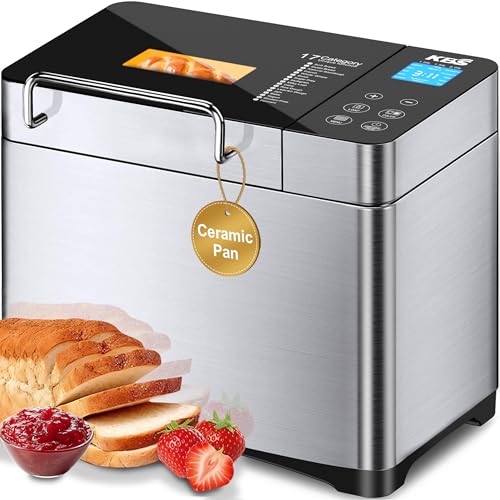
KBS Pro 710W 2.2LB Bread Maker
The KBS Pro runs 17 automatic programs plus a custom setting, dispenses nuts and fruit on its own, and uses a ceramic pan instead of a PTFE coating. It's the machine to get if you want a long feature list without paying premium prices.
$135.99fromAmazonList priceCNET's reviewers identified the mid-tier price band as the sweet spot for most home bakers, noting that machines above it mostly add dispensers and program counts rather than better bread. The KBS lands right in that band and then adds the dispenser anyway. You get a stainless steel automatic dispenser that drops nuts and seeds in at the right moment, which is the feature people usually pay a lot more to get.
The program list is genuinely long: Basic, Gluten-Free, Sourdough, French, Whole Wheat, Multigrain, Cake, Jam, Yogurt and Dough, plus a custom setting where you set your own times. If you're using the dough cycle for pizza or to shape a sourdough by hand before finishing it in the oven, that flexibility earns its keep. The 15-hour timer covers overnight scheduling with room to spare.
The ceramic pan is the reason to choose this over other machines in its class. Coating failure is what kills budget bread makers — the paddle starts sticking, the loaf tears coming out, and eventually you're shopping again. Ceramic sidesteps the PTFE question entirely, and KBS sells replacement pans if you ever need one. Owners who've had theirs a year describe cleanup as a rinse.
It also runs a 710-watt motor against the 600-watt standard, which matters on stiff whole-grain and rye doughs where a weak motor bogs down. Owners with decades of bread machine experience describe it as handling heavy dough without straining. The tempered glass touch panel and viewing window are nice, though they don't change how the bread tastes.
Flaws but not dealbreakers
The pan is still a vertical bucket, so your loaves come out tall and narrow with the classic uneven top. If bakery-shaped slices are what you're after, that's the trade-off you're making to save money here.
Sourdough on a bread machine is always a compromise, and the KBS is no exception — experienced bakers tend to use the dough cycle and finish in the oven rather than trusting the machine's sourdough program end to end.
Budget pick
The basics done competently, in a small footprint
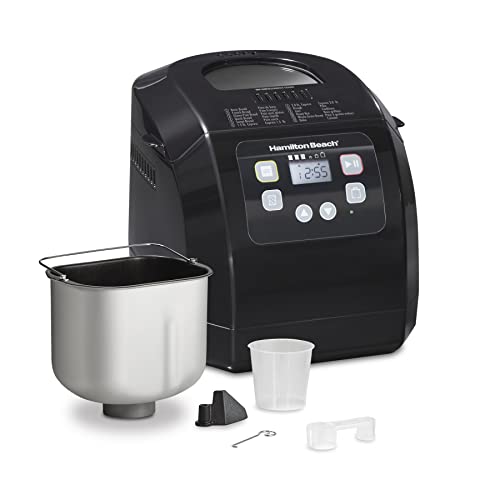
Hamilton Beach Automatic Bread Maker Machine
Hamilton Beach's machine makes 1, 1.5 and 2 pound loaves across 14 settings, including Gluten-Free and three Express cycles. It's the one to buy if you bake once a week and don't want to think hard about the purchase.
$109.95fromAmazonIf you're not sure you'll stick with this hobby, start here. You get three loaf sizes, three crust settings, a digital timer and a pan that's free of PFAS — a real consideration if the coating question is what's been holding you back. Owners repeatedly describe it as easy enough for someone who has never baked anything.
The three Express cycles are more useful than the spec sheet makes them sound. There's a 1 lb, 1.5 lb and 2 lb Express, so you're not stuck with one fast setting sized for a loaf you don't want. It also beeps before the second knead to tell you when to drop in fruit or nuts, which is the manual version of what the pricier machines automate.
At about 11 inches wide and 12 pounds, it fits in an apartment kitchen and it's light enough to move. It's also quiet enough that owners with open kitchens don't complain about the knead cycle. The automatic keep-warm holds the loaf for an hour after baking, so you're not racing to the kitchen the moment it beeps.
Flaws but not dealbreakers
The motor is the weak point. Owners running 2-pound loaves regularly describe it as strained, and a few doubt it will survive heavy daily use. If you're baking dense whole-grain loaves several times a week, spend more.
The gluten-free setting draws real criticism. Some owners report having to scrape the sides with a spatula mid-mix to get an even dough, and results that come out dense and underbaked. Gluten-free hydration needs a purpose-built cycle, and this one seems to fall short of that.
Upgrade pick
Four loaf sizes and custom programs you can save
Breville BBM800XL Custom Loaf Bread Maker Machine
The Breville Custom Loaf handles 1, 1.5, 2 and 2.5 pound loaves and lets you save nine of your own recipes with custom knead, rise and bake times. It's for bakers who want to dial in a recipe rather than pick from a menu.
$399.95fromAmazonNo other bread machine covers this much size range. Four loaf weights from 1 pound to 2.5 pounds means the same appliance serves a couple on Tuesday and a full family on Sunday. Most machines give you two or three sizes clustered in the middle. If your household size swings, that flexibility is the reason to pick this one.
The nine custom settings are the real draw for experienced bakers. You can adjust knead, rise and bake durations and store the result, which matters because dough behaves differently in a humid August kitchen than a dry January one. Owners specifically call out being able to tune cycle lengths for their own conditions as what won them over from other brands.
The collapsible paddle is a smart piece of engineering. It mixes, then folds down before the bake starts, so the hole left in the bottom of your loaf is much smaller than usual. You also get an automatic fruit and nut dispenser and 60 minutes of backup power — if the lights flicker mid-cycle, your loaf survives.
Flaws but not dealbreakers
Noise is the consistent complaint. Owners describe the knead cycle as loud enough to be disruptive, and some report the machine walking across the counter during kneading. A rubber mat underneath helps, but it's not a machine you'll sleep through in a studio apartment.
Reliability reports are mixed. Alongside years of happy owners there's a real thread of units failing inside the first year, and the brushed steel housing feels thinner than the price suggests. Baking is also less even than the Zojirushi's, particularly on the top crust.
Also great
A true small loaf for kitchens without counter space
Zojirushi Bb HAC10 Home Bakery Mini Breadmaker
The Home Bakery Mini makes 1-pound loaves in a footprint of roughly 12 by 8 inches. If you live alone or in a studio, it's the only mainstream machine that sizes both the bread and the appliance for you.
$294fromAmazonMost bread machines are built for families, and that's a problem if you're one person. A 2-pound loaf goes stale before you finish it. This one makes a true 1-pound loaf, so you bake what you'll actually eat this week. It's the smallest countertop footprint of any major brand, at roughly 11.8 by 7.1 inches, which is the difference between fitting in a galley kitchen and not.
It's still a Zojirushi, so the fundamentals hold up. You get a 13-hour delay timer for overnight scheduling, an LCD panel, a viewing window and a quick-bake cycle. There's also a carrying handle, which sounds trivial until you're the person storing the machine in a cabinet between bakes.
The dough and jam cycles make it more versatile than the size suggests. You can run cookie and pasta dough through it, and it does fresh fruit jam. For a small household, that's a lot of function out of something that takes up about as much counter as a large toaster.
Flaws but not dealbreakers
It's expensive for what it makes. You're paying Zojirushi money for the smallest loaf in the lineup, and the program list is short next to the Virtuoso Plus — no dedicated gluten-free, multigrain or vegan cycles.
This is also a vertical single-paddle machine, so the loaf shape advantage of its bigger sibling doesn't carry over. And at 450 watts, it isn't built for heavy whole-grain dough.
The BB-HAC10 comes with a one-year warranty.
Who this is for
Buy a bread machine if you want to control what goes into your bread. Five or six ingredients, no preservatives, no dough conditioners — that's the pitch, and it holds up. It also saves money: Serious Eats puts the ingredient cost of a homemade 2-pound sandwich loaf well below what a comparable artisan or whole-grain loaf costs at a grocery store or bakery. If you're gluten-free, the savings are larger still, since specialty loaves carry a premium. And if hand-kneading and proofing have always sounded like too much work, this is the appliance that removes both steps.
Skip it if you're chasing an open, irregular sourdough crumb or a crackly free-form crust — you'll want a Dutch oven and a real oven for that. This guide covers countertop machines that mix, proof and bake a loaf start to finish. It doesn't cover stand mixers, proofing boxes, or dough-only appliances. We also didn't consider commercial machines. If you bake less than once a month, the counter space probably isn't worth it.
How we picked
Loaf shape: Horizontal dual-paddle pans produce evenly browned, bakery-shaped loaves; vertical pans give you tall, narrow bread with an uneven top. Programs: We wanted at least a dozen presets, with genuine whole wheat and gluten-free cycles rather than a generic setting. Coating durability: Ceramic and premium PTFE pans hold up past a couple hundred bakes, while budget coatings often start sticking much sooner, so we favored machines whose makers sell replacement pans. Delay timer: Thirteen to fifteen hours is the range across the category, and anything in it covers overnight baking. Footprint and noise: We checked published dimensions against real counters and read owner feedback about machines that vibrate or walk during kneading.
Other bread machines worth considering
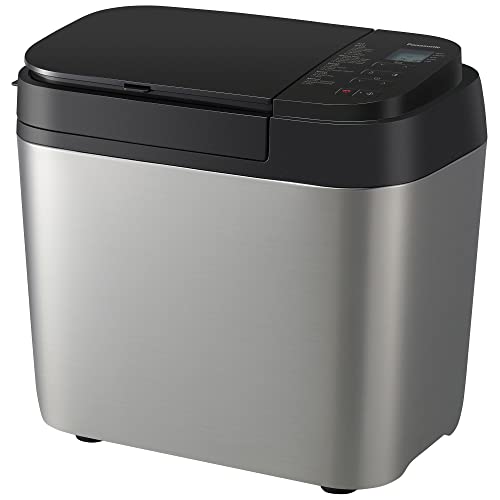
If you want the machine to handle the yeast for you: The Panasonic Bread Machine ($298.97) — The Panasonic SD-R2550 runs 20 presets and a double temperature sensor that reads both the dough and the room, then adjusts rise and rest times to match. That's genuinely useful if your kitchen swings between a cold winter morning and a hot summer afternoon. Panasonic's dispenser design keeps dry yeast fully isolated from liquid until the machine releases it, which addresses the single most common way beginners ruin a loaf. Owners report excellent bread across whole wheat, sourdough and brioche. Two things hold it back from a pick: the machine has a noticeably weaker reliability record than the others here, with a meaningful share of owners reporting dented or failed units, and several describe customer support as effectively unreachable. Owners working with ancient grains like spelt also found no preset that kneads gently enough.
If you want bread in an hour: The Oster Bread Maker with ExpressBake ($171.61) — Oster's ExpressBake cycle finishes a full 2-pound loaf in about an hour, against roughly three hours for a standard cycle on any other machine here. Consumer Reports' testers confirm the speed but note the crumb comes out denser than a full cycle produces. That's the deal: you're trading texture for time. If dinner is in ninety minutes and you want warm bread with it, no other machine here can do that. You also get 12 settings including gluten-free, three crust options and an automatic nut and fruit dispenser, in a compact and light body. Owners like the dough cycle for pizza. The dispenser is the weak spot — several report it jamming or becoming difficult to remove and reseat for cleaning.
The competition
This is what our research surfaced, not a complete map of the category. Bread machines from brands we didn't evaluate exist, and some of them are good. The machines below came up repeatedly in published reviews and owner discussion, and each lost to one of our picks for a specific reason — but a couple of them could still be right for you.
Care and maintenance
The pan and paddle are what wear out, not the machine. Never put either in a dishwasher — detergent and heat strip non-stick coatings faster than anything else you'll do. Wipe the pan with a soft cloth and warm soapy water, and skip abrasive pads and metal utensils entirely. Remove the paddle before the bake starts if your machine lets you, which leaves a smaller hole in the loaf and spares the coating some abuse. Let the pan cool before washing; thermal shock is hard on ceramic. If the paddle starts sticking to the shaft, soak it briefly rather than prying. Most manufacturers sell replacement pans and paddles, and swapping a worn pan is far cheaper than replacing the whole machine. Check that yours does before you buy.
Questions we get
What's the difference between a single-paddle and a dual-paddle bread machine?
A single-paddle machine mixes dough in a tall vertical bucket, so the loaf comes out narrow and often has an uneven top. Dual-paddle machines like the Zojirushi Virtuoso Plus work the dough from both ends of a wide horizontal pan. Testers at Good Housekeeping found the horizontal design produces loaves that look and brown more like oven-baked bread. If you want normal-looking sandwich slices, that's the difference.
Is a Zojirushi worth it compared with cheaper machines?
It depends on how often you bake. CNET's reviewers concluded that machines above the mid-tier mostly add dispensers and extra programs rather than better white or whole wheat bread. But two things do change: loaf shape, thanks to the horizontal pan, and pan durability, where owner reports point to Zojirushi coatings surviving past 200 bakes while budget machines often start sticking well before that. Bake weekly and the cheaper machine is fine. Bake several times a week and the premium one pays for itself in not being replaced.
Can a bread machine make sourdough?
Partly. Several machines here include a sourdough program, but a machine bakes in a straight-walled pan on a fixed schedule, which is the opposite of what sourdough wants. Most experienced bakers use the dough-only cycle to mix and bulk-ferment, then shape by hand and finish in the oven. You'll get a much better crust and crumb that way.
How long does a loaf actually take?
A standard 2-pound white loaf runs roughly 2 hours 50 minutes to 3 hours 30 minutes on most machines. Rapid cycles cut that down — the Zojirushi does white or whole wheat in about 2 hours 25 minutes, and Oster's ExpressBake finishes a 2-pound loaf in around an hour. The fast cycles give you a denser crumb, which is a fair trade when you're in a hurry.
Why does my loaf sink in the middle?
Almost always too much liquid, too much yeast, or both. Bread machines are far less forgiving about measurement than hand baking, so weigh your flour if you can and measure water precisely. Humidity matters too — the same recipe that works in January can be too wet in August. Cut the water by a tablespoon and see if the top holds.
How much do you really save baking your own?
Serious Eats puts the ingredient cost of a 2-pound sandwich loaf — flour, yeast, salt, water and oil — at a fraction of what a comparable artisan or whole-grain loaf costs from a grocery store or bakery. Bake weekly and a mid-range machine pays for itself over a year or two. Bake several times a week, as many owners do, and it happens considerably faster.
Why you should trust us
For this guide:
- We read published testing and rankings from Wirecutter, Good Housekeeping, Consumer Reports, CNET and Tom's Guide on loaf shape, cycle times and where the price curve stops buying better bread.
- We compared manufacturer specifications for every machine here on loaf sizes, program counts, delay timer length, wattage and countertop footprint.
- We read owner feedback across all of these listings for recurring themes around motor strain, coating wear, dispenser jams, noise and gluten-free results.
- We read owner reviews on every listing, weighted toward the critical ones, because that is where the recurring failures show up.
- We have a systematic way of automatically fetching the latest prices, so the numbers on this page stay current.
- This is a research-focused guide, so the team may not own every product listed — though we often do own the top winners, which gives us extra context for the recommendations.
- We don't accept free products, and the retailer commission never changes which product we recommend.
Sources
Best Bread Machines 2026 — Wirecutter, Wirecutter
The Best Bread Machines — Serious Eats, Serious Eats
Best Bread Machines — Good Housekeeping, Good Housekeeping
Bread Machine Ratings — Consumer Reports, Consumer Reports
Best Bread Machines of 2026 — CNET, CNET
Best Bread Machines — Tom's Guide, Tom's Guide
Best Bread Machines — The Spruce Eats, The Spruce Eats
Best Bread Machines — Better Homes & Gardens, Better Homes & Gardens
Zojirushi BB-PDC20 Virtuoso Plus Review — Allrecipes, Allrecipes
Panasonic SD-YR2550 Bread Maker — Panasonic UK Product Page, Panasonic
Amazon product listings and owner reviews for all 7 products
Manufacturer specification pages for each product
Some passages in this guide may be paraphrased with AI help. Prices are refreshed automatically.
More like this.
Continue exploring appliances reviews and recommendations.

The Best Bread Machines
Fresh bread from a machine is really about mornings. You load flour, water, salt and yeast the night before, set the timer, and wake up to a warm loaf and…

The Best Bread Machines
A bread machine earns its counter space by removing every step you don't enjoy. You dump in flour, water, salt and yeast, press a button, and walk away.…

The Best Bread Makers
A bread maker earns its counter space by making one thing easy: a warm loaf you didn't have to think about. You dump in flour, water, salt, and yeast,…

The Best Portable Washing Machines for Apartments
If your apartment has no laundry hookups, you already know the drill. You haul a bag down three flights, feed quarters into a machine somebody else just…

The Best Nespresso Machines and Accessories
A pod machine earns its counter space by being faster than your patience. You want coffee before you've finished finding your keys, and you don't want to…

The Best Chocolate Tempering Machines
Tempered chocolate is the difference between a truffle that snaps when you bite it and one that smears on your fingers. That snap comes from getting cocoa…