The Best Ice Cream Makers
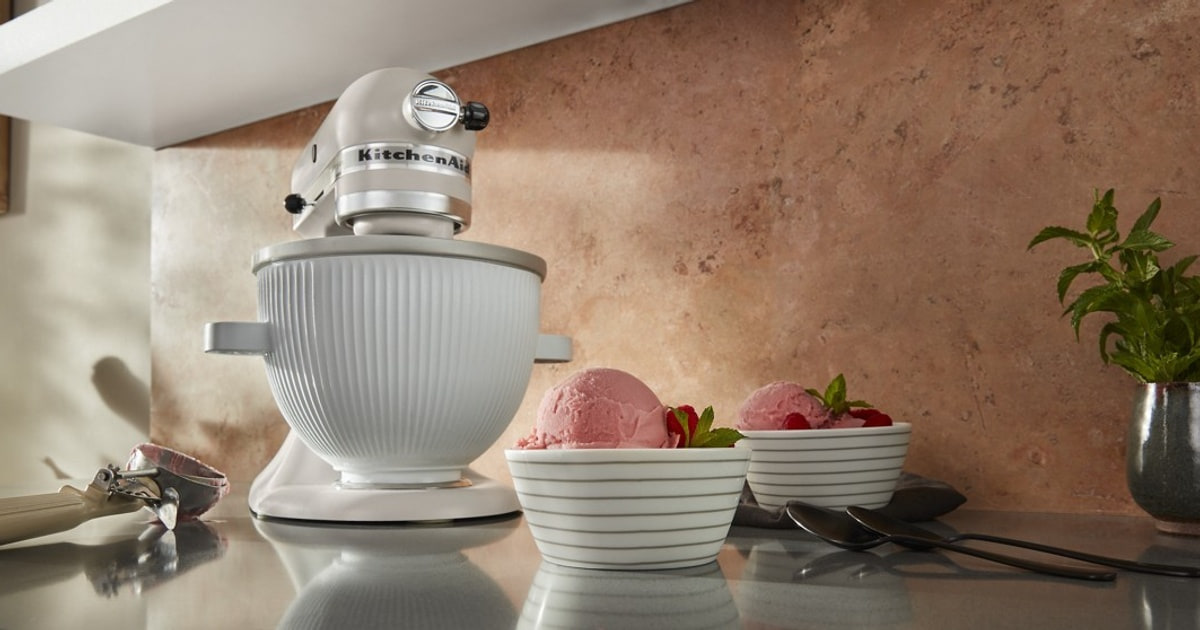
Homemade ice cream is mostly a texture problem. The base is easy — cream, sugar, maybe egg yolks — but turning it into something scoopable instead of a block of sweet ice comes down to how fast the machine freezes it and how steadily the paddle keeps scraping. A good machine gets you a dense, smooth pint in about 20 minutes. A bad one leaves you with grainy soup that hardens into a brick overnight. Everything else — capacity, cleanup, noise, how much counter it eats — follows from that.
Here's the honest part: none of these machines let you make ice cream on a whim. The freezer-bowl models need their bowl frozen solid for 12 to 24 hours first, which means you're deciding tonight what you want tomorrow. The bucket churns skip that wait but trade it for a shopping trip, because each batch burns through several pounds of crushed ice and a good cup of rock salt. And every one of them gives you soft-serve at the end, so firm scoops mean a few more hours in the freezer.
We looked at five listings in this category, from a two-quart countertop machine with a countdown timer to a four-quart wooden-bucket churn built for a backyard crowd. What separates them isn't really brand — it's which kind of planning you're willing to do. Freezer-bowl machines ask for foresight. Bucket churns ask for supplies and a hose. We think that the Cuisinart ICE-70CRM is the best ice cream maker for most people, and that the KitchenAid Ice Cream Maker Attachment is the one to buy if you already own a compatible KitchenAid stand mixer.
Everything we recommend

Three texture modes and a timer, if you can plan ahead

Denser, smoother results if you already own the mixer

Four quarts at once, for a backyard full of people
At a glance
| Product | Capacity | Freeze Time | Price | |
|---|---|---|---|---|
 | Cuisinart ICE-21PDL Replacement Ice Cream Maker MixingAlso in lineup | — | — | $25.90 |
| Hamilton Beach Electric Automatic Ice Cream MakerAlso great | 4 Quart | 20-40 min | $62.95 |
 | Nostalgia Electric Ice Cream Maker - OldAlso in lineup | 4 Qt | 20 min | $44.99 |
| KitchenAid Ice Cream Maker Attachment for StandUpgrade pick | 2 Quart | <30 min | $79.95On sale |
| Cuisinart ICE-70CRM 2-Quart Cool Creations Ice CreamTop pick | 2 Quart | 20 min | $189.99 |
How we picked
Texture and overrun. We weighed how much air each machine works into the base, since less air means a denser, more intense scoop. Published reviews and manufacturer specs on paddle design and motor speed did most of the sorting here.
Batch size. We matched capacity to household size: 1.5 to 2 quarts covers a family of four, while four quarts is what you need for a party. Anything that couldn't feed the group it was aimed at got marked down.
Setup demands. We compared what it takes before you can churn at all — 12 to 24 hours of bowl freezing, or a supply of crushed ice and rock salt. Machines that hide a big planning requirement behind a short churn time needed to be worth the trouble.
Cleanup. Dishwasher-safe bowls, lids and dashers count for a lot, because the machines people stop using are usually the ones that are a chore to wash. Salt-and-ice models take extra rinsing to keep brine off metal, and we factored that in.
Durability signals. We looked for repeated themes in owner feedback about motor housings, gaskets and long-term reliability. Metal builds and recurring reports of trouble-free seasons carried more weight than a long feature list.
Top pick
Three texture modes and a timer, if you can plan ahead
Cuisinart ICE-70CRM 2-Quart Cool Creations Ice Cream
A two-quart freezer-bowl machine with dedicated ice cream, gelato and sorbet settings, an LCD countdown and auto shutoff. It makes about eight to ten servings in 20 minutes once the bowl is cold, and every part that touches food goes in the dishwasher.
$189.99fromAmazonThe three settings aren't just labels on a dial. Gelato mode runs the paddle slower, so less air works into the base, and you get that dense, intense spoonful that separates real gelato from a supermarket tub. Sorbet mode is the one that surprises people — fruit bases are where home machines usually turn out icy, and published reviews single this setting out as the reason the ICE-70CRM handles them cleanly.
Two quarts is enough that you don't have to run it twice. That's roughly eight to ten servings, which covers four to six people with seconds. The 1.5-quart machines crowding the budget shelf run dry fast if you've got kids or company. Cuisinart puts a batch at 20 minutes or less once the bowl is frozen, and there's an ingredient spout with a built-in measuring cup in the lid, so chocolate chips or a caramel swirl go in mid-churn without stopping anything.
The countdown timer takes the guessing out of it. Freezer-bowl machines punish inattention in both directions. Churn too long and the base warms up and turns grainy. Pull it too early and you've made a milkshake. The LCD counts down and shuts the motor off by itself, so you can walk away and finish dinner. Owners keep coming back to how repeatable the results are batch to batch, and that consistency is really what the timer buys you.
Cleanup takes about two minutes. The bowl, lid and paddle come apart in seconds and go in the dishwasher, and the parts are BPA-free. There's no brine to drain, no bucket to lug to the sink, no salt to rinse out of metal. That matters more than it sounds. The machines people quietly abandon are usually the ones that turn a 20-minute dessert into a 20-minute mop-up.
Flaws but not dealbreakers
You have to think a full day ahead. The bowl needs 12 to 24 hours in the freezer before it'll freeze anything at all, so deciding at 4 p.m. that you want ice cream tonight doesn't work. Most owners land on the same fix: leave the bowl in the freezer permanently and accept that you've given up a shelf. If your freezer is already stuffed, that's a real cost.
One bowl means one batch. Want vanilla and then chocolate on the same afternoon? You can't, unless you buy a second bowl and keep it frozen alongside the first. Once a bowl has done its job it's warm, and it's out of commission until tomorrow.
The screen washes out in bright light. The LCD is easy enough to read in a normal kitchen, but put the machine in a sunny window or take it outside and the countdown gets hard to see. It's a small annoyance, not a dealbreaker.
The ICE-70CRM carries a limited three-year warranty.
Upgrade pickOn sale
Denser, smoother results if you already own the mixer
KitchenAid Ice Cream Maker Attachment for Stand
A two-quart freezer bowl and dasher that drop straight onto a compatible KitchenAid stand mixer. There's no second motor to buy and nothing new on your counter, and the mixer's steady drive speed produces a richer, less airy texture than most standalone machines.
$79.95fromAmazonList priceThe mixer's motor is the whole reason this works so well. It holds one speed for the entire churn, and steady speed means smaller ice crystals and less air whipped into the base. What comes out is denser and richer, closer in character to gelato than to the fluffy stuff sold by the half gallon. Reviewers who line it up against standalone budget machines consistently put its texture near the top of the pile.
You're not really buying an appliance. There's no new motor, no new plug, no new footprint. The bowl locks in where your mixing bowl normally sits, the attachment slides into the power hub, and you're churning in about two minutes. When you're done, the whole thing goes back in a cabinet. If your counter is already full, that's worth a lot.
The parts are built like the rest of the mixer. The bowl is heavy, the redesigned handles make it easier to seat, and the dasher is shaped to spread, scrape and fold at the same time so the base freezes evenly instead of caking on the wall. Owners who've had one for years tend to describe it as the accessory they never think about, which is about the best thing you can say about a kitchen part.
Two quarts in under half an hour. KitchenAid puts a batch at less than 30 minutes once your base is ready, and two quarts is plenty for a household of three or four. You get the same batch size as our top pick without adding a second machine to the kitchen.
Flaws but not dealbreakers
It's useless without the right mixer. It fits most tilt-head models, but not the Artisan Mini KSM3316 or KSM3317. It fits most bowl-lift models, but not the K5SS, KSM50, KSM500 or KSM450, and it won't work with the Professional line KSM90 or KG25H. Check the model number stamped on your mixer before you order. Buying the wrong one is the most common frustration owners describe.
The bowl needs a long head start. Plan on about 15 hours in the freezer, and more if your freezer runs warm or is packed. Same problem as any freezer-bowl machine — you're committing a day in advance, and the bowl is bulky enough that finding it a permanent home takes some rearranging.
Your mixer is tied up the whole time. It has to sit still, plugged in and running for 20 to 30 minutes, so it's not doing anything else and it's not going back in the cabinet until the batch is done. If you were planning to churn ice cream and knead bread the same afternoon, pick one.
Also great
Four quarts at once, for a backyard full of people
Hamilton Beach Electric Automatic Ice Cream Maker
A classic bucket churn with an electric motor and a four-quart stainless canister, enough for 12 to 16 servings in one go. You pack ice and rock salt around the canister, flip the switch, and it churns for 20 to 40 minutes and stops on its own.
$62.95fromAmazonFour quarts changes what dessert can be. That's 12 to 16 real servings from a single run — a birthday party, a reunion, a church social. A two-quart countertop machine would need three back-to-back batches and three frozen bowls to match it, which nobody is doing on a Saturday afternoon. If you're feeding a crowd, capacity beats every other feature on the list.
There's no bowl to freeze the night before. Salt lowers the freezing point of ice, and the resulting brine gets cold enough to freeze the canister from the outside in. So the cold comes from the bucket, not from your freezer. As long as you've got a bag of ice and a box of rock salt, you can decide to make ice cream the same day — which none of the freezer-bowl machines here can claim.
It runs itself. No cranking, no babysitting the dial. You pour the base and your mix-ins into the canister, cover it, assemble the machine, pack the bucket, and hit one switch. The motor churns for 20 to 40 minutes and stops when the ice cream is ready. Chopped fruit, nuts, chocolate chips and candy pieces all go in at the start, so there's nothing to time.
The bucket and canister hold up outdoors. The wooden bucket takes a summer of patio use without complaint, and the stainless canister doesn't hang onto flavors, so last month's mint doesn't haunt this month's peach. At about five pounds it's easy to carry out to the yard and just as easy to hose down when you're finished.
Flaws but not dealbreakers
Every batch costs you supplies. Figure four to six pounds of crushed ice and a cup or so of rock salt per run, and you'll need to top off the bucket partway through as the ice melts. That means a store trip before every party, and it means you can't churn on a whim unless you keep both on hand.
The cleanup is genuinely messier. You're draining salty water, rinsing the bucket and lid with fresh water and drying everything before it goes away, or the metal starts to corrode. And you have to keep the brine out of the canister itself — check the lid gasket every time, because salt water in the base ruins the batch.
The texture is a little coarser. Cooling from the outside of a bucket is less even than a fully frozen bowl, so the crystals come out slightly bigger and the result reads more old-fashioned than silky. Plenty of people prefer exactly that, especially straight from the canister at soft-serve temperature. If you're chasing gelato smoothness, this isn't the machine.
Who this is for
Buy one of these if you like the idea of controlling exactly what's in your dessert — less sugar, more vanilla, a flavor nobody sells. You should also want to plan a little. Every machine here asks for something in advance, whether that's a bowl in the freezer overnight or a bag of ice in the car. If you want ice cream in 15 minutes with zero forethought, none of these will make you happy, and you're better off with a compressor machine that chills its own bowl.
This guide covers churn-style home machines: freezer-bowl countertop units, a stand-mixer attachment, and traditional salt-and-ice bucket churns. It doesn't cover compressor machines with built-in refrigeration, and it doesn't cover pint-processing gadgets like the Ninja CREAMi, which spin an already-frozen block into something creamy rather than freezing a liquid base. Those are useful, but they're a different purchase. We also don't cover spare parts and replacement components, even when they show up alongside the machines in search results.
How we picked
We sorted these listings on five things. Texture and overrun: how much air the paddle works in, since a denser churn tastes richer and reads less like supermarket ice cream. Batch size: two quarts for a family, four quarts for a party, and no credit for capacity a household won't use. Setup demands: the honest cost of getting started, whether that's 12 to 24 hours of bowl freezing or several pounds of ice and a cup of rock salt per batch. Cleanup: dishwasher-safe parts win, and anything that leaves brine on metal has to earn its keep. Durability signals: recurring notes in owner feedback about motors, gaskets and how these hold up over a few seasons.
The competition
This is what our research turned up in this lineup, not a map of everything you can buy. Compressor machines and pint processors sit outside the scope here, and plenty of good churn-style machines never surfaced. Here's the one that didn't make the cut.
The Nostalgia Electric Ice Cream Maker - Old ($44.99) — The Nostalgia Electric Ice Cream Maker is a four-quart bucket churn with the same salt-and-ice setup as our Hamilton Beach pick, wrapped in a retro blue shell with a carrying handle. It makes ice cream, frozen yogurt or gelato, the motor locks into place, and it's a genuine crowd-pleaser at an outdoor party before anyone tastes anything. It lost on build. The motor housing is plastic where the Hamilton Beach is sturdier, owners raise durability questions after a few seasons of use, and it runs noticeably louder. The canister lip also makes pouring awkward without a ladle. It typically costs less than the Hamilton Beach, though, so if you want four quarts for a couple of summer parties and the vintage look is part of the appeal, it's a reasonable pick.
Care and maintenance
If you buy a freezer-bowl machine, just leave the bowl in the freezer for good. It's the single habit that decides whether you use the machine or forget about it, and a second bowl kept alongside the first lets you run vanilla and then chocolate the same afternoon. Bowls, lids and dashers go in the dishwasher, so don't let them soak in the sink. With a bucket churn, keep brine out of the canister — check the lid gasket before every batch, since salt in the base ruins it. Afterward, rinse the bucket and lid with fresh water and dry everything completely before storing, or the metal will start to corrode. And plan on two to four hours in the freezer after churning if you want firm scoops instead of soft-serve.
Questions we get
Which machine should a beginner start with?
A freezer-bowl model, because there's almost nothing to learn. You pour in a chilled base, press a button, and 20 minutes later you've got soft-serve. The Cuisinart ICE-70CRM shuts itself off on a timer, which removes the one mistake beginners actually make. The only habit to build is putting the bowl in the freezer a day early.
Do I need a compressor machine, or is a freezer bowl good enough?
For most people a freezer bowl is plenty. Compressor machines chill themselves, so you can churn on impulse and run batches back to back, but they cost far more and take up much more room. If you can reliably plan a day ahead and don't need two batches in one sitting, a good freezer-bowl machine gets you texture that holds up against machines costing several times as much.
What should I buy for a big family or a backyard party?
Go with four quarts. The Hamilton Beach churns 12 to 16 servings in a single run, which is the difference between one batch and three. It needs crushed ice and rock salt each time, so keep it outdoors or somewhere you don't mind draining salt water. The Nostalgia holds the same four quarts if you want the retro look instead.
Is a Ninja CREAMi a substitute for one of these?
Not really — it's a different process. The CREAMi shaves an already-frozen pint into a creamy texture rather than freezing a liquid base while paddling it. It's excellent for single-serving, protein-forward or ingredient-controlled desserts. But you can't fold in mix-ins during the spin, each pint is one serving, and you still freeze the base overnight, so think of it as a companion rather than a replacement.
How long does homemade ice cream take start to finish?
With a freezer-bowl machine, count on 12 to 24 hours of bowl freezing, then 15 to 25 minutes of churning, then two to four hours in the freezer to firm up. A bucket churn skips the bowl freeze but runs 20 to 40 minutes and needs ice and salt ready to go. Either way, the churn is the short part.
Why does my homemade ice cream turn out icy?
Usually the bowl wasn't cold enough or the base went in warm. A freezer bowl needs a full day in a freezer that isn't crowded, and the base should be refrigerated cold before it hits the machine. Fat and sugar also matter — a lean, low-sugar base freezes harder and grainier. On a bucket churn, keep topping off the ice and salt so the brine stays cold the whole run.
Why you should trust us
For this guide:
- We read published reviews and testing write-ups from major food and appliance publications for each machine here, and compared their conclusions against the manufacturers' own specifications.
- We compared capacity, stated churn times, freeze requirements and cleanup demands across all five listings side by side.
- We looked for repeated themes in owner feedback, paying particular attention to compatibility confusion, motor housing durability and how these hold up over several seasons.
- We read owner reviews on every listing, weighted toward the critical ones, because that is where the recurring failures show up.
- We have a systematic way of automatically fetching the latest prices, so the numbers on this page stay current.
- This is a research-focused guide, so the team may not own every product listed — though we often do own the top winners, which gives us extra context for the recommendations.
- We don't accept free products, and the retailer commission never changes which product we recommend.
Sources
The Best Ice Cream Makers — Wirecutter (NYT), Wirecutter / The New York Times
The Best Ice Cream Makers, Tested and Reviewed — Serious Eats, Serious Eats
Best Ice Cream Makers of 2026 — Good Housekeeping, Good Housekeeping
Best Ice Cream Makers — Consumer Reports, Consumer Reports
Best Ice Cream Makers 2026 — CNET, CNET
Best Ice Cream Makers, Tested by Food Network Kitchen, Food Network
Ninja CREAMi Review — Epicurious, Epicurious
Best Ice Cream Makers — Tom's Guide, Tom's Guide
Amazon product listings and owner reviews for all 5 products
Manufacturer specification pages for each product
Some passages in this guide may be paraphrased with AI help. Prices are refreshed automatically.
More like this.
Continue exploring appliances reviews and recommendations.

The Best Portable Ice Makers
A countertop ice maker solves one specific problem: your freezer can't keep up. Maybe your fridge's built-in maker died, or it produces a trickle when you…

The Best Countertop Nugget Ice Makers
Nugget ice is the soft, chewy pellet ice you get at a drive-through soda counter, and once you've had it at home, regular cubes feel like a downgrade.…
The Best Retinol Creams and Night Serums
Retinol is the closest thing over-the-counter skincare has to a sure thing. It speeds up how fast your skin sheds and rebuilds itself, which softens fine…

The Best Eye Creams
The skin around your eyes is thinner than anywhere else on your face, and it has fewer oil glands. That's why it creases first, why it looks tired after a…

The Best Retinol Creams
Retinol is one of the few skincare ingredients with decades of real research behind it. It speeds up how fast your skin sheds and rebuilds itself, and…

The Best Retinol Creams for Sensitive Skin
Retinol is the rare skincare ingredient with decades of clinical evidence behind it. It speeds up cell turnover, softens fine lines, and evens out tone…