The Best Range Hoods
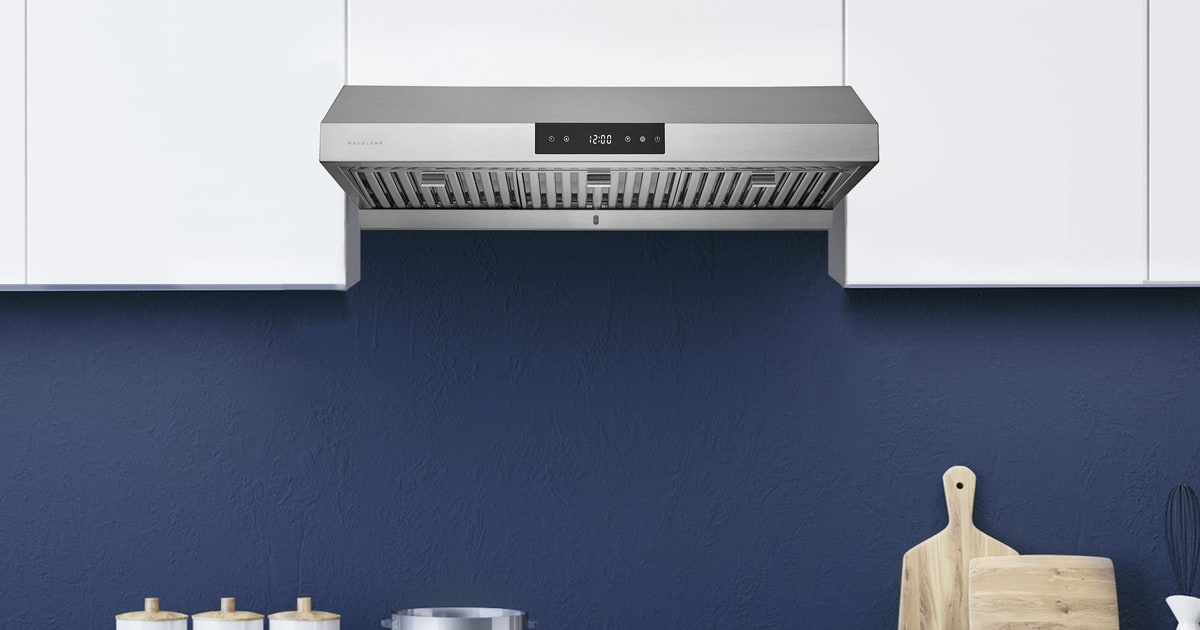
A range hood earns its keep three times a day, and you barely notice it when it's doing the job. It pulls steam off a pot of pasta before your windows fog. It catches the grease that would otherwise settle on your cabinet doors as a sticky film you can feel with a fingertip. And it clears combustion fumes from gas burners, which matters more than most people think. Lawrence Berkeley National Laboratory research found that cooking on gas without ventilation can push indoor nitrogen dioxide 50 to 400 percent above EPA outdoor air standards within about 15 minutes.
Here's the tension nobody has solved: moving a lot of air makes noise, and a hood you find annoying is a hood you'll leave off. Airflow ratings are also optimistic on their own terms, since a hood connected to a narrow or twisty duct never hits its rated number. Consumer Reports testing found hoods on 8-inch ductwork move 20 to 30 percent more air than the same models choked down to 6 inches. And recirculating hoods, per LBNL, clear only 30 to 40 percent of contaminants versus over 95 percent for ducted.
So this guide is about matching a hood to your actual kitchen: the width of your range, the BTUs you cook with, and how far you can realistically run a duct. We stuck to hoods you can buy and mount over a residential range, from slim under-cabinet models for a condo to a serious capture hood for a household that fries every night. We think that the FOTILE JQG7505 is the best range hood for most people, and that the Hauslane Chef Series PS18 is the one to buy if you want dishwasher-safe baffle filters and a choice of venting directions.
Everything we recommend
Strong capture at the burner, without a droning fan

Baffle filters and three ways to vent a tricky kitchen

A slim, quiet hood for a kitchen that can't fit much

A wider canopy and a quiet low speed, with modest airflow
At a glance
| Product | Max CFM | Ducted or Ductless | Price | |
|---|---|---|---|---|
 | Zephyr AK8400BS-E Tornado Mini 290 CFM 21Also in lineup | 290 CFM | — | $399 |
| FOTILE JQG7505 30” Under-Cabinet or Wall-Mount RangeTop pick | — | Ducted | $1,098.59 |
| HauslaneRunner-up | — | 3-Way Venting | $349.99 |
| COSMO COS-5MU30 30 in. Delta Collection DuctedBudget pick | — | Ducted | $159.99 |
| Faber 36-Inch Under Cabinet Range HoodAlso great | 300 CFM | — | $149 |
How we picked
Airflow matched to BTUs. HVI's guidance of 100 CFM per 10,000 BTUs of gas output set the baseline, and we checked each hood's rated airflow against the range sizes it's realistically paired with. Hoods that only suit light cooking had to say so clearly.
Noise you'll tolerate. A loud hood gets switched off, which defeats the purchase. We prioritized published sone and decibel ratings at the low and medium speeds people actually use, not just the number at full blast.
Filters and cleanup. Good Housekeeping Institute testing puts baffle filters near 95 percent grease capture versus about 80 percent for aluminum mesh, so we favored baffles and dishwasher-safe designs. Filters that are annoying to clean don't get cleaned.
Duct and fit. We looked at outlet diameter, canopy width relative to a standard range, and depth over the front burners. Consumer Reports found ductwork size changes measured airflow by 20 to 30 percent, so a hood's outlet matters as much as its motor.
Owner feedback themes. We read through owner reports for repeated complaints — rattles, dim lights, awkward installs — rather than one-off gripes. Patterns that showed up across many buyers shaped the flaws sections.
Top pick
Strong capture at the burner, without a droning fan
FOTILE JQG7505 30” Under-Cabinet or Wall-Mount Range
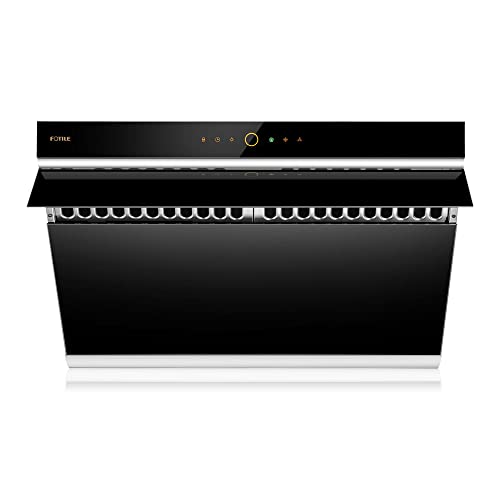
A 30-inch side-draft hood with two DC motors and a touchscreen, built for kitchens that cook hard. It grabs smoke and grease at the back edge of the cooktop instead of waiting for it to drift up past your face, and it stays civil on low and medium.
$1,098.59fromAmazonThe side-draft layout is the whole reason this hood works so well. Instead of a canopy hanging high over your head, the intake stands at the back of the cooktop and pulls fumes sideways, right where they're generated. FOTILE says the system separates up to 95 percent of grease and cuts odors by 98 percent. If you sear steaks, run a wok, or keep a pot of chili at a hard boil, that's exactly where a traditional hood tends to lose the plume.
Two DC motors do the work here, and that's unusual at this size. FOTILE rates the system at 540 Pa of static pressure, which is the spec that actually matters once your duct run has a couple of elbows and a roof cap in it. Rated airflow is a lab number. Static pressure is what gets air through real ductwork. Owner feedback consistently describes it as quiet on low and medium, with plenty left on high.
You'll like the hands-free control more than you'd guess. Wave at the infrared sensor with a greasy hand and it turns on or off — no smudged glass, no hunting for a button while a pan smokes. The touchscreen gives you four speeds plus a stir-fry burst for the messy minutes. The grease tray and filter both pop out, so cleanup is a sink-and-dishwasher job rather than a project.
This is the hood for a household that cooks daily, not occasionally. Owners who replaced a recirculating over-the-range microwave describe the difference in blunt terms: cabinets stop getting tacky, and the house stops smelling like last night's dinner. If that's your situation — heavy frying, high-BTU burners, an open floor plan that carries every odor into the living room — the extra money buys something you'll notice every evening.
Flaws but not dealbreakers
It's big and heavy. At roughly 64 pounds and more than 18 inches deep, this isn't a solo Saturday install, and the depth eats into the space above your back burners. The onyx glass looks great in photos and shows fingerprints in person, so keep a microfiber cloth nearby.
It's also the most expensive hood here, and it's only 30 inches wide. That's fine over a 30-inch range, but the Home Ventilating Institute recommends a canopy that extends at least 3 inches past each side of the cooking surface, and this one can't. On its top speed it's loud — not unreasonable for the air it moves, but not background noise either.
Runner-up
Baffle filters and three ways to vent a tricky kitchen
Hauslane
A 30-inch under-cabinet hood with stainless baffle filters, a touch panel, and LED lamps. It vents through the top, out the back, or recirculates with a charcoal kit, which makes it the flexible answer when your kitchen won't cooperate with a straight duct run.
$349.99fromAmazonThe baffle filters are the practical reason to choose this one. Good Housekeeping Institute testing found baffle-style filters capture roughly 95 percent of airborne grease, compared with about 80 percent for aluminum mesh. They're pressed steel, they go in the dishwasher, and they don't slowly load up and strangle your airflow the way a matted mesh screen does. Over a few years, that's less scrubbing and more consistent suction.
Three-way venting is what saves a hard installation. Plenty of kitchens have a joist exactly where the duct wants to go, or no exterior wall within reach. This hood lets you go up, go back, or run it recirculating with a carbon kit. Ducted is always better — LBNL research puts recirculating effectiveness at 30 to 40 percent versus over 95 percent — but having the option beats discovering mid-project that you don't.
The controls are a flat touch panel rather than push buttons, which means one wipe cleans the whole face. At about 8 inches tall and 23 inches deep, it's deeper than most under-cabinet hoods. That depth isn't wasted: a deeper canopy sits over your front burners, and front burners are where the pan you're actually watching tends to be.
Owner feedback points the same direction. People who moved from a builder-grade recirculating hood describe a clear improvement in how fast smoke clears, and several mention pairing it with a 6-inch duct run through the attic. The construction gets called out as solid — heavier gauge metal than the price suggests, with a fit and finish that reads semi-professional.
Flaws but not dealbreakers
This particular listing is a Renewed unit, which means refurbished. Expect the possibility of cosmetic blemishes, and read the coverage terms carefully, because renewed appliances typically carry less protection than new ones. If that makes you uneasy, it's a fair reason to buy elsewhere.
The listing title says matte white while the spec sheet says stainless steel, so confirm the finish before you order. Owner feedback on this listing is also thin compared with the high-volume hoods here, which makes it harder to spot a pattern in long-term reliability.
Budget pick
A slim, quiet hood for a kitchen that can't fit much
COSMO COS-5MU30 30 in. Delta Collection Ducted
A 5.5-inch-tall stainless hood with three speeds, push-button controls, and reusable mesh filters. It's the sensible upgrade for a condo or apartment kitchen where the cabinet above the range is shallow and the budget is the real constraint.
$159.99fromAmazonThe profile is the point. At 5.5 inches tall, it tucks under a shallow cabinet without stealing the headroom you need to lift a stockpot, and it can vent out the top or straight back through the wall. If you're replacing a 30-year-old hood in a galley kitchen, this one usually drops into the existing opening with minimal drama.
For the money, it does the basic job honestly. Three fan speeds, LED lighting, five push buttons, and a noise floor Cosmo rates as low as 50 dB on the lowest speed with rigid ducting. Reusable aluminum filters mean nothing to buy again. And if you can't vent outside, a carbon filter kit converts it to recirculating — a compromise, but a real option for renters.
Installation is where people get tripped up. Owners repeatedly report a rattly, noisy hood that turns quiet once it's mounted flush and fastened tight, so use bolts rather than the included screws for an under-cabinet install and shim it until it sits flat. The included flexible duct works, but rigid metal duct will be quieter and move noticeably more air.
Flaws but not dealbreakers
The 5-inch round duct is the real limitation. Most ventilation guidance treats 6 inches as the minimum, and Consumer Reports found 8-inch ducting moves 20 to 30 percent more air than 6-inch at the same rating. A 5-inch outlet puts a ceiling on what this hood can do, no matter how you install it.
The mesh filters catch meaningfully less grease than baffles, so plan on running them through the dishwasher often. And the light is a small lens set far back on the underside — bright enough, but it pools behind your pans rather than over them. Owners flag the dim front burners more than anything else.
The Cosmo comes with a two-year limited parts warranty.
Also great
A wider canopy and a quiet low speed, with modest airflow
Faber 36-Inch Under Cabinet Range Hood
A 36-inch under-cabinet hood with three speeds, a 10-minute boost, and halogen lighting. The extra width is the feature: it hangs past both sides of a standard 30-inch range, which is how you actually catch what rises off the front burners.
$149fromAmazonA wider hood catches more than a stronger fan does. HVI guidance calls for a canopy that extends at least 3 inches beyond each side of the cooking surface, which means a 30-inch range ideally pairs with a 36-inch hood. Most people buy width to match the range and wonder why smoke escapes at the edges. If your cabinet run allows 36 inches, this is the easiest capture upgrade you can make.
It's also gentle on the ears where it counts. Faber rates it from 3.5 to 6.6 sones across its range, so the speed you'll actually leave running while something simmers stays in the background. When you need more, a 10-minute intensive setting ramps it up and then steps back down on its own, which is nicer than remembering to turn it off after the smoke clears.
The rest is deliberately simple. Push buttons for three speeds and the lights, dishwasher-safe grease filters, and a plain stainless face at 5.5 inches tall. There's no touch panel or app to eventually fail. For a rental unit, a second kitchen, or anyone who just wants a hood that turns on and stays out of the way, that simplicity is a feature.
Flaws but not dealbreakers
At 300 CFM, this is a light-to-moderate cooking hood. HVI's rule of thumb is 100 CFM per 10,000 BTUs of gas output, so a 40,000-BTU range asks for more air than this one delivers. Wok cooking and heavy searing will outrun it.
The halogen lamps are dated. They run hot, they're dimmer than LEDs over a long cooking session, and bulbs burn out eventually. It's a minor annoyance rather than a dealbreaker, but every other hood here uses LEDs.
Who this is for
Buy a hood now if you cook on gas, if you fry or wok more than occasionally, or if you're still living with a recirculating over-the-range microwave that just pushes warm, greasy air back at you. Those are the kitchens where a real hood changes daily life: less film on the cabinets, less lingering smell in an open-plan living room, and meaningfully lower combustion byproducts in the air you breathe. Renters and anyone who can't cut a duct should read the ductless caveats carefully before spending much.
This guide covers residential hoods that mount over a range — under-cabinet models plus one insert for custom cabinetry. It doesn't cover downdraft systems, over-the-range microwave combos, or commercial equipment, and it doesn't cover island hoods, since none of the confirmed listings here are built for an island installation. If you're running a professional-style range above 60,000 combined BTUs, none of these hoods is enough; you want a dedicated high-CFM chimney hood and a conversation with your builder about makeup air.
How we picked
We built the shortlist around five things. Airflow: rated CFM had to make sense against HVI's 100 CFM per 10,000 BTUs guidance for the ranges each hood would sit above. Noise: we weighted published sone and decibel figures at low and medium speeds, because that's where a hood spends its life and where a loud one gets abandoned. Filters: baffle designs won out over mesh on grease capture and ease of cleaning, with dishwasher-safe construction as the practical threshold. Fit: we checked outlet diameter, canopy width against a standard 30-inch range, and how far the hood reaches over the front burners. Owner feedback: we looked for repeated complaints across many buyers — rattles, dim lighting, fussy mounting — and let those patterns shape what we flag as flaws.
The competition
This is what our research surfaced, not a census of every hood on the market. Range hoods are a fragmented category, and plenty of good models sell only through appliance dealers or kitchen showrooms. The product below is worth knowing about, even though it didn't earn a pick.
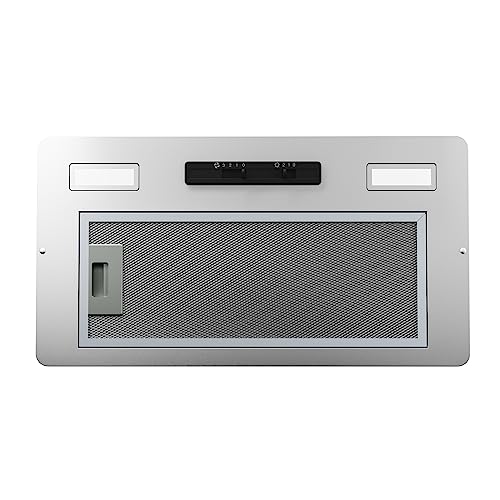
The Zephyr AK8400BS-E Tornado Mini 290 CFM 21 ($399) — The Zephyr Tornado Mini is an insert, not a finished hood. It's a 21-inch-wide, 290 CFM ENERGY STAR power unit with LED lighting, designed to be built into a custom wood or plaster chimney surround so the ventilation disappears into the cabinetry. That's a remodel decision, not a weekend swap, and it's why we didn't rank it against the under-cabinet hoods here: you need a carpenter and a design before it does anything at all. The airflow is also modest and the width is narrow, so it suits a smaller electric cooktop rather than a big gas range. But if you're building a custom surround and want the hardware invisible, an insert is the only way to get there, and the ENERGY STAR certification helps if your state's energy code requires it.
Installation and duct notes
Mount it at the right height first. NKBA guidelines call for 24 to 30 inches above an electric cooktop and 30 to 36 inches above gas — higher than that and the plume spreads before the hood can grab it. Use rigid metal duct, not the flexible hose in the box, and keep the run short with as few elbows as you can manage. Six inches is the practical minimum diameter, and anything over 400 CFM really wants 8 inches. Wash the filters in the dishwasher about once a month if you cook most nights, and swap charcoal filters on schedule if you're running recirculating. In a tightly sealed house with a high-BTU range, ask your inspector about makeup air before you buy.
Questions we get
What CFM do I need for my range hood?
The Home Ventilating Institute recommends at least 100 CFM for every 10,000 BTUs of gas range output, so a 60,000-BTU range needs 600 CFM or more. For electric cooktops, roughly 2 CFM per inch of cooking surface is the usual guideline. Most home cooks with a standard 30-inch range are fine in the 400 to 600 CFM band. Going bigger than you need mostly buys noise.
Is a ducted or ductless range hood better?
Ducted, and it isn't close. LBNL research puts recirculating hoods at 30 to 40 percent contaminant removal versus over 95 percent for ducted models, and a ductless hood can't remove heat or moisture from the room at all — it just filters air and hands it back. Go ductless only when venting outside genuinely isn't possible, like a rental or an interior condo wall. If you do, change the charcoal filters on schedule, because they stop working long before they look dirty.
What sone rating should I look for?
For the speed you'll actually run while something simmers, aim for somewhere around 3 to 4 sones or lower. Full-power ratings on a strong hood often land past 6 sones, and that's normal — you're only there for a few minutes. What matters is whether the low setting is quiet enough to leave on through a whole dinner. If it isn't, you'll switch it off and lose the benefit entirely.
How high should a range hood be mounted above the stove?
NKBA planning guidelines call for 24 to 30 inches of clearance above an electric cooktop and 30 to 36 inches above gas. Mount it lower within that window for better capture; go higher if you're tall enough to keep bumping your head. Always check the manufacturer's own minimum, since it's tied to fire clearances and your local code.
Baffle or mesh filters — which is easier to live with?
Baffle filters, on both counts. Good Housekeeping Institute testing found baffles capture around 95 percent of airborne grease versus roughly 80 percent for aluminum mesh, and baffles rinse clean in the dishwasher instead of matting up. Mesh screens gradually clog, which quietly cuts your airflow. Either way, run them through the dishwasher monthly if you cook most nights.
Do I need a makeup air system for a high-CFM hood?
Possibly, and it's a code question more than a preference. Forbes Home notes that professional-style ranges above 60,000 combined BTUs paired with a powerful hood can create negative pressure in a tightly sealed house, which risks backdrafting a water heater or furnace. Many jurisdictions require makeup air above a set CFM threshold. Ask your building department before you buy the hood, not after.
Why you should trust us
For this guide:
- We read manufacturer specification sheets and installation documentation for every hood here, focusing on rated airflow, sone and decibel figures, outlet diameter, and filter type.
- We compared published lab findings from Consumer Reports and the Good Housekeeping Institute alongside ventilation guidance from the Home Ventilating Institute, Lawrence Berkeley National Laboratory, and the NKBA.
- We read through owner feedback looking for recurring themes — mounting noise, dim lighting, cleaning hassles — rather than isolated complaints.
- We read owner reviews on every listing, weighted toward the critical ones, because that is where the recurring failures show up.
- We have a systematic way of automatically fetching the latest prices, so the numbers on this page stay current.
- This is a research-focused guide, so the team may not own every product listed — though we often do own the top winners, which gives us extra context for the recommendations.
- We don't accept free products, and the retailer commission never changes which product we recommend.
Sources
Best Range Hoods — Wirecutter (NYT), Wirecutter
Best Range Hoods Tested — Consumer Reports, Consumer Reports
Best Range Hoods — Reviewed.com (USA Today), Reviewed.com
Best Range Hoods — This Old House, This Old House
Best Range Hoods — Bob Vila, Bob Vila
Best Range Hoods — Good Housekeeping Institute, Good Housekeeping
Ventilation Rate Recommendations — Home Ventilating Institute (HVI), Home Ventilating Institute
Kitchen Ventilation and Indoor Air Quality — Lawrence Berkeley National Laboratory, Lawrence Berkeley National Laboratory
ENERGY STAR Certified Ventilating Fans, U.S. EPA ENERGY STAR
Title 24 Kitchen Ventilation Requirements — California Energy Commission, California Energy Commission
Kitchen Planning Guidelines — National Kitchen & Bath Association (NKBA), NKBA
Best Range Hoods — Forbes Home, Forbes Home
Amazon product listings and owner reviews for all 5 products
Manufacturer specification pages for each product
Some passages in this guide may be paraphrased with AI help. Prices are refreshed automatically.
More like this.
Continue exploring appliances reviews and recommendations.

The Best Sous Vide Machines
Sous vide takes the guesswork out of dinner. You drop a sealed bag into a water bath, set a number, and the machine holds that number for hours. A chicken…

The Best Portable Espresso Makers for Travel
Bad hotel coffee is a small daily tax on travel. A portable espresso maker is the fix: a hand-pumped cylinder that takes fine grounds and hot water and…

The Best Smart Thermostats for Heat Pumps
A heat pump asks more of a thermostat than a furnace does. It has to know when to run the compressor, when to give up and call for backup strips, and when…

The Best Bread Makers
A bread maker earns its counter space by making one thing easy: a warm loaf you didn't have to think about. You dump in flour, water, salt, and yeast,…

The Best Countertop Microwave Ovens
A countertop microwave is the appliance you touch most and think about least. You reheat last night's chili, soften butter, steam a bag of green beans,…

The Best Smokeless Indoor Electric Grills
Indoor electric grills solve a specific problem: you want a seared burger in February, or you live somewhere a propane tank isn't allowed on the balcony.…