The Best Countertop Microwave Ovens
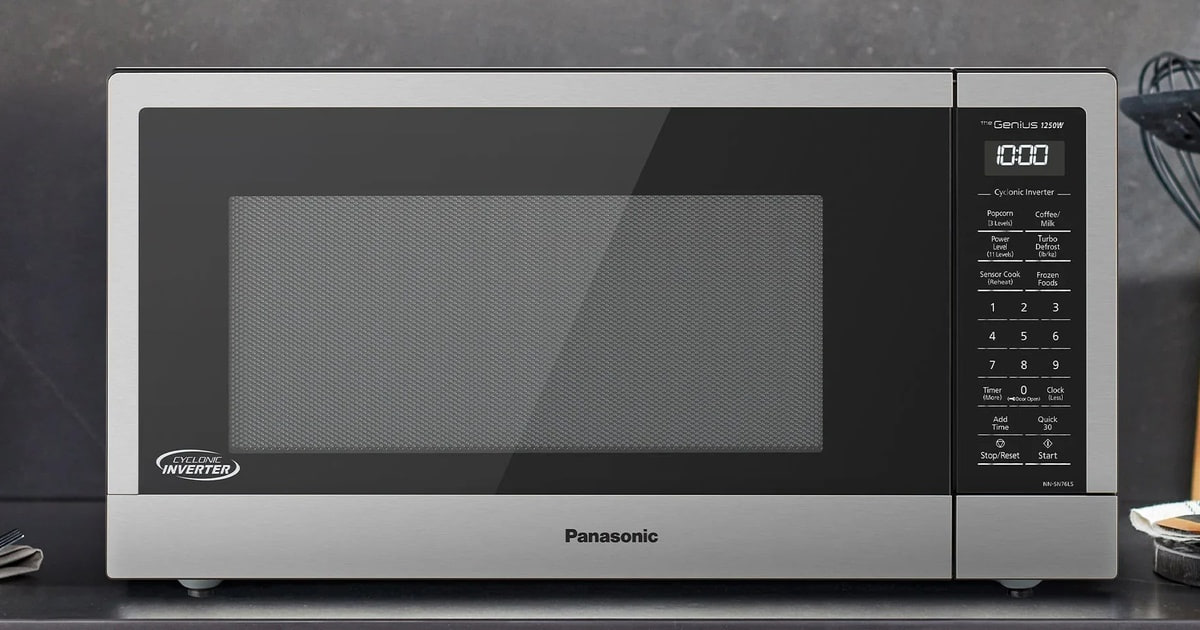
A countertop microwave is the appliance you touch most and think about least. You reheat last night's chili, soften butter, steam a bag of green beans, warm a mug of coffee you forgot about twice. Statista's survey work puts one in more than 90% of American homes — only the fridge is more common. So the difference between a good one and a mediocre one isn't drama. It's whether your leftovers come out hot in the middle, whether the beeping wakes the baby, and whether the door still latches in year seven.
Here's the honest part: no microwave cooks food well. It reheats, defrosts and steams, and that's the job. Even the best ones leave some unevenness, and the cheap ones leave real cold spots — Reviewed.com's thermal imaging found detectable cold spots in 72% of items from standard 1000W models. Convection combos can bake, but they're slower and fussier than a real oven. And AHAM data puts the average replacement cycle at nine or ten years, which means build quality matters more than any preset menu.
What separates the good from the forgettable is mostly inverter power delivery, sensor cooking and a cavity that actually fits your dishes. We think that the Panasonic NN-SN67KS is the best countertop microwave oven for most people, and that the Toshiba 1.2 Cu.Ft. 1000W is the one to buy if you want solid sensor reheating without paying for inverter power.
Everything we recommend

Even reheating and real defrosting, in a normal-size box

Sensor cooking and a big turntable without inverter pricing

A narrow, quiet 0.9-cubic-foot box for one or two people

Family-size capacity and 1250 watts, without a huge footprint

Replaces a toaster oven and an air fryer, if you can live with the quirks
At a glance
| Product | Capacity | Wattage | Price | |
|---|---|---|---|---|
| TOSHIBA Countertop Microwave OvenRunner-up | 1.2 Cu.Ft | 1000W | $133.96On sale |
| Chefman Countertop Microwave Oven 0.9 Cu. Ft.Budget pick | 0.9 Cu. Ft | 900 Watt | $109.99 |
| Panasonic NN-SN67KS Microwave OvenTop pick | 1.2 cu.ft | 1200W | $239.95 |
 | TOSHIBA ML-EM45PITAlso consider | 1.6 Cu.Ft | 1250W | $179.88On sale |
 | ORTVS KSD201 110 for GE JES1657SMSS MicrowaveAlso in lineup | — | — | $7.79 |
| Breville BMO870BSS Combi Wave 3-in-1Also great | — | 1200 W | $499.95 |
| Panasonic NN-SN76LS 1.6 cu.ft Cyclonic Inverter CountertopUpgrade pick | 1.6 cu.ft | 1250Watt | $310.15 |
How we picked
Even heating. We weighted inverter power delivery heavily after reading thermal findings from RTINGS and Reviewed.com showing large center-to-edge variance in standard cycling models. Anything we'd recommend for defrosting or low-power work needed inverter or a documented equivalent.
Sensor cooking. Good Housekeeping Institute's testing found sensor models cut overcooked-food incidents by 34% against manual timers. We treated a working humidity sensor as close to mandatory above the budget tier.
Wattage and capacity. We looked for 1000W or more paired with capacity matched to real households — 0.9 cubic feet for one or two people, 1.2 for most kitchens, 1.6 and up for families reheating 9×13 dishes.
Footprint and fit. We compared published exterior dimensions against typical counter depth and cabinet clearance, favoring units that deliver capacity without a bulky cabinet. Turntable diameter mattered as much as cubic feet.
Durability and noise. AHAM puts the average replacement cycle at nine to ten years, so we read owner feedback for patterns in door latches, control panels and early failures — and for how loudly each unit runs.
Top pick
Even reheating and real defrosting, in a normal-size box
Panasonic NN-SN67KS Microwave Oven
This is a 1.2-cubic-foot, 1200-watt microwave with inverter power and Panasonic's Genius sensor. It heats leftovers edge to center without rubbery rims, and it fits under most upper cabinets without hogging your counter.
$239.95fromAmazonInverter power is the single upgrade worth paying for, and this is the least expensive credible way to get it. A standard microwave doesn't have a 50% setting — it runs at full blast, then shuts off, then blasts again. Inverter units hold a steady lower power instead. RTINGS measured under 10°F of center-to-edge variance on inverter models against 25–40°F for cycling ones. You notice it on cheese that melts instead of separating.
Defrosting is where the gap gets embarrassing. Wirecutter's long-term work found Panasonic's inverter line thawed a pound of ground beef in under six minutes with no cooked edges — something equivalent-wattage cycling models couldn't match. If you pull dinner out of the freezer at 6 p.m. more often than you'd like to admit, that's the feature that saves the evening.
The Genius sensor handles the guesswork. It reads steam and stops when the food is hot, which matters more than it sounds — Good Housekeeping's testing found sensor models cut overcooked-food incidents by 34% against manual timers. Sixteen sensor settings cover the usual suspects, and sensor reheat is the one you'll actually use. There's also a three-level popcorn button, sized for different bag weights.
At 1.2 cubic feet with a 13.4-inch turntable, it's a sane footprint. It swallows a dinner plate and a mixing bowl without the 20-inch-wide bulk of a family-size unit. Owners replacing bigger, weaker microwaves consistently report they gained power and lost counter space at the same time, which is a rare trade.
Flaws but not dealbreakers
The control panel divides people. Some owners find the button layout genuinely annoying — there's no simple quick-minute row that goes up to six, and the sequence for basic manual cooking takes more presses than it should. If you want to punch two numbers and walk away, expect a week of relearning.
Panasonic's reliability record here is good but not spotless. A minority of owners report units failing after a couple of years, and door-latch complaints show up across the brand's lineup. That's true of nearly every microwave at this price, but it's worth knowing before you assume a decade of service.
The interior is a plain painted cavity with a turntable. It cleans fine, but there's no fancy easy-release coating, and dried-on tomato sauce still takes a damp cloth and some patience.
Runner-upOn sale
Sensor cooking and a big turntable without inverter pricing
TOSHIBA Countertop Microwave Oven
Toshiba's 1.2-cubic-foot, 1000-watt model gives you smart-sensor reheating, ten power levels and a 12.4-inch turntable. It's a standard-cycling microwave, so heating isn't quite as even, but for reheating plates and mugs it's plenty.
$133.96fromAmazonList priceIf inverter isn't in your budget, this is the microwave to buy. It has the sensor — the feature that keeps you from turning a plate of pasta into a hot brick — and enough power at 1000 watts to reheat a dinner plate in a couple of minutes. Bob Vila's published review of Toshiba's smaller model reports only ±8°F of variance across the turntable, comparable to inverter units costing twice as much for simple tasks.
The 12.4-inch turntable is the quiet reason people keep this one. Plenty of budget microwaves technically hold a dinner plate, then scrape the sides as it rotates. This one clears a 10.5-inch plate without drama, and owners upgrading from 0.7-cubic-foot units describe the difference as night and day. Six preset menus cover pizza, vegetables and sensor reheat.
It runs quietly. Owners repeatedly mention how little noise it makes compared with whatever it replaced, and there's a mute option if the beeping bothers you. In an open kitchen or a studio apartment, that's not a nicety. It's the difference between using the microwave at 11 p.m. and not.
This is also the most popular microwave in this guide by a wide margin, which matters for a product you'll own for close to a decade. Parts, replacement and general familiarity are easy. Toshiba's service response also earns goodwill — owners with cracked doors and dead units report the company made it right.
Flaws but not dealbreakers
It's a standard cycling microwave, and you'll feel it on low power. Set it to 30% to melt chocolate or soften cream cheese and it still pulses at full strength with gaps in between, which is exactly how you get scorched edges. For pure reheating that's fine. For anything delicate it isn't.
The kitchen timer has a real design flaw: run the countdown timer and you can't use the microwave until it finishes. Owners find this out at the worst possible moment. It's fixable by clearing the timer, but it shouldn't be necessary.
Quality control isn't perfect. A meaningful share of owners report units that arrive with problems or fail sooner than a nine-year appliance should. Most are fine for years; a few aren't.
Budget pick
A narrow, quiet 0.9-cubic-foot box for one or two people
Chefman Countertop Microwave Oven 0.9 Cu. Ft.
Chefman's 0.9-cubic-foot, 900-watt microwave measures just over 19 inches wide and still fits a full dinner plate. It has six presets, a mute button and an eco mode, and it costs a fraction of the inverter models here.
$109.99fromAmazonFor a dorm room, a studio, an office break area or a second microwave in the basement, this is enough machine. Nine hundred watts reheats a plate in about two and a half minutes and pops popcorn without babysitting. Six presets handle popcorn, potatoes, pizza, vegetables, beverages and leftovers, and the memory function saves whatever you run constantly.
The mute button is a genuinely underrated feature at this price. Most budget microwaves beep like a smoke alarm and give you no way to stop it. This one silences alarms entirely, which matters if the kitchen shares a wall with a bedroom. Eco mode also shuts off the display when idle, so the clock isn't glowing at you all night.
Owners consistently describe it as quick and even for its size — the comparison people reach for is a gas station microwave, meaning it heats fast and doesn't leave a cold core in a burrito. Multiphase cooking lets you chain two power levels in one run, which is more control than you'd expect down here.
Flaws but not dealbreakers
The display is bright. Really bright. Even with eco mode available, owners report taping over it at night, and there's no dimming setting. If the microwave sits in your line of sight from a bed or couch, that's a real annoyance.
It's louder than the Toshiba and the Panasonics, especially in the first few seconds of a cycle. Not unbearable — just noticeable in a quiet room.
At 900 watts and 0.9 cubic feet, it's not a family machine. A 9×13 casserole dish won't fit, and reheating for four means going one plate at a time.
Upgrade pick
Family-size capacity and 1250 watts, without a huge footprint
Panasonic NN-SN76LS 1.6 cu.ft Cyclonic Inverter Countertop
Panasonic's NN-SN76LS pairs 1.6 cubic feet and 1250 watts with Cyclonic Wave inverter power and the Genius sensor. It fits full casserole dishes and reheats fast, and its cabinet is unusually shallow for the capacity inside.
$310.15fromAmazonIf you cook for four or more, capacity stops being a spec and becomes a daily irritation. This one holds a 9×13 dish and a 15-inch turntable, so batch-cooked lasagna goes in flat instead of getting cut in half. Forbes Home's work found 1200W units reheat a single plate roughly 30% faster than 700–800W budget models — across a Sunday of reheating, that adds up.
The cyclonic inverter is the more sophisticated version of what makes our top pick good. Rather than just holding steady power, it circulates energy in three dimensions across a wider cavity, which is the harder problem in a big microwave. Owners who were skeptical of the marketing come around once they run sensor reheat on something dense, like a stuffed baked potato.
Panasonic packed the electronics tight, so the exterior is about 21.9 inches wide and under 12 inches tall — shorter than most 1.6-cubic-foot units. If you have low upper cabinets and had written off family-size capacity, measure again. Fifteen auto-cook presets cover entrees, oatmeal, soup, rice and pizza, plus dedicated Keep Warm and Quick 30 buttons.
Consumer Reports reserves its Excellent heating-uniformity scores for inverter models, and standard-cycling units cap out at Good. That gap is why we'd steer a big-family buyer here rather than toward a cheaper, larger box with more cubic feet and worse power delivery.
Flaws but not dealbreakers
The child lock is poorly implemented, and it's the complaint that comes up most. Some owners find the door becomes hard to open — pressing the button does nothing and they end up prying from the bottom. It's usually the lock engaging unexpectedly, but the fix isn't obvious.
Sensor cooking runs hot. Even dialed down, it sometimes overshoots and leaves food hotter than you wanted. You'll learn to knock it back manually on delicate items.
The turntable sits high on a bulky roller ring, which eats into usable height. Tall containers that fit the stated cavity dimensions may still hit the ceiling. And the quick-start buttons don't go past 30 seconds, so long manual runs take more presses.
Also great
Replaces a toaster oven and an air fryer, if you can live with the quirks
Breville BMO870BSS Combi Wave 3-in-1
Breville's Combi Wave 3-in-1 is an inverter microwave, a convection oven and an air fryer in one cabinet. If your counter can only hold one appliance, this is the one that does the most — and it's the quietest microwave here by a wide margin.
$499.95fromAmazonConsolidation is the whole argument. Instead of a microwave plus a toaster oven plus an air fryer, you get one 20-inch box that bakes brownies, air-fries fries and defrosts soup. In a small kitchen, reclaiming two appliances' worth of counter is worth more than any single feature on this list. Fast Combi mode blends convection, grilling and microwave to cut cook times.
It's the quietest microwave in this guide, and it's not close. Breville rates the operating noise at half that of a conventional unit, with a soft-close door that's 80% quieter. There's a mute button too. If your kitchen opens onto a living room where someone's watching TV, this is the one that doesn't interrupt.
CNET's lab work measured this unit heating a cup of water from 70°F to 212°F about 18% faster than a same-wattage standard turntable microwave, which they attribute to the smooth-wave stirrer. No turntable also means the cavity floor is flat and square — rectangular dishes fit that would spin into the walls elsewhere. Nineteen smart presets and inverter power smoothing handle the rest.
Owners who use it primarily as a microwave with occasional baking tend to be the happiest. The controls draw genuine praise for being intuitive, which is rare in a three-mode appliance.
Flaws but not dealbreakers
Reliability is the real concern. This has the weakest owner sentiment of anything we'd recommend, with a meaningful share reporting failures, and the soft-close door mechanism is a specific repeated complaint. Breville's warranty service gets mixed marks — some owners describe replacements arriving without a fight, others describe a slog.
Air frying is the weakest of the three functions. Owners report uneven results in air-fry and convection modes compared with a dedicated air fryer, and the required crisping insert has drawn questions about its coating materials. Treat air fry as a bonus, not the reason to buy.
It's the most expensive unit here by a wide margin, and it's large — over 20 inches in both width and depth.
Who this is for
This guide is for anyone buying a freestanding countertop microwave — replacing a dead one, outfitting a first apartment, or upgrading from a basic cycling model to something that reheats evenly. If you reheat leftovers more than a few times a week, defrost meat regularly, or share a wall with a sleeping kid, the differences between these units will show up in your daily life. If you just need something to nuke popcorn twice a month, buy the budget pick and don't think about it again.
We don't cover over-the-range or built-in microwaves, drawer models, or commercial units — those involve cabinetry, venting and installation questions this guide doesn't address. We also don't cover dedicated air fryers or toaster ovens, though one pick here doubles as both. If your counter is under 18 inches deep or your upper cabinets hang low, measure before you order: several units here need an inch of rear clearance and stand nearly 13 inches tall.
How we picked
Even heating: we favored inverter power delivery after thermal findings from RTINGS and Reviewed.com showed 25–40°F of center-to-edge variance in standard cycling models against under 10°F for inverter units. Sensor cooking: Good Housekeeping's testing found sensor models cut overcooked-food incidents by 34%, so we treated a humidity sensor as near-mandatory above the budget tier. Wattage and capacity: 1000W or more, with cavity size matched to household — 0.9 cubic feet for one or two, 1.2 for most, 1.6-plus for families. Footprint and fit: we compared published exterior dimensions and turntable diameters against real counter depth and cabinet clearance. Durability and noise: with AHAM putting replacement at nine to ten years, we read owner feedback for patterns in latches, panels and early failures — and for how loud each one runs.
Other countertop microwave ovens worth considering
If you want inverter heating with more room than our top pick: The TOSHIBA ML-EM45PIT ($179.88) — Toshiba's ML-EM45PIT gives you 1.6 cubic feet, 1250 watts and inverter power for less than the equivalent Panasonic. The 13.6-inch removable turntable fits a 12-inch pizza, there's an easy-clean interior, and the mute function and eco mode are both there. Owners who switched from Panasonic often report it runs quieter and heats more consistently. What gives us pause is the ownership record: complaints about units failing early and quality-control problems out of the box show up more often here than with our picks, and the mute function takes an awkward long-press to enable. If you're comfortable relying on Toshiba's replacement service — which owners generally describe as responsive — the value is hard to beat.
The competition
These are the products our research surfaced in this category, not everything on the market. A few didn't make the picks for reasons that might not apply to you, and one listing isn't a microwave at all.
The ORTVS KSD201 110 for GE JES1657SMSS Microwave ($7.79) — The ORTVS KSD201 thermostat is a replacement thermal fuse for GE microwaves, not a microwave. If a GE unit has started smelling like burnt plastic or stopped heating, this is the part that commonly fails, and owners report a straightforward swap. But repairing a nine-year-old microwave is a different decision than buying one, and it belongs in a different guide.
Care and cleaning
The trick with a stainless microwave is steam, not scrubbing. Heat a bowl of water with a few lemon slices for three minutes, leave the door shut another five, then wipe the softened splatter away with a soft cloth. Skip abrasive pads and powdered cleansers on the interior — they scratch the painted cavity and the stainless door, and scratches trap grease. On the exterior, wipe with the grain of the brushed finish. Pull the turntable and roller ring out every few weeks and wash them like dishes; crumbs under the ring are what makes a turntable grind. And keep the door seal clean, since baked-on residue there is a common reason latches stop closing squarely. Give the unit the rear clearance its manual specifies so the vents can breathe.
Questions we get
Is inverter technology worth paying extra for?
For most people, yes — it's the single biggest jump in quality here. A standard microwave fakes lower power by cycling on and off at full blast, which is why edges overcook while the middle stays cool. Inverter units hold steady reduced power instead, and Consumer Reports gives its top heating-uniformity marks only to inverter models. If you defrost meat or reheat dense leftovers often, you'll notice it within a week.
What wattage do I need for a family of four?
Aim for 1000 to 1200 watts. That's the practical sweet spot — Forbes Home found 1200W units reheat a single plate roughly 30% faster than 700–800W budget models, and going above 1200W brings diminishing returns for everyday tasks. Pair that wattage with at least 1.2 cubic feet, or 1.6 if you regularly reheat casserole dishes.
What's the difference between sensor cooking and preset programs?
A preset is just a timer with a fixed power level — press pizza, get two minutes at high, regardless of what's actually in there. Sensor cooking measures the steam coming off your food and stops when it's genuinely hot. Good Housekeeping's testing found sensor models cut overcooked-food incidents by 34% against manual timers. It's the feature that keeps rice from turning to cement.
What size microwave fits a dorm room or small apartment?
Look at 0.7 to 0.9 cubic feet, which typically means an exterior around 19 inches wide and under 12 inches tall. Our budget pick fits that envelope and still holds a full dinner plate, which many compact models don't. Measure your counter depth and the gap under your upper cabinets before ordering — several units need an inch of clearance behind them.
Can a convection microwave really replace a toaster oven?
Mostly, if you accept some compromises. A combo unit bakes and roasts in the same cabinet, which frees real counter space in a small kitchen. But owners consistently report that air-fry and convection results are less even than a dedicated appliance, and combos cost considerably more. Buy one to consolidate, not to get better baking.
How long should a countertop microwave last?
AHAM puts the average U.S. replacement cycle at nine to ten years. That's the number to keep in mind when you're weighing a cheap unit against a better-built one — spread across a decade, the difference in daily experience is usually worth it. Door latches and control panels tend to fail before the magnetron does, so treat the door gently and keep the seal clean.
Why you should trust us
For this guide:
- We read published lab findings from RTINGS, Consumer Reports, Good Housekeeping Institute, Reviewed.com, CNET, Forbes Home, Tom's Guide, Bob Vila and Wirecutter covering heating uniformity, defrost quality and reheat speed.
- We compared manufacturer specifications for every unit here — wattage, cavity and exterior dimensions, turntable diameter, sensor and inverter capability — against the capacity and clearance needs of real kitchens.
- We read owner feedback across each listing for recurring themes in noise, control-panel design, door and latch durability, and early failures.
- We read owner reviews on every listing, weighted toward the critical ones, because that is where the recurring failures show up.
- We have a systematic way of automatically fetching the latest prices, so the numbers on this page stay current.
- This is a research-focused guide, so the team may not own every product listed — though we often do own the top winners, which gives us extra context for the recommendations.
- We don't accept free products, and the retailer commission never changes which product we recommend.
Sources
The Best Microwave Ovens — Wirecutter, Wirecutter
Best Microwave Ovens — Consumer Reports 2026, Consumer Reports
Best Microwaves 2026 — CNET, CNET
Best Microwave Ovens 2026 — Good Housekeeping, Good Housekeeping
Best Microwaves for 2026 — Tom's Guide, Tom's Guide
Best Microwaves Right Now — Reviewed (USA Today), Reviewed (USA Today)
Best Countertop Microwaves — Bob Vila, Bob Vila
Microwave Oven Test Results — RTINGS.com, RTINGS.com
Best Microwaves for 2026 — Forbes Home, Forbes Home
ENERGY STAR Microwave Ovens — EPA, ENERGY STAR / EPA
Amazon product listings and owner reviews for all 7 products
Manufacturer specification pages for each product
Some passages in this guide may be paraphrased with AI help. Prices are refreshed automatically.
More like this.
Continue exploring appliances reviews and recommendations.

The Best Countertop Toaster Ovens
Most of the time, a toaster oven isn't cooking dinner. It's reheating two slices of pizza, browning a tray of frozen nuggets, or making toast while the…

The Best Countertop Nugget Ice Makers
Nugget ice is the soft, chewy pellet ice you get at a drive-through soda counter, and once you've had it at home, regular cubes feel like a downgrade.…

The Best Indoor and Countertop Composters
A kitchen composter solves a small, daily annoyance: the coffee grounds, onion skins and half-eaten banana that sit in your trash can getting riper by the…

The Best Countertop Stainless Steel Microwaves
A microwave is the appliance you touch every single day and think about almost never - until it dies. Then you discover how much of your routine runs…

The Best Countertop Dishwashers
A countertop dishwasher solves a specific problem: you have dishes, you have a sink, and you have no room for a real dishwasher. These units sit next to…

The Best Pizza Ovens for Home Use
A home oven tops out around 500°F. That's the whole problem. At that heat the dough dries out before the top browns, and you get a cracker with toppings…