The Best Portable Air Conditioners for Small Spaces
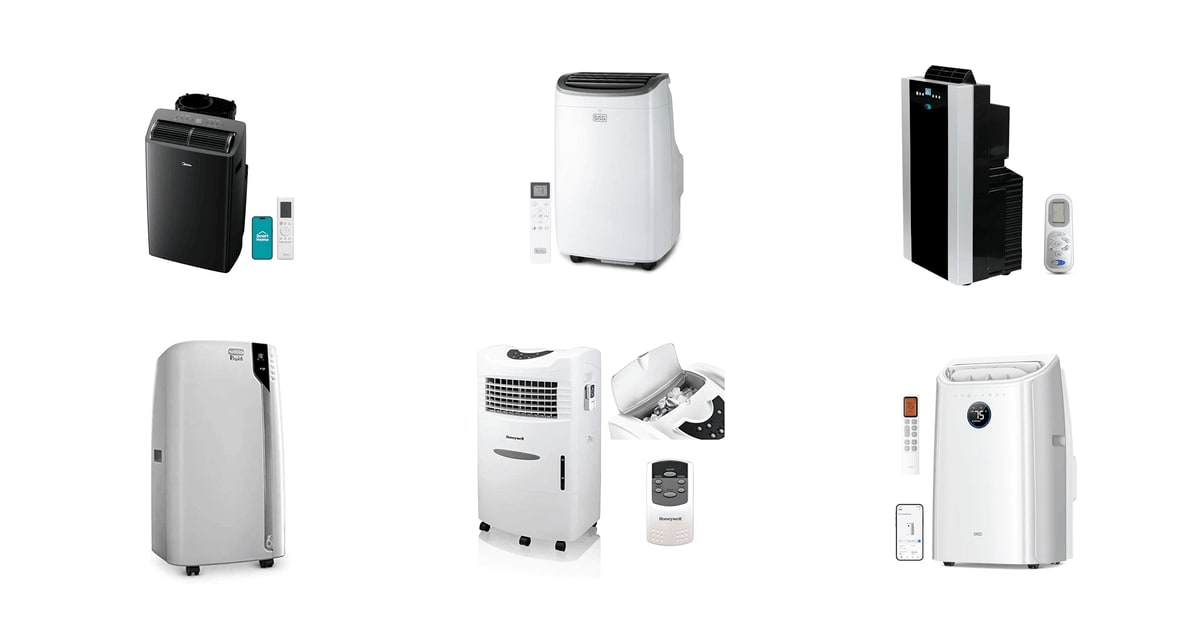
A portable air conditioner is what you buy when a window unit isn't an option. Maybe your lease forbids anything hanging outside. Maybe your windows slide sideways, or your sill is too shallow to hold sixty pounds of metal safely. Whatever the reason, you've got one hot room — a bedroom over the garage, a home office that bakes after 2 p.m., a studio where the kitchen and the couch share the same air — and you need it livable. These machines roll in, vent out a window through a hose, and cool that one space without a permanent install.
Here's the honest part: no portable AC is as efficient as a window unit of the same rating. They sit inside the room they're cooling, so the compressor's own heat works against them, and the hose radiates warmth back into the space. Popular Mechanics' cost analysis puts window units 30 to 40 percent ahead per dollar of electricity. Ratings are confusing too — the DOE's SACC standard, mandatory since 2017, lands 20 to 30 percent below the legacy BTU number splashed on the box. A "14,000 BTU" unit often means 9,000 to 10,500 SACC.
So buy a portable because you can't install a window unit, not because you think it's cheaper to run. Once you accept that, the differences between models are real and worth paying attention to: dual-hose designs cool faster, inverter compressors cut your bill, and a self-evaporating drain saves you from hauling a bucket at 11 p.m. We think that the Midea Duo is the best portable air conditioner for most people, and that the BLACK+DECKER BPACT08WT is the one to buy if you want basic cooling for a small bedroom without spending much.
Everything we recommend

Dual-hose cooling and inverter efficiency, in a quiet package
Drain-free operation and an efficient inverter compressor

Basic cooling for one small room, and easy to move

Dual-hose cooling plus a heat pump for shoulder seasons

The quietest option, with a remote that senses your comfort
At a glance
| Product | Cooling Power | Hose Type | Price | |
|---|---|---|---|---|
| Midea Duo 12Top pick | 12,000 BTU | Dual Hose | $579 |
| BLACK+DECKER Portable Air ConditionerBudget pick | 9,000 BTU | — | $494.99 |
| Whynter Portable Air Conditioner & Heater 14Also great | 14,000 BTU | Dual Hose | $525.99 |
| DeLonghi PAC360LVYN WH Pinguino Portable Air ConditionerRunner-up | 6800 BTU SACC | — | $602.02 |
 | Honeywell CL201AEWW Environmental ApplianceAlso in lineup | 745 CFM Airflow | — | $249 |
| DREO Inverter Portable Air ConditionersUpgrade pick | 14,000 BTU | Dual Hose | $699.99 |
How we picked
Real cooling capacity. We compared SACC ratings rather than the larger ASHRAE BTU numbers on the box, since the DOE standard runs 20 to 30 percent lower and is the figure that reflects actual performance. Anything whose listing hid its SACC number got a closer look at the spec sheet.
Hose configuration. Published testing shows single-hose units lose an estimated 20 to 40 percent of their effective cooling to negative pressure. We prioritized dual-hose designs, and where we recommend a single-hose unit we say plainly what you're giving up.
Noise on the spec sheet. We compared manufacturer dB ratings against published acoustic measurements, treating 52 dB or below as the threshold for a unit you'd tolerate in a bedroom. The category average sits around 54 to 57 dB on high.
Drainage and upkeep. Self-evaporating and auto-drain systems came out ahead of manual bucket designs in owner feedback more consistently than any other feature. We weighted drain-free operation heavily for anything meant to run overnight.
Weight and window fit. We looked at unit weight against the 64-to-72-pound category average and at the range each window kit spans. Good Housekeeping's lab found kits failing to seal on more than 60 percent of double-hung installs, so kit quality mattered.
Top pick
Dual-hose cooling and inverter efficiency, in a quiet package
Midea Duo 12
The Midea Duo pairs a dual hose-in-hose design with a variable-speed inverter compressor, so it cools a room faster and draws less power than a conventional single-hose unit. Midea rates it as low as 42 dB, and it takes app and voice commands.
$579fromAmazonThe dual-hose design fixes the single-hose problem. A single-hose AC exhausts your already-cooled indoor air out the window. That drops the pressure in the room, and hot outside air seeps back in through door gaps and cracks. Wirecutter estimates this cuts effective cooling by 20 to 40 percent. The Duo pulls its own outdoor air for the condenser through a hose-in-hose sleeve, so the room stays balanced and the cold air stays put.
The inverter compressor matters just as much. Instead of slamming on at full power and shutting off, it ramps up and down to hold your set temperature. Midea claims more than 40 percent savings against the federal standard. Tom's Guide reports inverter units reaching a CEER of 12.0 versus 8.0 to 9.5 for cyclic compressors. In practice that means a steadier room and a smaller July bill.
Quiet matters if this thing lives in your bedroom, and the Duo is rated down to 42 dB at its lowest setting. That's below the roughly 54 to 57 dB category average on high. Owners describing it in bedrooms consistently mention being able to sleep and hold conversations over it. The unit also lets you shut off the front display, which is a small thing until you're the person who notices a glowing panel at 2 a.m.
The window kit comes better equipped than most, and owners who've bought several portable ACs over the years single out the seal quality as a step up. It's Wi-Fi enabled with iOS and Android apps plus Alexa and Google Assistant, so you can start cooling the bedroom from the driveway. For a 500-square-foot studio or a hot upstairs bedroom, that combination — quiet, efficient, well sealed, remotely controllable — is hard to beat.
Flaws but not dealbreakers
At about 73 pounds it's heavy. Casters help you roll it across a flat floor, but getting it up a flight of stairs or over a threshold is genuinely a two-person job. If you plan to shuttle it between rooms daily, look at something lighter.
The hose-to-window connection draws the most complaints. Several owners report the coupling working itself loose over time and needing a re-seat or a strip of tape. It's an annoyance rather than a defect, but you'll want to check it after the first few days.
Reliability isn't spotless. A minority of owners describe units that arrived making a loud mechanical racket out of the box — enough that you should unbox and run it early in your return window rather than storing it until the first heat wave.
Upgrade pick
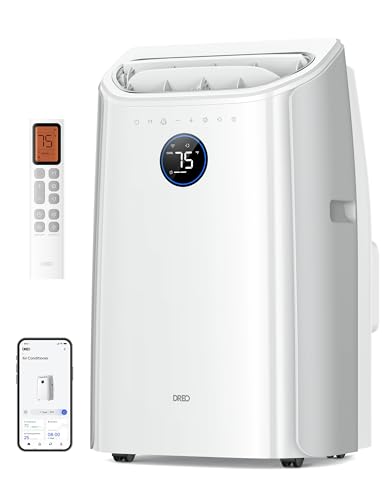
Drain-free operation and an efficient inverter compressor
DREO Inverter Portable Air Conditioners
The Dreo pairs an inverter compressor with a dual-hose exhaust and a pump-driven self-evaporating system that handles condensate for you. It's lighter than most units this capable, and it takes app, remote, or Alexa commands.
$699.99fromAmazonEmptying a condensate bucket is the chore that makes people hate portable ACs. Dreo's answer is a sensor-and-pump system that evaporates water automatically in environments below 90 percent humidity. That's the single biggest quality-of-life difference between owning one of these and merely tolerating it. If you run your AC overnight in a humid climate, not waking up to a full-tank alarm is worth real money.
It's the lightest capable unit here. At just over 55 pounds and under 29 inches tall, it's noticeably easier to move than the 72-to-85-pound machines it competes with. If you want cooling in the office by day and the bedroom at night, this is the one you can actually reposition without recruiting help.
Dreo claims 32 percent better efficiency than conventional models, from the combination of inverter modulation and dual-hose exhaust. The listing rates it at 14K BTU ASHRAE, which works out to 10K DOE — and Dreo is refreshingly upfront about the gap. That SACC number covers 200 to 300 square feet comfortably, which is most bedrooms and home offices.
Control options are broad: app, physical remote, or voice through Alexa. Owners repeatedly mention that the front display can be turned off, and that setup takes minutes rather than an afternoon. The window kit spans hung and sliding windows from 20 to 53 inches, so it fits more apartment window types than the average kit does.
Flaws but not dealbreakers
Dreo is a newer name in cooling, and the ownership record is shorter than Whynter's or BLACK+DECKER's. At least one owner reports a serious internal failure with chemical fumes after a few months of light use. That's a single account, not a pattern, but it's a reason to register the unit and keep your paperwork.
The self-evaporating system has a stated limit — above 90 percent humidity you may still need to drain. If you live somewhere genuinely swampy, treat drain-free as a most-of-the-time feature rather than a guarantee.
Coverage is modest for a unit that advertises 14,000 BTU. Dreo's own listing says 200 to 300 square feet. That's honest, but it means this isn't the unit for an open-plan studio.
Budget pick
Basic cooling for one small room, and easy to move
BLACK+DECKER Portable Air Conditioner
The BLACK+DECKER BPACT08WT is a straightforward three-in-one unit that cools, dehumidifies, and blows air. At about 53 pounds it's the easiest here to carry, and its remote doubles as a thermostat so it cools where you actually sit.
$494.99fromAmazonThis is the unit for a dorm room, a small bedroom, or a spare office where you just need the temperature to come down and don't want to think about it. It's single-hose, so it's less efficient than the Midea or the Dreo. But the install is genuinely simple, the controls are obvious, and it's been on the market long enough that the design is well understood.
Its 5,300 BTU SACC rating is the real number to plan around. The box says 9,000 BTU, and that's the legacy ASHRAE figure. Consumer Reports also suggests sizing down about 20 percent for rooms with high ceilings or strong afternoon sun. So treat this as a unit for a modest bedroom, not the 400 square feet the listing mentions.
At 52.9 pounds it's among the lightest full-function portable ACs you can buy, against a category average CNET puts at 64 to 72 pounds. Combined with casters and handles on both sides, that's the difference between relocating it yourself and waiting for someone to help. Owners have moved these into RVs and between floors without much drama.
The Follow Me remote is a smarter feature than it sounds. The remote reads temperature where you're holding it, so the unit cools to the setting at your desk or your bed rather than at the machine's own intake. In a room with uneven airflow, that's a meaningful difference.
Flaws but not dealbreakers
It's loud. Owners consistently call out a buzzing or droning quality on higher fan speeds, and the button beeps are sharp. Light sleepers should look at the Midea or the De'Longhi instead.
Longevity is mixed. Plenty of owners report five years of hard use including generator duty and garage storage, but a notable minority describe failures within the first couple of months. Buy it where returns are easy.
Single-hose operation means it pulls hot air back into the room through gaps as it works. In a well-sealed small bedroom that's fine. In a leaky older apartment, you'll feel the shortfall on the hottest days.
Also great
Dual-hose cooling plus a heat pump for shoulder seasons
Whynter Portable Air Conditioner & Heater 14
The Whynter ARC-14SH is a dual-hose unit that also runs as a heater, so it earns its floor space in October as well as July. Good Housekeeping named it their best overall portable air conditioner, and it covers up to 500 square feet.
$525.99fromAmazonThe heat pump is the reason to choose this one. Most portable ACs sit in a closet eight months a year. The ARC-14SH runs as a heater in ambient conditions above 45°F, with thermostatic control from 61 to 77°F. If you're in a rental with unreliable radiators or a converted garage office, one machine handles both ends of the year.
Like the Midea, it's dual-hose, so it avoids the negative-pressure penalty that hobbles single-hose units. Whynter rates it at 51 dBA on low, and includes a patented auto-drain that exhausts condensate in most environments. Its dehumidifying capacity is listed at 71 pints per day, which is genuinely useful if your problem is muggy air as much as hot air.
It covers up to 500 square feet, which is the largest area of anything here. Owners cooling older, poorly insulated houses — the kind with 1940s bones and no ductwork — repeatedly say it handles rooms other portables gave up on. The 5.9-inch hoses move a lot of air, and they extend to 60 inches, giving you flexibility in where the unit sits.
The included kit is more complete than most: an activated carbon filter, a washable pre-filter, a window kit spanning 20 to 46 inches, and a storage bag for the off-season. Small thing, but the storage bag means the hoses and kit don't end up scattered across your closet by next spring.
Flaws but not dealbreakers
It's the heaviest unit here at 85 pounds and 35.5 inches tall. Plan on putting it somewhere and leaving it. Moving it between rooms isn't realistic for one person.
Quiet is relative. Whynter's 51 dBA figure is for the low fan speed; on higher settings owners describe it as loud enough to want headphones if you're working a few feet away. It's not a bedroom unit for a light sleeper.
The LCD display is bright, and there's no simple way to dim it. If it's going in a bedroom, expect to drape something over the panel.
Runner-up
The quietest option, with a remote that senses your comfort
DeLonghi PAC360LVYN WH Pinguino Portable Air Conditioner
De'Longhi's Pinguino uses a Bluetooth remote that reads temperature and humidity where you're sitting, then adjusts to match. Its Arctic Whisper design targets low noise, and it runs as an AC, dehumidifier, or fan.
$602.02fromAmazonIf noise is your deciding factor, start here. RTINGS.com measured a De'Longhi Pinguino at 44 dB in sleep mode and 52 dB on high, against a category average of 54 to 57 dB on high. The Arctic Whisper Extreme system cuts noise by up to 3 dB, with roughly 50 percent reduction versus maximum fan speed. Owners replacing older portables consistently describe the difference as dramatic.
Cool Surround is the feature that separates it from the pack. The remote carries a Bluetooth sensor that monitors the actual temperature and humidity around you, not at the machine's intake. Set it on your nightstand and the unit works to make that spot comfortable. In a long room where the AC sits by the window and you sleep across from it, that's a real improvement.
De'Longhi's Eco Real Feel technology manages humidity alongside temperature, and the company claims up to 30 percent energy savings from it. Humidity control matters more than most people expect — a room at 76°F with dry air often feels better than 72°F with damp air, and it costs less to get there. The unit also runs as a standalone dehumidifier or a plain fan.
The SACC rating is 6,800 BTU against a 12,000 ASHRAE figure, which is exactly the kind of gap the DOE standard exists to expose. Plan around 6,800. That's a bedroom or a home office, not a studio apartment. Sized correctly, owners in that range report it holding temperature comfortably and quietly.
Flaws but not dealbreakers
Airflow is the recurring complaint. Several owners say the blower is weak and directs air upward rather than out into the room, so cold air pools near the ceiling. A cheap circulating fan fixes it, but you shouldn't have to buy one.
There's no Wi-Fi. The Bluetooth remote is clever, but you can't start it from your phone on the way home the way you can with the Midea, the Dreo, or the TCL-class units.
It's 72 pounds and it's expensive relative to what you get in raw cooling capacity. You're paying for quiet and for Cool Surround, not for BTUs.
Who this is for
Buy a portable air conditioner if a window unit is off the table. That covers renters whose leases ban exterior installs, anyone with casement or sliding windows a window unit won't fit, upper-floor apartments where hanging sixty pounds out a window is a bad idea, and dorm rooms with rules about what goes in the frame. It also covers the person with exactly one problem room — a west-facing office, a bedroom above the garage — who doesn't want to touch the whole house's cooling to fix it.
Skip it if you can install a window unit and simply prefer not to deal with the hassle. Popular Mechanics' analysis puts window units 30 to 40 percent ahead on cooling per dollar of electricity, and that gap compounds across a summer. This guide covers freestanding, hose-vented units for spaces roughly 500 square feet and under. It doesn't cover window ACs, mini-splits, whole-home systems, or evaporative coolers, which work on an entirely different principle and only in dry climates.
How we picked
We built the shortlist around the things that change how one of these feels to live with. Real capacity: we compared SACC ratings, not the inflated ASHRAE numbers, because the DOE figure runs 20 to 30 percent lower and is what actually matches your room. Hoses: dual-hose designs avoid the negative-pressure penalty that costs single-hose units an estimated 20 to 40 percent of their cooling. Noise: we treated 52 dB as the bedroom threshold, against a category average of 54 to 57 dB on high. Drainage: self-evaporating and auto-drain systems came out well ahead in owner feedback, since nobody wants to empty a tank at midnight. Portability and fit: weight against the 64-to-72-pound average, plus how wide a window opening each kit covers.
The competition
Here's what else the research turned up. This isn't every portable air conditioner sold — it's the set of listings we looked at alongside the picks, including a couple that turned out to be a different kind of machine entirely.
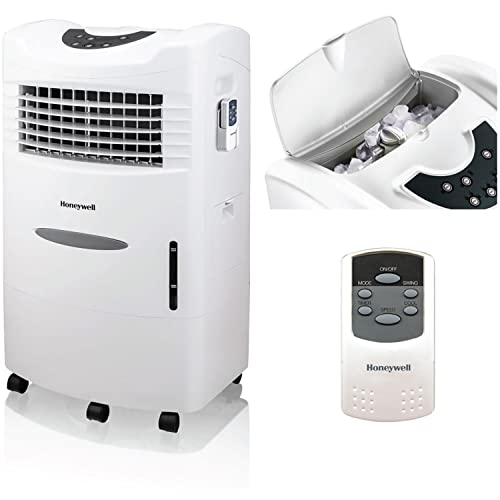
The Honeywell CL201AEWW Environmental Appliance ($249) — The Honeywell CL201AEWW isn't an air conditioner, and Honeywell says so directly in its own listing. It's an evaporative cooler, sometimes called a swamp cooler: it pulls air across a wet pad and drops the temperature through evaporation. That works well in Phoenix or Denver, where humidity sits below 60 percent, and it draws only about 250 watts — a fraction of what a real compressor pulls. But it has no refrigerant and no compressor, so it can't cool a humid room, and it adds moisture to the air. Owners in dry climates like it; owners in the Southeast describe it as an expensive fan. Consider it only if you live somewhere genuinely arid and want spot cooling for a patio or garage.
Installation and upkeep
Measure your window opening before you order anything. Good Housekeeping's lab found portable AC window kits failed to seal properly on more than 60 percent of double-hung installs without extra weatherstripping, so budget for a roll of foam tape and plan to spend a few minutes closing gaps around the panel. Sliding windows need a kit that runs vertically, which not every unit includes. Keep the exhaust hose as short and straight as you can — every extra foot and every kink radiates heat back into the room you're trying to cool. Wash the pre-filter every couple of weeks during heavy use; a clogged filter starves airflow and makes the compressor work harder for less cold air. At the end of the season, run the fan-only mode for a few hours to dry the interior before you store it, which keeps musty smells from developing over the winter.
Questions we get
What size portable AC do I need for a 300 square foot room?
Look for a SACC rating around 8,000 BTU for a 300-square-foot room with standard eight-foot ceilings. Consumer Reports suggests sizing down about 20 percent if your ceilings are taller or the room gets direct afternoon sun, which effectively means you'd want a larger unit for those conditions. Remember that the number on the box is usually the ASHRAE rating, which runs 20 to 30 percent higher than SACC.
What's the difference between single-hose and dual-hose portable air conditioners?
A single-hose unit pulls air from inside your room, uses it to cool the condenser, and blows it outside. That creates negative pressure, so hot outside air leaks back in through door gaps and cracks. A dual-hose unit draws outdoor air in through one hose and exhausts it through the other, leaving the room's air balanced. Published estimates put the single-hose penalty at 20 to 40 percent of effective cooling.
What does SACC mean, and why is it different from the BTU number?
SACC stands for Seasonally Adjusted Cooling Capacity, a Department of Energy standard that's been mandatory since 2017. It accounts for real-world losses that the older ASHRAE BTU figure ignores, including heat from the exhaust hose. SACC typically lands 20 to 30 percent below the marketed BTU number — a unit advertised at 14,000 BTU often carries a SACC of 9,000 to 10,500. Always compare units on SACC.
How much electricity does a portable air conditioner use?
A typical 10,000 BTU SACC unit draws roughly 900 to 1,200 watts while the compressor runs. Run eight hours a day and that's a noticeable addition to a monthly bill at average U.S. electricity rates. An inverter model cuts that meaningfully, since it modulates output instead of cycling at full power, and Energy Star certification is worth looking for — only about 12 percent of models on the market carry it.
Can I use a portable air conditioner without a window?
Not really, at least not as an air conditioner. These units move heat out of the room rather than destroying it, so the exhaust has to go somewhere outside the space. People do vent them through sliding doors, drop ceilings, or dryer vents, but you need some path to outdoors. Without one, the unit adds more heat to the room than it removes. An evaporative cooler is the windowless alternative, and only in dry climates.
Do any portable air conditioners drain themselves?
Yes, and it's worth prioritizing. Self-evaporating designs use the condensate to cool the condenser coil and expel it out the exhaust hose, so you rarely touch a tank. Some go further with a pump-driven system that handles water automatically below about 90 percent humidity. In very humid conditions even these may need occasional draining, so treat drain-free as a most-of-the-time promise rather than an absolute.
Why you should trust us
For this guide:
- We compared manufacturer specification sheets for every unit here, paying particular attention to SACC ratings, dB figures, weight, and window kit range.
- We read published evaluations from Consumer Reports, RTINGS.com, Good Housekeeping, Tom's Guide, CNET, and Popular Mechanics, along with Department of Energy and Energy Star guidance on cooling capacity standards.
- We reviewed recurring themes in owner feedback for each model — noise complaints, hose and window-kit seal problems, drainage behavior, and long-term reliability reports.
- We read owner reviews on every listing, weighted toward the critical ones, because that is where the recurring failures show up.
- We have a systematic way of automatically fetching the latest prices, so the numbers on this page stay current.
- This is a research-focused guide, so the team may not own every product listed — though we often do own the top winners, which gives us extra context for the recommendations.
- We don't accept free products, and the retailer commission never changes which product we recommend.
Sources
Best Portable Air Conditioners — Wirecutter, NYT, Wirecutter
Portable Air Conditioner Ratings & Buying Guide — Consumer Reports, Consumer Reports
Best Portable Air Conditioners 2026 — Tom's Guide, Tom's Guide
Portable Air Conditioner Reviews & Tests — RTINGS.com, RTINGS.com
Best Portable Air Conditioners — Good Housekeeping, Good Housekeeping
Best Portable Air Conditioners — Popular Mechanics, Popular Mechanics
Energy Star Certified Room Air Conditioners — EPA, Energy Star / EPA
DOE Portable Air Conditioner Test Procedures & SACC Explanation — Department of Energy, U.S. Department of Energy
Best Portable AC Units — CNET, CNET
Portable vs Window Air Conditioners — Bob Vila, Bob Vila
How to Size a Portable AC for Your Room — This Old House, This Old House
Best Portable Air Conditioners — Forbes Home, Forbes Home
Amazon product listings and owner reviews for all 6 products
Manufacturer specification pages for each product
Some passages in this guide may be paraphrased with AI help. Prices are refreshed automatically.
More like this.
Continue exploring appliances reviews and recommendations.

The Best Foldable Treadmills for Small Spaces
A treadmill in a small apartment is a negotiation. It has to be big enough that you'll actually use it, and small enough that it doesn't eat your living…

The Best Ellipticals for Small Spaces
A small apartment doesn't leave much room for cardio. A treadmill eats a whole wall. A full-size elliptical eats a corner and then some. That's why…

The Best Window Air Conditioners
A window air conditioner is the difference between sleeping through a July night and lying awake on top of the covers. If you rent, or if your house has…

The Best Portable Air Compressors for Your Garage
An air compressor is one of those tools you buy for one job and then use for a hundred you never planned on. Topping off tires before a road trip. Blowing…

The Best Deep Conditioning Hair Masks
Most people don't think about a hair mask until the damage is already obvious. Your ends feel like straw, a comb snags halfway down, and the conditioner…

The Best Small-Kitchen Organizers
A small kitchen doesn't hold less stuff. It holds the same stockpots, the same sheet pans, the same drawer full of spatulas - packed into a fraction of…