The Best Robot Vacuum Mop Combos
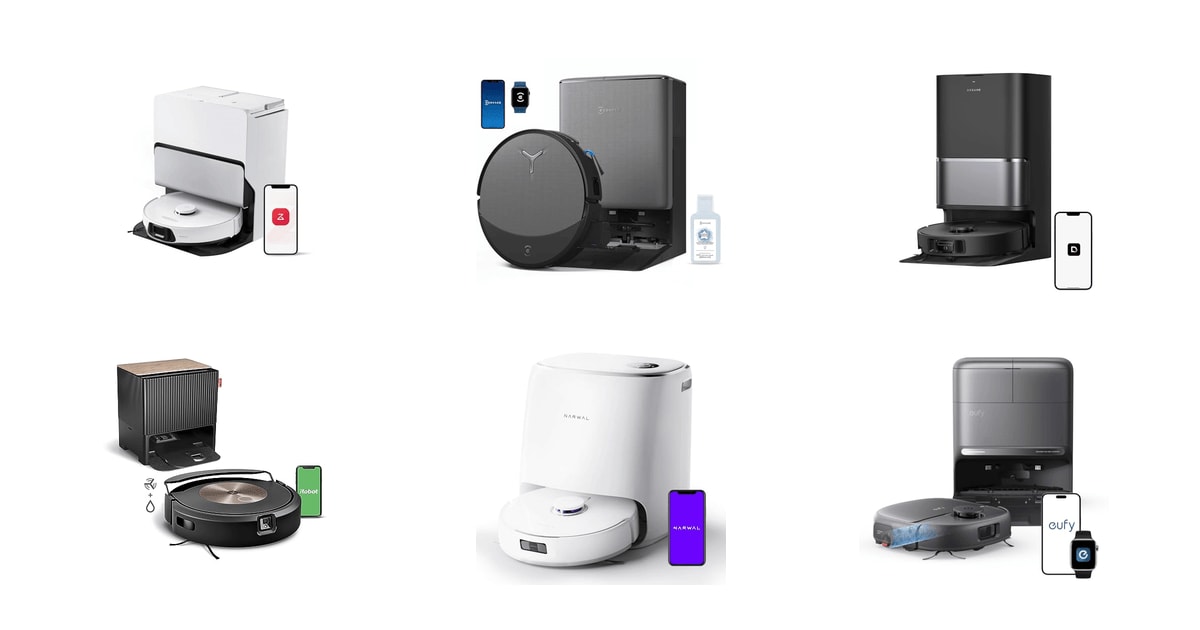
A robot vacuum mop combo earns its keep in the boring middle of the week. You're not deep-cleaning. You're dealing with cereal under the high chair, dog hair drifting into the corners, and a sticky ring where a juice cup tipped over. A good one handles all of that on a schedule you set once and mostly forget about. The best ones empty themselves, rinse their own mop pads, and dry them, so you touch the machine about once a week.
Here's the honest part: none of these replaces a mop and elbow grease on a genuinely bad mess. Dried tomato sauce, grout lines, the gunk in a bathroom corner — a robot gets you most of the way there, not all of it. Carpet is the other soft spot. These machines either lift the mop or skip rugs entirely, and the lift is measured in millimeters, so a thick shag rug can still pick up damp edges. Deep pile isn't what any of them are built for.
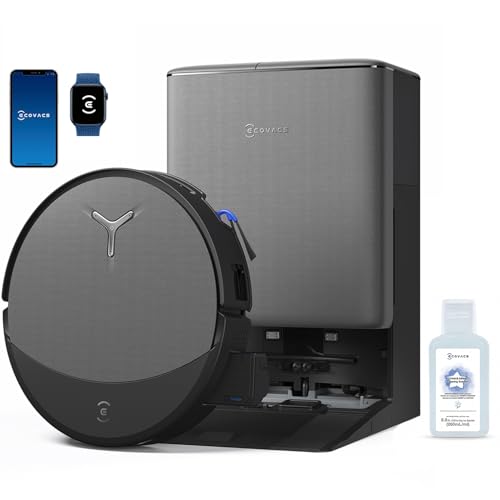
What separates these machines is mostly the dock and the mop. Docks that wash pads in hot water and blow them dry keep your house from smelling like a forgotten gym towel. Mops that scrub under pressure lift dried spills instead of smearing them. Suction numbers, camera tricks, and app polish matter less than those two things. We think that the roborock S8 Max Ultra is the best robot vacuum mop combo for most people, and that the ECOVACS DEEBOT T90 PRO Omni is the one to buy if you want a self-rinsing roller mop that scrubs harder.
Everything we recommend

The most complete hands-off setup for a mixed-floor home
Harder scrubbing, if you'd rather not chase sticky spills

Self-emptying and light mopping, without the fancy dock

The most hygienic mopping if your floors are mostly hard
At a glance
| Product | Suction | Mop System | Price | |
|---|---|---|---|---|
| roborock S8 Max Ultra Robot Vacuum andTop pick | 8000Pa | Auto Mop Washing | $469.99 |
| ECOVACS DEEBOT T90 PRO Omni Robot VacuumRunner-up | 30,000Pa | OZMO Roller 3.0 | $899.99 |
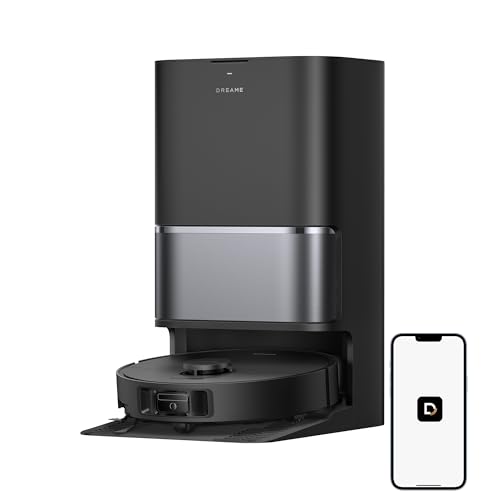 | dreame L40 Ultra Gen 2 Robot VacuumAlso consider | 25,000Pa | Self-Cleaning Dock | $569.99On sale |
 | iRobot Roomba Combo j9+ Self-Emptying & Auto-FillAlso in lineup | — | SmartScrub | $1,090.80 |
| Narwal Freo X Ultra Robot Vacuum andAlso great | 8,200 Pa | — | $199.99On sale |
 | eufy C28 Robot Vacuum Cleaner and MopAlso consider | 15,000 Pa | HydroJet Roller | $529.99On sale |
| Shark Matrix Plus 2-in-1 Robot Vacuum &Budget pick | — | Sonic Mop | $299.99 |
How we picked
Mopping that scrubs. We favored systems that apply real downward pressure — spinning pads or a pressurized roller — over cloths that just drag. Published lab comparisons keep showing that dragging smears dried messes instead of lifting them.
Mop lifting. Any robot here has to get its wet pad off your rugs. We looked for a stated lift height on the spec sheet and a carpet mode you can actually control, not a vague promise to avoid carpet.
What the dock does. Auto-empty is table stakes now; washing and hot-air drying the pads is what removes the weekly chore. Reporting on long-term use suggests a full dock cuts your own upkeep to roughly once a week.
Navigation and mapping. We prioritized LiDAR mapping over gyroscope-only navigation, since spec sheets and published reviews both point to it as the dependable way to cover a multi-room home without missed strips.
Reliability and upkeep. Owner survey data on two-year failure rates, plus repeated themes in buyer feedback, told us more about which machines survive daily use than any headline spec did.
Top pick
The most complete hands-off setup for a mixed-floor home
roborock S8 Max Ultra Robot Vacuum and
It vacuums at 8,000 Pa, lifts its mop 20 mm so carpets stay dry, and washes those pads in water heated up to 140°F between rooms. The FlexiArm side brush swings out into corners, which is exactly where most robots leave a visible line of dust.
$469.99fromAmazonThis is the one that asks the least of you. The RockDock Ultra empties the bin, refills the water, washes the mop pads hot, and dries them. Roborock's dirt detection decides how long a wash needs and sends the robot back to a room it left dirty. Per ZDNet's long-term reporting, an all-in-one dock like this cuts your own upkeep to roughly once every seven to ten days in a home under 2,000 square feet.
Carpet is where combos usually fall apart, and the 20 mm mop lift here gives you real clearance. Low and medium pile stays dry while the robot vacuums it. You can also tell the app to vacuum carpets first and then mop the hard floors, or to skip rugs entirely. If your place is half tile and half area rugs, that ordering is the difference between one clean run and a wet-rug apology.
Corners are where you'll notice the difference. The FlexiArm side brush extends past the body to reach into concave corners, and the mop swings wide along baseboards, with Roborock rating the edge gap at under 1.68 mm. Round robots leave a gray outline along the wall after a few weeks of use. This one gets closer, and closer is what keeps you from following it around with a broom.
Reliability is a real reason to lean Roborock. Consumer Reports' survey of robot vacuum owners put Roborock and Eufy under an 8% failure rate in the first two years, the lowest among major brands in that data. These machines have pumps, heaters, and a lot of moving parts. A brand that tends to still be running two years in is worth paying attention to.
Flaws but not dealbreakers
This listing is a renewed unit — professionally inspected rather than factory-fresh. That's how you get this dock for a fraction of what a new flagship costs, and plenty of people are fine with it. But you're accepting a refurbished machine, and coverage on renewed stock isn't the same as buying new.
The dock is big. It needs a clear stretch of wall with room on both sides, and hot washing and drying isn't silent. If the only free outlet is in a bedroom or a narrow hallway, plan around it.
The mop vibrates rather than scrubs. It's good on dust and dry stains, but a pressurized roller works harder on sticky, dried-on kitchen messes. If your floors take a beating near the stove, look at the runner-up.
Runner-up
Harder scrubbing, if you'd rather not chase sticky spills
ECOVACS DEEBOT T90 PRO Omni Robot Vacuum
The OZMO Roller 3.0 is a 10.6-inch roller that rinses itself continuously while it mops, so it lays down clean water instead of pushing dirty water around. Pair that with a lot of suction headroom and an edge-hugging roller, and it's the better choice for busy kitchens.
$899.99fromAmazonA pad drags. A roller scrubs. That's the whole argument, and after a week of real cooking you can see it on the floor near the stove. The roller here spins under pressure and gets rinsed as it goes, with a scraper pulling the dirty water off into a separate tank. Owners consistently single out the mopping as the strongest part of this machine.
The suction number is marketing, and it still cleans very well. TechRadar's benchmarking suggests real-world pickup plateaus around 6,000 Pa on low and medium pile carpet, with more mainly helping on deep pile and heavily soiled rugs. So don't read 30,000 Pa as five times better than a 6,000 Pa robot. Read it as plenty of margin, which is what you want with a shedding dog in the house.
TruEdge 3.0 pushes the roller about 0.6 inches past the body so it can scrub along baseboards, and ZeroTangle 4.0 steers long hair into the airflow instead of letting it wrap. If you've spent a Sunday morning cutting hair off a brush roll with scissors, those two features alone are a reason to look here.
It handles the practical stuff too. PowerBoost tops up the battery during wash cycles, and charging adapts to the size of your home, so a long multi-room run is less likely to stall halfway. Owner feedback backs that up — people with larger floor plans tend to be the ones praising it hardest.
Flaws but not dealbreakers
The app and mapping are the weak spot. Owners who love the hardware still gripe about the software: clumsy map editing, rooms that merge when they shouldn't, settings buried a few taps deep. Budget an evening to get your map the way you want it.
It's a tall, heavy dock, and the roller system has its own upkeep. Rollers and scrapers collect grime and eventually need replacing, which is a recurring cost — just a different one from mop pads.
Budget pick
Self-emptying and light mopping, without the fancy dock
Shark Matrix Plus 2-in-1 Robot Vacuum &
This is the stripped-down version of the idea. It vacuums, sonic-mops hard floors, and empties itself into a bagless base with a HEPA filter — but there's no mop washing, no water refill, and no subscription, so the pad is your job.
$299.99fromAmazonYou give up the dock, not the vacuuming. Matrix Clean runs a grid pattern with multiple passes instead of one, which Shark rates at 30% better carpet cleaning than a single pass on level-loop carpet. CleanEdge Detect uses puffs of air to knock debris out of corners and into the robot's path. On a low-pile rug and a hallway of hardwood, that covers most of what you actually need.
The base is bagless and holds up to 60 days of debris, so there's nothing to reorder. No bags, no app subscription, no features locked behind a paywall. Over a couple of years that quietly adds up, and it's easy to overlook when you're comparing machines side by side.
It's also the easiest one here to live with if you're not a gadget person. The app is plain, mapping is straightforward, and the robot recharges and resumes where it left off. If you mostly want dust off the floors and a light wipe through the kitchen, this is enough machine.
Flaws but not dealbreakers
Sonic mopping is vibration on a damp pad, and it shows on anything dried on. You'll pre-treat stuck spills, and you'll rinse the pad by hand after every mop run. That's the trade for skipping the wash-and-dry dock.
Owner reports on longevity are mixed. Some people get years out of it; others describe plastic parts wearing down or the robot acting strangely after about a year of regular use. Build quality sits a step below the premium docked machines here.
Also greatOn sale
The most hygienic mopping if your floors are mostly hard
Narwal Freo X Ultra Robot Vacuum and
Narwal's twin spinning mop heads press down with 12 N and spin at 180 RPM, and the base keeps clean and dirty water permanently apart, so the robot never re-wets your floor with gray water. It also compresses dust internally instead of loudly blasting it into the base.
$199.99fromAmazonList priceHygiene is the pitch, and it holds up. The Good Housekeeping Institute rated this model's clean and dirty water separation the most hygienic mop system it evaluated — the only one that kept gray water from carrying between rooms in back-to-back cleaning. If the thought of a robot mopping the bathroom and then the kitchen bothers you, this is the answer to that.
DirtSense is the other clever piece. The robot reads how dirty the rinse water is and keeps scrubbing until it comes back clean, so a muddy entryway gets more passes than a spare bedroom does. You're not guessing at how many passes to schedule. It sorts that out on its own.
It's the quiet one. RTINGS measured the Freo X Ultra at about 67 dB in operation, the quietest combo robot in that group. Just as useful, it skips the loud dust-evacuation blast most self-emptying robots do — debris gets compressed internally into a bag rated for about seven weeks. You can run it while someone's on a call in the next room.
The Zero Tangling brush rides on a single floating arm, and Narwal cites SGS and TÜV certification for a 0% tangle rate with 99.5% of hair going into the bag. Anyone with a long-haired dog knows what that's worth. Owners with heavy shedders are the ones who sound happiest with it.
Flaws but not dealbreakers
Carpet is its weakness. Owners with area rugs report it struggles to climb thicker ones and doesn't vacuum them well. Treat this as a hard-floor machine with a few thin rugs at most.
The app splits people. Several owners find map editing frustrating — rooms that merge and won't split back apart, functions that take hunting to find. And like our top pick, this listing is a renewed unit rather than a new one.
It's thirsty. In hard-water areas, some owners switch to distilled water to keep mineral scale out of the base and the lines.
Who this is for
Buy one of these if most of your floors are hard — tile, vinyl plank, sealed hardwood — and you want daily upkeep to happen without you. Pet owners with mixed flooring get the most out of them, since the vacuum deals with shedding and the mop deals with paw prints. And if you're upgrading from a suction-only robot, the self-washing dock is the part that'll surprise you most.
Skip them if your home is mostly carpet. You'd be paying for a mopping system you can't really use, and a good suction-only robot will serve you better. Skip them too if you need grout scrubbed or a bathroom floor properly deep-cleaned — that's still your job. This guide covers combo robots with docks sold in the US. It doesn't cover suction-only robots, wet-dry stick vacuums, or commercial machines.
How we picked
Mopping: the pad or roller has to press down and scrub, not drag. Carpet: the mop needs to lift, with a stated height and a carpet mode you control. Dock: auto-empty plus washing and hot-air drying, so you're not wringing out a pad by hand. Navigation: LiDAR mapping that holds together in a multi-room home. Reliability: brands with low reported failure rates over the first couple of years, and owner feedback that doesn't repeat the same complaint over and over. Noise: quiet enough to run while you're home, which rules out the loudest dust-evacuation cycles.
Other robot vacuum mop combos worth considering
If you want the longest run on a single charge: The dreame L40 Ultra Gen 2 Robot Vacuum ($569.99) — The dreame L40 Ultra Gen 2 pairs 25,000 Pa with a brush and mop that extend outward for corners and under furniture, plus a 0.41-inch mop lift and four separate carpet modes — avoid, boost suction, deep clean, or lift. In Quiet Mode it's rated for 231 minutes and 1,679 square feet on a 5,200 mAh battery, which makes it the one to look at for a big single-floor home. What you give up is the roller mop; it's still a pad system. Owners with very heavy shedders also report the auto-empty struggling to keep pace with a serious hair load.
If you want a self-rinsing roller mop for less: The eufy C28 Robot Vacuum Cleaner and Mop ($529.99) — The eufy C28's HydroJet roller spins at 270 RPM with 24 water ports feeding it, and a scraper pulls dirt into a separate tank, so it rinses itself continuously the way our runner-up does. It vacuums at 15,000 Pa, lifts the mop 10.8 mm for short carpet, and navigates by LiDAR with no camera — worth something if you'd rather not put a lens in your living room. The station is rated for 75 days between emptyings and dries with 50°C hot air. Eufy also lands alongside Roborock in Consumer Reports' low failure-rate data, which counts for a lot at this price level.
The competition
This is what our research surfaced, not a census of everything on sale. New models land constantly, and plenty of perfectly decent robots never made this list simply because nothing credible has been published about them yet.
The iRobot Roomba Combo j9+ Self-Emptying & Auto-Fill ($1,090.80) — The iRobot Roomba Combo j9+ has the cleverest mop design here — the pad retracts all the way onto the top of the robot, so carpets stay bone dry, and Dirt Detective learns which rooms get dirtiest and saves the bathroom for last. The Verge's review panel found it identified and avoided pet waste in nine of ten real-world obstacle runs, which is the failure mode nobody wants to think about. But owner feedback is rough. Buyers repeatedly describe cryptic error codes, navigation that wanders into the wrong room, a dock that doesn't reliably refill the robot's water, and a mop that won't drop without a nudge. The longest-term owners are the harshest. If you're already committed to iRobot OS and dry carpets are your top priority, it's worth a look — otherwise the picks above are safer bets.
Care and maintenance
Even a self-cleaning robot needs you a few times a month. Empty the base's bag or bin when the app nags, and rinse the dirty-water tank instead of letting it sit — that's where the smell starts. Pull the main brush every couple of weeks and cut away wrapped hair; Roborock suggests replacing a rubber main brush every six to twelve months, and that's a fair schedule across brands. Mop pads and rollers wear out too, and should be swapped once they stop looking flat and even. If you have hard water, scale builds up in the pump and lines, so some owners run distilled water instead. And before a mop run, pick up the phone cables and socks. These robots are good at avoiding clutter, not perfect.
Questions we get
Can a robot vacuum mop combo actually replace mopping by hand?
For light-to-moderate traffic on hard floors, mostly yes. A robot with spinning pads or a pressurized roller keeps daily grime from ever building up, which is the real win. But dried-on spills, grout, and bathroom corners still need you a few times a year. Think of it as maintenance mopping, not deep cleaning.
Do I need a self-cleaning base station, or is it just nice to have?
It's the single biggest quality-of-life feature on these machines. A dock that empties the bin, washes the pads, and dries them with hot air cuts your own upkeep to roughly once a week, based on long-term reporting on these robots. Without one you're rinsing a dirty pad after every run, which is exactly the chore you were trying to avoid. The tradeoff is a big appliance parked against your wall.
How do auto-lifting mops work, and why does it matter?
The robot detects carpet — usually by ultrasound or by how the surface reflects — and raises the mop module a set number of millimeters before it drives on. Lifts here range from about 10.8 mm to 20 mm. Without one, the robot either soaks your rugs or refuses to touch carpet at all during a mop run. If you have both rugs and hard floors, this is the feature that lets one pass cover the whole house.
What does Pa mean, and how much suction do I actually need?
Pa is pascals, a measure of the vacuum's sealed suction pressure. Higher looks better on a box, but TechRadar's benchmarking suggests real-world pickup plateaus around 6,000 Pa on low and medium pile carpet. Above that you're buying headroom for deep pile and heavily soiled rugs. Brush design and airflow matter at least as much as the number.
Which of these is best on thick carpet?
None of them is great on deep pile — that's the category's blind spot. Among these, the models with a tall mop lift and high suction headroom do the best, so the roborock S8 Max Ultra with its 20 mm lift and the dreame L40 Ultra Gen 2 with its dedicated deep-carpet mode are the ones to look at. The Narwal is the wrong choice if you have thick rugs; owners report it struggles to climb them. For serious shag, keep an upright vacuum around.
How often do mop pads and rollers need replacing?
Plan on a few months of regular use before pads start looking matted or fraying, and swap them once they stop sitting flat against the floor. Rollers last longer but still wear, and the scraper that cleans them collects grime. A pad that no longer looks even won't press evenly either, so it just smears. Keep a spare set on hand.
Why you should trust us
For this guide:
- We read published lab reviews and long-term write-ups from RTINGS, The Verge, TechRadar, ZDNet, Consumer Reports, and the Good Housekeeping Institute to see how these mopping systems and docks hold up over months rather than minutes.
- We compared manufacturer spec sheets side by side — suction ratings, mop-lift height, pad pressure and RPM, dock capabilities — and treated the headline Pa numbers with some skepticism.
- We read through owner feedback for every model here, looking for complaints that repeat across many buyers rather than one-off bad luck.
- We read owner reviews on every listing, weighted toward the critical ones, because that is where the recurring failures show up.
- We have a systematic way of automatically fetching the latest prices, so the numbers on this page stay current.
- This is a research-focused guide, so the team may not own every product listed — though we often do own the top winners, which gives us extra context for the recommendations.
- We don't accept free products, and the retailer commission never changes which product we recommend.
Sources
Best Robot Vacuums 2026 — Wirecutter, Wirecutter
Best Robot Vacuums and Mops — Tom's Guide, Tom's Guide
Robot Vacuum Reviews and Ratings — RTINGS.com, RTINGS.com
Best Robot Vacuums — PCMag, PCMag
Best Robot Vacuums — CNET, CNET
Robot Vacuum & Mop Combo Ratings — Consumer Reports, Consumer Reports
Best Robot Mops 2026 — Good Housekeeping Institute, Good Housekeeping Institute
Best Robot Vacuums 2026 — TechRadar, TechRadar
Best Robot Vacuums — The Verge, The Verge
Best Robot Vacuums — ZDNet, ZDNet
Roborock S8 MaxV Ultra Official Specifications, Roborock
Dreame L20 Ultra Official Product Page, Dreame Technology
Amazon product listings and owner reviews for all 7 products
Manufacturer specification pages for each product
Some passages in this guide may be paraphrased with AI help. Prices are refreshed automatically.
More like this.
Continue exploring appliances reviews and recommendations.

The Best Robot Mops
A robot mop earns its keep on ordinary days. Not the deep clean before guests arrive, but the film of dust and dried juice that builds up on a kitchen…

The Best Robot Mops And Floor Scrubbers
A robot mop earns its keep on the floors you walk on barefoot. Kitchen tile picks up grease and crumbs. Entryway plank floors collect grit that gets…

The Best Robot Vacuums
A robot vacuum earns its keep on the days you'd never vacuum anyway. Tuesday morning, nobody home, crumbs under the kitchen table and a drift of dog hair…

The Best Robot Vacuums for Pet Hair
If you live with a shedding dog or a long-haired cat, you already know the problem isn't dirt. It's hair. It drifts into corners, mats into the edge of…

The Best Steam Mops for Hardwood and Tile Floors
Mopping with a bucket mostly moves dirty water around. A steam mop skips that entirely: you fill the tank with plain water, wait half a minute, and push a…

The Best Fishing Rod and Reel Combos for Beginners
Your first fishing combo has one job: get you to the water without a fight. That means a reel that doesn't tangle when your cast goes sideways, a rod that…