The Best Fishing Rod and Reel Combos for Beginners
Your first fishing combo has one job: get you to the water without a fight. That means a reel that doesn't tangle when your cast goes sideways, a rod that survives a car door, and line that's already spooled so you're not standing in the driveway watching a YouTube tutorial. Most new anglers quit early, and it's usually the gear's fault — a seized reel or a snapped tip on a slow afternoon sours the whole thing. So the boring qualities matter most here. You want something forgiving, not something impressive.
Here's the honest part: no combo in this range is a nice reel bolted to a nice rod. It's a matched set built to a price, and something always gives. Usually it's the rod. Owners across nearly every model in this guide report tips snapping — during a cast, on a snag, sometimes within the first few outings. Fiberglass and composite blanks hold up better than thin graphite, but none of these are heirloom pieces. Treat a first combo as a season or two of learning, not a lifetime purchase.
We looked at what published reviews, manufacturer specs and owner feedback say about durability, ease of use and how each setup behaves in a beginner's hands. Spinning reels won out for most adults because they cast farther and handle more lures; spincast still makes sense for kids. We think that the Ugly Stik GX2 Spinning Combo is the best fishing rod and reel combo for beginners, and that the Zebco 33 2-Pack is the one to buy if you're outfitting a child or two who've never held a rod.
Everything we recommend

Tough enough for rough handling, and it packs for travel
The easiest reel to learn, and you get two of them
A genuinely smooth reel on a rod you should handle gently

More sensitive Ugly Stik, in a length that grows with a kid
At a glance
| Product | Rod Length | Reel Size | Price | |
|---|---|---|---|---|
| Ugly Stik GX2 Spinning Reel and 6'Top pick | — | Size 30 | $89.95 |
| Zebco 33 Spincast Reel and Fishing RodAlso great | 5-Foot 6-Inch | Size 30 | $64.99 |
| KastKing Centron Spinning CombosBudget pick | — | 2000 | $72.99 |
| Ugly Stik 6’6” Camo Spinning Fishing RodRunner-up | 6'6" | Size 20 | $109.95 |
 | Shimano Fishing Rod & Reel Sienna SpinningAlso consider | 6'6" | 2500 | $69.99 |
How we picked
Durability first. We weighted blank material and guide construction heavily, because owner feedback across this category is dominated by broken rod tips and popped guide inserts. One-piece stainless guides and fiberglass-composite blanks cleared the bar; thin graphite got a caveat.
Easy to learn. We favored reels that don't punish a bad cast — spincast for kids, well-behaved spinning reels for adults. Anything requiring thumb control or careful spool management was out.
Ready out of the box. Pre-spooled line and matched components matter when it's someone's first rod. We noted which listings ship ready to fish and which need a spool of mono before the first trip.
Sensible power and length. We looked for medium power, 6 to 15 pound line ratings and lengths between 5'6" and 6'6" — the range that covers panfish through bass from a bank or small boat.
Brand support. We checked stated warranty terms and how established each maker's service is. A rod that breaks is a smaller problem when a real warranty stands behind it.
Top pick
Tough enough for rough handling, and it packs for travel
Ugly Stik GX2 Spinning Reel and 6'
A four-piece composite rod paired with a size 30 spinning reel, sold with a cloth travel bag. It's the setup tackle shops have pointed beginners toward for decades, and the four-piece build means it fits in a suitcase instead of riding on your roof rack.
$89.95fromAmazonThe Clear Tip composite blank is what you're really buying. Ugly Stik blends graphite and fiberglass, and the result bends instead of snapping when you do something clumsy. And you will. New anglers set the hook like they're trying to launch the fish into orbit, drop rods on boat decks, and close hatchbacks on tips. This blank forgives more of that than a thin graphite rod ever will. Owners who've broken other collapsible rods single this one out as the exception.
The four-piece design is the practical difference between this and every other Ugly Stik. It breaks down into a cloth bag you can throw in a duffel, so a fishing trip stops requiring a rod tube and a roof rack. One owner packed it for a walleye trip to Canada specifically because it fit in luggage. If you fish twice a year on vacation, that's a bigger deal than any spec on the box.
The reel is honest, not exciting. Spec sheets list a 5.2:1 gear ratio, a machined double-anodized aluminum spool and 28 inches of line per crank — perfectly normal numbers for a size 30. It won't feel like a Shimano. But the bail is sturdy, the drag adjusts smoothly across its range, and for someone still learning to close a bail and feel a bite, that's the whole job. Bearing count won't teach you to fish.
The guides are the quiet upgrade. Six PVD-coated one-piece stainless guides resist corrosion and cut down on line fray, and one-piece construction means there's no ceramic insert to pop out when the rod bangs against a dock post. That's the failure that kills cheap combos in a single season. It also makes light saltwater use reasonable, as long as you rinse everything afterward.
Rod power runs medium with a 6 to 15 pound line rating and a 1/8 to 5/8 ounce lure range. That's the sweet spot for panfish, trout, bass and the occasional catfish — basically everything you'll target from a bank or a small boat. At six feet, it's short enough to swing on an overgrown creek and long enough to reach out on open water.
Flaws but not dealbreakers
Fiberglass content makes it heavier than a graphite rod of the same length. Over a full afternoon of casting, you'll notice it in your forearm. It's not bad, but an ultralight setup this isn't.
Multi-piece rods have more places to fail, and "indestructible" is marketing, not a guarantee. At least one owner reports it breaking on a single river outing. That's rare across the feedback, but it happens, and the four ferrules are worth checking for a snug fit before every trip.
Reports differ on whether line comes spooled, so plan on picking up a spool of 8 to 10 pound monofilament just in case. Not a real cost, but a genuine annoyance if you find out at the lake.
Ugly Stik covers the GX2 rod with a 10-year warranty.
Also great
The easiest reel to learn, and you get two of them
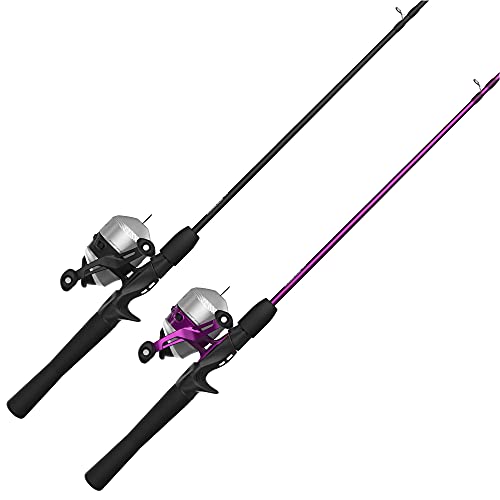
Zebco 33 Spincast Reel and Fishing Rod
Two complete spincast combos with 5-foot-6 fiberglass rods, pre-spooled with 10-pound line. Push a button, swing, let go — there's no bail to close and almost nothing to tangle, which makes this the fastest way to get a kid actually fishing.
$64.99fromAmazonNothing removes frustration from a first cast like a closed-face reel. The spool sits inside a nose cone, so line only leaves in one direction at a controlled rate. That means no bird's nests, no picking at a knotted spool while a six-year-old loses interest. You press the button, cast, and let go. Owners buying for grandkids consistently point to this as the thing that made the trip work.
You get two combos in the box, which changes the math for a family. Two kids can fish at once instead of taking turns. Or you can fish alongside your child instead of untangling their line all afternoon. Buying a second cheap rod later almost always means buying a worse one, so getting a matched pair up front is the better move.
The 5-foot-6 two-piece rod is sized right for smaller anglers and tight spots. On a wooded creek bank or a pond ringed with brush, a shorter rod is simply easier to swing. Zebco pairs it with an EVA handle that stays grippy when hands are wet, and the reel runs all-metal gears at a 4.1:1 ratio with a dial-adjustable drag and QuickSet anti-reverse. Both come pre-spooled with 10-pound line, so there's genuinely nothing to set up.
This isn't only a kid's rod, either. Owners report landing five-pound bass on it, and at least one grandparent bought a pair for grandchildren and ended up using them personally for inshore fish. Medium power and moderate action cover panfish, trout, small catfish and bass fine. Just don't expect it to handle anything that runs hard.
Flaws but not dealbreakers
Spincast reels cast shorter than spinning reels, full stop. Past about 40 or 50 feet you'll feel the ceiling, and if you're an adult who plans to fish regularly, you'll outgrow it within a season. Switching to a spinning reel later means relearning the cast.
The rods are the weak link. Multiple owners describe the upper section snapping — one on a snagged limb after fewer than a dozen casts. Fiberglass is forgiving, but these are thin fiberglass. Teach kids to walk toward a snag rather than pulling back on the rod.
Skip saltwater unless you're prepared to rinse everything thoroughly afterward. The line capacity is modest, too, so bigger catfish or carp will strip you quickly.
Zebco warrants these combos for one year from purchase against defects in workmanship and materials.
Budget pick
A genuinely smooth reel on a rod you should handle gently
KastKing Centron Spinning Combos
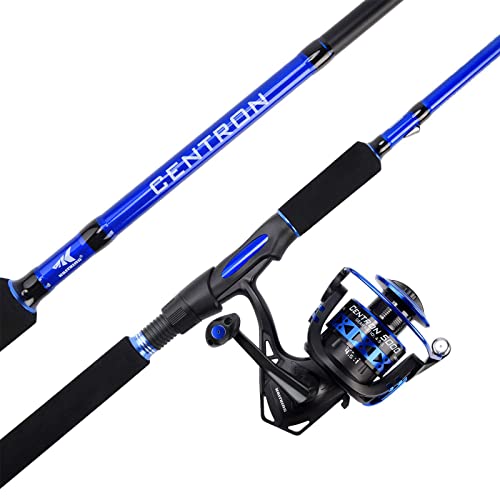
A 6-foot IM6 graphite spinning combo with a size 2000 reel running 9+1 ball bearings and a triple-disc drag. The reel is the star here — it's smoother than anything else at this end of the market, and the split-handle grip keeps the whole thing light.
$72.99fromAmazonThe reel is where your money goes, and it's worth it. KastKing lists 9+1 ball bearings, a 5.2:1 gear ratio, an anti-twist line roller and a triple-disc felt drag — a spec sheet that normally sits well above this price class. Owners consistently describe the retrieve as smooth and the drag as predictable. For a beginner still learning not to horse a fish, a drag that gives line evenly is what keeps your knot intact.
The graphite blank tells you more than fiberglass does. IM6 graphite transmits what's happening at the end of the line — a crappie mouthing a jig, the change from gravel to mud, the difference between weeds and a bite. If you're fishing panfish or working soft plastics for bass, that feedback teaches you faster than a rod that stays silent. Owners fishing bluegill and crappie call it a good match for exactly that.
Split-handle EVA grips cut weight and put your hand closer to the blank, which is part of why it feels lively. The rod comes in two pieces and assembles in a minute. And the whole package is light enough that a long afternoon of casting doesn't wear out your shoulder the way a fiberglass setup can.
Stainless guides with ceramic ring inserts handle mono or braid without chewing up your line. That's a real spec, not a marketing line — cheap guides with rough inserts are the reason budget combos eat through line. If you eventually want to run braid, this one's ready for it.
Flaws but not dealbreakers
The rod breaks. This is the clearest theme in owner feedback: several report the blank snapping, one within a handful of trips, another after roughly sixteen hours of fishing. Graphite trades impact resistance for sensitivity, and this blank sits at the brittle end of that trade. If you're rough on gear or buying for a kid, get the Ugly Stik instead.
Several owners who broke the rod kept the reel and paired it with something sturdier, which tells you where the value actually sits. That's a fine outcome if you already own a rod. It's a worse one if you wanted a complete setup that lasts.
KastKing doesn't have the decades-long service record of Shimano or Pure Fishing, and warranty support is less established. The listing doesn't state a warranty term, so check before you buy if that matters to you.
Runner-up
More sensitive Ugly Stik, in a length that grows with a kid
Ugly Stik 6’6” Camo Spinning Fishing Rod
A 6-foot-6 two-piece Ugly Stik in Mossy Oak camo, matched with a size 20 spinning reel. The Ugly Tech blank is a touch more sensitive than the GX2's, and the extra six inches buys casting distance a growing angler will use.
$109.95fromAmazonThis is the GX2's toughness in a slightly more refined package. Ugly Tech construction blends graphite and fiberglass the same way, but the balance leans a little more toward sensitivity — you'll feel more of the light taps that a beginner otherwise misses entirely. Six UglyTuff guides handle the abuse, and one-piece construction means no inserts popping out when the rod gets dragged across a dock.
The six extra inches matter more than they sound like. At 6'6", you get noticeably more casting leverage than the six-foot GX2, which helps when you're trying to reach a weed line from the bank. For a kid who'll be four inches taller next summer, it's a rod they won't outgrow. Owners report five-year-olds handling it well enough to catch a fish on the first cast, though very young children may find it unwieldy.
The camo finish is a genuine selling point if you're buying for a child or teen, and a genuine drawback if you're not. Nobody needs to be told which camp they're in. Underneath it, the specs are ordinary in a good way: a 5.0:1 gear ratio, a ported aluminum spool, front drag and Instant Anti-Reverse.
Medium power with a 6 to 15 pound line rating covers the same ground as the GX2 — panfish, trout, bass, the occasional surprise. Ugly Stik lists mono capacity at 110 yards of 8-pound line on the size 20 spool, which is plenty for bank fishing. Owners report landing solid smallmouth on it without drama.
Flaws but not dealbreakers
The reel has a two-ball-bearing system, which is fewer than the GX2's and far fewer than the KastKing's. It works, and it holds up. But it feels notably less refined in the hand than the Centron, and you'll notice if you've used both.
Rod breakage shows up in owner feedback here too, including a snap mid-cast. Ugly Stik's warranty covered that replacement, which is the whole argument for buying from an established brand.
Two pieces instead of four means it won't fit in a suitcase. If travel is part of the plan, the GX2 travel kit is the better call.
Ugly Stik includes a seven-year warranty on the rod.
Who this is for
This guide is for someone buying a first complete setup — a rod, a reel and line in one box — for freshwater bass, panfish, trout or small catfish, fished from a bank, a dock or a small boat. It's also for parents outfitting a kid, which is a slightly different problem: you want something that survives being dropped and doesn't require untangling every fifteen minutes. If you're returning to fishing after twenty years off, start here too. Entry-level reels have gotten meaningfully better.
If you already fish regularly, buy a rod and reel separately instead. You'll get more for your money and can match the blank to how you actually fish. We also don't cover baitcasting reels, surf setups, fly gear or anything built for serious saltwater. Baitcasters in particular are a bad first purchase — they backlash spectacularly until you've put in real practice, and that practice is more fun on gear you already trust.
How we picked
We ranked these on five things. Durability: blank material and guide construction, weighted heavily because broken tips are the single most common owner complaint in this category. Ease of use: reels that forgive a sloppy cast, with spincast favored for children and clean-running spinning reels for adults. Ready to fish: pre-spooled line and matched components, so a first trip doesn't start with a trip to the tackle counter. Power and length: medium power, 6 to 15 pound line ratings and 5'6" to 6'6" blanks, the range that handles panfish through bass. Support: stated warranty terms and how established the manufacturer's service network actually is.
Other fishing rod and reel combos for beginners worth considering
If you want the best reel you can get at this level: The Shimano Fishing Rod & Reel Sienna Spinning ($69.99) — The Shimano Sienna FE pairs a 6'6" medium rod with a 2500-size reel running Shimano's Propulsion Line Management System and a G-Free body. On paper it's the most refined reel here — the tapered spool design reduces friction on the cast, and Shimano's line lay is consistently praised in published reviews for preventing the wind knots that plague cheaper spinning reels. The 6.2:1 ratio picks up slack quickly, and P-Cork handles feel good over a long day. Two things hold it back from a pick. It costs the most in this lineup, and the owner feedback on this particular listing is thin and includes a report of damage on arrival, so we can't recommend it as confidently as the others. If you're fairly sure you'll fish often and want gear that keeps up as your technique improves, it's still the smartest stretch.
The competition
This is what our research surfaced, not a survey of everything on the market. Beginner combos turn over constantly, and plenty of decent options exist that didn't come up. Every product in this guide earned a spot somewhere, so there's nothing here we'd tell you to actively avoid — the differences are about fit, not quality.
Setup and care
Two habits will keep any of these alive longer than the rod deserves. First, respool with fresh 8 to 10 pound monofilament before your first trip — 6 to 8 pound for kids and spincast reels. Mono stretches, which absorbs the shock of an overenthusiastic hook set and saves you from break-offs. Fill the spool to about an eighth of an inch below the lip; overfilling causes the loops and wind knots that make beginners think their reel is broken. Second, when you snag, walk toward the snag and pull with the line, not the rod. Bending a rod backward against a stuck lure is how most of these snap, and it's the failure owners report over and over. Rinse everything with fresh water after saltwater, even gear rated for it, and store rods flat or hanging by the blank rather than dangling from the reel.
Questions we get
Should a beginner start with a spinning reel or a spincast reel?
If you're an adult, start with a spinning reel. You'll cast farther, use a wider range of lures, and won't have to relearn anything in a year. For kids under about twelve, a spincast like the Zebco 33 is the better call — the push-button design removes nearly all the tangles, and a frustrated kid is a kid who quits.
What pound test line should I use?
Eight to ten pound monofilament covers general freshwater fishing for panfish and bass. Drop to 4 to 6 pound for kids or ultralight setups. Mono's stretch forgives hard hook sets and forgives bad knots, which is exactly what you want early on. Save fluorocarbon and braid until your casting is consistent.
Is fiberglass or graphite better for a first rod?
Fiberglass, or a composite blend, for most beginners. It bends where graphite snaps, and first rods take real abuse — dropped on concrete, caught in doors, yanked against snags. Graphite is lighter and tells you more about what's happening at the lure, but that sensitivity matters less than survival at this stage. The Ugly Stik composite blanks split the difference well.
What rod length should I get?
Six to six and a half feet is the versatile range for bank and small-boat fishing. Six feet gives you better control in tight quarters like brushy creek banks, while the longer end adds casting distance on open water. Kids and anyone fishing wooded spots should look at five and a half feet. Below five feet or above seven feet, you're into specialty territory you don't need yet.
Can I use these in saltwater?
Light saltwater only, and only with real care. Piers, inshore flats and estuaries are fine for combos with stainless or aluminum oxide guides, but none of these are built or warranted for saltwater duty. Rinse everything with fresh water immediately after and dry it before storing. The Shimano and the Ugly Stik GX2, with their corrosion-resistant guides, handle it best of the group.
What gear ratio should I look for?
Anything between 5.0:1 and 6.2:1 is fine, and every combo here falls in or near that band. That's a medium retrieve speed, which handles bobber fishing, basic lure retrieves and light jigging without you thinking about it. Faster ratios above 7:1 exist for specific bass techniques and require more deliberate speed control. It's one variable you can safely ignore while learning.
Why you should trust us
For this guide:
- We read manufacturer spec sheets for each combo, comparing blank materials, guide construction, gear ratios, line ratings and stated warranty terms.
- We reviewed published guidance from fishing publications and instructional sources on what actually helps new anglers stick with the sport.
- We read owner feedback across all five listings, paying particular attention to recurring failure modes — most notably rod breakage — rather than isolated complaints.
- We read owner reviews on every listing, weighted toward the critical ones, because that is where the recurring failures show up.
- We have a systematic way of automatically fetching the latest prices, so the numbers on this page stay current.
- This is a research-focused guide, so the team may not own every product listed — though we often do own the top winners, which gives us extra context for the recommendations.
- We don't accept free products, and the retailer commission never changes which product we recommend.
Sources
Best Fishing Rod and Reel Combo — Wirecutter (NYT), Wirecutter / New York Times
Best Fishing Rod and Reel Combos — Outdoor Life, Outdoor Life
Best Rod and Reel Combos Tested — Field & Stream, Field & Stream
Best Fishing Rod and Reel Combos — Wired2Fish, Wired2Fish
Best Beginner Fishing Rods — In-Fisherman, In-Fisherman
2024 Special Report on Fishing — American Sportfishing Association, American Sportfishing Association
National Survey of Fishing, Hunting, and Wildlife-Associated Recreation — U.S. Fish & Wildlife Service, U.S. Fish & Wildlife Service
How to Choose a Fishing Rod — Take Me Fishing (RBFF), Take Me Fishing / Recreational Boating & Fishing Foundation
Amazon product listings and owner reviews for all 5 products
Manufacturer specification pages for each product
Some passages in this guide may be paraphrased with AI help. Prices are refreshed automatically.
More like this.
Continue exploring lifestyle reviews and recommendations.

The Best Fly Fishing Rod Combos for Trout
Most trout fishing happens closer than you'd think. Trout Unlimited points out that the majority of American trout water is a stream under 30 feet wide,…

The Best Surf Fishing Rods
Surf fishing asks a lot of a rod. You're standing in moving water, throwing a heavy sinker into wind, and trying to keep your line above the breakers so…

The Best Fishing Gear for Beginners
Fishing asks less of you than almost any other outdoor hobby. You need something to cast with, something to tie on the end, and a place to stand. But the…

The Best Fish Tank Starter Kits for Beginners
A fish tank is the rare pet that asks for a little work every week instead of a lot every day. But the equipment you start with decides how pleasant that…

The Best Robot Vacuum Mop Combos
A robot vacuum mop combo earns its keep in the boring middle of the week. You're not deep-cleaning. You're dealing with cereal under the high chair, dog…

The Best Toaster Oven Air Fryer Combos
A countertop oven earns its space by handling the small stuff. Reheating two slices of pizza, roasting a sheet pan of broccoli, crisping frozen fries at…