The Best Leadership and Business Books
A leadership book earns its place on your shelf by changing what you do on Monday morning. Most don't. You read a chapter on the train, nod along, and forget the whole thing by the time you're back at your desk. The ones that stick share a few traits: a framework simple enough to remember under pressure, examples concrete enough to recognize in your own team, and a point of view the author actually believes. Everything else is airport reading with a nicer cover.
Here's the honest caveat about this whole genre. Nearly every book here builds its case on stories chosen after the fact, which means the evidence is more persuasive than it is proof. Companies held up as models later stumble. Principles that sound universal turn out to fit the author's industry best. And most of these books could say what they need to say in half the pages — padding is the category norm, not an exception. Read them for frameworks, not gospel.
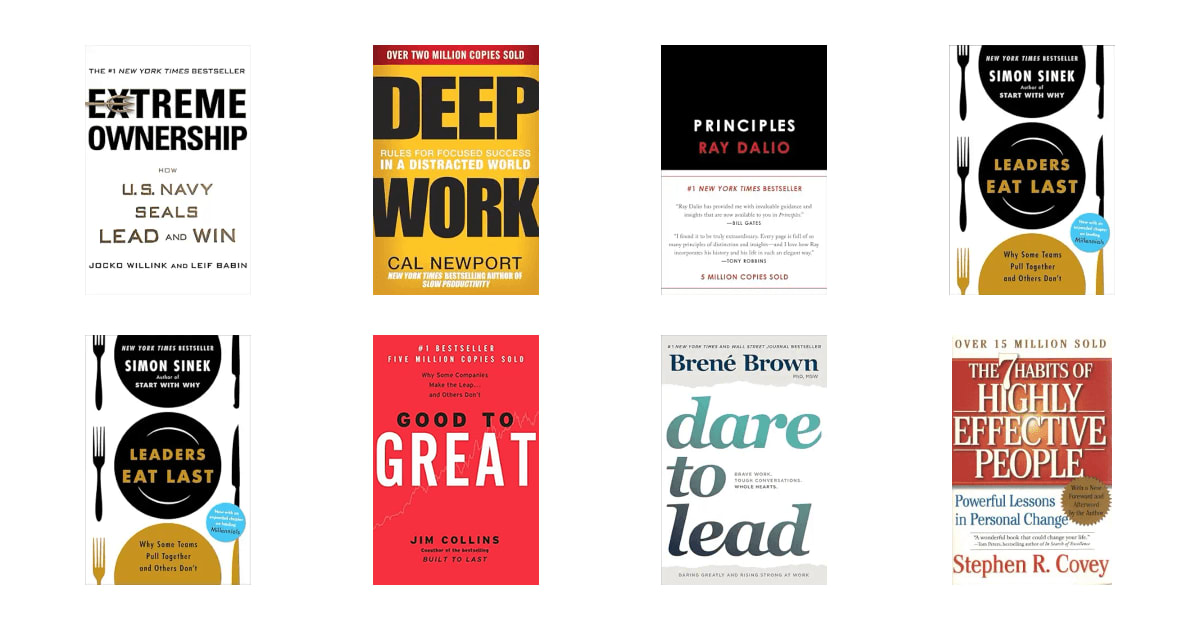
We looked at what published reviewers and long-term readers say each book actually does for working managers, not what the jacket copy promises. We think that Extreme Ownership is the best leadership book for most people, and that Dare to Lead is the one to buy if your hardest problem is the conversations you keep avoiding.
Everything we recommend

The clearest, hardest-to-argue-with book on accountability

Better if your hardest problem is the conversation you keep avoiding

The one to read if you're trying to change an organization
Not about leadership, but the most immediately useful book here

A dense, demanding system for people who run things
At a glance
| Product | Core Topic | Best For | Price | |
|---|---|---|---|---|
| Good to Great: Why Some Companies MakeAlso great | Good To Great | — | $17.95On sale |
 | Start with Why: How Great Leaders InspireAlso consider | Start With Why | — | $10.93On sale |
 | Leaders Eat Last: Why Some Teams PullAlso consider | Leaders Eat Last | — | $17.62On sale |
| Dare to Lead: Brave Work. Tough Conversations.Runner-up | Dare To Lead | — | $11.48On sale |
| Extreme Ownership: How U.S. Navy SEALs LeadTop pick | Extreme Ownership | 1 Year And Up | $19.76On sale |
 | The 7 Habits of Highly Effective People:Also in lineup | 7 Habits | — | $18.63 |
| Principles: Life and Work HardcoverUpgrade pick | Principles | — | $15.14On sale |
 | Deep Work: Rules for Focused Success inAlso consider | Deep Work | 5 Years And Up | $17.98On sale |
| Atomic Habits: An Easy & Proven WayBudget pick | Atomic Habits | — | $18.57On sale |
 | Leaders Eat Last: Why Some Teams PullAlso in lineup | Leaders Eat Last | — | $10.96On sale |
How we picked
Actually usable. We favored books with a framework you can recall under pressure and apply within a week. Published reviews and long-term reader feedback consistently separate the books people quote from the ones they merely finish.
Evidence behind it. We looked at what each argument rests on — original research, sustained field experience, or a set of stories chosen to fit. Books grounded in years of interviews or comparative research got more weight than ones built on a single career.
Holds up over time. Owner feedback written years after publication tells you whether a book stuck. We looked for signs people still reference these books rather than shelving them after one read.
Signal-to-page ratio. Padding is endemic in this category. We noted where reviewers reliably report repetition or filler, and weighted that against how much the core idea is worth.
Range of the lineup. We wanted the set to cover accountability, trust, strategy, focus and behavior change rather than five variations on one theme.
Top pickOn sale
The clearest, hardest-to-argue-with book on accountability
Extreme Ownership: How U.S. Navy SEALs Lead
Two Navy SEAL officers turn combat leadership into a business playbook built on one idea: the leader owns every outcome, full stop. It's blunt, it's short on theory, and the principles survive translation from a firefight in Ramadi to a stalled product launch.
$19.76fromAmazonList priceThis is the rare leadership book you can act on the same day you finish a chapter. Each chapter runs the same way: a combat story, the principle it taught, then a business situation where the same principle applies. That structure does a lot of work. You're not asked to abstract a lesson yourself — Willink and Babin do it for you, then show you the translation. Readers who've come back to it years later say the chapter titles alone function as a checklist.
The core argument is uncomfortable on purpose. If your team missed the deadline, you didn't brief them well enough. If a direct report keeps underperforming, you haven't been clear about the standard. There's no room in the book for a bad hire, a difficult stakeholder, or an impossible timeline as an explanation. That's the whole point, and it's why owners keep describing the book as a mindset shift rather than a technique.
Practical chapters get less attention than the philosophy, but they're the ones you'll reuse. Cover and Move, Simplify, Prioritize and Execute, Decentralized Command — those four cover most of what goes wrong on a team of any size. Prioritize and Execute in particular is the antidote to the day where everything is on fire and you freeze. Pick the biggest problem, say it out loud, solve it, move to the next.
It works whether you manage two people or none. Plenty of readers pick it up before they have any formal authority, and the accountability framing still lands — owners regularly report applying it to their own habits and relationships before their teams. If you're a first-time manager who inherited a team that isn't performing, this is the book that stops you from looking for someone to blame.
Flaws but not dealbreakers
The military framing gets heavy. If war stories aren't your thing, you'll spend a lot of pages in Ramadi, and the tonal register — no excuses, no complaints, no exceptions — can feel like being shouted at for 300 pages. Some readers find that bracing. Others find it exhausting by the halfway point.
Taken literally, extreme ownership breaks down. Not every failure is yours, and a leader who internalizes every setback burns out or starts protecting people who genuinely aren't doing the work. The book doesn't spend much time on where the line sits, which leaves you to figure out the nuance the authors skipped.
Runner-upOn sale
Better if your hardest problem is the conversation you keep avoiding
Dare to Lead: Brave Work. Tough Conversations.
Brené Brown makes the research case that vulnerability is a leadership skill, not a liability, then hands you scripts for the conversations most managers dodge. It's the most practically useful book here on feedback, trust and conflict.
$11.48fromAmazonList priceMost of us avoid the same three conversations: telling someone their work isn't good enough, admitting we got something wrong, and naming the thing everyone in the room is thinking. Brown treats those as trainable skills rather than personality traits. Her rumble framework gives you an actual opening line for a hard conversation, and the BRAVING inventory breaks trust into seven components you can point at when trust is broken.
The research backing separates this from the usual soft-skills book. Brown spent years interviewing leaders about shame, courage and failure before writing any of it, and the argument builds from that material rather than from anecdotes she liked. Readers who came in skeptical — expecting another round of clichés about communication — tend to be the ones most surprised by how specific the tools are.
It's also broader than its title. Owners consistently report using the book at home as much as at work, because the skills are the same skills: say the hard thing kindly, stay in the conversation when it's uncomfortable, don't armor up. If you manage people and also have a family, you're getting two books for one.
The writing is warm without being vague, which is harder than it sounds. Brown names the specific ways leaders hide — perfectionism, cynicism, knowing-it-all — and asks you to spot your own. That makes the reading experience uncomfortable in a productive way. Several readers describe having to put it down partway through because it hit too close.
Flaws but not dealbreakers
The structure is loose. It reads more like a collection of strong chapters than one argument built brick by brick, and some sections cover ground Brown has already covered in earlier books. If you've read her before, expect overlap.
If you lead in a culture that treats emotion as weakness, this book gives you tools but no cover. Brown assumes you have the standing to change how conversations happen on your team. Not everyone does, and the book doesn't help much with the politics of getting there.
Also greatOn sale
The one to read if you're trying to change an organization
Good to Great: Why Some Companies Make
Jim Collins and his team spent five years comparing companies that made a durable leap in performance against ones that didn't. The result is the most rigorous framework here for thinking about strategy, hiring and what actually separates a good organization from a great one.
$17.95fromAmazonList priceIf your problem is organizational rather than personal, this is the book. Level 5 Leadership — the combination of personal humility and fierce professional will — is the most quoted idea, but the more useful one is getting the right people on the bus before you decide where the bus is going. That single reframe changes how you think about hiring, and it's held up better than most of the book's specific examples.
The Hedgehog Concept is the other durable tool: find the overlap between what you can be genuinely best at, what drives your economics, and what you actually care about. It sounds simple. Applying it honestly to your own team or company is not simple, which is why readers keep coming back to the diagrams years after finishing.
Collins writes like a researcher who learned to tell stories, and the methodology is laid out clearly enough that you can judge it yourself. That transparency matters here. You can see which comparisons drove which conclusions, and decide for yourself where the argument is strong and where it's stretched.
Readers with MBAs and years of management behind them still recommend it, which tells you something. Not because the material is new to them, but because Collins states it more clearly than they could. That clarity is the book's real product.
Flaws but not dealbreakers
The famous problem: several of the great companies later collapsed or were bought in distress. That doesn't invalidate every principle, but it does mean you should read the framework as a useful lens rather than a formula with a track record. Selecting winners after the fact and then explaining them is a shaky method.
It's an older book and it reads that way in places. The examples come from an era of large industrial and retail companies, and if you work in a small team or a young software company, you'll be doing some translating.
Budget pickOn sale
Not about leadership, but the most immediately useful book here
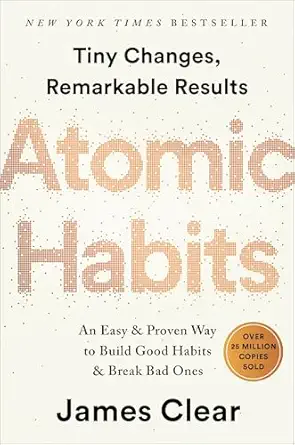
Atomic Habits: An Easy & Proven Way
James Clear's book on habit formation is the shortest path from reading to doing anything on this list. The four-law framework — make it obvious, attractive, easy, satisfying — applies to your own behavior and, with some translation, to how a team's norms actually form.
$18.57fromAmazonList priceEvery other book here asks you to change how you behave. This is the one that explains the mechanics of doing that. Clear's argument is that you don't rise to your goals, you fall to your systems, and the practical consequence is that you should design your environment rather than rely on willpower. Habit stacking and the two-minute rule are the two ideas most readers actually keep.
It's the best first book on this list for anyone who's bounced off business books before. Clear writes in short chapters with clean examples and no throat-clearing. You can read it in a week of commutes. Nothing else here is as easy to finish, and a book you finish beats a better book you abandon at chapter four.
The leadership application takes a little work but pays off. A team's culture is mostly its repeated behaviors, so the four laws give you a way to think about why a standup keeps drifting or why nobody writes the postmortem. Make the desired behavior obvious and easy, make the undesired one hard. It's not what the book is about, but it maps cleanly.
Flaws but not dealbreakers
It's a personal-development book wearing a business jacket. If you came looking for guidance on leading other people, you'll have to build the bridge yourself, and the book gives you no help with team dynamics, conflict or organizational politics.
The ideas are also widely summarized elsewhere, and the core framework fits on an index card. If you've absorbed the four laws already from articles or talks, the book mostly adds examples rather than new substance.
Upgrade pickOn sale
A dense, demanding system for people who run things
Principles: Life and Work Hardcover
Ray Dalio lays out the decision-making principles behind Bridgewater, split into life principles and work principles. It's the most intellectually ambitious book here and the least casual read — closer to a reference manual than a book you finish in a weekend.
$15.14fromAmazonList priceThis is the only book on the list you'll use as a reference rather than read once. The work principles section is essentially a catalog of hundreds of numbered rules covering hiring, disagreement, decision rights and firing. Readers commonly describe skimming the audiobook and then keeping the physical copy to flip back through, which is the right way to use it.
Dalio's central idea is an idea meritocracy: decisions should follow the best reasoning available, not the most senior person in the room. The mechanics he built around that — believability weighting, radical transparency, recording every meeting — are extreme by design. Even if you'd never implement them, working out why you disagree sharpens your own thinking about how your team makes decisions.
The opening third is autobiography, and it's the most readable part. Dalio walks through his early bets, the ones that nearly destroyed him, and what he changed afterward. That failure narrative gives the principles their weight. Without it the rules would read as a successful man explaining that he's successful.
This is the pick for someone who already leads at scale. If you're setting culture, designing how decisions get made, or building the systems other people work inside, the density is worth it. For a new manager, it's a lot of machinery for problems you don't have yet.
Flaws but not dealbreakers
It's genuinely long and structurally lopsided — a substantial book followed by an even more substantial list. Readers who otherwise admire it note that it turns repetitive, and that the tone tips into arrogance in places. You'll skim.
The Bridgewater system is also famously hard to live inside. Radical transparency works for a self-selected group of people who signed up for it. Dropping pieces of it onto a team that didn't sign up tends to produce fear rather than candor, and the book underplays that risk.
Who this is for
This guide is for working managers and people about to become one — anyone who has to get results through other people and wants a short shelf of books worth the hours. If you're a first-time supervisor, a founder whose team just outgrew informal coordination, or an experienced executive looking to fill a specific gap, there's something here for you. We've focused on general leadership and personal effectiveness titles that a broad audience can use.
Skip this if you want something narrower. There's nothing here on finance, negotiation tactics, sales, or industry-specific management, and nothing on the academic side of organizational behavior. And if you already own three unread leadership books, buy none of these. Read one you have, apply one thing from it, then come back.
How we picked
We weighed each book on a few things. Actually usable: a framework simple enough to remember mid-meeting and apply the same week. Evidence behind it: whether the argument rests on original research and sustained experience or on stories picked to fit a conclusion. Holds up over time: whether readers still reference the book years later, according to long-term owner feedback. Signal-to-page ratio: how much of the book earns its place, since padding is the category norm. Range: we wanted the lineup to span accountability, trust, strategy, focus and habit change rather than repeat one idea five ways.
Other leadership and business books worth considering
If you want to figure out your purpose before your tactics: The Start with Why: How Great Leaders Inspire ($10.93) — Start with Why is the most inspirational book on this list and the least prescriptive. Sinek's Golden Circle — why, then how, then what — is a genuinely useful communication tool, and it's the reason so many readers say the book reframed how they pitch anything. Some readers order extra copies for their teams. The trade-off is repetition: the central idea is clear within the first chapter and the rest is reinforcement. And critics have picked apart specific examples where the company story doesn't quite support the claim. Read it for the reframe, not the case studies.
If you want the science behind why some teams pull together: The Leaders Eat Last: Why Some Teams Pull ($17.62) — Leaders Eat Last builds the case that trust is biological — that a Circle of Safety, where people aren't defending themselves against each other, is what lets a team do hard things. The chapters on brain chemistry are the most interesting material here, and readers find they explain why certain management behaviors feel wrong in the gut. It's the better Sinek book for people who already manage a team, and the hardcover is the substantial edition. Where it falls short of our picks is the follow-through: it explains the problem beautifully and gives you less to do about it on Monday.
If your real problem is that you can't get an hour of uninterrupted thinking: The Deep Work: Rules for Focused Success in ($17.98) — Deep Work argues that sustained concentration is getting rarer and more valuable at the same time, and that most knowledge work has been redesigned to prevent it. Newport's rules are concrete — scheduled blocks, a shutdown ritual, a hard look at what social media costs you — and readers report measurable changes within a week or two. It's not a leadership book, and Newport's prescriptions run strict enough that most people adopt a partial version. But if the thing standing between you and better work is a calendar full of nothing, this is the most direct fix on the list.
The competition
These are the other books our research turned up in this lineup, not a survey of everything published on leadership. Each one has a real readership and a case for existing. They lost to the picks on how much they change what you do, or they're a format variant of a book we've already covered.
The The 7 Habits of Highly Effective People: ($18.63) — The 7 Habits of Highly Effective People is the ancestor of most books on this list, and it's still the most complete system for personal effectiveness — moving from independence through interdependence, with the character-versus-personality distinction underneath it all. Readers who work through it slowly, often as part of a workplace program, tend to rate it highest. The reasons it isn't a pick: the writing is wordy and dated, several habits have been better explained in shorter books since, and it demands real effort before it pays off. Buy it if you want the foundational text and you'll actually do the exercises.
The Leaders Eat Last: Why Some Teams Pull ($10.96) — This is the paperback edition of Leaders Eat Last — same content as the hardcover we recommend above, in a smaller, lighter package that's easier to carry and mark up. If you read on trains or lend books out, the paperback is the more practical choice. It's not a separate recommendation, just a format decision. Pick whichever binding suits how you read.
How to actually use these books
Reading without applying is just entertainment. The habit that works for most people is simple: after each book, write down three specific changes and start with one. Not a resolution — a change to something on your calendar or in how you run a specific meeting. If you finished Extreme Ownership, take your next miss and write the version where it's your fault. If it was Dare to Lead, book the conversation you've been putting off and use her opening line. A team book club multiplies all of this, because arguing about a chapter forces you to decide what you actually think. One book a month is a sustainable pace for a busy manager, and most of these reward a second pass a year or two later, when your problems have changed.
Questions we get
Which book should I read first as a new manager?
Start with Extreme Ownership. It's short, blunt, and it fixes the most common first-time-manager failure, which is looking for the reason a miss wasn't your fault. Follow it with Dare to Lead for the conversation skills you'll need within your first month — feedback, conflict, admitting you were wrong. Those two cover most of what actually goes wrong early.
How are these different from typical business books?
Mostly in what they're built on. Good to Great rests on five years of comparative research, Dare to Lead on years of interviews about shame and courage, and Principles on decades of running an unusual organization. They give you frameworks rather than encouragement. That said, they're still trade books — persuasive by design, and none of them is a substitute for evidence about your own team.
Do these help with leading a remote team?
More than you'd expect. The Circle of Safety idea from Leaders Eat Last matters more when people can't read the room, and Dare to Lead's tools for hard conversations translate to video calls with almost no loss. Deep Work is the practical one for a home office full of distractions, and Atomic Habits helps you build the structure an office used to impose. The gap none of them fills is how to build informal trust without hallway time.
Which are best for experienced executives?
Principles, for the sheer depth of its frameworks on decision-making and organizational design. Good to Great, if you're working on strategy or a turnaround. Deep Work speaks to the specific executive problem of never getting an uninterrupted hour to think. Experienced leaders often find the later habits in 7 Habits — the ones on interdependence and renewal — land differently the second time.
Should I read them in a particular order?
Each stands alone, but a sequence helps. Start with purpose and accountability: Start with Why, then Extreme Ownership. Add the people skills with Dare to Lead and Leaders Eat Last. Then move outward to Good to Great and Principles when you're shaping strategy or culture. Fit Atomic Habits and Deep Work in wherever your own execution is the bottleneck.
Do these apply outside the corporate world?
Yes, with some translation. Extreme Ownership's accountability lands the same in a hospital or a nonprofit as in a tech company, and readers report using Leaders Eat Last in church leadership and Dare to Lead in schools and government. Good to Great is the most corporate of the set and takes the most work to adapt. The principles are broadly portable; the examples usually aren't.
Why you should trust us
For this guide:
- We read published reviews and reader feedback for each title, looking for what people said they actually changed after finishing.
- We compared the books against each other on framework clarity, evidence base and how much of each one earns its page count.
- We checked editions and formats against publisher listings so the hardcover and paperback recommendations point at the right book.
- We read owner reviews on every listing, weighted toward the critical ones, because that is where the recurring failures show up.
- We have a systematic way of automatically fetching the latest prices, so the numbers on this page stay current.
- This is a research-focused guide, so the team may not own every product listed — though we often do own the top winners, which gives us extra context for the recommendations.
- We don't accept free products, and the retailer commission never changes which product we recommend.
Sources
Amazon product listings and owner reviews for all 10 products
Manufacturer specification pages for each product
Some passages in this guide may be paraphrased with AI help. Prices are refreshed automatically.
More like this.
Continue exploring lifestyle reviews and recommendations.

The Best Science Books for Curious Readers
A good science book has to do two jobs at once. It has to be accurate, and it has to keep you turning pages on a Tuesday night when you're tired. Most…

The Best Books for Understanding AI
Most of us pick up an AI book for one of two reasons. Either something at work changed and you want to know why, or a headline scared you and you want to…

The Best Book Subscription Box Editions
A subscription box book isn't just a book. It's the copy that shows up on your porch in a cover you can't get at the bookstore. Some of these editions are…

The Best Gifts for Book Lovers
Readers are easy to shop for and easy to get wrong. Buy them a novel and you're guessing at taste they've spent years refining. Buy them a mug that says…

The Best Self-Help Books for Mental Health
A mental health book has to work on your worst week, not your best one. That's the real test. You'll pick it up at 11 at night, read four pages, and put…

The Best Personal Finance Books for Building Wealth
Money advice fails for boring reasons. You know you should save more, you know index funds beat stock picking, and then it's Tuesday, you're tired, and…