The Best Science Books for Curious Readers

A good science book has to do two jobs at once. It has to be accurate, and it has to keep you turning pages on a Tuesday night when you're tired. Most books manage one or the other. The ones that manage both tend to share a few traits: an author who actually works in the field, chapters short enough to finish in a sitting, and explanations built from analogies instead of equations. If you're buying a gift, the physical object matters too. People display books they like.
No science book will make you an expert, and the honest ones don't pretend otherwise. Popular science trades precision for clarity, and that's the deal you sign on page one. Fast-moving subjects like artificial intelligence age quickly, so a book written during one research cycle can read a step behind the next. Deep topics get compressed into a chapter. If you want rigor, you'll end up with a textbook eventually. What these books do well is hand you the shape of an idea you can build on.
So pick for the reader, not for the subject's prestige. A physics-curious friend and a policy wonk want very different things, and a kid wants something different again. Think about what the person already brings up at dinner, then match the book to that. Length helps too, since a shorter book actually gets finished. We think that A Brief History of Black Holes is the best science book for most people, and that The Coming Wave is the one to buy if you want to understand the technology reshaping work and politics.
Everything we recommend
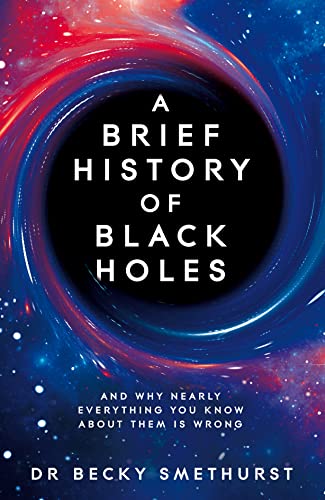
Real astrophysics, no math, and short enough to finish

Insider authority on AI, if you can take the policy chapters

A book to browse rather than read, for people who love numbers
Prices as of Oct 22, 7:36 AM PT · Details
At a glance
| Product | Format | Weight | Price | |
|---|---|---|---|---|
| The Penguin Dictionary of Curious and InterestingAlso great | Kindle eBook | — | $10.99 |
| The Coming Wave: AIRunner-up | Book | 0.54 lb | $13.99 |
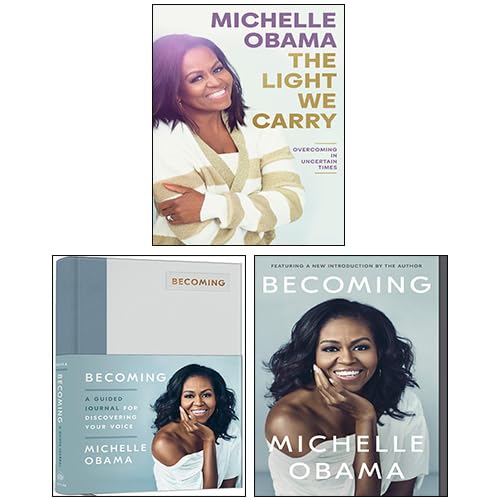 | Michelle Obama 3 Books Collection SetAlso in lineup | Book | — | $74.99 |
| A Brief History of Black Holes: AndTop pick | Book | 0.83 lb | Check price |
 | Coralie and The Coral Kingdom: An UnderwaterAlso consider | Book | — | $11.99 |
Prices as of Oct 22, 7:36 AM PT · Details
How we picked
Who wrote it. We favored books by people who work in the field they're explaining, like a practicing astrophysicist or an AI lab co-founder. Credentials were checked against publisher material and published reviews.
No prior knowledge. Every pick had to make sense to someone who never took the class. Owner feedback helped here: repeated reports of readers getting lost pushed a book down the list.
Length you'll finish. Shorter books get read. We gave weight to titles under roughly 300 pages, and to browsable formats you can pick up for ten minutes.
Holds up as an object. For gift buying, the edition matters. We noted publisher, format and dimensions, plus recurring owner comments about binding, trim size and print quality.
Range of curiosity. We wanted the shortlist to span physics, technology, mathematics and marine biology rather than five variations on the same subject.
Top pick
Real astrophysics, no math, and short enough to finish
A Brief History of Black Holes: And
This is astrophysics for people who loved the movie and now want the truth. It's short, funny, and organized around correcting the things you probably believe about black holes, and owners with no physics background say it never leaves them behind.
Check priceatAmazonPrices as of Oct 22, 7:36 AM PT · Details
It starts with what you've probably got wrong. Movies taught most of us that black holes suck in everything nearby like a cosmic drain. They don't. The book works through those misconceptions one at a time, which turns out to be a great way to learn, because you're not memorizing new facts so much as repairing old ones. Owners with no physics background say the corrections land, and that the wit keeps things moving.
An astrophysicist wrote it, and the research is current. The author publishes in the field and takes readers up through the direct images of black hole shadows produced by the Event Horizon Telescope collaboration. That matters, because this corner of astrophysics has changed more recently than most people realize. You get the modern picture rather than a rehash of what your school textbook covered.
There isn't a single equation in it. Every idea arrives as an analogy instead: time dilation, event horizons, Hawking radiation. The comparisons are chosen carefully enough that you finish with a mental model you can actually use, not a vague sense of awe. Readers who already thought of themselves as well read on the subject report learning things anyway, which is the harder test for a book like this.
It's short, and that's a feature. The book runs under 300 pages in crisp chapters, so you can read it in twenty-minute stretches on a train without losing the thread. Long science books get abandoned around chapter four. This one gets finished, which is the whole point if you're handing it to someone who claims they don't read nonfiction.
Flaws but not dealbreakers
It won't satisfy anyone with a physics degree. Quantum gravity and string theory approaches get mentioned rather than explored, and there's little hard data on masses, sizes and timescales. Owners with technical backgrounds say they wanted more numbers behind the explanations. If you want mathematical rigor, you'll be reaching for a textbook afterward.
The hardcover doesn't always feel premium. Some owners describe the binding and paper as thinner than expected, and the trim size as smaller than the cover art suggests. It reads fine and looks fine on a shelf. But if you're giving it to someone who cares how a book feels in the hand, the physical object is the weakest part of the package.
The subtitle promises more than one book can deliver. You won't discover that almost everything you know is wrong. You'll discover that four or five things are, which is still a good outing. The tone stays playful rather than smug, so nobody feels lectured.
Runner-up
Insider authority on AI, if you can take the policy chapters
The Coming Wave: AI
A DeepMind co-founder explains what artificial intelligence and synthetic biology are about to do to work, politics and security. It's the rare technology book that's neither breathless nor dismissive, and it assumes you know nothing about the field going in.
$13.99fromAmazonPrices as of Oct 22, 7:36 AM PT · Details
The author helped build the technology he's warning you about. Mustafa Suleyman co-founded Google DeepMind and later ran Microsoft's AI division, so the book comes from inside the rooms where these decisions got made. That's a vantage point no journalist can borrow. Owners who work in tech consistently point to the insider detail as the thing that separates it from the pile of AI books written from the outside.
It treats AI and synthetic biology as one story. Most books pick one. Suleyman's argument is that they're arriving together, and that the combination is what makes them hard to contain, because cheap intelligence plus cheap biology changes who can do what. Whether or not you buy the thesis, it reframes a conversation that usually gets stuck on chatbots and homework cheating.
You don't need a technical background. Concepts get built up from first principles in plain language, and the book explains itself as it goes. Readers with engineering jobs and readers with none both come away feeling smarter, which is rare in this genre. Most AI books are either a programming primer or a bag of anecdotes, and this one is neither.
It's the best book here for a group discussion. Suleyman deliberately refuses easy answers, which makes for weak punditry and strong conversation. A club with mixed backgrounds gets somewhere real: the software engineer and the schoolteacher end up circling the same question from opposite directions. Bring it to a group that enjoys disagreeing with each other.
Flaws but not dealbreakers
The back half turns to policy, and the pace sags. Once the argument moves to governance and containment, the chapters get denser and more abstract. Owners describe that stretch as a slog even when they admire the research behind it. If you read for narrative pull, you'll feel the shift.
It's an argument, not a set of stories. There are few human characters to hold onto, and because the subject is the future, a lot of the book is necessarily projection. Some readers wanted more concrete detail and fewer scenarios. If you like your science writing driven by people, the black hole book is the friendlier read.
Also great
A book to browse rather than read, for people who love numbers
The Penguin Dictionary of Curious and Interesting
This is a cabinet of numerical curiosities, arranged smallest to largest, that you open at random for ten minutes at a time. If someone in your life lights up about primes or pi, they'll keep it within arm's reach for years.
$10.99fromAmazonPrices as of Oct 22, 7:36 AM PT · Details
It's built to be opened at random. Entries run from the small numbers upward, each a short note on why that particular number deserves a second look. You read three, get curious, then read nine more. That's a different pleasure from a narrative book, and for a lot of people it's a more durable one, because the book stays on the desk instead of migrating to a shelf.
The entries are short and reliably surprising. The number 1,729 is the smallest you can write as the sum of two cubes in two different ways. Pi and e get their own strange histories. Mersenne primes, factorization oddities and mathematical folklore all show up. Owners who work with numbers professionally say it still catches them out, which is a decent signal of how deep it goes.
Teachers get the most out of it. Owners who teach math describe pulling single entries out as hooks, a two-line curiosity that makes a restless class suddenly want to know why. It's a supply of small mysteries rather than a lesson plan. If you're buying for someone who explains things for a living, this is the most useful book in the guide.
Nothing in it goes out of date. Mathematics doesn't get revised the way climate or technology writing does, so this is the one title here a recipient can keep for decades without it aging. Owners who wore out or lost an earlier copy come back for another one. That kind of repeat purchase tells you more than any blurb does.
Flaws but not dealbreakers
There's no through-line at all. If you want a story, a protagonist, or an argument that builds toward something, this isn't it. Readers who try to work through it cover to cover tend to bounce off. It rewards a browsing habit and punishes anyone expecting a linear read.
Some entries assume you already speak a little math. Prime factorization, triangular numbers and modular arithmetic turn up without much hand-holding. Readers who don't have that vocabulary hit stretches that read like a list of facts with no reason to care. It's a fair complaint, and it's the main reason this isn't the top pick.
This listing is the digital edition. A reference you flip through is happier in print, and browsing on a screen is clumsier than thumbing pages. Owners have also flagged the occasional error in the converted text. Search partly makes up for it, and the content is the same. But the paper copy is the nicer object to give.
Who this is for
This guide is for anyone buying one science book, for themselves or as a gift, who wants something readable rather than exhaustive. If you've been meaning to understand black holes or artificial intelligence and keep stalling out on articles, start here. If you're a working scientist looking for depth in your own field, none of these will do much for you, and you already know where to look. And if you're shopping for someone whose interests you can't name, ask one question first: what do they bring up unprompted at dinner?
We cover general-audience science nonfiction, including one reference title and one illustrated book for children. We don't cover textbooks, academic monographs, science fiction, or the enormous back catalog of older classics that any of these books will send you toward. The lineup here is what our research surfaced, which means good books are missing. Treat it as a shortlist you can trust rather than a ranking of everything in print.
How we picked
Author: we favored writers who work in the field they're explaining and checked their credentials against publisher material and published reviews. Accessibility: each pick had to make sense with no prior coursework, and repeated owner reports of readers getting lost counted against a book. Length: shorter titles and browsable formats got extra weight, because a finished book beats an ambitious one. Edition: publisher, format, dimensions and owner comments about binding and print quality mattered for anything you'd wrap. Range: we wanted physics, technology, mathematics and marine biology all represented, so the shortlist works for more than one kind of reader.
Other science books for curious readers worth considering
If you're buying for a kid who's obsessed with the ocean: The Coralie and The Coral Kingdom: An Underwater — This is a slim illustrated story about a coral reef, pitched at readers roughly eight to fourteen, and it teaches real marine biology on the way through: coral symbiosis, the algae that live inside coral tissue, and what warmer, more acidic water does to a reef. The story comes first, so some mechanisms get simplified for pace, and the scope stops at reefs, with nothing on the deep ocean. Adults who want depth should look elsewhere. But for a kid who rewatches ocean documentaries, it's the right shape of book, and the glossary and reading list in the back give them somewhere to go next.
The competition
This is what our research surfaced, not a census of everything in print. Plenty of strong science writing didn't cross our path, and the list below reflects the titles we had in front of us rather than a verdict on the whole field.
The Michelle Obama 3 Books Collection Set — This is a three-volume set of Michelle Obama's memoir, her later essay collection and a guided journal, which makes it a gift bundle rather than a science book. It lands in a science guide only because The Light We Carry draws on ideas from psychology: resilience, habit, identity, and how people change. That's a real subject, but it's handled as personal reflection, not as research, so it lost to every pick here on the basic question of whether you'd learn any science. If you're shopping for someone who reads memoir and might drift toward behavioral science later, the set is a generous gift and the journal gives them something to do with it. Anyone who asked for a science book will notice the swap.
Formats and gifting
Think about format before you buy. A reference like the numbers dictionary belongs in print if the reader will browse it, since the digital edition is searchable but awkward to flip through. Narrative titles work well as audio, and both the AI book and the black hole book have author-narrated editions that owners rate highly. If you're giving a book, check whether the recipient already owns it, because bestsellers and memoir sets are the usual duplicates, and tuck the receipt into the card. Hardcovers photograph better under wrapping paper. Slim illustrated books for kids need a little care: thin spines crease fast once they get shoved into a backpack.
Questions we get
Which of these works if you have no science background at all?
A Brief History of Black Holes is the easiest way in. It builds from misconceptions you already hold rather than knowledge you don't have, and it uses no equations. The Coming Wave is also written for general readers, though the policy chapters ask for more patience.
Which one makes the best gift for a curious adult?
The Coming Wave is the safest gift for most adults, because the subject is unavoidable right now and the Crown hardcover looks good on a shelf. For a mathematically minded recipient, the numbers dictionary is the better call, since it gets picked up again and again instead of read once. If your recipient likes space, the black hole book is short enough that they'll actually finish it.
What's the best book here on AI for a general reader?
The Coming Wave, without much competition. Most AI books are either technical enough to need programming knowledge or thin enough to be opinion columns stapled together. This one sits between policy, history and technology, and the author's role in building modern AI gives it credibility a journalist can't match.
Which of these do scientists themselves recommend?
A Brief History of Black Holes has support from working astrophysicists, who like that it corrects popular myths without dumbing down the physics. The Coming Wave gets cited approvingly by AI and policy researchers for its handling of development timelines and risk. The numbers dictionary has been a standby recommendation from math educators for a long time.
What should I get a teenager who loves biology?
For a younger teen, Coralie and The Coral Kingdom covers genuine marine biology, including coral symbiosis and ocean acidification, in a story format that holds attention. For an older teenager, The Coming Wave's chapters on synthetic biology, gene editing and engineered organisms are a strong entry point into where biology and technology meet. Both assume curiosity rather than coursework.
Which works best for a book club with mixed science knowledge?
The Coming Wave. It needs no technical background but still gives the engineer in the group something to argue about, and its questions about power and ethics pull in members who don't care about the technology itself. A Brief History of Black Holes is a good second choice, mostly because people enjoy discovering that their confident beliefs came from movies.
Why you should trust us
For this guide:
- We read published reviews and press coverage for each title and compared them against publisher listings, format details and stated page counts.
- We looked for recurring themes in owner feedback, especially reports of readers getting lost, physical build quality, and how people actually use each book.
- We compared the shortlist across subjects and reading levels so the guide covers more than one kind of curious reader.
- We read owner reviews on every listing, weighted toward the critical ones, because that is where the recurring failures show up.
- We have a systematic way of automatically fetching the latest prices, so the numbers on this page stay current.
- This is a research-focused guide, so the team may not own every product listed — though we often do own the top winners, which gives us extra context for the recommendations.
- We don't accept free products, and the retailer commission never changes which product we recommend.
Sources
Best Science Books 2025 – The Guardian Science Book Reviews, The Guardian
Best Popular Science Books – Science News Picks, Science News
Goodreads Science Nonfiction Best Books 2025, Goodreads
Publishers Weekly Science Bestsellers 2025, Publishers Weekly
NPR Books Science Recommendations 2025–2026, NPR Books
New York Times Book Review – Best Science Books, New York Times
American Library Association Notable Books – Science Category 2025, American Library Association
Bill Gates Summer/Winter Reading Lists 2024–2025, Gates Notes
Amazon product listings and owner reviews for all 5 products
Manufacturer specification pages for each product
Some passages in this guide may be paraphrased with AI help.
Product prices and availability are accurate as of the date/time indicated and are subject to change. Any price and availability information displayed on Amazon.com at the time of purchase will apply to the purchase of this product.
More like this.
Continue exploring lifestyle reviews and recommendations.

The Best Chapter Books For Early Readers Ages 6 To 8
The jump from picture books to chapter books is where a lot of kids stall out. One night they're happily reading about a duck, and the next you hand them…

The Best E-Readers of 2026
A good e-reader earns its keep by disappearing. You pick it up, the text is there, and nothing buzzes at you. The screen reflects light instead of…

The Best Waterproof E-Readers
Reading in the bath used to mean paperbacks with wavy, buckled pages. A waterproof e-reader fixes that. Every device here carries at least an IPX8 rating,…

The Best Floor Lamps for Reading
A good reading lamp does one job. It puts light on the page without putting it in your eyes. The ceiling fixture doesn't manage that. It washes the room,…

The Best E-Readers of 2026
An e-reader lives in the gaps of your day. You read a few pages waiting for coffee, a chapter before bed, an hour on a plane. So the things that matter…

The Best Sci-Fi Books About Artificial Intelligence
Machines that think used to be a thought experiment. Now you talk to one before breakfast, and the questions novelists spent seventy years turning over - …