The Best Electric Spice Grinders
Pre-ground spice is convenient, and it's also a slow leak. The oils that make cumin smell like cumin start escaping the moment the seed breaks open, so a jar that's been sitting in your cabinet for months tastes like dust no matter how much you shake in. Grinding your own fixes that in about fifteen seconds. Toast whole coriander, drop it in a grinder, and the smell hits you before the pan does. An electric grinder is what makes the habit stick, because nobody keeps up with a mortar and pestle on a weeknight.
Here's the honest part. Every grinder in this guide is a blade grinder, which means it chops rather than mills, so you'll get dust and grit in the same batch and no technique makes it perfectly even. They're all small-motor appliances too. Cinnamon sticks, whole cloves and dried allspice berries are the wall they run into, and one of these machines asks you not to grind those at all. Cleaning is the other tax: turmeric stains, fenugreek lingers, and coffee oils get into everything they touch.
So we treated this as a research problem. We compared spec sheets, feature documentation and published reviews across five widely recommended grinders, then weighted the things that actually change your morning: whether the bowl lifts out, whether the motor can finish a cinnamon stick, and how loud the thing is before anyone else is awake. We think that the Cuisinart SG-10 Electric Spice-and-Nut Grinder is the best electric spice grinder for most people, and that the KRUPS Electric Blade Coffee Grinder is the one to buy if you'd rather spend less for the same grinding muscle.
Everything we recommend
A bowl that lifts out, and a motor that finishes the job

Same grinding muscle, fewer manners, less money

The quiet one, if your spices aren't rock hard
At a glance
| Product | Bowl Capacity | Wattage | Price | |
|---|---|---|---|---|
| KRUPS Electric Blade Coffee Grinder 1.6 OzRunner-up | 1.6 Oz | — | $28.45 |
 | KitchenAid BCG111OB Blade Coffee GrinderAlso consider | 4 oz | — | $34.97 |
| Cuisinart SG-10 Electric Spice-and-Nut GrinderTop pick | 90 grams | — | $49.95 |
| SHARDOR One Touch Coffee Grinder ElectricBudget pick | 1 Bowl | — | $27.99 |
 | Secura Electric Coffee Grinder and Spice GrinderAlso in lineup | 2 Bowls | 200W | $39.99On sale |
How we picked
Power for hard spices. We treated whole cinnamon sticks, cloves and dried allspice as the pass-fail line, since that's where small motors quit. Spec sheets and published reviews point to roughly 200 watts as the threshold that turns a four-cycle job into a one-cycle job.
Cleanup between spices. A bowl that detaches is the single feature that saves the most time, so we favored it heavily. We checked listing documentation for whether the bowl is removable and dishwasher-safe, and whether the chamber is stainless rather than stain-prone plastic.
Batch capacity. Bowls in this group run from about 1.5 to 4 ounces, which is the difference between one recipe and a month of blend. We noted which grinders force you into multiple rounds for a big batch of dukkah or a custom rub.
Noise and footprint. Blade grinders are loud, and a grinder that lives in a cabinet gets used less. We compared published noise figures and manufacturer dimensions, giving credit to models that stay small and stay put on the counter.
Safety and warranty. We looked for bowl-activated locks that keep the blades still until everything is seated, plus nonslip bases. Warranty terms broke ties between otherwise similar machines.
Top pick
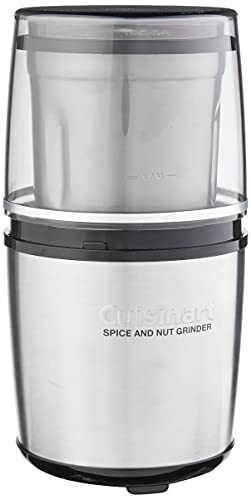
A bowl that lifts out, and a motor that finishes the job
Cuisinart SG-10 Electric Spice-and-Nut Grinder
The SG-10 is a spice grinder first and a coffee grinder never, and it shows. The bowl comes off the base so you can tap ground turmeric straight into a jar instead of scraping at it, and the motor is stout enough for cinnamon sticks and dried chiles.
$49.95fromAmazonThe bowl lifts off, and that changes everything about cleanup. Grind turmeric in a fixed-chamber machine and you'll spend ten minutes chasing yellow dust with a brush. Here you pull the bowl off the base and tap it out over a jar, a measuring spoon, or the pan itself. When you're going from coriander to peppercorns to dried guajillo in one session, that's a rinse and a towel between each one instead of a whole ritual.
The motor gets through the spices that stall cheaper grinders. Cuisinart calls it heavy-duty, and at roughly 200 watts it sits at the top of this group. Cinnamon sticks, dried allspice berries and tough chile pieces are what separate a real spice grinder from a coffee grinder with ambitions. Published reviews put the SG-10 on the right side of that line, usually in about twenty seconds of grinding.
It was designed for spices, not adapted to them. Most of what you can buy in this class started life as a coffee appliance. The SG-10 didn't, and the small things give it away: extra storage space built into the lid, a bowl and lid that both go in the dishwasher, and a manual that ships with spice recipes instead of brew ratios. The push-top lid means one control and nothing to learn.
It stays put and it stores easily. Nonslip rubber feet keep it from walking across the counter mid-grind, which sounds minor until a loaded grinder skids toward the edge. The base is only about four inches square, so it tucks into a normal cabinet or lives next to the toaster without taking over. At roughly a pound, dragging it out isn't a chore, which is the difference between using it and meaning to.
Flaws but not dealbreakers
There's no grind setting. Texture is entirely a function of how long you hold the lid down, so a coarse crack for a steak rub takes a lighter touch than you'd expect. Let go a beat late and you've got powder. You'll learn the feel in a week or so, but if you want repeatable coarse grinds every time, this isn't the machine that hands them to you.
The bowl holds about 90 grams, which isn't much. Building a month of taco seasoning or a big jar of ras el hanout means grinding in rounds and emptying into something larger between them. For a single dinner it's plenty. For pantry stocking, the KitchenAid's much bigger bowl saves you real time and a fair bit of patience.
It gets warm if you lean on it. Running past roughly forty-five seconds without a break heats the motor and the bowl, and heat is the enemy of the aromatics you're grinding for in the first place. Work in short pulses and let it rest between batches. Not a dealbreaker, just a habit worth building early.
Runner-up
Same grinding muscle, fewer manners, less money
KRUPS Electric Blade Coffee Grinder 1.6 Oz
The KRUPS is the plain, durable option that keeps showing up in kitchen recommendations. You get a 1.6-ounce dishwasher-safe bowl that lifts out, stainless blades, and a press-and-hold lid that lets you dial texture with your thumb. Nothing clever, nothing to break.
$28.45fromAmazonPress the lid and it grinds — that's the entire interface. Hold longer for finer, release when it looks right. There's nothing to set, nothing to configure and nothing to forget between uses. For a lot of people that's the honest ideal: a grinder you actually reach for because reaching for it takes no thought. It's also why this design has barely changed while flashier machines came and went.
The bowl comes out and goes in the dishwasher. That's the feature that makes a grinder livable, and KRUPS includes it here. You fill it off the base, grind, then lift it away and pour. The stainless blades shrug off acidic spices like sumac, amchur and dried tamarind, which pit and dull lesser metal over time.
It has enough power for hard seeds. At roughly 200 watts it matches our top pick, which is unusual at this end of the market — plenty of rivals run smaller motors that visibly bog down. Black peppercorns go to an even powder in seconds. Oily fennel seed, which gums up weaker grinders and packs against the blade hub, comes out clean instead of pasty.
It's a known quantity. KRUPS is a Groupe SEB brand, and this grinder or something nearly identical to it has sat on kitchen-writer recommendation lists for years. A very large install base means the failure modes are well documented rather than a surprise you discover alone. That matters more with small appliances than most people admit.
Flaws but not dealbreakers
The cord is short. Shorter than the KitchenAid's, and short enough that it dictates where the grinder lives. If your outlets are awkward or your counter is deep, you'll be grinding wherever the plug says you can. Annoying rather than serious, but you'll notice it every time.
There's no advertised safety lock. The Cuisinart and the Secura both stop the blades from spinning unless the bowl is seated. KRUPS doesn't claim that, so keep a hand on the lid and make sure everything is seated before you press down. With a bowl full of peppercorns, a misfire is a mess you'll be sweeping up for a while.
A 1.6-ounce bowl is small. It's fine for a recipe's worth of cumin or a fresh grind of pepper. It's not fine for batch-building a spice blend, where you'll be running four or five loads and cleaning between colors. Buy this one for cooking, not for stocking.
Budget pick
The quiet one, if your spices aren't rock hard
SHARDOR One Touch Coffee Grinder Electric
The SHARDOR is the low-risk way into fresh-ground spice, and it's the quietest option here by the numbers its maker publishes. You get a removable stainless cup, a single press-and-hold button, and a two-year warranty. The small motor is the catch.
$27.99fromAmazonIt's built to be quiet, and quiet matters more than people expect. SHARDOR rates the average noise around 60 decibels, well under what blade grinders in this class usually produce. If you grind pepper while a toddler sleeps down the hall, or your kitchen opens straight onto the room where everyone else is sitting, that's the difference between a nuisance and a non-event. It also encourages short bursts rather than one long roar.
The stainless cup lifts out and goes in the dishwasher. You fill it away from the base, grind, then pour without tipping the whole machine over a jar. Stainless also shrugs off the pigments that ruin plastic chambers — turmeric and paprika stain almost anything porous, and there's no undoing it once they do.
One button, nothing to learn. Press to start, release to stop, hold longer for a finer result. That's it. If this is your first spice grinder and you're not sure you'll use it twice a week, the lack of settings is a feature. Nothing sits between you and a handful of coriander seed.
The warranty is the longest in this group. SHARDOR covers it for two years, twice what KitchenAid offers on its grinder and longer than most brands bother with at this level. That's meaningful for a machine whose main risk is a small motor giving out. It doesn't make the motor bigger, but it does make the gamble smaller.
Flaws but not dealbreakers
The motor is the weak point, and it's the whole story. SHARDOR's own list mentions cinnamon and anise, but at roughly 150 watts it's the smallest here, and published reviews describe hard, woody spices needing several passes where a 200-watt grinder needs one. Whole cinnamon sticks and star anise are where it visibly struggles. Coriander, cumin, fennel, peppercorns and dried herbs are well within its range.
There's no coarseness control at all. Texture depends entirely on how long you hold the button, and without a pulse mode it's harder to stop at a coarse crack for rubs and brines. You can get there with practice. You just can't set it and repeat it.
SHARDOR doesn't have the track record of the others. Cuisinart, KitchenAid and KRUPS have decades of kitchen appliances behind them and long paper trails when something goes wrong. This is a newer name with a shorter history, which is worth weighing even with the longer warranty attached.
SHARDOR backs the grinder with a two-year manufacturer's warranty.
Who this is for
Buy one of these if you cook with spice more than once a week and you're tired of jars that smell like cardboard. That covers a lot of people: anyone building curry pastes or masalas, anyone who makes their own barbecue rub, anyone who wants pepper that tastes like something. It also covers the cost-conscious cook, since whole spices run meaningfully less per ounce than the pre-ground version and last far longer in the cabinet. If you grind a pinch of pepper twice a month, a hand mill is enough and you can skip this entirely.
This guide covers small electric blade grinders — the countertop kind you fill by hand and run in bursts. We're not covering burr mills, which grind more evenly but cost far more and are much harder to clean of aromatic residue between spices. We're also not covering full-size blenders or food processors, which won't get a small quantity of seed fine enough because the blades spin above the pile. If you also grind coffee, plan on keeping a dedicated bowl or a dedicated machine for spice; the flavor transfer runs in both directions and it's worse than people expect.
How we picked
We started from spec sheets, feature documentation and published reviews, and weighted five things. Power: the motor has to finish a cinnamon stick without four passes, which in practice means about 200 watts. Cleanup: a bowl that lifts off the base and goes in the dishwasher saves you time on every single use, and a stainless chamber won't hold a turmeric stain forever. Capacity: small bowls are fine for one dinner but punishing for batch-blending, so we noted who's stuck grinding in rounds. Noise and size: loud grinders and bulky grinders both end up unused, one because of the household and one because of the cabinet. Safety and warranty: bowl-activated locks, nonslip feet and the length of the coverage broke ties.
Other electric spice grinders worth considering
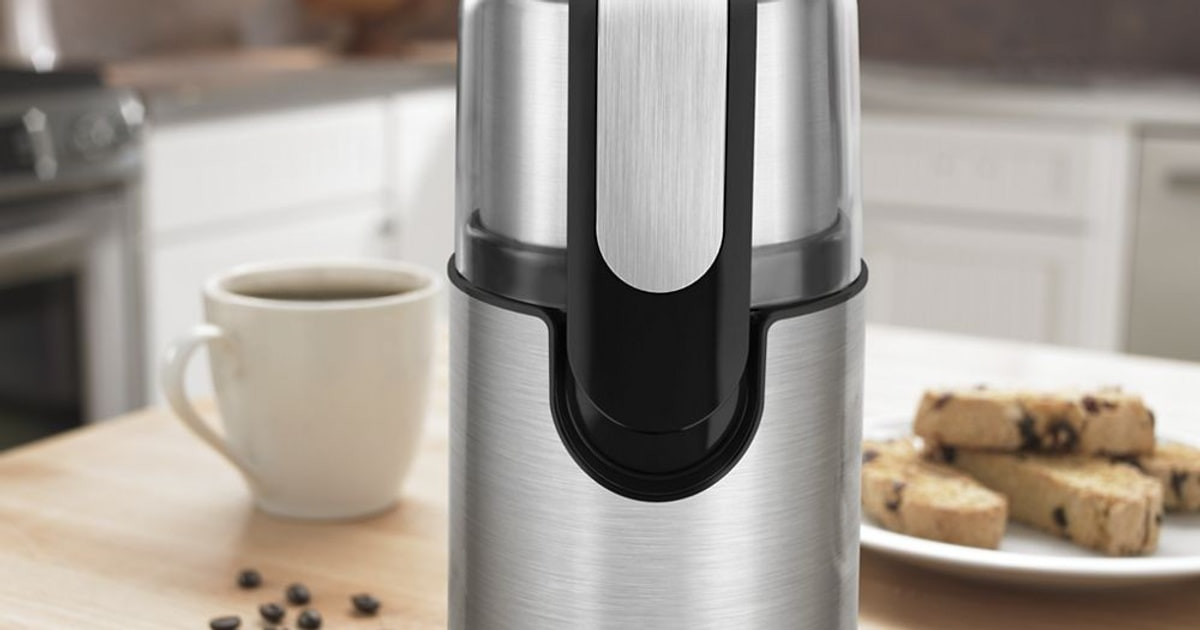
If you grind big batches of your own blends: The KitchenAid BCG111OB Blade Coffee Grinder ($34.97) — The KitchenAid BCG111OB has a 4-ounce bowl, more than double what the Cuisinart or KRUPS hold, and it's the one to reach for when you're making enough za'atar or dukkah to last the household weeks. The bowl is removable and marked so you can measure without a separate cup, the clear cover lets you stop at the texture you want, and the build is what you'd hope for: no flex in the housing, a lid that clicks, a base that doesn't wander during a long cycle. The wide bowl helps too, since fine powder is less likely to pack against the hub and shield the coarser bits from the blade. A one-year hassle-free replacement warranty backs it. What you give up is counter space — it's the bulkiest thing here — and any spice-specific design, since this is a coffee grinder that happens to be very good with seeds. It also costs more than the KRUPS without grinding any better.
The competition
This is what our research surfaced, not a census of the whole market. Small blade grinders turn over constantly and dozens of near-identical machines ship under names nobody recognizes. The one below is a genuinely good appliance that lost to our picks on a specific point.
The Secura Electric Coffee Grinder and Spice Grinder ($39.99) — The Secura Electric Coffee Grinder and Spice Grinder is the dual-bowl answer to a very common problem: one machine, two jobs. It ships with two removable stainless bowls, so you can dedicate one to coffee and one to spices and never find clove in your morning espresso. The hardware around that idea is thoughtful — a 200-watt motor, a bowl-activated safety lock, overheat protection, and a transparent double lid that lets you watch the texture while keeping dust off the counter. What kept it out of our picks is Secura's own guidance: the instructions tell you to avoid grinding very hard foods like cinnamon, cloves or coconut, and those are exactly the spices most people buy a grinder to handle. It's also described as the loudest of this group. If your spice list runs to seeds and dried herbs, and the problem you're really solving is coffee contamination, it still makes plenty of sense.
Care and cleaning
Never put the motor base in water. Wipe it with a damp cloth and leave it at that. For removable bowls, tap out every last bit, rinse in warm water or run it through the dishwasher if the manual allows, and dry it completely before the next spice goes in — moisture trapped in a closed chamber is how you end up with mold. To clear stubborn aromatics like fenugreek or clove without water, grind a small handful of white rice or a torn piece of dry white bread for ten to fifteen seconds, throw that powder away, then brush out what's left with a dry pastry brush. Split cardamom pods before loading; the papery husks grind to a gritty nothing and dull the result. And work in short bursts, since heat costs you the aroma you're after.
Questions we get
Can I use a coffee grinder to grind spices?
Yes, and most of the machines here are marketed as coffee grinders. The catch is flavor transfer: coffee oils soak into the metal and leave a roasted, slightly bitter note in your next batch of coriander, and clove or cardamom does the same thing to your espresso in reverse. The clean fixes are a dedicated spice grinder that never sees a bean, a dual-bowl machine like the Secura, or a strict cleaning routine between uses.
How do I clean a spice grinder between different spices?
If the bowl comes off, tap it empty, rinse it in warm water and dry it fully before the next use. If it doesn't, use the bread technique: grind a small handful of white rice or a torn piece of dry bread for ten to fifteen seconds so the starch absorbs the residual oils, then discard it and brush out the rest. Never submerge the motor base, and never load a damp bowl.
Blade or burr for spices?
Blade, for almost everyone. Burr mills produce more uniform particles because the material passes through a set gap instead of being chopped at random, but the good ones cost several times what these do and their internal geometry is genuinely hard to clean of strong aromatics. A few microns of variation won't change how your curry tastes. Save burrs for espresso or high-volume work.
Which spices are worth grinding fresh?
Black pepper, cumin, coriander, cardamom, star anise, cinnamon, cloves, allspice and whole dried chiles — these carry volatile compounds that start evaporating the instant they're ground. Freshly ground, they can be several times more aromatic than the pre-ground equivalent, which was often processed long before it reached the shelf. Dried leafy herbs like oregano and thyme improve much less, so they're a lower priority.
Can these grinders handle cinnamon sticks and star anise?
The 200-watt machines — the Cuisinart SG-10, the KRUPS and the KitchenAid — generally manage both in twenty to forty seconds across one or two pulses. The SHARDOR's smaller motor needs several passes and may leave woody fragments behind. Secura specifically advises against hard items like cinnamon and cloves in its bowls. Split cardamom pods first no matter which one you own.
How long do freshly ground spices stay good?
Roughly six months to a year in an airtight glass or metal container kept away from heat and light. That's still far better than a store jar, which loses much of its aroma before you ever break the seal. Grind in amounts you'll actually use within a few weeks and the difference stays obvious.
Why you should trust us
For this guide:
- We read the manufacturer spec sheets and listing documentation for all five grinders, including the fine print about which foods each maker warns you not to grind.
- We compared published reviews and long-running recommendations from kitchen and food media to see which of these designs hold up over years rather than weeks.
- We weighted the complaints that come up repeatedly in owner feedback on blade grinders as a category: motors that stall on hard spices, aromatics that linger in a chamber you can't detach, and uneven grinds from overfilled bowls.
- We read owner reviews on every listing, weighted toward the critical ones, because that is where the recurring failures show up.
- We have a systematic way of automatically fetching the latest prices, so the numbers on this page stay current.
- This is a research-focused guide, so the team may not own every product listed — though we often do own the top winners, which gives us extra context for the recommendations.
- We don't accept free products, and the retailer commission never changes which product we recommend.
Sources
The Best Spice Grinder — Wirecutter (New York Times), Wirecutter / New York Times
The Best Coffee Grinders, Tested — Serious Eats, Serious Eats
Best Spice Grinders, Tested by the Good Housekeeping Institute, Good Housekeeping
Equipment Review: Spice Grinders — America's Test Kitchen, America's Test Kitchen
Best Spice Grinders of 2026 — The Spruce Eats, The Spruce Eats
The Best Spice Grinders for Home Cooks — Food52, Food52
Best Spice Grinders — Bon Appétit, Bon Appétit
Best Electric Spice Grinders — CNET, CNET
Amazon product listings and owner reviews for all 5 products
Manufacturer specification pages for each product
Some passages in this guide may be paraphrased with AI help. Prices are refreshed automatically.
More like this.
Continue exploring appliances reviews and recommendations.

The Best Spice Racks And Organizers
Spice storage fails in a boring way. You reach for the cumin, knock over the paprika, and find two jars of oregano hiding behind it. McCormick's consumer…

The Best Coffee Grinders
Your grinder shapes your coffee more than your brewer does. Grind size and evenness control how fast water pulls flavor out of the beans, so a pile of…

The Best Angle Grinders
An angle grinder is what you reach for when metal needs to be cut, smoothed, or stripped away. It takes a rusted hinge off a gate, cuts through a seized…

The Best Meat Grinders And Sausage Stuffers
Grinding your own meat is one of the few kitchen upgrades where the difference shows up on the first bite. You pick the cut, you pick the fat ratio, and…

The Best Dog Nail Grinders and Trimmers
If you can hear your dog's nails clicking across the kitchen floor, they're already too long. Overgrown nails push the toes out of alignment, change how a…

The Best Electric Turkey Roasters
Thanksgiving has one real bottleneck, and it's your oven. The bird sits in there for hours while the stuffing, the rolls and the pie all wait their turn.…