The Best Smart Thermostats
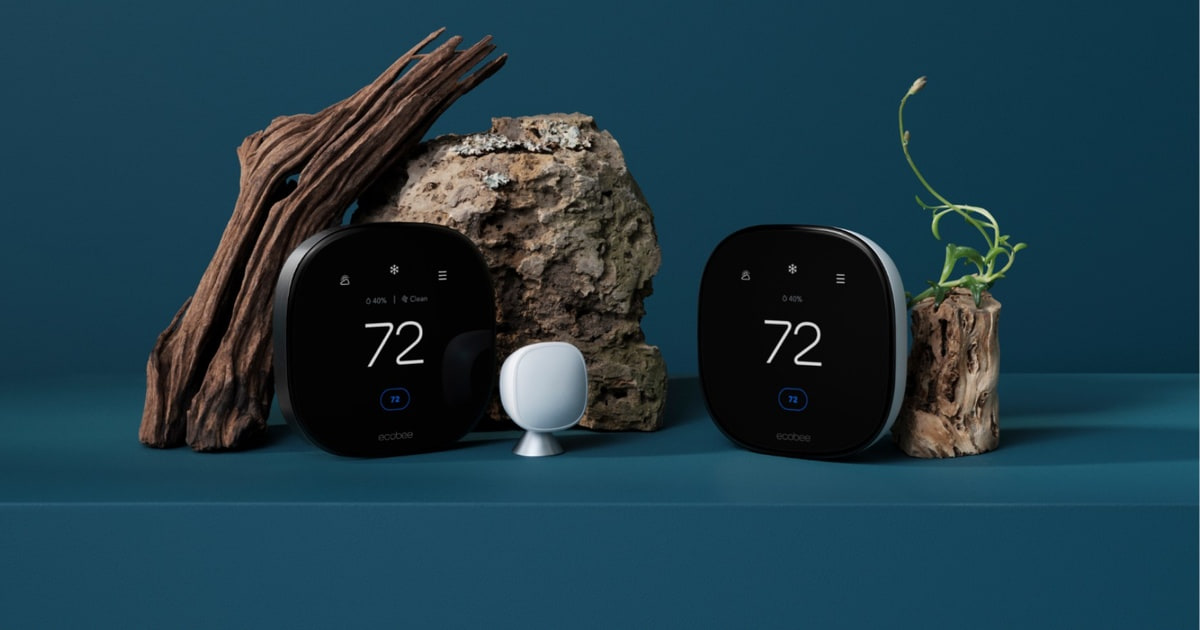
Your thermostat is the one gadget in the house that spends money every hour of the day. Heating and cooling eat close to half the energy bill in a typical American home, and a lot of that goes into rooms nobody's sitting in. A smart thermostat's real job is small and repetitive: turn things down when you leave, warm the bedroom before you get up, and stop cooling the whole house because the hallway is sitting in a sunbeam. Do that reliably and it pays for itself.
None of these fix bad ducts. If your upstairs runs seven degrees warmer than your living room, room sensors can nudge that imbalance, but no thermostat can move air your system won't deliver. The savings figures come from manufacturers' own fleet data, and what you actually save depends on your climate, your insulation and how sloppy your old schedule was. All of these also lean on a phone app and a cloud account, so a bad Wi-Fi week means fiddling with the wall again.
Wiring is the thing to settle before you buy anything. Some homes have a C wire behind the faceplate and some don't, and that one detail decides which of these will actually run. Check your terminals and your system type first, then shop on features. We think that the ecobee Comfort and Security Bundle is the best smart thermostat for most people, and that the Google Nest Learning Thermostat (4th gen) is the one to buy if your house already runs on Google Home.
Everything we recommend

Room sensors, air quality alerts and a bit of security too

Nicest screen here, and it writes your schedule for you

The pick for a big house with rooms that never match
At a glance
| Product | Price | |
|---|---|---|
| ecobee Comfort and Security BundleTop pick | $319.98 |
| Google Nest Learning ThermostatRunner-up | $239.99On sale |
 | ecobee Trim Plate for Smart Thermostat EssentialAlso in lineup | $14.99 |
 | Google Nest Thermostat - Smart Thermostat forAlso in lineup | $117.49On sale |
| Honeywell Home T9 WiFi Smart Thermostat withAlso great | $111.49 |
How we picked
Wiring and compatibility. We read each manufacturer's compatibility documentation for system types, C-wire requirements and included workarounds. A thermostat that can't run on common older wiring without new cable pulled got marked down.
Room sensing. We looked for support for wireless sensors that report both temperature and occupancy, since that's what separates a real comfort fix from a nicer-looking wall dial. Owner feedback about uneven floors shaped how much weight this got.
Ecosystem fit. We compared documented support for Alexa, Google Home and Apple's ecosystem, including whether voice control is native or routed through a separate speaker.
App reliability. We read published reviews and recurring owner complaints about app outages, failed pairings and settings that don't stick. Persistent patterns counted against a model even when the hardware was strong.
Energy credentials. We favored ENERGY STAR certified models, mostly because certification is what makes a unit eligible for utility rebates, and we treated manufacturers' savings percentages as claims rather than results.
Top pick
Room sensors, air quality alerts and a bit of security too
ecobee Comfort and Security Bundle
This is a thermostat, a room-sensor hub, an air quality monitor and a small security system in one box, bundled with two door and window sensors. It's the only pick here that watches temperature, occupancy and indoor air at the same time.
$319.98fromAmazonThis is the thermostat that pays attention to more than one room. Every thermostat reads the temperature where it's mounted, which is usually a hallway nobody uses. The included SmartSensor reads a room you care about and tells the system somebody's in there, so the furnace runs for the bedroom instead of the wall by the front door. If your office over the garage is always the wrong temperature, that's the fix.
Ecobee rates the savings at up to 26% a year on heating and cooling, measured against holding a house at a flat 72 degrees. Treat that as a ceiling rather than a promise. It's ENERGY STAR certified, which matters mostly because it makes the unit eligible for utility rebates in a lot of territories, and those are worth checking before you order.
The built-in air quality monitor flags when the air in your house goes bad, suggests what to do about it, and nags you when the furnace filter is due. Owners are split on how much they use it. Several say the filter reminders alone earn their keep, while others report the air readings end up being interesting rather than actionable, and they'd have been fine with a simpler ecobee.
The security half of the bundle is the part to think hardest about. You get two door and window sensors, a radar motion sensor that covers the main floor when you're out, and a thermostat that listens for the sound of a smoke alarm. It's genuinely useful, but the sharper alerts, including motion notifications when the system is armed, depend on an ecobee Smart Security subscription.
It talks to everything. There's a speaker and microphone on board for hands-free Alexa, and it works with Siri and Google Home as well, which makes it the safest choice if the phones in your house don't all agree. Ecobee also ships a power extender kit, so a home without a C wire behind the faceplate can still run it without pulling new wire.
Flaws but not dealbreakers
It's the most expensive setup here, and a chunk of that cost is security hardware you may not want. If all you're after is a thermostat that handles rooms well, you're paying for sensors that will sit in a drawer.
The door and window sensors are where the install goes sideways. Owners describe long setup sessions, at least one dead sensor out of the box, and a support call to sort it out. The thermostat itself goes on the wall quickly; budget extra patience for the extras.
It's a physically large unit. On an older wall cutout you may see the ghost of the previous thermostat around the edges, which means paint or a trim plate.
Runner-upOn sale
Nicest screen here, and it writes your schedule for you
Google Nest Learning Thermostat
The fourth-generation Nest Learning Thermostat has the best-looking display in the category and comes with a Nest Temperature Sensor in the box. It figures out your routine on its own, which suits households that never got around to programming anything.
$239.99fromAmazonList priceThe screen is the reason people buy this one. It's about 60% larger than the previous generation, and Dynamic Farsight lights it up with a clock, the weather or the temperature when you walk past, so it reads from across the room. Brightness adjusts on its own, or you can set it yourself. Owners consistently call out how well it disappears into a hallway.
Its best trick is that you never have to build a schedule. It watches what you do for a week or two and starts anticipating the changes you'd have made anyway. When it wants to alter your schedule to save energy, it asks first, sends the proposal to the Google Home app, and waits for you to tap yes. That's a real improvement over older Nests that just decided things.
It comes with a Nest Temperature Sensor, so you can point comfort at one room at a certain hour, like the nursery at bedtime. It's less flexible than ecobee's occupancy-aware approach, since you're telling it where to care rather than letting it notice. But for the classic problem of one cold bedroom, it works, and you can add more sensors later.
Compatibility is broad on paper: most 24V systems, including gas, electric, oil, forced air, heat pumps and radiant, with no C wire needed in most homes. It's Matter compatible, which makes it easier to fold into a mixed smart home. Run your wiring through Google's compatibility checker anyway, because the exceptions are the expensive kind of surprise.
Flaws but not dealbreakers
The no-C-wire claim doesn't hold for everyone. Owners report cases where a third-generation Nest ran fine on the same wiring and this one wouldn't, partly because the mounting and power hardware changed between generations. If your current thermostat is a hand-me-down setup, check before you commit.
Apple households get less than they'd like. Siri control runs through a smart speaker rather than a native Apple Home integration, so the automations you can build are thinner than with the ecobee. And full functionality assumes a Google account you're comfortable feeding.
The energy reports are pretty but coarse. If you want to know exactly when your system ran and why, ecobee's dashboard tells you more.
Also great
The pick for a big house with rooms that never match
Honeywell Home T9 WiFi Smart Thermostat with
The Honeywell Home T9 comes with one wireless Smart Room Sensor and accepts many more, with a range that covers a two-story house. If your comfort problem is really a whole-floor problem, this handles more rooms than anything else here.
$111.49fromAmazonNo other thermostat here scales across a house like this one does. The wireless Smart Room Sensors reach up to 200 feet, so a sensor in an upstairs bedroom still reports cleanly to a thermostat on the ground floor. One comes in the box and you add the rest as you go. For a two-story home where the top floor bakes in July, that's the whole ballgame.
The sensors read temperature and detect people, and you choose how the thermostat uses that. It can follow whoever's home and prioritize whatever room they're in, or stick to a schedule that shifts priority room by room through the day. Owners who sleep upstairs describe it in the simplest terms: they stopped conditioning the hallway and started conditioning the bedroom.
The hardware is straightforward and the color touchscreen is easy to read without your phone, which is more useful than it sounds when a guest or a kid wants to change the temperature. It works with Amazon Alexa, Google Assistant and Apple HomeKit, so it's the rare non-ecobee option here that Apple-first households can actually automate.
Check the system list before you buy. It handles forced air on gas, oil or electric, hot water and steam, and heat pumps with electric backup. It does not work with electric baseboard heat, and it requires a C wire, though a C-wire adapter is included for homes that don't have one.
Flaws but not dealbreakers
The app is the weak spot. Owner complaints about the Resideo app and its smart home integrations stretch back years, and while updates have helped, this isn't the one to buy if you plan to live inside the phone interface.
Extra sensors are sold separately, so a large deployment adds up quickly. The switch between averaging across rooms and following a schedule also confuses people; more than one owner has reported settings appearing to revert overnight until they worked out which mode was in charge.
Energy reporting is basic next to ecobee's, and the design is functional rather than handsome. Nobody's putting this one in the entryway to be admired.
Who this is for
Buy one of these if you're still adjusting a dial by hand, if your house empties out on a predictable weekday schedule, or if one room is reliably miserable while the thermostat insists everything's fine. The savings are real but unglamorous, and they show up over a season rather than a week. If you already own a working smart thermostat from the last few years, there isn't much here worth swapping for unless you're adding room sensors.
This guide covers wall-mounted smart thermostats for standard low-voltage residential HVAC. It doesn't cover electric baseboard heat, line-voltage thermostats, communicating or proprietary systems from a single manufacturer, or the mini-split remotes that some ductless systems use. If your equipment falls into any of those buckets, check with the manufacturer before you buy anything on this page.
How we picked
Wiring: we read the compatibility documentation for each model, including C-wire requirements and whatever adapter or power kit ships in the box, because that's the detail that decides whether a thermostat works in your house at all. Room sensing: we favored models that support wireless sensors reading both temperature and occupancy, since that's the difference between a nicer wall dial and an actual comfort fix. Ecosystem fit: we checked documented support for Alexa, Google Home and Apple's ecosystem, and whether voice control is built in or borrowed from a speaker. App reliability: we tracked recurring owner complaints about outages and settings that don't stick. Energy credentials: we preferred ENERGY STAR certified units, mainly for rebate eligibility, and treated savings percentages as manufacturer claims.
The competition
This is what our research turned up in this lineup, not a survey of everything on the market. A model landing here isn't necessarily bad; it just lost to a pick on the things we weighted most heavily.
The Google Nest Thermostat - Smart Thermostat for ($117.49) — The Google Nest Thermostat is the simple, inexpensive way into Google's ecosystem, and an enormous number of people buy it every month. It's ENERGY STAR certified, runs without a C wire in most homes, turns itself down when you leave, and sends alerts if your heating or cooling starts behaving strangely. But it doesn't learn your schedule, and it doesn't accept room sensors at all, which rules out the one upgrade most people eventually want. Owners also grumble about two things worth knowing up front: it lives in the Google Home app rather than the older Nest app, which is annoying if you own other Nest gear, and the mirrored finish that looks striking in photos washes out in a sunny hallway. Its owner ratings are the softest in this group, mostly over setup confusion. Still a reasonable choice for a rental, a cabin or a spare zone where you just want remote control and a basic schedule.
Installation notes
Kill the power at the breaker first, not just at the thermostat. Then pull the faceplate and photograph the wiring before you disconnect anything, because the labels on the old terminals are the only map you'll get. Look for a wire on the C terminal while you're in there. That one detail determines your options, and it's worth running your wire configuration through the manufacturer's compatibility checker with your equipment model numbers before ordering. A standard forced-air swap takes most people well under an hour with a Phillips screwdriver. Two things slow it down: a wall cutout larger than the new unit, which needs paint or a trim plate, and junction-box mounting, which usually requires one. Dual-fuel heat pumps, radiant floors and communicating equipment are worth an HVAC tech's opinion first.
Questions we get
Are smart thermostats actually worth buying?
For most people with central heating and cooling, yes. Manufacturers report savings in the range of 10% to 26% against a flat setting or a dumb programmable, and even the low end adds up over a couple of seasons. Utility rebates on ENERGY STAR certified models shorten the payback further, so check your provider's rebate page before you order. If you already keep tight manual control of your thermostat, expect less.
What's a C wire, and how do I know if I have one?
The C wire, or common wire, gives a thermostat continuous 24-volt power so it can hold a Wi-Fi connection without borrowing power from your HVAC control board. To check, shut off the breaker, pull the faceplate and look for a wire landed on the terminal marked C. Newer homes usually have one; plenty of older ones don't. Ecobee ships a power extender kit, the Nest models run without one in many homes, and the T9 includes a C-wire adapter.
Which one works best with Apple Home and Siri?
The ecobee is the safest pick for an Apple household, since it works with Siri alongside Alexa and Google Home. The Honeywell T9 also lists Apple HomeKit support, which makes it the option for Apple users who need lots of room sensors. On the Nest models, Siri control comes by way of a smart speaker rather than a native Apple Home integration, so the automations are more limited.
Do these work with heat pumps?
Standard single-stage heat pumps are widely supported. The complications are dual-fuel, multi-stage and variable-speed systems, where support varies by model and a mismatch can leave auxiliary or emergency heat unavailable. The Nest Learning Thermostat lists heat pump support among 24V systems, and the T9 covers heat pumps with electric backup but not electric baseboard heat. Run your specific equipment model numbers through the manufacturer's compatibility checker before you buy.
Can I install one myself, or do I need an electrician?
These are designed for DIY installation, with in-app wiring guides, and a normal swap needs one screwdriver. You don't need a licensed electrician for standard low-voltage thermostat work. The exception is wiring you can't identify or systems that are dual-fuel, radiant, multi-zone or communicating, where an HVAC tech is worth the call. Owners who ran into trouble almost always ran into it at the wiring stage, not the app stage.
Do room sensors really make a difference?
In a house with even airflow, not much. In a two-story home or one with a room over the garage, they're the single biggest comfort upgrade here. The thermostat stops chasing the temperature of a hallway and starts working toward the rooms you actually occupy. Ecobee and Honeywell handle this best; the base Nest Thermostat can't do it at all.
Why you should trust us
For this guide:
- We read the manufacturer specifications, listing details and compatibility documentation for every thermostat in this guide, including wiring requirements and supported system types.
- We compared published reviews and recurring themes in owner feedback, paying particular attention to complaints about installation, app reliability and room sensor behavior.
- We weighed each model against the same criteria rather than against its own marketing claims.
- We read owner reviews on every listing, weighted toward the critical ones, because that is where the recurring failures show up.
- We have a systematic way of automatically fetching the latest prices, so the numbers on this page stay current.
- This is a research-focused guide, so the team may not own every product listed — though we often do own the top winners, which gives us extra context for the recommendations.
- We don't accept free products, and the retailer commission never changes which product we recommend.
Sources
Best Smart Thermostats — Wirecutter (NYT), Wirecutter / New York Times
Best Smart Thermostats of 2026 — CNET, CNET
Best Smart Thermostats — Tom's Guide, Tom's Guide
Smart Thermostat Ratings and Reviews — Consumer Reports, Consumer Reports
Energy Star Certified Connected Thermostats, U.S. Environmental Protection Agency — Energy Star
Thermostats — Energy Saver Guide, U.S. Department of Energy
Best Smart Thermostats — PCMag, PCMag
Best Smart Thermostats — Forbes Home, Forbes Home
Amazon product listings and owner reviews for all 5 products
Manufacturer specification pages for each product
Some passages in this guide may be paraphrased with AI help. Prices are refreshed automatically.
More like this.
Continue exploring home reviews and recommendations.

The Best Smart Thermostats With Voice Control
A thermostat is one of the few gadgets in your house that you interact with while half-asleep, mid-argument about the temperature, or with both hands full…

The Best Smart Thermostats for Heat Pumps
A heat pump asks more of a thermostat than a furnace does. It has to know when to run the compressor, when to give up and call for backup strips, and when…

The Best Smart Garden Systems for Fresh Herbs
Fresh herbs go bad fast. You buy a clamshell of basil for one recipe, use a third of it, and find the rest slimy in the crisper a week later. A smart…

The Best Smart Door Locks and Keyless Entry Systems
A smart lock earns its keep in the small moments. You're carrying groceries in both arms and the door opens anyway. Your kid gets home from school and you…

The Best Smart Blinds and Shades
You touch your window shades more than almost anything else in the house, and you never think about it. Up in the morning, down at dusk, halfway when the…

The Best Smart Bird Feeders With Cameras
A smart bird feeder turns a window chore into something you actually look forward to. Instead of catching a blur of wings while you refill the coffee, you…